A Shot of AG
S02 E12: Luke Harvey | Local Beekeeper
Season 2 Episode 12 | 26m 46sVideo has Closed Captions
Luke Harvey is a local beekeeper who loves to teach others about the importance of bees.
Luke Harvey is a local beekeeper (apiarist) who loves to get others involved and excited about raising happy, healthy bees and harvesting honey. He shares the importance of having a mentor and getting involved in local clubs. Bees aren’t scary, they have very specific jobs and are important to a healthy environment.
Problems playing video? | Closed Captioning Feedback
Problems playing video? | Closed Captioning Feedback
A Shot of AG is a local public television program presented by WTVP
A Shot of AG
S02 E12: Luke Harvey | Local Beekeeper
Season 2 Episode 12 | 26m 46sVideo has Closed Captions
Luke Harvey is a local beekeeper (apiarist) who loves to get others involved and excited about raising happy, healthy bees and harvesting honey. He shares the importance of having a mentor and getting involved in local clubs. Bees aren’t scary, they have very specific jobs and are important to a healthy environment.
Problems playing video? | Closed Captioning Feedback
How to Watch A Shot of AG
A Shot of AG is available to stream on pbs.org and the free PBS App, available on iPhone, Apple TV, Android TV, Android smartphones, Amazon Fire TV, Amazon Fire Tablet, Roku, Samsung Smart TV, and Vizio.
Providing Support for PBS.org
Learn Moreabout PBS online sponsorship(opening theme music) - Welcome to "A Shot Of Ag."
My name is Rob Sharkey.
I'm a farmer that started a podcast that led into an XM radio show, which led into a national television show, which led to me being here today.
But today, today is not about me.
Today is about Luke Harvey.
How are you doing Luke?
- I'm doing great.
- Yeah, you're a Peoria native, but you've made the rounds.
- I have, yep.
- Yeah.
- Been overseas for a little bit, six years in Kobe, Japan lived up in Chicago area for awhile a couple of years and then moved back to Peoria after I promised I'd never come back.
- Kobe, Japan, you know what they're famous for?
- Kobe beef.
Yeah.
- Yeah, absolutely.
- Yep.
- It's good, isn't it?
- Yeah, it's really nice.
- I tell people it's like, the best couple bites of beef you'll have, but it's rich.
It's awful rich and at the end of the steak, you're probably done.
- Yeah.
- Yeah.
And they take good care of the cows.
- Yeah, they feed them beer and stuff.
- Yeah.
- I don't know if that's real.
- Yeah they give them massages, yeah real.
- Do they really?
- Yeah.
- But they do live in buildings, so they don't really get a lot of, they don't get out and exercise and stuff.
- Barns.
- Yeah.
- Yeah.
(both laughing) - What took you over there?
- Caterpillar, so my family, my dad worked for Caterpillar.
We got transferred over as, as a family and then 1990 and we lived there.
- I mean, were you... what do they call them?
- High school students.
- The Caterpillar, the kids that grew up with their parents or Caterpillar.
- ISEs or a third culture kid, it depends on an ISE just to overseas.
- Okay and that's kind of the thing too.
I don't know anything about Caterpillar, but it seems like the people that work there, they work there for a little bit and then they get an opportunity to go over and it's, you kind of have to decide if you're going to do all that.
- Yeah.
- Yeah.
- Was it a hard decision?
- Well, I was a kid, so I didn't really get to decide, but, so I just got told to go when I was told to go, I really didn't want to go.
- Can you speak Japanese.
- I can, yeah.
- Really?
Yeah.
- Okay, how long does that take?
- It depends on how dedicated you are to it, and what kind of skillset you have for it.
It probably took me like three years to have a decent conversation.
- Yeah - And then... yeah.
And then after that I stayed for another like six years, so.
- Okay, we're going to talk about honey today.
- Yeah.
- That has nothing to do with Japan.
- Nothing to do with Japan.
- We squirrel a lot in this show rabbit trail.
That's okay.
- Yeah.
- So you're with the HOIBA, did I say that right?
- That's right.
- What is that?
- The Heart of Illinois Beekeeping Association.
So we're a local beekeeping club that supports local beekeepers, new beekeepers, we hold classes.
- I didn't know there was a club.
- Yeah, it's a big club.
- Do you have a clubhouse?
- We don't, we just meet wherever so like we meet at some like the ag building and Peoria.
We meet all over.
- How often do you meet?
- Once a month.
- Yeah.
- Yup.
- Oh, what do you do at a beekeepers association?
- We share information, we new train people, we share information.
I think our next one's in actually September, because right now is a really busy year for beekeepers, for collecting honey and getting ready for fall and winter.
- Since you are... aren't you in a competition with these people?
- No, no, they're all... we're the beekeeping society.
The unit of the beekeepers, we're all close.
We all work with each other.
We're all supporting each other.
Beekeeping's hard and if you don't have like a foundation to work from, you're not going to succeed.
- Let's start from the beginning.
- Sure.
- How'd you get into this?
- So I'm a naturally curious person.
- Yeah.
- My friend had bees, I was watching his bees and one...
So this is going to scare people but one came out and stung me on the neck I'm watching it from a distance away.
And I thought- - Sounds fun.
- (laughs) Right.
- That would make me want to get involved too.
- But I thought, wow, how strange?
Right, and I asked him, I said, "What's going on?"
And he said, "Well, you're standing right in their flight path and you're doing exactly what a predator would do."
You walked in their fright of flight path.
You're watching them, you're a distance away.
To be fair, they're a little crabby, this time of year, the weather was bad, bees have personalities just like us.
- There's crappy times of the year for bees?
- Yup, yeah, yeah.
Yeah.
So, if they've swerved that that they've swarmed, which means that they've taken their... they've reproduced, they've taken half the population and moved to a new location and they're...
It's kind of a very dangerous time for them and there'll be real... - They're homeless.
- They're home...
They're kind of homeless, but they're making a new home, but part of them gone and made a new home and they're trying to re recreate their current home.
So, there's one queen, so they're replacing that queen.
- Yeah.
- So they get crabby.
So this was actually a rainy day.
I don't really know what was going on at the time.
Cause this was years ago, but it did come out just on the neck.
And I thought, why would something so small, have the mentality to come out and directly go from a hive and sting somebody that's standing there right.
To discourage me from being anywhere near that hive, right.
You need to get away.
- Maybe he's just a jerk.
- It could have been just a jerk.
- Yeah.
- But it was big.
- Do they die when they sting you?
- Absolutely.
Yeah.
- Okay.
Has it make you feel a little bit better, right.
- Well, not really right.
I mean, if you're... a little bit, but not really because they still die and it's a terrible death, they get disemboweled.
It's- (overlap talking) - It's kind of their own fault, right?
I mean, you're just standing there doing your own thing and he's starting to... - Yeah, but they're protecting their home.
They're protecting their lively...
They're protecting all the rest of the bees in that hive.
- Okay.
- Right.
- When they swarm that's where you see the pictures of like, I don't know, like a kid's toy out in the yard and it's surrounded by, it's covered in bees - Covered in bees.
- That's when they're splitting off and they're trying to build a new home.
- Absolutely, it's like a ball of bees.
- And everybody you freak out.
If you don't know what they're doing, because you think the world's going to end.
- Yeah, lots of people , I've gotten lots of calls.
So I routinely get calls the club gets calls too.
So you can call the club and they'll let everybody in the club know and then somebody from that club will go get that swarm for you.
- They'll get the swarm for you.
- Yeah, so they'll- - What do you mean?
- So, they'll bring a box, we'll scoop up the bees.
They'll put them in the box that box will be the new bees, their new home, will take him somewhere and put them in their apiary, which is the collection of the hives.
- All right, are you pulling my leg?
- No, serious.
- You just go and you box up some bees and take them home and they're yours, you can keep them.
- Yep, and the Queens with there, and the workers are there and they're built... they're set up to build right there.
They have the mindset that they're going to build a new home.
So they have all the resources to build a new home and they build very quickly.
- Don't you get stunned when you go to box them?
- You don't actually, they're really, so they're full, they're full of honey, right.
Because they've got a long trip ahead of them.
- Oh, they loaded up.
- So they load up, yeah.
- So they had the cooler full.
- Yeah, so they don't sting they're really not aggressive at that time and it's like..
So, I've personally gone out and gotten some and scooped them up with my hand and put them into rail box.
- Really?
- Yeah.
- Okay, I mean, you do this for fun.
- Yeah, I do this for fun.
- Huh?
- I do get stung.
- Does it hurt?
- It always hurts, it never, never doesn't hurt.
- We've talked to some people that had bees in the past and they were like, I don't even feel anymore, were they just lying to me?
- Yeah, it still hurts.
Like it's not as shocking.
Right.
The shock of being stung is worse than the sting.
So you're not expecting to be stung and you get stung.
That's worse than the sting.
- I've been stuck in it.
It hurts half the day.
- So when you get stung once a year or something, then that's a shock and it aches.
But when you're stung 10 times a week, it's not- - Is that how much you get?
- Probably if I'm messing around and I don't, if I'm hurrying, the bees will tell you slow down.
Right.
- Really?
- Yeah, they don't want you messing around.
If somebody came into your house and like started knocking everything around rearranging everything.
- Yeah.
- And they did it on a routine basis, you'd really be like, hey, I can't stop you from doing this, but you need to slow down.
And so they'll let you know, they'll helmet you, they do a thing called bouncing.
They'll bounce off ya.
So where they hit ya, they don't sting ya, but they run into ya.
- That's a warning shot.
- It's a warning shots.
- They're like, ya know- - Yeah, get away, kind of.
- Going up and giving you the business.
- Yep.
- I didn't know they had such an attitude.
- They have, I'd call it a personality.
You have ones that are real calm that don't mess with you and you have... and I've had ones in the past that are just mean as heck.
- Okay, and we're talking honeybees.
- Honeybees.
- Yup.
- Right.
And that is mainly... that's the only thing that's making the honey, like you find in a grocery store, right?
- That is... well, yes.
It's the only thing that's making the honey that you find in the grocery store.
- Okay.
- There are other species of bees that do make honey, but what you're going to find in the grocery store is going to be Apis Mellifera, which is the European honey bee honey.
- Okay.
And this, you made this, well, your bees made this.
- I got out of the way while bees made that.
- So to start out, right, okay.
We never finished your story because you keep distracting me with stuff that I don't know if it's true or not.
- It's all true.
- Right, so you're at your buddies, you get stung and you got curious, and then you- - So I went and so I talked to him about it and he said, yeah, you should slowly get into this.
And I said, oh, okay.
So then I bought, I think four or five books on it.
And that winter, I read all the books and I bought a hive and put a hive together.
Just the wooden where the wooden portion of the hive.
Right?
- Yeah.
- So it's actually... Yeah.
It's the wooden portion of the hive.
And then I bought bees in the spring and I put bees in my...
I bought two hives actually.
- Okay.
And I mean, do you live in the country?
Do you have to live in the country?
- You don't, technically anybody can have bees.
And fury had just passed a law that will, well, yeah... Bill or law that just allows you to have bees.
There's... it has- - So anybody.
- Anybody can have bees.
- In your apartment building?
- If you have a space to put them, yeah.
On top of apartment buildings, Chicago has tons of bees and they put them on top of roofs.
- Well, I mean, if you put a bunch of bees in your backyard, right.
Your neighbors, obviously they're going to have questions.
- Absolutely, they wouldn't even know.
- They wouldn't know.
- They wouldn't, they would not know.
My guess is that most people, unless you know what you're looking at, you're not going to know.
- Really?
Hey, there's some nosy neighbors out there.
- There are some nosy neighbors out there, but I've had...
I had hives and so my house is in the neighborhood.
- Yeah.
- And I had a hive out there and my neighbors had no idea I had bees for a year until I actually told them, I actually gave them all a bottle of honey and said, "Here you go, here's from the bees and your neighborhood."
- Then were they mad?
- No, some of them were a little worried because the things that people know about bees is that they make honey and they sting you.
- Well, yeah.
It's like sharks ever, you know, you learn from whatever, right?
- Yeah.
- Okay.
So you were started, you were a... what do you call a bee keeper?
- An apiarist.
- An apiarist you would think that is more of a primate thing?
- Yeah, I guess so.
I don't know exactly where that's from, but yeah.
Apiarist, so an apiary is your hives and the apiarist would be a beekeeper.
- And how long have you been doing it then?
- About nine years.
- Nine years?
- Yeah.
- Yeah.
Okay.
So I mean, do you do it for the honey... Do you do it for like a hobby or for a business or what?
- So, I do it as a hobby.
I do run a side business doing it.
I really keep bees to keep bees.
So the honey is kind of a side effect of having bees.
- What's a delicious side effect?
- It's a great side effect of having bees and you can do stuff with your hon when you have your own honey too right.
So like I make Mead, which is great.
- Now we're talking, we got something going now.
- I make candles, like the candle they make.
And there's- - This is actually a candle - That is actually a candle.
- Why a bear?
- Because it's just a neat.
- But I mean that, why did a bear is it because they eat honey.
- Oh yeah they'll destroy a hive they just- - Really?
- Yeah, yeah there's lots of pictures.
- Then it shouldn't be the mascot.
- Yeah, it probably shouldn't be.
- Someone didn't think that through.
- They'll go in and let's say, if they get their hands on a hive, it looks like somebody stuck a stick of dynamite in there and just blew it to smithereens and they totally destroy it.
- Winnie the pooh was kind of a punk.
- Yeah, he was kind of a punk.
- He was always messing around with those bees.
- Taking the bees they didn't do anything.
- They weren't doing anything wrong.
- Nope.
- And that mutated tiger on that show.
- Well actually it's the beekeeper right?
'Cause he always has a pot of honey.
So where do you get the pot on him from?
He didn't get from the bees.
He pulled it from some beekeeper that poor beekeeper had no idea.
- You know I never, you don't think Winnie the Pooh was a beekeeper.
- Could be?
They... yeah.
Bears are really adept at dealing with stings and stuff.
- Good the whole Mandela effect is all over this place, isn't it?
- Firing stuff we thought we were just going to learn about honey, we're learning all about a whole lot more secret societies and all that stuff.
Okay.
So you're making honey.
- Yep.
- You're selling honey.
- Yep.
- Okay, I've interviewed people in with honey production that will tell me, you go to the grocery store, you buy honey, you don't necessarily know if it's actual real honey or not.
- That's correct.
- What's the deal with that?
- So honey is about the third, most copied food in the world.
So there's a chemical called invertase that you can put in sugar water, and then you can process it.
And you basically make honey, you make a honey with...
It doesn't have any of the naturally occurring hydrogen peroxide that occurs in honey.
You don't have any of the pollen.
You don't have any of the rest of the nutrients.
It's just sugar water.
It actually tastes kind of like sugar water once you've tasted other honey, it's a different flavor.
And depending on where you are, it's a different flavor.
So the honey that you buy.
So, for this honey compared to stuff, you bought out, 20 miles away in a different kind of soil area will taste different.
It will be different flowers will taste different.
So because it's profitable, everybody eats honey.
- Yeah.
- And because they can do it, it's a fake, it's a fake thing.
There's a real, there's some really good shows out there about them, about how it's done.
But yeah, Chicago actually was one of the biggest honey busts.
- Honey bust?
- Yeah.
Where they're selling fake honey or honey, that actually wasn't a safe, right.
Because if it gets dosed with pesticides, it's no longer safe for human consumption.
- Ah ha.
- So.
- Well I mean like a lot of it, from my understanding, it was like made from corn syrup, which isn't necessarily, it's not bad for you.
It's not poison, right, but if I'm going to buy honey- - Yeah.
- I want honey.
And it's not fair to the people that are making honey to have all this counterfeit stuff on the market.
- That's true, yeah.
So if you'd like, if you basically, if you're buying honey and you don't know your beekeeper, you may or may not be getting honey.
- I don't think most people know that.
- Yeah.
- I think when they, they go and they buy the thing in the grocery store, they figure it's come from a bee.
- Yeah.
- Yeah.
- Yeah, and once I get people to buy honey, I have re so I don't do a lot of advertising and my customers are repeat customers just because they know you, they trust you, and then you give them a product that they can trust.
- One pound of honey, you say is how many flowers?
- 2 million roughly.
- Okay, can you say it like this 2 million?
(overlap talking) (both laughing) That's unreal, when you think about.
- It's- - How much is this?
Is it like how much?
- That's one pound.
- This is 2 million flowers.
- Yeah, absolutely.
- Holy cow.
That's, I didn't know there was that many flowers.
- Yeah.
- And actually, so one bead during its whole lifetime, we'll make about one eighth of a teaspoon of honey for its whole life.
- Okay.
- So not very much.
And it might be even less than that I might be quoting that wrong.
- But it makes you feel bad all that work... - They make extra though.
- Do they?
- Yeah, absolutely.
So a hive will make like 100 pounds, reasonable year.
We'll make a a hundred pounds of extra honey that as a beekeeper, I take.
- Do you rent your bees out ever?
- I don't, I've thought about it, I just haven't done it yet.
- And there's people that do that, right.
- There are people that do that as pollination services.
That's what they do that for.
So I take a different approach to that.
There is a farmer that does use me locally rather than pay for pollination services.
He has hives of his own, but he's allergic to bees.
So I take care of his bees for him.
- Oh, yeah.
- Yeah.
So, he uses the bees for pollination there all year.
He grows all kinds of stuff and- - Because I know, especially like in this area though, the pumpkin's- - Yeah.
- They'll do that a lot.
- Yeah, absolutely, pumpkins pumpkins actually don't produce a lot of nectar, they produce a lot of pollen, so oftentimes even if I put my bees, so if somebody hired me to put my bees out there on the pumpkin's for them.
I'd actually have to feed them because pollens only a protein source.
They have to have proteins and carbohydrates just like everything else.
So the nectar is the carbohydrate, the proteins, the pollen.
So in order to make up for the lack of nectar, they're getting, you often have to feed them.
- There's way too much science involved in this.
- There's a lot of science.
You don't have to approach it from a scientific point of view either though.
(overlap talking) You can just get out of their way.
- The bees will figure it out.
- Yeah, the bees will do it.
So that's why I tell a lot of new beekeepers I said, you'll make mistakes, just get out of their way they'll fix the mistakes you make.
- All right, do you want to help new people?
- Yeah.
We help that part, being part of the club is the best way to join and start beekeeping.
Like just be, go find a mentor, all the clubs around, have mentors set up, go join get a mentor.
And if you're going to keep bees do it that way.
- Okay, let's talk about this thing.
- Okay.
- I don't want to break it.
- Yeah, well it'll be okay it's not too- - Okay.
So what am I looking at?
- So this is honeycomb.
This is there's lots of vocabulary that goes along with beekeeping.
So this is called a deep frame because there's different sizes of frames, there's a deep, a medium and a shallow.
It smells, yeah, it's- - It doesn't smell like anything.
- No, it'll have a... this is a little bit old, right?
So as the new frames will be almost white, they've drawn all of this they're all hexagons.
- That's insane.
- Yeah.
- Yeah, they're all hexagons.
So the reason that they're dark is because they've laid eggs in this and used it for different things.
You can see the lighter color here.
Right, so this is actually called a honey arc.
This is where they just going to store most of their honey.
And then this one actually has some rainwater on it.
But it's so the dark comb is just where they've laid eggs, they've hatched.
- Them baby bees in there.
- Baby bees came out and because they're an insect, they had a cocoon and that cocoons what we're seeing here that dark color is some of that cocoon.
- So but, there's honey in here too like.
- There's not any honey right now.
Well, yeah, but yeah, they can store honey in there too.
- Okay why are so that's like the... when you pull one out, you're either going to be getting honey or you're going to get baby bees?
- So it's more of a setup, right.
So like when I mentioned that honey arc, right.
You'll have like honey across the top and then you'll have.. sometimes you'll have pollen, but usually the bees are right in here and then there's other stuff down here, pollen or honey or whatever else they use, they put in there.
They're engineers.
- They're confusing little critter.
- And they're confused, they're smart little critters.
Like at first we think, oh, it's just a bee, right, it's not that smart.
- Yeah.
- They're smart as a group.
Supposedly I've never tested this out, and know how you test it, but it's supposed to be about as smart as a small primate as a group of- - A bee is?
- A honey, as a group, as the whole hive.
- As a hive?
- Yeah.
- They're supposed to be a smart as a... - And they have jobs.
- Maybe that's why they call them Apiaries.
- Maybe.
(Luke laughing) - Do you ever think about that?
- No.
I never put that one together.
- Huh, okay, so tell me you sell Queens.
- Yeah.
I sell Queens.
- So well, don't you need the queen.
- So I go through a process where you were, I take hives that have overwintered they have good genetics.
- Yeah.
- Because it is like a livestock that you're working with.
Right.
- Yeah.
- You want to promote good genetics so that there's more good genetics out there, right, because you would never promote inferior genetics for any other like livestock.
- Yeah.
- So my make a graft B Queens cuts a process where you- - You graft?
- Graft them, so you go through with a tool and you scoop up the larva, that's in the cell and you put it into a specially created hive that's queen less so you make a hive queen less.
There's all kinds of ways you can do it, but... and then you have a specialty frame in there.
Then you put the, put the little larva in there and their bees will raised the queen.
- Who figured this stuff out?
- They've been working on it for a long time.
I mean, the Egyptians worked on it too.
Right, that's what a skip hive is.
If you ever think of like original hive, right.
If I didn't tell you what a honey, honey beehive looked like, it should kind of look like a little half circle looking thing, right.
If you've seen pictures of them.
- Okay.
- That's called a skep hive and they wove those out of grass.
- I just... it's crazy.
- And people have a sweet tooth, right, so that's why we have- - Oh yeah.
- Right, that's why we chased it and so honey really was your sweetness for years.
- Obviously you are passionate about this, right?
- Yeah, absolutely.
- Here we are.
I mean, we're getting close to the end.
What do you want people to know about bees?
- Wow.
There's a bunch that I'd like them to know, but the first one- - It's only a half hour show.
- I know right, but there's...
So one is that they're not there to hurt you.
They have a job they're out there trying to do their job.
The fact that I got stung by that one hive, I was doing a bunch of things wrong right.
Standing in their way.
So they're not there to sting you.
So just because they sting at, usually, you usually have done something wrong, right?
You're crushing them, you sat on them, you drank them out of a soda can or something weird like that, whatever, you don't tell something wrong to get stung.
So they're not there to sting you.
And really they're there just to do their job.
And their job is usually it's getting pollen and nectar out in the world and getting back to the hive.
So yeah, that pollen- - This is almost secondary.
I mean, them being pollinators is what's so important to us.
- Absolutely, yeah, about every two, every third bite of food that you eat roughly is because of bees.
- Really?
- Yeah.
Almonds, blueberries, all that stuff was pollinated by pumpkin's, pollinated by bees.
- All right.
- So anyway, but if I- - I guess they can be little punks (indistinct).
- They can.
- Helping that much, yeah.
- They really do a lot for us.
- Huh?
It is hard to get people to realize though that it's not something to be feared, right.
- Absolutely - Because the movies, everything, I mean, it's all, the bees are bad.
- Yeah.
Yeah.
Or they hurt, they there to sting you, right.
'Cause they focus on, right.
'Cause a sting is a memorable, seeing a- - Damn right it is.
All right ,if people want to find out more about this, I know you got a Facebook.
- Yep.
- What's that?
What's your Facebook page?
- Oh, Riverview Road Apiary.
- Riverview Road Apiary.
Apiary is A-P-I-A-R-Y?
- Yep.
- Hey, I learn something new every day.
Is there anywhere else that you would recommend people go to learn more about- - Yeah.
- Beekeeping.
- Your local club, if you just Google wherever you are.
If you Google your local beekeeping club, something will pop up and then- - Are they everywhere?
- They're everywhere, yeah, Bloomington's got one, Peoria has got one there, there's Chicago's got a huge one.
- Really?
- Yeah.
- Do you guys have a drinking games at your meetings?
- No drinking games, we do do a baking contest every once, every year where you have to use honey in the recipe.
- Kind of goes hand in hand, you're going to eat you got to drink, right?
- Yeah.
That's true.
- I think it's pretty fascinating.
I mean, obviously bees, you think you know about them, but you don't, you talk to someone like yourself that is so knowledgeable about them and it's just fantastic.
It's great that someone knows the insect world because your hive has benefited all of us.
- Yeah, every... yeah within about two mile radius.
But even so even without that, the grafting, the Queens and stuff, spreading them, spraying those genetics benefits us.
But all of our pollinators are important too.
This should be the other takeaway from this.
It's not just honey bees, all of our pollinators are important and we needed to do as... as a people, we need to help them out where we can.
- Yeah, put the raid can away.
- Yeah, put the raid can away.
- Cause that's tempting when you see the swarm of bees.
- Yeah, yeah, and I've had people call me and say, come pick up the swarm and then by the time I get there, they said, well, we were scared, we sprayed with raid.
And it's heartbreaking.
- That's kind of got a grind to you, doesn't it?
- Yeah.
Yeah.
- Honestly, I see both sides because if people are afraid because of what they've been taught, but again, you being so knowledgeable on it.
- Yeah.
- Ah, okay.
If people want to find your honey, do they go to your Facebook?
- Yup.
Just message me on Facebook, I'll respond.
- And I've heard you should eat local honey, because it helps with your allergies, is that true?
- Yeah, so I don't know if it's true personally, I don't have allergies from here.
I have people that buy it regularly for allergies.
A 30 mile radius is about what you want to be to get that local pollen effect, which is going to be in there.
- Do you put that on why (indistinct)?
- No, no.
(Luke laughing) No, no chance.
- Okay.
Okay.
I appreciate you, let me screw with you for the last half hour.
- No, it's been fun.
- You thought, we were just going to talk about bees.
- Yeah, yeah.
- Yeah, I think it's very cool.
Keep doing what you're doing.
And I love the fact that you are willing to help new people come into it because that's how you keep things going.
So Luke Harvey from the HOI Beekeepers Association.
Thank you so very much.
- No problem.
Thanks for having me.
- And everybody else, we'll catch you next week.
(upbeat music)
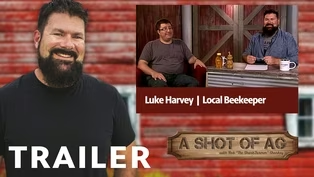
S02 E12: Luke Harvey | Local Beekeeper | Trailer
Preview: S2 Ep12 | 20s | Luke Harvey is a local beekeeper who loves to teach others about the importance of bees. (20s)
Providing Support for PBS.org
Learn Moreabout PBS online sponsorship
- News and Public Affairs

Top journalists deliver compelling original analysis of the hour's headlines.

- News and Public Affairs

FRONTLINE is investigative journalism that questions, explains and changes our world.












Support for PBS provided by:
A Shot of AG is a local public television program presented by WTVP