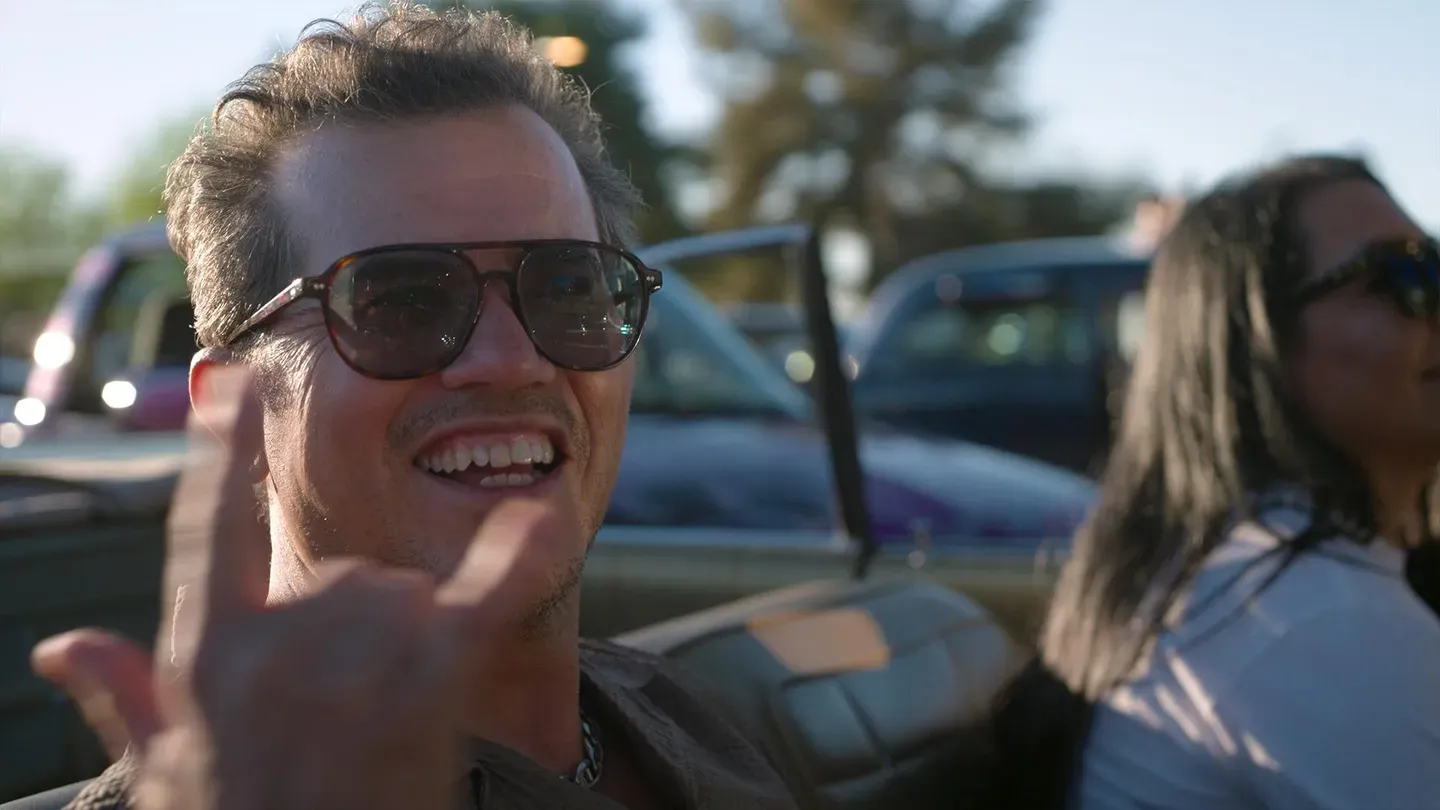
Leguizamo Does America
San Antonio
8/31/2026 | 44m 33sVideo has Closed Captions
John dives into San Antonio's Latino legacy amid statewide political tensions.
John dives into San Antonio's Latino legacy, celebrating its cultural richness and resilience amid statewide political tensions.
Problems playing video? | Closed Captioning Feedback
Problems playing video? | Closed Captioning Feedback
Leguizamo Does America is presented by your local public television station.
Leguizamo Does America
San Antonio
8/31/2026 | 44m 33sVideo has Closed Captions
John dives into San Antonio's Latino legacy, celebrating its cultural richness and resilience amid statewide political tensions.
Problems playing video? | Closed Captioning Feedback
Where to Watch Leguizamo Does America
Leguizamo Does America is available to stream on pbs.org and the PBS app.
[upbeat Latin music] - San Antonio, the birthplace of Tex-Mex cuisine.
You're welcome, world.
♪ ♪ And guess what?
It's also considered the cradle of Latin civil rights movements.
So I'm here at Mission San Jose.
It's a relic of Spain's 18th century colonial influence.
And over time, Indigenous communities blended with the Spanish to create a unique Texan identity.
San Antonio has a complicated history, though.
It was a Spanish territory, then part of Mexico, and then, finally, a thriving U.S.
city.
But with each change came shifts in the border.
And I don't have to tell you all the trouble that it's caused for us.
This is a town with unmistakable Latin roots.
Come on.
What's Tex without the Mex?
Today, Latinos are about 65% of San Antonio's population.
And I got to tell you, what was once a story of cultures fighting it out is now being reframed as a story of cultures coming together to make something better.
And this is a city full of food, music, food, art, and food.
Yo, I feel like it's almost time to get some food.
Yo, where's my queso, homies?
Yo, dawg, dawg.
I need my food now, not later.
No, I'm starving now.
[upbeat Latin music] ♪ ♪ We all remember the Alamo.
Or at least we remember "Remember the Alamo."
It's been mythologized as a symbol of Texas pride and the American rebel spirit.
But let's be honest, behind every myth, there are truths waiting to be uncovered.
But before we get to all that, let me drop some knowledge.
Long before the Battle of the Alamo, this area was part of New Spain, a territory that eventually spanned a huge portion of Southern and Western North America, from Florida to California.
As they expanded, the Spanish built missions to convert the Indigenous population to Catholicism, sometimes by force, and claimed them as subjects of the Crown.
And one of those missions built right here in 1718 was named San Antonio de Valero, and it later became known as, yep, you guessed it, the Alamo.
I'm meeting with poet laureate and native San Antonian, Carmen Tafolla to understand what really incited the Battle of the Alamo and unpack its lasting effect on the Latinx community here.
Hello, Carmen.
What a pleasure.
Nice to meet you.
I wanted to get to the root of our Latin origins in America.
And the Southwest is our biggest origin story.
- And San Antonio is a very special part of that story.
[acoustic guitar music] The 1600s, the Spaniards came to establish the missions, but this area was already inhabited.
- What were the Indigenous tribes that were here?
- Well, the Spaniards tried to erase a lot of those names, but they were basically Payaya peoples, what were later called Coahuilteca peoples.
- And it was "Taysha," the Caddo word for friend, that became "Tejas" in Spanish and later "Texas" in English.
It's like a game of colonizer telephone.
Spanish colonial rule ended in 1821 when Mexico won its independence.
To boost the population, the new Mexican government invited Americans to settle in Tejas.
But those settlers, known as Texians, refused to integrate or learn Spanish, and soon they outnumbered the locals.
So to assert authority, President Santa Anna restricted immigration to the region and sent in troops.
Hmm, sounds familiar.
- My great-great-grandmother's great-grandfather was one of those soldiers.
- Wow.
- My ancestors were involved in this.
Both sides.
- By 1836, Mexico was facing a full-on revolution.
To crush the revolt, Santa Anna led an army of thousands to San Antonio, where a small group of Texian defenders awaited reinforcements in the Alamo mission.
- The entire Mexican Army is coming.
This is serious.
- You better do something, 'cause that's a big-ass army.
[suspenseful music] [horse whinnies] On March 6, 1836, the Mexican Army attacked the Alamo, outnumbering the Texians 10 to 1, and all the revolutionaries were killed.
So weeks later, when Sam Houston secured Texian independence at the Battle of San Jacinto, "Remember the Alamo" was their rallying cry.
So an overreaching government done in by brave and independent rebels, AKA, the Texas origin story.
[record scratch] But is that the whole story?
- We hear about this noble cradle of liberty, that this was a fight for freedom and independence.
- Right, propaganda.
- It was the freedom to keep slaves.
Because the guys who came from Kentucky and Tennessee heard that Texas was a good place to go get a lot of land.
The thinking from the Deep South at that time was plantations.
- Right.
More.
- It was pre-Civil War.
The bigger your plot of land, the more slaves you can have, the more money you're going to make.
- But Mexico was anti-slavery.
- Mexico had outlawed slavery.
They had a Black president.
- Look at that.
So we were progressive.
That's right.
Mexico's second president was an Afro-mestizo man, Vicente Guerrero.
And in 1829, he abolished slavery, 34 years before the Emancipation Proclamation.
What is the damage, do you think, that happens when history is only told from one side?
- We do a disadvantage to everybody, because that's not real life, and it doesn't develop any maturity in us.
- After the revolution, anti-Mexican sentiment took hold and persisted as the Republic of Texas became the State of Texas in 1845 and into the 20th century.
And Carmen felt that discrimination firsthand growing up in the 1950s.
But she was a born renegade and wasn't gonna take it.
- I was a six-year-old kid.
I broke the law 20, 30 times a day easily, because it was against state law and school law to speak Spanish on school grounds.
- Wow.
- Kids were punished.
They were paddled.
Thick, wooden paddles.
- That's crazy.
- Outlawing Spanish and basically our culture as well went from 1917 to 1969, the year I graduated from high school.
- That's crazy.
That you weren't allowed to speak Spanish, which was the first language spoken in this whole country.
- Well, the first European language.
- First European language.
Thank you for correcting me on that.
Keep me honest.
I'm sorry.
I had to decolonize my mind.
Sometimes it's a little difficult.
- We have been treated like we're a foreign people, but we didn't cross the border.
The border crossed us-- several times.
- That's right.
That's right.
- In several countries.
- And you're still here.
- We're still here.
- I'm so glad you're still here.
History may be written by the victors, but there will always be people like Carmen who seek out and illuminate the full story.
- Okay, it's time for Part Two of my crash course on San Antonio.
And who better to be my guide than local politico, Joaquin Castro?
He's served this area for over two decades, first in the Texas legislature, then as a U.S.
Congressman since 2013.
Not to be confused with his identical twin brother, Julián, who was Mayor of San Antonio, Obama's HUD Secretary, and a 2020 presidential candidate.
Talk about a couple of overachievers.
Hola, Congressman.
- Hey, John, - How's it going?
How you doing?
What a pleasure.
- Good.
Welcome to San Antonio.
- So, Congressman, where exactly are we?
- Well, you're in the Market Square here.
It's like part of the center city, and it's one of the main places where a lot of Mexican-Americans would come fiesta.
[upbeat music] ♪ ♪ - There's Margarita.
- Margarita.
- I'm used to seeing the aguas frescas that they sell around here.
- Oh, yeah.
Market Square, or El Mercado, has been around since the 1800s.
Merchants would sell food, crafts, clothing, and more from their puestos in a lively, colorful, and musical atmosphere.
By the mid-1900s, as produce sellers outgrew the space and moved out, the market fell out of favor.
One restaurant owner, Pedro Cortez, fought like hell to save it.
And by 1976, the revitalized Market Square was as bouncing as ever.
And by the way, it's now the largest Mexican market in the country.
Joaquin grew up near here and came to this market a lot as a kid.
- The neighborhoods I grew up in were probably 95% or more Latino, mostly Mexican-American.
People were poor, but you would go inside those houses and there was so much hope and so much faith and so much life to them.
I just felt at home.
And I still represent a lot of the neighborhoods now.
- How did you become so political, man?
'Cause you've been of service.
Did you have a calling?
Were you summoned?
What makes you wake up every morning and fight?
- I learned from my parents, especially watching my mom trying to change the system.
She was a hell-raiser because her experience of watching my grandmother suffer through discrimination.
There were signs that hung in Texas-- "No dogs, Negroes, or Mexicans allowed."
- Crazy.
Rosie Castro, mom to Joaquin and Julián, became a member of La Raza Unida Party and one of the first Chicanas to run for city council, advocating for political representation and social justice.
Their father, Jesse Guzman, was also an activist.
It's no wonder they birthed the Democratic dynamic duo.
- My parents were together until I was eight.
But every day, day in and day out, I would literally fall asleep listening to them and their friends talk about the city council and the state legislature and what laws they were trying to change.
And I still believe it's true, even after all these years, that when government works right, it can actually create opportunities in people's lives.
- I love that.
Considering the history of Latinx activism in this town, it's easy to see how he maintains that drive for justice.
- San Antonio's been a cradle of Latino civil rights movements over the years.
There were so many individuals and organizations that really fought for civil rights.
MALDEF, the Mexican-American Legal Defense and Education Fund that started here.
HACU, Hispanic Association of Colleges and Universities.
- Incredible, incredible.
And let's not forget Emma Tenayuca, who led the Pecan Shellers' Strike, winning higher wages and better working conditions for Mexican-Americans.
Not to mention Rebecca Flores, Mario Salas, Gloria Rodriguez, Willie Velasquez, all of them activists in the fight for Latinx rights.
Just being here is getting me revved up to keep fighting the good fight.
But first, I need a little fuel.
- I'm going to take you to this place that I love coming to, Mi Tierra.
I was dying to get, like, their cheese enchiladas when I would come home from school.
- That sounds good.
What kind of cheese?
- Cheddar.
- Oh, cheddar.
[upbeat Latin music] - Hi, how are you?
Welcome to Mi Tierra.
Cariño.
- Good to see you.
- Good to see you again.
- Cariño.
That's a beautiful name.
- Her family's been in this business for 80 years.
I think this is 80 years old?
- 80-plus years.
So we've been here since 1941.
My grandfather was from Guadalajara.
He came as a young man.
And he worked for his aunt and uncle's butcher shop.
He was delivering meat one day to this restaurant, and the owner of the restaurant was just kind of fed up with the business.
And he threw the keys and said, you want to buy this place for 150 bucks?
So he actually borrowed the money, and he opened Mi Tierra.
- It's massive.
Pedro Cortez and his wife, Cruz, turned their little three-table café into a Tex-Mex landmark.
Remember when I said one guy hustled to save Market Square?
Well, this is the guy.
In 1961, when he heard the city planned to knock down the market for new development, Don Pedro bought the entire business block and spent years fighting for the revitalization that would preserve El Mercado and Mi Tierra for generations to come.
With five restaurants, the Cortez family are bona fide Tex-Mex legends.
And I'm sure there was a large Mexican-American community here that wanted their cultural, you know, foods and things that gave them a little-- - Made them feel like home.
- Yeah, yeah.
- My dad always said growing up, everybody wants to be Mexican, so be proud of your culture.
We always have a party.
- I want to be Mexican.
How do I do that?
- Well, you have to eat.
You have to celebrate.
You have to have a margarita with us.
- I can do that.
So beautifully colorful and festive.
- We always talk about Tex-Mex cuisine, and for a long time people were like, well, it's not Mexican food.
And we were like, absolutely not.
It's Texas and Mexico.
- Yeah, I hate to break it to you, but fajitas, nachos, and chili con carne are not dishes you're going to find in Mexico.
All that flour, cheese, and beef are undeniably American.
Tex-Mex mixes the Spanish and Indigenous influences of traditional Mexican cooking with the Texan cattle rancher style of grilling, stewing, and barbecuing beef, beef, and more beef.
- Yeah, yeah.
- This is guiso.
And guisar is to stew.
And so you take these tough little cuts of meat, you know, all the scraps.
And then you see from here where you've got a predominantly chili-based sauce.
And it's not spicy, just super flavorful.
And then we have the Tex-Mex version.
They moved away from the chile.
So there's a little bit of cumin, a little bit of oregano, and it's beef.
- Was that done for the gringos, for the Americans to lighten it up a little bit?
- Yes.
So that was the evolution of Tex-Mex from here to here.
[upbeat Latin music] - Eso es exquisito.
That is unbelievable.
I mean, that sauce.
- It's a staple.
- It's amazing.
I mean, that was incredible.
Mmm.
- This is my favorite.
- They're both delicious.
So different.
Congressman, please help yourself.
♪ ♪ - Save some room for the fajitas.
- Oh, we got fajitas more coming?
- I know.
They're coming.
- I'm gonna need some alcohol.
- I know.
They're going to bring margaritas with the fajitas.
- Oh, yeah, bring those margaritas out.
Listen, I know Tex-Mex gets a bad rap sometimes, but its history is our history and worth honoring.
Besides, I can't lie to you.
It's freaking delicious.
[fajitas sizzling] Oh, I hear the sizzler.
Wow.
Ooh.
That's a good one.
- Beautiful.
- Wait, wait, wait.
Is it true-- I'm not calling you out or anything.
Your family invented this?
- Yeah.
My dad, he brought these sizzling platters from Mexico.
He had them made.
He wanted something that was going to make a splash and that was unique at the table that was just kind of a party.
And everybody loved them.
Like, people would come from all over and want to order these.
- And what are the ingredients?
- It's very simple.
So skirt steak.
We use outside skirt, because it's more tender.
And then we marinate it for 24 hours.
[upbeat Latin music] ♪ ♪ - Mmm.
This is amazing.
I mean, this food is so incredible.
I mean, I can't tell the home viewers how delicious this is.
You don't have this kind of Mexican food in New York.
Now we have a larger Mexican population, so we're starting to get good food, but not as good.
I mean, this is unbelievable.
- Well, we've been practicing for over 80 years, so-- [laughs] - I feel at home here-- - Stay a while.
- Cheers to your family, to Castros y Mi Tierra.
- Texas.
There's enough boots, trucks, and whiskey here to fill a million country albums.
But it might surprise you to learn that the most popular genre is actually Latin.
Damn straight.
Texans even have their own style of Latin music called Tejano.
And San Antonio is at the center of it all.
- [singing in Spanish] - I'm at UT San Antonio to meet Tejano legend Shelly Lares, whose career has spanned more than four decades and 25 albums.
- [singing in Spanish] - She's an artist in residence here, passing the Tejano torch to the next generation.
- [singing in Spanish] [upbeat Tejano music playing] ♪ ♪ This is where you throw a grito.
[cheering] [applause] [music concludes] - That's so great to see campuses now having some form of anything that has to do with Latin culture, because it was so absent when I was growing up.
- Absolutely.
And that's what I'm trying to do here for Tejano music.
- What is Tejano music?
Because I'm from the East Coast.
I have no idea.
I mean, I've heard it, but I don't know really.
- I guarantee you that by the time we're done, you're going to be, like, a huge Tejano fan.
Well, definitely-- - That'd be great.
- Definitely is a culture.
♪ ♪ Tejanos are primarily Mexican Indigenous people that live in Texas.
So there's a whole melting pot.
And I always say this.
When it comes to Tejano music in general, it's--we're extremely versatile.
- Meaning?
- Meaning musically, we've implemented anything from conjunto, to mariachi, to salsa, to jazz, to reggaeton, to merengue to, I mean, rock.
- So it just evolves and adapts.
It's very Darwinian.
Darwinian music genre.
- Exactly.
And as people would come to Texas, of course, and then of course, we had the Germans, we got the German polka sound as well.
- Yeah, ever wonder why you hear the accordion and tuba in so much Mexican music?
German immigration, baby.
And early Tejano mixed those polka rhythms with Mexican corridos and rancheras, the working class ballads and blues.
The mother of Tejano, Lydia Mendoza, is the one who put the genre on the map in the 1930s.
But modern Tejano found its groove once musicians incorporated the electric sounds of rock and roll.
And then it exploded in 1992 with the arrival of one of the most influential Latin artists of all time, the incomparable queen of Tejano herself, Selena, who, by the way, was Shelly's best friend.
- See, at this time, Tejano was still very small.
But in the early '90s, I think Selena and I started kind of bringing in that younger generation, 17, 18 years old, to start listening.
- I love it.
- So that's when things started to really emerge and things started to really build for Tejano music.
The numbers were picking up.
We went from AM to FM.
- Nice.
- We were just implementing all of our influences musically, if that makes any sense.
- I think that goes a lot in Latin musicians and artists that I've noticed.
- Right.
- I mean, obviously I grew up in the States, so it's very genre specific because of the industry.
But when you go to Latin America, it's genreless.
- Right.
It is.
- Whatever piece of music they grab, they meld-- - Absolutely.
- They blend together, and it sounds like a whole new sound.
- Absolutely.
I had never been around another genre other than Tejano where the musicians are so versatile.
They can play any genre-- any genre and good.
- Shelly grew up in San Antonio.
At age 10, she was asked to join The Hot Tamales as the lead singer.
Age 10.
And the band became a local sensation before Shelly struck out on her own a few years later.
You were a prodigy.
- Now that I look at it, at 52 years old, my parents really had that confidence.
- They knew what talent was.
- So yeah, I signed my first record contract, and eventually I had my first number-one hit in 1994.
It was a song called "Soy Tu Amor."
It was a cumbia.
It all started with a reggae baseline.
[imitating bass] - Oh, nice.
[Shelly Lares' "Soy Tu Amor"] - That's incredible.
- They loved it.
They still do.
[cheering] Whoo!
[singing in Spanish] Come on.
- Yo, I can see why "Soy Tu Amor" was the most played Latin track of 1994.
40 years and 25 albums later, Shelly has earned a spot in the Tejano Roots Hall of Fame, multiple Tejano Music Awards and three Grammy nominations.
- I did amazing things throughout my career.
I mean, it's what I did since I was 10 years old.
- That's why they call you Little Dynamite.
- Little Miss Dynamite.
Little Miss Dynamite.
- You are Little Miss Dynamite.
- Little Miss Dynamite.
- So, Little Miss Dynamite, how did you end up in this university?
- Man, it was not part of my retirement, if you will.
- [laughs] Tejano music is a vibrant and vital part of our cultural landscape, and preserving it is crucial.
UTSA students are so lucky to learn from one of the best, and so am I.
- Well, this is it.
This is the class.
- Oh, wow.
- Class, I want to introduce you to my friend John.
Make him feel welcome.
Have a seat and become one of the students.
- If you don't mind.
I'm your oldest student in the history of the whole college.
- Tejano music is really difficult to just really pinpoint in one thing.
Okay?
Because we are many things.
I think it's better that I show y'all musically, so you kind of understand and get a better feel of what it is.
It's a fan favorite, and I'm gonna perform it for y'all.
It's called "Ganas A Besarte."
[cheers and applause] I'll tell you what, John, come and sing it with me.
- Oh, God.
- Yes.
Okay, all you're going to sing is-- ay amor, ay amor.
- Ay amor, ay amor.
- [singing in Spanish] - Music communicates our culture in ways nothing else can, evolving as each generation incorporates new sounds, styles, and voices.
And I can't wait to hear how these students interpret Shelly's teaching.
Thank you, thank you.
I might be tripping, but do I smell a Latin Grammy in my future?
[music concludes] [cheers and applause] [soft dramatic Latin music] ♪ ♪ - San Antonio's Westside has been the heart of the Latino community going back to the days when it was the only place Mexican-Americans were allowed to live, thanks to redlining and segregation.
Almost a century later, and this community is still fighting to be recognized for its vibrant contribution to this city.
Hola.
I'm here to meet a woman who's been defending her hood since the '80s-- Graciela Sanchez, director of the Esperanza Peace and Justice Center.
What a beautiful spot.
- Yeah, well, it's called the Rinconcito de Esperanza, which is a project of the larger Esperanza Peace and Justice Center.
It's the neighborhood I grew up in.
[upbeat Latin music] ♪ ♪ I went to the public schools here, and so did my mom, who graduated in '42.
But all her life, she said they always talked negatively about the Westside.
And it's like, why?
It's like, because we're Mexican.
As I saw my whole neighborhood get demolished in the 1970s.
- To urban renewal?
- Urban renewal.
Exactly.
- Which is the "key word" of the destruction of people of color's neighborhoods.
- And I was 10, 11, 12.
There was a yearning that I've had since then you know, to find that neighborhood that I once lost.
- After graduating from Yale, Graciela returned home to the Westside to invest all those Ivy League smarts back into her barrio.
[rooster crows] Founded in 1987, Esperanza promotes social justice and cultural understanding through arts and education programs.
We're talking historic preservation, film festivals, public spaces, art installations, and concerts.
Anything they can do to bring people together to share, listen, and advocate for their community and other marginalized groups.
Why all this love to stay in this neighborhood and reclaim the neighborhood?
- The racism of this country says that if you're brown, if you're poor, if you're working class, if you're dark skinned, that's where all the trouble is.
And that's just a stereotype.
And we're trying to break those stereotypes and look for the tesoros.
- Looking for the treasures.
Yeah, yeah.
Esperanza has tirelessly protected the rights of Westside residents.
And I got to say, they're pretty badass.
When outside buyers started snatching up property to demolish and redevelop, Esperanza beat them at their own game.
They bought up buildings too, ensuring permanent low-income housing and keeping tenants from being pushed out.
And in 2024, they received a federal grant of over $1 million to keep going.
In your face, gentrifiers.
- Do you want to join me at the Casa de Cuentos?
It's where we're doing the oral histories of our community members.
- Please, I'd love to hear it.
- Sure.
- Quiero todos los cuentos.
- Todos los cuentos.
- Esperanza has championed voter rights, women's rights, and, in particular, LGBTQ rights.
But in challenging the status quo, they have pissed off a lot of powerful people.
So you've done amazing work, but I'm sure you had some challenges come up.
- One of the hardest parts of the work that we've done has been being out about being queer, about being an LGBT organizer.
And I think as we were receiving arts funding from the city and ranking first all the time because they liked what we were doing, we had folks from the conservative side of the world just kind of targeting our work within the LGBT community.
- Trying to shut it down.
- Right.
- So without warning, in 1997, San Antonio Mayor Howard Peak and the city council stripped all funding from Esperanza for being anti-family values.
"The group flaunts what it does.
"It is an in-your-face organization.
They are doing this to themselves."
- Yeah.
- That's what the mayor said.
- That's what the mayor said.
And he was the mastermind behind defunding us.
And he did it all in secret.
We have, like, four or five of these.
A lot of newspaper articles.
- Suddenly, the organization itself was the oppressed party in need of support.
So they did what they do best, organize.
It started with petitions, protests, and outreach to city officials, but soon escalated.
- Esperanza had to fight back, and we filed a federal lawsuit.
And it took four or five years.
- Oof.
- But we won at the end, because we did a campaign as well.
Arte es vida.
Art is life.
- Right.
- Todos somos Esperanza.
We are all hope.
We are all Esperanza.
- In 2001, a federal judge ruled in favor of Esperanza and reinstated their funding.
Now that's what's up.
Back from the brink of extinction and fired up, they channeled that money into programs like the groundbreaking MujerArtes.
Through ceramic art classes, MujerArtes helps the marginalized women of the Westside express themselves, connect with their heritage, and build community.
Graciela invited me as an honorary artista for the day to see what the collective is all about.
- Adriana is going to be your teacher.
- We are so pleased to have you here, this humble place.
- I'll see you.
All right.
Okay.
- I hope so.
- We have been here 29 years almost.
Every piece is made with love and care and also with a little background story.
- And so everybody here wanted to be artists?
Is that the thing?
Everybody wanted to express themselves?
- That's the key.
Everybody wants and has the right to express their feelings through the art-- - Mm-hmm.
- Through the clay.
But the beauty of working with clay is that you use your hands, and then you don't know what is going to happen.
- It's like acting.
Acting is the same way.
The thrill for me for acting is I don't know what I'm going to do.
But I know something's going to happen.
And it's always something better than what I planned.
[gentle music] ♪ ♪ What does it mean for you, MujerArtes?
- MujerArtes is freedom.
I feel like I have the freedom to express myself through the art.
So to me, is la libertad.
- Liberty.
It's freedom.
Beautiful.
- It's freedom.
- Thank you for sharing with me.
- Thank you.
- And trust me.
Arte es vida.
Arte es libertad.
Art is life.
Art is freedom.
[upbeat Latin music] - Ready for some culinary time travel?
That's how chefs Rico Torres and Diego Galicia describe their food at Mixtli, a restaurant that's forging the future of Mexican cuisine by mining the past-- 3,000 years of it.
Yo, where's my DeLorean?
[engine revving] [tires squeal] Hey, how's it going?
What's up?
- Hey, what's up, John.
Rico.
How you doing?
- Welcome.
Diego.
How are you?
- This is awesome, man.
What a beautiful, beautiful space.
- Welcome to Mixtli.
"Mixtli" means cloud in Nahuatl, which is a language spoken throughout the Aztec empire.
- Beautiful, beautiful.
Love that.
- In the way that clouds travel, our menus are traveling.
State to state, region to region, sometimes back in time.
- I think Latin food is very important to the world, especially Mexican food is the basis of all great cuisines.
Because without Mexican people inventing tomato sauce, you wouldn't have Indian food, you would not have Thai food, you would not have Italian food.
- Mexico is an agricultural cradle to the world.
- Yes.
I believe that.
- The potato changed the ecology, the economy of Ireland.
The beautifully hued chorizos that you see in Spain wouldn't have existed without the chilies from Mexico.
- Oh, I didn't know that.
- And just vanilla itself.
You hear French vanilla all the time.
French vanilla.
It's from tabasco.
It's from Mexico.
It's a little orchid that's native to that part of Mexico.
- You know, this is why I'm so excited to meet you guys, because this is my huge belief that, you know, Latin food is the center of all cuisine.
- We're about 200 miles away from the border here, and so the menu focuses on the histories of Mexico.
- We tell the stories of immigration to Mexico.
Immigrants from Japan and from China, from all over the world that came to live in the country, and now they're Mexican themselves.
We're talking about 1800s, early 1900s.
So we go back in time.
We're time travelers.
- That's a dope concept, to use food as a time travel machine.
Yo, I thought I knew my stuff, but these guys are no joke, and neither is their restaurant.
Mixtli is a foodie magnet, consistently appearing on best-of lists and garnering three James Beard Award nominations.
Nice to see an award show that embraces Latinos for a change.
Hollywood, you listening?
You taking me to pre-Colombian times, or right before the conquest times?
- Right before the conquest.
- Ooh.
When it was our empires ran everything.
- That's right.
So we're going to focus on blue corn.
And blue corn, as you know, the superfood of the Aztec and the Maya world.
- This is the way that civilizations sustain themselves for thousands of years with very little actual animal protein.
- What was fascinating is that they didn't believe that our civilizations could survive because it wasn't a wheat-based culture.
But we had our own wheat, which was corn.
- Correct.
So we're going to make a tlacoyo.
- What does that, tlacoyo, mean?
- Tlacoyo is the Aztec word for, like, an empanada, a vehicle for something to go on made of blue corn and beans.
- The first time that we see anything about this in history books is when the Spaniards are touring the tianguis with the Aztecs, the Aztecs markets.
Go ahead and squish it to a nice little tortilla.
- Not too hard?
- A little bit hard, yeah.
There we go.
That ought to do it.
This is the ultimate travel snack.
So when the Spanish write about it, they write about how they were able to take these with them, fill them up with some sort of ingredient.
In this case, we're going to do beans.
And then take them with them and they'll carry it for days.
If you want to spread a little bit of these black beans.
- Oh, that's the black beans.
- Yeah, these are black beans.
- 'Cause beans are also Indigenous to the Americas.
We gave the world beans too.
They didn't have no beans.
- Not too hard and not too far out.
That ought to do it, John.
- Sounds like my sex life.
- There you go.
[laughter] - Whoops.
- That's perfect.
- I hope I don't get canceled.
[laughs] By my wife, anyway.
Honey, you know I love you.
- So pretty close.
- This is what we're going for.
- Oh, yeah, it looks exactly.
- [laughs] - It's like a trapezoid, and mine's a rectangle.
- Right, but, you know, these things are fixable.
The more important an ingredient is to the culture, the less we pay attention to it.
In the mid-18th century, after Mexico had gained its independence, you see this double standard where people who eat corn and beans and chilies are very much looked down upon because that's the food of the poor.
- Right.
- It's not French cuisine.
It's not what you see in Europe.
It's not wheat.
And so the double standard was that behind closed doors, people were still eating this at home.
Later on, it becomes the derogatory term "beaners" for people like us.
- Which is so crazy, because beans saved the world, potatoes saved the Irish famine.
Corn feeds all the livestock and all the people and all of America.
[upbeat Latin music] You know, I'm starting to see what you mean by you're storytelling through food.
You really transported me.
You can smell that corn.
- And it's just-- it tastes like Mexico.
It's the charred corn, the beans.
It's really just-- - Incredible.
- Blue corn takes so well to the char, too, so don't be afraid.
If you're cooking at home, burn it a little bit.
- It's got a little spice to it, too.
Yummy, man.
I didn't expect all that.
- And the beans, avocado leaf, epazote.
The thing is that, here in the States, when they open up a Mexican restaurant, they forget the main thing, which is Mexico.
And it's been our mission to rescue, preserve, and promote Mexican food.
Because I think in the U.S., it's been-- - Bastardized.
- Pretty much.
Yeah, it's been abused, like a lot of things.
- But it's making a comeback.
That's what we're saying.
You know, Tex-Mex had gone through that evolution.
And it's very important for Mexico and the United States.
It's one of the first true gastronomies of this area.
I mean, it started here in San Antonio.
- You think it's one of the first American cuisines?
- It is.
- That's a big claim.
I like this guy.
- And so now there's this new movement in Tex-Mex where people in Texas want real Mexican food.
[upbeat music] - Guys, thank you for hosting my legends dinner tonight, because it's going to be bomb.
- Oh, it's our pleasure.
Absolutely.
- I don't want to give away too much.
Got something really special.
- That sounds incredible, man.
I can't wait.
Thank you so much.
- Thank you.
- I want to get ready.
♪ ♪ [twangy blues music] ♪ ♪ - San Antonio is a great example of a community that celebrates its Latinidad.
But let's not forget, they're still part of Texas with a conservative state government that is actively hostile toward Latin immigrants.
I've invited some of the city's brightest minds to dinner to discuss life in the Lone Star State and how Latinos can continue to thrive in the face of challenges.
Mayor Ron Nirenberg is serving his fourth term as leader of San Antonio.
I know he's not Latino, but he gets a pass for being an ally and for being smart enough to marry a powerhouse Latina, First Lady Erika Prosper.
The daughter of migrant farmworkers, she's a champion for local business and the Latinx community.
I've also invited Congressman Joaquin Castro and his mom, local civil rights legend Rosie Castro.
Between the conversation and the feast that the guys at Mixtli are cooking up for us, I can't wait to dig in.
This feels high end like "The Menu" movie.
I don't know if you saw my movie.
This will have a different outcome, though.
- You're not gonna get murdered.
We promise.
- It's so good to have you guys here, 'cause I find this city really important to me.
It was where a lot of resistance came against segregation.
So I want to get, like, your opinions about what's going on with the Latin people here in San Antonio.
What's going on in Texas?
- Well, there's a lot happening in San Antonio.
I think we believe that San Antonio is what most of the nation will one day look like.
Maybe not as many Latinos in one city.
Now, having said that, it's a sad day in Texas in a lot of ways, too, because of the politics of Texas.
But, of course, that's something that many people are working towards changing.
[pensive music] - Y'all, Texas has been in the news a lot in the last few years for its severe approach to immigration.
But the low point came in November 2023, when the Texas legislature passed Senate Bill 4, one of the most extreme anti-immigrant laws in history, which allows police to detain and arrest anyone they suspect of being here illegally.
In March of 2024, the Supreme Court upheld the law, but advocacy groups are continuing to fight it.
- We are facing an invasion on our Southern border.
- Rapists, murderers, even terrorists.
- They use boogeymen.
The immigrant is a boogeyman.
Those people that are poor, boogeyman.
I mean, this government just really sets out this lie about many of our people.
And unfortunately, they're doing that to an audience that believes them.
- Right.
- And you're attacking the myth of Texas.
When you do make boogeymens, then what you're doing is, you're not just attacking my livelihood or my way of life.
You're attacking us as a collective.
And so that has been the strategy is to somehow to think that we're diluting the Texas, you know, mainstay.
- Bloodline?
- Yeah.
- Joaquin, let me ask you.
And this goes to everybody.
Jump in whenever.
How is it that some immigrant Latinos are against the new immigrants coming over the border?
Because I feel like, you know, there's a lot of Latinos turning Republican.
- I think part of it is that there has been an effort over the years to drive a divide or a wedge between Mexican-Americans and Latinos that had been there for generations and new immigrants.
And also, I think for a lot of Latinos, especially when you go to places in the Rio Grande Valley in South Texas, they have felt left out over the years.
And they felt left out even when Democrats were in control of the state in the '50s and '60s and '70s and '80s.
And so when you have somebody like Donald Trump on the scene who, at least in a lot of people's minds, represents an affront to the establishment, so to speak.
- A disruptor.
Yeah.
- A disruptor.
I think some people are drawn to that.
- I also think, to a certain degree, it's predicated on making us as Latinos believe that the pie is small.
So all of us should be fighting for this small pie.
And people don't realize we're 40% of Texas now.
We're actually the majority now.
But they still work under the articulation that somehow we're the minority, and therefore the pie we have to fight for is this little.
The pie is actually ours.
We should be thinking about how they're actually imposing on our pie.
- Right.
Right.
- I think that would also bring about a different dynamic.
- And it's a scarcity mindset.
We forget ourselves in the context.
We can grow the pie together.
We have opportunity together.
And when we recognize that the values of this country are, you know, embracing people from all over the planet, that's why this country became exceptional is because this is a place where-- - Absolutely.
- All cultures come together.
- Oh, wow.
What do we have here?
- Wow, yes.
This looks delicious.
- This is amazing.
- Starting off with our first course, the okonomiyaki.
Okonomiyaki, broken down, basically, okonomi meaning whatever you like, yaki meaning grilled.
In this case, cabbages, carrots, squashes, pickled ginger, and then bonito flakes to finish it off.
- Beautiful, beautiful.
You guys hungry?
- Oh, yeah.
- Yeah.
- Yes.
- I'm glad because it's six courses, man.
Wow.
- My goodness.
- We should have a fireman here.
[laughter] - So you eat like this every day, John?
- No.
I wouldn't have my fighting weight if that was the case, but I do like to eat.
[laughter] What America feels like now, we're in such a divisive country.
I mean, there were always a lot of issues in America, but now this public division, what do you think we're missing?
- Yeah, I mean, we're certainly more polarized than we have ever been in a long time.
I think the isolation that has been apparent through the social media revolution and then the pandemic on top of that has really strained people.
And a lot of our optimism has to come from the fact that nothing is permanent.
It's good to be here, you know, watching the state politic.
But it is challenging.
The hope is that they don't break stuff before they leave.
- Right, right.
- With the way things have been redistricted, you know, some of the regressive voter laws.
They've put in laws to make it almost impossible for us to do things to-- - Get new voters.
Yeah, to register people.
- Exactly.
- I know that right now, activism is seen as a-- like, a horrible word some places in the world because they think, again, it brings change, it brings all these things.
But the fact of the matter is that because of our history of activism in San Antonio since the early beginnings, that's one of the reasons that Rosie's at this table, is because she was one of the OGs that said the status quo isn't working.
We need to change it.
- Yeah.
[upbeat music] All right.
Buen provecho, everybody.
That's delicious.
Here we go.
Here we go.
Another dish.
That sauce is beautiful.
- Gorgeous.
- Mmm.
- I'm not adventurous when it comes to food, but this is good.
[laughs] - Mmm.
Oh, my God.
This is incredible.
- It really is.
- Like the sweet with the savory.
- Yes.
- Oh, wow.
That looks amazing.
It's that smoky flavor.
Wow.
Oh, wow.
That's amazing.
- This looks so beautiful.
- Mmm.
- I don't want to talk anymore.
[laughter] The meal was quality, and you were quality.
Here's to San Antonio.
- Thank you.
- It's been an honor to have you in our city.
- Absolutely.
- Thank you, man.
- You're welcome back.
[mellow music] ♪ ♪ - So there you have it.
Whether they're creating a new cuisine or honoring an ancient one, making history or correcting it, fighting to preserve our past or ensuring our future, the Latinos here in San Antonio are a prime example of what it means to own your story.
So yeah, remember the Alamo, but remember our heroes too, got it?
Because this city's got plenty of them.
[bright Latin music] ♪ ♪ - [singing in Spanish] ♪ ♪












Support for PBS provided by:
Leguizamo Does America is presented by your local public television station.