Secrets of the Royal Palaces
Sandringham
Season 3 Episode 304 | 43m 40sVideo has Closed Captions
Britain's royal palaces are rich in untold history, incredible artworks, and many tales.
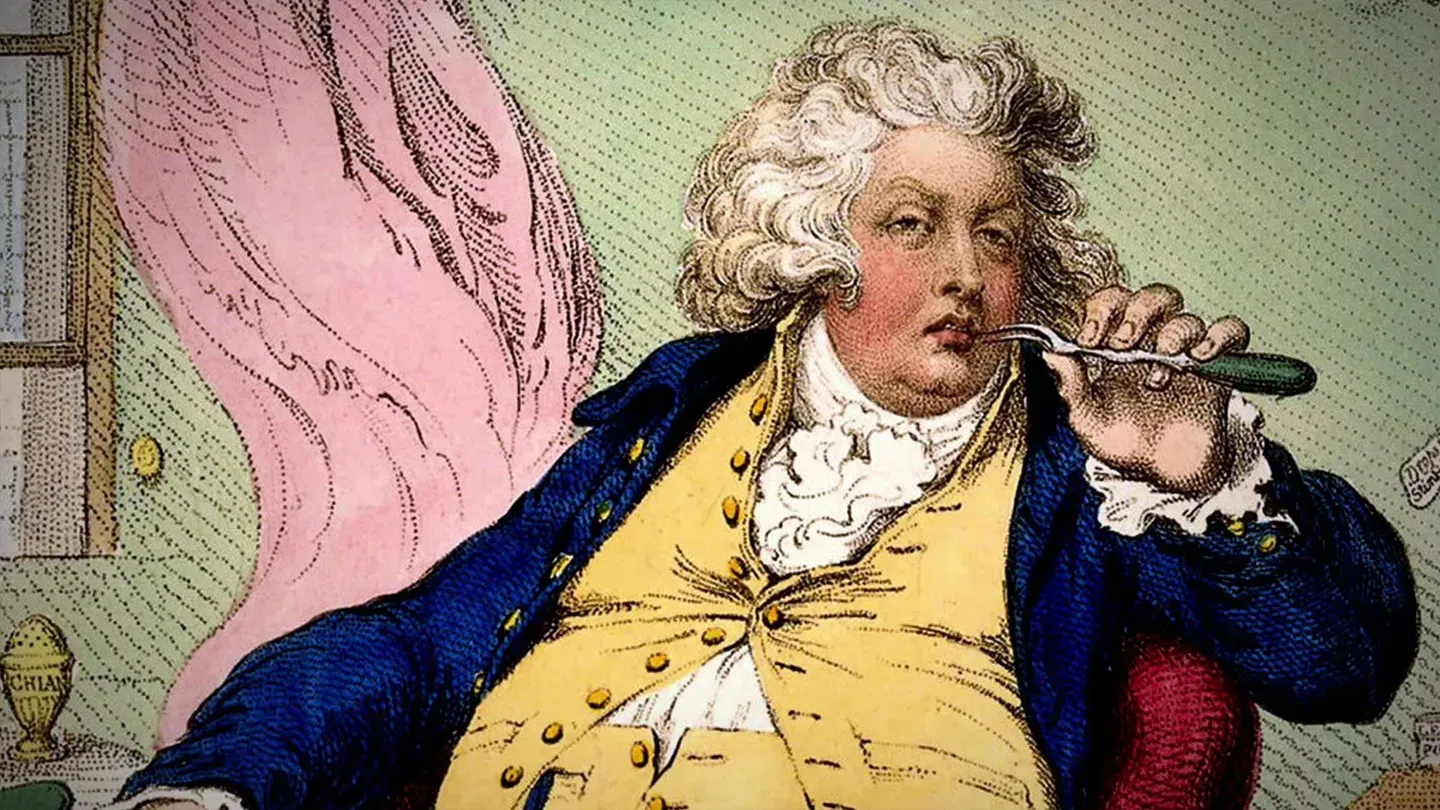
A network of tunnels is built by George IV underneath Brighton's Royal Pavilion to shield his appearance from cruel critics. Plus, how the Diana, Princess of Wales statue in Kensington Palace demonstrates the fractured relationship of her two sons.
Problems playing video? | Closed Captioning Feedback
Problems playing video? | Closed Captioning Feedback
Secrets of the Royal Palaces is presented by your local public television station.
Distributed nationally by American Public Television
Secrets of the Royal Palaces
Sandringham
Season 3 Episode 304 | 43m 40sVideo has Closed Captions
A network of tunnels is built by George IV underneath Brighton's Royal Pavilion to shield his appearance from cruel critics. Plus, how the Diana, Princess of Wales statue in Kensington Palace demonstrates the fractured relationship of her two sons.
Problems playing video? | Closed Captioning Feedback
Where to Watch Secrets of the Royal Palaces
Secrets of the Royal Palaces is available to stream on pbs.org and the PBS app.
Providing Support for PBS.org
Learn Moreabout PBS online sponsorship(narrator) At the heart of the British establishment are the royal palaces.
Imposing... (Dr. Ramirez) They encapsulate the very finest architecture, art, design.
(narrator) Lavish... (Professor Whitelock) It was deliberately grand, this most ostentatious statement of absolute power.
(narrator) ...and brimming with hidden gems.
(Lisa) You always feel like there's something new to discover.
(narrator) They're the backdrop to every royal event.
(Susie) Every celebration, birth, death, crisis for a thousand years.
(narrator) In this all new Secrets of the Royal Palaces, we gain exclusive access to these illustrious buildings and uncover their private parts... (Dr. Foyle) The regal bog, that would be used by Queen Victoria herself.
(narrator) ...reveal the extraordinary royal art hidden within... (Dr. Ramirez) The Queen's stamp collection is worth 100 million pounds.
Not a bad return on loads of pictures of yourself really, is it?
(narrator) ...dig up the royal palaces' dark history... (Professor Williams) George builds secret tunnels so no one could ever see him.
(narrator) ...and share fresh revelations about the royal dramas that are gripping the nation.
(Colin) Not a soul got anywhere near that island.
I loved it a bit.
(narrator) This is the Secrets of the Royal Palaces.
(dramatic music) (peppy music) In this episode, we discover the astonishing story behind Prince Charles's crown.
(Emily) I'd love to ask Charles now, does he know that there was a ping-pong ball on his head?
(narrator) Uncover how Sandringham saved the royal family's reputation.
(Lisa) Bertie, as he was known, "Dirty Bertie," or indeed, "Edward the Caresser," really ought to have a respectable home.
(narrator) Prince William and Kate depart Kensington Palace on the Royal Train into a controversial storm.
(Julie) Cases are rising, job losses are huge, and yet you have this royal couple using taxpayer money to ride in a luxurious train.
We reveal the mysteries behind one of the most expensive pieces of art in the royal collection.
Today's millionaires might spend a fortune on a fast car or a boat or a plane.
Henry was spending the equivalent on these tapestries.
(narrator) And we unearth the truth behind King George's secret tunnels.
(Professor Williams) George's wild, debauched life caught up with him.
He was large and he couldn't walk.
He was using a wheelchair, and these tunnels were built to hide himself away.
♪ (narrator) Britain's palaces play home to the royal family, but they are also the staging ground for much of this nation's pomp and ceremony.
(Edwina) Much of what happens in the palaces is ceremonial.
And yet ceremony matters.
It's an affirmation, it's a recognition.
(narrator) On the surface, royal ceremonies always appear to run like clockwork, but behind the scenes, the occasional catastrophe can occur.
(regal music) In July 1969, a 20-year-old Prince Charles was preparing for his investiture as the Prince of Wales, Britain's heir to the throne.
The ceremony symbolized Prince Charles as an adult, formally accepting his title and future responsibilities.
(Emily) His investiture in Wales as Prince of Wales was momentous really, because it was his first big royal gig.
So very important day, and he was on public show really for the first time.
He had to get it right.
(narrator) Held at Caernarfon Castle, since the investiture of the future George V in 1911, the event would see Prince Charles receive a type of crown called a coronet.
Prince Charles's great uncle Edward VIII took the previous coronet to France when he abdicated, so Charles needed a new one.
Aesthetics really matters to Charles, and he wanted a modern coronet for a modern man, for someone who had hair and also had quite sticky-out ears.
(narrator) Traditionally, a coronet was always made from solid gold, but the country was in recession and unemployment was high.
1960s Britain was paralyzed by strikes, balance of payments crises, and you know, there wasn't a lot of public money to spend on lavish events.
(narrator) With only five months to go before the ceremony, the famous goldsmith Louis Osman had come up with a bold and ambitious design for the new coronet.
But with the government refusing to pay for a solid gold crown, Louis Osman reached out to a chemical engineer, David Mason.
(David) When he first proposed the possibility of making this for Prince Charles, it didn't really sink in.
You know, I just thought, "We'll have a go at it."
(narrator) David was experimenting with a technique for creating complex shapes in metal.
Louis Osman formed his designing wax.
The wax model was used to make the resin mold, which David filled with gold using his new system.
(David) And after three-and-a-half days, we took the mold off and here inside we had the perfect crown.
(narrator) With a slender coronet successfully made and Charles's big day approaching, David took it to Goldsmiths' Hall to be hallmarked.
(David) I put it into a cardboard box and put it in the back of my minivan, which now seems ridiculous for something of this value.
The pressure was on in terms of time, and I'd beaten it off up to Goldsmiths' Hall.
(narrator) But the first tap of the hallmarker's hammer led to disaster.
Before I could get to the guy that was doing the hallmarking, before I could get to him, he put the first tap in, more than a strong tap, and the bits shot everywhere.
It was unbelievable.
(narrator) Prince Charles's investiture was only a few weeks away, and suddenly there was no coronet.
(dramatic music) Many of Britain's beautiful royal palaces feature as backdrops to iconic images of the royal family.
Whether it's Charles and Diana kissing on the balcony of Buckingham Palace, or the Queen and Prince Philip relaxing inside Balmoral, being a royal means life in the public eye.
(Richard) There is this relationship between the press and the royal family, which has existed for a long time.
If anything, it's about being visible, it's about being seen, and that means being photographed, being filmed.
(narrator) And while millions of news stories are published about the royal family each year, every now and then a photograph is taken which tells more than words ever could.
♪ There aren't many photos that you can say are genuinely iconic, but I think you can say that about this photo.
(narrator) Diana at the Taj Mahal.
(Daisy) It just is a photograph that everyone remembers.
(narrator) But how did it come out, and what are the secrets behind this image?
In 1992, a seemingly innocent photograph highlighted a marriage that was irreparably broken.
The now infamous picture was snapped by the then-royal photographer for the Daily Mirror, Kent Gavin.
(Kent) I would think I've taken over 2, maybe 2 million frames of the royal family over the years.
(narrator) And what many people don't know is this was not the first time a royal had been photographed in exactly the same spot at the Taj Mahal.
12 years earlier, as Charles and Diana's relationship was starting to gather pace, the Prince of Wales visited India and Kent took an almost identical image.
(Kent) In 1980, I was sent to cover the Prince of Wales' trip to India.
It was a year before the wedding.
He agreed to visit Taj Mahal.
(wondrous music) And during that trip he said, "Do you know the Taj was built from a man that loved a woman so much.
One day, I'm to bring my wife back here to visit this monument.
(narrator) Fast forward to 1992.
A now married Charles was back in India, and of course, as promised, a romantic trip to the Taj was on the cards.
(somber music) Only it wasn't.
♪ (Kent) Charles did not fulfill his promise, because Diana came alone.
♪ (narrator) The resulting photograph said it all.
(Daisy) It's the framing of the photograph, in so many ways, which makes her look so small and vulnerable.
If you look at all of the pictures, she never smiles.
God knows what was going through her mind.
I generally think that she was extremely upset about it.
(Daisy) I think many people suspected that Diana was unhappy, but that photograph did feel like a message that she was sending the world.
It just became such a totemic image of Diana's unhappiness.
(narrator) The picture hit the headlines and the press ridiculed Charles for abandoning Diana, cementing the idea that their marriage had run its course.
But history doesn't always repeat itself.
In 2016, when Prince William visited India with his wife Catherine, he demonstrated the media savvy of Diana, and showed his father how to do it right.
(uplifting music) ♪ Coming up on Secrets of the Royal Palaces: We discover the destination of King George IV's secret tunnel.
By the end of his reign he couldn't walk.
He was using a wheelchair and people laughed at him.
(narrator) We reveal the surprising inspiration behind Diana's controversial statue.
(Daisy) But she's wearing that exact outfit, the same belt, the same shirt, the same pencil skirt.
(narrator) And with time running out, an ingenious solution is needed to fix Prince Charles's broken coronet.
Nothing's been done like that before in gold anywhere, and I don't think it can be done again.
(narrator) Britain's palaces house the royal family, who, in turn, represent the nation.
(Bidisha) The palaces are a visual representation of the monarchy's wealth, fame, power, and status.
(narrator) And at the head of the family is Her Majesty Queen Elizabeth II, one of the most celebrated and respected heads of state in the world.
Queen herself is a great institution, and she fits her palaces beautifully.
(narrator) But some members of the royal family attain levels of popularity and fame higher than others.
(dramatic music) During her life, Princess Diana was one of the most famous and photographed people on the planet.
♪ In 2017, on the 20th anniversary of her death, Diana's sons William and Harry decided to commission a statue to honor her memory.
(crowd roaring) They planned to place it in the Sunken Garden at Kensington Palace.
♪ (Julie) That was her favorite place within Kensington Palace, and also probably the place that she shared a lot of memories with her two boys.
(somber music) (narrator) The statue would be unveiled to the public on the 1st of July, 2021, to mark what would've been their mother's 60th birthday.
(all) Three, two, one!
(crowd cheering) (narrator) But no one could've foreseen what would happen over those four years.
If you look at 2017 when it was commissioned, William and Harry were best of friends.
Fast forward four years later.
There is a huge rift between the brothers.
(tense music) (narrator) William and Harry's strained relationship was a breaking point, since the Duke and Duchess of Sussex announced their intention to withdraw from the royal family in January 2020 and move to California.
Months before the unveiling of the statue, Harry has come out publicly vilifying the royal family, not just once, but several times.
So the story of the sculpture of Diana got overshadowed by the bigger question of, "Are the two brothers speaking to each other?"
(suspenseful music) ♪ (narrator) The unveiling of the statue was the first time the brothers had been seen together in public for months.
♪ The press, and the public, were looking for the body language between the two boys.
Have they mended the rift?
Diana's two sons pulled the sheet off of the statue.
(applauding) ♪ This mother is looking on to her two sons... (sentimental music) ...and all of us looking at that knowing that they're barely speaking.
♪ (narrator) Created by renowned British artist Ian Rank-Broadley, whose picture of the Queen adorns many of the UK's coins.
The statue's pose is believed to have been inspired by a 1993 Christmas card, featuring Diana and her sons.
(Daisy) So you'll see, if you look at that Christmas card, she's wearing that exact outfit, the same belt, the same shirt, the same pencil skirt, and she's got her two boys next to her.
(narrator) Cast in bronze, and standing at one-and-a-quarter times life size, the base carries an inscription from the poem "The Measure of a Man."
But four years after it was commissioned, the statue divided the critics.
(Julie) Everybody remembers Diana's smile.
There wasn't the smile, there wasn't the Diana smile.
It was serious.
Number two was the dress.
(Bidisha) Anything she wore looked good.
How they managed to create a sculpture where she's wearing the one outfit that doesn't look enormously flattering is-- I mean, it's a talent in itself.
-Enjoy, welcome!
-Thank you, thank you.
(Daisy) I think the public really like it and I think they get it.
This wasn't a statue of a mother and her two sons.
It was a woman who'd helped a lot of people, particularly children, in her charitable work.
It's not meant to be overly complicated.
(narrator) Unfortunately, the unveiling of the statue didn't bring the brothers back together.
(Daisy) Don't think that Prince Harry spoke to William at all.
Turned up for the unveiling 20 minutes before, pulls the rug off the statue, and left 20 minutes later.
So it really was-- it was very sad to see that that relationship had not been fixed at all and wasn't fixed during that event.
(contemplative music) (quirky music) (narrator) Palaces were and still are places where the royals can retreat from public life.
(Richard) There are many, many secrets behind palace walls, some of which we will prize out over years, and some of which will probably remain secret for many generations to come.
(narrator) But some royals have gone to extreme lengths to stay unseen.
(mysterious music) ♪ (pensive music) ♪ The Royal Pavilion in Brighton might've been the ultimate party palace of excess for the exuberant Prince George, but under its fancy facade there lurks a mysterious, subterranean secret.
♪ (Professor Williams) I'm here in this epic secret tunnel stretching for over 60 meters under Brighton Pavilion.
But why did George build it?
♪ Initially it was thought it was a way of him sneaking his beautiful lover, Mrs. Fitzherbert, from her house just next door to his without anyone seeing.
Actually, rather than romantic and sexy twists, the truth is much sadder.
♪ These tunnels were built by George to hide himself away.
By the end of his reign, George's excesses, his wild, debauched life, it had caught up with him.
He was large, he was vast, he was gouty, he couldn't walk.
He was using a wheelchair and people laughed at him and mocked him, and he was ashamed of his appearance.
So these tunnels were the way by which he got from his pavilion to see his beloved horses, who, by this point, seemed to be his only friend.
Everyone else hated him or turned their backs on him.
(sentimental music) Imagine George trundling through these tunnels alone.
No one loves him.
A king who always wants to be seen, a king who was so glamorous in his youth, the party king, Mr. Special, who everyone saw is now so ashamed of his appearance that he builds secret tunnels so no one could ever see him.
What a sad end.
♪ (peppy music) (narrator) The royal family's palaces are the most iconic and luxurious in the world.
♪ They're filled with priceless objects and artifacts which symbolize their place in history.
(crowd cheering) Monarchs and members of the royal family have been adding to it for centuries.
(narrator) But even in a royal palace, not everything that glitters is gold.
Particularly for the investiture in 1969 of the Prince of Wales.
With less than two weeks to go before the ceremony, David Mason has a smashed coronet on his hands.
He faces the mammoth task of making another one in time for Prince Charles's investiture.
(David) We've only got a few days to go.
We need something quickly.
(contemplative music) (narrator) Working against the clock to make a second coronet, David and his team had come up with a way of making the new one more robust, this time reinforced with platinum.
♪ (David) Having seen our first attempt shatter into pieces, we just had to take a shot in the dark and add some different chemicals to the solution to hope and pray that it would produce a deposit that was less stressed.
(narrator) Goldsmith designer Louis Osman wanted to put a golden orb on the top of the coronet, so David had to work out how to do this without adding too much extra weight.
I happened to be watching a ping-pong game on television, and the thought came to me: We got a ping-pong ball and then we sprayed it with silver so it was conductive.
We hung it in the gold plating solution and we actually plated it for three days and brought it out, and it was a lovely gold color.
But of course, there was no way we could remove the ping-pong ball from the inside without destroying the gold, so in fact, the ping-pong ball is still there.
(regal music) (narrator) The replacement coronet, complete with its secret ping-pong ball, was finished just in the nick of time.
(David) We managed to get the whole thing completed before the investiture.
Breathed a sigh of relief when, in fact, the coronet eventually arrived at Caernarfon and didn't fall apart when it was placed on Charles's head during the investiture.
I'd love to ask Charles now, does he know that there was a ping-pong ball on his head when he was made the Prince of Wales?
I think we all were pretty proud of the fact that we'd been successful with it.
You know, it's once in a lifetime.
Nothing's been done like that before in gold anywhere, and I don't think anything'll be done again because gold is so expensive now.
(uplifting music) (narrator) But even after David's hard work, there was still one thing missing.
(quirky music) (David) We didn't get paid.
With all the gold samples and the gold orbs, it was more than $20,000 worth of gold.
We did send our usual chaser notices, but we were very unsuccessful in getting paid for it.
(narrator) The royal family had been gifted the coronet, but unfortunately for David, the company that gifted it hadn't confirmed how they were going to pay for it.
(Emily) (inaudible) of having made the coronet was enough.
I think I would prefer cold hard cash.
♪ (narrator) Still to come: We discover how Edward VII turned Sandringham House into a party palace.
(Lisa) What he really liked to do was to weigh his guests before and after their weekend at Sandringham.
(narrator) We find out why a goodwill tour by the Duke and Duchess of Cambridge turned sour.
(Bidisha) Frontline workers themselves were saying to follow the COVID rules, don't come and meet us.
(narrator) And we discover how a spate of poisonings nearly brought down the court of Louis XIV.
It was arsenic that was the best poison you could get.
You put it in someone's food and off they pop.
(quirky music) (narrator) The walls of Britain's palaces conceal the private lives of the royal family.
(Richard) The whole essence of royalty, if you like, is this sort of secrecy that surrounds it and the mystique.
(narrator) But when out and about, their actions are open to scrutiny, and on one occasion, the Duke and Duchess of Cambridge, who were usually pros at striking the right tone in public, got it badly wrong.
♪ In December 2020, Kate and William left the safety of their home at Kensington Palace, where they had been hunkering down during the COVID lockdown, and embarked on a three-day tour on the Royal Train.
They would be traveling around the country to meet frontline workers to hear about their experience over the last nine months.
The plan for Kate and William to ride on the Royal Train was to boost morale and to really congratulate the NHS and to, I think, in one sense, to do their job.
They are working royals, and to go out there and to show their support.
(narrator) The Royal Train is not your average intercity, it's more of a palace on wheels.
(Richard) It has its own livery, a claret color, and essentially, it's a dining car, sleeping accommodation, and a lounge area.
There are his and hers beds for couples, because god forbid a married couple should sleep together, and there's a 12-person dining room that's pretty luxurious, it's like dark woods and tartans and dark material, so that's nice.
(narrator) The Cambridges made six stops in total on their 1,250-mile trip.
But they made the headlines for all the wrong reasons.
Cases are rising, job losses are huge, people are told they can't see their loved ones, to stay away, and yet you have this royal couple using taxpayer money to ride in a luxurious train.
Frontline workers themselves were saying, "Look, the best you can do is follow the COVID rules.
Don't come and meet us, stay at home."
We have to remember that William will one day be king, so just like the Queen at times of difficulty and sadness and loss, we would see the Queen coming out.
Prince William went out there to boost morale.
He is and will be our future king.
(orchestral music) (narrator) Every monarch creates their own style and a court that is unique to their vision of the crown.
But in the court of King Louis XIV, a dark mystery lurked within the shadows of his magnificent 17th century Versailles.
One of the world's most beautiful palaces.
(bright music) ♪ (Kate) Versailles is this place of reason, enlightenment, grace, perfection.
Under it all was this seething underworld.
The aristocrats hated being forced to live at Versailles under the eye of Louis XIV.
What it created was this really intense world of jockeying for position, of fighting for favor, women, men, all fighting for the favor of the king.
The consequence of all this turned into people demanding magic to help them, and one of the key purveyors of this was a magic woman, a witch, called La Voisin, and what she found was that her clients kept asking her for three things.
What they wanted was someone to fall in love with them, they wanted someone to die so they'd get their inheritance, and the third thing they wanted is for their spouse to die so they could marry someone else.
The amount of people going to these witches, it was absolutely rife.
It was arsenic that was the best poison you could get.
That was one you couldn't smell it, you couldn't taste it, you put it in someone's food, and off they pop.
It was the perfect crime.
And Louis was so obsessed with it, so terrified of this that he set up this massive investigation into witchcraft in Versailles.
The king found that pretty much every one of his courtiers was engaging in magic.
Four hundred people investigated, and 36 people were finally executed.
La Voisin herself, the witch, the poison woman, it may be that she had been involved in the poisoning of 1,000 people.
(crackling) She was burnt at the stake, and all Paris turned out to watch the witch be burned.
(solemn music) (narrator) The possible deadly stay at Louis's Versailles is far from the relaxed life of luxury and grandeur that we associate with a royal palace.
Of all the British royal palaces, there is one in particular where the royals like to enjoy a weekend break, the stunning Sandringham House.
(Lisa) The present Queen certainly has great affection for Sandringham.
"One's known it all one's life," she says.
Sandringham represents the nearest they get to having a normal family life.
(narrator) Sandringham is more than just a house, it's a sprawling 20,000 acre estate, but the Queen's favorite palace arrived in the family relatively recently thanks to some regal naughtiness.
Sandringham was purchased in 1862 by the royal family.
Queen Victoria hoped it would tame her playboy son and heir, Prince Albert Edward, who was living the high life in London.
(Lisa) Decided that in anticipation of his forthcoming marriage with Princess Alexandra, Bertie, as he was known, Dirty Bertie or, indeed, Edward the Caresser really ought to have a respectable home.
(narrator) And Sandringham in North Norfolk was it.
Now a family man, Edward could still play host to the great and good of the country, away from the prying eyes of London.
(Jonathan) Sandringham is a kind of training ground for this king-in-waiting, and if you take the boy out of the city and instead make him the leader of country pursuits, you need a whole bunch of activities.
You need shooting, you need balls, you need to have dinner with them.
He's good company, and quite quickly this becomes known as the best weekend out in Britain.
(narrator) Unlike the splendor of Buckingham Palace with its 750 bedrooms, guests visiting Bertie and Alexandra were staying at one of the most comfortable houses of its time, described as beautiful in its simplicity and attractive in its homeliness.
When you walk in there, you don't feel like this is a king's palace, you feel like it's a home from home.
Sandringham is comfortable.
It's like a hotel.
Everyone gets together round a big table and you're talking about games and puzzles and bowling and chintz and china cups.
(playful music) (narrator) Along with all the fun at the palace, there was plenty of luxurious dining.
So much dining, in fact, that putting on a bit of weight when visiting Sandringham wasn't just expected, it was compulsory.
(Lisa) What Edward really liked to do was to weigh his guests before and after their weekend at Sandringham.
Needless to say, after a weekend of 12 course meals and five of them a day, most of the guests found that they had put on a few pounds, which apparently pleased the prince greatly.
(narrator) And according to reports, the scales at Sandringham are brought out every year by the current Queen and royal family, weighing in before and after a lavish Christmas dinner.
But back when Edward VII was hosting guests, Sandringham became most famed for one thing: shooting.
(Lisa) You've got this enormous game larder, the biggest one in Europe, and after beginning with about 800 birds a season, the bag, when Sandringham was at its height, could number up to 20,000 birds.
(narrator) With that many birds to shoot, there just weren't enough hours in the day, but when you're a king, that's not a problem.
(Jonathan) Because he depended on the daylight for his shoots, Sandringham time was set half an hour before GMT and operated independently of Greenwich.
It remained that way until 1936.
To have your own country house is one thing, but to have your own time zone, that's something else.
(narrator) But with all this extravagance and luxury, did Queen Victoria's plan to change her son's reputation from party boy prince to country gentleman succeed?
(Lisa) It certainly didn't prevent him from carrying on with his mistresses all over Europe even after he became king, but what Sandringham did achieve was present him as a responsible family man, and when he became king, he nonetheless developed into a respected and much loved monarch.
(regal music) (narrator) Scattered throughout Sandringham and the Queen's other nine palaces is the Royal Collection.
The Royal Collection is the greatest assembly of art in the world.
(narrator) It includes items from around the globe, priceless paintings and artifacts that would grace any collection on the planet.
But one piece stands out, or hangs out more than any other not just for its beauty, but for the carefully hidden secret message woven within its ancient threads: the Abraham Tapestries at Hampton Court Palace.
You can't really appreciate how magnificent the Abraham Tapestries are until you stand in front of them.
(bright music) ♪ (narrator) Believed to have been commissioned by Henry VIII around 1540 to celebrate the birth of his first and only son, Edward VI, these tapestries were the ultimate accessory for the king who had everything.
When the Royal Collection was valued after the execution of Charles I in 1649, the Abraham Tapestries were valued at an enormous 8,260 pounds.
That's the equivalent of a few million pounds today.
It was the single most valuable item in the entire art collection.
(orchestral music) (narrator) The tapestries consist of 10 giant panels depicting scenes from the Book of Genesis and the story of Abraham.
(Janina) There are events from his life, and they are all part of this Old Testament landscape that really sets the bar for how to be a good ruler.
(narrator) To illustrate such detailed stories, these tapestries needed to be big, really big.
(Jacky) The tapestries are enormous, they're breathtaking.
Each of them is about four or five meters high and eight or 10 meters wide.
They are absolutely enormous.
It's almost like a piece of installation art.
(soft music) (narrator) Intricate work on this scale was very expensive, and for a king like Henry, these tapestries were the ultimate status symbol.
(Jacky) The tapestries are really stunning, and their colors would have sung out even more loudly when they were first woven, because the wool and the silk that they were made from was added to by this rather wonderful gilt metal wrapped thread.
So you had these weaves of silver and gold running through all of the tapestries.
(Janina) Today's millionaires might spend a fortune on a fast car or a boat or a plane.
Henry was spending the equivalent on these tapestries, which were the finest art of their time.
♪ (narrator) Not only were they a demonstration of his wealth and power, but woven within the story of Abraham was some top-end Tudor propaganda.
Abraham is seen to have got his leadership directly from God.
Henry may have seen himself reflected in those stories, particularly at that moment, because he had set himself up as the head of the Church of England.
(orchestral music) (narrator) But time has not been kind on these delicate pieces of art.
Since 1912, the tapestries have undergone continuous maintenance, and they have one last secret.
They are no longer attached to the wall by damaging nails.
Instead, long strips of modern Velcro are used to allow their swift removal in the event of a fire and to aid their ongoing preservation.
(Jacky) They really want to ensure that these tapestries last another 500 years in the best possible state they can.
(narrator) Still to come on Secrets of the Royal Palaces: How Elizabeth I put down a rebellion from a former lover.
(Kate) On one occasion, he turns his back on the queen, she reprimands him, and he goes for his sword.
What was he going to do?
Chop off the queen's head?
(narrator) And we reveal how the royals' favorite home, Sandringham, had its very own railway station.
(Jonathan) Have you ever heard of a station with a throne room?
It's a regal bog.
That would be used by Queen Victoria herself.
(flushing) (dramatic music) (narrator) Throughout history, the royals have always used their various palaces to escape the politics and intrigues of court.
Whether it was Victoria's secluded Balmoral or Henry VIII's magnificent Hampton Court, each royal had their own personal favorite.
(Daisy) Palaces have always been the stage on which British history has been played out.
(narrator) But there is one palace, which has held a special place in the royals' heart: Sandringham.
(Lisa) Ever since its construction in the mid-19th century, Sandringham has been a sanctuary for the royal family.
(soft music) (narrator) Sandringham is the least palace-like of them all, but it's also the closest place to a real home for the royal family, and somewhere they return time and again, especially to celebrate Christmas.
But when Her Majesty makes the 100-mile journey from London to Norfolk, she chooses to go by train, and we're not talking royal train, we're talking the 10:42 service to King's Lynn with a regular first class ticket.
(orchestral music) (Daisy) I think all of us can appreciate the fact that when the Queen travels to Sandringham, she does exactly the same as the rest of us.
Now, I'm sure she gets a seat when she gets onto her perfectly ordinary train up to Norfolk.
I'm sure she doesn't have to sit on her luggage all the way, as many people do, around the holiday season.
(narrator) Riding the rails has been a staple of royal logistics since 1842 when Queen Victoria became the first British monarch to travel by train.
But the railway has a regal secret, as some believe it played a role in the selection of Sandringham House as a new home for her son, Prince Edward.
(Jonathan) This is Wolferton.
It's one of 13 villages in the northwest corner, the Sandringham Estate.
Previously, this area was only really accessible by horse and carriage, but the arrival of the new railway lines in 1862 meant that Central London to Sandringham would be a journey of just a few hours.
(narrator) Now nothing says affluence and importance quite like having your own railway station, but for Prince Edward and his wife, Princess Alexandra, a regular old station wouldn't do, so architect William Neville Ashbee, designer of many stations, including London Liverpool Street, was brought it to redesign Wolferton.
(Jonathan) This is the result, Wolferton Royal Station.
There are signs here of royalty everywhere.
You look at the old gas lamps, you can see not only crowns on the top, but coats of arms on them.
Over the main door here are the three ostrich feathers of Edward, Prince of Wales.
As a little piece of theater, it sits beautifully well with what Sandringham is all about as a romantic retreat.
(soft music) (narrator) Wolferton Royal Station saw more than 645 visiting royal trains in its lifetime.
It also ferried dignitaries and guests to Sandringham and handled traffic from royal weddings, coronations, and funerals.
(Jonathan) Now, it is on record that a certain Prince of Wales, not Edward but one called Charles, came here to see off his great-grandmother, Queen Mary.
He saw the guard's whistle and asked if he could have a look at it, and then blew into it and set the train off before it was supposed to leave.
(train screeching) (narrator) The station itself is now a Grade II listed home.
Having been lovingly restored, the interiors of the building are just as impressive as the outside.
It's good to see the interior of Wolferton Station.
The space is divided into a long corridor here so you can have secretaries looking out over the tracks to raise the alarm when the trains come in, and these rooms to the left and the right of this central hall were the waiting rooms of the prince on this side, and the princess on that side, and inside their waiting rooms are some special royal secrets.
(narrator) Because, whether prince or pauper, we all need to go before we go.
And for that purpose, Wolferton still has its original royal throne.
Have you ever heard of a station with a throne room?
The regal bog, that would be used by Queen Victoria herself.
It was designed by George Jennings, who brought the world the first flushing public loo, and Sandringham House was full of mod cons of sanitation.
(narrator) This particular loo is flushed with 40 gallons, that's two baths full of water, an innovation thought by historians to be an early air purifier.
(Jonathan) That volume of water plunging down into the loo would suck the contents out and all of the air from the room follows it out as well.
So in the age before mechanical fans, it meant that not just the toilet, but the air was cleaned when the royal person left the premises.
♪ (narrator) Having served the estate and palace for 160 years, the last train departed in 1969, and although the track is gone and the platforms are silent, the station has earned its place in Sandringham's rich history.
(classical music) Britain's royal palaces, the most famous and beautiful buildings in the world.
Every palace has seen thousands of years of secrets and drama and intrigue pass through their corridors and rooms.
(narrator) Palaces offer the monarch a protected space in which they can reign.
But for Elizabeth I, there was a traitor within her palace walls.
(bright music) (soft music) (Kate) Towards the end of her reign, Elizabeth I is under threat from a man she thought had been endlessly loyal to her, and that man was the Earl of Essex.
The Earl of Essex was handsome, he was a peacock.
He was nearly 25 years younger than Elizabeth.
He was a great fighter, but he was really arrogant, and he really believed that because he charmed the aging queen, it meant he had power over her.
He really underestimated her.
(ominous music) On one occasion, he turns his back on the queen, she reprimands him, and he goes for his sword.
What was he going to do?
Chop off the queen's head?
This bilious nature of his really reached a head when he decided to go off and put down a rebellion in Ireland.
(bright music) And what he does is he makes a secret truce there with the Irish to create peace.
He also abandons his post, and Elizabeth is so angry with him.
And you'd think that Essex at this point might wait quietly for the queen to get over her anger.
Instead, he does the worst possible thing.
He invades her bedroom.
There is the queen, no wig, no makeup, in her underwear.
I mean, that is shocking.
No one sees the queen like that.
Elizabeth is so infuriated with him.
He completely falls from favor.
♪ Well, if I was the Earl of Essex at this point, I would retreat to my estate with my tail between my legs.
But instead, what does he do?
He decides to start a rebellion against her in London to put himself on the throne.
Well, it's quickly put down, he's captured.
I mean, you could say that lots of people have had bad exes who've done all kinds of betrayals, but I do think that staging a huge rebellion to try and push you off your throne is pretty up there.
In the end, Elizabeth was a Tudor, and it was off with his head.
(slicing noise) (regal music) (narrator) Next time on Secrets of the Royal Palaces, a freak snow storm forces the Queen to seek shelter between palaces in a pub.
I know what she had, but I never told anybody.
(narrator) We discover how Brighton's Royal Pavilion was inspired by a stable block.
(Jonathan) This is fun!
It is sea-sidey.
It's also more than a little bit weird.
(narrator) And behind palace walls, Fergie faces the wrath of the palace.
Essentially, the Queen chucked Fergie out of Balmoral.
♪ ♪ (bright music)














Support for PBS provided by:
Secrets of the Royal Palaces is presented by your local public television station.
Distributed nationally by American Public Television