Washington Grown
Seeds to the Rescue
Season 10 Episode 1009 | 26m 46sVideo has Closed Captions
We're talking about how seeds are saving the planet, black bean empanada at Kismet.
We're talking about how seeds are saving the planet. Meet Washington seed growers, make black bean empanada at Kismet in Spokane, and learn how grass seeds are being used to reclaim the land.
Problems playing video? | Closed Captioning Feedback
Problems playing video? | Closed Captioning Feedback
Washington Grown is a local public television program presented by KSPS PBS
Washington Grown
Seeds to the Rescue
Season 10 Episode 1009 | 26m 46sVideo has Closed Captions
We're talking about how seeds are saving the planet. Meet Washington seed growers, make black bean empanada at Kismet in Spokane, and learn how grass seeds are being used to reclaim the land.
Problems playing video? | Closed Captioning Feedback
How to Watch Washington Grown
Washington Grown is available to stream on pbs.org and the free PBS App, available on iPhone, Apple TV, Android TV, Android smartphones, Amazon Fire TV, Amazon Fire Tablet, Roku, Samsung Smart TV, and Vizio.
Providing Support for PBS.org
Learn Moreabout PBS online sponsorship- Washington Grown is made possible by funding from the Washington State Department of Agriculture and the USDA Specialty Crop Block Grant Program.
And by The Potato Farmers of Washington.
Learn why Washington is home to the world's most productive potato fields and farmers by visiting potatoes.com.
- Hi everyone, I'm Kristi Gorenson, and welcome to Washington Grown.
Some of the biggest protectors of our planet are our lawns and grasses, like this beautiful field that I'm in in Connell.
In today's episode, we're gonna learn how grass seeds are helping us protect and reclaim the land.
I'm visiting a grass seed farm.
You guys love it?
- It's a love hate relationship.
[all laugh] Everybody's at the lake.
- Right.
- And we're out here and it's 110 degrees.
- And I'm making a black bean empanada at Kismet in Spokane.
I could just eat one of these and go lie down into a- - Yeah.
- Blissful nap [Dan laughs] with this in my tummy.
Then I'm learning how Washington grass seeds are being used to reclaim land in a sand quarry.
- Our job is to make those products and still take care of the land.
- All this and more today on Washington Grown.
[folksy theme music] This is my favorite part of the day.
[Baker laughs] You gave me this job just to keep me occupied, didn't you?
This is what fine dining is all about right here.
[Tomás and dog barking] - I could eat these all day.
[man laughs] - You all make this look so simple and easy.
Cheers to that!
[both laugh] [glasses clink] - I only hang out in pretty potato fields.
[laughs] [engine roars] [upbeat country music] - Up in Spokane's Hilliard neighborhood, there's an unassuming little place that's been stirring up quite a buzz in the community.
Here at Kismet, Chef Daniel Gonzalez is using his culinary expertise working in some of the finest Washington restaurants to create a menu that's fresh, fun, and unlike any other.
But to proprietor Monica York and Chef Dan, Kismet is more than just a restaurant.
It's a dream come true.
- The word "kismet" technically means "fate".
The way that we've always used it in our relationship is like when something works out, like, fortuitously for us, we just say that it's kismet.
- The food was delicious, authentic.
- Friendly neighborhood bar vibes, I guess, where you feel welcome.
- Honestly, it's probably one of my favorite restaurants now.
- We'd been working so hard for other people for so long.
It's like when the space was available to us, we were not gonna say no.
- The food is amazing.
- Oh, it's all really fresh.
You can tell that they take pride in the ingredients that they're selecting.
- Green's Fresh Market is right down the street and he has our phone number.
So whenever he has, like, maybe an excess of something or he has something he thinks that we would like, he calls us.
So we just walk right down the street- - Walk right down.
- Yeah, and get it from him.
- Don't miss later in the show when Chef Dan and I make a black bean empanada.
- You could eat one of these for dinner- - Mhm.
- And be ready for a nap 15 minutes later.
- Mhm.
[folksy theme music] [upbeat country music] - Next time you're spending family time out in the yard, look down.
Chances are the grass beneath your feet was first grown in Washington.
I'm in Othello, catching up with Jason Miller and Cody of Himark Farms for a lesson in growing and processing grass seed.
Why is this area a good place to grow grass seed?
- The number one reason, water.
- Irrigation.
- We get the right weather, and we have great ability for water, and we're dry in the summer.
You know, we're really fortunate there.
- Washington-grown grass seed, I think is some of the best in the world and that sounds crazy 'cause it's a big world, but it's really actually pretty factual.
- RJ Schmitt of Clearwater Seed explained that grass seed is a great rotation crop, putting nutrients back into the soil after other crops.
- Columbia Basin, I think a lot of people think of potato production, but you can't grow potatoes, on potatoes, on potatoes.
So grass seed is a very good rotation crop.
- And grass seed works really well with potatoes.
We do a lot good thing- - So if it's not grass, it's potatoes.
- Yeah, we do a lot of good things for together.
- In order to grow great grass, you have to have the correct amount of water.
- We monitor the moisture in the ground.
Right now we're pretty wet.
We're trying to keep that moisture so that crop has- - Oh, yeah, that is pretty.
- Quite a lot to pull from.
- You guys love it?
- It's a love hate relationship.
[all laugh] Everybody's at the lake.
- Right.
- And we're out here and it's 110 degrees.
[soft guitar music] - We leave the field and head over to Himark Seeds to get a closer look at cleaning and processing the harvested grass seed.
- This is our seed stock lines.
- Okay.
- So all of our seed that we plant with in the fall- - Uh huh.
Usually gets ran through this line.
We're doing some VNS bluegrass right now.
- Okay.
- So in here there's these doubles, there's other weeds.
As we look through here, there's all kinds of different things.
Throughout the process, we'll use a combination of speed, centrifugal force to- [machines churning] - Getting all the other stuff out of there.
- To get all the other stuff out and make something that's uniform at the end.
- Native Washington grasses are helpful to both farmers and consumers.
- And the primary reason for Snake River wheat grass is Bureau of Land Management on forest fire reclamation.
Reclamation, basically you can think about any project out there, whether it's a construction project, sometimes it's a harvest project like logging, you're disturbing soils, right?
And obviously long term, if we disturb too many soils, that's not a good thing.
A lot of grasses that we produce are going to reclaim these disturbed soils.
As the climate and the environment becomes a bigger talking issue.
Grasses are a major part of our ecosystems.
And whether it is a 208 soil in downtown wherever, that's filtering that water coming off of the pavement, or it's a thousand acres of CRP.
If you look at all those projects, grasses are base of all of those mixes.
My dad used to say, "Mother nature doesn't like to be naked.
If you don't seed something, she's gonna grow something."
And a lot of times it seems like in agriculture, it's weeds.
And so if we can get ahead of her and say, "Hey, let's provide some seed that we think is more beneficial," maybe she'll grow that instead.
[upbeat rock music] - Hey, let's go!
Farmer's markets are chockfull of fresh local food.
But if you're looking for a special way to eat your veggies, well then look no further.
Today, Seattle Samosa is bringing a delicious and traditional Indian snack to the Renton Farmers Market.
- So my name is Vikas, and we are about authentic and fresh samosas.
Samosas are really a street food in India.
- Okay.
- And that's what I have grown up, you know, eating it morning, afternoon, night, late night.
[Tomás laughs] - We are trying to bring the actual flavors from India.
And we wanna make this snack like an everyday snack for everybody.
- Today, we're trying out a special samosa filled with peas and potatoes.
- It's called Punjabi samosas.
- Punjabi.
- The main ingredients is potatoes and green peas.
- All right, now, I'm understanding that these are pretty high spice level, right?
- I won't say that, because my spice level [Tomás laughs] is a little bit higher.
- Look at this beautiful little package.
- Yeah, just dig in.
- All right, here we go.
- Cheers.
- That is so good.
And these potatoes are just so soft and moist.
- Yes.
- I can understand why you say you eat these all day long.
All right, let's see what the people at this farmer's market think of these samosas.
You both like peas and potatoes, right?
- Yes.
- Yeah.
- Okay, but I bet you've never had 'em like this before.
- Mm, probably not.
- No, not at all.
- All right, let's give it a shot.
Here we go.
Not yet, you'll get there.
You'll get there.
- Wow, yeah, that's really good.
- That's good.
I never thought it would taste like this.
- Fresh, it's flavorful, mm.
- This is nice and zippy.
Like acidic and a little spicy.
- You can really taste the spices.
- Oh, it's, somethin' got a little heat to it.
[all laugh] - Are you gonna want some too, Brady?
[mom laughs] Are you gonna want some of that, too?
- Creamy but also crunchy on the outside.
- I keep on eating.
Yeah, that's really good.
[both laugh] - She's like, "I want it!"
- You want some of these?
Later.
- [laughs] Later.
- A couple years, all right?
And then you can have one of these.
Who knew that you could just wrap up peas and potatoes- - Right?
- In something like that and create such an awesome dish.
- Yeah, no, this is delicious.
- That's not bad for just peas and potatoes.
[both laugh] [folksy music] - Grass seed is a very essential part to a healthy environment, producing oxygen, filtering carbon.
I've got a question for you.
How much oxygen does a 50 by 50 yard produce?
The answer will be coming up after the break.
- Coming up, I'm making a black bean empanada at Kismet in Spokane.
- You could eat one of these for dinner- - Mhm.
- And be ready for a nap 15 minutes later.
- Mhm, mhm.
And we're in The Kitchen at Second Harvest trying out some baked spaghetti squash with beef and veggies.
- So a 50 foot by 50 foot yard produces enough oxygen for a family of four.
- We're back at Kismet in Spokane.
Although their menu claims to be Latin inspired, the incredible flavors Chef Dan is whipping up in the kitchen push Kismet outside the boundaries of typical labels.
- It's kind of a unique combination of like Mexican and Spanish cuisine.
- Very vibrant with the flavors and the presentation's awesome.
- A little twist on Mexican, maybe with a South American appeal.
- It's just the kind of food I like.
- The food is pretty upscale, but we tried to make it an approachable atmosphere because I don't want anyone to be intimidated by the menu.
- Proprietor Monica York and her partner and chef, Daniel Gonzalez, work hard to make sure Kismet feels comfortable for anyone who walks through the door.
- It looks like this so that everyone is welcome and then they realize that food is for everyone.
- It's high-end- - Mhm.
- Cuisine.
- I had to learn some of the words on the menu, so I totally understand.
- [laughs] Yeah.
- That was the easiest part of my job in working with him is I'm, like, genuinely enthusiastic about the food so I don't have to be like, "You're gonna like that."
I'll be like, "No, you have to order that."
- You're gonna love it.
- So yeah.
- We didn't know what we were getting into when we walked in 'cause it is that bar feel.
- Oh, I don't think you would expect to kind of get these upscale plates, right?
You kind of walk in and it's kind of this bar feel, very relaxed, and it's nice.
You come in and the plate presentation is excellent and you get these complex plates, which is fantastic.
- I'm gonna be cooking with Chef Dan.
- Mhm.
- What are we going to make?
- The smoked cheese and black bean empanada.
- Looking forward to it.
Well, cheers!
- Cheers!
- Thank you so much- - Absolutely, thank you.
- For having us.
- Yes.
[playful folk music] - Empanada's comfort food, but there's so many different kind of empanadas you can make, right?
- Yeah.
- So like, there's dessert ones you can make with apple.
- Awesome.
- Thanksgiving time and all that comes around, pumpkin is a really popular one to make.
- Ooh, yeah.
- Black beans, for us, is kind of something that we can get year-round.
- Sure.
- We can get from Washington.
- Yeah.
- And we can make sure that we're... - Yeah.
And you, you get these from local grow- - Yeah, just the Spokane Seed.
- Yeah.
- There's a whole bunch of beans and legumes and things that they get there.
- Yeah.
I love that.
- And black beans are one of them.
- We start by stretching out a pie dough, then add in the black beans mixed with smoked cheese.
- So a little in mine.
- How do you smoke cheese?
- It's cold smoked.
So everybody's like, oh, smoked cheese is gonna melt and do everything.
Our bartenders have a smoke gun.
- Oh, okay.
- Which came in handy when we learned how to do it.
- That does have a really good smokey flavor.
Some of these ingredients are- - This will be- - Extremely local.
- Yes.
- Like how local are they?
[laughs] - So local that my grandma lives in central Washington- - Okay.
- And gets a lot of stuff for me.
- Thank you, Grandma!
- Yeah, thank you.
Exactly.
- Thank you, Grandma.
This is a healthy portion- - Yes.
- Of beans.
- So we're gonna just take that and fold that over.
Okay, and then we're gonna just pinch right here and then just continue to pinch every so often.
- Mine does not look anything at all like yours.
- That's fine.
We'll fix it.
- Yeah.
- As soon as your thumb pushes down, you're gonna- - So I need to use this finger too.
- There.
- Okay.
- And then there and there.
- There we go.
- There it goes.
Perfect.
- See I, ah!
Just needed a little, little more instruction.
- Perfect.
- That's it.
I mean, and now- - Yeah, that's- - They're just gonna go- - Yeah, okay.
- Into the fryer and we'll be able to enjoy one.
[upbeat Latin music] - Oh my gosh.
I could smell those all the way across the room.
- Perfect.
Right on.
- They smell so good.
And look at how crispy they are!
- Yeah.
- We start by plating with some house-made labneh and salsa verde.
- Your lovely empanada right there.
- Thank you.
Over the top, we add a special crema sauce and some pickled jalapeños.
- And, that's it.
- Yay!
[dish clinks] That looks so good.
[music continues] So these are the kind of things that you have to be careful.
It could be- - Could be nice and hot, yes.
- Nuclear inside.
I took too big of a bite- - You got it.
- So I couldn't talk.
- No problem.
- That's so good though.
- You could eat one of these for dinner- - Mhm.
- And be ready for a nap 15 minutes later.
- Mhm.
I like the smokiness.
- Yeah.
- Of the cheese.
- It's like the cold smoke gives it like a subtle smoke.
It's not like Texas barbecue.
- Yeah.
- This is like a little bit lighter.
- You're right.
I could just eat one of these and go lie down- - Yeah.
- Into a blissful nap [Dan laughs] with this in my tummy.
[laughs] - Perfect.
- To get the recipe for Kismet's smoked cheese and black bean empanada, visit wagrown.com.
[upbeat music] - Okay, so today we are talking seeds.
And seeds is such an underutilized part of the garden and cooking that I think more people should be taking advantage of.
And seed saving, truly you guys, you can't do it wrong.
And if it doesn't grow, try again.
It's not a big deal.
There's nothing on the line here.
And so for flowers, a lot of the times, like if you have a poppy or a sunflower, you can usually just let those do their thing in the garden and then go and get the poppies.
Pour the seeds into like one of these.
You want a little bit of airflow for your seeds.
That's why most seeds are packaged in like, a paper bag.
So don't put 'em in plastic, but go ahead and just pour 'em on in there.
If you really, really like something, bring it inside, dry it and save it.
You can just set it either to dry just in your kitchen, it can be kind of pretty, you can put it on something like this, like a cookie sheet, and you can just set it in front of a window and you can dry it that way.
And so you're just gonna kind of take 'em and you're gonna massage it like this.
But you can see the seeds there and you pull 'em apart, have 'em dry, and then just massage 'em apart and put 'em in this.
And if you do, by chance, live next to a seed farmer, just be very courteous, especially the Borrasca farmers, because you can have cross-pollination issues and we don't wanna cause the farmers any trouble.
Squash and gourds are a really easy fun one for beginners to try and plant.
And so these ones have nice large seeds, they're easy to dry and you can throw them in your garden for next year.
So we're gonna cut this open here.
So we're gonna go through there and we're just gonna kind of pull the seeds to the top.
You don't have to get super messy with it.
And we're gonna put 'em in a colander.
We're just gonna get the goop and everything off them and we're just gonna pat dry.
And then, we're just simply gonna set this in a sunny place.
Like that's it, you guys.
We're gonna set it on a nice table and we are going to let the sun do its work.
It's probably gonna take about two weeks.
And there you go, friends.
I hope that this really encourages you to get in the garden to play with seeds, whether it be flowers, whether it be fruit, foods, and just have fun experimenting with your family and learning the process of how all these things grow.
[folksy theme music] - Coming up, I'm learning how Washington grass seed is being used to reclaim a local sand quarry.
- Our job is to make those products and still take care of the land.
[folksy theme music] [gentle guitar music] - When a natural disaster happens, It's nice to know that authorities have plans in place to keep people safe.
That's why today, I'm meeting with WSDA Natural Disaster Program Director, Erin Coyle.
When disaster strikes, this critical program focuses on the preparedness, support, and emergency response in the ag sector.
- The most important part of planning is identifying those coordinating partners that you wanna work with during a chaotic environment.
Because the last thing that you want is, you know, trying to figure out how to build the plane while you're already flying it.
- Give me an example of what happens when something has hit, whether it be a wildfire, a flood, what happens then?
What do you guys do?
- Disasters and emergencies start locally.
So from a state perspective, you know, we are primed and ready to support when needed and when asked.
Washington State is a Home Rule state, which means that the initial responsibility and roles for response start on that local level of government, which in Washington is the county authority.
And when they have exceeded their threshold of resources available to respond to that hazard, then they can elevate their need to a state level.
- You know, I think it's really cool that as we travel around Washington State and we explore, it's nice to know that WSDA has these policies and agencies in place.
So when disaster strikes, and we know that it will, you guys got our back.
- Yeah!
- That's awesome.
- Yeah.
You know, I think it's, it is cool to recognize too that, you know, WSDA does think about emergencies, you know, all hazards, be it animal health emergencies, those big news headlines around highly-pathogenic avian influenza, or a foreign animal disease, or those big headlines around invasive moths and- - Hornets.
- And giant hornets.
- Yeah.
- And what we do about that.
But beyond that too, there's, you know, we are invested in preparing the agricultural industry and supporting our local partners on the county and tribal level when they have to respond to a natural disaster that impacts their direct lands and jurisdictions.
And WSDA is not alone in that.
Washington State has great agencies that think towards how we can better support and recover from and respond to all hazards.
[upbeat country music] - The rolling hills of North Spokane have a secret.
Something unique to this corner of the Northwest, sand.
I'm here with Brian Ellingson, a superintendent with Central Pre-Mix, as his team mines this precious resource.
- We are at one of our fine sand locations and we remove fine sand for the use in concrete and asphalt.
The fine sand closes up the gaps on the bottom end of a concrete mix and it offers really good finishability.
Other parts of the country do not have this resource like this.
So we're pretty fortunate in the Spokane area that we have this up north.
- Deposited here by the great Missoula floods, crews now work diligently collecting the sand.
- A lot of our sites just have one employee with one loader on it and we have dump trucks that are in and outta here on a daily basis.
- What are we seeing happening over here?
- We are seeing one of our loader operators and he is removing sand and reclaiming slopes at the same time.
- So eventually, because those are kind of steep cliffs, will those be... - Those will all be rolled in.
It'll all look natural and flowing.
- Rolling out steep hills is the first step Central Pre-Mix takes against a common side effect of resource gathering, erosion.
It's their mission to be great stewards of the land they work.
This area behind us was not this low before.
- You know, it was rolling hills just like it is now.
- Yeah.
- 'Cause we did put it back to a state where it looks natural.
- Mhm.
- But yet, we removed, average, about 30 feet outta here.
- And you wouldn't know that by looking at it.
- Yup.
We reclaimed it.
We put in slopes that were manageable so erosion wasn't a issue.
And we work with the local seed company, Clearwater.
- Mhm.
- And they make a blend up that we spread out and it grows grass.
[upbeat guitar music] - The seeds used are not random.
Central Pre-Mix uses Washington grass seeds to help return these work areas to their natural state.
- We use a lot of fescue, and it is really good with erosion.
You see it along our highways and freeways- - Uh huh.
- Because it's so good with the erosion.
It has a good root base.
These clumps like this- - Yeah.
- That's what keeps the erosion down.
- That's not going anywhere.
- Mm-mm.
If it was not there during an event, say we have a freeze thaw and a lot of rain, it would create trenches and wash-outs and things like that.
And the wind, the wind blowing on sand, it's no different than being out in the desert.
- Yeah.
- Where there isn't any vegetation.
- To Brian and others in the industry, it is critical to help the environment recover.
Doing so allows our modern world to exist alongside a more healthy planet.
- Mining is controversial, but, imagine our world with no asphalt, no concrete for sidewalks, and no concrete for the foundation of your house.
Can you imagine the cars and traffic on the road and the amount of emissions?
It would be dust flying into the air.
I mean, some people don't take the time to think about what it would be like without it.
Our job is to make those products and still take care of the land and put it back to a state that's natural and appealing and good for everybody, including wildlife.
- Yeah.
- So, yeah.
It's a good thing.
- Yeah.
[lively guitar music] Welcome back.
We're in The Kitchen at Second Harvest Food Bank in Spokane, and we wanna thank Second Harvest for allowing us to be in this beautiful cooking, teaching kitchen that we're in.
And you, Laurent, you actually- - Many memories here.
- Yeah.
- I did plenty of cooking class, yes?
- Yeah.
- And it was a great, it's a great place.
It's a good, good feeling, you know?
You work for others and it's, it's charitable.
It makes you feel good.
- And it's a process that is never-ending.
I mean, they're still working out there right now as we speak.
- Exactly.
- Yeah.
So we're extremely grateful for Second Harvest Food Bank.
We love them a lot.
And, we get to taste a lot of lovely food from allrecipes.com here.
- Yeah.
- And of course, my taste testers you just heard from, we have Tomás over here and Laurent over here.
- Hello, hello.
- Thank you for being here.
And today is baked spaghetti squash with beef and veggies.
And I have to be honest- - Oh!
- I don't think I've ever had spaghetti squash before.
- Okay.
- Coming from Europe, or from France especially, not too many squash dish.
Not too many squash variety, right?
Somebody asked me to get a spaghetti squash in the supermarket.
[Kristi and Tomás laugh] And I was looking for spaghetti or very thin squash.
And suddenly I see that big giant rugby ball.
[Kristi and Tomás laugh] Yellow and- - Right.
- And that's a spaghetti squash.
- This is by Robin.
And Robin says, "Baked spaghetti squash, peppers, and onions are mixed with beef and cheese in this delicious casserole."
- Nice.
[thumping country music] - Alright, this is a great looking casserole.
And you can see the spaghetti strands.
- Right.
- The squash.
- It almost looks like grated cheese.
This almost looks like- - Yes.
- A taco filling.
- Yes, it is.
That's perfect for kids to- - Delicious.
- Think they are eating pasta.
- Right.
- They're eating pasta, but they're eating actually a vegetable.
- It has a nice kind of like a taco casserole taste to it.
- To me.
- Yeah.
- Right, exactly.
I keep, I mean my brain keeps wanting to like, have a side of corn chips or- - Mhm.
- You know, put this in a corn tortilla.
But it is very good, very flavorful.
- And it does a nice, not like a lot of other squash, where it's very puree-like.
- Right.
- Right.
- This has some crunch, has some texture.
- It does.
- Yes, yeah.
- I like that, I like the texture of it, mhm.
- That's very beautiful.
If you wanna recreate this recipe, tag us on Facebook and Instagram, and one of the easiest ways to actually see Washington Grown is on YouTube.
So subscribe to our YouTube channel and check us out.
Yes.
- I Like that.
- And then make some of these delicious recipes, right?
- Delicious.
- Yeah.
To get the recipe for baked spaghetti squash with beef and veggies, visit wagrown.com.
Not only is grass beautiful, but it's helping us cool the climate and reclaim public and private land.
That's it for this episode of Washington Grown.
We'll see you next time.
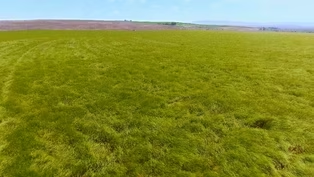
Preview: S10 Ep1009 | 30s | We're talking about how seeds are saving the planet, make black bean empanada at Kismet. (30s)
Providing Support for PBS.org
Learn Moreabout PBS online sponsorship
- Food
Christopher Kimball’s Milk Street Television
Transform home cooking with the editors of Christopher Kimball’s Milk Street Magazine.



Support for PBS provided by:
Washington Grown is a local public television program presented by KSPS PBS