
September 3, 2023 - PBS News Weekend full episode
9/3/2023 | 26m 45sVideo has Closed Captions
September 3, 2023 - PBS News Weekend full episode
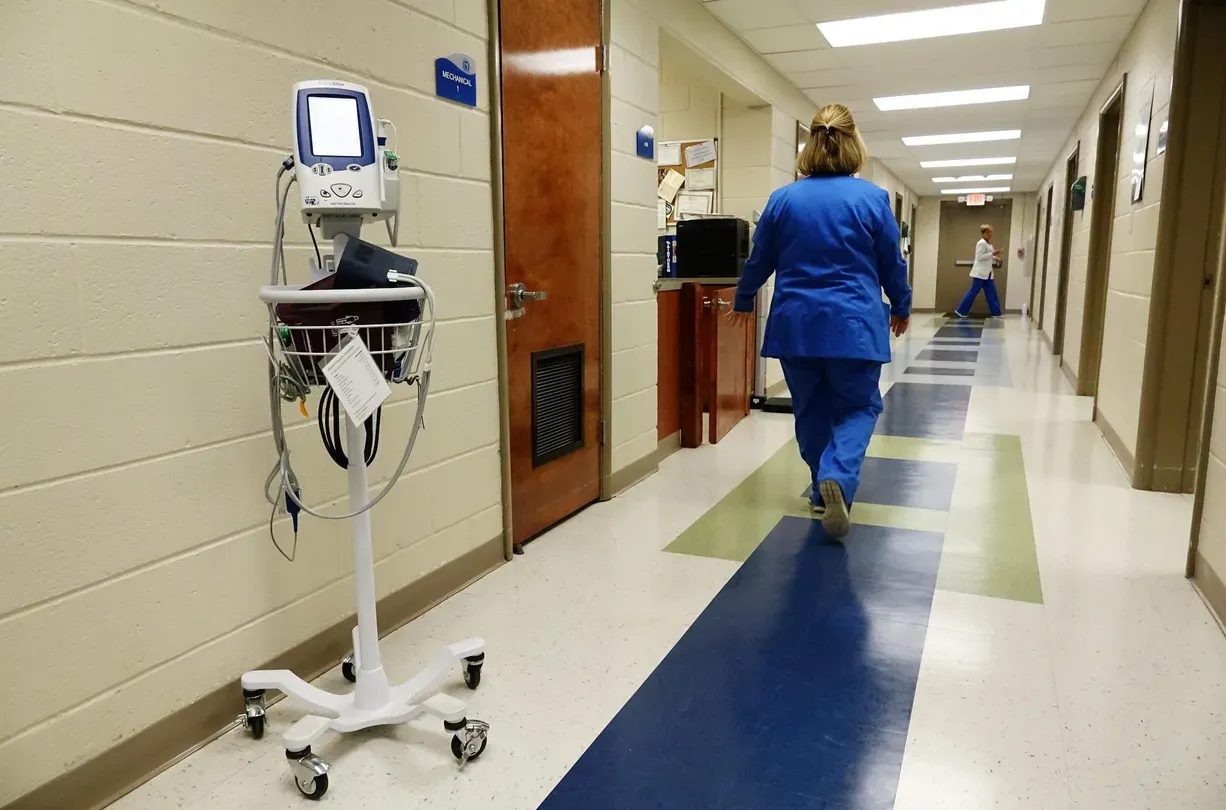
Sunday on PBS News Weekend, Medicaid recipients in Arkansas fight to get their health care back after the end of their pandemic-era extension. Then, a look at the rising cost of buying a car in America. Plus, a new method of delivering aid that sends in resources before a disaster hits.
Problems playing video? | Closed Captioning Feedback
Problems playing video? | Closed Captioning Feedback
Major corporate funding for the PBS News Hour is provided by BDO, BNSF, Consumer Cellular, American Cruise Lines, and Raymond James. Funding for the PBS NewsHour Weekend is provided by...
September 3, 2023 - PBS News Weekend full episode
9/3/2023 | 26m 45sVideo has Closed Captions
Sunday on PBS News Weekend, Medicaid recipients in Arkansas fight to get their health care back after the end of their pandemic-era extension. Then, a look at the rising cost of buying a car in America. Plus, a new method of delivering aid that sends in resources before a disaster hits.
Problems playing video? | Closed Captioning Feedback
Where to Watch PBS News Hour
PBS News Hour is available to stream on pbs.org and the PBS app.
Providing Support for PBS.org
Learn Moreabout PBS online sponsorshipJOHN YANG: Tonight on PBS News Weekend, Medicaid recipients in Arkansas fight to get their health care back after the end of their pandemic era extension.
WOMAN: I was told by the person at the front desk that I was denied.
I didn't even get a chance to, you know, submit other paperwork or have a conversation with the caseworker like I'm completely and utterly confused.
JOHN YANG: Then we'll look at the rising cost of buying a car in America and a new method of delivering aid that sends in resources before disaster hits.
(BREAK) JOHN YANG: Good evening, I'm John Yang.
Russia unleashed a barrage of drone attacks today on a Ukrainian port critical to the grain trade.
It comes on the eve of a new diplomatic effort to get Russia to rejoin the deal, allowing Ukrainian grain safe passage through the Black Sea.
Two people were reported injured in the attack on a port along the Danube River, which is now the main route for grain shipments since the Black Sea deal fell apart in July.
Tomorrow, Turkish President Recep Tayyip Erdogan has to meet Russian President Vladimir Putin in the resort city was Sochi to press Russia to rejoin the deal.
Meanwhile, late today Ukrainian president Volodymyr Zelenskyy said he's replacing his defense minister.
In a statement he said after more than 550 days of full scale war, the ministry needed new approaches.
A Florida judge has thrown out a redistricting plan pushed by Governor Ron DeSantis, saying it violates the state's constitution by diluting the voting power of black residents.
That issue is the Fifth Congressional District in North Florida.
The redrawn map move black voters into districts dominated by white conservatives, essentially drawing a black Democratic incumbent out of office.
The judge told the Republican controlled legislature to come up with a new map.
The state is expected to appeal.
And at the counterculture Burning Man festival in the remote desert outside Reno, Nevada, heavy rains triggered flash floods and stranded tens of thousands of festival goers.
Organizers have shut down access by vehicles and attendees have been told to conserve food.
There's been one death which the sheriff's office is investigating.
At least another quarter inch of rain was expected today.
The festival is to end tomorrow.
Still to come on PBS News Weekend, the rising cost of buying a car in America and a new method of aid delivery that aims to get ahead of disasters.
(BREAK) JOHN YANG: Medicaid is America's largest single provider of health care coverage serving low income adults and children and people with disabilities.
In the early days of the pandemic, Congress temporarily block states from kicking people off Medicaid even if they were no longer eligible.
As a result, enrollment reached unprecedented numbers.
But that's ended and now states have until next year to go back to pre-pandemic rules.
Check if those on Medicaid are still eligible and remove those who aren't.
Ali Rogin recently traveled to Arkansas which is nearing the end of that process, which is known as unwinding.
WOMAN: Howdy.
JENNIFER ROSE, Medicaid Recipient: Hi ALI ROGIN: For Jennifer Rose and her wife Melanie reading Tarot cards is a way to spend time together other end make some money.
JENNIFER ROSE: It looks like there are some career possibilities that you might be thinking about.
ALI ROGIN: The couple regularly does readings around Fayetteville, Arkansas which they've called home for three years.
That's on top of Melanie's work as a massage therapist and astrology writer.
JENNIFER ROSE: And there you are the queen of wands.
ALI ROGIN: They've been on Medicaid since November 2020.
Both because of their combined income and Jennifer's disability brought on by rheumatoid arthritis and rare immune deficiency.
JENNIFER ROSE: I have two infusions each month, those are absolutely life-saving medications that are very, very expensive.
ALI ROGIN: The couple new Arkansas' Medicaid program was changing with the expiration of pandemic era protections, which meant people whose covered had been extended past their eligibility would lose it.
And even though Jennifer said their eligibility hadn't changed months earlier, they've been asked to prove it by sending in some additional paperwork.
Jennifer took no chances.
JENNIFER ROSE: I went in person to the office.
I made sure that it was turned in.
ALI ROGIN: When they hadn't heard anything.
A few weeks later, Jennifer went back to her local Department of Human Services.
JENNIFER ROSE: I was told by the person at the front desk that I was denied that my application had been denied.
I didn't even get a chance to you know, submit other paperwork or have a conversation with the caseworker like I'm completely and utterly confused.
ALI ROGIN: More than 230,000 Medicaid recipients in Arkansas have lost coverage since April.
About a quarter of them would have lost coverage anyway because they now earn too much money or asked to be removed.
But most were terminated for procedural reasons like failure to return renewable forms.
JENNIFER WAGNER, Center on Budget and Policy Priorities: We're very concerned when we see those numbers.
ALI ROGIN: Jennifer Wagner is a Medicaid Eligibility and Enrollment expert with the Center on Budget and Policy Priorities.
So far 34 states have publicly reported their unwinding data of those states Arkansas has one of the highest rates of ending Medicaid coverage because of paperwork issues.
JENNIFER WAGNER: Their rate of termination, their low rate of renewal is kind of out of whack with what we're seeing in other states, which is very concerning.
ALI ROGI: The Centers for Medicare and Medicaid Services recently warned Arkansas that its high paperwork termination rate might mean people are having trouble understanding and submitting Medicaid renewal forms and needlessly losing coverage as a result.
And while Arkansas termination rates seem high, Wagner says many states are having problems processing three years worth of Medicaid renewals.
In fact, the Centers for Medicare and Medicaid warned that over half the states in the country are kicking people off at to higher rate, and that all 50 states may be kicking children off disproportionately.
JENNIFER WAGNER: We're seeing metrics that we've never seen before, but we actually don't have a baseline.
This has not been measured and reported on before.
ALI ROGIN: In response to PBS News Weekend, a spokesman for Arkansas Department of Human Services said there were large numbers of beneficiaries who would have been disenrolled were it not for the pandemic error requirement, and that it is not surprising that this group would be disenrolled at a high rate now, experts have also noted that some people who were terminated for paperwork reasons may have also been otherwise ineligible.
MELISSA MCMANUS, Legal Aid of Arkansas: Mark your calendar to be on the lookout for your renewal timeframe ALI ROGIN: Just north of Fayetteville, Melissa McManus is an attorney with Legal Aid of Arkansas which provides free services to low income people.
She helped Jennifer rose with her case.
MELISSA MCMANUS: People are coming to us because they've been terminated and the people are eligible.
ALI ROGIN: Each Friday Legal Aid runs a help desk for Medicaid recipients at the local courthouse.
Some clients are getting requests to submit extra documents when they shouldn't be renewed automatically.
MELISSA MCMANUS: It's cumbersome upon these individuals to try and gather information that is outdated that they may not have real access to.
ALI ROGIN: The process has been particularly stressful for Arknasans originally from the Marshall Islands.
The Marshalese community in Northwest Arkansas is one of the nation's largest with more than 15,000 people because of a unique immigration agreement with the U.S., Marshallese people couldn't get on Medicaid until 2020.
Now they're having to reenroll for the first time and many have limited proficiency in English.
The state provides translations but some say they still can't understand the forms.
CARLNIS JERRY, Marshallese Educational Initiative: That people that translate here.
I'm not from here.
They're outside and they're not Marshallese.
ALI ROGIN: Carlnis Jerry is with the not for profit Marshallese Educational Initiative.
She spends most of her time these days helping her community navigate their Medicaid status.
CARLNIS JERRY: The first time they sent out the flyer, I couldn't understand what they were saying.
ALI ROGIN: How does that make you feel?
CARLNIS JERRY: I feel like we're here.
We took a step forward and then we took a lot of steps backwards.
ALI ROGIN: Arkansas Department of Human Services said it began outreach to the Marshallese and other communities more than a year before the unwinding began.
REP. ROBIN LUNDSTRUM SPRINGDALE, Arkansas House of Representative: Promotes integrity and the welfare programs.
ALI ROGIN: The federal government is giving states up to one year to complete the Medicaid unwinding process.
But in 2021, the Arkansas legislature passed a law cutting that back to six months.
JENNIFER WAGNER: There is an indicator shinned that they are going faster than they need to.
ALI ROGIN: Wagner says the shortened timeframe could lead to unintended consequences.
JENNIFER WAGNER: If there's a huge spike in application volume the next month or two, that suggests that a lot of people were in fact eligible and erroneously lost coverage.
REP. AARON PILKINGTON (R) Arkansas State Representative: A six month period is better than a year long period.
ALI ROGIN: Arkansas State Representative Aaron Pilkington voted for the shortened timeframe.
AARON PILKINGTON: The longer we allow people to remain on these roles who do not qualify, who do not need it, that's taking money out of the hands of those who are truly needy.
ALI ROGIN: Many people who are having trouble reenrolling have been told simply to reapply for Medicaid.
And that is going to add its own backlog.
AARON PILKINGTON: That's a fair criticism.
I would argue though, if you're doing what you need to do, if for some reason you are excellent kicked off, it's nice to know that there is a way to get back on.
If you were worried about your coverage, we had made notices we had done, you know, try to let people know about it.
ALI ROGIN: Some of the public awareness efforts don't reach Arkansans living in rural areas.
Many of them are low income and change addresses frequently or don't have steady access to the internet.
Oftentimes, their first chance to address their Medicaid status is through their provider.
Clinics like Boston Mountain Rural Health played a critical role in ensuring those patients keep their coverage.
Sayde Davis helps patients navigate their Medicaid status.
SAYDE DAVIS, Boston Mountain Rural Health: There's a lack of knowledge and a lot of our patients about how to go about a lot of these things.
They're getting information in the mail that maybe they don't understand.
ALI ROGIN: Boston Mountain has offered patients help with insurance for several years.
But they've had to hire even more staff to help with the unwinding.
Beth Harris runs clinical operations here.
BETH HARRIS, Boston Mountain Rural Health: And we're constantly expanding that program as the need continues to arise.
I do expect it to increase just based off of what we've seen previously in the past.
ALI ROGIN: Back in Fayetteville, Jennifer Rose got back on Medicaid about as quickly as she got kicked off.
JENNIFER ROSE: I really just picked up the phone and there they said we've made a mistake and your Medicaid is fine.
And I said okay, thank you and they hung up.
That was it.
MELISSA MCMANUS: And you got that notice and writing.
ALI ROGIN: But she says she was only able to sort things out with the help of legal aid and Melissa McManus.
MELISSA MCMANUS: I love my job I help.
I love helping people.
But it would give me great pleasure if they didn't need me.
You should need a lawyer to be able to keep your health insurance.
ALI ROGIN: Until then she'll be at the courthouse every Friday to help.
For PBS News Weekend, I'm Ali Rogin in Fayetteville, Arkansas.
JOHN YANG: Five years ago, shoppers looking for an inexpensive car could choose from about a dozen models selling for less than $20,000.
Now there's only one, the subcompact Mitsubishi Mirage, and there are reports that it will be phased out in 2025.
The average car price is now more than $48,000.
And buyers are being further squeezed by rising interest rates.
It's hitting younger generations particularly hard.
Last year, those aged 18 to 39 Generation Z and millennials had more than $20 billion in auto loans more than 90 days overdue.
Total outstanding auto loans are nearly $1.6 trillion.
Earlier, I spoke with Tom Krisher, who covers the auto industry for the Associated Press.
I asked if the era of inexpensive cars is over.
TOM KRISHER, Associated Press: There will be some inexpensive SUVs, but the cars are cheaper.
And those are gradually they're falling out of favor with buyers, number one.
And plus the auto companies don't make nearly as much money on them as they do more expensive SUV.
So the auto companies have gotten out or a lot of the auto companies have gotten out of the small car business and it just doesn't have profit margins.
So I think you're correct that we're probably not going to have any or at least very few inexpensive cars for a long time.
JOHN YANG: And not only they're very few inexpensive cars, it seems like at the top end, it's grown.
It's not just the car is now cost 40 or $50,000.
But there are a number of models that are more than $100,000.
TOM KRISHER: Yeah, there are 32 according to Cox Automotive that are over 100 grand.
And just five years ago, there were a dozen.
Granted these are though, a small number because they're mostly high end European luxury models.
JOHN YANG: Of those two things you mentioned at the top customer demand being lower for small cars and also the automakers chasing the profit margin.
Which of those factors is bigger, do you think?
TOM KRISHER: It's a good question.
I would think it's the shift to SUVs.
Americans since about 2012 have just started wanting to sit higher in vehicles and they liked the utility being able to see sitting higher up in an SUV that kind of started the downfall of cars.
The auto companies saw the trend coming so they started to get out of it because the sales were dropping.
It used to be the midsize car was the number one selling non pickup truck in America.
Now, the Toyota Rav4 small SUV is the number one selling non truck in the country.
JOHN YANG: When you go to car dealerships, or talk to car shoppers, what do they say about this?
TOM KRISHER: There are people who are disappointed.
It's tough to afford something even $20,000.
You know, if you put the standard downpayment down at 7 percent interest, which is kind of the average now, on a car loan for 60 months, you're going to be paying 375 bucks a month.
And for a lot of people, if they make minimum wage, or even less, that's pretty expensive.
We do have, you know, quite a few other vehicles that have sticker prices starting at under $20,000.
But by the time you put on shipping, and then any options to them, they all got over, except for the Mitsubishi Mirage, which was, I think it had an average selling price of $19,205.
JOHN YANG: Do you think this will spur the growth of what not only ride sharing services, but also car sharing services, TOM KRISHER: It's kind of tough to say I ride sharing, I think, is going to be still more expensive than owning your own car if you drive it frequently.
If you make an infrequent trips, like you only have to go to the office two days a week or something, it may be cheaper to go with ride sharing.
And then you got this other wild card out there autonomous vehicles, crews and Waymo are testing driverless vehicles.
And if you don't have to pay the driver, your cost per mile is a whole lot less.
So the ride sharing ride hailing costs can come down.
Those are still, you know, kind of in the test phase, but San Francisco seems to be, you know, getting quite a few of these rides.
JOHN YANG: A few years ago, there were stories saying that the younger generation was moving away from driving, moving away from cars.
Is that holding up?
TOM KRISHER: Anecdotally?
No.
I use my own daughter as an example.
She has a car and she enjoys being able to drive to her place of employment park and walk into the door.
A lot of younger people, once they get out into the working world are starting to see that that it is convenient.
And if you don't have good public transit, which a lot of places don't, it's, you know, a much better way to get around.
JOHN YANG: You've covered the auto industry for quite a while if the sedans are going away, and it becomes sort of small SUVs become the smallest car that the car companies offer.
What's last for the American culture and for the for car buyers?
TOM KRISHER: Well, affordability is the top thing but you also have fuel economy an SUV, because it sits higher it has more wind drag.
And you can't defeat the laws of physics a smaller sedan or even a mid-sized sedan that sits lower it gets way better gas mileage, and people are spending more on gas because they have these SUVs and cars generally do a better job with that.
JOHN YANG: Is the shift to electric vehicles going to change this dynamic or more sedans going to be in demand, then?
TOM KRISHER: That's a possibility.
It may change the affordability issue too.
Because if you get a $7,500 tax credit, and you buy, say, a Chevrolet Bolt, which I think starts at $26,000, but it can go up, you know, rapidly.
So say you pay $30,000 for an electric car, it's really 22,500 because you get a $75 tax credit if you make enough money to get that credit.
But that makes it a whole lot more affordable.
They say that the prices of batteries and components are going to come down the more electric cars you build, then the price could even drop further.
JOHN YANG: Tom Krisher, auto writer for The Associated Press.
Thank you very much.
TOM KRISHER: You're quite welcome, John.
JOHN YANG: On Monday, the first Africa climate summit begins in Kenya with the goal of better preparing the continent for climate disasters.
When disaster does strike foreign countries, international aid organizations and individuals often send aid.
But what if that helped preceded the disaster?
Ali Rogin is back with a look at a new method of delivering aid that uses technology to help predict the greatest need.
ALI ROGIN: The concept of anticipatory action isn't completely new, but it's something that has been gaining traction within the humanitarian community in the last few years.
The basic idea is that instead of waiting to deliver cash and resources to communities after predictable disasters, organizations get ahead of them.
That way the people affected are better equipped to deal with the aftermath.
The International Rescue Committee a humanitarian organization recently tested this theory in flood prone areas of northeastern Nigeria.
To discuss the results I'm joined by IRC Nigeria director Babatunde Ojei.
Tunde, thanks so much for joining us.
How did this pilot program work?
BABATUNDE OJEI, International Rescue Committee: Thank you very much, Ali.
So the project was actually, as a result of us realizing that the flooding in Nigeria was getting to a level where there was a need to actually work with communities, and to see how they could actually be better prepared for flooding, which is resulting from climate change.
And also in terms of making sure that we also provided them with some information.
So fortunately, we, Google provided us with resources.
And we worked with the International Food Policy Research Institute to initiate this project, which was targeting 1,450 smallholder farmers in Adamawa state where we had 725 of this 1,450 household farmers.
They were the ones that got resources, three, the flooding, and the other group, which was more like the control, were provided resources, posts, the flooding.
We worked with the National Meteorological Institute to provide us with data and information that could actually help us to know what the flood regimes were.
So those were the triggers that helped us to know when we were able to provide the cash to the farmers.
We have been able to establish that providing anticipatory cash to farmers was a better option, because it reduced the chances of them adopting some negative coping strategies.
And then we worked with government agencies that naturally will provide weather information and forecasts.
But now we've made those information available to farmers for them to make decisions that enable them to actually reduce the shock that would have come from the flooding that came.
ALI ROGIN: And so when the floods came, what were some of the differences that you saw in terms of the responses from households who had received the money before the flooding versus those who received the money after the flooding?
BABATUNDE OJEI: The vulnerability of the group that got the cash, prior to the flooding was highly reduced.
And then they were able to actually be better prepared for the flooding, because one was they had the cash in hand.
And secondly was that they had the meteorological information in hand.
So some of them were able to actually invest in some productive activities that could also support them, for example, like some of them, were able to buy things that help them with early harvest of their cropping, some of them were able to raise the level of their bands where they keep their food produce.
We also saw some of them being able to buy some other food items to prepare for the shock.
However, for the group that were provided the cash post the flooding, so it's more like trying to survive the shock, more than being able to prepare for it.
So there was a huge difference between both.
And for us, it's really convincing that anticipatory supports makes a lot of sense, especially in some of these communities where we work.
ALI ROGIN: We're seeing more and more extreme weather events around the world.
Do you believe that anticipatory action is going to become more of the norm in terms of how humanitarian aid is distributed?
BABATUNDE OJEI: I believe so.
Two things here.
One is not just providing the cash, but also providing them the information and also using traditional structures, existing structures and traditional practices, because you could give money, but if you didn't have early warning systems in place that could actually have an impact.
The fact that they had that information they had the means to be able to better prepare for it shows clearly that this is really a positive way to actually support communities that are in the line of some of these climate related disasters.
One of the things we realized from our study was that beyond the disaster, the flooding, some of them still had some available resources from what was given to them to be able to also continue even after the flooding to continue to provide for their families, to continue to actually maintain a good level of living.
So for us, I think it's really the way to go rather than the usual, you know, providing the assistance after the disaster has happened.
ALI ROGIN: Babatunde Ojei, Nigeria Director for the International Rescue Committee.
Thank you so much for joining us.
BABATUNDE OJEI: Thank you very much to you.
JOHN YANG: And that is PBS News Weekend for this Sunday.
I'm John Yang.
For all of my colleagues, thanks for joining us.
Have a good week.
Arkansas Medicaid recipients struggle to keep their coverage
Video has Closed Captions
Arkansas Medicaid recipients fight to stay covered after federal protections end (8m 15s)
New aid delivery method aims to send help ahead of disasters
Video has Closed Captions
New method of aid delivery aims to send assistance before disasters strike (6m 46s)
Why auto prices are on the rise in America
Video has Closed Captions
Is the era of inexpensive cars over? Why auto prices are on the rise in America (6m 23s)
Providing Support for PBS.org
Learn Moreabout PBS online sponsorship New Episode
- News and Public Affairs

Today's top journalists discuss Washington's current political events and public affairs.
 New Episode
- News and Public Affairs

FRONTLINE is investigative journalism that questions, explains and changes our world.
 New Episode
 New Episode
 New Episode
 New Episode
 New Episode


 New Episode
 New Episode
 New Episode
Support for PBS provided by:
Major corporate funding for the PBS News Hour is provided by BDO, BNSF, Consumer Cellular, American Cruise Lines, and Raymond James. Funding for the PBS NewsHour Weekend is provided by...