
South Wales
Episode 8 | 45m 33sVideo has Closed Captions
James teams up with top chef Stephen Terry for a fun boys’ day out!
James teams up with top chef Stephen Terry and takes him on a fun boys’ day out! They start by driving through the Allt Mountains in the Brecon Beacons to admire the surroundings. Meanwhile, Stephen visits a rather large flock of lambs and feeds them too! James and Stephen round off their trip by visiting legendary Barry Island, where they experience all the fun of the fair.
Problems playing video? | Closed Captioning Feedback
Problems playing video? | Closed Captioning Feedback
South Wales
Episode 8 | 45m 33sVideo has Closed Captions
James teams up with top chef Stephen Terry and takes him on a fun boys’ day out! They start by driving through the Allt Mountains in the Brecon Beacons to admire the surroundings. Meanwhile, Stephen visits a rather large flock of lambs and feeds them too! James and Stephen round off their trip by visiting legendary Barry Island, where they experience all the fun of the fair.
Problems playing video? | Closed Captioning Feedback
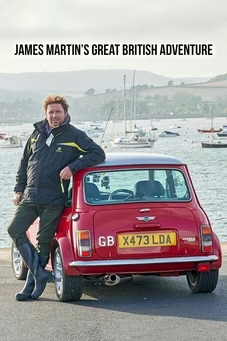
Where to Watch James Martin's Islands to Highlands
James Martin's Islands to Highlands is available to stream on pbs.org and the PBS app.
Providing Support for PBS.org
Learn Moreabout PBS online sponsorship[theme music] Here we go.
JAMES MARTIN (VOICEOVER): I'm going on my most ambitious British adventure yet-- Yes!
JAMES MARTIN (VOICEOVER): --meeting some of the finest chefs in the world.
You've been sweating over, James.
Aw, poor James.
Aw.
JAMES MARTIN (VOICEOVER): Cooking my way from the far South.
Duck on a barbecue is just off the charts.
JAMES MARTIN (VOICEOVER): --to the northernmost reaches of the land.
It's a magical experience.
JAMES MARTIN: You've got to do this.
It's amazing!
JAMES MARTIN (VOICEOVER): And using some of the best produce you'll find anywhere.
FARMER: Come on, pigs.
Come on.
Come on.
GALTON BLACKISTON: Look, look at him.
How can you miss that mouth?
[laughs] JAMES MARTIN: And some of the places require a little bit more effort to get to.
JAMES MARTIN (VOICEOVER): I'll be traveling by land, air, and sea.
TONY SINGH: Yeah, look.
Look, dolphins!
TONY SINGH: Dolphins.
JAMES MARTIN (VOICEOVER): So join me as I explore the British Isles, from islands to highlands.
[soothing music] Today, my trip takes me back to one of my favorite parts of the UK, glorious Wales.
It's, spectacular, Wales.
It really is.
It's a beautiful part of the world.
JAMES (VOICEOVER): I'm starting in South Wales, home to amazing produce, a vibrant restaurant scene, and first-class chefs.
And I'm on my way to meet Stephen Terry, who just happens to be one of them.
[engine purring] [pleasant music] There was a very famous restaurant when I was training as a young kid in London, called Harvey's, which was a three-star Michelin.
Marco-Pierre White-- he was the owner.
Gordon Ramsay was his sous chef.
Well, in the kitchen was Stephen Terry.
Stephen's done so much over the years.
Now he's got his own place called The Hardwick, which is just outside of Abergavenny.
And that's where I'm heading now to pick him up.
JAMES (VOICEOVER): In 2005, Stephen turned a roadside boozer into this destination restaurant with rooms, and its sensational menu has been a hit ever since.
He's obviously a classy guy, so I can't wait to see what he's got planned for our day out in South Wales.
[honks] [goofy music] [laughs] You idiot.
Morning!
[chuckles] You do you realize I'm in a Mini, don't you?
Well, we'll get them in.
They're inflatables.
We'll let some air out.
We're going to the island.
Which one do you want?
How are you?
Lovely.
Thank you very much.
There we are, chef.
JAMES: What is this supposed to be, anyway?
STEPHEN: That's a big lolly.
JAMES (VOICEOVER): Handbrake, handbrake!
Right.
[musical flourish] Unbelievable.
[upbeat music] JAMES (VOICEOVER): Abergavenny is on the eastern edge of South Wales, just 19 miles from the glorious Brecon Beacons.
Today we're weaving our way through this lush countryside and heading down to the South Coast.
We're going to the seaside, James.
We need inflatables.
I've got my camera.
- I know.
But the idea is you blow the inflatables up when you get there, not put the inflatables in a Mini.
My modern camera.
Look, it's all going on.
[laughter] JAMES (VOICEOVER): Unbelievable.
I know you're excited, Stephen, but before we hit the beach, we've got some work to do.
So I'm dropping Stephen off at one of his favorite suppliers, which rears one of Wales's best-known meats-- [bleating] --while I head on a bit further in search of something that I think goes rather well with lamb.
When you think of the Welsh valleys, you think of beautiful countryside, sheep.
You don't think of wine, until now.
JAMES (VOICEOVER): White Castle Vineyard, in beautiful Monmouthshire, was founded by Robb and Nicola Merchant.
They moved to this former dairy farm over 20 years ago and, in 2009, planted some 4,000 vines on these Welsh slopes.
Since then, their wines have gone on to win numerous awards.
Now, this is a fantastic story.
I had to stop by and chat to you about it because, how on Earth did this start for you guys?
I suppose, for us, it started in 1993, when I went to a property auction and bought this little smallholding.
And whose idea was it to turn it into a vineyard?
My idea.
[laughs] I'd had a dream of planting a vineyard and working from home and living a different lifestyle.
Well, in Wales?
Because many people have this dream about going to France and doing it, but-- - No.
A lot of people ask that question, why didn't you move to France?
No, in Wales.
We love where we live here, so why not in Wales?
JAMES: Presumably, you have to be quite careful with the grapes that you put on here, because the weather.
NICOLA: Yeah.
The majority of the varieties we chose were suitable for a cooler climate, which is obviously what we've got here.
Can we taste the fruits of your labor, then?
This is your pride and joy, is it, this one?
ROBB: That is our pride and joy, yeah, the Pinot Noir.
Didn't you have to go back to college, or something, to learn this?
Yes, yeah, we did.
2008, we bought the field behind us that's now planted with 5 acres.
So we planted that May 2009 and then went to Plumpton College to learn in September of that year.
I love this.
So it was just a gamble, and it's been awesome, to be honest.
What we got is an early-ripening Pinot Noir.
They call it Pinot Noir Précoce.
A little bit of blackberry and a little bit of vanilla with it.
- Tastes lovely.
- Thank you very much.
- Nice and fresh.
Yes, it is, yeah.
Are there many vineyards in Wales?
To be honest, I haven't seen many.
I've driven through Wales a lot.
I would say there's about 32 now.
It is unbelievable because you're here.
I'm literally looking at it.
I can see sheep beyond, and then you've got the vineyard here.
You've got phenomenal food here.
It kind of makes sense that-- To have a-- --they produce fantastic wine.
Yes, that's right.
For me, I think if you set your mind you want to achieve something, you will.
You'll give it your all, really.
What's the future for you guys?
I mean, do you look that far ahead, or do you just concentrate on what-- Just keep rocking, and enjoy what we're doing at the moment.
JAMES: Well, the fruits of the labor are right in this glass.
It is spectacular.
- Thank you very much.
- Congrats.
- Thank you.
- Thanks for having me.
- Our pleasure.
Our pleasure.
[twangy music] JAMES (VOICEOVER): The Welsh countryside really is stunning, and it's bursting with all kinds of unusual produce.
Kit like this is essential to farmers, who work tirelessly to produce food and to get it to our plate.
Don't worry, viewers, I've been driving these since I was eight.
I'm cooking the first dish of the day overlooking the Usk Valley.
What a place.
♪ ♪ JAMES: Do you know what?
Next time you're in the travel agent, looking for a holiday abroad, have a word with yourself.
Look at this.
You don't need to go anywhere.
Stunning.
And so is this dish.
This is using amazing lamb.
And I'm gonna do a lamb ragu, a classic lamb ragu, done with pasta.
But the first thing-- a little bit of Welsh wine.
Nice little bit of pasta, a few tomatoes, a little bit of thyme, this dish will be done.
So the first thing we do is get our mirepoix done.
Now, our mirepoix is diced veg, finely diced veg, really.
You're looking for the same size as the meat.
You slice through that way.
Make sure the knife is really sharp.
The reason why you cry-- your knife's not sharp.
And then, all the way through, and you end up with diced onion, like that.
Bit of garlic, edge of a knife.
Whack, and roughly chop that up.
That's that one done.
And do the same thing with the rest of the veg.
I've got some wonderful little bit of leek here.
I'm just gonna use the center part of this leek and then cut this into strips and then chop through.
When you chop through, rock the knife backwards and forwards, all the way through.
And we do the same thing with the celery as well.
A few bits of carrot.
Same thing applies.
Take your time when you do this, as well.
It's important that you get this bit right.
Otherwise, you just end up with what looks like a lamb stew.
Right.
In our pan, now, a little bit of butter and our mirepoix in.
So you're frying off all your nice veg.
Now, at the same time, now, you can grab some of this bacon, and we can dice this all up.
So in we go with the bacon.
Now, this is black treacle-cured bacon.
And we just pop a little bit of our meat in.
Now, if you wanted, you could use a little bit of shoulder as well, but make sure you dice it nice and small.
You don't want big chunks floating around in there.
So, once your lamb's in as well, now we can incorporate our liquid.
Now, I like to use a little bit of tomato puree with this.
But tomato puree is quite strong, so what you've gotta do is what we call cook it out.
You've gotta put in it at the beginning of the cooking.
You don't need any more than that.
And then a combination of tin-fresh tomatoes and stock-- it's entirely up to you what quantity you put in, but a little bit of tomato.
I like to use a bit of chicken stock, bit of beef stock for this.
Lamb stock's quite difficult to get hold of.
Little glug of red wine.
And then, all we need to do now is grab a few bay leaves and throw those in.
So then what you do is bring this to the boil and cook it without a lid because you want it to reduce down at the same time.
And cook it for about 20, 25 minutes.
Done.
Cheers.
[enchanting music] ♪ ♪ Just look at that.
Oh!
Now, to cook our pasta, plenty of salted boiling water.
The great Carluccio will be looking down on me now.
He said you should cook it in seawater.
Now, with pasta, particularly with the ragu, try and go for the ones like this, the little penne pasta, the ones with the holes in and the ridges, because the ridges and the holes keep the sauce in there.
Now, this is kind of fresh pasta, so it only takes a couple of minutes to cook, if that, really-- probably a minute in there, and then a minute in the sauce.
So fresh basil.
We just rip the basil up.
Just throw that in.
Plenty of black pepper, so season this.
Give this a quick mix.
Quick taste.
And then the pasta goes into the sauce.
Ragu needs the pasta cooking in it, like that.
[music playing] And then it's all about just finishing this off, so you can stir this all in.
♪ # # ♪ It is good.
Now, I was gonna put it on this platter, but it seems pretty pointless when you're up here because you just want to eat it out of the pan, really.
Parmesan cheese, grated over the top.
What more do you want?
I'm off to play with the tractor.
JAMES (VOICEOVER): So there you have it, lamb ragu with fresh penne pasta, the most fun you can have up a hill in Wales.
Well, nearly.
[upbeat music] ♪ ♪ [music playing] I'm in South Wales, a place of unrivaled beauty and world-class food.
And Andrew Morgan, of the Welsh Venison Centre, knows a thing or two about that.
He's been producing award-winning meats in this region since 1985.
And despite the name, it's not just venison they supply.
[bleating] Stephen Terry's gone to find out how they rear their lamb.
Hi, Andrew.
- Steve, good morning.
- How are you?
Good.
Pleased to have you here.
Thanks for having me.
Let's have a look at these sheep.
It's a pleasure.
STEPHEN: So why is Welsh lamb so special?
What makes it so amazing?
Well, the area that we're operating in has got a good rainfall, good summer temperatures, and it's ideal grass-growing weather, and that's-- like, sheep turn that into a healthy meat.
This is free-range lamb, isn't it, in the true sense?
I mean, you know, try and catch them.
I mean, they're running all over the place.
ANDREW: That's very true.
Like, it is free-range.
It is-- STEPHEN: Nonintensive farming.
--in the public good.
STEPHEN: Yeah.
ANDREW: You know, the environment they graze in has been established over generations for everybody, then, to come and enjoy.
Yeah.
You know, lamb from the other side of the world is so readily available in our supermarkets.
But really, you know, we've got our own lamb on our doorstep.
You can taste the pasture.
You know, you taste that provenance in the product.
And looking around here, you can see why, you know?
It's absolutely fantastic.
We've gotta get that point across to the general public that we've got a value food.
STEPHEN: Yeah, absolutely.
ANDREW: And you know, where it comes from-- it's a great product, you know?
STEPHEN: Yeah.
So Andrew, you've got your own shop.
You do your own butchery.
And you've got an amazing butchery because, I mean, you've been butchering for me for the last 10 years.
So that's something you've developed over the years.
You didn't start by doing your own butchery.
Did you just-- ANDREW: No, it's just grown organically, you know, to the situation we're in now.
But it's most important that we got somewhere where we can showcase the product and, in a new way, you know, keep reinventing it.
- Brilliant.
So can we go and have a look?
Yeah, let's go.
[bleating] I am proper spoiled for choice here, aren't I?
What to have?
What to have?
Do you know what?
I'm gonna go for a shoulder of lamb.
Look at the beautiful color on that.
That's just-- ANDREW: Yeah, that's a shoulder of lamb, on the bone.
That's had the breastbone taken out.
That looks amazing.
Here you go, Stephen, a bit of home-produced Welsh lamb.
Cheers, Andrew.
Thanks a lot.
Well, I've had an amazing day.
And James, you will find out that Welsh lamb is the best.
[bleating] [pleasant music] JAMES (VOICEOVER): I don't doubt it, Stephen, and I've got the perfect dish in mind.
♪ ♪ Now, Stephen, like I, are a massive supporter of Welsh lamb.
It is the best in the world.
It's unbelievable.
I'm going to do a simple little dish of a stuffed and rolled leg of lamb, but rather than do it with a gravy or a sauce, I'm gonna do it with a nice little sort of white sauce, serve it with some leeks and some onions.
But it all starts off with the stuffing for the lamb.
And I'm going to incorporate two herbs for this one.
I've got some parsley, and I've got some mint.
And rather than throw all equal quantities in, we take a fair chunk of parsley and about half the mint.
Otherwise, it becomes too strong.
And we're just gonna blitz this.
Mint-- throw that in.
See, straight away, you get a beautiful green color.
In there, now, I can add some garlic.
And then, once the garlic's all mixed in, I can then pop the breadcrumbs in.
So fresh breadcrumbs are best.
Give these a quick blitz.
And now a nice good tablespoon of Dijon mustard.
Add some hazelnuts, an egg.
Just pulse it like that.
That'll mix in the egg, but it'll just chop that hazelnuts just enough.
Now, stuffing is done.
Nice little bit of stuffing there.
Meanwhile, we can pay attention to our fabulous piece of Welsh lamb.
Now, this is a long leg, this Welsh lamb, so this has been boned.
So we can take our filling and pop this on here, like that, over the top.
Some of your black pudding as well, which we can just break up.
Add that to it, just randomly in there, really, for this.
And then season this.
Plenty of salt and pepper.
[pleasant music] ♪ ♪ So now what we can do is simply roll this and tie it up.
So what you do is you just take a little bit of this and just roll it up.
So you tuck this bit in.
Just roll it up, like that.
Don't worry about any bits of the stuffing that's coming out.
We can take some of this butcher's twine and then tie it up.
♪ ♪ ♪ ♪ So, once you're happy with that, just to hold it all together even more-- the best way to do that is to take some greaseproof paper and tin foil.
Place that on there.
And if you roll it up, like this, and then twist each end, like a big cracker, it keeps all the filling, everything, all in.
Pop this in the oven.
This takes about half an hour, about 220 degrees, something like that.
You want to color the outside of it and then drop the temperature down after about 20, 30 minutes.
Cook it about 200 degrees for another hour.
So, in total, it wants about an hour and a half, this.
So, to go with this lamb-- this is almost the garnish, the side dish, everything.
So it starts off with a few bits of onion, butter in the pan.
Add the onions.
[sizzling] As the onions are cooking, we can then chop and add the leek.
So, as soon as the leek start to wilt down, we can then make our sauce out of this.
Just a small amount of flour is what you want.
That's maximum-- probably a teaspoon, really.
Just a glug of white wine.
Just a little bit.
A touch of milk and then a little bit of cream.
And you'll see, instantly, you end up with this lovely, rich garnish, veg dish, sauce, everything.
Salt and pepper.
[pleasant music] ♪ ♪ And then, finally, just a little bit of chopped parsley.
So that sauce is done.
It's as easy as that, really that quick and simple to make.
Now, I've left the meat, once it's roasted, just to rest nicely, really.
Take the string off and just leave it, and then you can carve this.
Look at that.
You get that fantastic circle of stuffing, black pudding.
And then you can grab your sauce.
I know it's cliche doing leeks and stuff like that with lamb, but you know, it is a great combination.
It's fantastic.
You've got amazing piece of lamb.
♪ ♪ And I'm gonna taste this.
You've got the mint.
You've got parsley.
You've got that little bit of mustard, the hazelnuts to add a nice little bit of texture.
That's all you need.
Doesn't need gravy.
Never thought I'd say that.
JAMES (VOICEOVER): Stuffed leg of lamb, served with creamy leeks-- a tasty tribute to Wales.
♪ ♪ [exciting music] Today, I'm in beautiful South Wales.
Stephen Terry and I have been discovering more about the world-class produce here, from the well known-- [bleating] --to some unexpected delights.
I can see sheep beyond, and then you've got the vineyard here.
JAMES (VOICEOVER): And now I'm off to hunt out a hidden gem in the valleys that makes one of my favorite sweet treats, guilt-free.
[charming music] The Little Welsh Chocolate Company was created by mother-and-daughter team Glynis and Alison Pope.
Here, they make ethical chocolate from locally sourced, organic ingredients.
It all started as a charity fundraiser, making truffles at home.
I've come to find out how they make all their natural bars.
So tell me what's happening in here, then.
So I've got my dark chocolate here, at 45 degrees.
So it needs to come down to 32 degrees, and we're gonna do that by seeding with pretempered chocolate.
So that's what this is.
This is getting the shine to the chocolate, this bit?
Yes.
So this is organic, fair-trade, palm-oil-free, soy-free chocolate.
All those things are making the price go-- Yeah, exactly.
It does, it does.
But you do have to wonder, when you see a chocolate bar for 30p, or a pound, on the shelf, who or what has been exploited to get it there?
JAMES: Exactly.
So our emphasis is on just keeping it all really ethical.
So what's next?
So we're nearly at the right temperature.
I'm gonna add my inclusions, which is sea salt.
Right.
So this is where you're adding the flavor to it now?
ALISON: Yes.
So this is my organic essential lime oil.
JAMES: Yeah.
Just need a small amount for this much chocolate.
And are you thinking about these flavors, or is it something that you've tasted before, and you think, I quite fancy doing that, is it?
So we come up with flavors in loads of different ways.
This one-- I think me and my mum were out having some cocktails, and we came across-- Cocktails.
You see, it's always drink involved.
Right.
I think it was a mojito that inspired this one.
We call this bar that we're making The Zingy One.
JAMES: The Zingy One?
ALISON: Yeah, because of that oil.
And it makes all your taste buds kind of go, woo!
And then you just pop this in bars, then, I take it, do you?
Yes.
So this has been tempering now for about 45 minutes.
JAMES: Right.
So if you heat that up gently for me with the hairdryer.
With a hairdryer?
Do you find that Rowntree's do this, and Nestlé?
Probably not.
[hairdryer blowing] So you just gently warm it, yeah?
Yeah, just so the chocolate's not shocked when it goes in.
JAMES: So, Mum, did you think you were gonna be cleaning molds for a living?
- Yeah.
- Right?
Yeah.
JAMES: How do you feel now your daughter's got something like this?
- So, so proud.
- It's brilliant, isn't it?
It's great.
So, so proud of her because I wouldn't have done it.
JAMES: And then, once the chocolate's in there, what you normally have to do is whack the air bubbles out-- ALISON: Yeah, exactly.
But-- However, I love this gadget.
We've got this little gadget here that my dad got us as a little present when we were in your kitchen, didn't he?
So that just vibrates and gets all the bubbles out.
[vibrating] And that's it.
And then it goes in the fridge.
Do you want to ladle any?
JAMES: Go on, then.
Can I?
- Yeah.
100 grams per bar.
[pleasant music] ♪ ♪ Very good.
JAMES: Maybe you need a consultant chef to come and give you a hand.
Well, yeah.
I mean, if you're free, if you're in the area-- JAMES: I don't need lunch.
Just a few bars.
ALISON: Just a few bars?
That's fine.
We can manage that.
Right.
I'm dreading this bit, to be honest.
[vibrating] Woo-ee.
Lovely.
It's like one of those plates that you find at the gym.
Yeah, that gets rid of all your cellulite.
Never been to the gym.
We should try that, try standing on that.
- Me?
- No, me.
JAMES: [laughs] GLYNIS: Speak for yourself.
JAMES (VOICEOVER): Happy families, eh?
But lovely to see chocolate being made ethically.
Do you know what?
This is one of the magical things about doing a journey like this.
It's like Wales's answer to Willy Wonka, all local as well.
Chilli from Pembrokeshire, Carmarthenshire for coffee, Anglesey sea salt, salted caramel.
♪ ♪ Hello.
That is delicious.
Amazing.
It's proper, though.
[dreamy music] JAMES (VOICEOVER): Wales is a place that just keeps on giving.
And it's not just filled with amazing producers.
Top chefs flock here to cook with the incredible produce.
JAMES: Well, what can I say about this next chef I'm gonna go meet?
"Legend" would be not good enough of a word to describe Shaun Hill.
This man is a true culinary genius.
He's been cooking for over 50 years, and I'm so excited about meeting him, mainly because, when I was 18 years old, I applied for a job for Shaun.
He turned me down, by the way.
[pleasant music] JAMES (VOICEOVER): Sean's illustrious career has taken him all around the UK, but since 2008, he's been shaking the pans at the Walnut tree, just outside of Abergavenny.
At 72, he's still at the pass, and has just been awarded the Catey's Lifetime Achievement Award.
Like I said, a total legend.
And at last, I get to cook with him.
All right, then, Chef.
Well.
How are you?
Better, all right.
[laughs] Well, I couldn't work for you when I was 18, so now I get the opportunity several years later, you see?
And there's a job going-- Oh, thanks very much.
So what are you going to be cooking for us?
SHAUN: I'm cooking a sort of version of bourride.
Right.
I'm looking forward to this, to be honest with you.
- Good.
- Go on, then.
Hot stuff.
You're still behind the stove here, aren't you?
It's very sad, isn't it?
No, it's not, though.
It's not.
It's fantastic.
Congratulations on your award as well, because, dare I say, a lifetime achievement award-- what does that mean, anyway?
Does that mean-- It means you're over 70.
[laughter] JAMES (VOICEOVER): Sean is modest, but his food is adventurous.
Here, he's combining orange peel, shallots, and peppers with a touch of cumin and saffron, before blitzing it.
[blending] So what brought you to Wales, then?
I used to eat at The Walnut Tree quite often.
I really liked it.
It was an Italian restaurant, and then it went bust.
The bank had repossessed it, and I thought to come back and get it on its feet.
Fantastic.
Then do two days a week.
And now you're in the kitchen.
It's been full-time ever since.
JAMES (VOICEOVER): After a quick sear, the fish is added to the chicken stock with a blended orange peel and shallot paste.
And then all you need now is garlic mayonnaise.
But it's not what you'd have in your tuna sandwich.
OK.
It's a bit more punchy than that because you're looking for a hit of raw garlic.
JAMES (VOICEOVER): Shaun then gets me to put the stock mixture into the blender without the fish.
SHAUN: See how quickly the fish cooked?
It's sort of, more or less, done.
And that's it, a couple of minutes.
Not even that, really.
Not even that.
Can I just say, I'll tell you what, this thing's seen some use, hasn't it?
It has.
I can't find a replacement.
[blending] At this point, you adjust the flavors if you need to.
And you can use a bit of Tabasco, bit of lemon juice, whatever you want.
You put in the fish, a nice selection of fish, herbs, a bit of coriander and flat parsley, a few chives.
[pleasant music] JAMES: It is proper food, this, innit?
Then the scallops at the very last moment.
JAMES: So again, seal it off in a hot pan.
SHAUN: Takes two seconds.
And you really want to do it at the last minute.
Could you see yourself doing anything else?
It's a bit late now to get a proper job, isn't it?
[laughs] No.
I've always enjoyed cooking, and I've always enjoyed eating.
It's also important to eat the whole portion, rather than put your finger in, or spoon in, and-- Experience what the customer wants.
Yeah.
[pleasant music] This is nice.
JAMES: Shaun, that is absolutely delicious.
And I just want to say, thank you, congratulations, and I may send that CV again.
[laughs] I'll come and work for you.
I will.
It is absolutely delicious.
JAMES (VOICEOVER): That man really is a culinary genius.
I just love his cooking.
Shaun, this next dish is just for you.
Now, there's moments in your life you kind of pinch yourself, and meeting Shaun and cooking with him in his kitchen was one of them, really.
I'll never forget it.
And I wanted to recreate not, sort of, exactly one of his trademark dishes, but he does an amazing dish of artichokes and mushrooms with a hollandaise sauce, a true classic way of cooking.
So what I'm going to do, first of all, is prepare our artichokes.
Now, there's two main types of artichokes.
There's Jerusalem artichokes, which grow below the ground.
There's globe artichokes that grow above the ground.
In the globe artichokes, you've got two main categories as well.
You've got violet artichokes, and you've got the larger globe artichokes.
What I'm going to use is these little violet ones.
Now, these are much easier to prepare.
You just trim off the stalk and then remove the small leaves from the base.
And then, what I like to do with this is use a peeler, and you just peel off the outside of the stem.
Then all you do, really, with this, is you just cut it right at the top of that leaf.
It's almost the first set of the big leaves.
And what you end up with-- this.
Now, inside here is the little choke.
Now, it's not fully developed on these smaller ones, so what you can do is just eat the entire lot.
And then what you need to do is store them in this, just water with lemon juice in it.
And this just allows them to sit in there without them going brown.
They'll go a little brown, but not too much.
So then, to simply cook these, I've got some water in the pan, a little bit of garlic, a few peppercorns, just a few white peppercorns, a touch of tarragon, and then a nice glug of olive oil, and a bit of white wine, like that.
Take the artichokes now, and just pop them in.
And then what we can do is just cover these.
So cover them with a lid, and we'll cook these for about 15 minutes, something like that, on a gentle simmer.
Now, while that's happening, you just get a pan on the stove and a whole block of butter.
It doesn't matter whether it's salted or unsalted.
Makes no difference, because, by clarifying it, you're gonna remove the salt out of it anyway.
What happens is the fats separate from the salts, and you can see almost straight away what's happening in the pan.
Once that's cooked, you take it off the heat, and you end up with what I've got in this pan here.
Now, in the bottom of here, you can see the impurities.
So whatever you do when you get to this stage, don't shake it.
Now, the second part of our hollandaise is what they call a gastric.
Now, it's a crucial part of making hollandaise, this.
I used to work with many, many great chefs when I was a youngster.
Now, there'd be a big argument with most of them whether or not you should keep the shallots in it or take them out.
And I'm gonna keep them in because I like the taste of shallots.
You take white wine vinegar and a touch of white wine, a few white peppercorns in there, and then the shallot.
And what we do is we boil this.
Touch of tarragon.
It almost boils to nothing.
So you start off with this amount of liquid in, and you end up with what looks like about a tablespoon of liquid.
But that is so, so strong.
We can then take the third part of our hollandaise, and for that, we use egg yolks.
You can use a combination of whole eggs and egg yolks.
It's up to you.
But classically, you'll be just done with egg yolks.
So, once you get to that stage, you can then take that off the heat, allow that to cool down, and then we can turn our attention to hollandaise.
We whisk it over a pan of hot water, and we keep whisking for about three or four minutes.
I'll see you in a bit.
[relaxing music] ♪ ♪ You can see the egg yolks' texture changes.
You can then slowly add the clarified butter.
So you treat this like you're making mayonnaise.
Keep it on the heat, and keep whisking in the butter carefully, little by little, onto the egg yolks.
We can then take this off the heat, and then we can flavor with this gastric.
Shallots.
Add that to the mixture.
So our artichokes are now done.
Got some wonderful little wild mushrooms.
And then we use a little bit of the clarified butter that's left and just quickly fry these.
A little bit of black pepper and a touch of salt.
While we're waiting our mushrooms, we can then take some of our artichokes out.
[sizzling] So our mushrooms are nearly done.
We just, basically, take those off the heat.
Just a bit of fresh tarragon.
You know, this is great for vegetarians, but it's also great for anybody, really.
I mean, a few little simple sauces like this-- it can taste amazing.
Just grab the artichokes now.
Just pop these in with the mushrooms.
Take your hollandaise over the top.
Then, very quickly, while everything's still warm, just pop it under the grill for about a minute.
♪ ♪ Look at that!
Smells amazing as well.
So there you have it, a classic dish inspired by probably one of the greatest chefs cooking in Britain, Shaun Hill.
JAMES (VOICEOVER): Artichokes with mushrooms and hollandaise sauce-- a feast on a plate.
♪ ♪ [exciting music] ♪ ♪ Today, Stephen Terry and I are in South Wales, and we're on our way to its most famous island, Barry Island.
♪ ♪ [laughter] ♪ ♪ JAMES: So, have you ever been to Barry Island?
Yes, I have been to Barry Island, yeah.
Because I mean, back in the '30s and '50s.
I mean, this place was hugely popular.
Well, when you see it, you'll understand why.
I mean, it's got amazing front.
There's been a big investment there in the last few years.
And obviously, the profile has been raised by Gavin and Stacey.
Gavin and Stacey.
And when you go there, you're like, oh, that's where Dave's Coaches is, and that's where Ness works.
And it's really cool.
[dreamy music] JAMES (VOICEOVER): And here it is, Barry Island, in the Vale of Glamorgan.
And yes, it truly was an island until the 1890s, when it was linked to the mainland by rail as part of the development of Barry Docks.
Once the public was able to access the beach at any time of day, tourism exploded.
Barry Island is still a popular place to visit in South Wales, and it's easy to see why.
To tell us more is born-and-bred Barry boy Oggie.
- Hello, gentlemen.
- Hi, boss.
How are you?
Can I interest you in any flyers on Barry Island?
JAMES: Absolutely, sir.
What is the highlight of this place, then, apart from that?
Obviously, the beach.
And there's six beaches here at Barry Island.
Six?
Six beaches, and no two beaches are the same.
It was hugely popular in the, what, '30s and '50s?
Oh, absolutely.
And that's thanks to Mr.
Butlins, wasn't it?
Mr.
Butlin, yeah.
He got his idea for his holiday camp here at Barry.
Right.
He had a stall on Barry Island in 1926.
JAMES: Yeah.
And his holiday camp was just up there, on Nell's Point.
JAMES: Right.
It was his last camp to be built, in 1966, and the first camp to close.
And I know because I was a Butlins redcoat.
You were a redcoat?
I was a Butlins redcoat, yeah.
That's what I'm doing here.
JAMES: What was life like as a redcoat, then?
OGGIE: Oh, absolutely fantastic.
JAMES: Yeah?
So you can sing and dance, and you can tell us a few funnies, and a bit of a routine?
A bit old now.
JAMES: [laughs] Not a lot has changed.
I've seen that, you know, the front coastline is kind of similar.
We've already spotted that.
What-- OGGIE: The Pleasure Beach.
JAMES: The Pleasure Beach.
We're going in there.
Is that any good?
OGGIE: Oh, absolutely.
STEPHEN: Right.
We'll go and check it out, then.
We'll check it out.
Anyway, we'll leave you to it.
No problem.
I like the pink jacket now, though.
Thanks, Oggie.
[laughs] What a lovely chap.
[carnival music] JAMES (VOICEOVER): The fairground has been a key part of Barry Island's appeal since the very beginning.
JAMES: It puts a smile on your face, though, doesn't it?
It brings back memories.
Ghost train, log flume.
It's gotta be dodgems, aren't it?
Dodgems.
JAMES: It's gotta be dodgems.
STEPHEN: Let's go.
Dodgems.
[hypnotic music] ♪ ♪ JAMES (VOICEOVER): This is almost as much fun as driving the Mini.
[laughter] ♪ ♪ JAMES: Man's a lunatic.
[eerie music] JAMES (VOICEOVER): Even scarier than Stephen's driving-- (CREEPILY) --the ghost train.
[creepy laughter] [honks horn] Actually, we might be a little bit big for this one.
[laughter] JAMES: I think it's stuck.
It didn't get me.
I got you, though.
I have not wet myself.
JAMES (VOICEOVER): Well, not yet, anyway.
But the log flume will, no doubt, take care of that.
[carnival music] Meanwhile, Stephen has opted for the Welsh Dragon ride.
[screams] ♪ ♪ [laughs] You're never too old.
JAMES (VOICEOVER): Especially if you're a big kid like Stephen Terry.
♪ ♪ [funky music] Well, that was a lot of fun.
Stephen enjoyed it so much, he stayed there, going round and round.
But I've worked up an appetite, and I'm gonna cook my next dish right here on Barry Beach.
♪ ♪ Now, there are many classic dishes that I could do in a seaside location like this.
Fish and chips would be the obvious one, a little bit of sponge sugar, but I've done enough of that on TV.
I thought I'd do churros, which is like a type of donut.
So the churros is based on a chioux pastry.
It's a little bit of water, flour, a little bit of baking powder, some butter, some eggs, and a touch of salt.
And the first thing you do is you warm up the water with a pinch of salt and a little bit of sugar.
In we go with the Welsh butter-- about 75 grams, roughly, kind of.
Maybe 85 grams.
That's gonna go in there, and we heat this up.
Now, when your butter is melted a little bit, this is where we can add our flour.
Now, there's quite a lot of flour in a churros, and this is why it's much easier to make than a donut.
The donut is made as an enriched yeast dough that you've gotta leave to prove, and then deep-fry it.
It's actually quite tricky.
This one is much more simple.
So you combine all the ingredients together now, and it thickens up into this paste, like that.
So you've got this dough, and then we add the egg.
So now, as the mixture cools down, we can add a little bit of our baking powder, just a touch.
That goes in there, and mix this all in.
The good thing about this is you can leave it to rest now.
And just let it sit there and cook them as and when you want to.
So I'm just gonna leave that to one side.
Meanwhile, we can turn our attention to our sauces.
I'm just gonna do two nice, simple ones, really.
First one is a dulce sauce, which is condensed milk that's been cooked in a can, and some Welsh cream liqueur.
And then just heat it up.
And that's the sauce of that one, done.
So, while that one warms through, the other one is a simple chocolate and orange sauce.
Chocolate, bit of orange.
Now, there are several ways you make a chocolate sauce, really, one of which-- you can start off with a bit of stock syrup.
Add the chocolate, and that's where you'll get a rich, shiny sauce.
The other one is use a touch of orange and double cream.
[lounge music] ♪ ♪ See that?
That's my career going.
About 150 mLs of double cream.
Next, turn our attention back to our sauce over here.
Once you've got our sauce done like that, we can then put our chocolate one on, and we'll pop this in a bowl.
Save a little bit left.
It is good, is that.
And do the same.
♪ ♪ JAMES (VOICEOVER): Apologies for the music, but I wonder if Stephen's won me any toys yet.
STEPHEN: That is a good grab.
♪ ♪ So your chocolate sauce is now done.
We can take a little pot of that, as well, and pour that in.
That is gonna taste ace.
And then we'll bring our nice, hot oil and get it even hotter.
But what we do need is the help of one of these.
[seagulls calling] Take your piping bag with a star-shaped nozzle.
Pop it into your bucket, and pour your mixture in.
Don't see them doing this in Spain, do you?
So, once you're ready, and when the oil is nice and hot-- and that's the key to it.
This is about 180, 190 degrees, something like that.
Hold your piping bag, and hold it carefully.
And you need a pair of scissors to hand because, when this starts to drip through, the only way to cut it is to cut it with a pair of scissors at the same time.
[lounge music] Good luck doing this at home.
♪ ♪ ♪ ♪ Got bored with the scissors.
♪ ♪ So these want to fry for about three or four minutes.
Meanwhile, we can get the rest of our stuff ready.
♪ ♪ Bit of cocoa powder in our sieve.
♪ ♪ ♪ ♪ Now, when your churros are ready, sprinkle them with a bit of sugar, a nice bit of sugar.
Pop these on here.
More sugar, cocoa powder, and then it's not quite finished yet.
We've got this wonderful lady called Sam Head.
She works on the show, and her job is to make food look pretty.
So she said, I've got you a few of these to put on-- chocolate sheep.
Shaun Hill, if you're watching this, I do apologize.
In fact, I don't, because I went out and bought this.
And this.
Barry Island.
[seagulls calling] ♪ ♪ JAMES (VOICEOVER): So there you have it, my Barry Island churros.
Yeah, a bit kitsch, but the music's still playing, remember?
♪ ♪ Worse than seagulls, this lot.
[playful music] JAMES: Well, that was a good trip, wasn't it?
I enjoyed it.
Very good.
JAMES (VOICEOVER): We've certainly crammed in a lot and tasted some amazing food, along with some fine wine, and met some fabulous people.
JAMES: It's great to see Shaun.
STEPHEN: What a wonderful man.
What a wonderful-- you're very privileged.
A legend.
You're a legend in my era.
Oh, bless you.
He's a legend a few decades on.
Yeah, only a couple.
JAMES: Are we getting off now?
STEPHEN: Shall we get off?
It's going around again.
Yeah.
[laughs] JAMES: People are gonna go, where's James Martin?
Last seen going round a wheel on Barry.
[laughs] JAMES (VOICEOVER): What a great day, what a great place.
[theme music] ♪ ♪ ♪ ♪ ♪ ♪ ♪ ♪
 New Episode
- Food
Christopher Kimball’s Milk Street Television
Transform home cooking with the editors of Christopher Kimball’s Milk Street Magazine.

 New Episode
 New Episode



Support for PBS provided by: