
State Supreme Court to Decide if Safer Kentucky Act is Legal
Clip: Season 5 Episode 78 | 3m 39sVideo has Closed Captions
Kentucky Supreme Court considers legality of Safer Kentucky Act.
The Safer Kentucky Act is now before the Kentucky Supreme Court. The justices will decide if the omnibus, tough-on-crime bill passed in 2024 is legal. As our June Leffler reports, the court's decision may determine how long 400 violent offenders stay behind bars.
Problems playing video? | Closed Captioning Feedback
Problems playing video? | Closed Captioning Feedback
Kentucky Edition is a local public television program presented by KET
State Supreme Court to Decide if Safer Kentucky Act is Legal
Clip: Season 5 Episode 78 | 3m 39sVideo has Closed Captions
The Safer Kentucky Act is now before the Kentucky Supreme Court. The justices will decide if the omnibus, tough-on-crime bill passed in 2024 is legal. As our June Leffler reports, the court's decision may determine how long 400 violent offenders stay behind bars.
Problems playing video? | Closed Captioning Feedback
Where to Watch Kentucky Edition
Kentucky Edition is available to stream on pbs.org and the PBS app.
Providing Support for PBS.org
Learn Moreabout PBS online sponsorshipThe Safer Kentucky Act is now before the Kentucky Supreme Court.
The justices will decide if the omnibus Tough on crime bill passed in 2024 is legal.
And as our June Leffler reports, the court's decision may determine how long 400 violent offenders stay behind bars.
Safer Kentucky Act, or House Bill five, increased the minimum time someone could stay in jail for a violent act.
Yesterday, the Kentucky Supreme Court heard arguments on whether lengthier sentences should apply to those who committed crimes before the law was on the books.
The case concerns Toby Barry, who pleaded guilty to strangling someone when he was 17.
It was understood by his defense, the prosecutors and the judge that his plea deal could get him out of jail in two years.
But the state Department of Corrections denied that and stuck him with his earliest release date of eight and a half years.
The doc is arguing against Barry's claim.
A defendant enters the plea and gets a promise of a 20%.
Isn't that a contract between the state and the defendant?
It is a contract, but this court has also held that you cannot plea to an illegal sentence.
And that would.
That's what this sentence would be.
So would the remedy be allow all these people to set aside their plea of guilty and go back and start over and renegotiate.
Barry's lawyer says his parole date has been amended.
But the case has now turned into a class action lawsuit that now concerns the fate of more than 400 offenders who committed crimes before the summer of 2024.
The attorney general's office argues not everyone deserves to have their sentences amended.
We have James Cecil, whose qualifying offenses were incest and second degree rape of his natural daughter.
We have Rodolfo Amaya, whose qualifying offense was second degree manslaughter.
Police found his victim dead in the front seat of his car, with the victim's toddler still in the back seat.
Even if they are granted 20% parole eligibility, the determination of whether or not they're going to be released is up to the parole board.
Whether or not they would even face the parole board is up to the parole board.
So to simply say that our decision would unwind the sentencing dates for these individuals who committed these heinous acts, I think is just incorrect.
In that 400.
How many of them pled with.
And then between the plea and the sentencing, the law changed.
I don't have a number on that in front of me, Your Honor.
I think that's the situation.
It really bothers us as a court.
Is somebody bargained for something, entered a plea, and then it changed by the time the sentencing came along.
Well, and that's that's a good point, Your Honor.
And again, that goes to the individualized determination for each of these inmates as to who would fall into that category and who would not fall into that category.
And that's one reason that we'd contend that a class is not appropriate in this circumstance.
Lower courts have sided with Barry and his counsel.
If the state's highest court agrees, nearly 300 offenders would immediately become parole eligible for Kentucky edition.
I'm June Loeffler.
The Safer Kentucky Act sponsor, state Representative Jared Bauman of Louisville told us, quote, I'm hopeful the Kentucky Supreme Court will recognize the importance of upholding this law so our state can move forward with its commitment to protecting public safety and holding violent offenders accountable.
 New
Video has Closed Captions
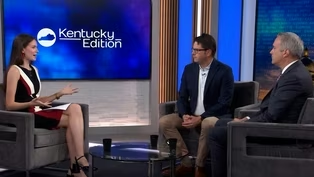
Clip: S5 Ep78 | 7m 48s | Inside Kentucky Politics with Sherman Brown and Tres Watson. (7m 48s)
 New
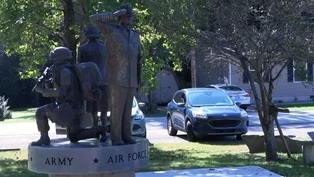
Kentucky Monument One of Few Dedicated to Women Veterans
Video has Closed Captions
Clip: S5 Ep78 | 4m 28s | West Liberty home of one of few monuments in U.S. dedicated to military women. (4m 28s)
Providing Support for PBS.org
Learn Moreabout PBS online sponsorship New Episode
- News and Public Affairs

Top journalists deliver compelling original analysis of the hour's headlines.
 New Episode
- News and Public Affairs

Today's top journalists discuss Washington's current political events and public affairs.
 New Episode

 New Episode
 New Episode
 New Episode



 New Episode
 New Episode


Support for PBS provided by:
Kentucky Edition is a local public television program presented by KET