
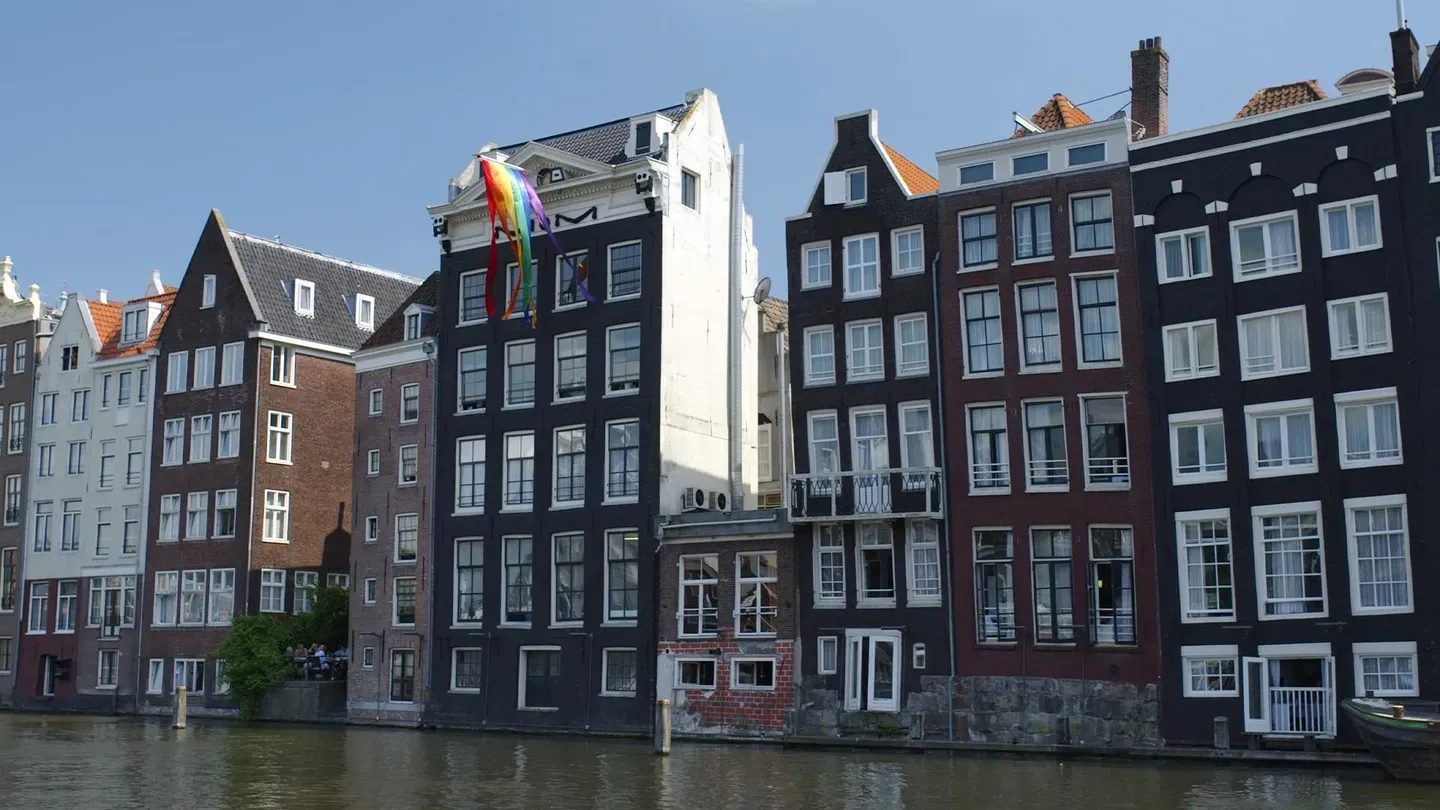
The First Story of Home
10/1/2026 | 53m 41sVideo has Closed Captions
Discover the fascinating origins of our favorite rooms.
Discover the fascinating origins of our favorite rooms, including the original hall of fame at the world's largest Viking Hall. Then, journey to Thomas Jefferson's Monticello and its incredible kitchen, where the beloved French fry may have been invented. The episode also goes to Highclere Castle (from Downton Abbey) and Hearst Castle.
Problems playing video? | Closed Captioning Feedback
Problems playing video? | Closed Captioning Feedback
The History of Home is presented by your local public television station.
Distributed nationally by American Public Television
The First Story of Home
10/1/2026 | 53m 41sVideo has Closed Captions
Discover the fascinating origins of our favorite rooms, including the original hall of fame at the world's largest Viking Hall. Then, journey to Thomas Jefferson's Monticello and its incredible kitchen, where the beloved French fry may have been invented. The episode also goes to Highclere Castle (from Downton Abbey) and Hearst Castle.
Problems playing video? | Closed Captioning Feedback
Where to Watch The History of Home
The History of Home is available to stream on pbs.org and the PBS app.
(upbeat music) - [Narrator] A home is more than just four walls and a roof.
It's what's inside that counts.
In this episode, The History of Home will explore the rooms that sustain, entertain, and define us.
It's time to open the door and step on in.
(upbeat music) Follow us as we feast in the original hall of fame.
We'll cook up a storm in some of history's coolest kitchens.
You'll need to be on your best behavior for a presidential dinner.
(bright music) Then pull up a chair and sit back as we kick it in an American castle.
And most importantly, just relax and prepare to be entertained.
Welcome to The History of Home.
(soft music) Among the remote islands of northern Norway, built on the site of an archeological discovery is an ancient seat of power.
- The chieftain's house.
The reconstruction of the hall we had just 50 meters away.
The biggest compound in Scandinavia and all the world.
They haven't found a house like this before, and I don't think they will find it after this either.
- [Narrator] This traditional long house is a recreation of a viking hall that ruled over these islands for almost 500 years.
The hallways we know today are a shadow of their former glory.
Nothing more than a corridor.
A place to wipe our feet and leave our keys.
But to the vikings, the hall was the room.
Even heaven was a hall and warriors who died in battle ascended to the greatest hall of all, Valhalla.
This proud history lives on at the Lofotr Viking Museum.
(soft music) - By day, I'm a kindergarten teacher.
By night, I'm the lady of the house.
(singing) I get to sing, I get to act.
It's an amazing job.
(singing) When a guest comes to visit me at the viking museum, I want them to live my history.
Live the history of the vikings.
I want them to see the real life of the viking.
The viking life at home.
(bright music) - [Narrator] Known more for their exploits abroad, than their architecture, the vikings were skilled builders and farmers who peacefully tended their land.
Local farmer, Odd Nicolaysen, is much like the Viking chieftains of yore.
- I have my little small farm where I have a wife and five children.
The chief was a farmer.
He was the biggest farmer in this area.
Having a big house like this meant that this is a rich area.
With a lot of resources.
- [Narrator] This shining house on a hill would have dominated the local community.
Inside, it's essentially one big room.
And in here was only one person in charge.
- The lady of the house was the boss.
That is what she was.
She didn't need to be the chieftain's wife to be the lady of the house.
But all chieftains needed a lady of the house to control everything.
- [Narrator] This single room was shared by anywhere between 40 and 50 people.
Lords, servants, slaves and family all working, sleeping, and living together under one very long roof.
- This room is where most of the normal daily life would have happened.
So they would have made food here.
There would have been a lot of crafts going on.
The sails of the ships were made here in this room on a loom.
In the wintertime, this is a very dark place.
So you need some light in your life.
So the fireplace is absolutely that.
- [Narrator] The communal style of living is common across the world.
It inevitably forges strong communities and cultures.
- They would have sacrificial rituals, political meetings, anything important would have happened in this room.
(cheering) It was a big part of the culture.
The chieftain could invite all his friends, all his allies, his people come in here, have a great feast.
It would be a way of place where he could share his wealth with his people.
- [Narrator] This hall stood supreme here for 100s of years, not because it was a place for domestic chores and occasional feasts, but because this room was a center of power.
A trait that endured as great halls evolved.
(regal music) The viking were by no means the only people who prized square footage and some nice high ceilings.
The word, hall, was one of the very first words recorded in English.
And across the North Sea, the grandest halls were the domain of kings.
- Well this spectacular room is the great hall at Hampton Court.
And it is the largest and greatest hall that Henry the Eighth ever built.
- [Narrator] Rich tapestries line the walls.
The ceilings would have been painted in vivid royal reds, golds, and blues.
No expense was spared on the room at the very heart of Henry the Eighth's kingdom.
- It is intended to impress as it still does.
Would have been the biggest room that most people had been in at the time that it was built.
So they would have been wowed by the architecture, by the decoration.
This would have been a place that made them stop and think that Henry the Eighth was the man with all the money.
- [Narrator] It's an ode to wealth and power.
But what good is all that if you can't have a bit of fun?
- So halls were above all about impressing as places to entertain, to host foreign guests, to have banquets and feasts.
There would have been revels and spectacles going on here.
Then there's dancing, Henry the Eighth loved dancing.
Total theater.
This was Henry the Eighth's palace of pleasure.
(epic music) - [Narrator] The great hall of Hampton Court Palace was a place of pageantry and politics.
And it couldn't be more different from the hallways of today.
- Over time, of course, the hall has declined dramatically in status.
I mean a hallway for us is a vestibule, it's an entrance space, it's where you leave your hat or your coat.
And then you go off from it into different rooms of the house.
- [Narrator] Even as the great hall reached its architectural apex, it was dying.
The functions once carried out in this one big room were separated.
- We now have many other rooms and I suppose over time we've seen a separation of the functions of hall into these other separate spaces.
- [Narrator] This transformation of the home began at the beating heart of every hall.
The hearth.
Here we gathered around the fire for warmth.
But also to cook delicious, life sustaining meats.
By the time Henry was chowing down and cutting a rug, cooking had long ago moved off to a room known as the kitchen.
From the simplicity of an open flame, to the gadget filled rooms of today.
The history of the kitchen is as rich and complex as the meals cooked within.
(bright music) Food and family are the secret ingredients to a good kitchen.
- So this is our wine.
I work on this.
These are for you because you cannot drink wine without eating.
Cheers.
(bright music) - [Narrator] Here in Tuscany, Lavinia and her aunt Paula welcome guests into the kitchen at the family's vineyard, Tenuta Larnianone.
- The most important room in the house is the kitchen.
It's the place, in our family, where we talk.
- [Narrator] Nothing says home quite like the sounds and smells of a home cooked meal.
- This is our way, our family recipe of papal pomidoro, which is a typical and traditional Tuscany dish.
Right?
She's master chef.
So I'm the apprentice, and still I have to learn from my aunt all the secrets.
- You're young so, you have time.
Important is to have the passion.
- [Narrator] The family has been cooking delicious food in this kitchen for generations.
- I remember, she was 10 years old, I think.
We made sacetote, the chocolate cake.
- It was magical.
What makes Tenuta Larnionone home, is that it always has been lived in by someone.
And you can feel that in the house.
The home, it's where people put a little bit of themselves around, and you can see the trace.
Legend says my great grandfather, when he met my great grandmother, who was this rich and beautiful woman of Tortuna, they bought this land and they started their family, and they developed the passion of cooking.
And that's why the plant a vineyard, olive trees.
Even though I haven't met my great grandparents.
- There's something behind.
There's a history.
They say it's magic.
- [Narrator] It's the memories, like recipes, shared and tasted that keep people coming home.
- So there is this crowd feeling.
- I like to do like this.
- And hopefully it's gonna work through generations.
- [Narrator] That warm and fuzzy feeling of sharing a meal with family and friends is timeless.
- The thing that makes a house a home for me is the smell.
The smells of scallions, and garlic, ginger, onions.
Just intoxicating.
The kitchen says a lot about who you are, where you're from, how you were raised.
- [Narrator] But the kitchen experience has changed drastically over the years.
- In our modern kitchens, we do lose a lot of the music.
We like convenience sometimes too much.
It's all beep, beep, beep, beep.
(dinging) I use things like sound, and smell, and sight to tell the timing of the food.
It's not based on a timer, or a button, or a little buzzy thing.
It's all based on the feeling.
- [Narrator] Culinary historian and author, Michael Twitty, uses food to reveal the hidden histories behind our kitchens.
- My perfect kitchen would be an idealized, late 18th early 19th century kitchen.
I've become so used to working in that framework.
- [Narrator] By cooking and teaching in historic kitchens throughout the United States, Michael bears the torch for those who came before him.
And in one uniquely historic kitchen, he can reveal the true story of a country's cuisine.
(bright music) Casting an eye over the state of Virginia, sits Monticello.
The pride and joy of Thomas Jefferson.
- We often describe it as an architectural autobiography.
And so at Monticello you get a true sense of the man.
- [Narrator] The mansion visitors see today is the finished product Jefferson dreamed of.
- It took Jefferson 40 years to built Monticello.
He starts around 1770 and he doesn't finish until 1809.
Because he is deeply involved in the war for independence.
He becomes the first Secretary of State, the second Vice President, the third President, and so he was a very busy man.
- [Narrator] Love and hard labor went into designing this impressive neo classical work of architecture.
But the story of this house, like the man himself, is complicated.
- I think Monticello is some place that I consider to be very, very special.
But I also think that it represents a great deal of pain.
I think it's important for people to understand the full history of Monticello because the enslaved community was in the majority for most of this place's history.
On any given day you can come and see approximately 125 to 140 enslaved people.
This house was built by enslaved people.
And actually, if you get close enough to some of the bricks, you can still see fingerprints of the enslaved community who put the house together and who made this place what it is.
- [Narrator] Jefferson's love of architecture was almost matched by his predilection for fine wines and foods.
The contrasting lives of Monticello's inhabitants is most stark in the kitchen.
- We forget that in order to have that idealized, sentimental kitchen you had to have people who were basically chained to that hearth.
The people who would have worked in this particular kitchen were enslaved men and women.
Generations of families who were the domestic servants on this plantation.
So this is a very special kitchen in the story of southern food.
As a culinary historian, my job is to use the tools of historical inquiry to investigate the history of cuisines and their creators.
These are the makings of okra soup.
The ingredients are from all over the world.
This is a dish that is known throughout the South, but also it's a dish that's known throughout the African Atlantic.
The culinary history that I focus on is really centered in looking at how Africa shaped the foods of the globe through that unwilling cultural exchange.
- [Narrator] The enslaved people of Monticello cultivated ingredients from across the world in their kitchen garden.
The kitchen itself was state-of-the-art, with food prepared by some of the best chefs in the country.
Chefs like James Hemings, the first African American to be trained in the art of French cuisine.
And a man who leveraged his skills to negotiate his freedom.
- People don't realize that enslaved people were not robots.
They brought their culture, and they brought their ideas, and they brought their skill set to their work.
Black cooks who worked in this space, they really are sitting in the middle of a great cross roads of foods and ideas about food.
That's one of the geniuses of that culture.
- [Narrator] Sure, Thomas Jefferson wrote the Declaration of Independence, and more importantly, popularized the potato fried in the French way.
Or the French fry to you and me.
But this founding father and foodie is indebted to the men and women working in this kitchen who set the course of food in America.
- The most important room in any home is the kitchen.
Hearth is the heart.
The living breathing heart of this space.
- [Narrator] Whether you're in a grand mansion or a simple shack, the sheer importance of cooking is universal.
- Food, like every other aspect of your culture, should speak to the emotional state of where you are in that place.
I mean there's a reason why we call black food soul food.
- [Narrator] Up in the main house, Jefferson's famed chrome yellow dining room recalls grand meals with visiting statesmen and scholars.
But the people doing all the work were nowhere to be seen.
(bell ringing) There's a reason why they are set apart.
We are beneath, and below, and around the corner from the main home.
There is a lot to be said about social class, about race, about culture, about those boundaries.
- [Narrator] Food preparation in the home has always been intrinsically mixed with class and wealth.
The kitchen has been the scene of many a class battle.
This is a pattern seen throughout the world.
- My name is Dr.
Emma Wells, I'm an architectural historian based at the University of York.
I just sort of love unraveling architectural styles and the people who created him.
- [Narrator] At Dennis Sever's house in central London, there is a lot to unravel.
More of a time machine than a home, every room is styled after a period of the 18th and 19th centuries.
- We're in, perhaps, the oldest kitchen in London.
The people who worked in this kitchen were the service staff for the merchant class above.
- [Narrator] For centuries, the kitchen was banished, shunted off to an out building or down into a basement.
It was the territory of servants, not the upper class who employed them.
- Many of the cooks, scullery maids, kitchen maids would be here for 16 hour days just taking the food, preparing it, cooking it, doing the washing, bringing the washing, et cetera, et cetera.
- [Narrator] Separating servants from the household was a symptom of a class obsessed kingdom.
- Domestic servitude in England is particularly unique because of the hierarchy of social classes.
We have a royal family, we have an aristocracy, a nobility, and over time we get social classes developing from that.
- [Narrator] This strict structuring of society was epitomized within the quaintly named English country home.
(orchestral music) The owners of these impossibly large estates were living a life of luxury most of us can only dream of.
And every whim and fancy was waited on hand and foot.
While servants lived, worked, and often slept in the same room 16 to 18 hours a day, seven days a week, - They're sort of a real microcosm of English, British history.
From the royal, the noble, down to the lowliest member of the lower classes are all wrapped up in these four walls of the country home.
- [Narrator] These parallel lives, the upstairs and the downstairs, are still a source of endless fascination.
While these stories begin hidden down in the kitchens, they were served up on a grander stage.
The dining room.
This country home has been the scene of historic melodrama both real and imagined.
- So my name is Lady Carnarvon, I'm sitting in Highclere Castle which is my home.
One of the largest lived in houses in England.
There's been a home here since at least 749 AD.
- [Narrator] This has been home to an Earl of Carnarvan sine the 1700s.
The most well known, the fifth Lord Carnarvan, helped find King Tut's tomb.
But it was a rather more modern endeavor that brought fame to Highclere.
- Well Highclere's become far better known because a little TV program called Downton Abbey was filmed here.
And extraordinarily, it has become a phenomenal hit.
And it has given many people much pleasure.
It's now probably one of the most famous homes in the world.
- [Narrator] The significance of Highclere Castle is no fantasy.
The dining room here has fed aristocrats and hosted royalty for 1200 years.
A dining room is a relatively modern invention.
For centuries following the decline of the hall, lords and ladies took their meals off to their rooms.
But for common people there had never been such a place.
Most houses had one room where we cooked, ate, and lived.
Now common around the world dining rooms have been the scene of family meals and family drama ever since.
- We are in the dining room which obviously I hope you might have guessed with the dining room table.
That probably wasn't very helpful, was it?
Why don't I start again?
- [Narrator] As the good lady has most graciously elucidated- - Come on, dogs.
- [Narrator] ...this is the dining room.
- Puppalito.
- [Narrator] In life as in fiction, this was a set for the verbal sparring and political maneuvering of the rich and powerful.
- Around the walls are actually my husband's ancestors.
This dining room must have welcomed royalty, statesmen, politicians, authors.
And it still happens today.
- [Narrator] And if you're lucky enough to get an invitation, it's a bloody nice place to enjoy a meal.
That you didn't have to cook yourself.
(soft music) - I tend to welcome 12 to 14 guests at most lunches or dinners here.
It can, the table can extend to seat 30 people which is a bit of a squidge, but enormous fun.
- [Narrator] Professional butlers and chefs prepare meals in much the same fashion as generations of their predecessors.
- This is a beautiful room and we eat the most delicious food.
And food is at the heart of every family, and every home.
What you serve, sitting down together, the conversation, the removal of one set of dishes, the representation of another.
That lies at the center of family life in every home.
- [Narrator] And if one is to be a good host, one must consider every aspect of the meal.
- When I'm trying to seat people round a table, I'm trying to work out who they might enjoy talking to, where the conversation might spark.
It becomes quite a big crossword puzzle, really.
- [Narrator] Despite the planning, the presentation, and the formality, in the end the dining room is a place to be enjoyed.
- I do love to share Highclere with family and friends, so I carve out weekends when I can stop and sit down and welcome friends who are struggling down from London for a jolly nice cocktail before settling down for a dinner on a Friday evening.
And it is important.
And I have five younger sisters, and our parents died very young so the idea of family and home is completely essential to all we do.
But as well as I say to think about the people who've dined here before, and people have dined here for 1200 years.
It's really important to stop, to share the most extraordinary dining room.
There have been some really good parties and I hope we continue having good parties.
(laughing) (soft calm music) - [Narrator] And the party isn't over.
(upbeat music) After a lavish meal, we can grab a jolly drink and loosen our belts.
Where else, but in the living room?
- When I think of a living room, I think of somewhere to relax, to really switch off from the world.
I have a comfortable sofa, a lit fire.
It's where I can escape.
- [Narrator] This room has changed more than perhaps any room in the house.
A fact reflected in its many names.
(upbeat music) - In the Tudor era, the 16th century, we have the great hall.
But then within that we have the withdrawing chamber.
Withdrawing chamber is the more elite, more hierarchical space for those more intimate, elite, private guests.
And then we move on, we drop the with, and we get the drawing room.
Now during this era we see sort of be used as we would today.
Entertainment, but quite formal entertainment.
- [Narrator] In the early 18th century, these rooms started to appear regularly in floor plans and they took on another name.
The parlor.
Derived from the French word, parler, it was a place to converse.
- This room, the parlor, is a reflection of 18th century merchant class.
The parlor certainly wasn't a lounge living room like we have today where we're kicking off our heels, and lounging around watching television.
You would entertain guests, but it's also the most important, elite room of the house.
All of your most valuable treasures would be surrounding you.
You're showing off yourself, you're showing off your identity, but you're also showing off your wealth, your affluence.
- [Narrator] During the era of the parlor, a revolutionary notion came into play.
Comfort.
- Comfort is actually quite a modern concept.
Modern in terms of the 18th century.
Comfort meant sort of aid, condolence, more helping one out in need.
We think it derives of the first sort of utterance of the word comes from Horace Walpole, the writer, in about 1770s.
And he talks about the differences between discomfort and comfort, and therefor it being something to desire.
- [Narrator] Finally a little cushiness was introduced into the stiff, formal withdrawing room of yester year.
The living room came into being in the late 1800s, and over the course of a century it became the room we know today.
A place for style, comfort, and living.
Obviously.
- The styles of our living rooms have changed pretty much each century and sort of in turn with each new architectural style.
Our living rooms are sort of microcosm and embodiment of style, of fashion, of culture, of taste, everything of the self but also of our identity.
- [Narrator] And this is no more evident than in one of America's most iconic homes.
Perched atop a California hill overlooking the Pacific Ocean is Hearst castle.
A shining monument to maverick newspaper tycoon, William Randolph Hearst.
- WR was the Steve Jobs and the Bill Gates.
I mean he brought comics, be brought designs, he brought games, he brought color to newspapers.
Before anybody else dreamt it could happen.
- [Narrator] Steve Hearst, the great grandson of William Randolph Hearst, is the fifth generation to call this property home.
(soft music) - I just think that this is one of the most spectacular pieces of property.
The gardens are flush, the flowers are blooming, the sun is out.
You've got beautiful pools, and fountains, and statuary.
Every family member drives through that gate, every one of them thinks they're home.
Regardless of where they've moved to, when they get back here this is home base.
This place, it's forever.
- [Narrator] Known as Hearst Castle to most, it's simply the ranch to the family.
- I hate to admit it, or admit this on camera, but I mean we're in cloth diapers up here when I was a kid and we would have dinner up there a lot at the A house and hide and go seek, or ditch were the name of the game, and what a better place.
I mean us as kids having the opportunity to play there.
It's a homey place, it's of course large, but you can still find a great room to sit in.
- [Narrator] The love for Hearst Castle has endured.
Today they share their family home with thousands of visitors from around the world.
- I'm Hoyt Fields, welcome to Hearst Castle.
Operated by California State Parks.
I have worked here at the castle for 50 years, and this is my passion, this is my life.
Hearst castle was a collaboration between William Randolph Hearst and the architect Julia Morgan.
28 years, 1919 to 1947, they worked together to build this beautiful home.
- [Narrator] Acclaimed architect and engineer, Julia Morgan, was the first woman to study at the National School of Fine Arts in Paris.
She built more than 700 buildings over the course of her prolific career.
But Hearst Castle stands alone as her greatest triumph.
- We want our visitors to feel like they are a guest of William Randolph Hearst.
Mr.
Hearst's guests would enter through the front door here and all of a sudden they would look up, and enter this grand assembly room.
One of 14 living rooms in the main house.
You have all these fabulous pieces of art, but then you have these comfortable pieces of furniture where you could sit down and relax.
(soft jazzy music) And that's what Mr.
Hearst wanted, he wanted you to enjoy it, to be comfortable.
Not to be stodgy.
It was all about your comfort and enjoyment.
- [Narrator] Though extravagantly decorated, this was still a family home.
- The five sons, they used to play ball games in here.
Can you imagine?
With this priceless art playing ball games.
The other thing they used to do in here, they used to roll up the rugs and they used to dance on the teak wood floors.
- [Narrator] But this lavish living room wasn't only for the rugrats.
(radio static) (band music) During Hollywood's golden age, a star studded guest list walked through its doors.
- You can imagine coming into this room in the evening, or any time of day and you have Clark Gable, you have Charlie Chaplin, you have the Marx brothers.
You might have the Mayor of New York, Winston Churchill.
So it was an eclectic mix of guests.
Everybody who was anybody was here.
- [Narrator] This castle and the surrounding ranch land is called home by more than just the Hearsts.
- I've spent to much time here it is like a second home to me, it really is.
Of course my home is not as opulent as this, but I feel that this is just as much my home.
- [Narrator] This incredible living room, at the center of a remarkable castle has a special place in American history.
Hoyt, Steve, and the foundation at Hearst Castle all work tirelessly to make sure this iconic home is protected and preserved for generations to come.
- I think if they came here today they would be extraordinarily pleased that the legacy is stable and thriving.
And they would be just as thrilled to know that it will be that way in 50 and 100 years.
- [Narrator] Our living rooms have changed a lot in the 100 or so years since Hearst's heyday.
There's still a place for fun and frivolity, but the fashion, fashion is more fickle.
Just ask interior designer, Brigette Romanek.
- Come on in.
(harp music) - [Narrator] With a Rolodex of celebrity clients, and a coveted spot on Architectural Digest's top 100 designers, Brigette has made her mark in styling homes across the world.
Today, she gives us a sneak peak into her own personal favorite.
- So this is our living room, and this is definitely where we spend a lot of time with the kids, and my husband and friends, and parties, and jumping around.
The living room is fantastic, I think in present day more than any other time because it really is a room to live in.
It used to be a space that was oftentimes just for show, and children were definitely not allowed into the living room.
But nowadays, it's great because it is a space where people love to use it, and do.
And that I really hope I do that with my clients as a creative space for them that I do call livable luxe.
And I just think that every space should be used and enjoyed.
- [Narrator] Brigette established her business, Romanek Design Studios, to share flair and functional comfort.
- Me starting this career, the love of my life, this career, was in such a natural way.
I've always loved my home and my husband would always joke that he didn't know where the sofa would be when he got home that night.
'Cause I'm always moving things around and always trying new things.
Everything for me is inspiration, I'm that corny person.
But it's true.
- [Narrator] From the art on the walls to the furniture that fills the room, Brigette brings together living room styles from across eras.
- I think that's such a big part of design and interior design.
Not pulling from one period, but using all of your research and knowledge to pull from different periods and making something really special.
Usually a set of extremely beautiful architectural, beautiful chairs is always important.
Usually vintage pieces.
Pieces that I've picked up from auction from the 60s and 70s.
And then made again with contemporary pieces like that console.
Nothing is ever done just for the sake of beauty.
I just try to bring it all together in a way that feels good.
This is not a museum, it's not a gallery, it is a space where one lives.
It really serves so many purposes.
My morning coffee, it's great.
The girls jump all over the sofas and run around.
There's the building itself, but there's the heart that goes into it.
It's a place that has soul.
- [Narrator] And when it comes to soul, what's inside matters.
The furniture whether bought, or bartered, or built can really make the living room a family room.
So lets take a moment to honor our favorite sitting chairs and side tables.
Hidden among the busy streets of south London, the kind of furniture designers dream of becomes reality.
(bright relaxing music) - I think the importance of handmade furniture is you're getting something that has been designed and put together with care.
- [Narrator] Goldfinch furniture uses furniture making to educate a new generation of craftsmen.
- For me, the beauty isn't even in the elusive price tag or having something that someone else doesn't have.
It's about finding something that's gonna be functional for your home that works with your life.
(soft music) - [Narrator] And the materials used to create these master works, can be as valuable as a steady pair of hands.
- There is a legacy to processing a 200 year old oak tree that has to come down, or has fallen down in a storm and carefully processing that timber to make furniture that's gonna last another two, three, 400 years.
The beauty of wooden furniture is that it's so tactile, it's still a living, breathing material.
It expands, it contracts with different weather.
It ages with you, it gets little marks, little blemishes and these all tell stories.
You can't create history with furniture that's only gonna last one generation.
- [Narrator] And if you care as much about the furniture you own as these guys care about making it, it says a whole lot about the home you make.
- When you walk into someone's home, you get a feel of their personality.
Not actually that interested in people making statements with their furniture, I'm interested in seeing how they interact with their furniture.
- [Narrator] Like the furniture itself, the craftsmen tradition is carried through generations here at Goldfinch.
- If I look at my dining table that's been in my family for five generations, there's marks on it that have been there for a couple of hundred years.
Is it five generations?
It is, isn't it?
Yeah, you're parents.
No, your grandparents, your parents, you, me, Sophie and the girls.
That's five.
- Five.
- There you were, shaking your head.
There we go.
It's always interesting working with your dad, 'cause whatever the argument, your dad always thinks he's right.
My love of timber and furniture making, that stems from my father.
But some of the best furniture makers I know are women and as a proud dad of three daughters, it's really important to me to make sure that some of the roles that have been historically male dominated can be opened up so that these girls when they get older can have a decision to make, do they wanna get involved in furniture making.
- [Narrator] These girls might be the future.
But for now, Dad and Granddad will continue fortifying the legacy of Goldfinch.
- I think that crafts and furniture in particular are so important because it's keeping the tradition alive.
Using your hands to create something that's not only beautiful, but is functional.
To bring that together, to create pieces that people are gonna love.
- [Narrator] Whether in Hearstian splendor or more modest surrounds, the living room is a space for family and friends to come together, to take a load off.
But also for a little entertainment.
(string music) So what now?
How shall we pass the time?
(string music) How did our forebears face an age old issue?
The curse of boredom.
- I think boredom is a modern invention.
- [Narrator] I'm sorry, what's that you say?
- When you look into the past, you have to reckon with the fact there is no computers, or televisions, or radios, or electric light, or any other of the essential distractions on which modern people depend for their very existence.
- [Narrator] Okay, got it.
Point taken.
Dr.
Irving Finkle is a long time curator of the British Museum.
The good doctor has a hobby.
A favorite of living rooms throughout history.
Board games.
- This is an Indian board for this came of Parcheesi.
And they have long dice.
They're rather good because they make a good noise and also (dice rattling) you can annoy your opponent.
I'm interested in the long history of people playing board games.
I'm really interested to find out what happened, why they survived.
Some archeologists think they are for ritual purposes, some archeologists say were there for things to do with the afterlife.
I personally think that games are securely in the category of the enjoyable passing of time.
- [Narrator] And from as far back as 8000-10000 years BCE.
Board games have provided us with a compelling way to do just that.
- Most human lives are busy and occupied and there's only a small amount of time for what we call leisure activity.
These objects are concerned with that part of a person's life when they do actually have nothing else to do.
And this nothing else to do is a very important thing in the history of man.
- [Narrator] What better way to keep yourself entertained during such times than a little friendly competition.
- Almost all boardgames in the world are for two players.
This is a crucial point.
So that it's one person against another.
Everybody knows chess.
There's strategy and intelligence, it's two sides of a war, and the person who has the sharpest brain will win on their merit.
There is nothing like beating an opponent over the chess board, staring at them and intimidating them, and being the better player.
Being the winner.
- [Advertiser] Quiet play can be fun too when you know how.
Watch.
- [Narrator] There is one modern classic particularly renowned for spreading dissension and causing schisms in living rooms around the world.
Monopoly.
- Monopoly, of course, celebrates the lowest animal that lusts for power and riches which lurks in the human race and in a roomful of children turns into kind of a monstrous and unpleasant matter.
I think it's marvelous, a test of a really good monopoly game in our household was the following, that one person stands up, kicks the board over onto the floor, and says I'm never gonna play with you again and runs out of the room.
That, to me, is the essence of a good family board game.
- [Narrator] Temper tantrums not withstanding, the bonds forged in the crucible of family competition test our wits, our knowledge, and our patience.
- In the case of boardgames, it's instructive to find out what's given people pleasure in the past because the principles which made these games successful are exactly the same as principles which make games today successful.
This is the source of wisdom.
However drastically they dress them up and disguise them, and cover them with makeup, the device underneath is a very simple thing which has been made a million times before.
So this is a very nice example of a village.
- [Narrator] We've been rolling the dice and moving the pieces for thousands of years now.
But in the last few decades, technology has changed not just how we game but the entire living room experience.
(upbeat electronic music) - I'm Sonja, or omgitsfirefoxx.
And I'm a gamer, a content creator, and this is my living room.
It's incredible, I can sit in my living room, like I'm doing right now, and I'm playing with people all over the world.
- [Narrator] Sonja Reid is a Twitch streamer and YouTube gamer with hundreds of thousands of followers.
In 2016 she held the Guinness World Record for most followed female gamer and was ranked in Forbes 30 gamers under 30.
(beep) - I felt like growing up I was so just drawn into video games.
I'll throw down in Settlers of Catan and stuff like that but I feel like my true love just lies in video games.
- [Narrator] Over the past decade, Sonja has seen the gaming world constantly level up.
- The evolution of games, it's just skyrocketed and it's almost just become like a household thing.
Thinking of something like Pong, something so simple to now we could have intricate games with like so many people across the world.
And I feel like it's just opened up such a huge community and it's become mainstream.
- [Narrator] Modern technology allows us to welcome the world into our homes, to spend some time alone together., - It's so interesting to reflect on our roots in games like chess and Go.
Now with the rise, and the publicity, and the monstrosity of Fortnite, and everything it's incredible to see even across the ages that gaming has always had like a common goal of bringing people together.
You're coming together with people for entertainment.
Getting my ass kicked.
- [Narrator] Whether in the mansions of legends, or the modest homes of the working classes, it's inevitably the living room where we come together.
- I feel like just having the living room as a space where you can let it all out and just game, and not have to worry about everything else going on.
But on the flip, it's still such a great place for hosting and having your friends over, and playing games together.
It's such a, it's my alone time, it's my safe place, it's my hosting place, it's my friend place.
- [Narrator] At the end of the day, whether we're spending time with family, friends, or thousands of viewers.
- Cheers.
- [Narrator] We just want to enjoy our homes.
Ever since the house evolved from a grand hall to a multi room mansion, the kitchen, the dining room, and the living room have dominated our cultures and defined our lives at home.
But in the next episode, we head upstairs to take an intimate look at the rooms the inspired humanity's creativity, cleanliness, and (clearing throat) our proliferation.
Then finally, we'll cast an eye to the distant horizon to predict the future of home.
(upbeat music) (soft faint music)















Support for PBS provided by:
The History of Home is presented by your local public television station.
Distributed nationally by American Public Television