Lost Louisiana
The Mississippi | Rivers Run Deep | Lost Louisiana
Episode 10 | 41m 2sVideo has Closed Captions
The Mississippi | Rivers Run Deep | Lost Louisiana
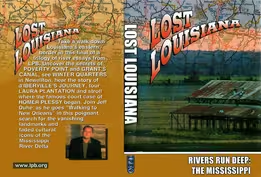
Take a walk down Louisiana’s eastern border in this final of a trilogy of river essays from Louisiana Public Broadcasting.
Problems playing video? | Closed Captioning Feedback
Problems playing video? | Closed Captioning Feedback
Lost Louisiana is a local public television program presented by LPB
Lost Louisiana
The Mississippi | Rivers Run Deep | Lost Louisiana
Episode 10 | 41m 2sVideo has Closed Captions
Take a walk down Louisiana’s eastern border in this final of a trilogy of river essays from Louisiana Public Broadcasting.
Problems playing video? | Closed Captioning Feedback
How to Watch Lost Louisiana
Lost Louisiana is available to stream on pbs.org and the free PBS App, available on iPhone, Apple TV, Android TV, Android smartphones, Amazon Fire TV, Amazon Fire Tablet, Roku, Samsung Smart TV, and Vizio.
Providing Support for PBS.org
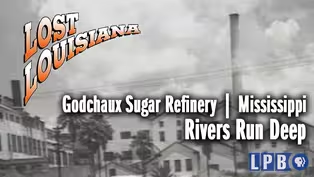
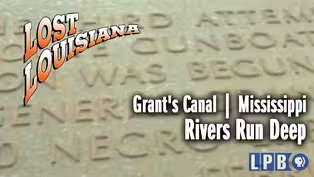
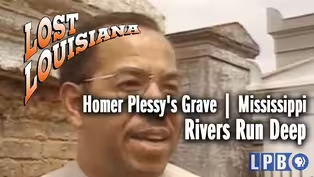
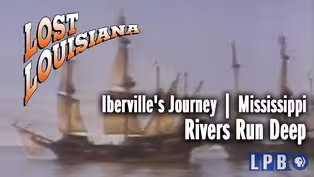
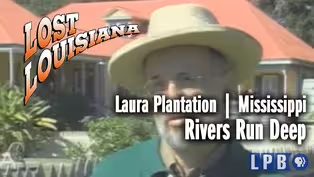
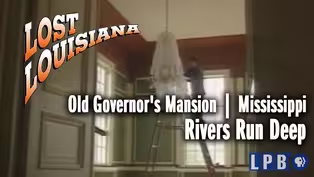
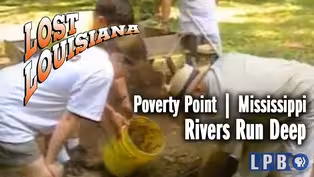
Learn Moreabout PBS online sponsorship[Music] i know that a woman river [Music] i want you to know he keeps on [Music] the constancy of the river is a common impression for songwriters travelers and anyone pondering the mississippi when we enter louisiana from arkansas at lake gas away that impression swells the first signs of work here are the lush pepper fields of panola pepper sauce though they call this the poorest part of the state some signs remind us not to judge it by economic numbers lake providence is rich in just the sort of beautifully faded landmarks we've come here to see in the delta wind-worn landmarks stare you down at its peak mound was the home to 500 tenant farmers who planted and worked the land the store provided everything the people even had their own currency the post office was closed after 70 years because postal regulations said liquor could not be served in a building which also handled the mail from one of our series references louisiana proud by andy smith this of course is mound and the mound plantation store a good starting point for a journey that you and i will now make which will take us all the way south to new orleans i'm jeff deway this is our latest search for lost louisiana rivers run deep this is the mississippi in the delta wind-worn landmarks not only stare you down they make you look back further than the old south longer than the europeans almost as far back as the current course of old man river we're trespassing now on the home of the mound builders in the 1840s an explorer looking for lead first reported native artifacts in this area but it wasn't until the 1950s when geologists took a second look at a 20 year old aerial photo that our generation realized something big was here long long before surprise a man-made shape so big you can't see it from the ground since then scientists have worked here trying to figure out who these people were we know they left this corner of louisiana three thousand three hundred years ago we are still examining the earthen ridges the mounds and all the much smaller things they left behind geologist roger associate yes we'll probably never know exactly why poverty point people have settled exactly where they did i have a feeling that that is probably largely a matter of socio economics or perhaps a socio-political factor but obviously the poverty point peoples liked the margins of the ridges like mason ridge this has supported them high ground relatively immune from flooding with good arable soils and good locations for for living conditions a c-shaped figure dominates the poverty point site at nearby epps the outermost ridges are nearly three-quarters of a mile wide the ends of the interior 594 meters apart if these were straightened they would be 12 kilometers long park service manager dennis labott mound a or the bird mound as some refer to it is singly one of the largest features that these people constructed while they're here today it rises about 72 feet in the air would measure about 600 by 800 feet at its base if you take these figures translate that into cubic yards you're looking at over 300 000 in its construction and then if we took that figure and translated it into 50 pound baskets you're looking at well over 10 million that one in this one mound alone that's pretty impressive see the bird shape mound that we have here you'd have to be about a thousand feet in the air it's truly that large looking here into the stairs you'd see the middle of the bird's back and then breaking out equally to the north and to the south representing the wings as you'd almost see this again flying away from the concentric terraces into the west and it is on an east-west axis so it's very carefully laid out scientists conclude their society was a sophisticated one with trade routes and exploration throughout the south what faded landmarks we can still find here show that this corner of modern louisiana mississippi and arkansas was an important cradle of native american society some people whizz by on i-20 through delta to vicksburg you and i will be taking a road less traveled we wouldn't want to miss beautiful crescent plantation just a mile from the super highway built in 1832 by dr dm and elizabeth dancey it's still a working farm it was saved from the yankees torch because a sickly woman inside could not or would not be moved scout around delta and you'll uncover one of the civil war's great forgotten follies this wide ditch is all that's left of grant's canal in 1862 vicksburg was holding up against the union's advance until the food completely ran out no less than general ulysses grant desperately wanted to uncork their river blockade and his scheme was to cut a huge ditch maybe the water would scour a new course and let northern commerce through to dig it he used captured slaves from the plantations near here the strongest had fled with their masters these were the aged and house helpers they dug that winter and failed and tried again with drag lines in the spring confederates pelted these rigs with cannonballs the mighty union army thought it could change the course of the river the river wanted to be tamed about as much as did the people of vicksburg it dumped only mud in grant's ditch and the yanks finally gave up all that remains is this long pit through the town of delta this is where teddy roosevelt hunted the louisiana black bear it would be illegal today but the teddy bear was inspired by his trip to the caney breaks along this stretch of our river the historic markers are plentiful along highway 65 south a cluster of graves in somerset mourns the richest family in these parts a planter named perkins [Music] his son has the saddest marker for the tragic story it tells he's not buried here he's still in the arctic it seems lost at sea in 1854 erected by his bereaved father in somerset here the river has left behind dozens of oxbow lakes on both sides of the state border the french explorer lasalle camped here in 1682. here's some newton high schoolers reenact their towns brush with a pivotal moment in history when the ten saw indians helped the white man through misleading channels the strange man's lips moved with no sound and he clasped and uncollapsed his hands making symbols and raising them towards the heavens the tensile people were very proud people and they worshiped the sun god so they basically thought lasalle was a sun god because his skin was so bright i think that this is a wonderful opportunity for them to study the history of tensile parish and by participating in it i think that they will always remember what they've learned i think that this day will be one day they will recall as being one of the fun days of their high school years without supplies and advice from the tencel lasalle certainly would not have paddled further south and wouldn't have claimed all this for france more about staking claims later in our journey for now it's back to the civil war and another house spared the yankee torches architecturally it's very unique studied in a lot of different classes you've got a log cabin an acadian style house built onto it and then the greek revival style built on and then the last addition the bathroom 1855 doesn't match any of the styles so and it was a working plantation a lot of times when you think of plantations you've got the pretty pristine fancy things like tara and going with the wind but this was more of a working plantation winter quarters is tucked away from big highway 65. it began in 1805 as a hunting lodge as a state park historic house it waits for the adventurous traveler on the south side of lake saint joseph kathy tarver will show you around dr haller nutt bought it in 1850 and was building a grander place on the other side of the river when war broke out he did on quite a few plantation homes he was not your typical plantation owner because he did a lot of agricultural research and genetic research within the cotton production he was building a house a bigger house a much bigger house across the river right longwood plantation is probably what you're talking about um it was a six-story beautiful mansion built similar to the almost like the taj mahal it has the dome like the taj mahal and it started just before the war and when the war started the mecha builders were all from the north so they were afraid they'd be trapped down here so they left and so the building was never finished howler died in 1864 julia moved back to longwood and that's where she lived for the rest of her days and she lived in that house knowing she could never fulfill her husband's dream and that to me had to have been real hard to finish my days in that house i couldn't finish today we think dr nutt a union sympathizer if that's true we can thank his politics that this gem stands today news of the union's advance was met with horror just south at pleasant view plantation the mistress of mrs bondurant deprived the invaders of 100 bales of cotton ready for market she burned them all through mighty army corps of engineers efforts to convince the mississippi not to change its mind and swoosh down the atchafalaya draw your own comment here on who will albeit not in our lifetimes who will eventually win constancy on the mine always along this river in new roads just yards away from the bank of false river in point coupee parish a small museum waits for visitors the flags of bourbon france and castillian spain declare to any passers-by on highway one this is a rich cultural stock melta poissue is one of the volunteers who will tell you just how rich in lore this spot is to lovers of louisiana history it's near sacred ground close to where the great explorer iberville and his hearty band of french canadians walked just over 300 years ago glenn morgan is an architect in new roads he's drawn a series of fanciful and detailed maps and storylines for educating visitors to the point coupe museum about the great trek french explorers made through these parts he was going from the south to the north right and ported over a small neckland bypassing this by passing a 22-mile bend on the river largest one in the mississippi system okay and he was lucky to have a good relation with the indians who told him oh yes they were on the way to another indian village and basically it's because he was trying to prove the fact that he was on the mississippi okay well do you find that even here in point guppy people know about the story of these tremendous folks you know that they they know the great human drama that was played here people don't really know that's why we like to tell the story just over three hundred years ago pierre lemoine cyr dieberville was anchored off ship island far to the east past bay saint louis he had three ships but they were too large to take him any further west on his mission to verify the mouth of the mississippi river he was skipping along the coast finding friendly natives and always asking them where in all this swamp can i find the great river that leads all the way to canada after he's lsu professor richard condrey is an avid fan of the detailed journals iberville kept it was a hard life they had disease on board when they were on the river several times you know iberville would say well this was a really hard day because i've had a fever they were often living on indian corn every now and then they would get from the indian some dried bison meat or some or some deer or be able to kill a bear or be able to kill a deer in fact i think it was near point coupe that they shot a deer as it was crossing the river swimming across the river and they feasted on it that night they crossed the marshes they rode through passages only the indians could show them the natives knew this watery realm for hundreds of years and unlike other europeans the french had a sophisticated rapport with the indians it seemed to be a rather peaceful experience for them okay there were really no hostilities on the first run uh along with the indians that they met in other words the indians seemed to offer peace and and the expedition seemed to offer peace theirs was actually no great discovery but it was a great claim for france spanish galleons had sniffed the mississippi's tithes back in 1519. desoto touched it near memphis in 1541 lasalle reached its mouth from canada 17 years before iberville when lasalle got lost a fellow canadian named tanti came down the river after him tonti left a letter for lasalle with an indian tribe lasalle didn't live to read the letter 300 years ago iberville's younger brother did he sends his brother bienville and the rest of the men on downstream and when they get to the village of the bayou gula the chief has been with him and he he now no longer suspects that they might be spanish but understands that the connection with french and with lasalle and he tells them that that he had not given them this letter from tonti to lasalle but he was given it to them now sure because tanti who had come looking for lasalle uh years before had left this letter with the indians and they knew that tanti that explorer had come all the way from canada down the mississippi so they they made the connection with that evidence so he knew that that was the mississippi and he brings that with him and gives it to his brother when they arrive on the same day at ship island when they rejoin when they rejoined just ironically on the same day he was also a scientist the french at the time were on an international first mission they were on a mission to measure the shape of the globe of the planet this is one of the great stages in a more than 300 year old drama miss melda is waiting to show you around we'll continue our search for lost louisiana as rivers run deep this is the mississippi [Music] at old man he must know something the man don't say nothing [Music] oscar hammerstein got one thing wrong in his dirge full lyrics for showboat old man river says plenty with his behavior right about here the waters tell us about the shape of america as they roll south of baton rouge this is the edge of the continental somehow and the old man shifts into low gear for a final mournful spread to the gulf this is our search for lost louisiana rivers run deep this is the mississippi and this is the capital huey long built now they're cleaning up the house he built to go with it [Music] there have been many redecorations of the old governor's mansion since 1930 nine governors lived here and every first lady added her own style in the case of plaster molding coat after coat of style and consequently we got at least you know nine governors so we got at least nine coats of paint and maybe sometimes twice and depending on what you know whatever the thoughts were we're in the east room the old governor's mansion and uh the colors that you see right now are the base colors for the faux work that's going to be done in here the red colors are the rusty red type colors is the base color that will be removed this will be the finished product or a wow area of this in 1930 this looks like a real expensive thing to do is that it was that it was this is top of the line architect jerry campbell has tried to think of everything even where to locate the air conditioning so there will be no anachronistic air vents yeah i like that you're able to in most cases conceal them or in case we had to lower the ceiling just in the hallway united you didn't know that the ceiling was lowered the non-profit foundation for historical louisiana will curate this georgian mansion in a deal with the state they are overseeing dozens of workers tending such delicates as unique french wallpaper foundation director carolyn bennett it began as a re-roofing project the most important thing you can do for old buildings is to make sure they don't leak we wanted to we wanted to work on this building that's been our mission preservation of baton rouge's architectural and cultural heritage ue built himself a new governor's mansion here it is the taxpayers were mighty sore about it they almost impeached him he replied that the old mansion was not good enough for him though it had been too good for his predecessors in 1930 not long before we sent the kingfish to washington as senator as governor he was tired of his old mansion and the stories go schemed in a typical fashion to get himself a new one he came in and declared that the building was unfit for human habitation he said it's full of rats it's full of termites he called angola had the warden sent out a trucks one day they took all the furniture out of the building the next day they sent another group of men and trucks and they totally demonstrable in about two days it was gone the ground up is history so at that point the legislature has no choice but to have to have a place for the government to live so they've you know they've built a new building that's a classic hughie and the classic huge story this is uh the governor's bedroom of course the first they occupied was here along himself all the other nine governors this was the government's bedroom so this is hear his bathroom um and it's in the greens of course which was his favorite color uh we're missing a few appliances in here like the uh the commode uh and a lot of a lot of bathrooms we're not sure where they went but uh they just disappeared when we got here they were gone so i'm not sure what time they left but turquoise and orange peel or peach color you know that it was his choice yes miss weiss the architect's wife had a lot to do with the colors and thicken the furniture i think so i'm pretty sure this is here his choice knowing his uh his demeanor and uh strongest man was he had a lot to do with the colors i would think yeah 19 000 square feet a sun room servant's quarters nine bedrooms at least each with a bath private study adjacent to staff rooms and quarters for personal bodyguards you wonder what this might cost on today's real estate market the restoration will top 2 million we have been getting some telephone calls in our offices people have items in their family's possession that have the are of being in this governor's mansion we also are very interested in people coming forward if they have oral histories uh stories about this mansion who were some of the people who were entertained here what events took place it was uh the home of the first family for about 32 years nine governors we want to capture those memories and now's the time because you know these people are getting quite old but for its address along the timeline of history this one has that location location [Music] let's cross the river to the west one last time the man who sang walking to new orleans was born right here fats domino spent his first four years in a small house near this much grander one this is laura plantation in vashery ten years ago it stood in abject ruin now norman marmion and his wife have miraculously rescued it and tend it respectfully i know the architects took uh drawings of it in 91 told me about it 92 we came here in 93 and we got our hands on it and they told us we had eight months before it collapsed really we had 12 buildings out here just being the biggest house but we're restoring even the small houses and things like the the well back there and the other houses but we had to do a lot of painting and we had to restore a lot of the columns down here and it's just it's a 12-year program we have 12 buildings out here that we're putting back together but what had to be done every day this on a plantation is very regimented it's almost like boot camp you get up at 3 o'clock in the morning to go to work when the sun rises then you get breakfast and no matter how old you are children 6 to 12 years of age had their chores to do every day they had to bring breakfast to all the workers by bringing breakfast i mean you carry two big heavy buckets filled with milk and butter and calabro or cottage cheese and you walk three and a half miles and deliver that you know for people who are working here so it was very structured there were classes even of slaves on the plantation this whole plantation is structured into cubicles 30 different cubicles because there's 30 different jobs to do in a plantation in the course of a year the plantation is color-coded because the workers cannot read and write and so a building would be painted a certain color so they'll know this is what you do in this spot and the other you don't do that so well it's a business this is a huge business and these businesses became mega businesses when you they would merge small farms into bigger plantations so by the 1850s and 60s these are mega businesses that's why you have more millionaires in this area between baton rouge and new orleans and you have in the rest of the country combined at that time so these are the big multinational corporations 12540 years ago this outbuilding from 1829 was the retirement home for the family manager it was also a civil war hospital then a barn for yams until the 30s what a sight along the river road in vashery travel the west bank of the river and you'll find many examples of how the modern is replacing the nearly forgotten that's the veterans memorial bridge linking gramercy to the west bank here in wallace and its approaches and exits nearly took out this beautiful old example of one of the early houses of the german and french settlers to this coast it has an extended kitchen as you can notice and in fact a dog trot area where you could go back and forth between the house and the kitchen on a personal note i simply can't forget this house because this was my great grandfather sheck schneider's place in wallace willie robert will not let his old home fall to ruin when someone broke into his family's 1814 creole style house and set it on fire he just couldn't surrender his history this is a creole cottage and you can tell that by the way the roof is designed it has a norman truss roof which is uh which is what indicative of his age it's a it's a 12 foot king post going up and it has two diagonal braces coming down on either side to support it you know a lot of my friends said man why don't you just knock it down you know forget about it i said well there's only about six left in the in in this area like this and i said well i made a promise to my aunt that i would keep it in condition good condition as long as i could you know and i'm just living up to my end of the deal robert has worked bit by bit and spent perhaps 50 thousand dollars to restore the duga house to livability the whole house is pegged together the only thing that was nailed was the end of the rafters and the shingles everything else was pegged together it's a remarkable effort along the river road where too many descendants have let too much go already there's not having any left to pick up on you know and like i said that's why i didn't let it go i mean because i could easily i was pretty well disgusted that morning i could have easily have just uh gone ahead when it when it burned yeah when it burned you know i mean it was it was pretty uh disturbing why did you rebuild it well i'm just living up to my end of the deal and like i said they don't have that many in the state left to the east bank and garyville this was a timber town trains and loggers pulled great cypress knees from the swamps between lakes marpa and pontchartrain the stebbins lumber company built houses for its workers it had one set of plans no matter the passage of time or the remodeling you can always spot the stebbins houses by their quaint angle and scale in garyville along the river road in reserve we were curious what was going on under a big tarp they're cleaning up an old locomotive this was one of the originals used to haul sugar cane by the gacho henderson refinery but there's only a pile of rubble where gacho once stood it had become a liability on a new industrial park for one of the world's largest ports seeing the last smokestack of the sugar refinery that once employed half the town at cutting season brings a lump to the throats of the men who worked it you'll usually find some gacho sugar veterans sitting outside the american legion hall the refinery started in 1896. it was only a sugar house a very small sugar house and this every year they just kept adding and then till they got to where they were at the end we were making over four million pounds of sugar nearly every day someone recalls a story from the factory i really had a good day's work for a good day i was doing the grinding about uh 47 48 62 cents an hour that was pretty good money i guess in the field they would pick the cane up put it on little game cards which do you know they call narragage cane cars or they would haul by mules you know wagons with mules they would chop the cane up so it'd make it smaller when it would get to the mill and it would go through a series of rollers that would grind you know and squeeze and rather squeeze all the juice out of the cane and then they would spin it into sugar too uh no that went through a different process it would have to be boiled uh in about four different stages before it came to you know a process of getting white sugar out of it this man once sold lunches to workers seven days a week delivered on his bike a labor strike provided small town drama 45 years ago some yankees came down and shot him some bs and they believed it but what it was all about me in the union yeah but the company offered them seven and a half cents but then they never did tell their membership that they offered them seven and a half cents they kept them they didn't even give them a nickel until they turned over the two bosses right there by my house over there on that cross street and they took them to court that's when they found out they were sold on the river that's the whole story now you can be what i'm telling you when dudley beedle was a boy he rode his bicycle through the sugar refinery it was such an important landmark to him he made this model he enjoys showing it to older workers and watching the memories come rushing back how long did you work there mr guerrette well i started when i was 16. and i went till i was 60. they see it and then they start reminiscing they that's what you just saw here a few minutes ago they talked about this and that going on now it seemed like uh it picks up their morale though you know they get quite a enjoyment out of it they talk about it often and it it stirs up a conversation with them mr colon did you uh do you think that um the town was really sad when the uh oh sure you always was in that man that was a lot of them a lot of people were saying they talk about the steel mills in you know bethlehem pennsylvania or anything like that all closing down in the 70s and 80s but we had a real story just like that right here right here right here right there's uh at least 50 percent of the workers here at that time was 50 years old and it was very hard on them because you know at 50 years old and then in the mid-80s there's very few plants were hiring anybody because they was cutting back and we just had to scrap here and there until we got the retirement age of security funny the stories you can dig out of an old pile of rubble everyone in reserve has some connection to these ruins 62 cents an hour that was pretty good money i guess he don't plant potatoes after all of us and all of our efforts we've come to know what will remain with that finality we'll pull into new orleans and bypass the usual stops you and i are headed for the cities of the dead tourists most often come to st louis cemetery number one to see the tomb of the witch queen marie laveau two rows over if they get a good tour guide they learn about homer plessy now they lost this case at the supreme court and this is really what began the rash of jim crow laws separate but equal laws that would be present here in the south all the way up until 1954. this is his grave it is unmarked the inscription that says he died in 1925 is over here so it won't fall off and break again such is often the fate for scant artifacts of lesser known heroes homer plessy the new orleans shoemaker lies here biographer keith medley is trying to write a better epitaph for homer plessy from a personal perspective i grew up during supper buddy equals the first few years of my life and i grew up in the same neighborhoods that they operated from so when i started digging into this case and i realized all of this stuff happened right where my grandparents lived and where they grew up that gave it even another dimension for me [Music] at the end of the last century there were a group of citizens many french-speaking creoles well-educated and erudite who decided to challenge segregation in july of 1890 the louisiana legislature passed the separate rail car act it demanded railroad companies separate passengers into cars for different races the only blacks in the white cars were to be porters or black nurses caring for white children homer was active in the benevolent associations that they had in treme uh these associations were set up and they gave medical benefits and burial benefits for their members so there were many reasons for him to be the test case at a downtown corner of press street named for the cotton presses here you could catch a rail car north over the new seven mile bridge across lake pontchartrain to covington homer plessy stepped off the east louisiana railroad company platform right here where only dusty track beds remain he stepped onto a train and into history as the train started inching forward the conductor came to him and asked him are you a color man plus he responded yes the conductor told him that you would have to go into the car set aside for your race plessy refiel said he was an american citizen and he intended to ride to covington they conducted them stopped the train called private detective cece kane who came aboard and told plessy once again that he would have to leave when he revealed uh he was dragged off the train six blocks away to the fifth precis precinct station on elysian fields in delphine the headline a snuff-colored son of ham that's a biblical reference for negro is taken to jail rather than mind his place after the arrest he came before judge ferguson in october of 1892 and then the louis uh judge ferguson ruled against plessy and then he came before the louisiana state supreme court which meant this very wrong [Music] we think it a common strategy now to put a law on trial by sending a test case through the courts but this was one of the first and it was controversial among blacks leaders like booker t washington argued for appeasement still to the u.s supreme court they forged on when he died on march 1 1925 i don't think he had any idea that he would ever be redeemed that same year the klan held the biggest rally ever in washington d.c and i think in many ways people may have blamed him for separate but equal because there was he brought the case but in 1954 he was redeemed by brown versus board of education and in that decision they used many of the same arguments and tactics that pluses and lawyers used in plessy versus ferguson john howard ferguson was the original judge his house still stands on henry clay street a plaque bears no witness to the yankee judge's most famous decision that homer plessy had no right to sit with whites there is no plessy v ferguson inscribed here there is no plessy versus ferguson inscribed here either only keith medley to tell a nearly lost story and to call our attention to these tangible connections as touchstones of lost louisiana all these lonely places crowded with memories [Music] through our louisiana conscience the mississippi will keep on rolling the moral at the end of our river journey is just what you and i knew it would be when we began you

Providing Support for PBS.org
Learn Moreabout PBS online sponsorship













Support for PBS provided by:
Lost Louisiana is a local public television program presented by LPB