Lost Louisiana
The Spirit Remains | Lost Louisiana
Episode 4 | 1h 1m 12sVideo has Closed Captions
The Spirit Remains | Lost Louisiana
Take to the road across Louisiana to explore landmarks and institutions that are gone but not forgotten including a tribute to an overlooked Franklin storekeeper, the tremendous talents of Shreveport’s “Leadbelly,” the emotional demolition of Thibodaux’s Grand Theater, a lesson in humanity as told by Ruston’s P.O.W Camp, the demise of LSU’s Free Speech Alley and the vanishing landmarks.
Problems playing video? | Closed Captioning Feedback
Problems playing video? | Closed Captioning Feedback
Lost Louisiana is a local public television program presented by LPB
Lost Louisiana
The Spirit Remains | Lost Louisiana
Episode 4 | 1h 1m 12sVideo has Closed Captions
Take to the road across Louisiana to explore landmarks and institutions that are gone but not forgotten including a tribute to an overlooked Franklin storekeeper, the tremendous talents of Shreveport’s “Leadbelly,” the emotional demolition of Thibodaux’s Grand Theater, a lesson in humanity as told by Ruston’s P.O.W Camp, the demise of LSU’s Free Speech Alley and the vanishing landmarks.
Problems playing video? | Closed Captioning Feedback
How to Watch Lost Louisiana
Lost Louisiana is available to stream on pbs.org and the free PBS App, available on iPhone, Apple TV, Android TV, Android smartphones, Amazon Fire TV, Amazon Fire Tablet, Roku, Samsung Smart TV, and Vizio.
Providing Support for PBS.org
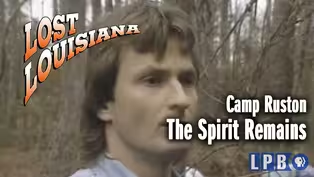
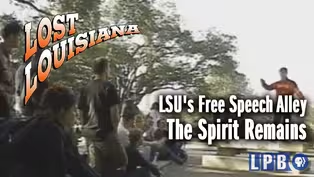
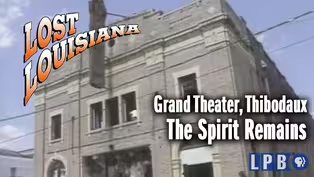
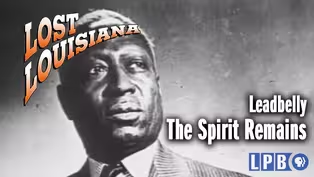
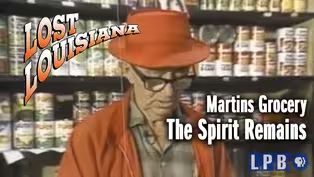
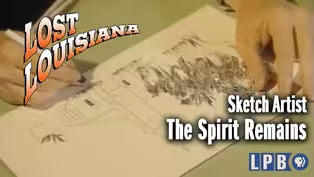
Learn Moreabout PBS online sponsorshiptravel this state enough and you'll notice things are changing landmarks are disappearing details in the smaller corners are fading travel this state some more and you'll notice some things never change a spirit of lost louisiana does remain the good book cautions us with this remove not the landmarks thy fathers have set but time compounded with ambivalence is stealing landmarks across louisiana travel in any direction and you'll notice familiar stores and even some churches with peeling paint things are changing for many of us too fast that's why we thought we'd take to the road again to visit the landmarks our fathers have set before it's too late this is a search for some vanishing reminders of who we are and a reminder that there are in our time and in our midst people and places and institutions we should preserve or at least treasure before they are gone along irish bend road outside franklin this is a landmark even the locals have come to take for granted madrid martin's store is as familiar as the growing seasons for sugarcane and all around it cane fields still bear the staple crop of this country life but the sugar mill that supported hundreds of families closed down a few years ago madrid martin is still here because medrick martin is an extraordinary man we don't have many little country stores left out here because when i first started in 1935 we had five stores around the irish bin and i i think i was the last one that started and i'm the last one left i'm still here and thinking where the situation is going now i really don't know how long i can last he started wearing that bright red hat when he took over this store over the years he's had others and they've always been red when he went to buy a new one maybe in 1945 all they had was read you'd be right to think medrick martin is set in his ways you see he's from an age when consistency was good that was terrible out there the first time you kill a hog your neighbors and all had a piece of it i think but not there the people don't live like we used to live we used to live together and not because uh most of the time these people work for 40 cents a day i mean from daylight till didn't have no such thing as eight hours a day myself when the eight hours a day came in i was i was working at the mill i went part time working the fields held my daddy my daddy was a madric martin not only sold general merchandise but beer and drinks to white and black alike field hands and cane mill workers would come here after their turn in the rows they would come here in the late afternoons and raised the roof the cajuns call a store like this where people come to drink and pass a good time they call that a bajoom that's what they used to call my place the baju that originally comes they used to call this the boujou [Music] you can only imagine now the parties because the mill is closed and only a few revelers still come by the bajoom it's just not the same as when medrick martin opened this side room in 1936 medrick and mildred have been married for almost 60 years and he still calls her the sweetest thing that ever came out of generette we have our ups and downs like anybody that's married will have a little contrary but you see when she gets mad i stay in glad medrick martin is an extraordinary man every day he has gotten up with the sun and gone to bed not long after it's set on the cain fields of saint mary parish every day every day he has opened this store because the people depended on him to do it he put his children through college on the profits of this store on these tupelo floorboards now smooth with the wear of his feet and the feet of children buying candy and mothers buying diapers he still walks he has walked on these boards for 60 years this is one of the original that i got when i came in the store now it's starting to show its age too because you're starting to it's rare too i can show you so that you see the hole is starting to come out there i had to make a little repairs on it if you actually what is the it's very small that's a hole that's where i rubbed my hand until it's rolled completely out so i had to do a little patchwork on it and so you've patched it under here patch it on there you wore out the wood with my fingers coming too you wore out the wood in this after 60 years after 60 years that's one of the original ones i had and i never won the cash register in my life does this tell you something about how long you have been here mr martin i've been a little pretty good a pretty good little while the sanding of human tirelessness and at the corner of one counter a worn spot where he has rested his feet these 60 years my hand here here for a little support and put this foot here and i put there in those 60 years mildred martin has traveled the world on cruises and trips to europe and even to the great wall of china he never would go while medrick martin stayed at the store on irish bend road he'd leave about four o'clock in the morning sometimes and come back he wouldn't come for lunch he'd come back maybe at seven seven o'clock some night sometimes later that's when he'd eat his main meal someone had to open and close and tend to the needs of the people of the cane fields and the families that have by now all moved away where 500 families had credit recorded in his book there are now 10. there is hardly anyone left to come to the bajoon what's your philosophy on why there aren't any more country stores like this well it's getting harder the big companies came in and that they don't want to deliver to little country stores and when the big stores guess i guess they're buying volume they get it so much cheaper then they can sell it cheaper than the country still can there's a walmart in franklin isn't it yes so they have a walmart in franklin and uh they they like to go in a store they can get everything in the world won't and the country still can't afford to stock everything because he'd have too much left on hand but watch this a customer walks in wanting some transmission oil does medrick martin have it okay so we just have what the necessities was like that we just saw i just saw a guy walk in and get transmission oil well we have that that's the necessity you have to ride in his automobile a little bit these country boys have a little automobile so they gotta have a little bit transmission oil you gotta have some of the things regular stuff that's nothing fancy nothing fancy no so you don't want no no no dead stuff i guess the changes over the years have been gradual there's closing down of the sugar mill about about four years ago but that was dramatic but things you don't notice them changing do you no you sure don't it it looks like it it grows on you it looks like the modern time just grew all of a sudden thank you and they come anything do you ever feel like you're out of touch you ever feel like you're out of touch like like like you've been left behind that's a sad thing to say sometimes you do when you sit down about four five hours while getting the customer you know it makes you stop and wonder what happened yet medrick martin is an extraordinary man who will not surrender to the economy or even the passage of time he may yet wear through these slow times as he has worn out the wood in his store for some people satisfaction lies in money or power or fame medrick martin has been satisfied to do one thing well he is constant there is no medal for medrick martin from the chamber of commerce there will be few people who come back to the cane fields of saint mary parish to tell him what should be said we will say it for all of them madrick martin is an extraordinary man there are all over this state people who embody a louisiana spirit of constancy but even the extraordinary individuals among us can be overlooked take for example a folk singer and songwriter of legendary talent hudi ledbetter has been gone for almost 50 years yet only now the towns of north louisiana where he once played in sang are coming to terms with how best to remember him [Music] in the center of shreveport you'll find a statue a man in a suit pounding a guitar and belting out a song his manner is exuberant his face happy lead belly is again standing on the corner playing a familiar tune one of his many tunes that all of america still sings i'll see you in my dreams a little blackboard come from mexico they say uh-huh come all the way to texas looking for a place to stay he's looking for looking for a home [Music] [Applause] [Music] it was down in louisiana just about a mile from texas canada they are songs from the country north of shreveport east of texas songs from the shaded dirt lanes and brilliant cotton fields hudi ledbetter was born more than a century ago near mooringsport his parents farm was a corner of what still called the jeter plantation and he applied a natural gift of tireless effort to learning music as well as to having a good time at house parties come the week's end [Music] there are a few photos of those parties but musicians who played them like 84 year old jesse thomas can paint a word picture it wasn't just one style it was blues stanzastone papa's song he'll be there whatever you call it and you could mix it up you know but you wouldn't have to play over four or five songs and go back and play the same song over again and people didn't mind no sometimes and a lot of times musicians would go play a party or dance and get drunk and couldn't play no move someone would fall out drunk and still get paid but you can't you go to top play engagement now and go there and get drunk man they wouldn't they'd put you in jail played the dances even parties for white people and businesses trying to gather a crowd of customers he picked cotton hundreds of pounds of it each day and as hard as he worked he played in the segregated corner of shreveport called saint paul's bottoms today children make the rowdiest noises here but parish councilman donald h recounts the colorful past of fannin street this is a dew drop inn on phantom street this is where lead belly as i understand spent a lot of time playing if you notice upstairs uh there are a lot of windows there and there are small rooms or these were the rooms that were rented by the hour this was the legal red light district this was a red light district endorsement it was condoned by the city the city fathers right what did that what does that say about the town that it was a almost a frontier town that it it's certainly a rough and tumble kind of place well i think i think history books will tell us that street fort was a kind of rough and tumble town pewdie led better played and sang in night spots all around the northwest and texas in those bustling days of horse carts and steamships and cotton bales and bootleg whiskey the walls of some dance halls one witness wrote were peppered with bullet holes from the windows howled jazzy music cutie ledbetter distilled rewrote outright composed or made up on the spot hundreds of songs led better cousin tom moore maybe on the job he would sit down uh look at the cotton field that's that's what he did like he was picking cotton and then he had something called a bow weaver and he got a song about that and the bow weaver would get in the bowl or the cut of the cotton and he would he would destroy that bowl and then that cotton couldn't produce right and then he would he would look at that thing look at that fly flying and look at that bow weaving and he'd make up a song he would compose a song about that thing he was one of the great musicians of that wonderful hybrid period in which jazz and blues and folk were all reared a hard-drinking hard-playing consummate folk balladeer this is beauty ledbetter money i can pick a beer [Music] the law caught up with ledbetter many times he escaped a chain gang yet he was kind-hearted and took three orphan girls into his home they say he shot a man then he broke out of jail for three days he served more than six years in prison before being pardoned by the governor of texas legend has it the governor was moved by his singing at least that's the legend and always this legend was playing and singing in 1930 even that got him into trouble he didn't get in trouble they put him in trouble the salvation army band were playing that morning spoke he came to town like lunch album and he loved it to dance he loved the music and they was playing the music and he was tap dancing down the street with the music and these uh evil men went out and told him what i told you [ __ ] what you doing dancing out here to this music and they kicked him and hit him and he pulled a knife out and he cut one he served one of three prison sentences at angola here and in texas he heard and wrote even more folk songs of hard work desperation and prisoner dreams then he met john lomax the famous collector of folk songs lomax and his son alan recorded dozens of songs by lead belly as he was known by then on a primitive machine lead belly was a treasure chest of stories and songs he went on to perform concerts on both coast and europe by the time of his death in 1949 his musical contribution had helped launch the folk movement in america led belly preserved the vanishing music of the common man but what an uncommon man he was [Music] lost louisiana will continue there is still a tremendous spirit of invention and perseverance in our people but for a visitor to louisiana without the time to get to know us there are fewer and fewer physical reminders of this rich culture the train stations and turn of the century feed stores are evaporating sometimes when they are deliberately torn down we might even take it as a symptom of sweeping cultural change [Music] they tore down the grand theater in thibodeau they tore it down i feel like something missing going to be missing sad why the whole family worked here and it's just like another death shirley barrios and the older people in this south louisiana town are saying farewell to an old friend they stand in the street and watch in silent sadness as this landmark of their childhood is rendered plank by cypress plank as the old bricks are pulled from old martyr it's just an old eyesore now but it's still something missing a lot of eyesores in a lot of small towns are coming down it's thibodeau's turn now to lose so much more than a landmark it was like a civic center in those days in the 30s uh a lot of the high schools would have their graduation exercise here on the stage with their families and friends sitting in the audience enjoying the performances we'd have kitty movies on a saturday morning to get the kids out of mom and daddy's hair for a little while anyway so uh we'd have a series of uh cartoons we'd have these uh laurel and hardy uh sharks all gang comedies uh the three stooges and there was no charges just a it was more like a a public service elmo barrios was the projectionist at the grand theater want to guess how long he worked there 34 years now the grand is literally coming down around him when the theater is open when it's always you take it for granted because it's there that's the grand theater you're going to show start breaking it down it brings you bring it back to the memories that you're going through and uh they were good memories oh good memories when the doors of the grand opened in 1922 the people of thibodaux entered through them a whole new era a little fishing town would see the world through newsreels the bayou kids went on expeditions to antarctica they crossed the desert with lawrence of arabia they crossed the ocean in the spirit of saint louis they danced with fred and ginger the movies had come to town and the town would never be the same think of the wondrous things that just for a nickel swept us all away that plane leaves the ground and you're not with them you'll regret it maybe not today maybe not tomorrow but soon and for the rest of your life but what about us we'll always have paris charlie chaplin's the idol class played that first week how fitting as the hard-working people of thibodaux could now escape the working world for a few hours to meet the stars who visited them at the grand gee that sounds swell to me the faces and close-ups 20 feet high what effect the stories and stars had on all the people in all the small towns with theaters just like the grand i'll be all around in the dark i'll be everywhere wherever you can look clark gable myrna loy uh norma cheryl oh she was always my favorite she was in early she was mostly in the silence but she was a beautiful woman and there was a spencer traces he was a great favorite all those years of all those stars and small thibodeaux got sophisticated after seeing the world at the grand they stopped coming to this old-fashioned place they wanted the 50-foot screen in the shopping mall they forgot their old friend the tired looking grand the concession stand was over to the left here the bathroom facilities were to the right this was a flight of step coming up to this floor larry aber is in charge of tearing down the grand it is with no joy that he does it he was one of those kids who sat in the dark with wide eyes always said towards the back or either upstairs but there was quite a few uh live entertainers that entertained us in our young days uh after the show or no uh just live entertainment and you know uh it was special shows like what such as uh i could remember lashleroux who was uh uh with a whip with a bull whip and he bashed the roof so he had a whip and what would he do he would have this girl hold a cigarette in the mouth and he would take this bull whip and cut just the tip of the cigarette off and do it two or three times till he got down right close to amal it was pretty interesting i was just a kid at the time when gone with the wind played we weren't allowed to come into the theater because some of the language which is mild compared to today but it was condemned the priest condemned that movie we had a hard time showing it here and i remember that but uh because of that long ago because of i don't give a because frankly scarlet i don't give a damn it was condemned did people go to confession after they saw the movie that i don't know but let me tell you it was ridiculous compared to the movies as shown today the mgm studios their trademark is a line that growls at the beginning of the show and uh sometimes if the record is not quite in sync he growls before he opens his mouth or sometime not too often we'd make a mistake and when we changed film we'd put the first record on and when the character on the stage would talk the line would roar and of course there's a lot of little comical-like things like this because it was really experimental at the time i remember the smell the candy the crowd noisy boys in front mr de la said not so loud the young lovers holding hands maybe a kiss hiding behind seats the scary movies we'd miss gibbon's robo show was so moved by the death of his old friend the grand he wrote a poem when a quarter was there mr percy had candy cough drops and licorice so sweet and dandy two or three hours maybe even more how well we remember the grandest of lore so farewell dear grand the baby is gone too we'll sit in the park shed a tear or two remember miss coulomb the levees and others then followed our many sisters and brothers the grand was so grand can i have a brick i'll keep it close watching each current flick the many happy hours stay with us always we smile and think of those good old days how much longer will the remaining old movie houses stand the dixie in ruston features live music now it will stand a while longer when we finally come to notice these landmarks are threatened people do often come together to save them so it is in another part of this town people have begun to care about a special place some here still remember as a lesson in harmony ruston louisiana is a town with a unique connection to the last world war look closely at a few old barracks still standing on the outskirts of town their remnants of an unusually close encounter with the enemy they were just as nice as they could be to me they would meet me and it was good gut morgan you know and sometimes they'd stop and try to talk to me in german and occasionally they would come in with some flowers they had grown over in the compound and present them to me come to the lab hand them to me mary duchene remembers when she nursed the sick at camp rustin american soldiers and alongside them the german prisoners they guarded here for more than two years do you recognize the place there are only two small buildings left and i know there were dozens and dozens of barracks for 5 000 prisoners yes there was and it doesn't look the same certainly not i remember that these these look like the barracks but as far as knowing where they were or whether this was the hospital lab or whether it was administrative building or whether it was just a ward i have no way of knowing and they all the buildings then look the same anyway you know something you don't remember the buildings and you don't remember the layout of the camp but you do remember the people [Music] it was a world of watchtowers and barbed wire mess halls and nightly card games a px where german prisoners could buy a coca-cola soldiers who once fought for world domination were rewarded with 700 fenced-in acres in north louisiana a government pow camp like 510 other ones in america but this camp was in ruston and that somehow made it different a hemisphere away the battles roared in north africa field marshal ernst rommel steamrolled over miles of sandy desert his africa corps was the pride of the nazi war machine rommel was even regarded by the british troops he fought as a gentleman soldier but gentility was hardly the way of hitler's strategist by the time the u.s entered the fray german submarines were sinking our supply ships to britain and africa in no time at all the war was in full production on the home front we learned that the nazis who some in america had admired were bloody thugs bent on domination that fear of germans was strengthened by wartime caricatures of leering bloodthirsty huns the enemy was ruthless craven giant and evil and everyone knew it but they were not invincible as time and again allied offensive hemmed up thousands of captured troops rommel's africa corps was decimated these tank gunners and infantrymen were shipped to camps in the states by train the africa corps traveled into the heartland last stop for some camp ruston where they were fingerprinted cleaned up and searched several times we would come by to pick up freight or something and have three or four of them on the back of a truck with a guard and we stopped back from the house and drink coffee never nobody ever complained about it and none of them ever tried to escape john gay was assigned two german helpers at the camp store they neither couldn't get away anyhow so they didn't want to lay out anymore i imagine i mean they had a kind of rough time in north africa they had enough but i'll tell you this from what i saw they had little or no respect for their officers we had one time had a dip their shots they were giving officers giving all of them and several of the officers i imagined about seemed like about 20 of them refused to have the shot so they walked them down in front of the exchanges and the boys hung on the fence and jeered them all the way down there to the little they forced them to take that shot they didn't done their own cooking they made their own bread and everything harold buckland guarded the germans on trips into town and took them on work details as an mp bringing their grab it and they made their own boy they made good stuff in you like when i come into hell he couldn't say harold come on come on i go there they have a big square can like got a coffee and a big hunk of bread and butter boy i said but you were the guard they had better food than in the army better than we had for all the propaganda we had absorbed this was a turning point in blind hatred many families had reason to hate but these huns for a few people in rustin now had faces normal even nice looking faces and by all accounts most of the enemy were not only clean and friendly they were smart and even polite there was a lot of propaganda and the radio and the newsreels and and in school ruston native ruth futrell was 14 when she saw her first german my best friend and i were standing on the platform downtown ruston her name was sue matthews waiting for the train to go and it was it was going by real slow and there were open box cars and we realized that these were german pows and we knew about the camp but we'd of course never been out but we knew that it was there and we just got real still and and all of a sudden all of these boys started calling and waving and smiling and we just waved and smiled back it just seemed like the thing to do and the train went by very slow and uh i don't remember how many cars of pows there were but it seemed like a lot of them at the time but we had been watching all through the war the newsreels at the movies and the radio of course and our idea of germans was the nazis you know and we were the good guys but here all these sweet-faced young boys go by just smiling and waving like and it it just kind of stunned us and after they went by we wondered how they were being taken care of out here we wondered how they were treated [Music] camp rustin was known as an anti-nazi camp a place where ordinary soldiers were safe from hardliners and ultra patriots of the fatherland if there were political fights in these ranks the americans didn't hear of it i could take four prisoners and go anywhere in the united states here whether that have no trouble what left them that was over crossed was injured when they come back over here they wanted to kill the germans germans were good fella they were right they had a german cook for the officers mess down there that sent cakes on my wife all the time they were real good sent cakes to your wife yeah she patched clothes and stuff for them when they needed someone and so they sent cakes here they worked in the fields around north louisiana picking peaches and chopping lumber when they were hired out to pick cotton black children were not allowed to watch remember this was 1944. and that wasn't proper work for white men we had one that escaped i think on a regular basis about once a month and they'd pick him up in different places in fact i think he'd call up and tell him i'm over it so and so or and they'd go get him bring him back i believe it was two who escaped and went all the way to ringo and uh got out there and it was cold and icy and they was about freeze to death and they turned themselves in over there and came back to camp they had visions he said of going into mexico and getting home they wanted all they wanted was to go home theater groups of pows yes and they built models and baked pastries to sell in town they made small castles in front of their barracks they sketched their new quarters and drew a snow-covered home life to remind them of a country that by wars and they would hardly recognize munich's olympic stadium marked the entrance to this barracks the men were even allowed to send this photo home as a christmas card in classrooms they mastered government taught democracy free enterprise and another language when we are marching in the mud and cold and when my pack seems more than i can hold even over in the compound i never heard about any fighting or anything over there they they seemed to try to make the best of what they had and except for the fact that they missed their loved ones back home i think they were happy to be here because they weren't fighting their lives were not at risk and they were well taken care of when one prisoner died there was no german flag to drape his coffin a woman in rustin even sowed an enemy flag for this stranger's coffin certainly an extraordinary show of compassion they kept their barracks immaculate a lot of the of the red cross reports that we found in the archives records indicate that that the inspectors were amazed that the grounds were immaculate you could eat off the ground and things like that and this is just indicative of that it's they came in and made a place for themselves to live today the secrets of camp rustin can be literally uncovered just dig down six inches mark scalia is a history student at louisiana tech some people remember this some people are fascinated by the cultural exchange between 19 year old german news that were in the africa corps they're in the u-boat corps you know very stark reminders of the german of the german military in russian louisiana i mean the social the social implications are staggering when you understand that you have people that were brought up under the guise of adolf hitler brought to rural north central louisiana and that's that's very intriguing and how the two the two areas adapted to one another what are you looking for what else can tell us what these guys did behind barbed wire as we expanded that we went further back and found what we call the patios there are brick landings they're laid out one in a herringbone fashion one straight crisscross fashion that coincide with the measurements of the building and the implication of course is they built these things to make their barracks look nice we found one in this barrack about 30 feet over we found one in front of the other barrack and it gives you a pattern it shows you how these people live we hope to recreate that whole atmosphere by going all the way through this and finding perhaps more castles a stadium anything that says hey i was made by german 47 years ago right at that crossroad is where the double gate was and the fences ran along this line here vince bion is eager to tell the true story of camp rustin he's organized as much memorabilia and as many of the old stories as he can people with stories to tell are starting to come forward now it's not unusual for example for me to sit in my office and get a phone call and say there's a an xpow up front and they come back they come back to see where they were kept i don't imagine people who would have bad experiences want to bring uh their families and take pictures and and almost come back like it's uh disneyland they come back they have good stories they sit down and have picnics with their families and and and tell us about their experiences at camp rustin uh just recently we had an italian prisoner come back came back by himself and i think one of the interesting things about his story is and he told us as he left here save those two buildings there's nothing else left he had gone to the other camps that he was kept there is nothing left and this is one of the few things in the united states that's left if you think about and you ask yourself this question how many sites for world war ii are on american soil there are very few pearl harbor there are sure some others but here's one also and that's what we're trying to tell the story of that's one thing we can be proud of in my opinion you may not share it but i think we can be proud of the fact that we took soldiers that had fought our boys and possibly had killed some of them and treated them humanely and well i've seen them come in society is judged by the depth of its humanity the charity we showed we did not uh try to to do what the germans were doing or the powers that be to them i understand that our boys weren't treated that well but we treated them with kindness and consideration for the most part there are many more stories about ordinary life and some not so ordinary tales of how two warring cultures got along here if the measure of a society is the depth of its compassion there may be an enduring lesson to be found in so small a corner of this warring world lost louisiana will continue among the landmarks of louisiana there are many faded reminders of what we've lost or even forgotten old stores and signs can still be found along the smaller roads these are nearly a century old this bank was once an institution here in garyville but an institution doesn't have to be a hundred years old for us to lament its passing traditions that have made us who we are are disappearing before our eyes and nothing it seems can be done for example hello darkness my old friend i've come to talk with you again louisiana state university 1994 alumni usually return only on weekends for football games and usually see only the flag waving boosterism public concern for the old war school which ebbs and flows with the scoreboard but in the middle of the week when students are busy there is another venue for a frenetic outpouring of championism this also is a coliseum but of words and thought this is free speech alley if i write a book that will endanger your life that will endanger your dignity your integrity and you tell me that is free speech you see it is free speech genetically you run faster than i run no it's impossible but it wouldn't be okay if you all had stronger legs for 30 years now this has been the student's crucible of argument and showmanship every wednesday for 30 years this has been an informal classroom a gathering place for kindred if amateur philosophers the incubator of protest rodney kennen like hundreds of other alley regulars remembers i came out here from high school skipping high school as it were and i found free speech alley it was a knockout there were two or three thousand people out here they were arguing about states rights and black and white and vietnam i think it was woody jenkins and uh um david duke they were going at it tooth and toenails a lot of alumni remember we'd better remember because even on beautiful fall semester afternoons and even with so much in the world to talk about the students no longer come free speech alley is dying university 1964 the same beautiful fall semester afternoons this is where the alley began in a breezeway under the new union building idealistic students with minimalist aesthetic sensibilities set up a sturdy black box it was the modern representation of the fabled soap box from which politicians and salesmen had customarily hawked promises and snake oil these students were different they would hawk persuasion and sell ideas to their peers not because they are easy but because they are hard a few years before john kennedy had ignited the nation's collective optimism and more students enrolled in college than ever before the children of the post-war baby boom were tipping the nation's demography towards youth and youth is always idealistic [Music] everybody get together try to love one another [Music] through cuba china king and nixon they talked through elvis the osmonds and abba they laughed through the space race the issues of race and nine presidential races they fought students here decried items as petty as football seating are as important as eternal salvation the other half said salvation was worthless and nirvana was a good football seat like everything [Music] by the late 60s marijuana was being smoked right out in the open at free speech alley in 1967 this is how the chancellor was photographed for the yearbook odd but telling in 1987 the chancellor was hung in effigy at free speech alley in the 90s an old alley regular returned to the cradle of his public speaking career to campaign for governor college changes all young people of course but for 30 years this weekly event put a spin on formal education for thousands of us oh yeah she's the second generation free speech alley dog her mother would be probably 20 years old now and she made the paper i think one one week 12 times now a concert of pre-recorded music on the parade grounds attracts more followers than the alley it's called a good wednesday when 50 students show and we can fix no specific blame we used to think the alley might be shut down by the university as the legislature had once tried we took the forum that seriously but then young people to their credit take their opinions seriously we all learned eventually that the establishment didn't take as keen in interest as we imagine the professors it turned out were often graduates of this same crucible yet to this day none of the alley's founders nor inheritance ever imagined it would end with a whimper no one in 30 years thought this fury would by 1994 be ignored as an obsolete zeitgeist it's as if um somebody just took everybody who had any interest in in saying their view and just moved them to a different campus or something it wouldn't matter we could come gather together in a group of a hundred even and gripe about parking and it would it wouldn't matter we're not getting any response from the things that we bring up about campus issues here i think that that we're a lot more dependent on on outer stimulation you know we need a lot more to to get our attention focused on i think they're getting numbed out by everything um desensitized to anything just about i mean it takes something really dramatic to get anybody's attention one of my professors gave us a little survey on current events and the whole class failed it with the exception of me and two or three other people and it was just pathetic i mean this is things people should have known i mean simple things they weren't complex questions and we just we don't know what's going on we're sitting in our dorm rooms our apartments watching beavis and butthead instead of the news and we just we don't care i don't think that's it even i don't i really don't of course the kids have gotten everything that we fought for i mean no draft no wars no no they sleeping next to the girls so they don't have any panty raids anymore students created the alley from nothing but intellect and courage students sustained the alley through adversity and apathy and unless students no longer like to argue unless young people have given up on each other we will perhaps soon again hear freedom roar not what you could expect here's an old school in kisachie it looks like an abandoned grammar school it's really a monument to great craftsmanship that it has stood this long the rich spirit of our unique culture also does remain maybe there are enough people who care about preserving the institutions and landmarks like this enough of you around so that it really isn't hopeless i'd like to introduce you to one more person who does embody the cultural sensitivity we have been discussing he's an artist with a personal goal to preserve at least in ink all the vanishing places one more reason for hope in an age of ambivalence to the louisiana that we are losing if there is an old church in your town chances are it's been photographed many hundreds of times by passers-by tourists who drive the smaller roads of our state delight in finding landmarks and forgotten corners they usually snap a few shots and move on but not andy smith he has a grander purpose the photos he's taking in this small town will be added to another 18 000 shots he's taken in every town but he's more than a collector of images he's a refiner of images when he gets home to his drawing table amid a clutter of odd memorabilia he sketches the icons of lost louisiana since it's my project i get to pick whatever i decide i want to do and so i go through the towns and just take buildings that i like and not historical buildings everyday buildings that's how mary lee got in there it was one of my favorite shots too because it just looked it looks real it's if people go there and everybody knows it and they pass it and they never look at it and so when you take it you make a black and white drawing it's like it's just it refocuses your you know you look on everything in this state there is certainly no shortage of talented artists who capture the soon to be forgotten but andy smith has published four volumes now of books in a series called louisiana proud the books are part history part documentation and at least half clearly accurate and powerful menageries of nostalgia how do you drive this distance over here and there's nothing then pop there's a town you know why does town get here you know how do these people live especially some of the towns that were big time then are you know are just barely shells now and so that did pick my interest on that to put that all into the book for an amazing 12 years andy smith has sat in the middle of his eclectically appointed studio tapping out millions of detail strokes in churches and stores and street corners from albany to there was some dutch person and uh that came over and owned land but i don't think he really uh no some of these people are gonna get mad because i'm trying to wreck a lag but that's i don't think he lived here but he owned a lot of land and he came over and and they named it for him what do you look for when you are traveling and you you spot something and do you actually stop the car and then put it in reverse and say hey that's something i missed back there well there are a lot of places where i didn't do enough of that because i would i would like go to the towns and take the take the pictures of the buildings i like her and a lot of times i would take maybe the whole the whole city street and then turn around and come back and take the other whole city side of the street but there are a lot of times when i'd pass a building up and i was going to another place and i and i you know 10 miles down the road i said you missed it's on monroe's layton castle was inspired by the chateau of europe it inspired andy smith in brulee that often photographed church takes on a lonesome calling in black ink a lot of the information i got was a little green book it was done in that in public works or one of these things and it and it took you on a tour of the whole state the center of mangum a faded husk that still feels alive but very old the old storefronts of new roads cleaned up for your viewing pleasure the artist leaves out the people on the sidewalk the telephone and power poles the buildings stand alone but in the imagination they are drenched in human company i go by these little buildings and look at them and the same thing what you're saying is you wish you were a fly uh that lived in that building forever because in these buildings all the political stuff went on all the life and death deals all the parades everybody's everybody's life was right there and you got to if you you know that buildings has seen all that and it's seen it all through all these little towns have that that same history and that same life that in those buildings and and they're all secrets locked away and and yeah you just need to find the key done to undo the thing and it would really be a good it would really be neat if you could get in on that andy smith has now done 1500 pen and ink drawings of 300 towns by now that's enough his fourth book in the louisiana proud project is the last even if he stops traveling and gathering he says he'll never shake a feeling that these old friends he's made have been and still are being betrayed by us all are we fast approaching a point in louisiana where the modernization the chain stores are all pushing pushing these things out of the way that would be my best guess no i don't i just i just think you're losing part of the history isn't part of the thing and i understand how it becomes it becomes a problem because those people who own the buildings a lot of times to to to get it back in this normal thing costs a lot of money and a lot of people in the in the towns don't go to the buildings and it's not economically feasible for them to do it so they just let it go down and then finally gets to the point where it becomes the hazard so they just wipe it out and i think that it's i i mean i understand why they do it but i still think some of these buildings need to be saved because your history is gone it's like the old people now the history of those small towns you can't find it and the only people who know it are the people who are still living and as soon as they pass on then that's gone too there will come a day when these drawings along with the works of other dedicated artists will be all that's left of these places a day when no one will be around to remember them except by opening a book and it's good such books are being made now in too many corners of louisiana that sad day has already dawned whenever you find that key that unlocks those secrets of all those inside of those old buildings they're not going to be there anymore so you're not going to be able to open the open the secrets up that's my official [Music] theory you
Providing Support for PBS.org
Learn Moreabout PBS online sponsorship













Support for PBS provided by:
Lost Louisiana is a local public television program presented by LPB