Sense of Community
The state of maternal health in Missouri
Clip | 2m 30sVideo has Closed Captions
Physicians and maternal health advocates reckon with Missouri's troubling maternal mortality rate
Physicians and maternal health advocates reckon with Missouri's troubling maternal mortality rate and what it reveals about the systems meant to protect its most vulnerable women.
Problems playing video? | Closed Captioning Feedback
Problems playing video? | Closed Captioning Feedback
Sense of Community is a local public television program presented by OPT
Sense of Community
The state of maternal health in Missouri
Clip | 2m 30sVideo has Closed Captions
Physicians and maternal health advocates reckon with Missouri's troubling maternal mortality rate and what it reveals about the systems meant to protect its most vulnerable women.
Problems playing video? | Closed Captioning Feedback
How to Watch Sense of Community
Sense of Community is available to stream on pbs.org and the free PBS App, available on iPhone, Apple TV, Android TV, Android smartphones, Amazon Fire TV, Amazon Fire Tablet, Roku, Samsung Smart TV, and Vizio.
[tranquil music] We're currently the seventh highest in maternal mortality based on the 2025 data.
So compared to the nation, we're not doing super great.
We have about 32 deaths per 100,000 women compared to the national average of 22 deaths per 100,000 women.
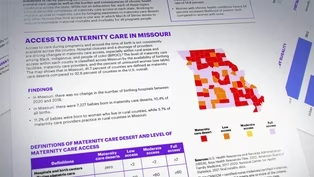
Almost half of our counties are what we consider maternity care deserts, which just means that people have less access to doctor's appointments and resources and support.
So we're not doing great in Missouri.
We have some rural areas that do not have obstetrics providers.
We know that Black women are two and a half to three times more likely to die during the time of pregnancy or the first year after pregnancy, the postpartum period, as white women.
Those moms that have more risk factors, such as a cardiovascular condition or diabetes or other chronic condition, women who are obese, as well as women who have some of those more socioeconomic risk factors that contribute to their overall health before they get pregnant but then can create risk scenarios and high risk for them during pregnancy are more likely to die.
60% of the mortality issues are related to substance use disorders, mental health disorders, depression, suicide, all of those kind of things.
Southwest Missouri is known for one of the highest rates of child abuse, neglect, and domestic violence, but also a huge piece of that is extreme poverty and barriers to healthcare.
A lot of the social services, a lot of the funding currently right now is going down.
We've seen a loss of state funding for domestic violence programs.
So in general right now, everyone's having to tighten their belt and have to do more with less, and that obviously does not help women and children when that happens.
If you aren't doing a good job of taking care of moms and babies, you're probably not doing a really good job of taking care of your population at large.
So we definitely have a lot of room for improvement.
For a country that spends more than any other country on prenatal care and pregnancy and has some of the worst outcomes to show for it, we got to change something.
Preview | 20s | Missouri consistently ranks among the lowest-performing states in maternal healthcare. (20s)
Video has Closed Captions
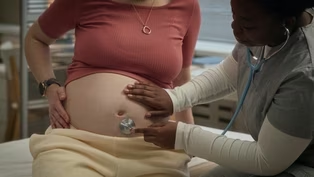
Clip | 2m 30s | OB/GYNs in Springfield and Columbia discuss the often hidden risks to maternal health in Missouri (2m 30s)
 Now Playing
The state of maternal health in Missouri
Video has Closed Captions
Clip | 2m 30s | Physicians and maternal health advocates reckon with Missouri's troubling maternal mortality rate (2m 30s)
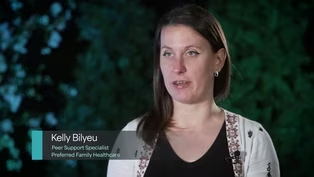
My story matters: one woman's path from addiction to advocacy
Video has Closed Captions
Clip | 1m 50s | How unprocessed trauma becomes a gateway to addiction. (1m 50s)
Improving Outcomes: Missouri’s Perinatal Quality Collaborative
Video has Closed Captions
Clip | 2m 20s | Partners across the state are pinpointing preventable issues in maternal health and working together (2m 20s)
Eight times more likely: Medicaid, poverty, and maternal death in Missouri
Video has Closed Captions
Clip | 2m 30s | Maternal health advocates unpack what the program actually provides for women (2m 30s)

The Doula effect: increasing access to support
Video has Closed Captions
Clip | 2m 30s | Hear how rural counties has a chance for care and support. (2m 30s)
Care across distance: maternal health in rural settings
Video has Closed Captions
Clip | 2m 25s | Hear about the challenges faced by mom’s in rural areas (2m 25s)
Breaking the cycle: how peer support is changing outcomes for high-risk mothers
Video has Closed Captions
Clip | 2m 20s | Federal grants offer support and care for pregnant women struggling with substance use disorder (2m 20s)
Preview | 30s | Ozarks nonprofits strive to make sure no one goes hungry (30s)
Video has Closed Captions
Clip | 2m 15s | Ozarks Food Harvest partners with another local nonprofit to provide fresh produce for those in need (2m 15s)

Video has Closed Captions
Clip | 2m 30s | Joplin area residents come together each week to help a local nonprofit feed their community (2m 30s)
Video has Closed Captions
Clip | 2m 10s | A food pantry in Ozark provides, food, education and resources to those in need (2m 10s)
Video has Closed Captions
Clip | 2m 30s | Families in the Ozarks face difficult choices between buying food and paying rent (2m 30s)
Video has Closed Captions
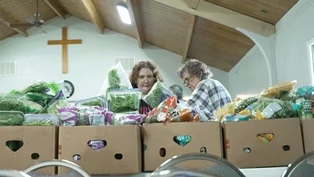
Clip | 2m | Volunteers make sure unused crops get to those facing hunger (2m)
Video has Closed Captions
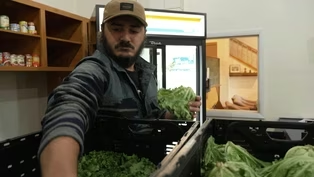
Clip | 2m | Community fridges across Springfield are helping to feed those who would otherwise go hungry (2m)
Video has Closed Captions
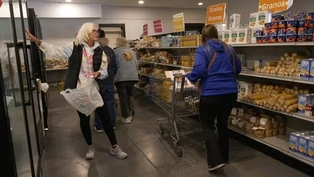
Clip | 2m 20s | Christian Action Ministries works to fill a need in Stone and Taney Counties (2m 20s)
Video has Closed Captions
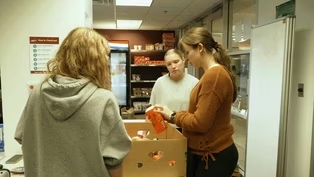
Clip | 2m 20s | The Bear Pantry challenges conceptions of what food insecurity looks like (2m 20s)
Video has Closed Captions
Clip | 20s | Climate Change in the Ozarks - Broadcast Premiere Sept, 22 at 9pm (20s)
Video has Closed Captions
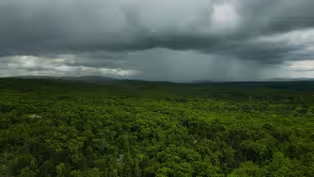
Clip | 5m 30s | Experts weigh in on the impacts of climate change on the Ozarks and suggest possible solutions. (5m 30s)

Video has Closed Captions
Clip | 5m 45s | Climate change creates greater rainfall in the Ozarks, negatively impacting our rivers. (5m 45s)
Video has Closed Captions
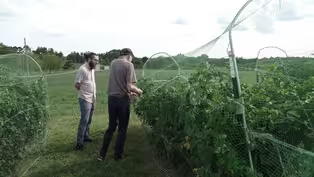
Clip | 3m 10s | Ozarks researchers work diligently to provide solutions to agricultural challenges (3m 10s)
Video has Closed Captions
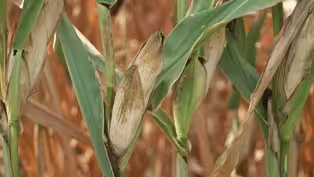
Clip | 3m 48s | A local farmer describes the challenges of growing crops in a changing Ozarks climate. (3m 48s)
Video has Closed Captions
Clip | 3m 50s | As a growing population in the Ozarks consumes more water, the need for new sources arises. (3m 50s)

Video has Closed Captions
Clip | 3m 2s | Native plants serve as a unique solution to the obstacles faced by Ozarks wildlife and habitat. (3m 2s)
Video has Closed Captions
Clip | 3m 51s | Floating wetlands present a unique solution to the problem of algal blooms in the Ozarks. (3m 51s)
Video has Closed Captions
Clip | 1m 45s | Young caregivers, often driven by gender norms, face challenges but grow personally (1m 45s)
Awareness Rising: The Future of Caregiving
Video has Closed Captions
Clip | 1m 58s | Experts stress caregiving awareness; hospice care users share how it deepened their bond (1m 58s)
Video has Closed Captions
Clip | 2m | Caregivers reflect on emotional toll, stress rest, reflection, and daily joy to reframe caregiving (2m)
Video has Closed Captions
Clip | 1m 58s | COVID isolation impacted personal connection's role in health and happiness (1m 58s)
Tackling Missouri’s Dementia Crisis
Video has Closed Captions
Clip | 1m 50s | 130,000 Missourians have dementia; 250,000 unpaid caregivers face isolation, service gaps. (1m 50s)
Redefining Care: Finding Support and Recognition
Video has Closed Captions
Clip | 1m 50s | Caring for a disabled child brings emotional, financial hurdles; need for better access to support (1m 50s)
Video has Closed Captions
Clip | 1m 58s | Caregivers share emotional struggles while experts suggest therapy, and peer support for stress. (1m 58s)
Video has Closed Captions
Clip | 1m 50s | Caregivers often experience depression, fatigue, and medical crises, and emotional strain (1m 50s)
Providing Support for PBS.org
Learn Moreabout PBS online sponsorship
- News and Public Affairs

Top journalists deliver compelling original analysis of the hour's headlines.

- News and Public Affairs

FRONTLINE is investigative journalism that questions, explains and changes our world.












Support for PBS provided by:
Sense of Community is a local public television program presented by OPT