
This NC County Started Testing the Drugs—Deaths Fell by Half
Clip: 10/31/2026 | 7m 23sVideo has Closed Captions
Testing the drug supply changed how one NC county responds to overdose calls.
Edgecombe County once had one of the worst overdose death rates in North Carolina. A community paramedic decided to find out why, testing the street drugs killing people and changing how his team responds to calls. Overdose deaths have fallen by nearly half since the PORT program launched. But the drug supply keeps changing, and staying ahead of it is harder.
Problems playing video? | Closed Captioning Feedback
Problems playing video? | Closed Captioning Feedback
ncIMPACT is a local public television program presented by PBS NC
This NC County Started Testing the Drugs—Deaths Fell by Half
Clip: 10/31/2026 | 7m 23sVideo has Closed Captions
Edgecombe County once had one of the worst overdose death rates in North Carolina. A community paramedic decided to find out why, testing the street drugs killing people and changing how his team responds to calls. Overdose deaths have fallen by nearly half since the PORT program launched. But the drug supply keeps changing, and staying ahead of it is harder.
Problems playing video? | Closed Captioning Feedback
Where to Watch ncIMPACT
ncIMPACT is available to stream on pbs.org and the PBS app.
Providing Support for PBS.org
Learn Moreabout PBS online sponsorship- Edgecombe County was losing people to overdoses faster than just about anywhere else in North Carolina.
A paramedic wanted to know what was actually in the drugs, so he started testing them.
What he found rewrote the county's entire response to overdose calls.
But is it working?
We ride along with Dalton Barrett and his team to find out.
I'm David Hurst.
This is "ncIMPACT".
[mid tempo ambient music] [vehicles humming on road] - Opioids are sold two different ways here.
- [David] Dalton Barrett has been a paramedic in Nash and Edgecombe Counties for more than a decade.
- This is one that we were really worried about.
- [David] In the past few years, the overdoses started looking different.
Narcan stopped working, and nobody could explain why.
- What we were seeing in the field was not making a lot of clinical sense to me as a paramedic.
- [David] In 2023, 32 people died from overdose in Edgecombe County.
It was the highest on record for the county and one of the highest rates per capita in the state.
Barrett couldn't explain what he was seeing at these scenes.
So he started asking a question nobody else was asking.
- You know, there's a lot of myths out there about the street drugs.
But we wanted to understand really what was in there.
- [David] He wanted to know what was actually in the drugs.
So he went looking.
Barrett heads up Edgecombe County's Post-Overdose Response Team, also known as PORT.
- [Dalton] Do you need any test strips?
Do you use those?
- Yeah, I do, I do.
- [David] It's a mobile unit that goes out after non-fatal overdoses.
He started asking people they visited something nobody had asked them before, could he test what they had?
In the field, test strips can tell him if certain drugs like fentanyl are there.
But what they can't tell him is what else is in the mix.
[machine whirring] So he's been shipping samples to the Street Drug Analysis Lab at UNC Chapel Hill.
The lab analyzes street drug samples submitted from communities across the country.
Research chemist Erin Tracy has watched the drug supply change dramatically since the lab opened.
- Drug samples that people might not have any idea of what they think they're buying.
They think they're buying a heroin sample.
There hasn't been plain heroin in years.
- [David] The UNC team publishes every sample online, building a public record of what's circulating in communities across the country.
- We will see opioid samples that have upwards of like 10 to 12 to 14 different compounds.
So I think these regional trends are really important when we're talking about the local drug supply.
Because what Portland, Oregon, is seeing is not necessarily applicable to what we're seeing say in like Morganton.
So being able to connect the dots on a hyper local level for our members really allows them to take actionable next steps in their own healthcare.
- This is one that we were really worried about.
Taco Bell had that medetomidine substance, quite a bit of it.
- [David] The samples Barrett was collecting came in branded packets.
The packets had names: Don Julio, Cloud 9, Goya, same branding month after month.
But what was inside kept changing.
- And then we have two benzos all in one substance.
This was not something that was expected.
- [David] Barrett took these findings and turned them into something tangible: monthly reports with photos of the actual packets and a breakdown of every ingredient found inside.
Those reports went out to community members, local health clinics, and people actively using drugs.
And what did that show you guys getting those results back?
- As we got the results back, I was just baffled.
I mean, you know, early on, there were things in the drug supply that we had no idea about.
It shifted everything that we offer as far as services.
- [David] Barrett's team showed up after overdoses, used what the lab found, and worked to get people into treatment.
- [Dalton] What's up, man?
Good to see you.
- [David] By 2025, Edgecombe County's overdose death rate had dropped in half.
The overdose rates here in Edgecombe County have gone down since 2023.
How much of that would you say is an impact of the PORT team versus just statewide and nationwide trends?
- I would like to think that we have had a huge impact.
But honestly, I think the impact that we've made through the PORT team is just a reflection on a lot of our community members and nonprofits in the area, the Federally-Qualified Health Center, and really, you know, this ecosystem of recovery that we have in the county versus any single thing that I've done or anyone who's worked for the PORT team has done.
- [David] Lamir Alleyne is one of the people that ecosystem reached.
- I usually be on like perc30s or like opioids.
And my brother like recently just ODed, so he's not doing too well.
So I told myself I wasn't gonna do it no more.
So I had to find another alternative, you know, to like wean me off of it.
- [David] That's where Barrett came in, connecting Alleyne to a local clinic and a path toward treatment.
- People usually don't stop.
You know what I'm saying?
But, you know, it's too many deaths going on.
And, you know, life is too valuable, man, just to give it all up just to get high.
You know what I'm saying?
So yeah, you gotta change.
You gotta make a change somewhere.
- [David] And while we were riding with Barrett, his phone rang, a former client calling from a recovery program in Texas.
- It's good to hear from you.
I'm glad to know you're still alive.
- [David] The man's name is Mike.
And he told Barrett what had changed for him.
He said it wasn't just the program, it was also the drug testing.
- [Mike] The fact that I had a man showing me that, "Hey, this is what's going in your body.
"This is what, this is not good."
That changed my aspect of what drugs were.
- [David] But despite these success stories, the drug supply isn't standing still.
In fact, it never has.
Experts describe the opioid crisis in waves.
The first wave was prescription painkillers.
The second was heroin, as prescription opioids became more difficult to get.
The third wave came a few years later with synthetic opioids, especially fentanyl.
Some researchers now call what's happening a fourth wave, fentanyl mixed with stimulants and other compounds that keep changing before any response can catch up.
- About every six months, we get hit with a substance that is, you know, either really potent or chemically different from anything that we've seen before.
- [David] Edgecombe County's overdose rate is still 55% above the state average.
The people driving that number are the ones the PORT team haven't reached yet.
Who is this program not reaching?
And how do you go about trying to connect to those individuals who might need the help, but just not able to reach them?
- The people that have a substance use disorder that are not overdosing, they could go without care.
Or they may not have had an interaction with us.
So that's why we've got the trailer to go out in the communities, to do more harm reduction work in the county to hopefully engage with someone before they overdose.
- [David] Dalton Barrett is figuring out what is in the drugs.
But in a crisis where the street supply changes every six months, the next wave may already be on the way.
For "ncIMPACT", I'm David Hurst.
[mid tempo ambient music]
 New
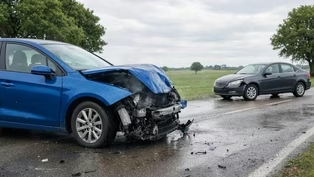
The NC City That Stopped Sending Police to Minor Car Crashes
Video has Closed Captions
Wilmington, NC, has sent civilians instead of officers to minor crashes since 2007. (7m 28s)
Video has Closed Captions
Not every 911 call needs a badge or a siren. Three NC counties are changing who shows up. (20s)
Providing Support for PBS.org
Learn Moreabout PBS online sponsorship New Episode
- News and Public Affairs

Top journalists deliver compelling original analysis of the hour's headlines.
 New Episode
- News and Public Affairs

Today's top journalists discuss Washington's current political events and public affairs.
 New Episode

 New Episode
 New Episode
 New Episode
 New Episode


 New Episode

 New Episode

Support for PBS provided by:
ncIMPACT is a local public television program presented by PBS NC