Washington Grown
Washington Hops
Season 11 Episode 1111 | 26m 46sVideo has Closed Captions
Washington hops make incredible beer, and the world knows it. We visit a brewery in Mexico
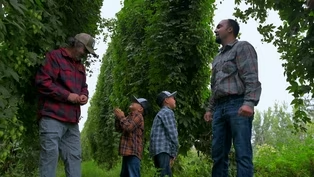
Washington hops make incredible beer, and the world knows it. We visit a brewery in Mexico City using Washington hops then travel to a Washington farm where hops are grown.
Problems playing video? | Closed Captioning Feedback
Problems playing video? | Closed Captioning Feedback
Washington Grown is a local public television program presented by KSPS PBS
Washington Grown
Washington Hops
Season 11 Episode 1111 | 26m 46sVideo has Closed Captions
Washington hops make incredible beer, and the world knows it. We visit a brewery in Mexico City using Washington hops then travel to a Washington farm where hops are grown.
Problems playing video? | Closed Captioning Feedback
How to Watch Washington Grown
Washington Grown is available to stream on pbs.org and the free PBS App, available on iPhone, Apple TV, Android TV, Android smartphones, Amazon Fire TV, Amazon Fire Tablet, Roku, Samsung Smart TV, and Vizio.
Providing Support for PBS.org
Learn Moreabout PBS online sponsorship- Washington Grown is made possible by funding from the Washington State Department of Agriculture and the USDA Specialty Crop Block Grant Program.
And by The Potato Farmers of Washington.
Learn why Washington is home to the world's most productive potato fields and farmers by visiting potatoes.com.
[light music] - On this special season of "Washington Grown", we're following Washington produce around the world.
Here we go.
- I mean there is just stuff happening everywhere.
- Breakfast, lunch, or dinner.
- Breakfast, lunch, or dinner.
[Kristi laughs] I'm doing all the work over here.
- That's a Tomás deluxe.
All good things are better shared right?
- Cheers my friend.
- Cheers.
[Val laughs] - I can't even walk.
Hot diggety dog!
- We got a lot to explore and a lot to do.
So let's get to it.
- To Washington.
- To Washington.
- Washington.
- Hi everyone, I'm Kristi Gorenson.
- And I'm Tomás Guzmán.
- And welcome to "Washington Grown" from Mexico City.
Washington hops are known worldwide for their high quality.
- And here in Mexico, they're the key ingredient for some of the best beers.
- They are.
So in this episode, we're gonna see how Washington hops are improving beer around the world.
I'm visiting Puterbaugh Farms to learn about hops.
Do you have a favorite one that you like?
- They're all wonderful, so kinda like children- - Yeah, yeah.
- You can't choose a favorite.
But there are a couple that rise to the top.
- And I'm making a special Ecuadorian dish, called estofado de pollo, at the Otis Restaurant in Otis Orchards.
- You can smell it.
- It smells so good.
- Yeah.
- Then we're learning how Mexico is using Washington hops to make their craft beer.
- I am really passionate about beer.
- Drinker of beer- - Every day.
- Extraordinaire.
- Yes.
- [laughing] That's great.
So you know beer?
- I know beer.
- Yeah.
All this and more today on "Washington Grown".
[upbeat music] In order to find that perfect little hole in the wall restaurant, sometimes you have to look small.
Here in the small town of Otis Orchards near Spokane, there's an old building with a new spark.
The Otis Restaurant is under new management and they're bringing out the familiar flavors the town loves, while also adding some unique Latin American cuisine to make a menu everyone will love.
- I don't think I've tried a plate that I don't enjoy.
They have a very unique style of Latin American foods.
- Just that fusion is, you know, it's a pretty cool idea.
- Yeah, I come here for the burgers, but stuff like this, it'll fill me up real good too.
- We want this to be in the home cooking, the home cooking flavor, that's what we provide in the whole experience.
- Yeah.
Mario and Belky Ruiz know that this community loved the Otis Restaurant before them.
So together they decided it was best to continue doing what people loved.
And with the addition of Belky's amazing Latin American dishes, the Otis Restaurant has never been a better place to visit.
- The Otis Grill was a staple here in the Orchard.
For the last 20-plus year, you can have a burger, you can have a Mexican plate on the same table.
- Yeah.
- You can have a burger, and you can have a taco.
- This is definitely homemade and sometimes that is what we're looking for.
- The chicken just falls apart in your mouth.
You hardly even have to chew it.
- It's like a home-cooked meal.
- Everything we do is make from scratch every day to make sure it's always fresh.
- I mean, when you see the face of the people and they say, "Thank you, that's good," it's a lot of enjoyable thing.
This is, you can share it.
- Don't miss later in the show, when Chef Belky and I make the Otis Restaurant's estofado de pollo.
Delicious.
- Yes, wonderful.
[bright music] - Washington is full of all sorts of farms from rolling hills of wheat to small blueberry farms, every single one has something special to offer.
But one thing many of these farms share is that they're rooted in family.
Here at Puterbaugh Farms, they're growing amazing hops with family at the center.
Stacy Puterbaugh has the best team to share the work with.
- I got two boys, Levi and Drew that are farming with me.
And I farm with my father and my sister.
And you just, you get to be around family a lot, so.
- Yeah, everybody's- - And the grandkids.
- Does everyone get along, mostly?
- It's family.
You know, we get in hair pulling contests every once in a while.
- For Stacy's sons, Levi and Drew, they couldn't imagine life any other way.
- Working with family is the best part of farming, honestly.
- What does harvest look like?
- Chaos.
[Kristi laughs] No, but on a good day, harvest is a beautiful thing.
Poetry in motion.
It just depends on the day in harvest.
- Yeah.
- There is no two days alike.
So every day's a new day.
It's why we do what we do during harvest.
- We're growing 19 different varieties on this farm here.
- Do you have a favorite one that you like?
- They're all wonderful.
So kinda like children- - Yeah, yeah.
- You can't choose a favorite, but there are a couple that rise to the top.
- But if you were to ask him his favorite beer.
- I get enough hops in the year that I generally would stray away from having a beer.
- Hops are in your blood- - Exactly.
- So to speak, without having to drink the beer.
- Yes, it's like going up and licking a kiln belt to me.
So, you know, you get enough of it and you're working in it, but there's a beauty to it, because it's almost like an artist.
You make the masterpiece and people come to enjoy it.
- Now Drew is taking me to the kiln, where harvested hops are laid out to dry.
- This was picked approximately an hour ago.
We've ran air just with a fan for an hour.
- Uh-huh.
- That helps wick off the initial moisture.
Then we put heat to it.
- So I guess when I squeeze on them, you can kind of feel like- - Some moisture, yeah.
- Some moisture.
- Mm-hm.
- Yeah.
- And then do you hear the crinkle when you move it back and forth?
- Yeah.
- That's the dry matter in the cone itself as it's hanging in the field.
Just kind of hear it crinkle- - Yeah.
- You know it's dry enough to pick.
If it's- - Okay.
- If it's still green then it's not quite ready to pick.
- Yeah.
So, yeah, I can hear it just a little bit.
- Mm-hm, just a little bit.
- Yeah.
- And this one should be the driest.
- Oh, they're like paper.
- This is almost ready.
Yep, exactly.
- They are.
- So we're shooting for eight to 10% moisture.
- Uh-huh.
- So there's still a little bit left in here.
- So those ones that I dropped in there weren't probably supposed to go in there.
- It all works out in the wash, yeah.
- Oh yeah, you can really feel the difference.
- Mm-hm, yes.
One thing that you'd feel for is this strig, which is the center part.
You kind of take all the leaves off and then it's left with this green core.
- Yeah.
- The strig of the hop.
- Uh-huh.
- And that will feel papery.
If it's rubbery, it's too wet.
And so there's a lot of feel aspect to it.
- Yeah.
- There's just some nuance to drying.
- Yeah.
- One of the more important jobs in the farm because you can work all year and then mess up on the drying and not have a quality product.
- I think Washington hop growers pride themselves on producing quality hops.
Quality is key and no job is half done.
- You guys work hard.
- Mm-hm.
- But it seems like you love what you do.
- Oh yeah, I enjoy every day.
[snickers] - And you get to do it with your family.
- Yeah, we get to do it with our family.
Favorite part and worst part all-in-one.
[Kristi and Drew laugh] Definitely the favorite part.
Definitely the favorite part.
- Yeah.
[upbeat music] To make great beer, you need a special combination of science, art, and a little bit of magic.
And here in Mexico City, there's no shortage of beer to be found.
But if you're looking for the real deal, it's all about finding the people who love everything about that special drink.
- I am Luis Enrique Fernández de la Reguera, CEO of Casa Cervecera Cru Cru, a local brewery here in Mexico City.
And also counselor of the Cerveceros de México.
That is a Mexican chamber of beer.
I am really passionate about beer.
- Drinker of beer- - Every day.
- Extraordinaire.
- Yes.
- [laughs] That's great.
So you know beer?
- I know beer.
- Yeah.
Luis has a long list of titles today, but looking back 10 years, you'll find him with just a love of beer and a dream.
- I used to be a product designer.
- Mm-hm.
- And one day I get a how to make beer kit.
- Oh yeah?
- And I brew my first kit just two months after I get married.
And I say to my wife, "Okay, I'm gonna quit."
And then we start the brewery.
- Whoa.
- So, yeah, it was kind of crazy at that time.
- Yeah.
- But, yeah.
- You were brave.
Very brave.
So tell me about Cru Cru.
So that's your brewery?
- That's my brewery, yes.
- So how big is it and- - Okay, brewery, it's a small brewery, but we are really loud, like the cricket.
Like a really small insect, but we have a bunch of noise.
We won a cup, not just a cup, but a bunch of medals.
- You won a lot of awards.
- Yeah, a bunch of awards.
Always talking about the Mexican flavors.
For us it's really important to develop the Mexican say, or the Mexican flavors.
- Yeah.
- And if we are gonna be involved in beer, represent our country the best way we can.
- Right.
- And at the beginning, we were excited about making beer.
- Right.
- And now we are excited about making good beer.
- Right.
- And you can't make good beer if you don't have good ingredients.
Not only hops- - Yeah.
- But barley, and good water, good yeast.
But hops are really important in beer, especially in the styles that are growing here in Mexico.
The Mexican beer industry is growing like at least 10% a year.
The craft market, it's only 0.1% of production, and somewhere around 1% of sales.
And also we have a different way to understand flavors here in Mexico.
- Mm-hm, yes.
- For example, we brew a beer with crickets.
Or we have porters with local chocolate, or also sours with watermelon.
We have a really big voice about flavor, so- - Can experiment a little.
- We experiment a lot and our beers represent that.
- Yeah.
To make great beer, you need great hops.
And it just so happens that Washington is the number one producer of hops in the US.
Which makes them the perfect match for Mexican brewers.
- The hops from the US, they're taking a really big part of the Mexican beer industry.
We're going behind the freshness of the aromas and the citrus.
And you can only get that with hops from the States.
- Yeah.
- The thing that I like the most is that you can get it fresh.
They're well packed, like came with nitrogen and compact.
So they didn't get oxidized in the- - Yeah.
- In the way here.
So that's really important for us.
- Well, you need to go to Washington.
- I need to go.
- So you can like see all the varieties.
- Yes.
- Yeah.
- I truly believe that the hop is like the future of beer here in Mexico.
As long as we still getting fresh hops and fresh aromas.
And we learned how to use it well.
- Yeah.
- It's a long way ahead now.
- I think we should have have some beer, right?
- Cheers.
- Cheers.
- Thank you.
- Thanks for having me here.
- Thank you.
[cheerful music] - Washington State produces 77% of the nation's hops.
What region are they grown in?
My brother Levi will have the answer for you after the break.
- Coming up, I'm making a special Ecuadorian dish called estofado de pollo at the Otis Restaurant.
Delicious.
- Yes, wonderful.
- And we're in the kitchen at Second Harvest trying Chef Laurent's cheddar and beer soup.
[cheerful music] - To answer my brother's question, the Yakima Valley produces 77% of the nation's hops.
- We're back at the Otis Restaurant.
Delicious plates come hot from the kitchen with a variety of flavors here, leaving guests full and excited to try the rest of the menu.
But even better than that, is the community made right here in the building.
- I always wanna go somewhere where they treat me like family and, you know, they make me feel welcome, and Belky and Mario do just an excellent job.
Their service is among the best in Spokane.
- We're so close.
I'll be here again.
[giggles] - We met in college in California 37 years ago.
We sat next to each other the first day of school and we got married the following year.
- Mario and Belky Ruiz are bringing traditional dishes from their homelands in Ecuador and Guatemala to the people of Otis Orchards.
But whether you want amazing Latin American food, or simply a burger and fries, they have got something tasty just for you.
- I don't think I've tried a plate that I don't enjoy.
They have a very unique style of Latin American foods.
- This is definitely homemade and sometimes that is what we're looking for.
- It's a whole new touch.
I really enjoy it.
- It's like a home-cooked meal.
- You are the chef, right?
- That's what they call me.
[Belky and Kristi laughing] I work my regular job.
Then I come after my regular job, I come in over here.
- Why do you do it?
- I mean, when you see the face of the people and they say, "Thank you, that is good."
It's a lot of enjoyable thing that you can share.
- Once you see an empty plate, and we know they like it.
They like our food.
- I love that.
So you and I get to cook today.
What are we gonna make?
- We gonna make estofado de pollo.
It's a chicken with vegetables, potatoes.
- It's a comfort food.
You can make dinner for four for under $20.
- Faster, not take it long.
- That's a good thing.
[laughing] That's even better.
- Yes.
- I'm excited.
We have some beautiful Washington grown ingredients.
And what is the dish that we're gonna make?
- We're gonna make chicken with potato and vegetables.
- And where does this originate from?
- From Ecuador.
- From Ecuador.
Okay, well let's get started.
We start with some garlic and onions, then add green peppers and tomatoes.
- This is a popular dish in my country and a lot of Central Americans too, they use this one.
You can smell it.
- It smells so good, yeah.
Next we add some salt, pepper, cumin, and oregano.
Then we put our chicken in.
Finally, we add some tomato sauce and let it simmer.
After five minutes, we add water and let it boil before adding the potatoes.
- Nothing better than chicken and potatoes for dinner.
- Right.
- Right?
[Belky laughing] What kind of potatoes are these?
- I choose the yellow potatoes.
- The yellow potatoes.
- Uh-huh.
- Oh, we love that.
Washington potatoes and all these lovely vegetables.
And we've got our Washington beer over here.
- Yes.
[Kristi laughing] - It's a local beer.
- Yes.
Do you like to use Washington grown, locally grown- - Yes.
- Vegetables and that sort of thing in your dishes?
- Yes.
- Try to use locally because we're locally too.
- Yeah.
- Yes.
- Local helping local.
- Yes.
- [laughs] I love that.
Our potatoes go in and we add some dehydrated chicken broth.
- Okay, we already cooked for 20 minutes.
Now we are gonna put the vegetables.
- Okay.
- We are using right now frozen vegetables.
That's why we put in five minutes before.
- Well the frozen vegetables, you know, are super fresh.
- Yes.
- Like they are frozen right away, right out of the fields.
- Once the five more minutes, then we put the cilantro on.
- Easy.
It's a one pot meal.
[cheerful music] So you need like some rice to kind of soak up all the juices.
- Yes.
- Oh, it's so soft and tender.
It really has a good tomato taste to it.
Just all the flavors work really well.
Delicious.
[Kristi laughing] - Yes, wonderful.
- Is it like home?
- Like home, yes.
- Yeah.
Easy and nice and fresh.
- I think it's easy and doesn't take too long.
- Hm-mm.
Thank you so much, Belky.
- You're welcome.
- Yes.
- Thank you.
- This is a lovely meal and I feel the love.
To get the recipe for Otis Restaurant's estofado de pollo, visit wagrown.com.
Coming up, Tomás is trying a special vegan taco at TacoVado in Spokane.
- The flavors are bold, fresh, robust, bright.
I mean, you guys are knocking it out of the park.
[cheerful music] - Today I'm visiting the US Embassy here in Mexico City.
I'm here to talk with the experts on how Washington and Mexico can benefit from each other in trade, and why the relationship between the two is so important.
- I like to say we are like the export arm for USDA.
- Andre Bradley is the Deputy Director of the Agricultural Trade Office in Mexico City.
Living and working here has given him a unique opportunity to learn about Mexico's consumers and what they want to buy.
- People associate US food with high quality, high safety standards.
Mexico is the top importer for apples coming from the US.
For fresh pears, hops, and barley.
And a lot of these products we know come from the state of Washington.
Every apple that I've seen on a store here in Mexico has some Washington sticker.
- Yes.
- Even local commercials here play advertisements for Washington apples.
And so we're reminded of Washington State all the time while we're here.
- Buyers, they really know that Washington products offer quality.
- Fabiola Cortez is a marketing specialist here at the trade office.
She knows that products like Washington apples are specially sought after in the markets.
- Mexico produces apples.
But they are very, very different.
Washington apples are crisp and they are sweet.
And so, it's a very nice thing to get an apple from Washington.
'Cause it's sweet, it's crispy.
- The relationship is so important, I would say between in Washington and Mexico, that whenever there's a trade disruption in Washington, we feel it.
I believe there are 14,000 trucks of apples that come down, on average, during shipping season.
And if anything that happens in Washington that would disrupt that, we feel it here.
We see it in stores, in like empty produce sections.
It's a very strong relationship between State of Washington- - Yeah, sure.
- And Mexico.
And so we always hope that everything works out smoothly.
- Keeps going smoothly.
- Yeah.
- Yeah, yeah.
- Washington wines, for example, they also have a very good awareness in the market, especially in the touristic destinations.
You can see a lot of people asking for Washington wines.
They know the wineries there.
We recently opened, in last May, the market for fresh potatoes.
So Mexico, it's getting more awareness on fresh potatoes.
- There's a big demand for healthy food.
And I believe that the state of Washington has a strong reputation for sending high quality, healthy food products into Mexico.
With that being said, Washington is always gonna have room here in the Mexican market.
- As a Mexican American, I know a good taco when I see one.
So I can be pretty picky about which ones I like.
Good news for me, though, TacoVado, here in Spokane, has created a menu so vibrant and full flavor that I can't help but clean my plate.
- People's flavor connections are usually attached to how much love went into the food, I think.
- Right.
- More so than just the style of the food or how it looks in a picture.
So like the way we feed people is with love.
- Mark Blaton is the co-owner of TacoVado.
With the help of his chef, they found a niche that's perfect for huge flavors and fresh ingredients.
- Our vegan clientele or customers, I should say, are some of the most excited people that come in.
We decided not to do imitation cheeses, or imitation meats, or anything like that.
- Right.
- We wanted to feature cauliflower and kale and all these ingredients the way they are.
And as we kept sneaking those in there people getting more excited and more excited, so we created the vegan menu.
- I see this cauliflower taco.
- Yeah, so this is what we're here for today.
- It's calling my name and- - That one is all you.
- All right, let's give this a try.
- It's bright and it's fresh, but it's also a really laid back, approachable, kind of a homey taco.
- You know, I think what's funny, I'm a carnivore.
- Yeah.
- I love carnitas and you know, chicken, but there's so much texture and heartiness to this taco.
- There is.
- It's fantastic- - Yeah.
- With this cauliflower.
- We're very intentional with our ingredient choices.
It's not just for color.
Everything is paired for flavor.
Everything works together so that the food that we're focusing on is complimented correctly.
- I'm guessing that using Washington ingredients is pretty important too, right?
- Totally.
And a lot of our vendors are focused on that too.
So it's not as hard for us to acquire it as it maybe it used to be for people.
So we're able to kind of attack our menu, put it out there, tell them what we're looking for.
Our onions, pickled onions, all come from Washington every week.
And we're making steps towards even our tortillas, and our breads, and everything.
- Even their beer comes from a local brewery.
- Yeah, we're drinking Lumberbeard, local beers from Spokane.
This is all Washington hops, Washington ingredients as well.
And we like them 'cause they're very flavor focused.
It's not just a throwaway beer that you- - Right.
- You just drink on the weekend.
It's a really awesome beer.
It's like a summer beer.
- Look at that.
- Pairs well with tacos.
- Usually, I don't go for a real hoppy IPA, but this is so like citrusy and bright.
- Totally.
- And when you pair this with some of the heat and the spice of the taco, oh, man.
The flavors are bold, fresh, robust, bright.
I think with your focus on these types of whole local ingredients, I mean, you guys are knocking it out of the park.
[upbeat music] - We are in The Kitchen at Second Harvest Food Bank and we are ready to taste some recipes made with Washington grown ingredients.
And my tasters are here with me.
Chef Laurent Zirotti, Thank you so much for being here.
- Fantastic to be here.
Thank you.
- And co-host Tomás Guzmán.
- Good to see you again.
- Yes.
And we love being here at Second Harvest Food Bank.
You, this is their teaching kitchen, which is great because they bring in folks who receive food from the food bank and teach them how to use that food and how to feed their families.
- Simple, simple cooking.
Here you have a lot of perishable products.
They don't know what to do with those perishable.
So we are here to teach them- - Right.
- How to- - That's great.
- To cook simple food, good food for good people.
- And it can be hard for a lot of us who are fortunate enough to not have those worries- - Yep.
- To forget that there are people that need some help.
- That are food insecure, yeah.
And so we're thankful for Second Harvest for what they do- - Sure.
- And also for allowing us to be in their gorgeous kitchen.
- That's true.
- Yes.
- And we are talking about Washington grown food and that includes hops.
- Hops.
- Hops.
- Right?
It was also fun to see that Washington hops are being used, you know, in Mexican beer.
- Yeah.
- And also Vietnamese beer.
We saw lots of Vietnam cans of beer that said Washington hops.
- Yeah.
- Or Yakima hops or whatever, right on the can, so.
- Exactly.
- Yes, and we created a recipe, developed a recipe around the final product that is beer.
Right?
- Beer.
- So what a better use of beer than- - Uh-huh.
- In a cheddar and beer soup.
- And that's a pretty popular- - I think- - Recipe.
- It's a very popular.
I think- - Yeah.
- I mean, besides drinking the beer, the best way to use it would be- - In a soup.
- In a soup.
- Yeah, I agree.
- And the key is not to boil your soup, all right?
Otherwise you curdle everything- - Mm-hm.
- And it's gonna be grainy and broken, so.
- Oh, okay.
- Very follow the instruction on the recipe that we developed.
- Yeah.
- Yes.
- Yes, yes, so.
- That's exciting.
So, let's see how we make it.
- Here we go.
[upbeat music] - We love this.
- Look at that.
- It smells- - It smells like a cheeseburger.
- Like a cheeseburger, mm.
- It's got some bacon in there, some croutons.
It's nice and tangy.
- The beer isn't overpowering.
- No.
- And I think that might be where a lot of people make some mistakes with cooking with beer.
You know, they get something that's- - It's too much.
- Yeah, they get something like a really hoppy IPA.
- Mm-hm.
- And they don't, they're not careful with it.
They put too much of it in there.
- Yeah.
- What kind of beer do you suggest?
- We use an ale, a lager would be fine.
- Gotcha.
- We use something local, No-Li.
- Wow, this is rich.
- Really good.
- Oh, yes.
- I know a French cook made this.
[all laughing] - You don't wanna eat a quart of it, yeah?
- Right.
- Just a little bit.
This is like the perfect amount.
- Mm-hm.
- Is it weird that I want a beer with my beer cheese soup?
- I don't think so.
- I don't think so.
- No.
- Okay.
- Garçon, garçon, a beer.
[all laughing] - A good Washington beer would taste good right now.
- That's delicious, Laurent.
Thank you.
- Thank you.
- To get the recipe for Chef Laurent Zirotti's cheddar and beer soup, visit us at wagrown.com.
- Without Washington hops, beer just wouldn't be the same back home or around the world.
- Ah, gracias.
That'll do it for this episode of "Washington Grown."
We'll see you next time.
- Adios.
- Salud.
Preview: S11 Ep1111 | 30s | We visit a brewery in Mexico City using Washington hops then travel to a Washington farm. (30s)
Providing Support for PBS.org
Learn Moreabout PBS online sponsorship

- Food
Christopher Kimball’s Milk Street Television
Transform home cooking with the editors of Christopher Kimball’s Milk Street Magazine.









Support for PBS provided by:
Washington Grown is a local public television program presented by KSPS PBS