Washington Grown
Washington Pears
Season 11 Episode 1109 | 26m 46sVideo has Closed Captions
Pears in the winter? We talk with a Mexican culinary historian. And make Tres Leches cake.
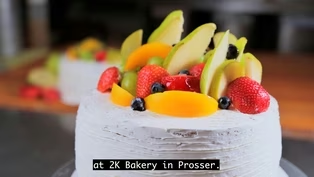
What happens to pears in the winter? We talk with a Mexican culinary historian. And we make Tres Leches cake at 2K Bakery in Prosser, where a special baker is handing out love in every bite.
Problems playing video? | Closed Captioning Feedback
Problems playing video? | Closed Captioning Feedback
Washington Grown is a local public television program presented by KSPS PBS
Washington Grown
Washington Pears
Season 11 Episode 1109 | 26m 46sVideo has Closed Captions
What happens to pears in the winter? We talk with a Mexican culinary historian. And we make Tres Leches cake at 2K Bakery in Prosser, where a special baker is handing out love in every bite.
Problems playing video? | Closed Captioning Feedback
How to Watch Washington Grown
Washington Grown is available to stream on pbs.org and the free PBS App, available on iPhone, Apple TV, Android TV, Android smartphones, Amazon Fire TV, Amazon Fire Tablet, Roku, Samsung Smart TV, and Vizio.
Providing Support for PBS.org
Learn Moreabout PBS online sponsorship- Washington Grown is made possible by funding from the Washington State Department of Agriculture and the USDA Specialty Crop Block Grant Program.
And by The Potato Farmers of Washington.
Learn why Washington is home to the world's most productive potato fields and farmers by visiting potatoes.com.
- On this special season of Washington Grown, we're following Washington Produce around the world.
- Here we go.
- I mean, there's just stuff happening everywhere.
- Breakfast, lunch or dinner.
- I'm doing all, all the work over here.
- That's a Tomás deluxe.
All good things are better shared, right?
- Cheers, my friend.
- Cheers.
- I can't even walk.
- We got a lot to explore and a lot to do.
So let's get to it.
- To Washington.
- To Washington.
- Hi everyone I'm Kristi Gorenson and welcome to "Washington Grown."
And everyone knows that Washington produces some amazing apples, but what about pears?
Our pears are known worldwide for being extremely flavorful, whether you eat them fresh or baked.
Today, we're exploring Washington grown pears.
Val's visiting Palmer Orchards.
- That's a whole new fruit.
- It's got a long ways to go.
- It's got a long ways to go.
- And I'm making Tres Leches cake at 2K Bakery in Prosser.
I just kind of gave up, Sylvia.
- Oh no, don't give up on me, girl.
- And Tomás is talking with a Mexican culinary journalist.
- I can say that Mexico City is one of the top five food capitals of the world.
- All this and more today on "Washington Grown."
[upbeat music] Donuts, cakes, bread, cannolis, and more.
If you're in Prosser and you catch the sweet smell of something delicious baking, it's probably coming from 2K Bakery.
The sweet treats and goodies here are delicious, and made even more amazing by one very special person who puts love into everything on the menu.
- My favorite thing is to visit Sylvia.
It makes everything really special.
- She's one of the hardest working people in Prosser.
She is here early in the morning and late at night.
- I joke with Sylvia, and tell her that I go to the gym, so that way I can come and eat her bread.
- My kids ask to come here all the time.
So it's like a fun stop in our daily life around Prosser.
- I know it's a hard job.
I know you have to be up early, long hours, but once you like what you do, it doesn't matter.
- Owner and Baker Sylvia Cortez has created a unique community of people in Prosser that can only be described as a family.
- I feel like I bring people together.
I love my customers, I love baking, it doesn't get boring.
What I love is that people brings memories, and then you forget about all the hard work that you do.
It's like this is my extra credit right here, my bonus.
- That's awesome.
Don't miss later on the show, when Sylvia and I make a special Tres Leches cake with Washington fruit.
- Oh, we're just having so much fun in here.
- [laughs] I love it.
[upbeat music] [singers vocalizing] - There's nothing quite like taking a big bite into a peary delicious piece of Washington grown fruit.
If you're looking for something sweet and delicious, there's nothing more refreshing than a fresh pear.
I'm at Palmer Orchards, where pears of all kinds are in the middle of the growing season.
So how did you get started in growing pears?
- So, I was lucky enough to marry into it, and now we are, I guess, the fourth generation to manage it.
- Darren Palmer might be new to the pear-growing game, but he's got the perfect team behind him.
- I didn't grow up with tree fruit, and I didn't know anything about 'em.
So, as we were talking about this transition, one of the things was that the guys that work for us have been working for us for four generations.
They know a lot, right?
They are out here every year.
They honestly know the orchard better than I do, because they've been working it.
They've been planting these trees, and taking care of 'em for all those years.
And I think it's more than that.
I think that we're a family, to be honest with you.
Their kids are in our house every day, jumping on our trampoline, playing in the pool, playing with my kids, I think there's something like 15 different kids that are involved in the families that live here and work here.
Washington State and specifically the Upper Valley here in the Wenatchee valley is, in my opinion, the best place to grow pears.
The pears really like the hot days that we get here, but then also the cool nights.
So right before harvest, as fall's starting to set in, the temperature drops, and the sugar content goes up in the pears, and creates the juicy pear that everybody loves.
- Although Mother Nature helps, growing the perfect pear requires a lot of careful work.
You wanna have spacing with your Bartletts or you won't get any size, and when people go to the grocery store, they want to pick up a nice perfect pear, right?
- Like a palm full.
- Exactly.
You don't want a little one.
So to get that bigger pear, we actually hand thin off the Bartletts, so that we have a single Bartlett every, you know, 10 inches or so.
So we will eliminate this one that's maybe smaller, or one that's going to grow and rub on a limb below it, or not be that perfect pear.
And once we thin that pear off, the remaining pear then gets all the nutrients coming from the tree to grow bigger.
These two pears are fairly close together, and so what we will do is we'll take the pear off.
So we'll take it off, so that these two pears will get bigger.
- So these are pretty close, right?
- These are pretty close together, so this is one I could, or would I take this one?
- I'd take out the middle one.
- Oh, I didn't even see that one hiding down there.
Oh, okay, and so I just go to the end of the stem.
- Yeah, you just plunk it out, there you go.
- Oh, and can I take a nibble?
- You sure could.
- I'm really curious.
Can I?
It's pretty hard.
- I don't know how good they'd be.
- That's a whole new fruit.
- It's got a long ways to go.
- It's got a long ways to go.
It's a different flavor altogether.
But I mean, you could pickle this, you could chutney it.
- All those that we throw in the garbage, should be picking, and doing something with them.
- Yeah, there's a whole new idea here.
How involved are your kids in the day-to-day work of the orchard?
- They like to run around with me.
Yeah, I mean, so it's every night, you know, you come home, and there'll be six, 10 kids run around in our yard, playing in the sprinklers, jumping on a trampoline, you know, you're kind of grumpy, maybe it was hot.
95 degrees, you've been out here working, and when you get home, and there's a dozen of kids in the pool all laughing, and having a great time, and playing, and it makes it all worth it, that's for sure.
So in the winter, we plow this to be a sledding hill.
Granddad will drop the kids off at the top of the hill at the shop, and they pile outta the back of the truck, and they all take off down the hill, all the way down around the corner, down to Highway 2, and grandad will drive down the road, and go pick 'em up, and they all pile back in the back of the truck.
You know, there'll be 10, 15 kids in the back of the pickup, and it just- - Oh my gosh.
- It's so much fun, the dogs are riding around in the front, just enjoying being in a nice heated cab, and.
- Oh gosh.
These kids have so much energy, It's hard not to feel like a kid again.
So, to end the day, I had to try a little something I haven't done in a long time.
- Take your shoes off first.
- All right.
Shoes off first.
All right.
Here I come, guys.
Ready?
Whoa.
Oh, oh.
- Yeah.
♪ Pocket full of posies ♪ Ashes, ashes ♪ We all We all fall down.
Oh, you guys are too funny.
Are too funny.
- Coming up, I'm making Tres Leches cake at 2K Bakery in Prosser.
- Oh, we just having so much fun in here.
- [laughs] I love it.
[uptempo cheery music] [singers vocalizing] - We're back in Prosser at 2K Bakery, here in this small bakery, there's no shortage of sweet treats, lovingly made, coming hot out of the oven, but the real draw is found in the owner and the love she gives out for free.
- Honestly, my favorite thing is to visit Sylvia along with getting the treats.
It makes everything really special.
- She's one of the hardest working people in Prosser.
She is here early in the morning and late at night.
- She works really hard, and she's always friendly, and just ready to make our day.
- We come on in, and we just feel like family, so.
- Oh my God, I love my customers.
I will always say that I love them, they made me part of their families.
- Owner and baker, Sylvia Cortez, makes sure a visit to her bakery is special, whether it's a donut or a cake, everything here is incredible.
- We usually get the conchas, of course, and the treats with the filling.
- I just heard there was some cannolis being made in the back and those are my favorite.
- I really go for the apple fritters - And then the conchas, the pink ones, those are my daughter's favorite.
- They, you come rolling fresh out the oven.
She's putting frosting on them for me.
So I come in and I usually eat a couple on my way home.
Hardly get out the door.
- But I like everything honestly.
- The secret to her sweet treats are the fresh ingredients found in the area.
- We use a lot of the blueberries.
Notice I have only one blueberry muffin in there, but it was like 30 this morning.
- Oh my gosh.
- And then, we also do a lot of the apples.
Every time we have a seasonal fruit, like cherries, we do something with cherries, pears, you know, those are beautiful to decorate cakes.
So today, Kristi, have you heard this cake called Tres leches cake?
- I have, but I've never had it.
- Okay, so today we are gonna make one together, and we also gonna use some fruit to decorate the cake.
Some local fruits from here, so yes.
The Tres Leches cake is a very moist cake.
so if you like moist, you're gonna love this cake.
- I do.
- Okay.
- Okay, let's get started.
- All right, Kristi, let's get started, yes.
- What do we need to do?
We start by combining some eggs, milk, canola oil, baking powder and salt, and mix it up.
Then we add some sugar and flour.
- I always go like this, it's something that I do.
Do you see air bubble, so you can take the air off?
- That's something my mom used to do with some of her cake.
- And then we bake that at 330 for an hour.
- There's three milks, right?
- Yes, it is, Kristy.
- And so tell me what we have here.
- Okay, so we have evaporated milk, and we have whole milk or 2% milk.
And then we have a sweet condensed milk.
- Awesome.
- So one, two, three.
- We mix the three milks with a little vanilla.
Meanwhile, Sylvia mixes some whipped topping.
When our cakes are done baking, we trim them up.
Can I eat this part?
- Yeah.
A lot of people loves to eat that part.
- Mm, okay.
- And you see the little holes, Kristi?
- Yeah.
- Yeah, that's where the milk sucks in.
- Oh.
- I like to do a little bit higher just because this is a Tres Leches.
So the milk don't run out.
- Moment of truth.
- Yes.
- Oh dear.
- So I always start in the center.
- This is usually where I mess up.
- You just pour it out.
I always like to start in the center, it will run out.
And if it start running like mine right now in here, you just move it and play with it.
- Okay, I've got a river.
A river of milk flowing outta my cake.
I just kind of gave up, Sylvia.
- Oh no, don't give up on me, girl.
Oh no, that is normal.
That is so normal.
- Okay, it is normal.
When you see people doing cakes, Tres Leches cake, you're gonna see cups, towels.
- Oh really, oh really?
- 'Cause it's normal to come out.
So in today we are gonna use those fresh strawberries.
- Yeah, and you're so lucky to be here in Prosser with so many awesome freshly grown fruit, and- - Fruits.
- Oh, yeah, - Oh, we can do so many things.
We get grapes, blueberries, cherries, peaches, I mean, you name it, we almost got it, apples, pears.
- So awesome.
We add a layer of whipped topping and some strawberries.
Then add our second layer, and repeat the process.
- Oh, we're just having so much fun in here.
- [laughs] I love it.
You're a good teacher.
Sylvia.
- Ready to decorate?
- Yes.
All right.
- I'm gonna follow your lead.
So you're just gonna pile it on?
- Yes.
- This is fun.
- It is fun.
- I like it.
Oh, that's so beautiful.
- So we got the pear, strawberries, peaches, blueberries.
- We did good.
- You like it?
- Yes.
[upbeat music] We finally get to taste it.
- I know the moment of the truth.
- The moment of the truth.
- Yes, let's go for it.
- Oh my gosh.
You weren't kidding when you said it's moist.
- It's moist, right, Kristi?
- Oh wow.
- It's not very sweet.
- No, it's just good though.
It's very moist.
- It is moist, yes.
- And I love the fresh fruit.
- That's a good thing living in Washington, Kristi.
We get different kinds of fruit, and it's just, it's beautiful.
Thank you so much.
- No, thank you, Kristi.
- I loved it.
- Thank you, thank you.
- You're such a good teacher.
I appreciate it.
- Thank you for coming all the way down here.
- Oh yeah.
- Thank you, thank you.
- This is amazing.
- To get the recipe for 2K Bakery's Tres Leches cake, visit us at wagrown.com.
[slow relaxing music] - What comes to mind when I say Mexican food?
Tacos, enchiladas, fajitas?
There's plenty of Mexican dishes I'm sure you're familiar with, but Mexico's food goes so far beyond these classics with pallets of flavors covering a wide range of styles and tastes.
So in order to truly learn about the richness of Mexican cuisine, it was time to bring in an expert.
- My name is Beto Lance.
I'm a Mexican photographer and food writer.
- I'm excited to hear a little bit more about what you do.
'cause I understand that not only are you a photographer and a food writer, but you do a lot of research as well.
Now that's interesting to me.
So what exactly do you research?
- Well, I work with many chefs, and I travel with them, and I get to stay in their cities, and we try to investigate, and to research the traditions, the way people in different areas of Mexico treat their food, and we put all that together, and that whole information is useful for chefs to cook with a good reason for doing things, and to make bonds with the communities.
It's a whole thing that respects its place and culture.
Mexican modern cuisine, it's a fusion, and still we have our flagships like corn, peppers, pumpkins, you know, beans and all that.
We have that, and we will never leave that apart, because we are very true to our traditions and to our history.
But we mix all that with products that come from all over.
The relationship with the United States, it's super important, because we are sure that we will get as much as we need.
- Like any delicious dish, Mexican cuisine always starts with good ingredients.
That's why chefs all over Mexico, love Washington produce.
- If you visit, let's say the top 20 restaurants in this city, you will see that one of the main things that those restaurants respect is quality, and a certain standard that never falls down.
So that's what Washington gives these cooks.
They're gonna stay loyal to that, because they know that whenever they get it, they will get the same.
So their dishes are gonna be always perfect just because of that.
I can say with a high level of certainty that Mexico City is one of the top five food capitals of the world.
This is what I hear when chefs come and visit, and I talk to them from all over the world.
We are in a truly rich area.
- Coming up.
Tomás is trying some delicious chilaquiles at Los Chilangos food truck.
- You gotta have some fun, be a little messy.
- And we're in The Kitchen at Second Harvest trying Chef Laurent's Pear and Napa Cabbage Salad.
[uptempo cheery music] [singers vocalizing] [uptempo cheery music] - Hey, let's go.
[upbeat music] Washington offers a huge variety of cultural food opportunities, but growing up in Yakima, surrounded by plenty of Mexican food, I can tell you I'm always ready for a taste of home.
Here at Los Chilangos in Kirkland, their recipes start at the roots.
- Basically.
When I need to make a recipe better, I call my mom - Owner, Oscar Mendez, knows that if his recipes are going to be on point, he needs to check in with his two toughest critics.
- Whenever they come from Mexico, they come, they check the recipes.
You know, I tell, "Hey, what can I do better," you know?
- It's all about mom, huh?
- It's all about mom.
- She's gonna give you the thumbs up, thumbs down.
- Yeah, yeah, she's the one that, yeah, say this is good, and this is not, - You're also using a lot of fresh local vegetables as well, is that correct?
- Yeah, of course.
Maybe 90% of the vegetables we use, you know, they can be, you know, local from Washington, tomatillos, lettuce, bell peppers, zucchinis.
- All that stuff's like right outta the Yakima Valley, isn't it?
- Of course, yeah.
- The real draw here are the special chilaquiles, tortilla chips drenched in queso fresco, a special mixture of carne asada, and chorizo, and topped with Washington grown veggies.
I'm looking at this plate that you just gave me, and it's got some heft to it.
- Yeah.
[both laughing] - This is no joke man.
You gotta have some fun, be a little messy.
That's pretty good man.
- Oh it is, right.
- The chorizo and carne asada.
- It's a good mix, right?
- Oh, it's great, for sure, this is delicious.
You guys gotta find Los Chilangos as soon as you can.
You won't regret it.
Let's see what people think of Los Chilangos chilaquiles, - That's very good.
- I love it.
- I like it, I like it.
- You like it?
- The meat's tender.
- It's very, very flavorful immediately.
- I just like the combination of the flavors actually.
- It's nice, it's balanced.
- Yeah, it tastes really interesting, 'cause you get like little spice of chorizo mixed with the carne asada, and then like a little bit of, yeah, the egg, and mixed in there and the tortilla chips.
Like, it's a really good mixture - Actually, It looks beautiful, and it actually tastes really good.
- And you can taste the fresh onion that obviously has a very sharp flavor to it.
- You want fresh stuff, right?
Everyone wants fresh food.
- It's local, it's close, and you support farmers in the area.
So that's really nice, and also knowing it's fresh.
It was all really delicious - Here in Mexico City at Central De Abasto, products come in from all over the world to be distributed throughout the city and rural towns.
There's a lot of movement with cantaloupe, bananas, melons, and even Washington fruit, headed all over the place.
Alongside our state's delicious apples and potatoes, there are nice, fresh and juicy pears.
- Hi I'm Mónica Moreno Arellano, and I represent in Mexico, the USA Pears or the Pear Bureau Northwest.
Most of the pears come to Mexico City, Guadalajara, and Monterrey.
They're our our three largest markets.
But the wholesale market in Mexico City is the largest market for produce in general.
And if you go to US and Washington, this is our main destination.
- With Washington being such an amazing place to grow pears, Monica works very closely with Washington growers.
- Of course, Washington is the largest pear grower in the US.
Washington grows over 50% of the pears that the US grows, and Mexico is our number one export market.
- How do these pears get here in such good shape, by the way?
So our growers work with packers and shippers that have great quality standards.
Everything that you see here comes through an importer.
And what happens is that these importers here in Mexico buy the fruit from our growers and our shippers.
And then they come here, they truck them down all the way from Washington to Mexico City, and they get here in excellent conditions.
- They do, they look fantastic.
So we're in a wholesale market.
Where does the general customer purchase their pears?
- A normal customer, regular person that eats pears can buy them either at the retail sector, at supermarkets, or they can buy them at the traditional sector.
In Mexico, the traditional sector is extremely important.
And around 60% of the produce moves through the traditional sector, we call tianguis, that are these small street markets that come out once every week.
We have another type of market, and like 60% of the fruit goes through that.
So if you're a regular consumer, you can go either to your favorite supermarket store or your favorite traditional market and you can find USA pears.
- Yeah.
How important is it to keep that trade relationship going between Mexico, and the United States, and also Washington State?
- The trade relationship between the US and Mexico is extremely important.
We are the number one export destination for US produce.
So for us, keeping that relationship between our shippers and growers and the Mexican trade is extremely important, and part of what we try to do every day.
[upbeat music] - We're in the kitchen at Second Harvest Food Bank in Spokane, and I am joined by my tasters today, 'cause we get to taste some wonderful food.
I have Chef Laurent Zirotti.
Thank you for being here.
- Hello, hello Kristi.
- As always, it's lovely to see you.
- It's always a pleasure.
- And my co-host, Tomás - And we are again.
- Yeah, I know.
- We are so lucky.
- We are.
We are very lucky, especially this season, huh?
- Yeah.
- I mean we had a chance to travel the globe, and go to Mexico City and Vietnam, which I'm sure all of you guys got to see in the segments.
- And then, you know, I got to hang out with Sylvia from the 2K Bakery in Prosser.
Prosser is so lucky to have her, because if you want something that is baked with love, go there.
- Yeah, and you know, you can ask any Mexican person from the Valley, that's like our grandma, like any Mexican grandmother, that is Sylvia.
- That's your grandma, yeah?
- That's it.
- Oh, I know, and she just gives great hugs.
- And food is always better with love, right?
- It's so good.
- It does.
- It absolutely does.
So you have been developing some recipes for us.
- Yep, some recipes.
- So what are we gonna make today?
- Well, today we are talking about pears, so we're gonna make a, a nice little Asian style, I will say, a pear and Napa cabbage salad.
So very refreshing for the summer when you have your fresh pear.
You know, we always talk about apples, you know, in Washington State, but pears are a big production too.
- Oh absolutely.
- And they're delicious in season.
- And they go all over the world.
- Yes.
So for that recipe, try to find a pear that is a little, maybe unripe to get that crunchiness of it, and for a salad, it's always nicer.
- All right, well our team is gonna make it for us.
So I'm excited.
- Cannot wait.
- I'm excited to try it.
So let's see how this salad is made.
- All right.
[upbeat music] - Look at that, that's beautiful.
- I know, it is.
- Beautiful, it is vibrant for the summer.
- It's gorgeous.
- It's great, refreshing.
Can do a little appetizer with it, you know, a few grilled shrimp on top for something like this.
- Oh, perfect.
That's a great idea.
- Let's see.
I wanna make sure I get some of that pear- I know.
- In my first bite.
Yep, me too.
Pears are so good in salads.
- The pear is what takes this from just a normal ordinary salad that you might expect to balancing it with that dressing, that has that nice little bite, But then the pear comes in, and sweetens it, and levels it all out, and it's so nice.
- Yeah, and it's super light.
I like it too.
And I don't necessarily think of pears as being super light.
But it adds just a great flavor to it.
So thank you Laurent.
- It's great.
- Yeah, I'm glad you enjoyed it.
- So try it out, make it, let us know, what you think of it on social media.
We'd love to hear your thoughts.
- Recipe's on our website?
- Yeah.
- Right?
- Yep.
- Give it a try.
To get the recipe for Chef Laurent Zirotti's Pear, Napa Cabbage Salad, visit us at wagrown.com.
Sweet and full of flavor.
Washington pears are known worldwide as a special fruit.
That's it for this episode of "Washington Grown."
We'll see you next time.
Preview: S11 Ep1109 | 30s | Pears in the winter? We talk with a Mexican culinary historian. And make Tres Leches cake. (30s)
Providing Support for PBS.org
Learn Moreabout PBS online sponsorship
- Food
Christopher Kimball’s Milk Street Television
Transform home cooking with the editors of Christopher Kimball’s Milk Street Magazine.



Support for PBS provided by:
Washington Grown is a local public television program presented by KSPS PBS