Washington Grown
Washington’s Sweet Spot
Season 13 Episode 1301 | 26m 46sVideo has Closed Captions
We explore the fun side of the Chelan and Manson region.
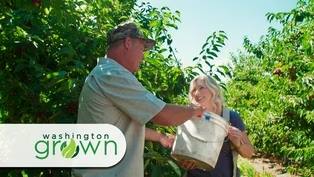
We meet up with the Gebbers Farm and Chelan Fresh to see how farmers are growing the world’s best cherries. We also chat with the Cascadia Conservation District about conservation farm planning and we explore the fun side of the Chelan and Manson region. Kristi makes a pork and cherry dish at the beautiful Sorrento’s restaurant and Tomás enjoys unique ciders at ChelanCraft Cider.
Problems playing video? | Closed Captioning Feedback
Problems playing video? | Closed Captioning Feedback
Washington Grown is a local public television program presented by KSPS PBS
Washington Grown
Washington’s Sweet Spot
Season 13 Episode 1301 | 26m 46sVideo has Closed Captions
We meet up with the Gebbers Farm and Chelan Fresh to see how farmers are growing the world’s best cherries. We also chat with the Cascadia Conservation District about conservation farm planning and we explore the fun side of the Chelan and Manson region. Kristi makes a pork and cherry dish at the beautiful Sorrento’s restaurant and Tomás enjoys unique ciders at ChelanCraft Cider.
Problems playing video? | Closed Captioning Feedback
How to Watch Washington Grown
Washington Grown is available to stream on pbs.org and the free PBS App, available on iPhone, Apple TV, Android TV, Android smartphones, Amazon Fire TV, Amazon Fire Tablet, Roku, Samsung Smart TV, and Vizio.
Providing Support for PBS.org
Learn Moreabout PBS online sponsorship- "Washington Grown" is made possible by funding from the Washington State Department of Agriculture and the USDA Specialty Crop Block Grant program, and by the Potato Farmers of Washington.
Learn why Washington is home to the world's most productive potato fields and farmers by visiting potatoes.com.
- Hi, everyone.
I'm Kristi Gorenson.
And welcome to "Washington Grown."
From cherries and fruit to spectacular views and family memories, the Chelan area is a special place to a lot of us.
In this episode, we're going to explore this magical place and learn all about the bounty that it provides.
I'm picking cherries at Gebbers Farms.
I'm not fired yet, right?
- Well, you weren't hired yet, so you can't be fired.
[Kristi laughs] - And I'm making a special pork and cherry dish at Sorrento's in Chelan.
I know you guys like to do it up high.
- Yeah.
Perfect.
[Kristi laughs] Beautiful.
- Then we're talking to the experts about why the Chelan Valley is so special.
- This valley is really unique, and we feel like it's undiscovered.
- All this and more today on "Washington Grown."
[light guitar music] [singers vocalizing] Cooking with Kristi.
Sweet- - Jiminy gee willikers.
[Kristi chuckles] - Watch my bangs.
Go big or go home.
[Tomás groans] - Right in my eye.
You made me a believer.
[guest laughs] Oh, I am making a mess.
- Oh, Val, I love you.
- Heaven on a plate.
That's yummy.
- We're gonna need a to-go cup for these.
- Yeah.
[laughs] - You keep talkin', I'll keep eatin'.
[light guitar music fades] [relaxing music] With incredible views and a glass of Washington wine in hand, it's hard not to have a great time.
And here at Tsillan Cellars and their partner restaurant, Sorrento's Ristorante, you can get that and a great meal as well.
- It looks like a painting.
- I'm seeing the view and then this venue, like it's just really amazing.
- The wine, the food, it doesn't get any better than this in Chelan.
- This began as a vision 25 years ago.
- Dr.
Bob Jankelson is the founder and owner of Tsillan Cellars.
After traveling and falling in love with Italy, he was determined to bring that same experience to Chelan.
- The culture of Italy is something they call la dolce vita, the sweet life.
- Yeah.
- And it's bringing together great food, great wine, friends and family, and just mixing it all in to an experience.
- It's Italy here in Washington state with the gorgeous view of the lake.
- Maybe I'm still in Italy, I don't know.
- Don't miss later in the show when Chef Jon Webster and I make a special cherry pork dish.
- It might spit a little bit at you, but if you wanna pour that wine in there?
- Sure, I can do that.
- Yeah, just dump it all in there.
[pan sizzles] Beautiful.
- Yeah.
[Jon chuckles] [singers vocalizing] [light music] From cherry blossom season with its gorgeous pink flowers to full-sized fruit, cherries are awesome.
But when it comes to harvest, they're delicate and they have a short harvest window.
So when harvest season hits, it's a mad dash to get everything done quickly and efficiently.
I'm visiting Gebbers Farms in Chelan to learn how they're making sure fresh cherries are ready just in time.
- So we are in like the heart of the cherry season.
And it's up to us to provide volume of good cherries from about June 1st all the way to August 10th with a cherry that traditionally is like a two-week harvest.
- Hawkins Gebbers has done just about every job at Gebbers Farms, so he knows all the best ways to extend the season.
- Every 100 feet of elevation change is gonna be like a two-day harvest window difference.
- Okay.
- In other words, if I harvest at the river, I can harvest 100 feet higher 2 days later.
- Wow.
- So we've planned our farm from almost sea level all the way up to almost 3,000 feet up here.
And we've planted varieties that have a different length from bloom to harvest.
- This is probably the largest contiguous cherry orchard on the planet.
- Mac Riggan works in sales and marketing for Chelan Fresh, part of harvest involves measuring cherries for size.
Today, Mac is showing me how to size cherries the old-fashioned way.
- So if you start picking some of these cherries off here, which are still a few days to go, and you put it in the hole, that it will not fall through.
That's not eight and a half, so that's a nine row.
- Nine row.
- I got a feeling that's an eight and a half.
Why don't you try that one?
- Oh, yeah.
- I mean, that's a real winner.
- Now it's time for me to learn how to pick cherries the right way.
- If I just grab all this fruit and pull- - Right.
- Number one, I pull off the little fruiting spurs for next year.
So I'm destroying next year's crop.
So I'm gonna pick these cherries, not by grabbing the fruit, but by gently getting into the stem and turning up- - Look at that.
- And so I only get cherry and stem.
- Now it's time for me to try.
I've got two minutes to fill my bucket, starting now.
I don't wanna ruin the tree.
Oh, there.
[laughs] That's nothing.
[laughs] - Pretty good quality wise.
Speed wise, probably wouldn't make a living at it.
- No, okay.
- Okay, not bad.
One leaf.
- One leaf.
- That's a dollar an hour off your pay.
[Kristi laughs] But yeah, pretty good.
So we'll just say that within two minutes you covered the bottom of the bucket.
- I'm not fired yet.
- Well, you weren't hired yet, so you can't be fired.
[Kristi laughs] But the effort, we love the effort.
- Compared to the professionals picking for the same amount of time, I'm afraid I won't be able to compete.
Whoa!
Oh my gosh, mine didn't even cover the bottom.
- True professional.
Bueno.
Gracias, amigo.
[employees applauding] - Gracias.
- It brings a lot of joy to us, like being a part of growing like a raw material from the ground and doing it as a team.
I mean, our family is majority a Christian family.
And one of the verses someone brought up that we were all like, yes, it was like the joy of the Lord is our strength, in Jeremiah.
And it was like, "Man, why do we do this every day?"
- That works.
- Even though it's like a long struggle, it's a lot of hard work, it is joyful.
And so we like doing it.
- God's work right here.
- Oh, it's amazing.
- Yeah.
[singers vocalizing] [light music] - Anna Lou and I just came back from my hike.
And, you know, when you're out in the woods and it's hot during the summertime, sometimes you need a way to refresh.
- Yeah.
- Today we're making some mocktails with some juice, seltzer water, Washington fruits, and some fresh mint.
I'm gonna make for you a cherry lime mojito.
- Okay.
- How's that sound?
- Yeah, that sounds good.
- Okay, so it's pretty simple.
First, we begin by adding some Washington cherries.
Then we go ahead and add a couple of lime quarters.
And then we give it a quick muddle.
We're gonna take some Washington mint.
Gonna clap that mint together.
- Oh, I can smell it.
- Oh, you smell that?
Yep, yeah.
- Yeah.
- Now go ahead and muddle that mint in there.
We then add some ice.
There you go.
Then we add some seltzer water, and then we give it a good stir.
- Wow!
- Ooh, look at that.
Mm, that's nice.
I got another one for you.
- More?
- All right, let's do another one.
- We begin by mixing apple and cranberry juice.
Next, we add some fresh cranberries and apple slices.
Then dad adds some ice and seltzer to finish it off.
- Ooh, look at that.
- Look at that gradient.
- Look at that beautiful thing.
- Yeah.
- That's Washington in a glass right there for you.
All right, give it a try.
And there you have an apple cranberry mocktail.
- That's really good.
- Isn't that great?
- Yeah, it's like cider but not... - Mm.
You can have one of those.
I'm gonna have one of these.
After a long day of hikin', it's nice to just kick back and relax.
- Cheers.
- Cheers, all right.
Mm.
Ooh, I like mine.
[Tomás and Anna Lou laugh] To learn how to make this recipe, and many others, head on over to wagrown.com.
[singers vocalizing] [light music] - As opposed to sour or pie cherries, these are fresh, sweet cherries.
So you buy these at the store, you can eat 'em right away.
Question for you.
Large and small cherries on the largest cherry, is the pit also larger?
The answer will come after the break.
- Coming up, I'm making a special pork rib eye at Sorrento's in Chelan.
I know you guys like to do it up high.
- Yeah.
Perfect.
[Kristi laughs] Beautiful.
- Then Tomás is trying some special ciders at ChelanCraft Cellars.
- I love cherry ciders.
How can we make a cherry cider that's a little different?
[singers vocalizing] [light music] - All right, so the question was, does a larger cherry have a larger pit?
And after eating about five billion cherries in my life, I can assure you the pits are all the same size.
So buy the larger cherry, there's way more flesh to eat.
[tongue clicks] See ya later.
[relaxing music] - We're back at Sorrento's Ristorante at Tsillan Cellars.
With absolutely incredible food paired perfectly with estate-grown wines, guests are sure to have a delightful and memorable experience.
Take one look around and you'll realize this is paradise.
- You've got the view, you've got the atmosphere, and the food.
- Divine, delicious.
I was gonna say definitely really good.
- When I built this, I knew it was about food, it was about wine, it was about the culture.
- Founder and owner Dr.
Bob Jankelson wants to bring a special experience to guests whether they're visiting, wine tasting, or dining.
- The view of the lake, the wine, the food, it doesn't get any better than this in Chelan.
- We're on the south shore of Lake Chelan.
They consider this the Golden Mile.
- Garrett Grubbs is the head winemaker at Tsillan Cellars.
With such an incredible grape-growing region, this is the perfect place to make incredible wines.
- We grow 14 different varietals here, white wine, red wine, production is on site.
- You know, tasting a lot of the local wine has just been really great.
- This is fantastic.
- As many as that, we make 21 different wines, so there's something here for you.
- Yeah, absolutely.
- We have you.
- It's Italy here in Washington state.
- You're always relaxed if you're in Chelan.
[chuckles] - I get to cook with your executive chef today.
- Jon Webster.
- Yeah.
- Jon and the winemakers work so closely together.
They're in contact constantly.
And they're always trying to complement both the wine and the food.
- Yes, thank you so much.
To la dolce vita, right?
- Cheers, la dolce vita, salud.
- We have just a beautiful array of food.
What are we gonna make today?
- Today I'm gonna make some pork rib eye steaks.
- I can help you.
- All right.
- You do you, and I'm here to help.
We start cooking the pork with some herbed compound butter and fresh rosemary.
Do you ever pinch yourself when you show up to work?
'Cause this is like one of the most beautiful places.
Breathtaking.
- Yeah, yeah, I love working up here.
- So we have some Washington-grown asparagus.
- Yeah, that's actually from Lake Chelan.
It's right on the Columbia River.
- Oh, that's great.
- Secret asparagus spot I got.
- I love that.
And then the cherries... - So they're actually dark dried, and then I'm macerating them with our 22 Barbera.
The maceration process will just kinda give them a little bit more life.
- Uh-huh.
- Kinda let them re-hydrate.
- Yeah.
- And they'll absorb that wine.
They're delicious.
- They're delicious.
That's good.
- They grow really well here.
It might spit a little bit at you, but if you wanna pour that wine in there?
- Sure, I can do that.
- Yeah, just dump it all in there.
[pan sizzles] Beautiful.
- Yeah.
- It just has such a robust flavor.
I think it's gonna really pair well with the dark fruity of the cherry.
- Yeah.
- I love using our wine and our food.
- Yeah.
- 20 plus years in the industry, I learned a little trick about tenderness.
So open palm is rare.
- Okay.
- And then finger down is medium rare.
Then, next, finger down is medium.
Medium well, then well done.
- Oh, that's crazy.
- Feel that change, it's like denser.
- Yes.
- Yeah.
- For the demi-glace, we add in some red onion, garlic, a veal demi-glace, and a special butter compound.
Like each step it smells better and better.
- Yeah.
- While the meat rests, we add our Washington-grown macerated cherries to the demi-glace.
For the asparagus, we keep it simple with salt and pepper.
I know you guys like to do it up high.
- Yeah.
[Kristi laughs] Perfect.
Beautiful.
- Oh my, that's beautiful.
[bright music] Get a cherry- - Put some of that sauce on there.
- Oh my gosh, that's heaven.
Rich but then you get a cherry, like a little bit of tartness maybe.
- Mm-hmm.
You know, right outta the gate, I'm getting that marbled pork.
That rich, robust flavor.
Sweetness from the glaze and the wine.
And then that cherry did just pop right in there and it was, yeah, tart, like you said.
- Oh, that's so good.
For this and other chef-inspired recipes adapted for home cooks, visit wagrown.com.
[bright music fades] [bright guitar music] - I'm here in the Cashmere area to visit a small farm that's working with the local conservation district to improve soil health and connect the community to their environment.
This is Campo Farm and Kitchen, where owner Katie Selasco is growing a wide range of produce with barely an acre of land.
- We have head lettuces, greens mixes, scallions.
Our potatoes are in.
Over here we have lots of perennials, so these beds are perennial flowers.
Our focus is to really just be as diverse as possible.
I think that it benefits the systems around us, and I think it also benefits people to have a lot of, you know, diverse vegetables to eat that are really beautiful and connect them to their environment around them.
- This farm wasn't always as green as it is today.
Campo Farm and Kitchen was originally a horse pasture, so Katie asked project manager Liz Jackson with the Cascadia Conservation District for a little help.
- We're able to create a baseline on what's happening on this landscape based on the soil test.
- The soil organic matter was at 2%, vegetables like 5 to 10%.
I retested my soil last spring, and I'm now at 5 to 10% in each zone.
So Cascadia really helped there.
- But that's not all.
Every conservation district in Washington offers farm planning, a free service that Katie utilized with Liz to enhance her farm's natural resources and productivity.
With that assistance, Katie has introduced pollinator habitats, irrigation, and even added high tunnels to extend Campo's growing season.
From Katie's success, Liz and the conservation district can use what they've learned to help others across the region.
- Each conservation district is a community hub.
We create programs and opportunities so people can learn about natural resources.
- Through this partnership, Katie can make huge strides toward creating a community that can understand and connect with their food.
- I want this to be just enriching our ecosystems, enriching the people who are a part of this farm.
So what that looks like is, you know, continuing to grow vegetables, involving more people in the farm and having it feel like a community hub where people are connected to where their food comes from and therefore connected to nature and the ecosystems around us.
- To learn more about your local conservation district, visit us at wagrown.com.
- Coming up, Tomás and I are learning why Chelan is so amazing.
- This valley is really unique, and we feel like it's undiscovered.
[singers vocalizing] [light music] [light music fades] [bright music] - Here in Chelan, there's no shortage of incredible wine.
But that's not the only beverage that celebrates and utilizes local produce.
Here at ChelanCraft, Cynthia and her husband, Eric Flynn, are making some delicious ciders using, you guessed it, local apples.
- We use basically dessert apples, Grannys, Goldens, Pink Ladys.
We ferment down to zero residual sugar, and you end up with this base cider that's kinda tasteless, very dry.
And so that's when I backsweeten with either concentrates to get flavors.
- You really are a mad scientist.
You're just mixing.
"I wanna try a little this, a little of this."
- Yeah, that's pretty much it.
- Should we try some of the fruits of your labor?
- Let's do it.
- All right, let's do it.
- Well, let's get started with ginger pear.
- Ginger pear.
Oh, but it's good.
You taste that bite of ginger in there and that sweet mellow pear.
- This is black currant.
- Ooh, okay, now this looks fun.
[bright music continues] Mm, I like that.
It feels a little bit more brighter, a little more bubbly than this one did.
- Let's do the very first one we made- - Okay.
- The lemon.
- Mm, this is definitely something you could see just chilling out by the lake.
And after a couple of sips, that lemon starts to sit in the back of your palate.
- All right.
- All right, and the final- - Cherry vanilla.
- The coup de grace.
Here we go.
Cherry vanilla.
I can already smell it.
Once that cherry hits, it really sinks into your mouth I mean it does feel like you're just biting a cherry.
- I love cherry ciders.
How can we make a cherry cider that's a little different?
- Right.
- You know, there's a lot of great cider in this valley.
So if you ever wanna just come to taste a bunch of cider, Chelan's a great option.
- You guys are doin' great.
And if I had to rank them, ginger pear, black currant, lemon, and my favorite is the cherry vanilla.
- Cherry vanilla.
- You know, they are all delicious.
So the next time you guys are in Chelan and you're lookin' to taste some tasty ciders, then you guys get on over here at the ChelanCraft Cider and taste for yourself.
Discover your own rankings.
I'm taking this one.
[relaxing guitar music] - The Chelan Valley, north of Wenatchee, is home to some stunning vistas, great wineries, and incredible agriculture.
I should know, I have a storied history with this place.
So right over there is where I first paddle boarded and ran into all the people that were sunbathing at Campbell's, 'cause I didn't know how to steer.
[Kristi laughs] Today, Tomás and I are learning what makes this valley so incredible for both agriculture and for the perfect family vacation.
- I understand you actually swam in this, right?
- I did, yeah.
There was a triathlon here years ago that I did.
It was beautiful.
Brought the family and we went jet skiing, hung out on this very beach.
- Yeah, there's a lot to do.
And I'm excited to explore.
I've only been here a couple times myself, so let's get crackin'.
- Let's do it.
- This valley is really unique, and we feel like it's undiscovered.
- As owner of Chelan Valley Farms and Lagrioth Winery, Chad Steiner knows what makes this region so great.
He's worked in agriculture across the US his whole life, but for him this valley was a special place.
- Surrounding the lake is like this landscape that's perfect for growing things.
Coming back to Chelan and buying a small farm was kinda like our dream come true.
- Look at the mountains and the lake behind us.
And that kinda thing, you don't find this.
This is like Lake Como in Italy, you know?
- Timi Starkweather is the executive director for the Manson Chamber of Commerce.
If you're looking for something to do in the area, she's definitely the person to ask.
- You can have a picnic, you can go on the lake, you can paddle board, you can swim.
Manson is known as being the end of the road, we're really just the beginning of your adventure.
- Tell me you guys already have a T-shirt with that on it, right?
- I do.
- Okay, good.
I better make sure I get one before I leave.
- Yeah, okay.
Well, come to the chamber.
I'd be happy to send you one.
[relaxing guitar music fades] - There are so many amazing things to do here, it's hard to choose.
But this valley is amazing for apples.
So we found a special place with a self-explanatory name.
Jared England and his team run Cider Press at Manson Growers.
And today, they brought us in to make our very own cider blend.
- Right here we have seven different varieties of apples.
They're all a little bit unique.
We have some really tart and tangy ones, all the way to sweet.
- Okay.
- This blend you're gonna make today is gonna be 100% unique, one of a kind.
So this is like driving a car almost.
- Oh.
- Okay.
So you have this pedal, this turns the- - I failed my driving test three times.
- Okay.
- What?
[all laugh] - We have three-year-olds do this, so you can do it.
I'm pretty confident.
- We grind the apples into a mush.
Now it's on to the press.
Muscle man over here.
- Yeah.
- Right, righty tighty.
Yeah, there you go.
[Kristi laughing] - All right.
- If you want, you can sample it right off the end there.
- Oh!
- Look at that.
- Cold off the press.
- Cold off the press.
Oh, that's so good.
- We've had kids say this is like drinking an apple.
- So if someone who is really into wine is a sommelier, what do you call somebody who's into ciders?
Is there a name for that?
- Cider...ier.
- We can make a name, right?
Yeah, what do you want?
- After all that hard work, we ended the day with a special apple snack in the tasting room.
- If you're gonna go for a little adventure, look no further than Manson, Chelan and come to the Cider Press and get yourself a fun little treat.
And have a good time making some cider.
- I can't talk.
My mouth is full.
- That's okay.
I'll do the talking.
[bright music fades] [bright music] - Washington is the number one producer of sweet cherries in the country.
And the US is second only to Turkey in global production.
And you can find many of those cherry orchards in Chelan and the Wenatchee valleys.
So how did these cherries become the staple crop they are today?
Let's rewind the clock by more than 150 years.
In 1847, pioneer Henderson Lewelling and his family traveled by ox from Iowa to what was then the Oregon territory.
Henderson brought hundreds of fruit trees with him, including cherry trees that he eventually sold for $1.50 each.
[coin clatters] The cherry business was a family affair.
Henderson's brother Seth developed the famous Bing cherry that many of us know and love today.
Seth named the sweet cherry variety after his orchard foreman, Ah Bing.
Bing worked for the family fruit orchard for more than 30 years, grafting and propagating trees.
Bing's contribution to American agriculture could not overcome the passing of the 1882 Chinese Exclusion Act.
After visiting his family in China in 1889, Bing never returned to the US.
His legacy, however, continued in the Pacific Northwest.
People planted hundreds of cherry orchards throughout Washington and the industry grew.
Cherry growers began forming co-ops and associations.
Settlers journeyed east of the Cascade mountains and found fertile soil for their crops near the river banks.
But the region as a whole was less promising for agriculture due to its dry climate and lack of water.
That changed with the introduction of irrigation.
- This flipped the switch on that challenge because it provided the orchardists an opportunity to then regulate how much water their crop was getting, and so making sure it didn't get too much or too little.
The irrigation systems in the Wenatchee and Yakima valleys both allowed us to really have a competitive advantage over other areas.
[hopeful music] - Growing and selling cherries is hard work.
Pruning, watering, and harvesting is skilled labor.
From the start, migrant workers have been vital to cherry orchards.
Native Americans, Japanese, and white migrant workers harvested crops.
By 1942, laborers from Mexico began arriving in the state and many worked in the Wenatchee and Chelan valley orchards.
The cherry business also takes patience.
Cherry trees take years to develop and produce a crop.
Early cherry farmers struggled because the crops didn't produce instant cash.
Cherries are also very sensitive to weather, and they're highly susceptible to pests that can quickly destroy crops.
Sweet cherries thrive in a mixture of both cool winters and warm, dry summer temperatures, making Washington the perfect place for the sweet fruit.
- The cherries grown in Washington are unique because we have such a wonderful, high-nitrogen mountainous region where all of our fruit and produce in the state of Washington is kind of grown.
And it's a unique microclimate and it's perfect.
Here in our state, we grow a lot of fruits and vegetables.
People forget just how much agricultural production there is in the state.
- In addition to a great growing environment, Washington is the birthplace of one of the world's most popular varieties.
The Rainier Cherry, a perfect celebration of the state's fruit heritage.
Today, cherry production stands as one of the state's most significant agricultural industries.
- Obviously, a large portion of them land right here in our state of Washington.
And normally, in a year, we will export 30% of the fruit to other countries.
Our strongest marketing region for cherries is the greater Asian area, including China, Taiwan, Korea, Vietnam, Malaysia, Thailand.
- While the fresh harvest season only lasts a few weeks, it is celebrated worldwide as a circus of flavor.
[hopeful music fades] - There's not enough time to tell you about all of the great food, farms, and people of this unique place, so you just have to come to Chelan and discover it for yourself.
That's it for this episode of "Washington Grown."
We'll see you next time.
Washington's Sweet Spot | Preview
Video has Closed Captions
Preview: S13 Ep1301 | 30s | We explore the fun side of the Chelan and Manson region. (30s)
Providing Support for PBS.org
Learn Moreabout PBS online sponsorship
- Food
Christopher Kimball’s Milk Street Television
Transform home cooking with the editors of Christopher Kimball’s Milk Street Magazine.




Support for PBS provided by:
Washington Grown is a local public television program presented by KSPS PBS