
What Does Leadership in Nashville Really Look Like
10/22/2026 | 26m 46sVideo has Closed Captions
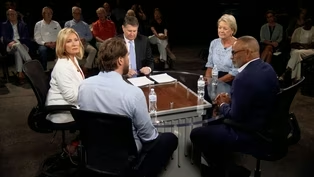
Scott Carey explores leadership and Nashville's future with local leaders.
Join host Scott Carey on Nashville Leads, a new Nashville PBS series featuring candid conversations with the leaders shaping Music City. This episode explores leadership, trust, decision-making, entrepreneurship, and Nashville's future, before shifting to personal stories about what makes the city special and the lessons inspiring the next generation of leaders.
Problems playing video? | Closed Captioning Feedback
Problems playing video? | Closed Captioning Feedback
Nashville Leads is a local public television program presented by Nashville PBS
What Does Leadership in Nashville Really Look Like
10/22/2026 | 26m 46sVideo has Closed Captions
Join host Scott Carey on Nashville Leads, a new Nashville PBS series featuring candid conversations with the leaders shaping Music City. This episode explores leadership, trust, decision-making, entrepreneurship, and Nashville's future, before shifting to personal stories about what makes the city special and the lessons inspiring the next generation of leaders.
Problems playing video? | Closed Captioning Feedback
Where to Watch Nashville Leads
Nashville Leads is available to stream on pbs.org and the PBS app.
Providing Support for PBS.org
Learn Moreabout PBS online sponsorship(upbeat music) - Yeah.
(upbeat music continues) (panelists applauds) (upbeat music continues) Welcome everybody to Nashville Leads.
I'm your host, Scott Carey.
Nashville is one of America's most dynamic cities.
We've got music and sports, healthcare innovation, and entrepreneurship.
There's creativity everywhere you look and a sense of community that's unlike anywhere else.
But you know what truly drives this city forward?
It's leadership.
Every day, leaders from every corner of our community make decisions that shape our city, our neighborhoods, and our future.
On Nashville Leads, we're bringing those leaders to the table for real, honest conversations about the experiences and challenges that are defining Nashville right now.
Today, we'll begin in the boardroom, where we'll explore leadership under pressure through a hypothetical challenge facing our city.
Later, we'll continue the conversation in the retreat where we'll learn more about the people behind the leadership.
We've got a great panel for you.
Joining us are Tracy Kornet, seven-time Emmy Award-winning WSMV Channel 4 anchor and nonprofit leader.
Charlie Nelson, co-founder and CEO of Belle Meade Bourbon and Honorary Consul of Iceland in Tennessee.
Rick Martin, business and nonprofit executive, leadership experience across multiple sectors, and Wanda Lyle, a retired UBS executive and board leader focused on education and healthcare.
Welcome everybody.
I'm really excited to have you guys here.
You ready to get started?
- [In unison] Let's do it.
- All right.
Well, let's start in the boardroom.
Here's the hypothetical.
Imagine the mayor has appointed a special task force made up of business executives, neighborhood advocates, educators, and nonprofit leaders from across Nashville.
The group has been asked to evaluate an opportunity that promises thousands of jobs, major investment, and long-term economic growth.
However, the proposal would reshape an historic Nashville neighborhood and raises real concerns about displacement, affordability, and preserving the very character of our city.
The mayor has asked the task force to spend 72 hours reviewing the proposal and deliver a recommendation.
You all are part of that 20 member task force sitting around the table.
Everyone believes that they're acting in Nashville's best interest.
No one sees the challenge the same way.
So how do you approach this situation?
When the discussion begins, what's the very first thing you do?
- In those situations, the best thing from my standpoint to do is to get all the data, the facts, and listen to what's already been explored and why, and think about what it means to that community and are there any other options?
- I also think once you get the data, but you got to be able to ask the right questions on the community side as well as on the business side to make sure that, hey, just what you see right in front of you, that may not be all that's to it, but so make sure that you have as much information as you can given the short time period.
- So I'm hearing that you probably start out listening.
Is that true for everybody?
- Absolutely, I mean, there's been too many times where I've made a quick decision and maybe once the facts played out, realized that, hey, if I had gone and asked these other leaders and people... I want to be the dumbest person in the room.
If I'm the smartest person in the room, that's a problem.
So I want to make sure that I'm surrounding myself with people that are knowledgeable about the situation and that we know that there are not gonna be a bunch of, you know, unforeseen consequences that might happen because we didn't have all the facts.
- So do leaders define the priorities or do they listen first and allow their priorities to emerge?
When you go in there, are you trying to lead that group or do you just kind of sit back and kind of see what emerges?
- You have to start somewhere with some basics and then you have to be malleable, right, based on what you gain from all the people at the table and interviewing and asking questions of the experts who know more than you do, right?
And then I know from my perspective as a journalist, I put on the fighter type of armor because I want to be representing the people who aren't at that table and be thinking of their interests.
- No, that's a great point.
That's a great point.
So let's continue with the hypothetical.
It gets harder.
On day two, the task force begins to fracture.
Some members focus on the jobs and the growth.
Others are more community based and are looking at how this might impact the public trust and the neighborhoods.
On the business community, they're pushing for it.
On the community side, they're kind of hesitant.
So in that situation, how do you build trust among the stakeholders who have competing priorities?
- I believe you have to really try to figure out what's mutually beneficial for both the community and the business side.
I mean, it's essentially a negotiation.
And as you have these conversations, if, particularly from the community side, they can look and say, "Hey, I know how this is making things better for you, but how's it making things better for me and our community?"
So I think you got to just look for something that you can align on as a starting point.
- And it goes back to listening.
If you're not listening, the people aren't going to listen to you either.
And so if you really want to build trust and a relationship where people can feel comfortable expressing their views and opinions, you have to listen to them first and have an open mind or at least appear to have an open mind so that the dialogue continues.
- Appear to have an open mind though.
I mean, that's where it gets sticky because if you come to the table already knowing what you're going to do and you don't think that people are perceiving that, then there will be no trust there.
And I think that's one of the beautiful things about Nashville in general, especially if we have relationships already there, not good old boy network type of relationships, no offense to any guys to any (indistinct) in the room.
Yeah but- - [Scott] To the good boys around the table.
- I mean, trust and value, I think it just goes, for me, it goes down to just values.
What are your values in any negotiation, in any meeting, and are you living it and are you representing what is best for both sides, if not multiple sides?
- And the way in which you ask the questions and engage with the people, it really matters because if you're just asking a question on social media, that's a lot different than actually meeting with the folks in person and listening and truly trying to get their opinion and engage with them in person.
- I think you have to communicate too.
And so like Rick was saying about understanding what the mutual benefits are and really explaining that and then making sure people understand how it works, because I know a lot of times on these type of projects when it's a big company coming, people hear about the tax benefits, but they don't understand that there is no pot of money that's taking away from other projects.
It's the company that creates the pot of money that then they get to have back for a period of time.
And so helping people understand what the real implications are of these agreements that we might be put in place and what the jobs are that'll be brought because whether we like it or not, and I'm full boat in favor of preserving communities and understanding what's important to the community, but you have to have economic growth as a city to continue to be viable.
It's not grow or stand still, it's grow or go down.
And so it's important that you really evaluate these opportunities and think them through and find ways to make it work for everyone as best you can.
- You all been on the Nashville leadership, the National Chamber of Leadership Study Mission, and we've gone to cities where kind of the feeling is, thanks, but no thanks.
We've got what we want and we're not really willing to grow.
So I think Nashville has done a good job of trying to combine both really.
But when you're in this room and take the audience into this room because you guys have all expressed that you want to listen first, gather some data.
- [Speaker] Yeah.
- How do you deal with people that you can tell are coming into the room with an agenda?
- I think you got to address that head-on in particular because once the agenda's developed, depending on what side that you're on, you can lose.
So, if I can see Wanda's agenda, then that leads to side discussions and then, hey, she's no longer either a part of the team or her stance has changed.
And once you go down that road, if you're agreeing that, hey, we all agree on this, we walk out of the room, say we're going to turn right and one person goes left, then that's where it gets really muddy and the struggle that you go nowhere.
- And really the task force, our colleagues of the 20 other people were thoughtfully elected and luckily we don't usually have 72 hours only to decide these big decisions.
- I was about to say we might ask for a little more time.
(panelists laugh) - The merit rule needs this really quickly.
(panelists laugh) So well, let's talk about kind of that tension because I think that's something, even though this is a hypothetical, it is something you see in Nashville.
How do you balance growth with things like affordability?
And we know that there's an affordability crunch here in Nashville.
The median, the average, the median household or the cost of buying a home is like $500,000 or above now.
A Vanderbilt study showed that 82% of people in Davidson County feel like they can't afford to buy a home in this county.
So how do you balance that from a perspective when you're looking at these types of opportunities?
- I know that, I believe it's comes from where's the pipeline that is going to get everybody up to speed to be able to train well and get them in these high paying jobs so that they can afford it.
If they can't afford it now, at least having a plan of action.
And I know, I think one of the beautiful things about Nashville is our nonprofit community.
And I know from... One of the boards I serve on is Uprise Nashville.
And I mean, we are pulling people out of poverty, training them for free once they get in there so that they can get to these $75,000 jobs to these $125,000 jobs in a matter of a couple of years.
You talk about changing the trajectory of a family.
That gets me excited, that kind of growth.
Because there's growth in Nashville with these businesses that are coming to town and that are, you know, they're to bring people hope, but also to work really hard in the trenches to develop the solutions and the pipelines to help people.
And then it's about educating folks so that they know that that's part, this is gonna help them too.
- We do have a great nonprofit infrastructure here in Nashville.
I think that's one of the things that sets us apart.
We've also got a great entrepreneurial kind of infrastructure as well.
And Charlie, you can speak to that.
I mean, you started your own company.
- Yeah, absolutely.
And I think that that's sort of the heartbeat.
And I think that it's critically important that we continue to allow for businesses and small businesses to grow and thrive because that's how we're going to be able to bring some of these people up and allow them to make more money and afford to live in this city.
- [Scott] All right.
- Yeah, no, I was just gonna add that the nonprofit space here is so valuable.
And you think about the entrepreneurship whether it's the the EC, Corner to Corner, some of the other organizations that are also ramping people up, teaching them how to start, plan, grow, and start businesses.
It's, we've got a fabulous baseline here in Nashville for entrepreneurship that probably doesn't get the visibility it deserves.
- Well, you've got a great perspective because you've kind of been on both sides.
You've been on the private sector and you've also been on the public sector.
- Yeah and I've said before to some, some of this room have heard me say it, that capitalism and compassion don't always mix.
And I always tried to be a bridge for that, for the companies.
And so I understand it from both sides, and I've made mistakes personally myself to where, hey, we either brought a vendor into the community that supports us and yeah, created jobs.
It helped the community at first, but as things change with our company, volume goes up and now we got all these trucks running through a neighborhood that I didn't see that five years ago when I brought that organization there.
So I don't know how you can evaluate every aspect and every impact the company is gonna have because things change, change, things change within their business, things change in the community.
And so how do you measure that and how do you monitor it over time?
- Wanda, you got a unique perspective of actually helping to move one of these projects to Nashville.
- Yeah.
I think it's important for the city to understand what the company's expecting to do.
A company doesn't bring someone here or doesn't usually bring, and it certainly doesn't bring 1500 jobs without having an idea of what they want, over what time period that'll be and what they want to accomplish with that.
So really understanding to the extent that you can, like, is it going to increase big truck track activity or is it going to create issues with parking or, you know, whatever the case may be.
And really the company understanding what the city offers their employees and it's really the city offering the employees.
It's the company, but the company is the employees.
And what does the company gonna bring to the city?
You know, talk about the Nashville way.
I was told, I think one of my very first Chamber meetings that, you know, with all these people coming here, you need to understand this is the volunteer state and it's real.
And so I was like, got it, you know, and really encouraging our employees to be part of the community and be part of the volunteers that did things for the city.
- Well, so let's go back to the hypothetical, and you've got a situation where the task force, rather than just taking a vote, is trying to reach some common ground.
And some people might call that the Nashville way.
So I'll ask you guys, is the Nashville way a real thing?
- I think so.
- Absolutely.
- Yeah.
- Yeah.
- I think it is, and it's hard to articulate exactly what it is.
- I was going to say, define it for us, Charlie.
(panelists laugh) Give it your best.
- Well, I think that to define it, I mean, have you ever flown into Nashville on an international flight?
I think that that's a part of what the Nashville way is, compare that to flying into New York City or Houston or Los Angeles or any other much bigger city.
But I just thought of that right now.
- [Tracy] Good one.
(panelists laugh) - But, you know, it's hard to describe.
It's something that you have to feel to really understand and experience.
And it's about actually, you know, an authenticity and a genuine care for your community and the people in it, and a desire to actually listen and learn and be a part of the community.
And not just to know a little bit about it, but to actually participate in what's happening and- - I think it's different things in different situations.
Like everything you just said, I completely agree with, but it's also, if I think about the flood and I think when, which was previous, I was not here for the flood, but I read plenty about it.
And then the bombings and the tornadoes.
Even people that disagree with each other come together and help each other and help people recover.
And that is a unique characteristic for Nashville.
- Yeah, I think you even seen it with the recent ice storm.
I mean, it's- - [Speaker] 100%.
- Yeah, I mean, it's definitely the tornadoes.
There's a history there that says the Nashville way, and I don't think we don't want that to ever change.
And to your point about the airport, we don't want it to be the Vegas way or the New Orleans way, which is a lot of way a lot of people are starting to think of it.
- What threatens the Nashville way?
- Lack of respect for each other.
I'm just jumping in here because I was thinking, okay, international, look at the international investment coming from outside and these, what, 212 different countries or something who are investing in our state.
Did you know that the latitude of Nashville is right on par with the latitude, literally, of Tokyo, Japan?
And the number of Japanese investors coming in here that are here, that are a part of it, but what attracts them?
Yes, our latitude, our environment, the warmth in here.
But it's truly indicative of our warmth and hospitality.
It is a huge draw for these other companies to grow and because it is like a part of who we are and a joy and a love and a respect and an appreciation and a kindness.
And that's what can't change.
And that would be a threat, would be if we started being a little too sharp.
- And I think it is being stretched right now a little bit.
You know, there's a lot of people coming in that are not familiar with the Nashville way.
And I welcome those people.
It's forcing our city, our communities to grow and evolve.
And I think that it's a great and beautiful thing.
And my hope is, and what I see is that it's contagious a little bit.
- [Tracy] Agreed.
- That, you know, yeah, it might get stretched, but people will catch the Nashville way and that it'll extend beyond the city.
And so that's my hope.
And, you know, again, it's something that you feel and it becomes a part of you.
- All right, so now the task force, you guys have to make a recommendation.
But no matter the outcome, some people are gonna be walking away happy.
Other people are going to be pretty disappointed, and some relationships, particularly in that room, may be strained.
Some people may never agree with that decision.
So my question to you is, as leaders, can you still follow the golden rule, do unto others, in that kind of situation?
- Yes.
You can do it respectfully.
It may not be an agreement, but you can be respectful of the fact that, as I say, you can agree to disagree.
But that doesn't mean I don't respect your values and your opinions.
If there are values that I think are appropriate, I guess.
(Wanda chuckles) But yeah, you can do that.
But I also think there are sometimes, it's not always a democratic process.
And so you have to have the courage to make the hard decision and make it as well as you can with the facts that you have and help articulate to everyone what it is and why it is, and do it as respectfully as possible.
- Absolutely you can.
To just piggyback off a little bit of what Wanda said, one of the easiest things for us to do as humans, is to really understand how we're gonna treat somebody.
I mean, to make a decision on how we're gonna treat somebody, their decision, their thoughts.
And in today's world, it doesn't always feel like that.
Well, if you're for this, then I'm for that.
I still think it goes back to the listening and understanding and making the best decision you can.
But yes, you can definitely still get along.
- Yeah.
I'm a little torn, you know?
Something that I heard very early on in trying to start my business was, "You know what the golden rule is?"
And I said, "Yeah, of course."
They said, "No, no, no, no, not that one.
It was he or she who has the gold makes the rules."
And so, you know, that maybe has jaded me a little bit on, on when I hear about the, the golden rule.
And so I think that it's really important to make sure that the ones who are in the positions making those decisions have the best intentions and, you know, the best in mind for the community.
And so you know, I guess I wouldn't be prepared to make a firm decision until I had all of those.
- Well, think about in your career, some of the leaders that you have admired the most, maybe somebody who's been a mentor to you.
Were they for the most part seeking consensus in trying to bring people along or were they sometimes willing to make the tough decisions, be unpopular, and maybe even be a villain?
- I think I respect them the most when they have to make those unpopular decisions, but it's how they make the unpopular decisions.
And it's feeling like you've been listened to, that you truly are understood, right?
And then once you are, you're not the one in charge, and that person's also gonna have to suffer the consequences in his or own way.
So I think that's a beautiful thing in a leader and something that is why it's difficult to be a leader.
- It's a hard trick to pull off.
- Yeah.
- But you can do both.
I mean, consensus is what you want, but at some point, the decision has to be made.
If you think about some of the tough decisions that get made, everybody's not gonna agree with it.
And that's okay.
But again, it's like I said earlier, we've agreed to do this and I've even been in rooms where, hey, where people have been so hard on decisions that you have to evaluate, hey, is this the right place for you?
I mean, it's really that tough sometimes.
But yes, I believe you can do both, but at some point a decision has to be made.
- All right.
Let's return to the hypothetical.
The recommendation has been made.
The mayor has decided, and years later, history will judge whether it was the right decision or not.
So looking at Nashville's next generation, as they look back, I want to hear from you guys, what's the one thing that leaders today must have the courage to protect?
What do we need to protect about Nashville?
- I think it's what Tracy referenced earlier.
It's our values and our authenticity and our welcoming spirit, but it's also really learning from past lessons.
You know, I think about the interstate going through Jefferson, and maybe some people knew exactly what that would bring about as it related to schools and communities and things like that, but a lot of people didn't.
And so realizing that your decision really could have far-reaching implications and, you know, preserving as much of that as you can through the process I think is, you know, what you have to protect, everybody's wellbeing.
- I think we need to protect and preserve beauty.
Nashville's beauty.
I think some people are so resistant to change, but they don't realize that with the growth of this, will be a cleaner, newer road that's safer for pedestrians to cross.
Cleaning out a patch of trees, yes, but guess what?
That also clears these dense forests and dense areas that we have, that actually got hit by the ice storm this year.
You know, I mean, there's a lot of positives that come with change and development, but making it beautiful and being so thoughtful in the planning and being so thoughtful in the next road and in the next bridge that crosses our Cumberland, you know?
- Yeah, I was going to say, I think that our culture, our community, and our connected spirit, you know, I think that it's so important that we continue to engage and have dialogue, and not all cities and communities have that.
And I think that Nashville and our community really, you know, has a deep respect for one another and an open line of communication.
And so I think that's how a lot of stuff gets done and where we can change and evolve in the right ways.
- All right.
I'm going to put you guys on the hot seat.
The last question it was a hypothetical, but I'm going to make you tell me what your vote would have been.
Are you for the proposal and the new business coming, or are you against it?
I'll start with you, Wanda.
- I'm for it because we've done such a good job, gathering all the facts along the way.
(everybody laughs) - Fair enough.
- Yeah, I'm for it as well because, not because we've gathered all the facts, but because we have kept our moral values in place while making this decision.
And so therefore we've made the right decision.
- All right.
Charlie?
- I'll say I'm for it.
I was initially against it, but I'm for it because- - [Scott] We brought you around somehow.
- You helped convince me and I think that the community's impacted will understand and be a part of a brighter future.
- I'm for it too.
I wish I could say I'm against, just to have a polar opposite view.
I'm for it because I believe in who is assembled at the table and I believe in the goodness of all these people and they were selected for a reason and the diversity of this table.
I mean, and that means diversity of every kind and every socioeconomic status represented.
And that I believe we've listened to the public and what they want and need and we have made adjustments and then the final proposal is gonna be the right thing for everyone so I'm for it.
- All right.
Four votes for it.
I would be for it too.
So there we go.
Great conversation.
Thank you guys so much.
Our scenario may have been fictional but the leadership challenges behind it are very real and are playing out every day across Nashville.
Many thanks to Tracy Kornet, Charlie Nelson, Rick Martin and Wanda Lyle for sharing their perspectives.
But the conversation doesn't end here.
If you would join us on the Nashville PBS YouTube page and you can then move Beyond the Boardroom to the Retreat, where we'll go beyond the hypothetical and discuss personal experiences, the influences and lessons that have shaped these leaders.
Thank you so much for joining us on Nashville Leads.
I'm Scott Carey.
Keep leading Nashville.
(light music)
Pilot Promo - What Does Leadership in Nashville
Scott Carey explores leadership and Nashville's future with local leaders. (30s)
Providing Support for PBS.org
Learn Moreabout PBS online sponsorship New Episode
- News and Public Affairs

Top journalists deliver compelling original analysis of the hour's headlines.
 New Episode
- News and Public Affairs

FRONTLINE is investigative journalism that questions, explains and changes our world.

 New Episode
 New Episode
 New Episode
 New Episode

 New Episode
 New Episode



 New Episode
Support for PBS provided by:
Nashville Leads is a local public television program presented by Nashville PBS