Lost Louisiana
What's In A Name, Part 5
Episode 20 | 42m 6sVideo has Closed Captions
What's In A Name, Part 5
This time Charlie Whinham visits the self-proclaimed "Frog Capital of the World" in Rayne and the tiny Sabine Parish village of Fisher. He also answers the questions: Why would a town be named Cutoff, and who is this man named Many and why did they name the town after him? Did you also know that Donaldsonville is not the original name of the parish seat in Ascension Parish?
Problems playing video? | Closed Captioning Feedback
Problems playing video? | Closed Captioning Feedback
Lost Louisiana is a local public television program presented by LPB
Lost Louisiana
What's In A Name, Part 5
Episode 20 | 42m 6sVideo has Closed Captions
This time Charlie Whinham visits the self-proclaimed "Frog Capital of the World" in Rayne and the tiny Sabine Parish village of Fisher. He also answers the questions: Why would a town be named Cutoff, and who is this man named Many and why did they name the town after him? Did you also know that Donaldsonville is not the original name of the parish seat in Ascension Parish?
Problems playing video? | Closed Captioning Feedback
How to Watch Lost Louisiana
Lost Louisiana is available to stream on pbs.org and the free PBS App, available on iPhone, Apple TV, Android TV, Android smartphones, Amazon Fire TV, Amazon Fire Tablet, Roku, Samsung Smart TV, and Vizio.
Providing Support for PBS.org
Learn Moreabout PBS online sponsorshipbye [Music] hmm [Music] hello i'm your host charlie winham welcome to another edition of lost louisiana what's in the name part five can you believe it this is our fifth show on lpb dedicated to finding out the origins of louisiana towns with unusual names my photographer renata woods and i have traveled to 25 towns over the past several years from abita springs to ziwali and we ask one simple question how did that town get its name it's interesting to see how that one basic inquiry becomes the cornerstone to some wonderful storytelling we are coming to you from the historic town of donelsonville this mississippi river community located between new orleans and baton rouge was once the capital of louisiana and in a little while i'll tell you how donaldsonville got its name but we begin with a town in acadia parish named rain rain's claim to fame well it revolves around a cold blooded animal lurking throughout the bayous this isn't a dangerous creature but rather quite a tasty one the moment you're in the city of rain louisiana it doesn't take long to detect a pattern a pattern of frogs from the 13-foot aluminum frog named measure jacques to over 50 murals to the long-standing tradition of the rain frog festival this town was built on frogs but it wasn't named for the creature so what's in a name and how did rained louisiana get its name well depending on who you ask around here you could get three different stories meet sheryl mccarty and tony olinger they were born and raised here the two carry the torch when it comes to town history they have written two books including one called rain as well as another called rain's people and places the town could have been named after a passing railroad worker named p.w.l rain when the louisiana western railroad installed a telegraph switch here there are no pictures of this mystery man only a newspaper mentioned in the 1880s it may be connected to a robert rain a prominent businessman who built the rain methodist church on saint charles in new orleans but tony and cheryl think the town is named after a woman named fanny rayne she married an area millionaire named john jennings mccomb mccomb made his money by inventing a mechanical cotton baler it's very intriguing to have three different options or three different versions of it we believe that the one with john jennings mccomb whose wife was fanny reign is is the true version with some of the historical research that mr milo doverval did back in the 60s and 70s and we believe that is a true version with some of the documentation that we do have when the railroad came through the closest town was a mile away named pooperville and when the railroad didn't come to the town the town came to the railroad this marker this brown pelican marker actually is erected where the poupeeville started jews pouville had a store here along with jd bernard and this is where it all started we got this marked right here they were all moved by oxencart over to the center of town to rain station and as a matter of fact this particular marker right here is uh the first post post office that was in jules poupeville store and uh joseph d bernard was the first postmaster here who eventually became the first mayor of rain so we've got all this wonderful stuff memorialized right here where it all started st joseph's church relocated to rain as well and the saint joseph cemetery is the only known graveyard with plots laid out in a north south position traditionally they lay east and west metaphorically representing life with the rising and setting of the sun it is the only known judeo-christian cemetery in the world with this characteristic we're not really sure what happened there's lots of stories about you know gravediggers that may have tilted the bottle a little bit too much when it got started but we eventually by the time it was discovered it was too late and most of the cemeteries had been laid in this way and now we actually have gained a claim in ripley's believe it or not for being the only known cemetery facing north and south as opposed to east and west in the late 1800s raine louisiana was the major exporter of big juicy louisiana frog legs at that time jacques weil and his brothers began using frog capital of the world in their marketing information the delicacies were shipped to new orleans restaurants as well as saudis in new york and actually it got one time where we had uh three frog companies and rain operating and they would actually send runners out early in the morning two or three o'clock in the morning to all the different areas like shetania and henderson and the first one there could buy the frogs out the swamp and back in the old days they'd actually cut the frog ladies off and sell them and they would give the the we call the fronts the front legs in the front to all the local people they would just give them away because they had so many and that's really the best part neither the frog is the most tender part what do you make out of them make a coubion or a sauce pecan either one of those do real well so starting with donat pizzo a frenchman and then the jacques wile family they started exporting frogs both to restaurants and to universities for biological research as a matter of fact in addition to putting frogs in barrels for nearly 100 years the city of rain has also sent frogs into space so many people don't know that in 1970 we sent two bullfrogs into space as a part of the medical research so we've actually had frog annots the two frogs that were sent up into space were pierre and tinom i have no idea who named them but those are good cajun names we had cajun frogs in space the send-off committee included then-congressman edwin edwards two bullfrogs spent seven days in space on a nasa mission and the information that was relayed back to nasa was very instrumental in determining the effect of anti-gravity and weightlessness on a human's ears because a frog's ears are very similar to a human's inner ear these days this town of roughly 8 500 people has elevated the louisiana bullfrog to new heights and every storyline imaginable this mural in front of the city courthouse makes a good case that the folks in rain have a pretty good sense of humor when it comes to being the frog capital of the world the murals are all around including depot square the site of the town's first railroad station the depot square is such an integral part of the city of rain and it's only fitting that we have some of our murals here right here at the depot square of course this one is frog's partying with an accordion you gotta love that on the opposite side when trains pass they actually see a frog mural that says b avenue there's even a relatively new copper frog fountain sitting in the park and in time those copper frogs will turn green and the annual frog festival has been a long standing make that jumping tradition complete with frog races a beauty pageant as well as great food and music all celebrating the life of this acadian amphibian so for cheryl and tony they take their frogs and their history seriously but not too seriously kermit the frog is contradicted every day here why is that because it's easy being green people have a lot of pride in rain you can see you know look around here it's a very clean city every year after year we win clean the city contest it's just a real warm louisiana community that a lot of people really love being in it's hard for people to leave here you know sometimes people do go away but they always tend to come back because of hurricanes gustav and ike organizers had to reschedule the frog festival which is usually held in the first weekend in september the 36th annual celebration was held on the second weekend of november to rave reviews this year's frog festival queen was chelsea richard and if you're interested in buying the books on rain written by tony and cheryl you can find them on amazon.com next we jump from frogs to alligators as we travel the louisiana coastline to south lafourche parish the town of cutoff louisiana is actually home to the largest alligator farm in the world but before you think this town is named after some freak mishap at the gator farm we hooked up with a couple of well-known area residents to help us bite into the real story of cut-off meet roland guidry and wendell cural a couple of cajun guys who love where they live along bayou lafourche about 40 miles off the gulf of mexico is a community called cutoff it's a place where everybody knows everybody my family trapped with his family and i saw i've been doing him since before he was born so i guess we've been trapped and if you're not paying attention when you're passing through you will miss the rich deep and profound history of the town where is it it's that ditch over there we often talked about it as being a cut off can i cut off can out to go from by lafourche to new orleans but that was one of the stories that was out there roland does the research and says no actually it was to help with drainage basically not a flood control this ditch actually has a great story and it began during the war of 1812 when general andrew jackson's troops cut down a two-mile swath of willow trees into bayou lafourche this obstruction prevented the british navy to make a backdoor route through donaldsonville and into new orleans the obstruction worked but it left bayou lafourche a mess after the war boats could not navigate the bayou louisiana applied for federal assistance and got it 50 years later and creating a cut off canal in 1856 helped area farms from washing away from the annual floods well it was it was called a cut-off outlet and they have there are those all over the state cut off outlets but this one the name stuck so after the hurricane of 1893 a lot of people moved up and by the time they were saying where are you going we're going by the cut-off and eventually the people said we're going to cut off cut-off was the name used by the english the french-speaking settlers however called this area [ __ ] launch cut off on the map was first community called itself scott walsh well that's when the people moved from the hurricane they moved their homes and everybody moved close to each other and they painted their homes white and most fishermen didn't i mean at cypress house you don't need to paint yeah but they painted their homes white and it was and so people pass it in the box coast this cut off canal was once 35 feet wide and 5 feet deep it was even used during prohibition to move bootleg whiskey but now it's just an extra mowing challenge sitting alongside the beautifully restored home of kirk st pierre but that's ok fact is this canal is part of the rich family histories carved out in cut-off we live in a place that the marsh around us makes us who we are i mean to be able to go i remember as a kid you can go and catch crawfishing back and feed your family now think about it where else can a kid just go do something and feed the family well if you like gator meat perhaps you could go down the road to savwa's alligator farm it is the largest gator farm in the world at last count there were over 115 000 gators being raised meet lance he's been working here for 19 years ever since he was 13 and he's only been bitten 40 times i've got bit in 2002 i had a female dragging out of an airboat when i was picking up her eggs come on yep how'd that work out i got away from her and i went to the hospital and i had a couple little stitches and holes on my side but it all healed up better and they still was back at work the gator pens are kept at a constant 90 degrees in this pen 400 baby gators including a few albino alligators are kicking about waiting for feeding time instead lance looks to add bite number 41 to his resume these are babies they were born uh within a three week period this past august and right now they're um [Laughter] right now they're about a foot long this alligator right here in a while to get to three and a half feet would take approximately seven years really we grow them over here in 12 to 14 months the gator skins are sold all around the world and will likely become a future pair of boots watch band or even a purse the meat is processed in lafayette and is also sold across the country savoir's gator farm also releases 14 percent of their gators back into the wild [Music] it's not just gators making a return into the waters cut off is also the home to a beautifully restored wooden oyster boat well it was uh originally built in 1940 by uh camellia jeremy and was built for my great grandfather emil emard and was built as an oyster boat and uh he's pretty much been in the family ever since the family got out of the oyster business in the 80s but restored the vessel and now use it strictly for pleasure boating the only oysters that we have on here is either oysters on the half shell or marinade or oyster soup and that's it it was built here and cut off it it lives here in cut off and that's where she's going to stay in and cut off that's true not only for the boats but most of the people here they were born and cut off and that's where they'll stay i think john paul said the best that's the thing about why do we live here you know god gave us the best cupboard in the world when you talk about this productive estuary that that came it's hard to imagine anywhere in the world in new job the upland the other and you tie into a few hogs everything tastes good with pig fat you know so you put that with the seafood around us the estuary that has fresh uh environment all the way to the salt environment how can you do better [Music] roland and wendell could talk for days about cut off and cut blanche if you let him and if you're lucky enough to know mike bell and his family you just might get a chance to take a ride along bayou lafourche on his family's beautifully restored wooden oyster boat we are at the halfway point of our journey and we have three more towns to visit when we come back photographer vernata woods and i head to the beautiful area of toledo bend to take a walk back in time in the village of fisher just a stone's throw away in manny we'll see how that town was once a neighbor to the largest military base in the country and of course we'll tell you how this town donaldsonville got its name as well you're watching lost louisiana what's in a name part five on louisiana public broadcasting [Music] [Music] welcome back to lost louisiana what's in a name part five i'm your host charlie winnem we next head to the beautiful toledo bend area and the village of fisher these days fisher is easy to miss as you travel along highway 171 in sabine parish but if you slow down enough to catch the historic business district you will not be disappointed back in the day fisher louisiana was a thriving self-sufficient company town that boasted all the creature comforts of the 19th century [Music] a little over 100 years ago there was a small yet progressive village of fisher this town was built out of the tall louisiana pines in 1899 that is when the louisiana longleaf lumber company built a sawmill as well as an entire community complete with a church opera house a train depot as well as a company store a century ago the village of fisher was a community where a steam whistle called you to work six days and a church bell requested your presence once a week susan slay has been the mayor of fisher since 1992. so mayor this is the village of fisher that is correct the village of fisher how many people live here around 300 now during its peak time when it was a big lumberville company town how big was fisher i would say it probably over a thousand the school probably had 300 in it mayor slay handles her duties out of the former office of the 4l company her town hall is 107 years old how did fisher get its name it came from their owner mr fisher his first name was oliver the owner of the lumber yard that's right he came here to establish the company which was lumber in fisher if you didn't work here you didn't live here mayor slay remembers her dad working six days a week as a foreman for the lumber company i remember coming over and picking up my dad's paycheck and it was on a saturday but they didn't give paychecks they gave cash and i would stand in line and uh wait on a saturday and uh get his few dollars and most of the time it was only five dollars where would you pick up that check right there at that window that little window that little window off to the left off to the left we wake up and wait paycheck which was a five dollar bill that's all money was given in cash by the late 60s the sawmill closed down but thanks to boise cascade the current owners they donated the town's historic buildings and land to the fisher historic foundation this historic district was entered in the national register of historic places in 1979 [Music] one popular spot for tourists is the old commissary back when fisher was a company town this massive store provided residents everything needed from cradle to grave these days it's a haven for antique hunters people who may like to go antiquing this is a pretty good place oh definitely that of the old commissary which is a huge building now it is loaded with antiques and the depot is also loaded with antiques as the old mill flea market gets ready for another season of christmas shopping make sure you pay close attention to the signs over 30 vendors make up this antique store and if you thought you could buy anything inside you'd be heartbroken this is sandra gail lewings she fell in love with elvis presley after the louisiana hayride i tell you what i like it all it's all i love it all i love this picture too the one in the red i love that one elvison ah gail proudly shows off her display of elvis memorabilia her collection is a shrine not a store so you can't buy a thing one day there were some girls that came in here gathered up all of this stuff and took it up to the front and i was having a stroke i said oh no and everybody said they looked at me like they didn't know what was going on i said and they said what's wrong i said oh no you have to carry all of that back none of this elder stuff is for sale this belongs to me i've been collecting it since i flew market is open thursdays through sundays and offers plenty of good ideas for christmas shoppers as well this town what's its future that's a good question um let's just hope that it will be maintained that you know that there'll be people that really care about fisher that do not want this heritage to get away because i know i'm getting up in age and you know there's got to be some young ones that really love it that want to keep it this is heritage this is not something you're going to see in the big cities in fact this is the only uh place that i know of in louisiana as such it's like stepping back in time back in the late 1800s and early 1900s most company towns were hastily constructed villages of shanties for the workers the village of fisher and the louisiana longleaf lumber company broke that mold 100 years ago the 4l company built the houses the workers lived in and most of those homes are still standing today and by all means for a real treat head to fisher on the third weekend in may for their annual sawmill days the festival recaptures the flavor of life in a sawmill town as well as raises funds for the historical district next we head a few miles north to the town of manny louisiana they could have been the home to the 4l company but town leaders back then decided over 100 years ago they did not want all that noise and commotion that may be easier to understand once you discover manny louisiana once was neighbor to the largest military base in the united states [Music] beauty and brawn surrounds the town of manny louisiana it is a quiet community that is just a stone's throw away from the tranquil shores of toledo bend and a former military fortress helped shape this area as well meet mayor ken freeman he's been mayor of manny for 20 years and he tells me this area was first known as baldwin store a marker commemorates the town's early origins in 1843 the center of the parish was a place called baldwin store just a large dog track log cabin and at that time it was where everyone gathered it's where uh courts were held the traveling ministers would come there it was a post office it was a courthouse it was a jail house it was everything that a governmental building should be but on a much simpler scale but as the united states expanded in the early 1800s this area grew as well mayor freeman remembers coming here as a child and caught a glimmer of manny's past mayor this is a beautiful church it almost looks like the alamo when i was eight years old coming down san antonio avenue one of the first things that i remember about this community was this old church and i remember thinking man we were going back in pioneer days i expected people to ride horses and have guns holsters and that sort of thing but it's been uh i found out that that was not the case which was fine well manny burns the ground in around 1904 and all the buildings you see along here are original to 1904 we have the old sabine theater behind us the very first two-story brick building in sabine parish is right behind us about 25 years ago a developer bought this whole block and renovated it into store fronts and now they're being used by stores and it retains the original flavor of the original town which we're very proud of so how did manny get its name the town was named after colonel james b manney who was reported to have been a very popular commander at a nearby military fort protecting the area against spanish threats from what is now texas six miles east of the town of manny is this site the fort jessup state historical site colonel james b manney was the commander here and it was built in 1922 and at the time this was the largest military base of the united states in fact half of the u.s army traveled through fort jessup in route to the war with mexico in 1845 following a united states victory the fort was no longer needed as a border outpost and was abandoned one year later fort jesup is now a national historic landmark complete with a museum and a modest amount of artifacts dana jeter is the park manager these are remnants of old officer's quarter buildings the rock and the limestone the lime was brought in from the hillside in order to construct the foundation of the buildings we had a row of about six to eight officers quarters in this vicinity and behind each officer's quarters was the kitchen that the soldiers had their meals in and socialized this is the actual oldest building uh the the only building that we have left on site from that particular time period this is the old kitchen in which all the soldiers would come in and have their meals each day whether it be for breakfast or for the evening dinner fort jessup was saved thanks to the dedication of so many from manny on a spring day in 1960 fort jessup state park held a grand re-opening one of those responsible for its restoration was long-time manny resident and daughter of the american revolution member catherine vines davis colonel manny gave it a little bit of culture and class he had everyone to dress in uniforms early and have a parade at 8 30 in the morning with top hats or cocked hats and so forth and a band the band played and it was a cultural place ms davis knows a little something about southern culture her family goes all the way back to the first days of maddie catherine is known to speak her mind and she lives in the same house she was born in her home is adorned with artwork it includes one piece from louisiana artist laurette amos lee armstrong this is called the road to manny but the most cherished works were painted by her mother gussy gussy painted everyone in the family catherine's husband her sister betty lynn even her grandfather william and oh yes gussy painted catherine and it is dazzling well i think this was it the dress that i had was used at the alpha delta pi sorority at lsu in baton rouge we had parties and uh little receptions and such as that well i bought the dress in baton rouge at uh i can't think of the name of the story now it wasn't dalton's rosen rosenfields i believe was the name of it and so forth i bought the dress there and it was flattering shall we say and so she painted it in that dress and it's a safe bet to say her great great grandfather probably knew colonel manny one day she would like to donate her home to a new chapter of the daughters of the american revolution and name it the colonel james b manny chapter it's all part of the southern culture that still surrounds her to this very day these days how do you spend your days watching pbs every night i watched watch the television the young people are very kind to me they kind of look at me like she's something special there aren't many people around here that remember things like that and so forth mayor ken freeman agrees he thinks the world of catherine and of manny he also keeps one eye to the future and hopes sabine parish could be the next big retirement community in the country we're also trying to develop manny and sabine parish and toledo bend as a destination point for retirees retirees are looking for a less congested area other than florida and we are central to the country it's beautiful out there property prices are reasonable they have all the amenities of a large town but still enjoy the small town security and and friendliness that they they would like to look for it's a good place to raise a family it's a good good place to build a life manny and fisher are just two of many quaint and historic spots in the toledo bend area that offers visitors so many wonderful options for more information on these and other towns near toledo bend go online at www.toledo dashbend.com finally we will wrap things up right here in the historic town of donelsonville just like fort jessup near toledo bend water plays a significant role in military strategy for a young and growing united states this mississippi river town had a union for during the civil war that played a major role in keeping confederate troops from advancing almost everywhere you turn you can see the history of donaldsonville and louisiana if you know who to talk to and where to look the historic town of donelsonville is made up of a mysterious founding father a forgotten military fort a history-making mayor and music local historian kirk landry helps us sort it all out so kurt what's in a name how did donaldsonville get its name well there was this gentleman by the name of william donaldson who was a visionary and he was a legislator a banker and he he was a city planner and city builder and he his vision was to build a town that would one day become the capital of the state of louisiana evidence of william donaldson's work is everywhere but if you're looking for a picture a statue or even some of the most basic of information on donaldson kirk says you'll have to keep looking well we know william donaldson as i said what we don't know is where he was born we we know he was an english descent we don't know if he was born uh here in the states or if he was born across the pond in england we know he passed away in 1813 we don't know where he's buried so there's a lot of work left to do on on william donaldson in 1806 donaldson commissioned bartholomew lafon a successful new orleans city architect to draw up the city plan laville day donaldson was incorporated in march of 1813 william donaldson died six months later even though we don't know much about william the town of donelsonville overflows with history madisonville is the third oldest city in the state of louisiana has the second largest historic district only after the french quarter in fact many people may not know donaldsonville was once the state capital this is what the capital looked like in 1830 but just like the founding father no trace of the state capitol remains legislators complained about the building leaking and devil did not have the same pizzazz as working in new orleans by 1831 lawmakers returned to the big easy and the donaldsonville capitol was demolished the bricks were dumped in the bayou for added protection from flooding 33 years later civil war broke out bayou lafourche connected the gulf of mexico and the mississippi river and donaldsonville was a contested strategic position during the civil war union troops built a fort right here and named it fort butler troops were made up of mostly freed slaves now even though there's very little signs left of this earthen fort the real story of the battle of fort butler lies just below the surface kirk tell me about this site well what we're standing on is a very historic site probably we're right in the middle of was once what was once fort butler a union fort here in donisonville which there was a battle june 28 1863 where confederate forces led by general tom green attacked the fort probably anywhere from 800 to 1200 confederate forces led by green attacked the fort defended by 187 men from the 28th maine and a number of free men of color who successfully defended that fort in one of the civil war's only nighttime battles hundreds of dead confederate soldiers lay underneath in a mass grave all that is left now are markers commemorating the battle of fort butler many might think the roots of jazz began with louis armstrong but louis got his start with a musician named joe king oliver and this king was born just a mile away from donaldsonville in the community of abend we're very very proud to say that jazz history may have originated right here in donaldsonville and abend kathy hambrick is the curator of the river road african-american museum over three centuries of rural african-american history is preserved at their museum in downtown donaldsonville inside king oliver shares space with a past donaldsonville mayor this man pierre landry made history in 1868 when he was elected the first african-american mayor in the united states he was sold as a slave at age at age 13 for 1665 dollars he was taught how to read and write on the plantation and you don't hear very many stories about that because you think that everyone who was enslaved was illiterate and unable to read and write and he was able to read and write he was able to get himself to law school he became a lawyer he was one of the leading people in the country who was an advocate for educating african americans after emancipation and i'm just very very proud to say that he was from donaldsonville the historic setting of donaldsonville is also making a name for itself in the movies over the years louisiana's third oldest city has been the backdrop to several movies including all the king's men and the curious case of benjamin button aspiring actor and donaldsonville native richard zaring has even worked with tommy lee jones as a dialect coach at any time did tommy lee jones look at you say how do you say that again [Laughter] no but i could tell he was a couple of times i would say something and it was it was his assistant who was driving and he was sitting in the uh in the front on the driver's side and i was sitting in the back talking and a couple of times i would say something he would just look over at the assistant and kind of give a little smile and of course i knew what he was smiling about but you know that's so be it but it was it was fun and richard just like kathy and kirk all see a promising future for donaldsonville a future that holds a firm grasp on the past and it's been fun showing off laville day donaldsonville to others and when i saw their interest it all of a sudden started you know giving my interest and and then you know i i became more aware of it and and kind of i guess in some ways been an ambassador for donaldsonville with the film industry you know not trying to be but just i can't help but when they come in to tell them about the city oh gosh uh probably one of the best kept secrets regarding history in in louisiana today there's no other museum in the entire world that's preserving this history so with louisiana being number one in tourism and i do still believe that we are number one even considering that katrina has taken its toll on us i believe that there needs to be a place where people who come from around the world to learn about the history of african americans that there's one place where they can do their research there's one place where they can see the artifacts and the documents of course during oral histories up and down the river road it seems that all roads led to donaldsonville [Music] education is a vital part of the mission and vision of the river road african-american museum the museum is open all year round and offers educational programs and tours that highlight the three centuries of history legacy and importance of african americans to the growth of the south for more information you can go online at african american museum and that will do it for this our fifth edition of lost louisiana what's in a name can you believe it's been 25 towns now man we are just warming up if you have a suggestion for a louisiana town with an unusual name please drop us a line you can contact us at lpb.org i hope you've enjoyed this time roaming around the louisiana countryside for my photographer vernado woods i'm charlie winham and i hope to see you again for another edition of lost louisiana [Music] [Music] on [Music] time
Video has Closed Captions
Clip: Ep20 | 7m 7s | Cutoff | What's in a Name? (7m 7s)
Donaldsonville, La. | What's in a Name?
Video has Closed Captions
Clip: Ep20 | 9m 19s | Donaldsonville, La. | What's in a Name? (9m 19s)
Video has Closed Captions
Clip: Ep20 | 6m 26s | Fisher | What's In A Name? (6m 26s)
Video has Closed Captions
Clip: Ep20 | 8m 7s | Many, LA | What's in a Name? (8m 7s)
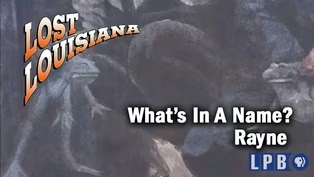
Video has Closed Captions
Clip: Ep20 | 8m 45s | Rayne | What's in a Name? (8m 45s)
Providing Support for PBS.org
Learn Moreabout PBS online sponsorship












Support for PBS provided by:
Lost Louisiana is a local public television program presented by LPB