
Who Responds?
10/23/2026 | 26m 46sVideo has Closed Captions
Not every 911 call needs a badge or a siren. Three NC counties are changing who shows up.
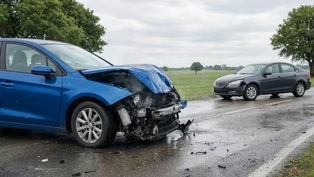
Call 911 in parts of NC and the person who shows up may not be a police officer. Explore how Wilmington sends civilians to minor crashes, how a community paramedic in Edgecombe County began testing street drugs and rebuilt his team’s overdose response around what came back and how Guilford County answers its most frequent callers with a social worker.
Problems playing video? | Closed Captioning Feedback
Problems playing video? | Closed Captioning Feedback
ncIMPACT is a local public television program presented by PBS NC
Who Responds?
10/23/2026 | 26m 46sVideo has Closed Captions
Call 911 in parts of NC and the person who shows up may not be a police officer. Explore how Wilmington sends civilians to minor crashes, how a community paramedic in Edgecombe County began testing street drugs and rebuilt his team’s overdose response around what came back and how Guilford County answers its most frequent callers with a social worker.
Problems playing video? | Closed Captioning Feedback
Where to Watch ncIMPACT
ncIMPACT is available to stream on pbs.org and the PBS app.
Providing Support for PBS.org
Learn Moreabout PBS online sponsorship- [David] ncIMPACT is a PBS North Carolina production in association with the UNC School of Government.
Funding for ncIMPACT is made possible by... - [Announcer] Quality public television is made possible through the financial contributions of viewers like you, who invite you to join them in supporting PBS NC.
- Just because we are the only resource for a period of time doesn't mean that we're the best resource.
- When we call 911, we often expect a police officer or an ambulance.
But in these three North Carolina counties, that's not always who shows up.
We'll explore communities rethinking who answers the call.
[calming music] [no audio] Welcome to ncIMPACT.
I'm Anita Brown-Graham.
For almost two decades, Wilmington has sent someone other than a police officer to minor crashes.
It started as a way to free up officers for more serious calls.
Today, that team of civilian crash investigators has only grown.
We head to Wilmington to get a firsthand look at how it works.
- If you get into a car crash in this city and call 911, there's a good chance police won't show up.
Instead, it'll be someone like Stanley Pollock, a civilian who's been doing this for nearly 20 years.
- Come and talk to me.
- Wilmington's had this program since 2007, so why haven't more places tried it?
We ride along with Stanley to see what's working and why more agencies aren't doing the same.
- Yeah, this is Screen Street up here.
- [David] After nearly 20 years in this role, Stanley has pulled up to thousands of crashes just like this one.
- All right, what I need, I need your driver's license, your registration, and proof of insurance.
- [David] At first glance, Pollock may look like he's a police officer, but he's not.
He can't make an arrest or write you a citation.
But if you've been in a fender bender in Wilmington sometime in the past two decades, there's a good chance he's shown up.
- My first wreck yesterday morning was right at this intersection.
6:00 in the morning.
- [David] Pollock used to work in law enforcement back in his home country.
When he moved to North Carolina, Wilmington was starting something new, something called the Civilian Crash Investigator Program.
Pollock was the first person hired.
- After doing it for some time, I think I'm at the point where I can close my eyes and press those keys, you know?
- [David] The paperwork may come second nature, but will tell you that the job is about more than just filing reports.
Civilian Crash Investigators respond to minor crashes, the ones without injuries where nobody's getting arrested or cited.
They check the scene, take statements, write the report, but most importantly, they deal with people in what can be a high-stress situation.
- You don't always want to see a man with a badge and a gun coming out to talk to you, you know?
They feel better to see a man just in a plain uniform, clearly marked with your name and your little tag saying who you are.
And you can come and talk to them, sympathize with them, and they understand who we are.
This is somebody that I can talk to.
- [David] Not everyone standing on the side of the road expects a civilian to show up.
Pollock says he's found his own way to put people at ease.
- That sweet accent and that lovely smile.
It works all the time.
[laughs] - [David] Some days are nonstop, others are slow.
Pollock says he never knows which one he's going to get until the radio goes off.
- Here we go guys.
[dramatic music] Look like we're going to get something to do.
- [David] The call is for a car crash about 10 minutes away.
[calming music] [computer beeping] - Howdy, ma'am.
How are you doing today?
- I was doing good.
- Are you still doing good?
Are you hurting at all?
- No, I'm not hurting.
- All right, let me check on the other driver, okay?
In the meantime, I have your driver's license, registration and insurance.
- [David] When gets to the scene, he checks on everyone.
- Are you okay?
- [David] Then he tries to figure out what happened.
- So what side were you coming from?
So you were coming from the side up there and you were turning left to come on this street?
And tell me what happened.
- [David] Once he gets a handle on the situation, he collects insurance information and starts on his report.
- So that's a case where the young man in the Jaguar is making a left turn from Queen Street onto South 17th Street, and South 17th Street is a one-way street.
So he says he was making a left turn coming slowly, and as he was coming out, he hit the car that was going northbound on 17th Street.
- [David] Stanley clears the scene in under 20 minutes, but a sworn officer could do the same thing, so why doesn't one?
Wilmington started this program in 2007 because officers were drowning in calls like this one.
[cars humming] - Wilmington does have its share of motor vehicle collisions, so we can be busy out there and it can be one after the other, so the calls could be stacking up on you.
All right, and this is the extent that you' damaged?
Just a quarter panel, a little bit on the door?
- [David] Frank Fortunato is another Civilian Crash Investigator.
He came to Wilmington after 28 years in law enforcement in New Jersey.
That's long enough to know exactly what a minor crash costs a police officer who has somewhere else to be.
- That could be time consuming for patrol officers when maybe they could be dealing with something of a more serious nature.
- [David] And it's a challenge playing out across the state.
A 2024 survey found nearly half of agencies that responded to the survey were more than 10% short-staffed.
- I know anytime there's less paperwork in police work, or less report writing, it's generally appreciated.
Do you have your license with you.
- I do.
- And your registration?
Thank you.
- All right.
- [David] For about 15 years, Wilmington was one of only two police departments in North Carolina doing this.
So why didn't anyone else follow?
Well, cities tried, but they had to go to state lawmakers to get approval, and only Wilmington and Fayetteville succeeded.
That's until lawmakers passed a bill in 2023 that allowed any city to do it.
So I asked Fred Baggett why.
Hey, Fred, how's it going?
- Well, okay, I know my background... - Baggett is the legislative council for the North Carolina Association of Chiefs of Police.
He's been following this issue from the very start.
Do you know why it took so long for legislation to pass around this?
- I think the, the staff shortages made it critical to find some solutions.
And also there, there was some resistance or at least questions about the desirability of having civilian traffic investigators.
It wasn't any sort of policy objection.
It was more concern and the newness of it to allow civilians to go to the scene of an accident, even if it's just property damage, and interact with individuals, civilians.
- [David] There's no public database tracking which agencies have adopted this model, but my research found roughly 15 to 20 departments that have started this program since the 2023 law passed.
But Baggett says this model isn't the right fit for every department.
- It depends on the size of the jurisdiction.
How many accidents do you have that this would apply to?
It doesn't make sense to hire an employee to be a Civilian Traffic Investigator if you don't have enough property damage only accidents to handle in a week or a year.
- [David] The law also set a training standard for civilian crash investigators.
Before anyone works a scene alone, they have to go through training with the North Carolina Justice Academy, then at least four weeks in the field with an experienced officer.
- Oh, I just saw it.
I'm sorry, ma'am, I just... [laughs] - When lawmakers debated that bill in 2023, they pointed to Wilmington and to Stanley Pollock.
He's now approaching retirement.
What kind of legacy do you hope you leave behind after nearly 20 years in this role?
- Man, that somebody can come in and continue what I started.
As being here on day one in 2007, yeah, I think I've done well.
If somebody can just mimic a few pointers as to what I've left behind and continue doing what is best for themselves and the department, I have no problem with that.
- [David] It's unclear how much further programs like this will spread in North Carolina, but more agencies are rethinking who responds when the call comes in.
For "ncIMPACT," I'm David Hurst.
- Just as Wilmington re-thought who responds to a crash, Guilford County did the same for their frequent 911 callers.
Paramedics there kept seeing the same names month after month, and the problem wasn't usually medical.
We head to the triad where emergency services partnered with social workers to build a different kind of response.
- Several people here in Guilford County were calling 911 several times a month, not because they were in crisis, but simply because they needed help and they had nowhere else to call.
The county answers about 100,000 calls a year.
Some of them dispatchers say were never a job for an ambulance, so the county tried something different.
Instead of sending another ambulance, it started sending a social worker.
Two years in, the county says it's changed how hundreds of people experience an emergency.
We ride along with those social workers and talk to the people who used to make those calls in order to see how this program works.
[people chattering] Judith Perl spent years taking care of her husband at home.
As his health declined, the fall started coming more often.
- My husband used to outweigh me by 200 pounds and I was a lot skinnier then.
- So you couldn't help him?
- No.
- [David] They didn't have family nearby, so when he fell, there was one number that would always send somebody.
- [Operator] 911, what's your emergency?
- [David] Stories like Judith were pretty common in Guilford County.
Scott Muthersbaugh spent years in the field, so he knows those calls well.
- We had those addresses that you could kind of recite in your sleep.
You knew the folks that would call routinely not because they had chronic medical issues, but just because they didn't have another resource to be able to call.
- [Radio] Driving by an accident.
- [David] Some of those callers were dialing 911 a hundred times a month.
- We had some folks when I was in the field that would call just because they were hungry or they needed assistance out of bed or up the stairs or something like that.
A lot of times with the older populations or with folks that just don't have somebody else to call.
EMS has served as the social safety net for a very long time, and just because we are the only resource for a period of time doesn't mean that we're the best resource.
[sirens blaring] - An ambulance could get Judith's husband off the floor.
It couldn't stop him from falling again.
What most people don't see is what's behind every one of those calls.
What is the resource strain when having to respond to these kind of calls?
- A traditional 911 response in our system often involves multi-agency, so that oftentimes is a firetruck, an ambulance, perhaps a supervisor, and a police officer.
And one of the things that we identified, particularly coming out of the pandemic, is we simply didn't have the resources to respond to non-medical needs with that type of public safety response.
- [David] Before the county could change the response, it had to understand why 911 had become the number of people called.
- One of the things that we identified is that when someone was in balance, either social, psychological, physical, or spiritual, then they oftentimes picked up 911 because that's what they knew to call when they had a crisis.
And what we realized is we needed to respond in a different way.
- [Radio] ETA is about 10 minutes.
- [David] It's easy to hear 100 calls a month and assume somebody's taken advantage of the system, but Guilford County found something else.
People were calling because something was actually wrong.
It's just not the kind of wrong that first responders are designed to fix.
- Many of the patients that we responded to did not have adequate care support for them.
They often didn't have someone to advocate for their care.
They may not have eligibility for benefits, and oftentimes we saw that they didn't have durable medical equipment in their home, perhaps physical therapy or occupational therapy that could allow them to continue to live independently.
- [David] So the county tried something else.
- How are you?
- I'm doing well.
So what seems to be going on today?
What problems are you having?
- I wanted to say - - EMS partnered with the county's Department of Social Services and its Family Justice Center.
They call it the Adult Resource Team, or ART for short.
The team is three social workers and a supervisor, all housed inside the Guilford County EMS office.
The county started small with a 90-day proof of concept.
Over one month, 34 people called 911 more than 440 times.
After the team reached them, that same group only called four times.
That's about a 99% drop.
Sherry Stinson supervises the ART team.
She was the first one hired.
Once you stepped into the role, how great was the need once you started meeting with these folks?
- One of the things I noticed is we had this big gap in services between our elderly population more so than any other population.
And when I saw that, that was very surprising to me because the elderly population is a vulnerable population.
And once I saw that gap, I understood that people needed more.
- She found the needs were specific and they were different every time.
What has the impact been?
Have you been able to experience some success stories?
- Yes, we've had a lot of success stories.
We've been able to help people move from a top floor apartment to a bottom floor apartment because they no longer could live in that situation due to their disabilities.
We've helped people move from this state here in North Carolina to Cleveland because we didn't actually have the services that they needed here, and we were able to connect with them and get them to a service that would benefit them and help them live healthier lives.
- [David] But Stinson says sometimes the hard part isn't finding out what somebody needs, it's finding somewhere to send them.
- We have improved over the years, but what you see is there are things that when people fall between the cracks, so they qualify for this, but they may not qualify for that, so they are not able to be in that program.
And that's a challenging thing because that makes us have to step outside the box and figure something out.
[sirens blaring] - [David] Albright says the other concern is funding.
When an ambulance takes someone to the hospital, EMS can send a bill.
That's how emergency services pays for itself.
The ART team gets paid differently.
Some through Medicaid, some through federal grant money, and the rest comes out of the county budget.
- EMS is really paid as a transportation benefit, so a lot of times the work that we do in the assessment and referral doesn't have the same level of reimbursement.
We've been very fortunate that Guilford County has supported this program.
- So it requires buy-in from local community leaders?
- It absolutely requires buy-in both of management and leadership of the county.
- [David] So far, the county has kept funding the program.
Judith Pearl is one of the people the team reached.
The team met with her and worked out what she needed.
It turned out to be a long-term care facility, and they helped her and her husband get there.
- They came from nowhere, and they found this place for me.
- Where do you think you would be?
What would it look like if they hadn't come into your life?
- They were necessary.
- [David] Judith Pearl has someone to call now.
The harder part is reaching the people who still don't know anyone but 911.
For "ncIMPACT," I'm David Hurst.
- For Edgecombe County, the challenge wasn't crashes or repeat callers, it was overdoses.
And for years, this county had one of the worst overdose death rates in North Carolina.
A community paramedic decided the problem started with something his county was not tracking.
We ride along with him to see what he found.
- Edgecombe County was losing people to overdoses faster than just about anywhere else in North Carolina.
A paramedic wanted to know what was actually in the drugs, so he started testing them.
What he found, we wrote the county's entire response to overdose calls, but is it working?
We ride along with Dalton Barrett and his team to find out.
[car humming] - Opioids are sold two different ways here.
- [David] Dalton Barrett has been a paramedic in Nash and Edgecombe Counties for more than a decade.
- This is one that we were really worried about.
- [David] In the past few years, the overdoses started looking different.
Narcan stopped working and nobody could explain why.
- What we were seeing in the field was not making a lot of clinical sense to me as a paramedic.
- [David] In 2023, 32 people died from overdose in Edgecombe County.
It was the highest on record for the county and one of the highest rates per capita in the state.
Barrett couldn't explain what he was seeing at these scenes, so he started asking a question nobody else was asking.
- There's a lot of myths out there about the street drugs, but we wanted to understand really what was in there.
- [David] He wanted to know what was actually in the drugs, so he went looking.
Barrett heads up Edgecombe County's post-overdose response team, also known as PORT.
- [Dalton] Do you need any test strips?
Do you use those?
- Yeah, I do.
- I do.
- Okay.
- [David] It's a mobile unit that goes out after non-fatal overdoses.
He started asking people that visited something nobody had asked them before, could he test what they had?
In the field, test strips can tell him if certain drugs like fentanyl are there, but what they can't tell him is what else is in the mix.
[machine humming] So he's been shipping samples to the Street Drug Analysis Lab at UNC Chapel Hill.
The lab analyzes street drug samples submitted from communities across the country.
Research chemist Erin Tracy has watched the drug supply change dramatically since the lab opened.
- Drug samples that people might not have any idea of what they think they're buying.
They think they're buying a heroin sample.
There hasn't been plain heroin in years.
- [David] The UNC team publishes every sample online, building a public record of what's circulating in communities across the country.
- We will see opioid samples that have upwards of like 10 to 12 to 14 different compounds.
So I think these regional trends are really important when we're talking about the local drug supply because what Portland, Oregon is seeing is not necessarily applicable to what we're seeing say in like Morganton.
So being able to connect the dots on a hyper local level for our members really allows them to take actionable next steps in their own healthcare.
- This is one that we were really worried about.
Taco Bell had that medetomidine substance, quite a bit of it.
- [David] The samples Barrett was collecting came in branded packets.
The packets had names, Don Julio, Cloud9, Goya, same branding month after month, but what was inside kept changing.
- And then we have two benzos all in one substance.
This was not something that was expected.
- Barrett took these findings and turned them into something tangible, monthly reports with photos of the actual packets and a breakdown of every ingredient found inside.
Those reports went out to community members, local health clinics, and people actively using drugs.
And what did that show you guys getting those results back?
- As we got the results back, I was just baffled.
I mean, early on, there were things in the drug supply that we had no idea about.
It shifted everything that we offer as far as services.
- [David] Barrett's team showed up after overdoses, used with a lab found and worked to get people into treatment.
- [Barrett] What's up, man?
Good to see you.
- By 2025, Edgecombe County's overdose death rate had dropped in half.
The overdose rates here in Edgecombe County have gone down since 2023.
How much of that would you say is an impact of the PORT team versus just statewide and nationwide trends?
- I would like to think that we have had a huge impact, but honestly, I think the impact that we've made through the PORT team is just a reflection on a lot of our community members and nonprofits in the area, the federally qualified health center, and really, you know, this ecosystem of recovery that we have in the county versus any single thing that I've done or anyone who's worked for the PORT team has done.
- [David] Lamir Alleyne is one of the people that ecosystem reached.
- I usually be on like PERC 30s or like opioids and my brother recently just OD'd, so he's not doing too well.
So I told myself I wasn't going to do it no more, so I had to find another alternative, you know, to like wean me off of it.
- [David] That's where Barrett came in, connecting Alleyne to a local clinic and a path toward treatment.
- People usually don't stop, you know what I'm saying?
But, you know, it's too many deaths going on and, you know, life is too valuable, man, just to give it all up just to get high, you know what I'm saying?
So, yeah, you got to change.
You got to make a change somewhere.
- [David] And while we were riding with Barrett, his phone rang, a former client calling from a recovery program in Texas.
- It's good to hear from you.
I'm glad to know you're still alive.
- [David] The man's name is Mike, and he told Barrett what had changed for him.
He said it wasn't just the program, it was also the drug testing.
- [Mike] But the fact that I had a man showing me that, "Hey, this is what's going in your body, this is what is not good."
That changed my aspect of what drugs were.
- [David] But despite these success stories, the drug supply isn't standing still.
In fact, it never has.
Experts describe the opioid crisis in waves.
The first wave was prescription painkillers.
The second was heroin, as prescription opioids became more difficult to get.
The third wave came a few years later with synthetic opioids, especially fentanyl.
Some researchers now call what's happening a fourth wave.
Fentanyl mixed with stimulants and other compounds that keep changing before any response can catch up.
- About every six months, we get hit with a substance that is, you know, either really potent or chemically different from anything that we've seen before.
- Edgecomb County's overdose rate is still 55% above the state average.
The people driving that number are the ones the PORT team haven't reached yet.
Who is this program not reaching, and how do you go about trying to connect to those individuals who might need the help, but just not able to reach them?
- The people that have a substance use disorder that are not overdosing, they could go without care.
They may not have had an interaction with us, so that's why we've got the trailer to go out in the communities, to do more harm reduction work in the county to hopefully engage with someone before they overdose.
- [David] Dalton Barrett is figuring out what is in the drugs, but in a crisis where the street supply changes every six months, the next wave may already be on the way.
For "ncIMPACT," I'm David Hurst.
[dramatic music] - Every story on "ncIMPACT" starts the same way.
People in a community see a challenge to their future, and they decide to take it on together.
That's what the show is all about.
Thank you to the local leaders featured in this episode, who so generously allow us to share their work and dreams, and of course, thank you to our audience for watching and engaging.
Tell us what your community is doing or how we can help you.
Email us at ncimpact@unc.edu or message us on Facebook or LinkedIn, and be sure to join us every Friday night at 7:30 on PBS North Carolina for new episodes of "ncIMPACT."
[no audio] [upbeat music] [upbeat music continues] [upbeat music continues] [upbeat music continues] [upbeat music continues] [upbeat music continues] [upbeat music continues] [no audio] Coming up on "ncIMPACT."
- You come down here and windows are boarded up, marquees are dark, you know?
It has an abandoned feel to it.
- [Anita] Across North Carolina, many industries that built our small towns have been disappearing for decades.
We'll explore what three communities did with the foundations those industries left behind.
- They planted grapes, they heard that it was a good thing to do, and they were like, "Okay, now I have the grapes planted.
What do I do?"
[calming music] - [David] "ncIMPACT" is a PBS North Carolina production in association with the UNC School of Government.
Funding for "ncIMPACT" is made possible by... - [Announcer] Quality public television is made possible through the financial contributions of viewers like you, who invite you to join them in supporting PBSNC.
[calming music] [calming music continues] [no audio]
Video has Closed Captions
Not every 911 call needs a badge or a siren. Three NC counties are changing who shows up. (20s)
Providing Support for PBS.org
Learn Moreabout PBS online sponsorship New Episode
- News and Public Affairs

Top journalists deliver compelling original analysis of the hour's headlines.
 New Episode
- News and Public Affairs

FRONTLINE is investigative journalism that questions, explains and changes our world.

 New Episode
 New Episode
 New Episode
 New Episode

 New Episode
 New Episode



 New Episode
Support for PBS provided by:
ncIMPACT is a local public television program presented by PBS NC