
To The Point with Doni Miller
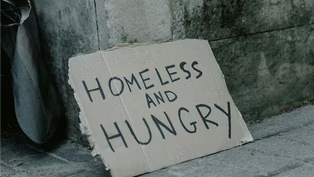
Winter Homelessness
Special | 26m 37sVideo has Closed Captions
Mike Clark and Stan Smith join Doni for to discuss one of our community's most urgent challenges.
Homelessness is one of the most visible and complex challenges facing our community. Why? Because from rising housing costs and economic instability to mental health and substance use disorders, the factors contributing to homelessness are varied, deeply interconnected, and unceasing. And behind every statistic is a person, a family, and a story. Mike Clark and Stan Smith discuss this with Doni.
Problems playing video? | Closed Captioning Feedback
Problems playing video? | Closed Captioning Feedback
To The Point with Doni Miller is a local public television program presented by WGTE
To The Point with Doni Miller
Winter Homelessness
Special | 26m 37sVideo has Closed Captions
Homelessness is one of the most visible and complex challenges facing our community. Why? Because from rising housing costs and economic instability to mental health and substance use disorders, the factors contributing to homelessness are varied, deeply interconnected, and unceasing. And behind every statistic is a person, a family, and a story. Mike Clark and Stan Smith discuss this with Doni.
Problems playing video? | Closed Captioning Feedback
Where to Watch To The Point with Doni Miller
To The Point with Doni Miller is available to stream on pbs.org and the PBS app.
The views and opinions expressed into the points are those of the host of the program and its guests.
They do not necessarily reflect the views or opinions of public media.
Homelessness is one of the most visible and complex challenges facing our community.
We've talked about this issue before and we'll likely do so again.
Why?
Because from rising housing costs and economic instability to mental health and substance abuse disorders, the factors contributing to homelessness are varied, deeply interconnected and unceasing.
And behind every statistic is a person, a family, and a story.
Mike Clark and Stan Smith are at the forefront of addressing this issue.
We'll discuss Toledo's current homelessness situation, the challenges individuals and service providers face, the progress being made, and how the community can create meaningful solutions.
I'm Donnie Miller.
Let's get to the point.
Connect with me on our social media pages.
But you know that you also know that you can email me at Donnie underscore Miller at dot org.
And for this episode and any other additional extras, go to gta.org.
To the point I am excited to have these two gentlemen with us today.
We have Mike Clark who is, and I'm going to get this title right, I promise you, because I've written it down.
Coordinated Entry Systems coordinator at the Lucas County Homelessness Board and vice president of the One Matters Board.
We also have the amazing Stan Smith.
Mr.
Smith is an outreach specialist for the Family First Council and also a member of the One Matters board.
Welcome.
You guys talking about this issue.
We're talking about homelessness today, the status of homelessness in the county, what we're doing about it, what is yet to be done about it is one topic that is very, very, very dear to my heart.
So I'm so glad to have you here to talk about it.
One of the things that I encounter all the time when I'm talking to folks about this particular issue is this they say it's a personal failure.
People aren't trying hard enough.
How did they let themselves get in that position?
To those people, you would say what, you want to go first, Stan?
Well, I think one of the hardest things about that is about choices.
Some homeless people are it's a choice for them.
With the housing being sky high, not finding nowhere to live.
It's a safety choice.
They just feel unloved and unwanted.
Is it a public policy issue, though?
Is it a public policy failure?
Are we not doing enough as a community?
Could we be doing more?
I don't think that to go back to the first question and join into this question, a lot of times it's out of a person's control more and more and more so now.
And that has a lot to do with with the reduced benefits that people have available.
So if you're if you're if your food benefits are gone, so you're spending more money on food if your Medicaid benefits or lowered.
So you have to hire co-pay or copay at all.
Or if you have to pay for insurance, if you happen to be working and make enough that you don't get Medicaid, all those things can come together and and just put you out of your home.
So if your costs of living go to high, but your income stays static, you're going to run into problems.
Something's got to give somewhere.
And a lot of times that's the the housing.
We are seeing more and more people with first time homelessness and well, in Lucas County and across the country, really people that have never had to worry about it before.
We have a lot of seniors that are are getting out.
The rent goes up too high or other taxes and insurances go too high, and they just can't make it.
And they, they, they call and they say, hey, I'm, I'm out on the street.
It's the first time this has ever happened to me.
I'm 68 and and I don't know what to do.
Right.
So I don't know what to do.
A lot of times it's not not anything under that person's control.
Others.
Yeah.
They made some bad choices.
And and the result of that is that they're homeless.
But at some point they don't have control of their choices either.
If you have a substance use problem, that's going to be the number one thing in your life.
And you can't just go, okay, I'm I'm not going to do that anymore.
It's not that simple.
There's a lot to it.
And, and the call of, of a drug that's got you wrapped around it is, is almost unbreakable.
Sometimes if you don't get the help, if no one steps up and offers to help you or guide you to help, you're just going to continue to do what you do, and you're going to be out there for a long time.
For a long time.
You know, I have to give this particular county Lucas County, lots and lots of credit.
There are great resources in this county.
This county has more community, more agencies focused on the social service needs of its residents than many places I've been.
And I've been in a lot of places in my lifetime.
Still, however, the problem seems to be getting worse.
Are we missing the boat?
How are we missing the the root problem?
Stan?
What?
What are we missing?
I think the hardest thing there is not.
The fact that they're missing is just the information that's not getting to them.
To them?
Yeah, to the homeless people, you know, because they don't they don't have they don't have TVs.
They don't have a ways of seeing things that's going on.
Everything here is the word of mouth.
And, and I like to walk around and talk to people and try to introduce them to the resources that they need to get what they need to be.
The point is, okay, like Mike said, if the drugs are paying a part and if they're not going to do it, you know, they're more just chasing the drug.
Fear kind of keeps people stuck where they at, not wanting to get ahead.
Fear or fear of what?
Sometimes fear of success.
Really?
Yeah.
The reason why I can say that because I was once homeless and I dealt with a lot of different people and fear of letting you know, I never wanted you to know I was doing that bad to you.
Seen it.
Then I stayed in that circle, and I was afraid to leave that circle because I did what everybody else did.
There's a lot of resources here, but getting people to it, I think we can do more.
I think we could do more.
What more do you think we could do?
Said fliers out to the homeless.
I mean, to the homeless.
Places like Church Street Mission and Sparrows Nest.
Agencies get more out in the community to talk to the homeless people and see what what they can do for them.
Some will say, okay, I need some help, but a lot of them still fear we're keeping.
So along that lines, I got into this work officially in 2018.
I'd been doing volunteer work prior to that, but, my first job as housing case manager was 2018.
And what I've seen along that time and what I've advocated for and the board, the homelessness board, and believes to be this part of the solution is more outreach and more case management.
And we currently our current application for funding to HUD has positions created for outreach and navigation.
If we have people that are whose job is like or each specialist like Stan, his job is to go out and interface and connect and meet and talk to the people that are having the problem of homelessness.
Then they can help guide them towards the resource solutions so that that will help solve.
How do we tell people about it?
Right.
That's what gets the word out there.
Other events that a lot of organizations have would also, get the word out.
So we had Tent City just this past weekend.
I want to talk about that.
And and so that offered up a lot of resources to people.
Sure.
But if you have out reach, who m the connection with people, gets them into the system to coordinate system, which is which is how they would start toward housing.
And then you have a navigator that picks up with them from that point and just walks them through all the steps and through the challenges that they might encounter, that that will help resolve people's homelessness.
That may not have reached out for help before, because there are people out there that, like Stan said, whether it's pride or fear or just don't know what to do, they just survive.
They're just out there and just surviving.
They don't think there's a solution, or maybe they think they deserve it or something like that.
Mental health and substance use are the two, two big factors in resolving things, because that'll get in the way of both, not necessarily the cause of homelessness, but homelessness could be the cause of mental health problems or substance abuse problems.
Yeah.
And those are the two of the toughest issues on the street that there are to resolve.
And two of the most prevalent as well.
What are you what are your thoughts about how we can really address the number of folks with mental illness who are on the street?
Because, Stan, even if they had more information, they still might be resistant or not be able to process how to.
Well, I really use that one thing that I don't I do know that's a problem a lot of people that have talked to or through their own experience to go to these different agencies and they feel disrespected.
They feel they're not being listened to.
They're being judged when they first walk in there.
Do you think that's true.
I know it's true.
Do you.
Yeah.
What.
What does that mean when you say that.
That you walked into an agency and you felt disrespected?
What I'm not going to do.
I'm not going to bring no certain agencies.
That's fine.
Okay.
That's fine.
But I think, we really have to understand what they're going through, not be that judgmental and try to be as kind, as nice as we possibly can to help them, even though they're going to be angry.
They're angry.
They're angry people.
They're not happy with their lives.
They want help.
And I think if we really look at that and understand where they're coming from, they will most likely reach out and follow directions and get the agencies and get the help that they need to do better.
Especially when all of the the economic data that we see these days have many Americans, one check away from significant financial, a significant financial crisis.
But beyond that the issue is that everybody has value and everybody deserves to be treated with dignity.
Well, one thing, if you're see, we got a lot of young people today that are homeless and the numbers that keep rising.
And the reason why is sometimes somewhere along the line something failed for them, whether it was at home, at things that they was doing and getting older and getting older and not knowing what to do.
Afraid homeless people act like they know what they're doing, but they're afraid to ask for help.
If we can get out the word that there's nothing wrong with asking for help, we can do a lot better.
Yeah, yeah, yeah, we're going to go away for just a few seconds.
But when we come back, I'd like to talk about what you all are finding to be the biggest misconception that people have about people who are homeless.
All right.
Stay with me.
All righty.
We will be right back.
To me, community means connecting to others.
I'm Doni Miller and welcome to the Point.
I love PBS kids.
We're a community committed to education.
Discover new ideas, dive into exciting subjects, and engage with the world around you.
I would send them personally a t shirt.
Crime doesn't pay in the old West End.
Pass it on.
That's how we cleaned up the neighborhood.
Vision loss for people is not the end.
It's the story.
It's the next chapter.
WGTE Public media invites you to get out and play day.
Monday through Friday.
It's the 419 powered by WGTE with Matt Killam, Gretchen DeBacker, I'm Kevin Mullen.
What can people expect on the show?
Give me an hour.
A reminder of why this is a great place to live, work and play.
Where you come to watch, listen and learn.
Connect with us on our social media pages.
Also email me at Donnie Underscore Miller at GT dawg.
And if you want to see this episode again, you can.
All you have to do is to go to E, to the point.
As I mentioned in our first segment, we have with us Mike Clark, who is the coordinated Entry System coordinator at the Lucas County Homelessness Board, and he's also vice president of One Matters.
We're going to talk a little bit about the One Matters organization in just a moment.
Stan Smith is also with us.
Mr.
Smith is the outreach specialist for Family First, for the Family First Council, and also a member of the One Matters board.
Again, you guys, thank you so much for coming.
And speaking about an issue that is certainly close to my heart, and I know the heart of many others who are out there in our community today.
You know, one of the things that I find in that I find is I talk to people about this issue is that there is a major misconception that folks who are unhoused are wandering around sort of aimless, not doing much, not figuring out how to live this life.
And therefore they use that as justification to sort of say we don't have to think about them, we don't have to worry about them.
That's really not what's going on in that community is at Mike.
It is not.
No it's not.
So a lot one of the biggest misconception is that people that are homeless chose to be homeless.
And we kind of covered that a little bit.
Everyone's pretty much a check or two away from a financial crisis for them in that same spot.
And that, that they're just they're looking for a handout, waiting for someone to do it for them.
It's really a lot of work to be homeless.
Or even even what we've termed the working poor.
A lot of people that are homeless are employed.
They go to work sometimes more than one job, and they still don't make enough money to be able to to rent an apartment.
I want to say that again, for people who didn't hear it, people, there are a lot of people out there who are homeless, who are working, who are working full time, every day, full time.
Sometimes part time jobs.
That's right.
Multiple part time jobs.
That's right.
And what they make just isn't enough to pay the bills, right?
If you look at and I'm going to say just drift off for a second here, but if you look at how much rent has gone up and how much utilities have gone up and how much food has gone up.
And then you turn around and you look even if somebody is on disability you look how much disability goes up, which is about $20 every time they decide to raise it.
So you went from 984 to 1014.
For 1014 if you have to pay $800 for your one bedroom apartment, you don't have much left for anything else.
No.
And if you have to pay, if you don't usually have to pay water in apartment, but if you have to pay electric, that's another 60 to $100.
And then food is going to eat up the rest of your money if it is even enough.
So it's not it's not like they're out there looking for a handout.
It's more looking for the opportunity to change their, change their life to move.
We have over 700 shelter beds available in Toledo and they are full.
They have been full for the last two and a half years at 100% capacity.
Pretty much the entire time we have waitlists for people trying to get into shelter.
Getting into shelters, one of the first steps to getting into housing.
Right.
Because then you get connected with case management and all the other things.
We, we're we're changing that of the homelessness board.
The cost is changing that.
We're we're making it where our assessment process and our process can represent people that don't make it to shelter, either they're on the waitlist or for whatever reason, they don't want to go to shelter.
We're going to have a that we get approved for the positions.
And even if we don't, we're still trying to move that direction.
We're going to have outreach that can work with those people where they're at.
It'll go out and they'll meet them where they're staying, whether it's in the woods or under bridge or an abandoned house, and they'll work with them to get them into the process of becoming housed.
You know, those are really important points to and thank you for making those.
But there's somebody out in the audience not but there is somebody listening who is saying, I get it, I absolutely get it, but I have rights to and, I am annoyed by people who are coming to me and asking for, for money or who are sleeping outside of my business or who are doing things publicly that really should be done privately.
How do we balance the rights of the residents of the city with the needs of folks who are homeless?
That makes perfect sense to me, because even though I found a way out, I haven't forgot where I come from.
I treat the homeless with the utmost respect.
And I look at it like this.
My dad always told me, never give away nothing you can't stand to lose.
So if I give it to him, I'm hoping that they do the right thing.
And if not, it's still okay.
I'm doing.
I'm doing something.
We need to learn how to care for each other more.
We need to learn how to understand that people are just down on their luck.
It's not nothing that they act for.
Without that we're going to continue to this.
What hurts when I see a family with kids sleeping in their cars, you know, and so I try to find it worse or worse.
I've seen families sleeping outside of cars.
Yeah, yeah, I do whatever I can to try to help them.
But fear feeling rejected being looked down on.
I want to really get that out there.
Being looked down on.
Who's going to ask for help.
Who's going to want to do anything.
That's right.
I agree with you.
But if I am that person who's just.
There are people out there who are trying to get through their days as well.
And you were trying to get to their jobs and they're just trying to make their days work.
And someone who finds themselves in an unused situation is is being disruptive.
How do we balance how do we balance those those rights?
Mike.
Well, I would like to.
I'm going to just like Mike, focus on on a word that you used.
You want to know these people that they're going to the residents of Toledo and, and the rights they have versus the rights of people that are unhoused have.
I would like to point out that the people that are under housed are also residents of Toledo.
They have they should all have the same rights.
Now how do you deal with, with people sleeping outside and people using the bathroom outside because there's no place else to go.
Probably the easiest, maybe not the easiest solution or it would be done the most effective solution.
Would it be made sure that everybody's housed and then they're not doing things outside.
They're not panhandling.
Every time you walk by, they're not sleeping on the bench.
They're not going to the bathroom outside.
They're not doing everything else that you do in your house outside because they have no walls.
And the solution is always comes down to money, right?
So it's funding if and it shouldn't just be the federal government because you don't want one source, right.
So we need private companies to do it.
We need the local governments to do it.
The city, the county, the state.
Everybody's got to participate in funding the solution.
And the main argument you can have for doing that is one you say, I don't want my taxes to be used for that, right?
I'm a taxpayer.
I work really hard for everything I have.
And why should my money go to help you just because you don't want to work that hard in my opinion.
Right.
But my money's going there anyway because if you don't have a home when it gets really cold out you're going to go to the emergency room and that's going to cost money or you're going to get arrested, you're going to get arrested to cost money.
Right.
It costs a lot more money to keep somebody unhoused than it does to house them.
All right.
So I'm going to give you a wish this morning.
I'm going to give you $10 million.
Don't count on it.
I'm going to give you $10 million.
What would you do with it?
Where would you where would you put it?
This is an follow up to your to your to your comment.
Mike.
What would you do with it.
Where would you put it?
I would take people with life experience who have or even homeless now buy houses, buildings.
Get them fixed up and run it like a shelter.
So you think if there were more housing out there, a large part of the unhoused issue would go away?
A lot of things would go away.
The fact is, if you would give them a warm.
What worries me right now is this winter.
Yeah.
Since the population has really.
Where's the warming centers?
Where's the place that's going to go?
When I drive through the city, there's a lot of empty houses.
Yeah.
Get them fixed up.
Take a person with life experience.
Put them in there.
Let it run it.
You know what people ask me?
Homeless people to stand.
How do you do what you do?
How can I get into that?
I would love to tell them.
Hey, I just started volunteering.
That's the first step.
That was my first step.
Just volunteer.
So we have a couple of minutes left in.
And I want to make clear that the reason I asked about increasing the number of houses and whether that would, if that would eliminate the problem, is that there are other issues.
And we've talked about those other issues that cause people to be unhoused, in addition to just not having the housing stock available.
But we have just a couple of seconds left.
How is Tent City?
It went really well.
Was it good?
Oh my God, was it wonderful?
Look at you.
You're laughing and shaking up for two days.
And I loved it.
Yeah.
Did you just meeting the people getting the needs met, sitting down, talking with them, seeing what's going on with them, giving them the resources that they need.
In fact, when I leave here today, I'm supposed to connect with a couple people who was at Tent City for resources to help them with driver's license, birth certificates, and maybe housing.
This is this is a phenomenal, phenomenal event that one matter is puts on.
And how long has it been going on now, Mike?
Since 1991, 1991.
It's amazing.
Amazing.
Last words we have about 60s.
What would you leave people with?
Go out and meet people.
So if you see somebody sleeping on the bench outside your office, talk to them.
They're human.
They're just a person.
Once you make that connection, you'll realize that they're not that much different than you do.
Five seconds.
Love them.
Love them no matter what.
Just be nice.
To be nice.
That's so important.
And can they call the homelessness board to volunteer?
You can.
Who should they?
Who should people call to volunteer?
So 2 in 1 runs a volunteer operation.
Cool.
Finalist.
That would be the best.
That's good.
All right.
Thank you all so much for joining us today.
In today's conversation.
Wasn't meant to make anyone feel bad or feel guilty.
It was just to let you know that everybody has value, and everybody deserves to be able to thrive in this community and every other place as well.
Thank you so much.
Thank you for joining us.
Be well.
The views and opinions expressed into the points are those of the host of the program and its guests.
They do not necessarily reflect the views or opinions of public media.
To the point is supported in part by viewers like you.
Thank you.
 New
Airs Friday, October 23rd at 8:30 p.m. and repeats Sunday, October 25th at 11:00 a.m. (30s)
Providing Support for PBS.org
Learn Moreabout PBS online sponsorship New Episode
- News and Public Affairs

Top journalists deliver compelling original analysis of the hour's headlines.
 New Episode
- News and Public Affairs

FRONTLINE is investigative journalism that questions, explains and changes our world.

 New Episode
 New Episode
 New Episode
 New Episode

 New Episode
 New Episode



 New Episode
Support for PBS provided by:
To The Point with Doni Miller is a local public television program presented by WGTE