Young Lions
Young Lions
Special | 56m 38sVideo has Closed Captions
Gilbert Castellanos is on a mission to pass on the living tradition of jazz to a new generation.
In jazz, the music lives on through those who pass it down, one player, one lesson, one late-night jam session at a time. Gilbert Castellanos, San Diego’s trumpet virtuoso is part of that living tradition. With the founding of the Young Lions Jazz Conservatory, he’s created more than a school; he’s built a bridge between generations, where young musicians learn to carry the torch of jazz forward.
Problems playing video? | Closed Captioning Feedback
Problems playing video? | Closed Captioning Feedback
Young Lions is a local public television program presented by KPBS
Young Lions
Young Lions
Special | 56m 38sVideo has Closed Captions
In jazz, the music lives on through those who pass it down, one player, one lesson, one late-night jam session at a time. Gilbert Castellanos, San Diego’s trumpet virtuoso is part of that living tradition. With the founding of the Young Lions Jazz Conservatory, he’s created more than a school; he’s built a bridge between generations, where young musicians learn to carry the torch of jazz forward.
Problems playing video? | Closed Captioning Feedback
Where to Watch Young Lions
Young Lions is available to stream on pbs.org and the PBS app.
♪♪♪ ♪♪♪ narrator: As Dizzy Gillespie once said, as a musician, you have to keep one foot in the past and have one foot forward into the future.
In jazz, the music lives on through those who pass it down.
One player, one lesson, one late night jam session at a time.
Gilbert Castellanos, San Diego's trumpet virtuoso, is part of that living tradition, trained by legends, shaped by discipline, and inspired by the greats.
Castellanos has become a mentor in the truest sense.
With the founding of the Young Lions Jazz Conservatory, he's created more than a school.
He's built a bridge between generations where young musicians learn not just to play, but to respect the music and to carry the torch of jazz forward.
♪♪♪ ♪♪♪ ♪♪♪ ♪♪♪ Gilbert Castellanos: I moved to San Diego in 1995 to start a music scene.
I wanted to put San Diego on the map and build a community around America's classical music, jazz.
I feel like there's a huge renaissance taking place here in San Diego, and a big part of it is because of Panama 66 and the San Diego Museum of Art.
♪♪♪ ♪♪♪ ♪♪♪ ♪♪♪ Gilbert: It all starts by listening to the music, coming out to live performances.
You start growing as a musician, you start learning from your peers, from your mentors, building confidence, and then before you know it, you're on the big stage performing for thousands of people.
♪♪♪ ♪♪♪ Young Lions started in this room.
Even before Young Lions existed, I was already mentoring kids.
I would hear one or two super talented kids and be like, hey, you know what, I can help you, we need to hang out.
You need to, you know, start hanging out at my gigs, and then eventually I want you to start sitting in, and then I'll call you for gigs, so that's how it started.
♪♪♪ ♪♪♪ Rob Thorsen: There was another jazz school that started in San Diego, and Gilbert was part of that.
Gilbert had sort of his own conception of what we needed to do, and it started small, but it grew pretty quickly.
He asked me about teaching at it.
I immediately said yes.
One thing I think we could bring more of, just a little more dynamics on the heads.
So Young Lions, I think, is a pretty unique approach.
All our staff are full-time professional musicians.
I think that makes a big difference because when you first start playing, some of the students are just like, "Oh, I played a wrong note," and they're stopping and everything, and other students get in there and they're clueless, but they just go for it, you know, and that's kind of what you want.
You wanna have fun with it and have that go-for-it attitude.
That's one of the main things that I try to instill in them is, you know, music's fun, you got to learn the scales, the arpeggios, the songs, the improvisation, but ultimately, you should be having a really good time doing it.
♪♪♪ Joey Kim-Weigandt: Well, at first I was kind of nervous first couple of years of Young Lions, but what happened is eventually I just kind of grew into it, and I just kind of view it as a fun, positive experience with my friends, and just like grooving along, sometimes I'll make a mistake, but like, it's kind of just like we joke around, we have fun.
Henry Hobson: I don't even really consider it a practice.
I consider it more like a jam session between my band.
♪♪♪ ♪♪♪ Tyler Kreutel: When I first met Gilbert, I had that feeling.
I felt that right away he invited me in and wanted me to learn this language and fit in, so it was just kind of--it's just trying to share that feeling as well with the musicians.
Now that I'm a little older, for example, I want all of the young musicians to have that same feeling of being invited into something and being a part of a group, because that was why I really wanted to keep doing it.
Nice solos and everything like that.
Good job, Aidan, like keeping the form and stuff on your solo, that was really good.
One thing, can I show you something, just how to play like one spot in the melody?
Just that part when the horns come way up, ba da ba ba ba, that part has to be like the climax of the song, you know?
Can we just play the melody one time, just one time through the melody, one, two, a one, two.
♪♪♪ Trinity Walsh: My whole key role is supporting the other musicians, and that's what I find like most enjoyable.
So when solos come, I'm kind of stressed, but I feel like what--the joy I get out of it most is like supporting the rest of the band and hearing them do all these great things, and kind of like laying down the bass and knowing they can--like, having them know they can do whatever they want, and I'm here behind them.
Joey: If you take it too seriously, then it--sometimes I feel like it degrades from the performance, but if you kind of just like enjoy it, have fun with your friends, and make sure you're doing everything correct and how you're supposed to, it's just, that's really where the best jazz music comes from.
1, 2, 3, 4.
♪♪♪ ♪♪♪ ♪♪♪ Gilbert: First thing that I say the first day of class every year is that we have no followers in this group.
Everyone here's a leader.
Every single person's gonna contribute something to make this band sound great.
♪♪♪ Stephanie Zavala-Lemarroy: He allows us during rehearsals to take leadership over how we want the band to sound and how we want to portray the music to an audience, and how we want to grow as a band.
Gilbert: Joey Kim-Weigandt, our sophomore piano player in Free For All, he just brought in a big band chart a couple of weeks back for the big band of one of his originals, and I was completely blown away.
This kid was so nervous, he was like, "I don't know if I wanna hear it," you know, "I don't know if it sounds good."
It sounded amazing, but me being the instructor, I try to keep that poker face and not show that I'm just completely blown away by this kid's arrangement because I need to like keep pushing him.
Elijah Marrewa: First year I was there, he's like, "I want you to play so much and give so much intensity that, like, I wanna tell you to back off.
When that happens, I'll give you a steak dinner," and that was kinda like the the push, like, "Oh, come on, come on, you want that steak dinner, like, come on, play more."
I mean, he's promised to me three times now, and I haven't gotten it yet.
Gilbert: And I do owe him a steak dinner now because now he's playing his butt off.
It took me five years to get him to do that, but he's doing it now.
Elijah: I think I've definitely come out of my shell thanks to Gilbert, I really love the music, and now I'm more confident with my playing.
Wrong notes, just kind of--things that I haven't developed yet, ideas that haven't come to fruition yet.
Gilbert: And that's the mentality that you have to have every time you play.
You have to have that fire in your eyes, you have to be hungry.
There's no redoing: you got one shot, you gotta do it.
Dennis Childs: So the biggest impact as a teacher is by showing, you know, these kids how to do it.
So it's the--it's not so kind of like mechanical with Gilbert.
He gives them a repertoire.
He says, "Go work the repertoire," and then he brings them in the rehearsal studio.
Through his tutelage, get to hear how it's done and see how it's done, and then apply it in a real authentic, organic setting.
It's learning through the doing and having a world class musician to help them along that path.
It's an amazing experience.
John Clayton: You know, if you're a musician, you can always point to people that really touched you, that teacher, those teachers that really made you want to do it, and that shows the importance of that passing on, that relationship that you build with others who can help you and inspire you, and that's exactly the same with all of us.
Gilbert does it so beautifully.
♪♪♪ ♪♪♪ Gilbert: When I was younger and had the capability of having any instrument to play, I had access to it from our home because my father would rehearse the band at the house.
One of his musicians had left the trumpet at the home because they had another rehearsal the next day, so they just left their gear, but my father told me that particular moment, "If you pick up that trumpet, you are never gonna put it down again."
And what he was trying to tell me is that "If you touch that trumpet, then I'm gonna make you play that horn, and you have no choice.
You're the only boy, five sisters, no brothers, second to the youngest, you're the chosen one."
Probably one of my biggest inspirations, and one of the biggest individuals that I look up to is my father because he's obviously responsible for getting me involved with music.
I think my father was just a curious, young man and just gravitated towards music being what he wanted to do.
When we lived in Guadalajara, he was mainly playing like the circuit, like the ballroom circuit where all the salsa bands and the cumbia bands would play.
My father recorded on several records.
Unfortunately, I only have two.
One of them, he was a side man with a gentleman who was a great singer in Guadalajara and in Mexico City, all over Mexico really.
His name was El Jarocho.
El Jarocho had an orchestra, and my father was in his orchestra, and this is a recording from the late '60s.
This record label, Cronos Records, heard my father play and offered him his own record deal.
He released this record, "Gil Castellanos Y Su Copacabana," and one of the songs on this record he wrote for the great pitcher of the mid-eighties, Fernando Valenzuela, for the Dodgers, and he wrote a song called "Fernando Y los Dodgers," which was a huge hit in the Latin American community at that time.
I mean, my father would take me to go see the, you know, the mariachis play all the time.
You know, Guadalajara, that's the mariachi capital of the world.
We lived two blocks away from the stadium where the Chivas play, the soccer team, and I just remember there would always be like the--I can always hear the crowd noises, and from the, you know, from the stadium, and there would always be parades going down our street, and I think even at a very young age, my father already knew, "You're not going to do that."
See, my father is a huge jazz fan, huge jazz fan.
A lot of my records I inherited from my father.
So when I was born, I think that he really already knew that he was gonna--like he didn't know how good I was gonna be.
Like, you know, I just want him--I want to live vicariously through my son being a jazz musician because I was never that musician, and I strongly believe that that's one of the main reasons why he chose this path for me.
Looking back, I've already had this music engraved in my blood.
It was already a big part of my DNA, so that wasn't gonna go away, and I think now I look back and I love him for it.
My father, not being able to support the family primarily being just a musician, had his own business, which was an upholstery business, and so he did all of the work out of our home.
He had an upholstery shop behind our house, the garage that he converted into his office workshop, so that's where I would practice.
So it wasn't like one of those situations where you tell your son, "You're gonna practice all day while I'm at work, and then I'll check in with you when I get home," but I had to sit there and practice in front of him for hours a day, I had no choice.
The way my father put it to me was, "You want to pull nails out of these chairs and couches, or do you want to practice the trumpet?
Look at my hands, they're bleeding, what do you want to do?"
"Oh, I want to practice the trumpet," of course.
And that's why I was like, I'll just choose music.
Learning how to be disciplined, and learning how to stay focused for that long of a period of time, you know, because as you well know, the trumpet's such a physical instrument that having it on your face for two to three hours at a time can be pretty brutal, but I would break it up.
You know, I would practice an hour and then listen to music for 20 minutes, and then come back and practice another two hours.
One other thing that I want to point out that my father would have me do is he would have me be his copyist for his music, so I mean, really before I was even learning like the ABCs and my learning how to count from 1 to 100, I was already writing musical notes and transcribing his notations onto manuscript paper.
When we moved to the States where I grew up in Fresno--I grew up in Fresno, that's where we ended up moving, he ended up doing the exact same thing there where he was kind of like the king of that whole scene of the ballroom gigs and weddings and quinceaneras, and he would bring me along, like, before I can even--you know, I mean, I was already playing, but I could literally barely hold a horn up because I was so little, that he would make me play the national anthem, both the American national anthem and the Mexican national anthem before he would start playing with his group, so I was kind of like the opening act for him when he would perform in these various venues.
Steve Acala: The first time I saw Gilbert, I was playing in a mariachi group, we were playing in a wedding, and his dad had his band playing there for the wedding, and then it's just, "Got my son that's playing trumpet now," so he's six, he was maybe seven years old, little guy like this.
And so his dad says, "Listen to him play this little fanfare," so he played like a little fanfare.
I don't remember what it was, like... [imitates "First Call" fanfare] "That's my son," then he walks off.
Must have lasted maybe 30 seconds.
That's the very first time I saw Gilbert, just a little tiny guy, never knowing that I was gonna be his teacher someday.
Robert Bush: He grew up in Fresno, of all places, which isn't exactly a jazz hotspot.
The first thing that he really came under the spell of was this Album called "Red Clay" by the great trumpeter Freddie Hubbard.
Gilbert, when he was like, I don't know, 12-13 years old, started attending local jam sessions in Fresno in which he would be by a long shot, by a country mile, he'd be the youngest person there.
Steve: Area in Fresno called the Tower District, and they had some jazz clubs there, and Gilbert would go over there and play with some of the great players in the area, so he'd go in and sit in with them.
I mean, he'd be going there and playing Freddie Hubbard licks, blowing his socks off, and one of the guys was just scolding him and says, "No, you go back and you learn the standards, and you come back and play with us."
Robert: He was fortunate that people took him under their wing, and the first--you know, he said, "Well, what do I need to do to get better?"
And the first thing that he said is, "Well, you need to know tunes."
You know, he says, "Let's play 'Red Clay,'" and they were saying, "Well, that's not really what we're talking about.
We're talking about the great American songbook," you know, standards.
Gilbert: If you really want to become a great musician, then you have to learn the repertoire, you have to learn the history, you need to know all of the standards in different keys.
You can't just show up with three songs and say you're a jazz musician.
Steve: So Gilbert went back there, studied all the standards, came back, and just was a regular there.
They would pay him to play in these jam sessions.
Robert: And so he began to learn tunes and evolve as a musician, and to the point where visiting pros like Dizzy Gillespie came to town, to Fresno, and heard Gilbert play when he was just a snot-nosed kid.
Steve: Well, Gilbert had a lot of talent.
He had a lot of desire to become a good player.
He was telling me this story that one night he wanted to go see Freddie Hubbard in the Bay Area.
He wanted to go see that concert, so he put the car in neutral so his mom couldn't hear, and then he pushed it out the driveway and then drove, and then when he came back like 2 or 3 o'clock in the morning after seeing the concert, and then pushed it in the driveway so his mom couldn't hear him, then he got in I guess through the window or something and went to sleep, so he thought he got away with it.
So the next morning his mom says, "Oh, how was the concert?"
So she knew, but he would do stuff like that.
You know, he would do things like that to become a better musician.
Freddie Hubbard didn't come to Fresno, but he was playing in the Bay Area all the time, so he went over there.
That's what you had to do, and that's what Gilbert understood.
You have to go where the musicians are, where they're performing, let that get into your system and influence you, and that's what he did.
He went to where the source was and absorbed what he was hearing, and brought it back into the classroom, and it was obvious every time he performed.
You know, people turn heads, "Who's this kid," you know, just a little guy blowing his brains out.
And then when he got to Roosevelt's High School, there was just something about him that I knew this guy was going to be successful because he always practiced, and immediately he started standing out head and shoulders above everybody else in the band.
♪♪♪ ♪♪♪ ♪♪♪ Steve: And because of his talent in the band, more kids wanted to come, you know, and join the band.
You know, they got somebody, like, of that caliber, you kind of want it to rub off on you, and then when Gilbert came along, I got him in the jazz band that I started, which was very good at that time, and then I got him in the Latin jazz group.
Then he'd go, you know, practice four hours, and then go over and do a jam session, and then his homework, and so he'd come to school sometimes beat up.
Gilbert: I was surrounded with so many young, talented musicians.
As a freshman, I didn't really even have the opportunity to have my lunch because we would spend it just jamming in the band room, for the 45-50 minute period.
Steve: You put your students in a position to grow, and the thing about my band is we always were performing for a conference, at some lunch thing somewhere, some television program.
We were always performing, so Gilbert had the opportunity to grow, and in order to be motivated, you have to have a gig coming up, so we had a lot of gigs, so they were always practicing, and they gave him a lot of confidence.
So we go to jazz festivals and play this music, this Latin jazz music, and like, the directors, I could tell after like eight hours of ching-ching, ki-ching-ching, ki-ching, you know, and listening to the average bands.
There were really good bands, they'd wake up for that, but they then hear this Latin jazz group come through, and there's a conguero and a timbale player, and they're playing, you know, Poncho Sanchez and all these--Peter Escovedo, and all these great musicians.
They'd wake up and they'd say, "Oh," they would get these great comments, and I'd get these directors who say, "Where are you getting this music from?"
♪♪♪ ♪♪♪ ♪♪♪ Steve: When they heard the jazz band, and we were playing college level charts, "Man, you guys are great," and that really feeds their self-confidence.
When they would go up to the kids and congratulate them, and they've never heard that style of music before, then that would boost them up that we are doing something special.
♪♪♪ ♪♪♪ Gilbert: At a very young age, even in high school, he would take us to--like, not the whole entire band, he would take two or three of us to like the Bay Area for the weekend to see music.
Steve: I would take the kids to go see concerts at Kimball's East and Yoshi's.
I mean, these are students I'm taking.
We had a concert with Tito Puente, so the students got to meet him, do a performance with him.
It was real, they were standing right in front of him, they got to ask him questions, got to play alongside of him in a concert or something, so that was a big influence for them.
Gilbert: It was those little things that he would do for us, like really go above and beyond to give us that exposure to the music, and you know, growing up in Fresno, we didn't really have a lot of that type of music coming through town, so I mean, he was just so inspirational from so many points of view, not only as a teacher, but just his encouragement.
Steve: And I had him take lessons with professional musicians.
Gilbert was taking lessons from Lloyd Ellis and other great trumpet players.
We got selected to perform at the Monterey Jazz Festival, and then from there they picked the best students, and Gilbert was selected to be in the All-Star Band, and Dizzy Gillespie was performing, so they got to perform together.
That was a big moment for him.
Gilbert: Your biggest idol that put his arm around you as you're taking photos and saying, "Hey, you're a Mexicano, right?"
"Yes."
"You sure do play like one, you got that fire."
And there's a photo in my office where he's saying that to me.
He has his arm around me, and he's saying those words to me, and if photos can only speak, you know?
But yeah, so that was life changing.
That was like the seal of approval that music was gonna be my path for life, and there was no more reservations or second guessing, "Should I go into a different career?"
That was like, you just got the seal of approval from the godfather of jazz.
I started jam sessions in Fresno when I was 14 years old.
I had a Friday night jam session that I was running.
Steve: So that's where you get experience.
You get your nerves out, try out your licks, and learn your craft in a real setting.
Robert: Dizzy Gillespie became a supporter and a fan, and I think Gilbert told me he doesn't know it for a fact, but he's pretty sure that Dizzy Gillespie was responsible for him being accepted to the Berklee College of Music in Boston, Massachusetts.
At the time, you know, that was like a real hot spot.
You went to Berklee and that meant something.
Gilbert: When I moved on to college in Boston, when I was attending Berklee College of Music, I continued the jam sessions.
I would find a local pizza shop or a coffee house to still maintain my drive to keep these jam sessions running because for me, it was not only an outlet for me to expose the music to my peers at the time and a new audience, but also for me to learn the repertoire.
Robert: He graduated from Berklee, and then he moved back to California and enrolled at CalArts.
While he was at CalArts, he met his future compatriots, a band called Blacknote.
He impressed the people in Blacknote and they invited him into the band.
Willie Jones III: The group was already together and we needed a trumpet player, quick, so as soon as we met at school, I was like, "Man, you need to come down to LA and play with us in Leimert Park."
So we've been tight ever since.
Robert: And they asked him if he had a suit, and he had to like, you know, run out and get one.
But yeah, as you have no doubt noticed, he's developed into quite a fashionista, which helps add to the dignity of the music.
Gilbert: Same thing when you play music, it's like, you dress up, you--that's what I mean by respect the music.
You dress up, you look sharp.
Art Blakey's famous words, "They see you before they hear you."
First impression is everything.
When you see a group of musicians in suits and ties, serious, no music stands on the stage, getting ready to play a two 90-minute set, that's impressive.
Steve: If you practice seven hours a day, it's gonna lead to something.
Once you got here to San Diego and change the scene, getting awards and recognition, someone's gonna notice you.
Robert: After doing the LA thing for a while, he came visiting San Diego, and ended up becoming enamored of the place, and we were lucky enough when he moved here, and as soon as he moved here, he started that jam session.
[bell clinking] ♪♪♪ Gilbert: When I moved to San Diego in '95, I did not know one soul in the city.
No one knew who I was.
I didn't know any musicians in town, and when I moved here, I would try to go out and meet the musicians that were doing their thing in town, and I would try to--you know, I would bring my horn to every session, every gig that they had, and they would never let me sit in, or they would invite me, and then I would sit there all night long, pay the two-drink minimum, the cover charge.
And I was broke, by the way, I was like struggling, a struggling musician, but I wanted to go out and meet musicians, so I told myself, you know what?
If I can't be a part of this scene, then I am gonna create my own scene.
I am gonna create my own scene in San Diego where everyone's welcome.
♪♪♪ ♪♪♪ Gilbert: You might be that one palette of color that's missing from this painting that's not perfect yet, and you may be that missing link that's gonna provide that during a song or during a jam session.
♪♪♪ ♪♪♪ John: One of the things that I think most of the professional musicians talk about is some time in their life, in their early stages, they had a place to play.
They had a place to jam, they had a place to--you know, and sometimes those things come and go.
You know, they ebb and flow, they're up and down.
Sometimes it's really hot one minute, and not the next.
Robert: First of all, he changed the landscape in San Diego by pioneering the weekly jam session.
You know, now weekly jam sessions are something that goes back way back to the beginnings of the music, but what Gilbert did was seek out a venue, get a regular playing time, and then just invite everyone who was anyone and everyone who wasn't anyone to participate in weekly jam sessions.
Rob: He's always had a jam session.
Since Gilbert first moved here, he's always--like, we played at the Onyx, we played at a place called El Camino, we played at a place called Seven Grand.
There's always been--there was the original Dizzy's had an after hours jam session a long time ago.
So Gilbert's always kept these jam sessions, and that's really a great way to engage your whole community and the younger musicians.
Willie: As far as I'm concerned, Gilbert has created a whole industry, a whole jazz scene down here in San Diego.
That didn't exist when he moved down here.
John: My son Gerald, who is now a professional musician, he came up through Gilbert's ranks.
Gil is the one that my son heard about, and he would drive down in his high school days and his college days, even when he was first going to school at USC.
Gerald Clayton: Yeah, that was my school.
I mean, I would drive down every week, every Tuesday night to play with Gilbert, sometimes a few times a week to play with him, and yeah, that's where, you know, you really cut your teeth.
You go up there and get your butt kicked and come back next week and try again.
Gilbert: It's really important to give that outlet not only to obviously our Young Lions Jazz Conservatory students, up and coming musicians, but also to the seasoned veteran players that may have a crappy job, and maybe that's their way of releasing their tension.
Running a jam session is making it a community event.
I don't want to turn anyone away from sitting in.
Everyone has something to contribute.
It doesn't matter how much experience you have, you're going to contribute.
Robert: And the thing that I asked him one of the first times I interviewed him was, well, what happens if you invite somebody to come on up and they're super nervous, or they're not maybe quite ready for it, and he had an incredibly generous spirit about that, and saying that he was always gonna work to make people comfortable doing what they were doing, and to try to draw the best out of them.
John: One of the beautiful things about Gil is his consistency in building and establishing venues and an environment for young people to play, to grow, to experiment.
Robert: The jam session is the first stake that he drove in changing San Diego jazz, and it's been going now for more than 20 years, and it's had many different homes, but that's the first way that he changed our landscape.
♪♪♪ ♪♪♪ ♪♪♪ ♪♪♪ Kahlil Childs: Ever since I met Gil, I knew I wanted to continue playing the music, and there's been different milestones in my music playing where I've had five or six times playing with great musicians.
After that, I can just say, "Let's go, let's play."
Christopher Holliday: It was invaluable for me to be able to play with the musicians that I played with when I was growing up, and I'm sure that they will look back on the opportunity to play with great musicians either in the band, the house band, or that come through town.
They'll look back on that and remember that they can touch you with just a word, just a concern.
Clarence McDuffie III: Very precise in how they approach jazz, and working with such serious people and such dedicated people.
It definitely brings the energy up, man.
It just makes you want to play more and more and never want to stop playing.
Charles McPherson: It's important to have people like me because I'm the one that has the knowledge because I've been doing this, and for them to be privy to that on a one to one personal level is of great benefit.
Tyler: The spirit of this music has always been like that where it's about--jazz has always been an intergenerational art form, you know, taught from higher generations to lower generations.
Kahlil: When you're playing with such higher caliber musicians, it just lifts up.
You feel like you're flying, and you're not even playing, you're just looking at the whole group from above and seeing what everyone's doing and listening to everyone.
John: Gilbert is doing all of the things that--his village, and I'm in that village, he is inspiring others because he was inspired.
He's teaching others because he was taught.
He's opening the door for others because others opened the door for him.
That's that continuum, that's that beautiful circle that I love about music.
♪♪♪ Gilbert: My approach with with all of these young musicians is that I don't treat them like youngsters, I treat them like adults.
I treat them like if they were members of my band.
I don't sugarcoat anything because it was never sugarcoated for me.
I got the straight answer, and it was just, what you see is what you get, and people were very, very honest with me, and I'm grateful for that.
Was I happy about that?
Was I--did it bum me out when I was a kid?
Yes, of course, but I learned from it, and it made me the musician that I am today.
Ethan Fairclough: He'll definitely will let you know if he hears something, and obviously it's because he wants you to improve.
It's not like a little daycare center where you're playing with Gilbert, it's like, "Oh, it's so cool," right?
He'll dig into you, and he'll be like, you know, "You got to do this, that, that."
If your solo sounds good, he'll make sure that you know that your solo sounds good.
♪♪♪ Mathew Mitchell: Well, one, Gilbert's just cool, okay?
So whatever that is, whatever that kind of, you know, equal mix of like serious but laid back, you know, there's like a great combo there.
You know, some people I think go all rigor, all stick, and some people are maybe too laissez-faire and too caring and kids don't get engaged, but there's something, what is it, that is the secret sauce with what he has going on here.
♪♪♪ ♪♪♪ Gilbert: We were just talking about the performance on just little things, little subtle things that I caught, and I'm sure other people caught too.
I would say the same thing to my exact same band.
Like, if I was the leader, if I felt that there was tension or the vibe was weird, I would call my guys out on the spot, but I didn't wanna say anything that day because you guys were enjoying the moment and everybody was on, you know, cloud nine, so I thought, oh, okay, then I'll wait until I see them in class, and then we can have this discussion, but before I get into that, do you guys have any idea what I'm about to say?
It really doesn't even have to do with the music.
Well, it does, but it's mainly stage presence.
I heard cats, like, messing around with the melody.
Some guys were like altering melodies trying to get all fancy and not play the actual tune, and to me, that bothered me because that was disrespecting the music, and most importantly the people that you're playing with because everyone's playing the music as it's written, and if someone's gonna try to get cocky and start messing around with the music, then that's gonna mess everything up, and that's why I wrote that word on the board, showboating.
You guys know what showboating means?
Showboating, showing off.
Well, the first solo went really long.
We only had five minutes left at that point, and some of you guys didn't get to solo on the last song, or at least stretch out like you should have been able to, so keep that in mind, be a team player, don't get selfish.
You guys sounded incredible, but it's my job to also put things into perspective and let you guys know.
That's gonna be a turn off for musicians like me to say to myself in the future, "I don't wanna hire this guy if he's gonna be like that."
That's not the type of player I want on the stage with me, I want a team player.
♪♪♪ ♪♪♪ Gilbert: When you show these kids that respect, that you're talking to them at their level and not talking above them or at them, then they're like yours.
They're like, you know, they become your family, and they're gonna listen to whatever you have to say.
I think you should scat on this, yeah.
speaker: I was so scared... ♪♪♪ ♪♪♪ ♪♪♪ Trinity: He treats us like we're not just students.
He treats us like other human beings, he doesn't treat us like we're younger, he doesn't treat us like we're someone different or someone to be taught, he's just trying to encourage us to like pursue music, and like, even if we don't go into music in the future, we always have that connection to it.
Gilbert: And if you can not only say these words to them, but also show them by example, like, "Look, I want you to play this, it has to sound like this, let me give you an example," and you play it for them on the spot, and they're like, "Wow, Gil hasn't touched his horn all day, and he just picked up his trumpet and played this without making any mistakes, and it was swinging so hard, I can do that."
And then it just inspires them.
♪♪♪ ♪♪♪ Clarence: Gil does a great job of setting us up in places where we can--or we could show our talent to professional musicians.
John Murray: He has his weekly jam session, and he calls up kids to play with his group.
Like, he kind of cycles through every week, and he'll call up somebody first and have them play with Tyler Kreutel or Jason Shattil or Joshua White or something like that.
Tyler: Here, the students get a unique experience of learning from people that are professional playing musicians and are constantly doing it.
You know, after almost all my classes on Saturday, I go and do a gig just like Rob Thorsen, you know, he works every weekend, Gilbert works every weekend.
Robert: I think that's one of the shining lights about the Young Lions Jazz Conservatory, is the fact that these are professional musicians who are playing out and about every night of the week.
John: That kind of strategy that he's employed to get kids in the mix is really I think a huge part of what makes kids go from being kids to being professional musicians through the Young Lions track.
Clarence: We've had Charlie McPherson, Emmet Cohen, we've had, who else?
Gerald Clayton, John Clayton.
John: It's really cool for me to see Gilbert do what I've done.
I remember Ray Brown, he was one of my mentors, great bass player.
I mean, iconic bass player, and he was helping me, and every step of the way I'd say thank you, thank you, thank you.
Finally, one day I said, "You gotta be tired of me always saying thank you, you help me so much."
And he said, "No, I'm doing this for you because somebody did it for me, and you're gonna do it for somebody else further down the line."
Gilbert: I want to create these opportunities for these young musicians because if it made this big of an impact on my life, just imagine what it's gonna do for these kids.
♪♪♪ When I was their age, I was already playing professionally, 15-16, in groups with 40-50 year olds, and they would say the same thing.
They would tell me, "Hey, you know what, you have a long ways to go, you have a lot of talent, but you know, you're working with us.
You're out here in the trenches with the rest of us.
This is the real world."
Tyler: I learned that about him when I was young and he first started playing with me, because he gave me opportunities well before I felt that I was ready for that opportunity, and yet even when I was unsure, he said, "Hey man, can you come do this gig, can you come be there?"
And I did it, and it didn't go great because it was my first time that I felt, you know, I just--he just kind of threw me in there and just let me try it out.
Kahlil: The first time I went to Panama 66, I was ten years old, I think.
I heard Christopher and Gilbert play, and it was just, whoa.
I said, "I'm not playing," but then Gil, of course, came up to me and was like, "Get your feet wet, come on, play with us."
Trinity: I always think I don't get nervous, and then I get my name called up and I'm like, "Oh, no," and I try to hide, and then I step on the stage, and like mid-set I start like shaking, my hands get all clammy, and like, I get all this sense of nerve, and I just have to like teach myself to breathe, and like remember that these are other musicians, these are other people who go through the same things.
This is normal, and it's not that big a deal.
Tyler: In the program, he does that as well with groups.
You know, when, a group's only been together for a few months, we put them on the stage, and they learn that way, and that's really the--you know, it's trial by fire, kind of, but that's how you really learn about yourself and about the things you need to work on, and you know, you're kind of playing insecurities and you're playing securities.
Elijah: As the newer students come in, they also play at Panama as well, and it's usually nerve-wracking.
He's there helping them out.
They're counting off the tunes, they're--they know all the forms front and back.
John: Gilbert really breeds some confident young musicians because he puts them in uncomfortable situations and builds up that confidence.
Elijah: And I think as they are in the program longer and they start to get more comfortable with playing and soloing and stuff like that, that's when it's like, he's just like, he just sits in the back and just watches as the kids like do their thing, they're announcing.
Gilbert: This kid's 15 and he's already a leader.
He's already like conducting the rehearsal and directing traffic and hearing not only what he's doing, but what other musicians are doing, and explaining to that individual that, "No, no, no, on the recording the drummer's doing this, you should be doing this," or you know, "Hey, I think you're playing a wrong note, check out your part, saxophone player," those little things.
Tyler: The kids at this program in particular get really great performance practice, which is really what--that's where it really matters, you know, the stuff you play in the practice room doesn't really matter if you can't perform it on the stage.
Christopher: And I think that's what these sessions are great for because you have all these students that are playing together, hearing each other play, and that inspires them, and they also get to hear us play, and we get to hear them play, and that inspires me too.
Luke Little: Sticking around for the jam session is the part that gives you more experience because not only is it older and more experienced musicians, but it's people you've never met before, people you've never played with before, so kind of having--you're gonna have to keep your ears open, and you have to be a little accepting and kinda trying to change your sound a little bit just to try to fit with what everyone's trying to do.
It helps you contribute to the music in a way that's more impactful than being kind of self-centered, I wanna say.
Rob: Because the students that show up at, say, the jam sessions consistently, they're the ones that really rise quickly because you get that adaptability, which is a big thing with jazz.
It's the--just the ability to just show up, and even if you don't totally know a tune, that you have the ability to kind of get through it, and using your ears and your--whatever resources you have getting through a song, you know?
That's where you really learn jazz.
Gilbert: And it makes my job a lot easier because I just kick back and say, you know what, it's working.
It's this--the formula is working.
♪♪♪ ♪♪♪ ♪♪♪ Gilbert: Of course, being street smart, you have to learn how to hustle.
You need to be out there trying to get a gig, figure out how you can be that top call musician for all the session work.
John: Gilbert puts a lot of emphasis on kind of the working model of being a jazz musician: going to the gig, getting paid, like, coming up with a set list, like, kind of doing that all yourself from a young age.
Like, he doesn't really do any of that for you.
He guides you, for sure, but he doesn't do any of that himself, he lets the kids lead.
Luke: I know what it's like to be gigging, and I think that's very important when you're a musician because if you start getting gigs, you got to know how to navigate that, and that's been very helpful.
Dennis: When he started, he was completely green, and now, you know, he's even got to play on a couple of professional gigs, and is, you know, really on his way to being a professional musician, so Young Lions I feel like is the best program of its kind in the country.
John: It creates band leaders.
It creates people who know how to put together a set instead of people who can play who don't really know how to do any of the actual stuff that it takes to be a professional in the industry.
John: That sometimes people get hung up on kind of the networking and the push and the hustle and all that stuff, and the next thing you know, when it's time for those doors of opportunity to open for them, they don't have anything of substance that represents a high level so that the doors can really open for them.
So I think Gilbert really represents somebody who's got their head on straight and understands the balance.
♪♪♪ Lea Slusher: Gil has all these opportunities for us, presenting them, you know, on a concert at the Rady Shell or at Jacobs Music Center.
We're just helping to kind of build on that experience.
So this is really kind of advancing, I think, in San Diego, the jazz scene through the younger generation.
Claudia Russell: It's a pleasure for me to present to you tonight opening our show, an all-star ensemble from the Young Lions Jazz Conservatory, please make them feel welcome.
Well, several years ago, Gilbert Castellanos launched the Young Lions Conservatory here in San Diego.
They have had students go through their program who are attending Berklee, who are attending the Juilliard School of Music and other prestigious music schools throughout the world.
One of the things that I love about being affiliated with the jazz world is that there are always mentors.
My whole career in jazz radio, I've heard about the Young Lions being brought up by the older members of the jazz scene and teaching them what they know.
♪♪♪ ♪♪♪ ♪♪♪ ♪♪♪ Gilbert: When Wynton finally met these young musicians backstage after they performed, he was in his dressing room when they were playing the entire time, so he didn't physically go out and peek through the side of the stage and be like, "Oh yeah, you know, they're great."
He thought they were in college when he heard them.
He was completely blown away when I told him they were in high school.
♪♪♪ John: What Gil has established here is unique, period.
I mean, you can look in New York, you can look in LA, you can look in Chicago, Miami.
Wherever you wanna look, you're not gonna find anything like this.
Gil's beautiful vibe is one that closely attached to the community here.
It really feels like an extension of San Diego.
I love that about what he's established here, it ends up making everybody feel at home.
♪♪♪ Gilbert: When I see these young, talented musicians perform at a world-class venue like Rady Shell, it makes me realize that my dream is a reality, and having these musicians continue the tradition of jazz, they are now the messengers of this music just like I am.
♪♪♪ ♪♪♪ [applause] ♪♪♪ ♪♪♪ ♪♪♪ ♪♪♪ ♪♪♪ ♪♪♪ ♪♪♪ ♪♪♪ ♪♪♪ ♪♪♪ ♪♪♪ ♪♪♪ ♪♪♪ ♪♪♪ ♪♪♪
Video has Closed Captions
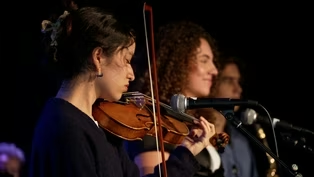
Gilbert Castellanos is on a mission to pass on the living tradition of jazz to a new generation. (2m 20s)
 New
Video has Closed Captions
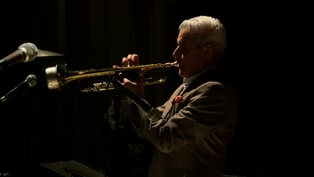
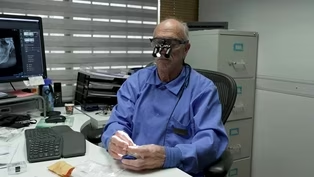
Gilbert and his dentist recount his experience with dental issues that affected his trumpet playing. (4m 19s)
 New
Video has Closed Captions
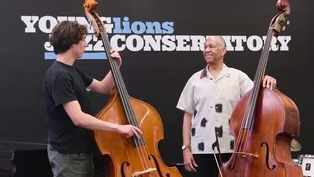
Gil and John Clayton reflect on their relationship and first meeting. (1m 18s)
Providing Support for PBS.org
Learn Moreabout PBS online sponsorship












Support for PBS provided by:
Young Lions is a local public television program presented by KPBS