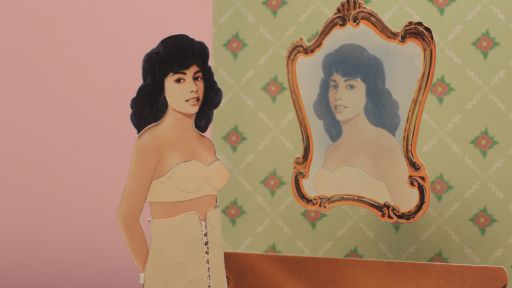
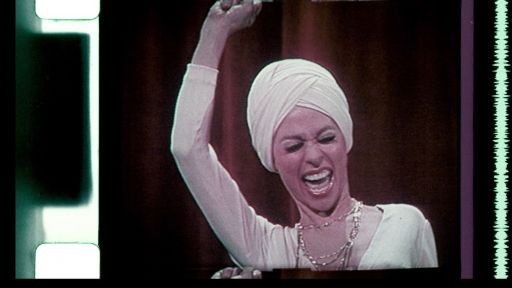
Click Here for the Spanish language version of the article. | Haga clic aquí para ver la versión en español de este artículo. The first time I interviewed Rita Moreno, I had prepared a series of questions about the biggest moments of her career. As ...
In 1969, Ursula K. Le Guin published a groundbreaking novel called "The Left Hand of Darkness" that questioned binary concepts of gender. Learn about the backlash from fans that found the book too controversial as well as criticism from feminists who felt that she didn’t ...
Lin-Manuel Miranda describes discovering Rita Moreno and seeing "West Side Story" for the first time, and realizing it was about Puerto Rican New Yorkers. "It was a gamechanger."
Xolo Maridueña (actor, "Cobra Kai"), Gina Torres (actor and producer), Tanya Saracho (showrunner, "Vida"), and Ivana Rojas (actor, "Gentified") discuss the importance of Latine representation both in front of and behind the camera.
"You can't be 20% of the population and be less than 1% of the stories. That's exclusion." Actor and director John Leguizamo and Felix Sanchez, co-founder of the National Hispanic Foundation for the Arts, discuss the "digital segregation" of Latine people in the media.
Hello, readers. American Masters is excited to announced our partnership with ALL ARTS to read Ursula K. Le Guin's genre-defining classic, The Left Hand of Darkness. As part of ALL ARTS' Ballerina Book Club, we'll be coming together to share features and clips about Le ...
The EGOT is an acronym that stands for the four major awards that an artist can win in the entertainment industry: the Emmy, the Grammy, the Oscar and the Tony. To excel in all four disciplines of stage, screen, television and music is a rare ...
Helen Keller became interested in politics and read extensively on socialism. She began to write articles for The Call, a socialist paper in New York City. "It can't be unreasonable to ask of a society a fair chance for all. It can't be unreasonable to ...
Helen Keller became interested in politics and read extensively on socialism. She began to write articles for The Call, a socialist paper in New York City. "It can't be unreasonable to ask of a society a fair chance for all. It can't be unreasonable to ...
Helen Keller was a social activist and suffragist, lending her name to the labor movement and the women's movement. "This inferiority of woman is man-made," she said in a speech in 1916.