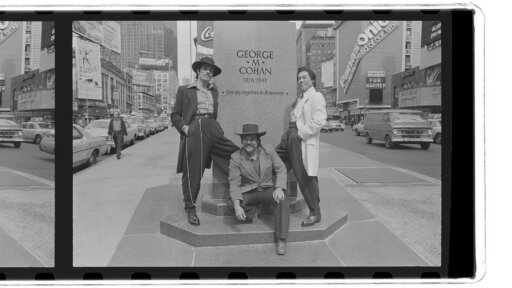
As a pioneering voice in Chicano theater, Luis Valdez played a pivotal role in bringing Mexican American stories and experiences to American stages and screens. Born in Delano, California, he grew up in a migrant farmworker family and spent much of his childhood working alongside his parents in the fields. Despite the long hours and difficult conditions, Valdez developed an early interest in theater and storytelling. He later studied English in college with ambitions of becoming a playwright.
In the mid-1960s, Valdez joined the farmworker movement in Delano and founded El Teatro Campesino, merging art with activism through short plays that brought humor, inspiration, and social commentary to striking workers. It marked the beginning of a career that would expand from theater into film, television, music, and dance.
“My works speak for themselves. They just happen to speak for an awful lot of other people,” Valdez observed. From the satire of “Los Vendidos” to the historical storytelling of “Zoot Suit” and the Hollywood success of “La Bamba,” his work has repeatedly placed Mexican American experiences at the center of the American story. Here are five of his most influential works.
1. “Los Vendidos” (1967)
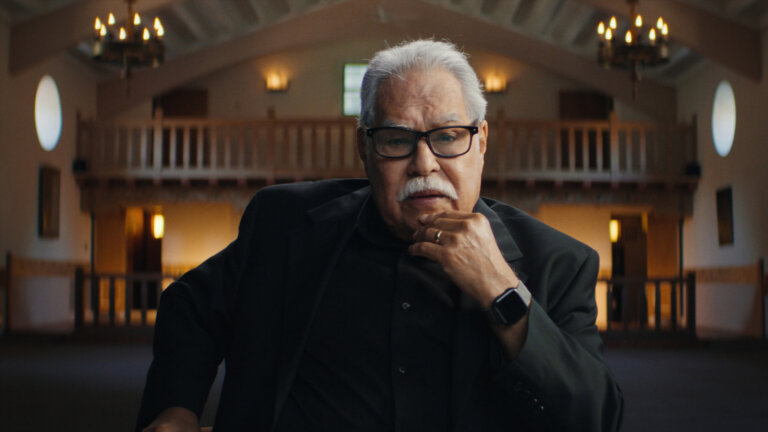
One of Valdez’s defining early satires, the one-act play “Los Vendidos,” embodied the politically charged theater he was developing with El Teatro Campesino. The title roughly translates as “The Sellouts,” pointing to the play’s central concern with how Mexican Americans were stereotyped and valued according to how well they fit the expectations of American society.
The play centers on Miss Jiménez, a secretary for then-Governor Ronald Reagan, who visits Honest Sancho’s Used Mexican Lot and Mexican Curio Shop searching for a Mexican American who can appeal to the governor’s lower-income constituents. Sancho presents her with a series of exaggerated stereotypes; each treated like a product for sale. She rejects them for being too radical, criminal, or un-American before purchasing a clean-cut Mexican American model in a business suit. The joke ultimately turns on her when the models come alive and reveal themselves to be human, while Sancho is left behind and identified as the real sellout.
Valdez drew inspiration for the story from the experiences of his older brother Frank, who faced racism while living on a military base. At the same time, Frank wanted to believe in the ideals America represented and sought to assimilate into American culture. Through comedy and exaggeration, Valdez explored what Mexican Americans might be asked to sacrifice to be accepted as fully American.
2. “I Am Joaquin” (1969)
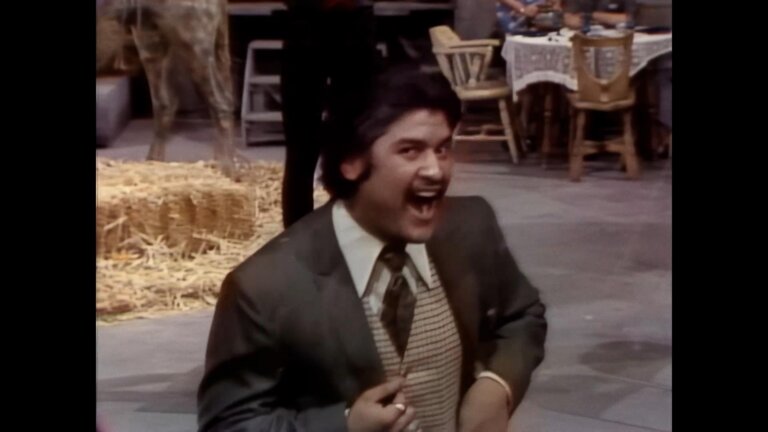
The Chicano Movement of the 1960s inspired a new generation of poets and writers to explore questions of culture, identity, and assimilation. Rodolfo “Corky” Gonzales’s influential poem “I Am Joaquin” emerged from this period, and Valdez transformed it into a short film. Created as Valdez was expanding his theatrical work, the film demonstrated his growing interest in moving beyond the strike-oriented actos toward broader questions of Chicano history and identity.
Valdez brought Gonzales’s words to the screen through a combination of historical images, music, and poetry, while also serving as the film’s narrator. Moving across generations of Mexican and Mexican American history, “I Am Joaquin” examines the complicated search for identity and belonging that stood at the heart of the Chicano movement. It is now regarded as one of the earliest and most significant works of Chicano cinema.
In 2010, the Library of Congress selected “I Am Joaquin” for preservation in the National Film Registry, recognizing its cultural, historical, and aesthetic significance.
3. “Zoot Suit” (1979 play and 1981 film)
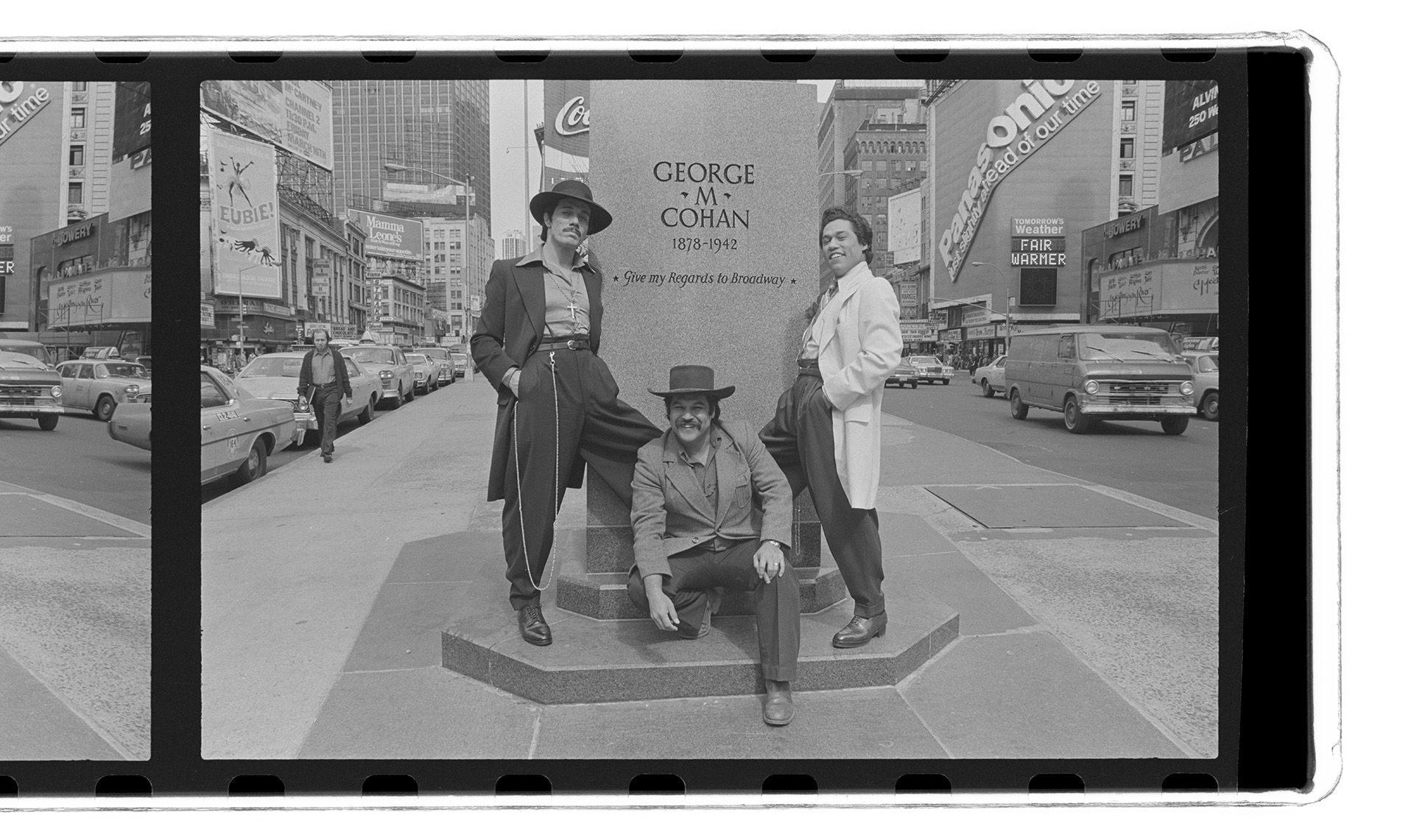
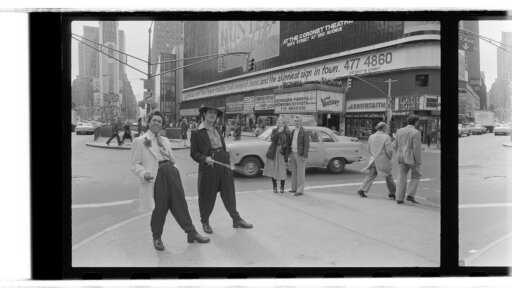
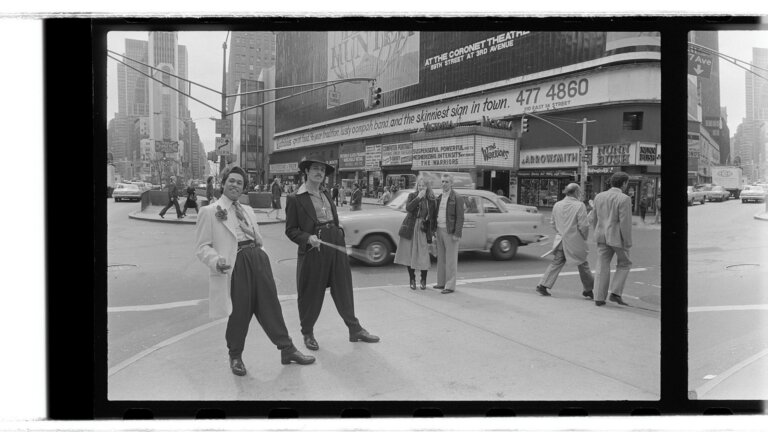
Danny Valdez, Luis Valdez and Edward James Olmos in Times Square (1979)
Much of Valdez’s work draws upon personal experiences and moments that shaped Mexican American history, including the 1942 Sleepy Lagoon case. More than 20 young Mexican American men were put on trial following the death of José Díaz, while a massive police sweep resulted in the arrests of hundreds of youths. Valdez drew upon these events and their aftermath to create one of his most important works, “Zoot Suit.”
The zoot suit itself became a powerful symbol in the play. Worn proudly by pachucos, its exaggerated style offered young Mexican Americans a way to assert their identity and claim their place within American culture. During the Zoot Suit Riots of 1943, however, young people were attacked and stripped of their suits. For Valdez, stripping away the clothing also represented an attempt to strip away an identity they had created for themselves.
With “Zoot Suit,” Valdez sought to reclaim a history in which these young people had often been portrayed as criminals and outsiders. Through the character of El Pachuco, an almost magical narrator, the story unfolded from a Chicano perspective. The Los Angeles production became a cultural phenomenon, with audiences lining up around the block and some arriving dressed as pachucos. “Zoot Suit” moved to Broadway in 1979, becoming the first Chicano play presented there, and Valdez brought the story to the screen in 1981. The film remained closely tied to the stage production, with Daniel Valdez and Edward James Olmos reprising their roles. Daniel Valdez and Lalo Guerrero also provided the music.
Like the Broadway production, the film received mixed reviews. Some critics questioned Valdez’s decision to blend theater and film, with certain scenes retaining the presence of a live audience while others unfolded more cinematically. Decades later, however, the film received significant recognition. In 2019, the Library of Congress selected “Zoot Suit” for preservation in the National Film Registry as a work of “cultural, historical, or aesthetic significance,” further recognizing Valdez’s efforts to bring Chicano history to audiences beyond the theater.
4. “Corridos: Tales of Passion and Revolution” (1987)
In 1982, El Teatro Campesino’s San Juan Bautista playhouse launched its Corridos workshop. Valdez built the production around the traditional Mexican corrido, a folk ballad used to tell stories of love, violence, immigration, revolution, and everyday life. Combining music with acting, dance, mime, and storytelling, he created a production that later enjoyed a successful theatrical run in San Francisco.
In 1987, Valdez brought the production to television with “Corridos: Tales of Passion and Revolution,” which aired on PBS. The adaptation allowed him to take a traditional Mexican form of storytelling and introduce its music, history, and cultural traditions to a national television audience.
Valdez served as narrator, while the cast included Linda Ronstadt, his brother Daniel Valdez, Clancy Brown, and Sal Lopez. “Corridos: Tales of Passion and Revolution” earned a prestigious Peabody Award for its creative use of television and celebration of Hispanic heritage, demonstrating Valdez’s ability to bring culturally rooted stories into the American mainstream.
5. “La Bamba” (1987)
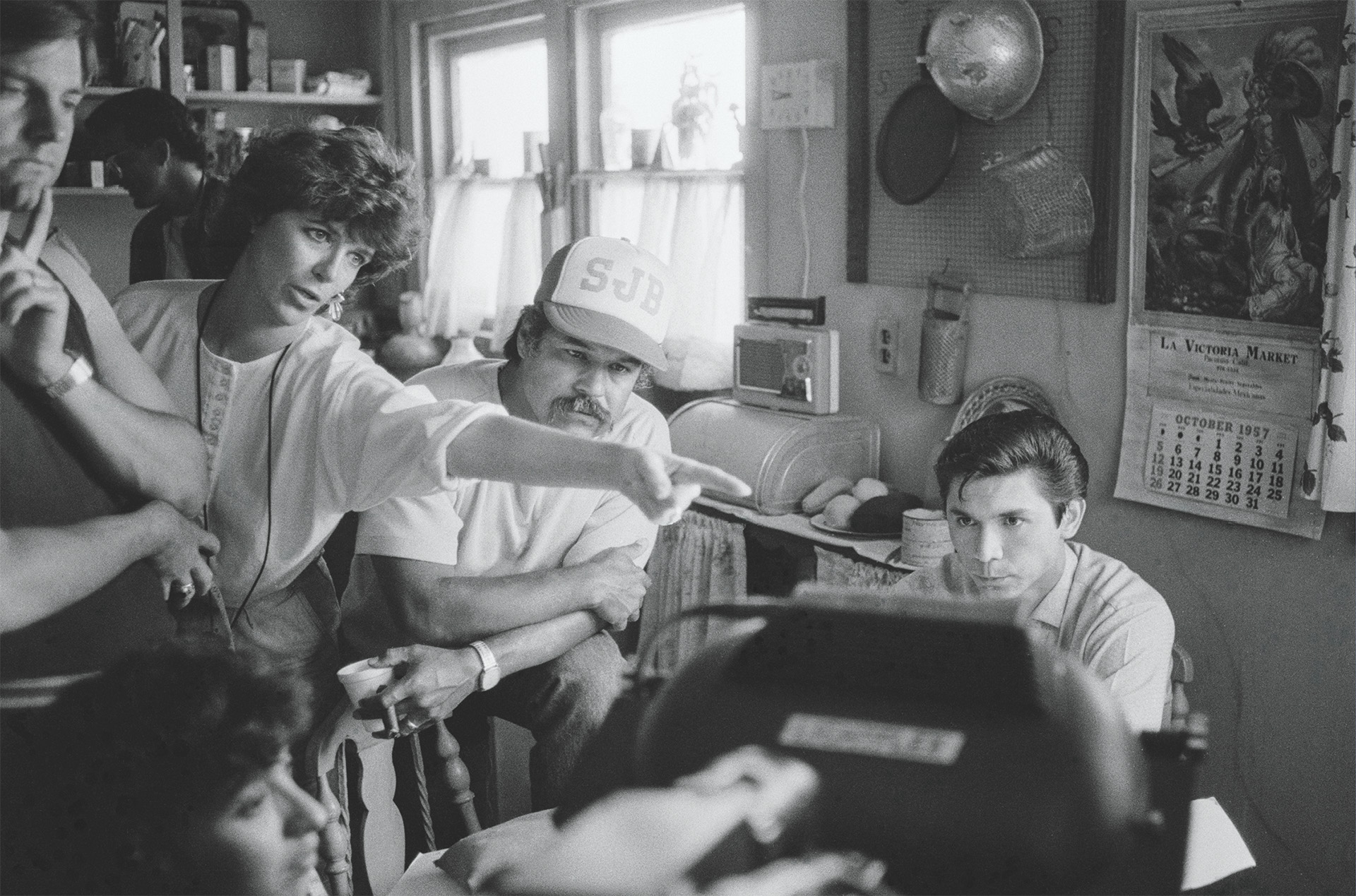
Luis Valdez and Lou Diamond Phillips on the set of “La Bamba” (1987)
February 3, 1959 would become remembered as “the day the music died,” when musicians Buddy Holly, J.P. “The Big Bopper” Richardson, and Ritchie Valens were killed in a plane crash in Iowa. As the decades passed, Buddy Holly achieved iconic status, while Valdez believed the story of Valens, a Mexican American from California’s San Fernando Valley who died at just 17, had not received the attention it deserved. Like Valdez, Valens had grown up working in California’s fields. Determined to bring his story to a wider audience, Valdez created “La Bamba,” named for one of Valens’s most famous songs.
The idea for the film can be traced back to the opening night of “Zoot Suit” on Broadway, when Valdez and his brother heard a mariachi band outside playing “La Bamba.” Having explored the Chicano experience of the 1940s in “Zoot Suit,” Valdez saw an opportunity to turn to the 1950s and the emergence of a young rock and roll star. With Lou Diamond Phillips in the leading role, “La Bamba” followed Valens’s rapid rise to fame while placing his family, heritage, and experiences as a Mexican American teenager at the center of the story.
“La Bamba” became a major commercial success and remains one of Valdez’s most recognizable works. The Library of Congress has described it as the first Hollywood blockbuster centered on a Hispanic family’s experience, marking an important moment for Latino representation in mainstream American film. For Valdez, however, his goal was to restore Valens to his rightful place in rock and roll history while honoring the family and community the young musician left behind.
***
Throughout his career, Luis Valdez has used his work to bring greater awareness to the racism, stereotypes, struggles, and triumphs experienced by Mexican Americans. Valdez also encountered racism throughout his career, reinforcing the importance of maintaining authority over his work. “A director has to claim his set. A director has to claim his movie,” he explained.
That determination has defined much of Valdez’s career. By claiming the right to tell these stories on his own terms, he helped open doors for generations of Chicano artists and storytellers while remaining one of the most influential voices in Chicano theater and American culture.