
At Christmas
Season 46 Episode 10 | 28m 48sVideo has Closed Captions
The Roadshow at Christmas looks back at memorable items and asks: ‘what happened next?’
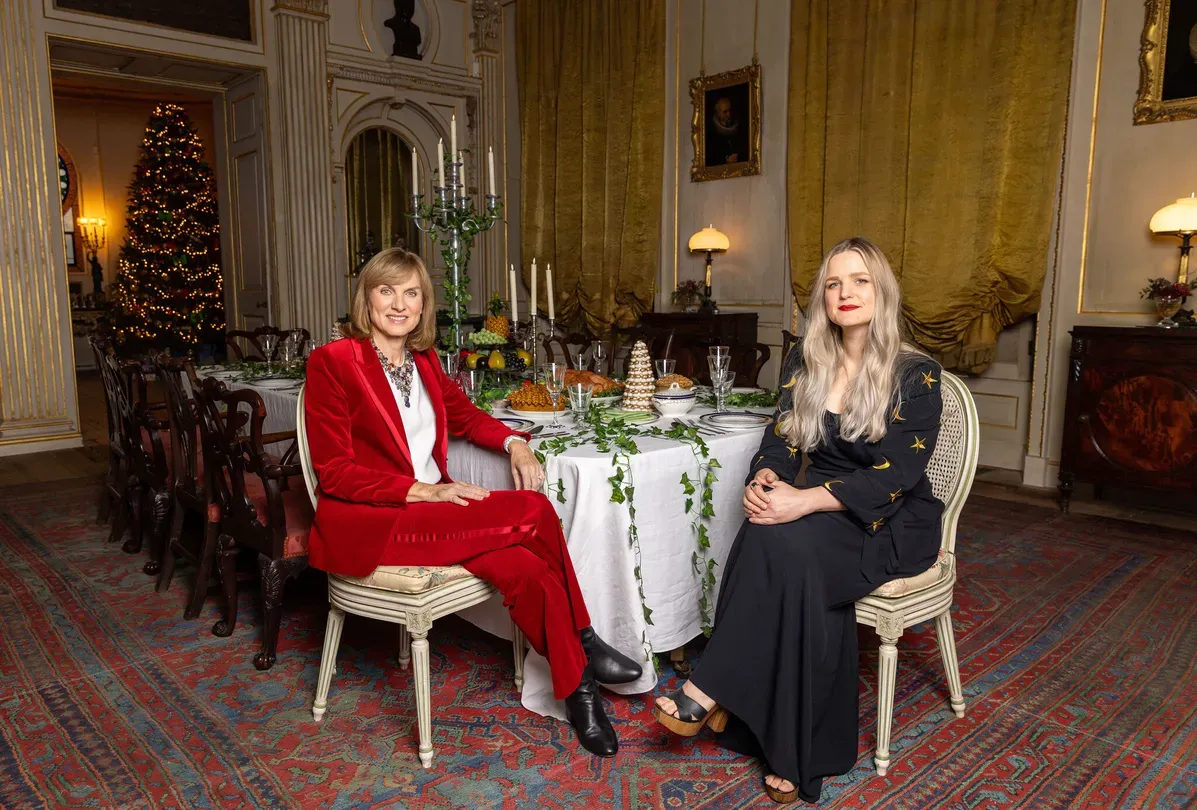
The end of the year can be a time for gathering families together and reflection. In this festive special, the roadshow looks back on some of the most memorable, intriguing and moving stories to have appeared in recent years to find out: ‘what happened next?’ Uppark House in West Sussex, a glorious Georgian manor, fully decorated for Christmas, provides the seasonal backdrop.
Problems playing video? | Closed Captioning Feedback
Problems playing video? | Closed Captioning Feedback
Antiques Roadshow UK is presented by your local public television station.
At Christmas
Season 46 Episode 10 | 28m 48sVideo has Closed Captions
The end of the year can be a time for gathering families together and reflection. In this festive special, the roadshow looks back on some of the most memorable, intriguing and moving stories to have appeared in recent years to find out: ‘what happened next?’ Uppark House in West Sussex, a glorious Georgian manor, fully decorated for Christmas, provides the seasonal backdrop.
Problems playing video? | Closed Captioning Feedback
Where to Watch Antiques Roadshow UK
Antiques Roadshow UK is available to stream on pbs.org and the PBS app.
♪♪ Today, we're unwrapping a special Christmas edition of the "Antiques Roadshow," finding out what happened next to some of our favorite items of the last few years.
And we're doing so in the glorious surroundings of this Georgian Manor House, Uppark House, here in West Sussex.
Built in 1690, the house was, for generations, the home of the Fetherstonhaugh family, before transferring to the National Trust in the 1950s.
But disaster struck in 1989 when the entire building was gutted by a fire.
Over the following six years, the Trust painstakingly rebuilt the property, piece by piece, returning it to its former glory.
Today, the house has been decorated for Christmas, looking just as it would have during its heyday in the 18th century.
♪♪ And its stunning rooms will play host to our experts as they share some of their favorite winter treats.
This is a menu from a Midwinter's meal that was had on Robert Falcon Scott's Antarctic Expedition.
Fiona: And we'll enjoy some unseen festive items from previous shows.
Come Christmas time or birthdays, I really love unwrapping things that come in small boxes.
Fiona: And at this reflective time of year, we'll be looking back at some of our most touching items and stories, to find out what happened after we stopped filming.
We'll be catching up with one owner whose mum's story continues to inspire.
I feel very proud.
She so wanted to be a pioneer for women to go into aviation.
Fiona: And we'll follow a box of photo slides all the way to Canada, where they're helping uncover incredible family stories.
We've been able to identify fifteen boys that are in these slides.
This is such a critical piece of our history.
♪♪ Welcome to the "Antiques Roadshow" at Christmas.
♪♪ We begin with the kind of story we love on the "Antiques Roadshow," a hunt for a missing treasure.
Twelve years ago, at the Royal Naval College, Dartmouth, we asked our experts to tell us about any items they dreamed of discovering, and our jewelry expert Geoffrey Munn had not one, not two, but nine items on his wish list.
Geoffrey: What we see the least of are almost Holy Grail of Victorian 19th century design.
And the highest possible point of that for me is the jewelry designed by the neo-Gothic architect William Burges, who's really the greatest genius of 19th century design.
And we know about them because the designs remain at the Victoria and Albert Museum.
And is that what these are here, then?
Yes, most definitely they are.
And they’re very tantalizing.
It says on the top of here, -"Six of these in silver."
-Fiona: Mm.
And "Three of these in gold."
So, we've nine chances of the "Antiques Roadshow" flushing these out.
♪♪ Fiona: Just a few years later, Geoffrey was amazed to see one of the lost brooches turn up at the Senate House in London.
Let's get it out and have a look.
Oh, my goodness, me.
Client: I think it might be that one.
Fiona: Let's have it here, right next to it.
Geoffrey: I don't think there's any shadow of doubt and I think that that's, um, that is absolutely, uh... Well I-- I honestly can hardly articulate it.
But in every sense of the word, it is it, and so-- -Is it?
-It's pulse-making!
I mean, honestly, I mean, -this is sort of, it is-- -Oh, wow!
It's a Tutankhamun experience on the "Antiques Roadshow."
Client: What is its worth?
Geoffrey: Something close to £10,000.
[ Gasps ] Oh, my God!
Oh, crikey.
Fiona: In fact, the brooch went on to sell for £31,500.
And earlier this year, at our "Roadshow" in Alexandra Gardens in Cardiff, Geoffrey was in for yet another big surprise.
Now, here's a brooch, made of silver, and coral, and lapis lazuli, and malachite, with an intrinsic value that's remarkably low, and yet, my pulse is racing.
[ Both laugh ] So, tell me about it, come on.
Well, I bought it, uh, 33 years ago.
And then, two months ago, out of the blue, I saw an old "Roadshow" about most-wanted finds, and I thought that brooch that's been found on the "Roadshow" looks just like mine, or very similar.
So, I had a better look and there it was.
It sort of jumped off the page from the Victoria and Albert Museum drawing straight into my hand.
Geoffrey: Well, it certainly did.
-Client: And there it is.
-I'm excited all over again because you've done it again!
So, this is on the same sheet as the previous jewel and it is a bridesmaid's brooch designed by William Burges, and it's a breathtaking discovery, really, totally thrilling and a most marvelous relic of... high Victorian art, concentrated and distilled into a tiny thing like this.
The nub-- The rub is to try to attach a price to it because that was a huge precedent for the first one.
£31,500.
So, I'm going to say, just as a starting point for this brooch, that, um, £8,000, £10,000, and-- and it's not a tiny scintilla of the excitement that it's generated for me.
I'm so pleased, yes.
Well, I'll probably hold on to it, I must admit, because this is such a sort of important piece and, uh, I'm so happy to own it.
Fantastic.
Well, I'm very happy to see it, thrilled, excited.
So, thank you so much, it's brilliant.
-No, thank you.
-Thank you.
-Thrilled to meet you.
-[ Both chuckle ] [ Applause ] Fiona: There are still another seven lost Burges jewels to add to Geoffrey's Christmas list.
But for most of us, when we were children, there was one thing we truly desired.
Over the years, we've seen hundreds of toys brought into the "Roadshow."
So, given that it's Christmas, we're going to show some of them to you now.
We begin with our beloved expert Judith Miller, who sadly died in April after 15 years with us on the "Roadshow," and a lifetime of sharing her antiques expertise.
Last year, at Brodie Castle, she uncovered a toy bus which was delighting children over a century ago.
So, this is a rather special German tinplate lithographed double-decker bus.
Where did you get it?
It was my father-in-law's and it came from the UK, his family came from the UK, and I'm assuming that it was given to him as a gift when he was a small child.
Judith: Where are you from?
I'm from upstate New York, Vestal, New York and here visiting.
Lovely, and you brought this with you.
I did, I did, I heard that the "Antiques" show was going to be filming, and I was very excited.
I'm a fan back in the States, so this was a real pleasure.
Well, it's a very early example of this German factory, OROBR, that produced these tinplate toys, -pre-First World War.
-Mm-hmm.
Judith: Now, I would say this is circa 1912.
It has some problems, in that it's lacking a row of seats.
Client: Mm-hmm.
Judith: But the lovely thing about it is, it's got its driver, and that is so important.
And also, the lithograph is in really good condition.
I mean, you know, it's age-worn.
-Client: Right.
-Judith: Of course it is.
We're talking about, you know, something-- -100 years old.
-Over 100 years old.
-You know-- -I love the spiral staircase.
-Judith: I know, imagine!
-Client: I know.
Judith: You know, I remember going up one of these when I was quite young.
It's just such a beautiful example of its type.
And for its period, it's in really good condition.
Especially the paint job.
I was really impressed that it's remained.
But it hasn't been really abused, it's just been used.
Judith: Exactly.
Well, that's-- That's important because collectors wouldn't want it brand-spanking-new.
-Client: Right, right.
-Because it's got its age.
-Client: Mm-hmm.
-But it's still in really good condition.
And this one, I would put... £800 to £1,200.
Pays for the trip to the UK!
[ Both laugh ] Good!
Fiona: And from Clissold Park in 2022, we have two unseen toy treats, starting with one family's much-loved secret plaything.
Today, I've brought along a toy called Muffin, Muffin the Mule, from a children's program in the early '50s.
And Muffin should, occasionally, try, or not, to eat his turnip.
I played with him as a child, and as my daughters came along, they did the same thing, until my mother saw an "Antiques Roadshow" and he was on it, and valued at £25 in the, probably, early '70s, and it then ended up in a glass cabinet 'cause it was worth money.
My daughters then used to sneak him out and play with it and so did they -as they got older.
-We did.
Granddaughter: When I was about 7, I used to sneak it from the glass cupboard.
My mum used to get it out for me, um, and then we used to put it back, we'd play with it first, and we'd put it back, and then he wouldn't know about it, 'cause he'd be like, "You shouldn't touch it!"
And then, sometimes he found out, but... yeah, it was very fun.
They got away with it, the granddaughters.
Granddaughters get away with anything.
-Granddaughter: True.
Fun fact!
-[ Chuckles ] Fiona: And Bunny Campione met another famous toy from the screen with an extraordinary story.
-May I hold him?
-Yes.
Thank you.
So, tell me the story about Mickey.
Client: Um, my grandfather was a-- a pilot in the war, and he was flying a Lancaster that was shot down in occupied France, and he was helped by the French Resistance.
And a-- a family, a French family, hid him and were teaching him French, and ultimately, after the war, they gave Mickey to my mother, who was a baby at the time.
Bunny: So, how long was he with the French family?
About a month, but he was, uh-- A German officer came to the property and he hid in the back of a compartment of a wardrobe, and that property was taken over, so he escaped into the woods.
Goodness, what a story!
How did he get back to England?
So, from Paris, he'd made the call that he was okay back to the family.
My mum was a few months old then, -so months of worry, um... -Yes!
They falsified the documents and he had to... improve his French while he was with the family.
[ Bunny gasps ] So, that's not his real name?
Jean Dupont?
-No.
-What's his real name?
Client: Walter John Oldacre.
[ Laughs ] Not at all French.
-Client: No.
-That is-- -And that's him?
-Client: That's him, yes.
Very good looking.
What a story, oh!
Makes me... goose bumps.
And that was a gift after the war, Mickey.
Bunny: He's certainly been much loved.
-Client: Yeah.
-And, um, he's-- His tail is missing.
That's, you know, where the tail was.
-Client: Yeah.
-Bunny: But so often, Mickey is missing his tail.
I think children usually hold them by the tail or something.
And I don't think he's French.
I think he's probably British.
-Maybe Chad Valley.
-Oh, wow!
Bunny: 'Cause that's very like the copyright that Disney gave Chad Valley and various makers in the '30s.
It's very difficult to put a price.
I mean, to you, he's priceless isn't he?
Client: He is, absolutely.
It must be 1,000, 2,000.
-You can't put a price on it.
-No, no.
-Just wonderful.
-Oh, thank you so much.
♪♪ Fiona: Back at Uppark, I'm joined by our books expert Fuchsia Voremberg, who specializes in stories from the frozen polar regions.
Today, she's brought along items relating to an extraordinary female traveler.
Fuchsia, tell me about this woman looking absolutely splendid in her furs here.
Fuchsia: So, this is Violet Cressy-Marcks and she is this really exciting traveler from the 1920s, who I have a particular soft spot for.
This particular picture relates to a journey that she took in 1928 where she started off in Scandinavia, where she was provided with an armed guard and a group of indigenous guides.
They traveled by reindeer in what's known as a pulka, which is a small sleigh, 1,000 miles from Finland, all the way through the Sapmi region, formerly known as Lapland, to the Russian border.
She was chased for 20 miles by wolves that she fought off with a stick.
It was a hell of an adventure.
Wow!
And doing all that as the only woman, presumably surrounded by men.
And she seemed completely unfazed.
It was how she preferred to travel.
You see the way the press treated her.
She's often pictured both in her explorer's garb, and then also in her debutante society wear.
Fiona: I mean, it's a fantastic contrast, isn't it?
Fuchsia: Yeah, and she really plays with people's perceptions of what gender can be, and also the limitations of that.
So, there's an article here.
"She has found a name for her baby son."
So, what's this all about?
Yeah, so let me read a little bit of this to you and you'll get a taste of, um, perhaps what she was up against.
"She has known adventure in the jungle swamps of the Amazon, "she has endured the icy cold of the Arctic Circle, "but today, she overcame what she regards "as the greatest problem in her career, she has at last found a name for her 4-month-old baby son."
Which was, incidentally, what?
She named him Ocean, which, as someone who has a silly name, I think is kind of epic.
One of the really interesting things about her travels is that she's able to access areas and people that male explorers perhaps were not able to.
So, she has pretty much unfettered access to Russia, and she also interviews Chairman Mao while she's in China in the 1930s, too, which is fairly extraordinary.
Fiona: And you've got Christmas cards here.
Fuchsia: These Christmas cards were sent from her, from Tibet, from China.
Fiona: They're certainly not the kind of Christmas cards we're used to seeing.
She was clearly a remarkable woman.
Fuchsia: I think so, too.
♪♪ Fiona: Often, an appearance on the "Antiques Roadshow" starts a quest to find out more about a treasured possession or a beloved relative.
At Stonor Park, Siobhan Tyrrell heard the stirring story of another pioneering woman, pilot Jackie Moggridge.
She's my mother and she wanted to learn to fly, basically to show off to her brothers.
And war broke out, and, um, she wrote to the RAF and said, "I'm going to join the RAF," and they said, "Oh, no, no, no, we don't take women fighter pilots."
So, she became a radar operator.
Siobhan: And it wasn't until all our RAF male pilots -were being shot down... -They didn't have enough.
Siobhan: ...and then, suddenly, there was an absolute need for these ferry pilots to ferry all kinds of planes from the factories to the operational centers.
Client: Yes, to the fighter pilots, so that they could take off, and that was my mother's chance.
Air Transport Auxiliary.
She didn't talk a lot about the war, but if you jumped into bed with her in the morning, she would say, "Do you want to fly a Spitfire?"
She'd say, "Let's pretend the duvet's the clouds," she said, "and hold the joystick."
And she said, "The Spitfire is such a lady's plane."
Siobhan: It's often been said.
Client: "Beautiful, very delicate," she said, "to fly," and her favorite.
Fiona: After the episode, Jackie's daughter, Candida, was contacted by the team at the Biggin Hill Heritage Air Museum, who were restoring a plane flown by Jackie after the war.
It was one of 30 Spitfires flown from the Middle East to Burma, now known as Myanmar, in 1954 to join the nation's Air Force.
Alex Monk, who works at Biggin Hill, has been in charge of the restoration.
This is your mum's aircraft that she ferried from Israel across to Burma, -all those years ago.
-Candida: Amazing.
What you see here will fly again.
We will put this all back together and the whole airplane will fly, which is-- is quite rare now, in this day and age.
Candida: Oh, my mother would be thrilled.
Alex: Down by you there, -we've got the seat.
-Candida: Yeah.
Alex: Then the control column a bit forwards.
And-- She sat in that seat, held that.
Exactly.
That's what she would've used when she was flying this airplane.
Candida: She actually says in her logbook, when she flew this, that she flew it through very bad weather.
Alex: It's a hell of a feat.
I mean, most people that fly airplanes now will use GPS instruments.
Candida: They didn't have it in the '50s, -'53, '54.
-No, she flew halfway across the world on her own in... I mean, to put that in today's context, that's like someone jumping in a Eurofighter Typhoon on their own, with no ground crew, no support, no assistance, and then just by pure dead reckoning, flying halfway across the world.
It's almost unfathomable really, that someone could achieve that.
-Candida: Yeah, but they did.
-Alex: And then, she went and just did that, and then not once, but quite a few times.
Candida: Yeah.
She loved it.
Fiona: And as well as Jackie's plane, Biggin Hill is now the home of some other artifacts of this remarkable woman.
My mother's ferry pilot's notes, that was mentioned in "Antiques Roadshow."
Her medals, and since the "Antiques Roadshow," we have found a comic from France in 1959.
I literally bought it off the internet, thinking, "That's lovely, they had a woman being an airline captain in 1959."
I looked inside at the story and I realized it was "Captain Jackie" and it's my mother's story.
I feel very proud and very excited to think that it's also here with her plane that she flew.
She so wanted to be a pioneer for women to go into aviation, and so, she would be really thrilled to think that children will be able to come and see the story of women in the war, and realize they could do these things and they can do whatever they want to do.
♪♪ ♪♪ Fiona: Uppark House is filled with treasures handed down through the generations.
And at our "Roadshows," we love to see items passed down through the family.
This year, at Powis Castle, John Foster saw a selection of gold coins collected over a lifetime.
-Now, are you a gold nut?
-Far from it.
Me-- My mother, his-- his grandparents, were the gold nuts.
They collected these sovereigns over the years and then the instruction was, when she passed away, which she sadly did, they were to be sold, and the money divided up equally between the five grandchildren.
That's a lot of forethought, then, has gone into that.
They would have a value of thirty to 35,000.
The grandchildren will be pleased.
Fiona: And John's estimate was bang-on.
The coins sold for £32,000.
We love a Mystery Object on the "Roadshow," but sometimes, it takes an eagle-eyed viewer to get to the whole truth.
In 2022, at Sefton Park in Liverpool, Wayne Colquhoun gave me what sounded like a logical explanation for one item's use.
That's for tying your flies.
Fishing flies, we're talking?
So, you would attach it to a bench.
-Fiona: Right.
-Wayne: And you would pull the hook tight, and you would wrap your tie with the appropriate material, and then it enables you to work around it.
Fiona: Okay.
Ah, but some viewers contacted us to say that this wasn't the original purpose of the item.
We joined Wayne at his home in West Wales to learn more.
As the program went out, my phone started bouncing off the hook.
"Well, you got that wrong!
It's for putting bands on pigeons' legs!"
[ Chuckling ] Oh, no.
So, its original use was to find a band.
What you would do is put this on, then find a pigeon, shove its leg underneath here, and then carefully put that on to its leg.
And then, you'd be able to track this pigeon wherever it was.
So, I must apologize to the pigeon fanciers out there.
Why I described it as that was because I actually tied summer flies on this when I was a youth.
I had a little side job.
I used to sell them to a local tackle shop.
So, the way I would do it is I would clamp it into there, hold it on there, tie the band around it, and... then you would get your feather.
And what you want to do is you want to imitate the fact that it is a nymph.
You would use a bit of, um, peacock, mallard down.
You can use anything you want.
I'm go-- probably gonna upset the fly-tying fraternity 'cause this wouldn't catch a cold.
But believe me, I've tied many a fly on this.
And then, I thought, "Oh, hang on, "it was given to me by my friend's father "when I was 14, "who showed me how to tie my first one in his shed... which may have been a pigeon loft."
[ Birds chirping ] ♪♪ Fiona: The festive season is celebrated in different ways across the globe.
At Uppark, I've been joined by our expert Runjeet Singh.
Today, he's sharing stories of the winter celebrations he remembers from his childhood.
Runjeet, we're used to seeing you as a specialist in Asian arms and armor, but you've brought along some items today associated with winter ceremonies of Northern India.
Runjeet: Absolutely.
It's a really busy time for the Indian community.
November, December, January.
But aside from Diwali, which many people know about, there is the lesser known festival of Lohri.
Lohri essentially is a winter solstice festival and a winter harvest festival, and it's celebrated with a bonfire.
An offering is made to the fire of winter harvest foods such as radishes, sesame seeds, peanuts.
They're thrown into the fire, are they?
Yeah, just a small amount, as an offering.
And then, songs are sung and there's dancing involved.
I've got these vivid memories of my mother and my aunties standing round the fire, wrapped in shawls, 'cause January in England is not the warmest time, and so, that's why I've brought along these two beautiful shawls to show you.
And this with a classic paisley pattern.
Runjeet: Paisley, yes, but before paisley, it was called a boteh.
This swirling floral design is-- is a boteh from Kashmir.
Probably came to Europe in the 18th century.
Really became fashionable when people like the Empress Josephine of France, the first wife of Napoleon, famously and fashionably wore them and is seen in many paintings wearing Kashmiri shawls, and the British set up an important manufacturing center in-- -Paisley, in Scotland, yes.
-Runjeet: Paisley, absolutely.
So, it really has become kind of this international design, but it all comes from Kashmir.
This example, I bought in auction a few years ago, and it was made around 1840 in Kashmir.
And what about this one here?
Runjeet: It's called a phulkari.
"Phul" meaning flower, "kari" meaning work.
A very traditional folk art from Punjab, India.
And this one is a family heirloom.
It was given to my mother by her auntie, and my mother gifted it to me.
Made around 1940, and an item very precious to me, and reminds me of a phrase women would sing when they're embroidering this shawl.
It's in Punjabi and it goes, [ Speaking Punjabi ] [ Speaking Punjabi ] Which means, "This phulkari was embroidered by my mother, may I hug it tightly."
And it-- it's just an indication of how sentimental these objects were.
They were made with real love by mothers and grandmothers and passed down to daughters and sons.
They're beautiful examples of the craft, aren't they?
Do they have a great value?
The one closest to you, yes.
It's, you know, considered a real antique, and-- and a very fine textile.
Something like this would be... three and a half, £4,000.
Phulkari, it's growing in value, it's an emerging art, highly collectible, but a lesser value.
But of course, this is so dear to me, sentimentally.
Well, thank you so much for telling us about them.
Runjeet: Yeah, my pleasure.
♪♪ Fiona: Christmas and Lohri are a time for families, but at our show at the Royal Botanic Garden in Edinburgh in 2021, Paul Atterbury saw a collection of slides from the turn of the 20th century which told a heart-breaking story of separation.
They showed young children preparing for a transatlantic voyage, far away from the homes and families they knew.
This is a box which tells a story.
What is that story?
It was a story about a farm that had been set up as an educational facility for young lads, and it looks like the young lads were destitutes taken from Glasgow, and taken to the farm to give them an education.
And then, I noticed on one of the slides, the boys were onboard a ship.
And I'm thinking, "What were they doing there?"
And I saw the ship's name, and it checked out that that ship was going to Canada.
Paul: And this was a very major philanthropist activity in late Victorian Britain.
Between 1869 and the 1920s, we exported 100,000 children -to Canada.
-Oh, that's a lot.
Yeah.
So, once you see the scale of it... -Client: Mm-hmm.
-...you really do begin-- -I-- I began to question it.
-Client: Yeah.
'Cause, you know, these children didn't have an option.
They were ripped out of their environment, -whether they liked it or not.
-Client: Mm-hmm.
Mm.
-But what about their families?
-Client: Mm.
What if they didn't want to go to Canada?
You know, none of that -was relevant.
-Yeah.
That’s right.
Fiona: The boys were known as Home Children, and would become a significant part of Canada's growing population.
After the program went out, the slides made their own journey to Canada, in the province of Ontario.
There, they'd been bought by Lori Oschefski, president of a Canadian charity which helps the descendants of the Home Children trace their family history.
Lori: In Canada, we have over four million descendants of British Home children, and that's about 10% of our population.
And yet, the vast majority of them are not aware of that connection that they have.
There was a lot of shame that was placed on the children, and therefore, many, if not most of these children, did not tell their descendants that they were a Home Child.
This is such a critical piece of our history for Home Children.
They're unlike any other slide collection that we have.
The quality of these slides are outstanding.
They're crystal clear.
Looking through the slides, we've been able to identify fifteen boys that are in these slides, and I did some preliminary research.
On a slide here, we have one of the boys, Charles Gillis Lennox, and Charles came over to Canada in 1912.
He did serve for Canada in the First World War, and he did sustain an injury where he was shot in the neck.
Now, Charles did marry, and he did have two sons, and we have traced the sons right down to their obituaries.
Um, neither one of them, however, appeared to have had descendants.
And that's one of the things that we're really working on as we move forward with this collection, is trying to find living descendants.
I'm just so proud of these children and what they were able to accomplish and what they were able to overcome.
♪♪ ♪♪ ♪♪ Fiona: We've come to the end of our Christmas Special, and of our time at Uppark House.
The house will be closing its doors for restoration work in 2024, so it's been wonderful to visit now.
But before we go, there's just one family story I want to share with you.
This is Harry Fetherstonhaugh.
In 1774, he inherited Uppark, and he was a socialite and party animal.
He remained a bachelor until his 70s, when he decided to marry the 20-year-old dairy maid here at Uppark, Mary Ann Bullock.
It was an absolute scandal at the time, and when he died, aged 91, the house and all its contents were transferred to Mary's family.
It was the ultimate bringing together of upstairs and downstairs.
From the "Antiques Roadshow," goodbye, and have a happy Christmas.
♪♪ ♪♪
 New Episode
- Drama

Hugh Bonneville stars in a crime drama inspired by one of the largest robberies in British history.
 New Episode
 New Episode
 New Episode
 New Episode
 New Episode


Support for PBS provided by:
Antiques Roadshow UK is presented by your local public television station.