
Big Sounds, Little Town & More
Season 16 Episode 11 | 27m 27sVideo has Closed Captions
Music finds a new home in an unexpected place, cultivating change- one garden at a time & more.
Music finds a new home in an unexpected place, cultivating change- one garden at a time, two no-hitters 70 years apart and, the return of the Sandhill Trumpeter Swans. Rsacal Marinez returns to his hometown of Sutherland NE to open a music recording studio. A community garden finds success in Omaha. Jackson Brockett becomes the second Nebraska Baseball pitcher to pitch a no hit nine inning game.
Problems playing video? | Closed Captioning Feedback
Problems playing video? | Closed Captioning Feedback
Nebraska Stories is a local public television program presented by Nebraska Public Media
Big Sounds, Little Town & More
Season 16 Episode 11 | 27m 27sVideo has Closed Captions
Music finds a new home in an unexpected place, cultivating change- one garden at a time, two no-hitters 70 years apart and, the return of the Sandhill Trumpeter Swans. Rsacal Marinez returns to his hometown of Sutherland NE to open a music recording studio. A community garden finds success in Omaha. Jackson Brockett becomes the second Nebraska Baseball pitcher to pitch a no hit nine inning game.
Problems playing video? | Closed Captioning Feedback
How to Watch Nebraska Stories
Nebraska Stories is available to stream on pbs.org and the free PBS App, available on iPhone, Apple TV, Android TV, Android smartphones, Amazon Fire TV, Amazon Fire Tablet, Roku, Samsung Smart TV, and Vizio.
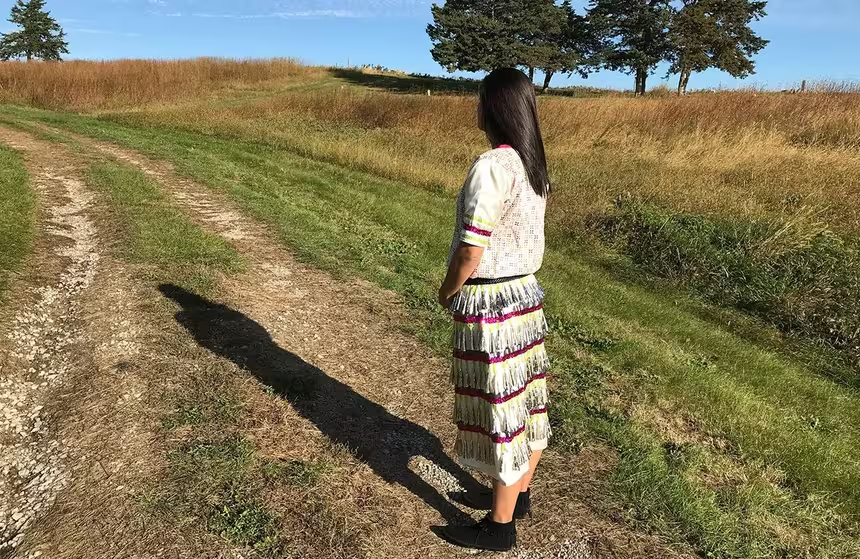
Do you have a Nebraska Story?
Do you have a story that you think should be told on Nebraska Stories? Send an email with your story idea, your name, your city and an email address and/or phone number to nebraskastories@nebraskapublicmedia.org. Or, click the link below and submit your information on nebraskastories.org.Providing Support for PBS.org
Learn Moreabout PBS online sponsorship(upbeat music) -[Narrator] Coming up on Nebraska Stories, music finds a new home in an unexpected place, (upbeat music) Cultivating Change one Garden at a time, (upbeat music) Two no hitters 70 years apart, one Nebraska Legacy, (upbeat music) and the return of the Sandhill Trumpeter Swans.
(upbeat music) (upbeat music) (upbeat music) (upbeat music) (upbeat music) (somber western music) -[Narrator] Nestled in the high plains of Western Nebraska along the historic Lincoln Highway.
Sutherland is an unassuming town of 1200 that blends agricultural traditions with modern industry.
(somber western music) Main Street is a mix of practical needs and community charm.
(somber western music) -[Rascal] Nebraska nice, just a good spot.
(somber western music) Everybody's really friendly, good people.
(somber western music) A lot of hard workers around here too, so you get some real honest people.
(somber western music) -[Narrator] Musician, Rascal Martinez was born and raised in Sutherland with cattle, crops, an ethanol plant and a power station driving the local economy.
This might seem an unlikely place to forge a music career.
(guitar music) -[Rascal] For the last 10 years, I've been really busy performing all over.
Just been a full-time musician.
(guitar music) I play probably over 150 senior center shows like a year.
I've been doing that for like 10 years.
(somber music) Private events, a lot of corporate events, you know, backyard party type stuff.
I do a lot of weddings.
(somber music) I was down in Tennessee for a long time, just back and forth writing and doing shows.
(somber music) California, New York and Chicago.
(somber music) I almost moved to Tennessee but I was gone so much traveling all over.
I was like, why would I live here if I'm not gonna be here?
(somber music) So I moved back to Sutherland (somber music) -[Narrator] And that's when he found a new way to bring the music world to his tiny pocket of Nebraska.
-[Rascal] I was just looking kind of for an office space.
And then I saw this place was for sale.
So this is a, it was built in 1910.
It was an old bank farmer's bank back in the day.
I think it closed like somewhere in the seventies (crunching sounds) and it was vacant for a couple years.
-[Narrator] The character of the building is largely preserved from its original tin ceilings to the worn wooden floors that still bear the impressions of customers and tellers for more than a century ago.
-[Rascal] I came in here and right away I was just like, yikes.
I gotta have the place.
This is just like, just too good.
(somber music) (somber music) I've always wanted to make my own studio, have a place to rehearse or have bands come in.
I don't think people think they can do it in a small town, but with social media and all the things that we have now, just right at our fingertips, I mean, I think anything's possible with that.
(somber music) We record all the shows live and then I recording everything so that I can mix it all down and master it later.
(somber music) It's 1910, so you're, you know, this is not a brand new million dollar building that's, you know, you can't hear any noise.
You're gonna hear some stuff for sure, but I think that just gives it, it's just, it's so just is warm though.
(background chattering) -[Narrator] He calls it Stolen Vault records.
-[Rascal] We do a lot of bigger shows, but then there is something about a small audience of 20, 30 people where people are coming to listen to, you know what you have to say and it's just a different thing.
'cause you can kind of, you can be in the room.
♪ I don't Even know ya ♪ ♪ I don't even know your name.
♪ ♪ I don't even know ya anymore.
♪ (somber music) -[Rascal] We're bringing a lot of bands from all over.
A lot of, I mean, we got some Colorado bands, a lot of Nebraska bands coming in, a lot of solo artists.
(somber music) If you're coming from Denver and you gotta play a show in Omaha, I mean we're right smack in the middle.
You could do another show, just that small intimate show and you're just like, you're right there.
One-on-one, like with the artist.
♪ No one to turn to anymore ♪ (applause and cheering) -[Muriel] I don't care if it's an an A-list celebrity or a singer songwriter just starting out doing their own things.
This is an incredible way to experience their music.
- I love his passion and what he wants to do with this area and he wants to basically bring more musicians and more bigger musicians out here.
- He is putting us on the map for those big city musicians to come here and not only to perform but to record it is just amazing what this corner of Sutherland Nebraska is becoming.
(upbeat music) (upbeat music) (upbeat music) - Alright, everybody feeling alright?
Alright.
-[Narrator] In a world where success often means leaving small towns behind Martinez is proving that sometimes the best path forward is the road that leads back home.
(upbeat music) (upbeat music) -[Rascal] I've always loved Sutherland.
This is my home for sure.
Just to be on the spot where I grew up and bringing people to town they probably never even heard of is just.
Why wouldn't we do that?
You know, (upbeat music) (upbeat music) I like my life here and I like, you know, raising a family here and, and I can still travel and do everything I need to do, but I don't really need to be in the the big city to do that.
(upbeat music) (upbeat music) I've been an entrepreneur for a long, long time and you know, I just find my own way I'm doing things and then just I believe in what I'm doing.
I think that's a huge part.
(upbeat music) (upbeat music) (upbeat music) (upbeat music) (upbeat music) (crowd cheers and claps) -[Crowd] Woo.
-[Rascal] Thank you.
(applause) (gentle music) - Yeah, yeah.
These are the right ones.
Have you had these ones?
(gentle music) -[Shannon] City Sprout started in 1995, and it was neighbors getting together and wanting to do something great with this empty space in the Orchard Hill neighborhood.
They decided on a garden, and then it's been growing since then, almost 30 years.
(gentle music) - It's been something I always wanted to do.
I always wanted to learn how to garden, and then I saw, you know, people gardening over here and, and so I started getting involved - Where there, it's like, there's mentorship, so like they'll help you get your garden started.
- I think people who don't live in the neighborhood that come here are like, whoa, I had no idea that this space was here.
And they're really inspired by that.
And maybe this is a part of town that they also haven't explored that much.
I feel like it's a big point of pride for the neighborhood.
I live in the neighborhood too, so speaking for myself, it's definitely a big point of pride.
(gentle music) This garden space is like this common thing that brings everybody together.
-[Lady] So right when Covid started, so they... -[Sebrina] I love, love to now, you know, I bring my grandkids.
It's the most beautiful thing ever.
When I saw them eating, being taught about a flower, that it was edible and they all tasted it and they was like, Ooh, tastes, tastes like a, kind of like a pepper.
So they kind of knew what that was.
It showed me that they're open-minded about being outside, you know, learning things.
(gentle music) They've done a lot to better, the gardening community to me is still, it's still City Sprouts.
It feels like home.
(gentle music) -[Shannon] It's always felt good to have a garden space where people can come and smell flowers and pick vegetables and all of that.
It's hard to see with the glare, but now we've gotten to a point where we're like, we need to really take this seriously and look at the big picture and see where we can continue to grow and share resources and like get our whole city to a place that is everyone's getting fed.
(somber music) (gentle music) (gentle music) -[Aaron] In 2018, moved back to Omaha.
moved back home and kind of helped, you know, bring City Sprouts from what was a, a little tiny, you know, 10th of an acre garden into, to what you see behind me here (gentle music) -[Edgar] Of pride and ownership, that you're doing something greater for, the community.
Greater for yourself.
You're not really just, it's mine.
It's the, you're sharing your crops, you're sharing your space, you're sharing your time with other people.
The gap between the affordability of, of healthy food is starting to become a large, large gap now where some people just have no access to be able to, to buy the food.
Even if they had the ability to, go to a store, they just don't have the money for it.
And that's even in some other neighborhoods, there's not even a grocery store.
-[Aaron] Looking at food as a justice issue is something that is really near and dear and core to what we do here at City Sprouts.
We're not just growing great produce, we're growing great produce for a reason.
And that reason is that we believe that everyone in Omaha should have equal access and equitable access to delicious healthy produce like this.
-[Shannon] We're kind of figuring it out and then helping support these other growers.
And I think the more people we can get growing food in the city, the better.
-[Edgar] Like by showcasing that you don't need a lot of land to be able to grow food.
I mean, for example, at our farm, we're able to harvest a little over 10,000 pounds of food, acre and a half ish, something like that.
When they see that, they're like, oh, this can be done in a small scale and this much.
It's like, yes it can.
And that's the biggest thing that we want to emphasize about land access is because it is difficult.
But if you can't give a small piece of land to work on, you can accomplish great things.
(gentle music) -[Aaron] So we could not exist and do our jobs without our partners at the food bank or without our partners at Whispering Roots.
And so if we didn't have them, we'd just be a bunch of weirdos out here growing kale, right?
So anyone that grows on the small scale knows how much time it can take.
And so our partnerships have really allowed us to get the knowledge, get the expertise on the distribution side, on the like food pantry side that we don't have the time to kind of dig into ourselves, right?
We're focused on growing as much food as we can here and we're so happy to be able to rely on our partners to be able to help fill in the the gaps.
- They survey the people that are coming to their pantry to find out what they want to eat and then we communicate with them and we're making sure that we're growing that kind of food.
So they're able to distribute like local, fresh, healthy produce that's also culturally relevant.
That's really huge.
(gentle music) Urban agriculture is gonna continue to grow.
I think they're gonna be more people growing food on lots of these empty lots that we have around town.
(gentle music) -[Edgar] The faster you put seeds down and the faster you watch 'em grow, the faster you're gonna learn and you're gonna realize that it does.
Seeds have been doing this for millions of years.
Plants themselves, they'll do the work for you as long as you provide 'em healthy food, a healthy soil, and you water them consistently, they'll do the rest.
It's not that difficult.
It's almost too easy really.
I think so.
(Edgar chuckles) (gentle music) (gentle music) (clapping) -[Jackson] You dream of it, like obviously like you want to like dream about doing all that, like throwing a perfect game.
No hitter, but like it's not something that's always on your mind.
I would say.
(gentle music) -[Narrator] May 1st, 2024 Hawks Field, Nebraska Junior, left-hander, Jackson Brockett takes the mound just as he has done dozens of times before, but this time something was different.
The morning of the game, Jackson made an offhand comment to his teammates.
-[Jackson] It's funny, like that morning after we got done working out, I did tell like two my teammates that I was gonna throw a no hitter.
So I guess you could say I kind of called it.
(upbeat music) -[Narrator] But inning after inning hit after hit never came.
(upbeat music) -[Jackson] I think it was after like the fifth inning when I came off is when I first like kind of realized that I didn't have any hits.
And then like the sixth inning, I thought it was like for sure my last inning.
'cause I mean I wasn't even supposed to go five, six, let alone, so I thought like six, like I got through halfway through the game and did, gave me everything I could.
So I thought six was my last inning.
And then I come off after the six and coach Childress was like, "one more."
And I was like, okay, this is, I'm going, I'm gonna go to the game -[Announcer] Kicks and deals.
The two, two pitch swinging and a Miss.
Strike three (crowd cheering) Jackson Brockett has the first nine inning no hitter for the Nebraska Cornhuskers since 1954.
And he did it on his 12th strikeout.
(crowd cheering) The night belongs to 33.
(upbeat music) -[Narrator] 70 Years.
That's how long it has been since the last nine inning.
No-hitter for Nebraska baseball.
That last pitcher was Richard Geier who threw his no-hitter in 1954 against Kansas.
And now he and Brockett are forever linked in Husker history.
-[Richard] Actually (laughing) -[Narrator] The similarities between them are striking.
Both are southpaws, both are students of business and now both share one of the rare feats in baseball.
(uplifting music) (uplifting music) -[Narrator] For Brockett.
The moment was surreal.
(uplifting music) -[Jackson] I guess I really didn't like unders or know about the whole like, record thing, but I guess like you could say it like a rare moment, probably like in the ninth when it, I went out and like the crowd like kind of all got up and they were clapping, like gave me goosebumps.
I'm not gonna lie.
I think it was like in that that moment it kind of really hit me the most that like something was going on.
(uplifting music) -[Narrator] Even in a moment of personal triumph, Brockett knew it wasn't just about him.
-[Jackson] I was the last one to like leave the field.
And I was walking up and I think it was our trainer was like, they want you in the locker room.
I was like, okay.
And then like, like as soon as I opened the door, they were like throwing water at me and all that.
Like I, I think that was the coolest part.
Just 'cause like, you know, like I said, I have some of the best teammates and they always have your back.
They're always rooting for you.
They're always wanting everyone to do good and just want the best outta everyone.
And I think that was the coolest part was just getting able to like being able to share it with them.
(uplifting music) (laughing) (people chatting) -[Narrator] Richard Geier in 1954.
Jackson Brockett in 2024.
Two names.
One legacy forever, part of Nebraska baseball history.
- Good luck.
-Yeah.
Thank you.
(gentle music) (gentle music) ♪ ♪ >> THE TRUMPETER SWAN IS A REALLY NEAT SUCCESS STORY.
>> IT WENT EXTINCT IN THE SANDHILLS.
>> TRUMPETER SWANS ARE REALLY GOOD INDICATOR SPECIES OF HABITAT QUALITY.
>> THEY'RE A BIG, BEAUTIFUL WHITE BIRD THAT IS AN ICON OF THE NEBRASKA SANDHILLS.
>> THE SANDHILLS IS STILL ONE OF THE LAST REMAINING INTACT GRASSLANDS LEFT IN THE WORLD.
>> THIS IS PROBABLY ONE OF THE FEW PLACES WHERE PRIVATE INDUSTRY, PRIVATE RANCHERS, HAVE IMPROVED THE LAND.
>> I HOPE THAT I ALWAYS GET TO MAKE MY LIFE HERE IN THE SANDHILLS.
♪ ♪ ( swans honking ) >> THEY'RE HUGE AND THEY'RE HEAVENLY WHITE.
A TRUMPETER SWAN ACTUALLY IS THE LARGEST WATERFOWL SPECIES IN THE WORLD.
AND THEY'RE BEAUTIFUL.
THEIR BIRDS SITTER GOOD WATER QUALITY.
THEY NEED BIG OPEN GRASSLANDS AND WETLANDS AND OPEN BODIES OF WATER IN ORDER TO THRIVE.
>> WE REALLY DON'T KNOW A LOT ABOUT THEM, ABOUT THEIR BEHAVIOR.
IT'S REALLY FUN TO LEARN ABOUT THEM.
MY NAME IS HEATHER JOHNSON AND I'M RESEARCHING TRUMPETER SWANS IN THE NEBRASKA SANDHILLS AT THE UNIVERSITY OF NEBRASKA, KEARNEY.
I'M ALSO A WILDLIFE BIOLOGIST WITH NEBRASKA GAME AND PARKS STUDYING WATERFOWL.
SO HISTORICALLY TRUMPETER SWANS BREEDING RANGE, RANGE ALL THE WAY UP IN ALASKA IN THE BOREAL FOREST.
AND THEN THE SANDHILLS WAS THE VERY SOUTH TIP OF THAT BREEDING RANGE AND POPULATIONS WERE UPWARDS, PROBABLY ABOUT HALF A MILLION TO A MILLION.
THE FUR TRADE INDUSTRY PLAYED A LARGE ROLE IN THE DEPLETION OF THE POPULATION OF TRUMPETER SWANS.
THEIR DOWN FEATHERS ON THEIR BELLY WAS VERY DESIRED FOR WOMEN'S POWDER PUFFS.
THE FEATHERS WERE DESIRED FOR CLOTHING AND HATS AND QUILL PENS.
IN FACT, AUDUBON HIMSELF PREFERRED A QUILL PEN FOR HIS DRAWINGS.
THE MIGRATORY BIRD TREATY ACT IS WHAT SAVED THESE BIRDS IN 1918.
HAD THAT TREATY BEEN NOT PUT INTO PLACE, WE WOULD NOT HAVE TRUMPETER SWANS TODAY.
>> NEBRASKA SANDHILLS WAS A CORE OF THEIR RANGE AND THEY WERE WIPED OUT OF THE SANDHILLS, WIPED OUT IN NEBRASKA AND THEN THROUGH CONSERVATION LAWS AND A LOT OF CONSERVATION EFFORTS OVER THE LAST HUNDRED YEARS, TRUMPETER SWANS HAVE STARTED TO COME BACK.
( airboat engine whirring ) >> YOU MAKE THAT LOOK EASY.
>> I DIDN'T KNOW WE HAD ONE.
>> OH, YEAH.
>> YOU TAKE AN AIRBOAT OUT, WE RUN UP NEXT TO THESE BIRDS AND GENTLY SCOOP THEM UP WITH A BIG OLD SCOOP NET AND THEN WE BRING THEM BACK AND THEN WE'LL COLLECT WHAT WE CALL BODY CONDITION DATA.
THAT'S HOW YOU CAN DETERMINE HOW HEALTHY A BIRD IS.
AND OVER THE LAST THREE YEARS, WE'VE BEEN PUTTING ON GPS SATELLITE CALLERS.
SO, WE'VE BEEN TRACKING THESE SWANS, AND WE'RE LOOKING WHERE THEY'RE GOING IN THE WINTER.
>> LET'S TAKE HER BACK DOWN THERE.
♪ ♪ >> WE'RE TRYING TO GET A HANDLE ON THE POPULATION NUMBERS AND NOT NECESSARILY JUST THE NUMBERS, BUT THE TRENDS.
IF THEY'RE GOING UP OR GOING DOWN.
WHAT WE HAVE BEEN SEEING ACTUALLY OVER THE YEARS IS WE'VE SEEN AN INCREASING POPULATION.
SO THE OVERALL NUMBER OF SWANS HAS INCREASED, BUT THE PROPORTION OF JUVENILES IS KIND OF SLIGHTLY DECREASING.
>> THERE'S A LOT OPPORTUNITY FOR PREDATORS TO GET AHOLD OF THESE BIRDS.
SOME PREDATORS WOULD INCLUDE NORTHERN PIKE, SNAPPING TURTLES, BIRDS OF PREY.
THOSE ARE KIND OF THEIR MAIN PREDATORS.
AND THEN THERE'S ALSO, YOU KNOW, WEATHER, MANY OTHER FACTORS THAT CAN AFFECT SURVIVAL.
♪ ♪ >>> WELL, ONE OF THE THINGS THAT WE'RE ANTICIPATING OR COULD ANTICIPATE -- WIND ENERGIES ARE ONE OF THOSE THINGS THAT MAY BE CROPPING UP IN THE SANDHILLS AND IT HAS IN ONE OR TWO SPOTS.
AND WITH THAT, YOU HAVE A LOT OF TRANSMISSION LINES AND SO FORTH.
AND SOME OF THOSE THINGS MAY BE CUTTING ACROSS SOME OF THE WINTERING AREAS THAT THESE BIRDS USE.
AND SO, WHAT WOULD THAT DO FOR THOSE SWANS?
>> WHERE YOU PUT THOSE TRANSMISSION LINES ARE REALLY IMPORTANT BECAUSE IF YOU PUT THEM NEXT TO A KEY WINTERING GROUND, THESE BIRDS DIDN'T EVOLVE WITH BIG, LONG, THICK WIRES SPANNING ACROSS THE SKY.
SO, THAT CAN BE A DEATH TRAP.
♪ ♪ >> THE FIRST TIME I SAW A TRUMPETER SWAN WAS PROBABLY IN THE LATE SIXTIES AT LACREEK, UP THERE NORTH OF MERRIMAN.
MY NAME IS A.B.
COX AND I LIVE ON CALF CREEK RANCH.
THIS IS CALF CREEK, NORTH OF MULLEN, NEBRASKA IN SOUTHERN CHERRY COUNTY.
>> I'M SHELLY KELLY.
I GREW UP BY BREWSTER, NEBRASKA ON A RANCH FAMILY OPERATION, AND JUST ALWAYS LOVED THE SANDHILLS.
THE TRUMPETER SWAN IS KIND OF A ICONIC SPECIES BECAUSE IT STICKS OUT SO MUCH.
PEOPLE PAY ATTENTION TO THE SWANS AND EVEN RANCHERS THAT HAVE LIVED HERE THEIR WHOLE LIVES LIKE MYSELF, WHEN WE SEE A TRUMPETER SWAN, IT'S REALLY EXCITING.
WHAT WE DO KNOW IS IF WE HAVE A HEALTHY LANDSCAPE, WE KNOW THAT IT'S BETTER FOR THE SWANS.
IT'S NOT A COMPETING INTEREST.
YOU KNOW, WILDLIFE AND RANCHING, THEY'RE NOT ON DIFFERENT HANDS.
THEY SHARE THE SAME GOALS.
>> MOST RANCHERS HAVE BEEN REAL GOOD STEWARDS OF THIS LANDSCAPE BECAUSE THEY NEED GOOD GRASS TOO, IN A WAY THEY'RE GRASS FARMERS.
>> WE JUST SEE IT AS WE ARE TRYING TO BE GOOD STEWARDS, AND LEAVE IT AS BEST WE CAN.
>> I CARE ABOUT THESE BIRDS BECAUSE THEY'RE REMARKABLE.
I THINK ABOUT WHAT WOULD THE WORLD LOOK LIKE IF THEY WEREN'T IN IT.
YOU KNOW, TO ME, IT'D BE PRETTY BORING PLACE.
IT'S A REAL CONSERVATION SUCCESS STORY.
THAT'S BECAUSE OF AN AWFUL LOT OF PEOPLE THAT ARE DEDICATED THEIR LIVES AND THEIR EFFORTS TO HELP BRING THESE BIRDS BACK.
SO IT'S A PRETTY COOL DEAL, BUT THERE'S NO FINISH LINE IN CONSERVATION.
AND SO WE HAVE TO KEEP THINKING ABOUT THESE BIRDS AND WHAT THEY REPRESENT AND REALLY CELEBRATE THEM SO WE CAN HAVE THEM AROUND FOR A LONG TIME.
♪ ♪ (upbeat music) (upbeat music) - [Narrator] Watch more Nebraska stories on our website, Facebook and YouTube.
Nebraska Stories is funded in part by the Margaret and Martha Thomas Foundation, and the Bill Harris and Mary Sue Hormel Harris Fund for the presentation of cultural programming.
(upbeat music) (upbeat music) (upbeat music) (upbeat music)
Video has Closed Captions
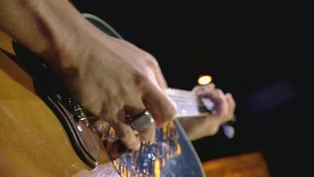
Clip: S16 Ep11 | 6m 46s | Music finds a new home in an unexpected place. (6m 46s)
Video has Closed Captions
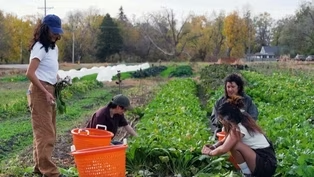
Clip: S16 Ep11 | 5m 54s | Cultivating change, one garden at a time (5m 54s)
Video has Closed Captions
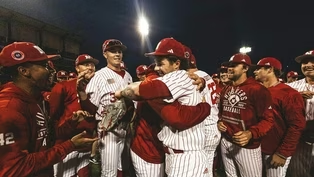
Clip: S16 Ep11 | 4m 37s | Geier to Brockett, a 70-year no-hitter journey. (4m 37s)
Providing Support for PBS.org
Learn Moreabout PBS online sponsorship












Support for PBS provided by:
Nebraska Stories is a local public television program presented by Nebraska Public Media