
Castle Howard
5/1/2026 | 43m 37sVideo has Closed Captions
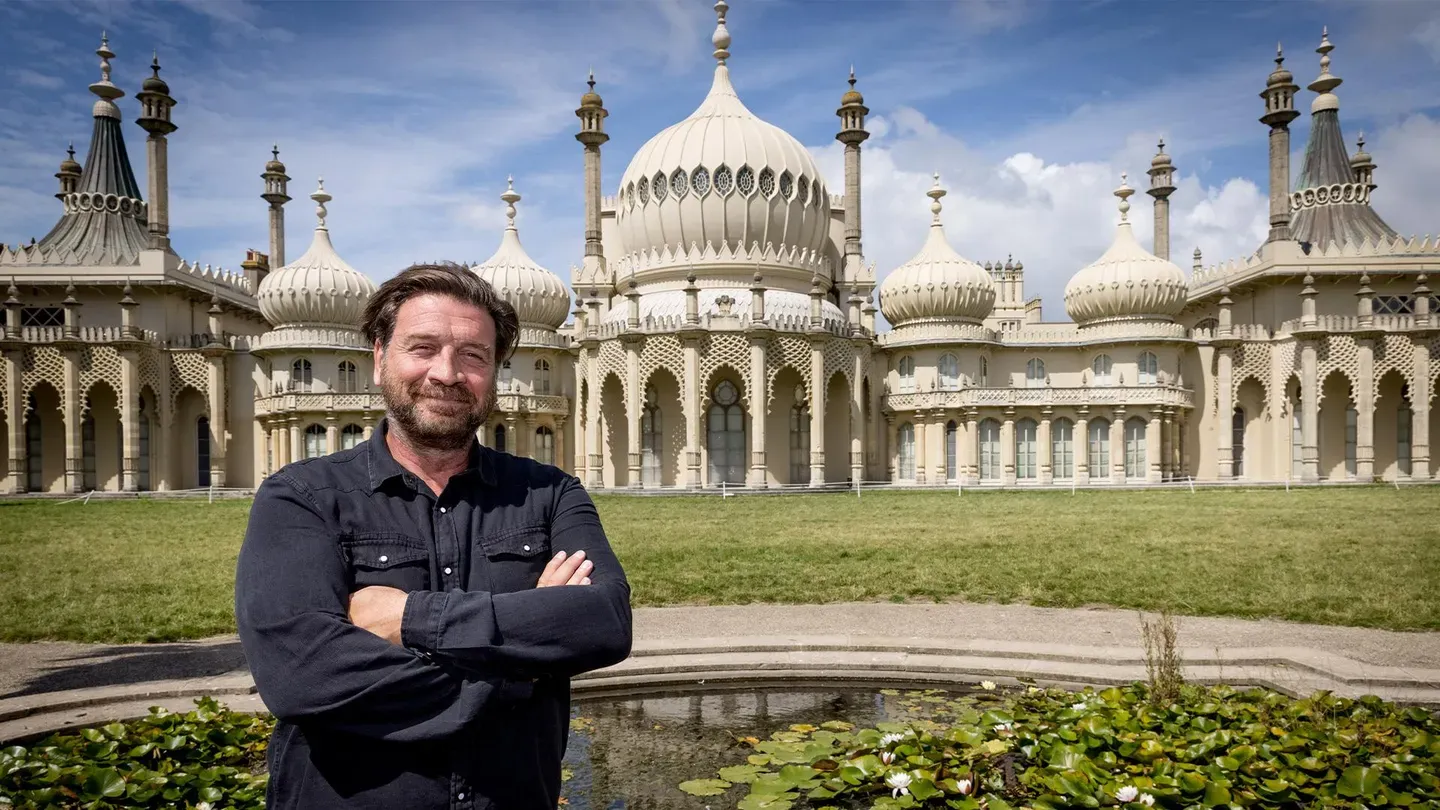
Castle Howard, filming location for Bridgerton and Brideshead Revisited.
Castle Howard is an enchanting stately home that has been featured in many iconic TV shows and movies. But the building has been badly damaged by rain and fire.
Problems playing video? | Closed Captioning Feedback
Problems playing video? | Closed Captioning Feedback
Nick Knowles: Heritage Rescue is presented by your local public television station.
Distributed nationally by American Public Television
Castle Howard
5/1/2026 | 43m 37sVideo has Closed Captions
Castle Howard is an enchanting stately home that has been featured in many iconic TV shows and movies. But the building has been badly damaged by rain and fire.
Problems playing video? | Closed Captioning Feedback
Where to Watch Nick Knowles: Heritage Rescue
Nick Knowles: Heritage Rescue is available to stream on pbs.org and the PBS app.
-Today, a castle that's more like a work of art... I've never seen anything like this.
It's absolutely stunning.
...that's being ravaged by rain, wind, and fire.
-In the long term, we've probably got about £50 million worth of work to be doing.
-This beautiful building was very nearly lost forever.
I'll be following the team rebuilding a 400-year-old lead roof... -Every hit's where it needs to be.
-Yours is dead straight, mine's like a snake's backside!
-Just like a big jigsaw.
-...bringing a rare arts and crafts mural back from the brink... -If the flake has fallen, we can't put it back.
But where it is lost, we will recreate it.
-...and restoring some glamour to the grand entrance.
-It's 18th century, so I don't want to break it.
-From castles to stately homes, Britain boasts some of the world's most glorious buildings... Well, I think it's magnificent.
Nuts, but magnificent.
...with hundreds of years of history.
-Why was it hidden under a floorboard?
How did it get there?
-But our heritage is under threat.
-Some of the 300-plus rooms are completely derelict.
-Come with me to see some extraordinary buildings being saved... Look at the scale of this.
It's vast.
...meeting the craftspeople dedicated to their rescue... -59½ minutes of preparation, 30 seconds of glory.
-...and witnessing the skills and passion needed to keep these incredible places alive... -I'm leaving something behind that's going to last longer than I am.
It's a good way to make a mark on the world.
-...for us all to visit and enjoy.
Nestled in the rolling hills of the North Yorkshire moors is one of Britain's most extraordinary homes.
With a driveway as grand as this, you know you're heading for something a bit special.
The gatehouse, the mock medieval walls, all designed to give you a sense of anticipation, to make you think, at the end of this, there must be a very grand house.
And you'd be absolutely right.
Castle Howard was built in 1699, designed to outdo every other home in England in showing off wealth and extravagance -- and it worked.
As one awed guest reported, even the mausoleum here tempts one to be buried alive.
So, when a film or television director wants a posh and glamorous location, this place is always near the top of the list.
Most recently, in the bodice-ripping drama, "Bridgerton," back in the '80s, reflecting the life and loves of the aristocracy in "Brideshead Revisited."
Drama is in the DNA of the building.
It was actually designed by one of Britain's best playwrights, and there's a sense of theatre everywhere.
You can see why this place is such a popular film location, but it has had its fair share of real life dramas, too.
In fact, Castle Howard has only survived thus far by the skin of its teeth.
It was one of the first estates in the country to be opened up to the public, and to stay open, it needs urgent repair.
Crumbling stone and leaking roofs are now threatening to damage some of the most extraordinary interiors in the country.
I'm...it's genuinely taking my breath away.
In 1689, local nobleman, Charles Howard, went on a grand tour to see the finest art and architecture Europe had to offer.
I've never seen anything like this.
It's absolutely stunning.
When he came home, he built his very own Versailles.
It's been the Howard family seat ever since, and it's currently home to Nick Howard.
I'm so sorry!
I barely noticed you there because I was just awestruck by this.
It's utterly breathtaking.
-It is.
It takes my breath away sometimes, when the light is absolutely perfect and it's streaming through.
It just -- I have to stop in my steps just when I'm walking across the house.
-I've seen a lot of stately homes, but nothing to compare with this.
This is almost cathedral-like, like the Vatican or even Saint Paul's.
To create his dream, Charles Howard enlisted Sir John Vanbrugh to design the castle, an extraordinary choice given Vanbrugh was a playwright who'd never built anything before.
Realizing he could do with some help, Vanbrugh called in Nicholas Hawksmoor, an architect who knew exactly what he was doing.
-Well, Hawksmoor worked with Wren on Saint Paul's, so he understood how to put a dome on a building.
-The result was that this incredible castle has become much more than its 20 bedrooms, 12 bathrooms, and 12 entertaining rooms.
-Throughout the house, you find these very, very theatrical flourishes around the place where you see things revealed as you move through arches and corridors.
-How does this work as a home?
-It's an extremely nice place to sit.
[ Both laugh ] -I'm sure it is!
-There's lots of eye candy around.
-So, it never loses its magic for you, despite growing up here?
-Never, never, never.
I'm always finding out things about it that I didn't realize.
-Do you have a sense of being the steward of it?
-Yes, absolutely.
I mean, there's a huge responsibility, obviously, when you're here, looking after it.
But it's not just for now.
It's for the future.
-Protecting it for the future, though, isn't something that comes cheap.
Current tranche of work going on, obviously around £1 million, but realistically... -Realistically, in the long term, we've probably got about £50 million worth of work to be doing, and that's just a rolling thing.
In a 300-year-old house, there's a constant process of decay going on.
You're chasing your tail the whole time.
-For now, though, Nick is concentrating the money on repairing some of the castle's stonework, including its amazing entrance... ...saving an important hand-painted ceiling, and crafting a new lead roof the size of two tennis courts, complete with a beautiful dome on top.
I've just come up the several flights of scaffold to get to the roof.
It's quite high... but does afford a fantastic view over the parkland.
This landscape was entirely created, by the way.
They built those lakes to look great out of the front of the building.
But the roof, that's something else.
Look at this.
These urns dotted all the way around.
They look about 2-foot from the ground.
They're...taller than me.
And then, it opens out into this huge sort of... courtyard of a roof with massive chimneys and the cupola.
There's real drama up here, too.
Beautiful.
But it's also been leaking for 20 years.
After a patchwork of repairs, Nick's taken the tough decision to spend £1 million and replace the entire east wing roof for the first time in 100 years.
The team are hard at it, peeling off the old cracked lead and shaping shiny new lead to go on.
Andy.
How you doing?
Andy Marshall's been a heritage lead worker for over 15 years.
When you left school, and a careers officer said to you, "What do you want to be?"
did you say, "I want to bend lead for a living"?
-Started off roofing, went through roofing and then went into lead, which were the best thing I ever did.
Getting out of bed and making shapes out of something that's flat.
You go home in the night happy.
-Now, I've been on a fair few building sites in my time, but there's not been much call for lead work on this scale until now.
-So, this is just your basic tools.
I call them big rubber dinghy, little rubber dinghy, and I've got my big tallywhacker, and I've got my little tallywhacker.
Bossing mallet.
And then, just your usual characters, your normal dresser, bending stick, bossing stick.
And you can pretty much make any shape out of that.
-So, learning your trade is learning when to use what and how.
-And moving the lead.
-This piece of lead will cap a corner, so it needs to have straight edges and a neat corner join.
I've had no training whatsoever, so I can't really have a go at any of this.
-Yeah, you can!
Yeah, we'll get you folding a bit.
It's not going to hurt it.
-Are you sure?
-Yes!
-Oh, that's heavier than I thought.
-I'd have to pay for it.
-[ Laughs ] That's like the expression we use when we're on the building trade.
They'll go, "Is that alright?"
You go, "Yeah, would look great for my house."
-Till it up a little bit.
Now you're getting there.
Just tilt.
-Yours is dead straight, mine's like a snake's backside!
-And again.
And again.
There you go.
-Oh, I tell you what.
You could take out some frustration.
It's not a job for a hangover, though, is it?
Shaving the lead is precise, delicate work, but done with heavy, blunt tools.
I'm in awe of Andy's skill.
So, what do you do now to fold it?
-We fold the sides up.
A little bit of heat.
Not too much because it'll melt.
Just get your bottom of your corner in.
-A few taps later, and he has a seamless rounded corner with a lip for the rain to run off.
-Happy days.
-It'll take several hundred panels like this to cover the roof.
Everything at Castle Howard is done on a huge scale.
From the classical domes on top to the museum like halls below, wherever you look, there are reminders of Charles Howard's grand tour of Europe.
But here's the problem -- this house wasn't built in Italy.
It was built on a hill in North Yorkshire.
And the weather can be brutal.
It's a constant battle to keep the damp out and stop it damaging the house's precious contents.
With murals flaking and carvings crumbling, this is a rescue operation on a vast scale, and it's a race against time to get the new roof on.
Set in 9,000 acres, the amount spent in building Castle Howard would equate to £20 million today.
But let me tell you, if you were to build this, you wouldn't see much change out of half a billion.
It's crowning glories have to be its domes, inspired by Saint Paul's Cathedral in London.
It's magnificent inside and out.
Wow, this is so much bigger than I expected it to be.
Cutting-edge architecture at the time, they were designed to let in dramatic shafts of light, but for years, they've been letting in the rain, too.
On the east wing, the domes have been stripped of their old, cracked lead while Andy and the team handcraft new coverings.
And as the timbers beneath have been revealed, so has the story of one of Castle Howard's characters -- not a lord or a lady, but a humble builder who, as curator Chris Ridgeway discovered, worked on one of the castle's previous repairs.
-When the lead came off here, timbers were revealed.
On one section, you saw carved these initials, "HMC 1900 October."
And we thought, "Well, who is HMC?
We need to go and find that out."
But not only this came to light, but as more of the timber came to light, this appeared, which had been left behind in 1900.
This probably was used by HMC or one of his colleagues in this very spot.
Whether he got his wages docked for leaving this behind, I don't know.
-Well, you know, some builders used to, occasionally, at the end of a job, they would leave a tool on site.
It was almost like a dedication to the work they'd done.
So, who was this man?
Did you find out who this man hanging on for grim death up here was?
-We did.
So, these are the worksheets for 1900.
So, here we have "castle repairs to Old Wing."
And then, the name of workman down on the left hand column, and your third name down is Coates, H. Martin.
-That really is him there, isn't it?
That's him right there.
-That's Harry Martin Coates.
He was a workman here for 40 years.
He lived in the village.
He raised a family of six children.
One of his sons came to work on the building, too.
So, that's that generational thing of workmen in the area.
-And how much was he being paid to risk his life up at the top here?
-He's been paid the princely sum of 25 shillings a week.
[ Chuckles ] -But he's recorded as a good workman.
And I don't know whether he thought in 100 years' time we'd be sitting here having a talk about it.
I...hope he did.
I mean, and if he's looking down from on high, I hope he's chuffed.
-Repairs to the dome are long overdue.
It's leaked for 10 years, and water has reached right down to the ground floor corridor and badly damaged a very rare hand-painted ceiling.
In the 19th century, William Morris and the arts and crafts movement were all the rage, and many stately homes were painted with designs inspired by animals and plants of the British countryside.
Hardly any are left, but here at Castle Howard, a few still survive... just about.
Conservator Dr.
Elizabeth Woolley is overseeing the rescue.
-I have been cleaning the ceiling, so using a sponge to clean off dirt that has accrued over probably decades.
So, we just use a conservation grade eraser sponge which crumbles as you rub it over the dirt.
And then, we brush away the crumbs and make sure that the effect is even.
-The worst damage has been caused by the rainwater getting between the stone and the oil paint, causing it to lift.
Oil paints are great as long as it stays dry.
Once it doesn't, it flakes terribly, doesn't it?
-It does.
It does, indeed.
As you can see over here, that's what Amaryl is fixing right now.
-It will take the three-strong team at least three weeks of painstakingly detailed work to save the ceiling.
-For the flake fixing, we deposit the adhesive with a syringe, and then it's tamped back into position with tissue and cotton.
The flake fixing is very delicate, and the area within which you're working is also quite flaky, so you can't stabilize yourself against the surface of the painting.
You've got to be working in a confined area.
-So, how much of this do you stick flakes back up, and how much do you just have to go, "Well, that's had it," and we have to replace them, repaint that?
-If the flake has fallen, we can't put it back.
If the flakes hanging off, we can stick the flake back.
That's the approach we're taking.
Because these paintings are 150 years old, very skillfully done, very important to the history of the house.
But where it is lost, we will recreate it with paint so that, from a distance, it looks whole again.
It's great to think that we are helping to safeguard these for the future.
-While the delicate work to save the ceiling continues inside, outside, much of the east wing roof has now been stripped.
But the old roofing lead has far from finished its usefulness.
Instead, each piece is sent to Peterborough to one of the last companies in Europe to cast lead in the traditional way.
Carl Edwards has been doing it for the last 32 years.
-10 tonnes of the lead that was brought back from Castle Howard in this one pile.
So, the whole project will take us somewhere in the range of 6 to 8 weeks just to make the lead, not including the fit inside.
-The old lead is melted down in a furnace at 370 degrees Celsius, before being poured onto a flat bed of sand to cool, a method that goes back to Roman times.
-This whole process is based around giving a nice, true, and level bed that has enough moisture in it to actually change the lead from a liquid to a solid.
-The tighter the sand bed, the smoother the lead.
The initial flattening is done by machine, but then any bumps in the surface are filled in by hand.
-They're not just putting sand on the table, we're physically throwing it into the holes.
So, we make sure we've got a nice, solid bed to work from.
This is the key part.
-The final smoothing is done the old-fashioned way.
-So, this is just really trying to give us that billiard board finish that we love.
So, this is just plain, flat copper that's been smoothed off by the sand.
The sand acts as a sandpaper all the time.
-At last, the sand is deemed dense and flat enough for the lead to be poured.
-Our process is 59½ minutes of preparation, and 30 seconds of glory.
I hope we get the glory today.
-The lead is first pumped from the furnace into a steel holding pan to cool to the point just before it's ready to set.
-This crusting that's forming around the edge, that basically is telling us that we're changing from a liquid to a solid.
-Once it cools to around 330 degrees, some impurities can be scooped off the top.
-Bismuth, tin, antimony, arsenic are even in there.
They're just part and parcel of the makeup of lead.
Trace elements that separate with the different temperatures.
-The big moment is getting close.
-You see the spider's web effect that's coming across the surface.
Another indicator that the lead is slowly starting to cool down.
-And finally, the lead is ready to be poured.
-Go on, you beauty.
Go on, go on, go on, go on, go on!
-The casting machine helps the lead run evenly all along the sand bed, creating a perfect, smooth surface.
And within seconds, the molten metal is a solid lead sheet.
Within minutes, it's cool enough to handle, and the lead is soft enough to be cut to length with a hammer and chisel.
-Now we've got the shapes that we want, all of this side material can all be rolled up and go straight back to the furnace.
-Finally, the finished sheets are rolled and stacked, ready for transport home to Castle Howard.
Not looking too bad for a 100-year-old lead.
It's said that if a craftsman wants his work to last forever, he works in stone.
But here on the North Yorkshire moors, even that gets a battering.
The pediment above this entrance is in danger of collapse, and the beautiful carvings on the north entrance portico are in a sorry state.
Valerio?
-Hi.
-If anyone is up to the job of saving it, it has to be Italian born stone conservator Valerio Caputi.
So, what have you worked on in Rome?
It doesn't get any better than that, does it, for an Italian?
[ Both chuckle ] So, how does this compare to the quality of... what you've worked on there?
Genuinely, you think the finest?
-Yeah.
-But as the north-facing portico has borne the worst of the wind and rain, some of the delicate carving has been badly damaged.
Oh, yes.
On the face on the right.
-Yeah, lovely faces.
-We've lost a bit.
So, you're gonna recarve that?
-Yeah.
-Is it fun for you to come from Italy and find a piece, an example, that sort of mimics Rome in the middle of the Yorkshire countryside?
Oh, that's nice.
Inside, the arts and crafts corridor that was damaged by leaks is shaping up.
It's taken a month to reattach all the loose flakes, and now it's time to start retouching the painting.
-We've now stabilized the paint, so the flaking should stop.
And where the paint is already lost, and you can see the white plaster underneath, those losses are being disguised so that, from a distance, the pattern is uninterrupted to your eye.
-It's like completing a jigsaw puzzle where half the pieces are missing.
Luckily, though, the pattern repeats itself.
Nicole starts by filling in the background colors before building up to the intricate design.
-This is the first stage of trying to integrate the losses that are here, which is just to knock back... the small losses with a little bit of pigment.
So, I'm putting on a mixture, actually, that we made specifically.
They are compatible with the original materials, but you would be able to remove them.
-The conservators want their retouching to be good, but not identical to the original.
-I suppose we're not pretending that this damage didn't happen.
We want it to be similar, but not the same so that, close to, you can distinguish our work from the original artist's work.
-For the artists, this is a once-in-a-lifetime job.
-This is the dream for me.
I mean, to actually be here and be an integral part of... preserving even a tiny portion of it is a really great honor.
-It's wonderful to see artisans like Liz bringing their skills so meticulously to care for even the smallest part of this extraordinary place.
But if, on one fateful night in 1940, things had turned out differently, she would have had nothing left to restore.
That evening, this beautiful building was very nearly lost forever.
♪♪ ♪♪ Castle Howard in Yorkshire is one of our most opulent buildings.
As well as being a piece of art in itself, it has 145 rooms filled with the stuff.
But we're lucky any of it is still here at all.
One night in 1940, a huge fire devoured most of the southeast wing and the grand central dome.
Though many of the treasures were saved by evacuee schoolgirls staying here at the time, the building was thought to be a write off.
George Howard, meanwhile, was away fighting, and when his two elder brothers were both killed in action, he found himself the unexpected owner of a burnt-out shell.
Piece by piece, George began to put Castle Howard back together.
Your father is an extraordinary man in that, you know, he absolutely dug in.
-Well, you're spot on.
He was in a terrible state when he got back.
When I was a child, it was all open to the elements.
The dome had to be completely recast.
It was a tremendous job.
He then put a roof back on the burnt-out part.
He put windows back in.
And I watched it, as I've grown through the years, just coming back to life.
-To fund the work, George had to think outside the box.
Back then, country houses were to keep the hoi polloi out, but George opened up the house to visitors in return for a small fee.
He was one of the very first to do it.
-He was in the vanguard of it, the nation's stately home business, which changed the game completely.
It was a very, very popular thing.
People would flood to them.
-Quite visionary for its day, then.
-Yes, definitely.
And I think people cottoned on quite quickly to the fact that this might be a way of keeping the roof on, literally.
-Using this new source of income from the entry fees, Nick's father lifted Castle Howard like a phoenix from the ashes.
60 years later, the work continues.
On the east wing roof, the joiners have been finishing up repairs to the timber structure of the dome for the lead to sit on.
-A really good job, done a really good job of it.
Quite unique, aren't it?
Yeah, we're really proud of it.
-Just room for the original plank with the carved initials of joiner Harry Coates.
-Very important.
Preserving history.
-And of course, this restoration is history in the making.
-We also put another nameplate in which will have the three joiners that worked on this job putting this roof on.
But I won't be on it, so I put mine on in pencil.
-The finish line might be in sight for the joiners, but on the pediment above the east wing entrance, work is just beginning.
The stonemason, Gary Bishop.
-Some of the decay is in the back of the stone rather than what's showing actually in the front.
So, until we start taking stone back, we're not sure how deep the damage has gone.
There's pockets of decay, like, you can see... you know, some of it's quite soft.
It's, you know, especially around the fixings, because that spreads all the time.
-All this will need to be replaced.
But getting your hands on stone like this isn't as simple as popping down to your local builders merchant.
No, it has to be dug to order.
Here at Aislaby Quarry, a 10-ton chunk of sandstone has been earmarked for Castle Howard.
Now, it's down to Nicholas Craven to slice it up.
-When the block comes out the quarry, it'll go on this saw as a rough block, and we'll cut two sides on it, which will effectively be your top and bottom of a slab.
When we've got two flat sides, we'll then lay it over and put it on the secondary saws, and then we can cut the other four sides.
-The blades are 4 meters long and made of diamond-tipped steel.
-A piece of stone like that, about 1½ metre high, would probably take around an hour to cut.
-The next stage is for Nicholas to square the piece off using a 2-meter diameter circular saw.
-I'm just making sure that the blade's not going through too fast.
There's not too much friction being caused.
Just everything's running smoothly.
Yeah, it's all looking good at the minute.
-Every finished piece will be unique.
-All looking good.
We'll have a quick measure up and check that nothing's gone wrong.
Yeah, definitely looking good.
On to that side if you want.
-On site, the stone is handed over to masons Liam Kelly and James Holmes for hand finishing, using methods unchanged since the castle was built.
-90% of the tools and the techniques are still the same.
It's how it was supposed to be done, and it's how we still do it now.
-So, one more time, that's a... -Combi square.
-Okay.
That one?
-A bull-nose chisel.
-This one?
-That's just a 2-inch tooling chisel.
-Okay.
-That's what we call a pencil.
-You don't want to throw pencils away, do you, when you've still got a good amount left on it like that.
-Cost a fortune.
-[ Laughs ] Now, you've got horizontal lines drawn on your face there, but yours are on the diagonal.
So, what's going on with that?
-That's correct.
Every elevation on this building, as you can see, has got a different tooling mark.
There's your hit-and-miss tooling, there's your diagonals, your horizontals, and it's just to match best around it.
-What did you call this?
Hit-and-miss?
-That's a hit-and-miss, yes.
That is just go with the flow.
-Just, like, make it up as you go along?
-Make it up as you go along.
-Okay.
So, how hard do you have to hit it?
-Not hard on this.
It's quite a soft stone.
-Oh, yeah.
-You're not looking for any straight lines.
You're not looking to be uniform.
Put your chisel down, hit it, and that's hit-and-miss.
-The name hit-and-miss makes it sound easy.
It's anything but.
-Flick the chisel, as well, with your wrist as you're doing it.
-So, you gotta roll your hand away as you go.
-That's it, yeah, just flick it away.
-It's quite satisfying, isn't it?
-It is, yeah.
-Yours looks a lot better than mine does.
-It's practice.
-Practice makes perfect.
-Well, that's the thing, really.
I suppose if I was able to do it first time out, then it wouldn't be a skill, would it, that you've learnt over the years.
-Exactly, yeah, it takes many years.
-Meanwhile, Valerio is at the front of the building, starting the delicate job of rescuing the North Portico.
-There's one section that was too far gone to save.
So, Adam Beaumont's creating a replacement using the other end of the portico as a guide.
-I'm producing a mirror image, the opposite to what I'm looking at now.
So, I'm... I'm trying to flip it around in my head at the same time.
I'm roughing out the basic shape of the carving, which is hair flowing into a ribbon with a knot.
And then, once I've got the shape, I can work in the flowing bits.
This is a claw chisel.
It's good for roughing out and shaping and getting curves.
All this is quite a soft stone.
It's fast to work, but easy to break.
It's knowing when to slow down or be gentle.
-Slowly, the shape of the ribbon starts to emerge, but making the design flow between old and new stone is the trickiest bit.
-So, now, I'm just trying it in, testing the fit.
These bits need flattening off to pair in with these.
But you know, I'm glad that there's too much on there rather than too little.
I'll probably fix it in, make sure it's secure, and then do the finishing touches in situ.
-The stone will be fixed in place with a steel dowel inside for extra strength.
It's a nerve wracking job.
-It's 18th century, so I don't want to break it.
Definitely don't want to break it.
So, the pin will go into the indent, and then it will go into the existing stonework.
-The dowel will be held in place by a tough epoxy resin.
Adam has to work fast.
-So, once I add the hardener, probably about 5 minutes before it goes hard.
It doesn't matter if it creeps out because I can always cut it off and work it back.
Put some in the hole, force them in the hole with the dowel.
This is the moment of truth.
I can just about see the... the hole that it's going into.
It's going nowhere.
It's lined up.
♪♪ There we go.
-5 minutes later, the glue has gone off and Adam starts the detailed work, armed with a finer chisel and a lighter mallet.
-Because there's less stone now, there's more pressure to get it right.
-Just finishing this one stone will take another full day.
But as my mum always says, if a job is worth doing... -Once it's finished, hopefully, you won't be able to tell that it's a new piece.
♪♪ -It took 100 years to build this place, and just one night to almost completely destroy it.
Over the last 60 years, teams of skilled artisans and craftsmen have worked tirelessly to try and mend the damage done in the fire.
This latest tranche of work is just coming to an end, and I, for one, can't wait to see the results.
In North Yorkshire, Castle Howard has been a hive of activity for months.
From releading the enormous roof to rescuing rare 19th-century murals, craftsmen and women have been pulling out all the stops to get the castle ready for its grand reopening.
Up on the roof, Andy's wrestling the last pieces of lead onto the dome.
And as always, attention to detail makes all the difference.
-So, I can trim that and get a nice, crisp line across it.
Not that anybody's going to be able to see it from the floor, but I know about it.
-Andy's welding small lead clips onto each panel, which now fold up to secure the bottom of the panel above.
-Now I've got the clip there, wind gets under it, 70, 80 mile an hour wind, it will lift it and just... peel it back like a tin of beans.
It's nice to be a part of its history, its legacy.
We are part of the fabric, if you want to put it like that now.
-Meanwhile, on the once-crumbling east wing, the final stone is about to go in.
It's a tricky one, so stonemason Gary has rigged up a clever device.
-We've drilled holes in either side of these pediment base stones.
Holes in there.
We've got stainless steel dowels.
Dowels go into the hole.
Once the stone is in place, we pull the string, and the dowels go into the holes.
They should be here long after I'm gone.
[ Chuckles ] -The holes are filled with a quick-setting epoxy resin.
-This glue will go solid around the dowel, which stops the stone from moving.
Well, you're getting close to the wall.
How close are we?
-About 20 mil.
-Keep going then, John, if you want.
-This last stone will see Castle Howard's roof complete.
-Just...break the string off!
-And with the scaffold gone, six months' work can finally be displayed.
-Quite looking forward to the grand reveal.
♪♪ -Apparently, when Castle Howard was first built, posh ladies would drive up here just to admire it.
They'd come along in their fine carriages and be so taken with the beauty of the place, they would swoon and have to be revived with smelling salts.
These days, a cup of black coffee does it for me.
But you have to say... it still takes your breath away.
This magnificent castle is safe for another 100 years.
A year ago, this building had real problems.
Leaking roofs, peeling paint, and crumbling stonework.
Not anymore... ...thanks to an army of artisans and the passion of Nick Howard.
Morning, sir!
-Morning.
And here we have it.
-It's magnificent, isn't it?
-Doesn't it look good?
-And you must be pleased to have all of that scaffolding gone.
-Oh, heavens, it's like we've been in a cage for the last God-knows-how-long.
But no, we're out of the cage now, and we're free.
-The portico that, for months, has been wrapped in scaffold in a sorry state... ...has emerged, renewed with sharp lines and intricate detail.
You must be very proud of this.
-It's extraordinary.
It sort of gives this sort of sense of joie de vivre to the house, I think.
-One of the ladies had lost her hair!
-Yeah, she's been to the hairdresser and she's looking fantastic again.
-How wonderful that you actually -- I can't tell which one was the original and which one's been replaced.
-You can't see the join.
-And that pediment, that had pretty much dissolved, looks fantastic!
-Yes, it's great to see it back.
At the beginning of the project, I don't think any of us realized quite how much stonework would have to be done, but now we have -- We have a completely new roof.
We have stonework redone.
It's looking pretty good.
-Inside, the rare hand-painted ceiling, which was in danger of being lost forever, is now good for another century, at least.
This is the most beautiful ceiling, and they've done such an amazing job on the restoration, haven't they?
Because none of it looks super new.
-No, it sits within the kind of faded elegance of the original.
-I think, for me, one of the privileges was seeing the people who do the restoration, and the care, and time, and patience that they show in doing it.
It's extraordinary, isn't it?
-It is.
The people who are doing the restoration have probably got exactly the same intent as the people who made it originally.
They love what they're doing.
They're craftsmen.
And it's just, it's beautiful to see.
-That's the thing.
The love of it.
They have as much joy in this building, almost, as you do as the owner.
-Well, I think that's one of the things that keeps the whole place going, that everybody who's involved in it, in one way or another, falls in love with it.
-One of the things I love most about the work here is the attention that has gone into what most people will never see.
The roof and dome that were leaking and threatening to destroy the treasures inside have been completely transformed.
Leadman Andy didn't just make them watertight -- he made them works of art.
Wow.
It's beautiful, isn't it?
You've got to remember, all of this was just flat lead, beaten into shape... just by his will, and his...tallythwackers, and the various other tools that he has.
Making these wonderful shapes, the rolls, there's a vent here, a curved vent, all taken from flat lead and made into these wonderful shapes.
Very clever.
It's a joy for me to see it up close, but for Steve and Andy, it's good to step back once in a while and see it how most of us will -- from the ground.
You proud of it?
-It looks well.
It's one of the first times I've seen it with the full scaffold down because you're always trying to have a look through, trying to get through all the scaffolding poles and take a decent picture of it.
But yeah, it's looking well.
-But it's all solid now?
-Yes, yes, it's all solid.
It's rewarding, very rewarding, seeing the finished product like that.
You know, something that's going to stand for hundreds of years, you know, and you've put your effort in and done it and kept it alive for other people to see.
-So, when you're old and doddery, will you bring the kids up here and go, "I did that roof"?
-Well, I said to the Mrs., I said, "We'll go to Castle Howard and we'll, um... I'll show you a few of my roofs."
She says, "You already have all the pictures and things," but I think she sees enough, she gets tormented with my stories and... -Yeah, but I reckon your grandchildren will come up here and be like, "Do you know Granddad did that roof?"
I think it's beautiful, guys.
Well done, well done.
It's thanks to the skills of people like Andy and Steve that Castle Howard will be around for us all to enjoy for centuries more.
What they've achieved here over the last year or so is incredible, but there's still a way to go.
-There's a continuum of repair going on when you've got a building this old, there's slow progress continuing, and hopefully, one day, it will all be back.
But it will be well beyond my day, I think.
-When Nick Howard's father, George, decided to open up his ancestral home to the public six decades ago, it was a game changer.
It meant this place went from a bastion of power and wealth for the few to somewhere that was welcoming to everyone.
And as a result, a quarter of a million people a year now visit the baroque magnificence of Castle Howard.
It also means the people working so meticulously inside to maintain the building are looking after not only an architectural masterpiece, but a national treasure.
♪♪ ♪♪ ♪♪

 New Season
- Home and How To

Hit the road in a classic car for a tour through Great Britain with two antiques experts.
 New Episode
 New Episode
 New Episode





 New Episode


Support for PBS provided by:
Nick Knowles: Heritage Rescue is presented by your local public television station.
Distributed nationally by American Public Television