Virginia Home Grown
Celebration of Trees
Season 21 Episode 8 | 56m 46sVideo has Closed Captions
Discover the many benefits trees provide.
Celebrate trees and the many benefits they provide! Learn about the importance of urban trees for improving health with Southside ReLeaf, then visit The American Chestnut Foundation to see how they are working to grow blight-resistant trees. Robyn Puffenbarger and Jen Naylor share gardening tips you can use. Engage with us or watch full episodes at Facebook.com/VirginiaHomeGrown. VHG 2108 10/2021
Problems playing video? | Closed Captioning Feedback
Problems playing video? | Closed Captioning Feedback
Virginia Home Grown is a local public television program presented by VPM
Virginia Home Grown
Celebration of Trees
Season 21 Episode 8 | 56m 46sVideo has Closed Captions
Celebrate trees and the many benefits they provide! Learn about the importance of urban trees for improving health with Southside ReLeaf, then visit The American Chestnut Foundation to see how they are working to grow blight-resistant trees. Robyn Puffenbarger and Jen Naylor share gardening tips you can use. Engage with us or watch full episodes at Facebook.com/VirginiaHomeGrown. VHG 2108 10/2021
Problems playing video? | Closed Captioning Feedback
How to Watch Virginia Home Grown
Virginia Home Grown is available to stream on pbs.org and the free PBS App, available on iPhone, Apple TV, Android TV, Android smartphones, Amazon Fire TV, Amazon Fire Tablet, Roku, Samsung Smart TV, and Vizio.
Providing Support for PBS.org
Learn Moreabout PBS online sponsorship>>In 1904, a blight fungus was discovered on some of the trees in New York.
And in about 50 years, all these trees throughout the forest were wiped out.
American chestnuts would re-sprout and grow at the bases of these long dead trees, but that's all we have today, is throughout the mountains you have sprouts growing at the bases of dead trees.
>>It's important for us to understand where these urban heat islands are and to make sure that we're increasing access to green spaces and to do the simplest thing, such as like planting trees so we increase canopy cover.
>>I'm Peggy Singlemann and in the first half of our show, we'll be in Southside Richmond where a community organization is improving the health and well-being of their neighbors by planting trees.
>>And I am Keith Nevison.
In the second half of the show, we'll be learning about the important work of the American Chestnut Foundation.
at their research orchard in Nelson County, Virginia.
As always, we welcome your questions via email and Facebook.
Stay tuned for another episode of Virginia Home Grown.
>>Production funding for "Virginia Home Grown" is made possible by.
(crickets chirping) (cheerful music) >>I'm Peggy Singlemann, welcome to "Virginia Home Grown."
October's been lovely, and our gardens are thriving in the cooler temperatures of autumn.
And the fall planting season is in full swing.
Today we're talking about trees and exploring the many benefits they provide us and the environment.
Before we start the show, remember to send in your gardening questions via Facebook or email, to ask our guests about planting and caring for trees, or other gardening topics where you can use some help.
In the second half of the show, my co-host, Keith Nevison will visit an experimental orchard where the American Chestnut Foundation is growing blight-resistant trees.
But first let's take a look at my visit to Swansboro Playground in Southside Richmond, where I met up with Sheri Shannon and Amy Wentz of Southside ReLeaf to learn about their work to improve wellness and quality of life in the community.
>>Sheri and I, a few years ago, participated in The Richmond 300 master planning process.
And a part of that process, we had to go through what was called the Insights Report.
But one of the sheets talked about the life expectancy.
And so we noticed that there was a up to 20-year life expectancy difference between neighborhoods in Southside, and neighborhoods north of the river.
And so we began to explore why this is happening.
Like why is this and what could we do as just community members to try to help mitigate this.
And so we started realizing that a lot of it came down to heat, and that there are neighborhoods in Southside that are a lot hotter than other neighborhoods.
And so we figured out that in order to be able to help with this, we needed to create some sort of grassroots organization, that later became Southside Releaf that work to enhance our green spaces and plant trees.
>>And I love for people to know that it's R-E-L-E-A-F, relief.
And I love the play on words.
>>Absolutely, Sheri came up with that.
>>I did.
>>Excellent.
But tell me about the Heat Island Effect.
>>Well, the Urban Heat Island Effect is not unique to the City of Richmond, it actually takes place all over the country, all over the world.
And essentially, what it is is that we have urban areas because of impervious surfaces.
What that means is asphalt, roads, sidewalks, all of these things that aren't green spaces that actually absorbs all of this heat, and it radiates it back up into the atmosphere.
And so what we're talking about is in these urban centers, that don't have a lot of tree canopy cover, it's just much hotter.
And it can be anywhere between 15 and 20 degrees hotter in certain neighborhoods.
And what that looks like for us in Southside, Richmond, and in other areas across Virginia, is that people experience chronic illnesses, they have asthma flare ups, they end up going to the emergency room just because of the heat.
And something that a lot of people may not realize is that extreme heat is the number one cause of death for when it comes to natural disasters.
So we think of all the devastation from hurricanes and tornadoes, and yes, those are really traumatic events.
But we look at urban heat islands in this extreme heat, that too is also a disaster that's impacting people every single day.
>>So how did we get here?
>>Yeah Peggy, that's a really good question.
I think that's one of the biggest reasons why we felt that it was equitable to have an organization like Southside Releaf come about.
Unfortunately, in cities like ours, there were racist policies that allowed neighborhoods, certain neighborhoods, I don't know if you've heard of the term redlining before where the government actually, insurance companies and banks, redlined certain neighborhoods, and those neighborhoods were deemed unvaluable and they unfortunately, were neglected.
And so there wasn't the great planning that came with some of the other neighborhoods with trees, and being intentional about ensuring that certain spaces were shaded.
And then came urban renewal.
And that's like when folks came in and said "Oh, we're gonna fix these neighborhoods," and they started forming industrial districts and certain things to bring in jobs.
But that also brought in a lot of warehouse spaces, and a lot of parking lots, and a lot of things like that.
So just making sure that now we are looking to right those wrongs, working with cities, working with governments to make sure that they are acknowledging those wrongs.
And saying yeah, we messed up here and we're going to do right by these folks.
>>And trees, and paying attention to the green spaces that are there with hopefully creating more green spaces, is really the best answer.
>>Absolutely.
I think now, the city has committed to bringing five new parks on here in Southside, five new parks that actually get to be created by the community members.
And so one of the things that we're going to be working on is walking groups through and saying, what would you like to see here?
How do you want to feel in this space?
What would you like to use this space for?
And so that's a really exciting way that the city can say that you know what?
We do realize that we've had problems in the past, and we're going to work to fix those.
>>We want to point out that like we're volunteers doing this.
Like this is not an uphill battle in a sense, where it's just like, you can't conquer this.
As long as you have folks who are committed to this cause, who want to get involved.
Who want to just say like hey, I believe that my community also should have equitable access to green spaces, and I'm going to commit time and energy to making this happen.
I'm going to knock on the doors of those in the halls of power to say, "I am here, you cannot ignore us."
These are the things that are achievable, and we want folks to know that they have the power of voice to make that happen.
>>It's so vital for the health of our neighbors.
It's just an important step to take.
>>Absolutely.
And if you think about, like specifically in South Richmond, there are a lot of folks that rely on public transportation, They might not have access to a family car.
And so, you're talking about some of the major corridors that have no shade.
And so if you're thinking about getting off from a long day of work, and then you have to travel to the bus stop, then you have to sit at that bus stop, there's no shade to keep you cool.
you can go to neighborhoods north of the river, and there are plenty of trees that shade the actual public sidewalks to get to bus stops, >>And much cooler.
>>Much cooler.
But on Southside, unfortunately, we have a problem, an issue with that.
And so that's one of the things that we're trying to mitigate as well.
>>And I think people can identify it by parking their car in a parking lot on a hot summer day, and take that analogy of the parking lot walk to somebody's living space.
And the importance that trees play.
And I just, I applaud you for what you're doing.
So how do you choose the species of trees?
And how do you go about fulfilling this mission of Southside Releaf?
>>So the reality is I'm not an arborist, right?
But there are plenty of folks who are arborists and urban foresters, and we have amazing partners within the community.
And so that's working with the Department of Forestry and their community foresters.
That's working with some of our tree, our tree groups within the city.
And we're always preaching right trees, right place, but also we need a diversity of species.
And so even as you see here, in this playground, we have almost about 10 different types of tree species there.
And for us, knowing that we are a community group, we know that our job is to be advocates and to be really hands on when we are doing these projects.
And it's okay to say listen, I'm going to rely on the the city arborist.
I'm going to rely on the community forestry to help us make sure that we have the right tree species and diversities throughout these projects.
>>So how can people get involved?
>>That is my favorite question, Peggy.
So we love for community members to get involved.
One of the ways that you can do that is by visiting our website.
We have a list of all of the ways people can volunteer, get involved with tree plantings, get involved with any community advocacy, workshops, classes.
We also have the Greeting Working Group, which is another initiative we have here where folks can really get into a deep dive into different topics like climate change, learning about trees, urban farming, other topics like that.
And then also getting involved with their friend groups at their parks.
So finding out the local park that's near them, and then just pitching in and joining a friends group.
>>This is a wonderful program, and it's one that I can see will benefit a whole community and can be used as a model throughout the state and the country.
And I applaud you all for initiating this grassroots organization that will truly make a difference as these trees grow, and cool, and save lives.
So thank you.
>>Thank you for having us.
The impact of Southside ReLeaf is measurable.
It is one that will reap benefits for decades to come.
Congratulations to all community and city partners involved in this initiative.
And now I'm joined by Scott Turner from Truetimber Arborists to talk about planting trees.
But before we get started, remember to send in your gardening questions via Facebook or email.
Scott, you've got some victims here, this poor cheery and this poor dogwood.
How have they been surviving with those type of roots?
>>Yes, I've brought you a couple sad little guys here.
I know it's planting season, and everybody's used to seeing a plant in a pot or sometimes this big, old sack, ball and burlap.
>>Yes.
>>But I thought it might be nice for your viewers to see what's inside those pots, in the ball and burlap.
And to tell a little story of the journey these poor little trees have gone on.
This is a Kwanzan cherry.
It was grown in a field somewhere far away.
>>Happy in the sunshine.
>>Happy in the sunshine, and in the good earth and had a wonderful person called a grower.
>>Yes.
>>That was very interested in its happiness.
Because happiness for the tree meant money down the road for the grower.
>>Exactly.
>>And we assume he or she's a tree lover too.
>>Yes.
And that they love trees.
That's why they're trying to grow them and share them with us.
>>Exactly.
>>But this tree got a lot of TLC where it was grown.
Then this thing happened (laughs).
>>(laughs) Yes.
>>Big, old knife came and cut it out of the earth, chopping off major roots.
A wire basket was wrapped around it.
It was wrapped in burlap and then moved to what we know as our little local nurseries, where they're kind of a middle person where these can be stored and sold.
None of this is wrong.
Number one, thanks to Joe over at Glen Allen for giving me these poor little guys.
And we will be trying to plant them tomorrow.
>>Yes, they're going in the ground tomorrow.
>>That is one of the only conceivable ways to bring this big tree- >>Huge tree.
>>From far away and get it in our backyard.
But I just want us all to be aware of the stress the tree went under for it to happen.
We used an air spade to blow all the dirt out of this root ball, so you could see these areas where big roots had to be cut- >>Yes.
>>For this to be transported this way.
You can still see the wire basket there.
>>Unfortunately (laughs).
>>You'll notice, Peggy, the black tape here.
>>I saw that.
What's that for?
>>Another important point for people planting ball and burlap or watching your helpers plant ball and burlap, one of the reasons we educate, I don't assume all you guys are gonna be doing this planting, but you might be overseeing the planting of some people.
>>Yes.
>>This is where the earth was pushed up to around the trunk of this tree.
>>Oh my!
Oh my.
>>So, one of the first steps in ball and burlap is to pull that dirt layer down and get close to what we call the root flare of the tree.
That's the proper position to be equal to the grade.
>>Yes.
>>of the ground.
>>I'd like to equate that when we were in kindergarten and we drew our picture of the tree and we had it flare out.
>>Yes.
Yes.
>>There's our root flare.
>>You never grew a pole going in the ground, right?
>>No, it's not a lollipop.
>>You drew a, yes (laughs).
And so a lot of people make that mistake because you get this, and the dirt is from there to there.
And you think, "Well, that must be the top.
That's must be where."
Roots have a lot easier time growing downward.
So, if you we're gonna make a error on one side or the other erroring high is a better mistake to make.
You can always add dirt around the tree to give those roots >>Yes.
a nice taper to grow down.
>>Yes, time to grow down.
They have a little more struggle fighting upwards, and they like to drink.
And usually the lot of the moisture's draining downward.
They're good at chasing that, they're not good at coming up.
And they wouldn't any way, the soil's dryer and crustier up there to begin with.
>>And they're seeking moisture.
>>Yeah.
>>And another point to consider is that roots need oxygen just as much as the rest of us living organisms on the earth.
And so when we plant it too deep, there's less oxygen that's in there- >>There's less oxygen down there.
>>Yes.
>>And they certainly are thirsty.
One of the biggest thing for all, everybody enjoying the fall planting season and getting new just like us, they're probably about 50 to 60% water.
>>Yes.
>>You can't see the water in me, it's hard to see the water in this thing.
It's about 50% water.
Water is almost more important than any other thing you might try to give the tree.
>>Exactly.
>>You can add some little nutrient to the hole, you can do some things.
Keeping the soil around it moist is it's number-one survival.
I think we can survive maybe three and a half days without water.
I bet these guys know how to go a little longer, but they would still be upset.
>>They would be, they would be.
>>At least for a year, as we talked about earlier.
>>Right.
>>A year to baby it.
Yup.
>>So it can get all these little roots going, get strong, don't baby it too long, just like, with our children, right?
>>Yeah.
Right?
No helicopter.
You don't want to helicopter forever on the tree.
>>Not at all.
>>If you're using the stabilizers, that's good for a year so, maybe, if you're worried that it'll get knocked around or bump.
But if you helicopter parent your tree, then it won't learn to grow its own strong roots and to dig for water, and to do the things that a tree needs to do to survive.
Or you're setting up a lifelong dependency.
>>You are, but we've gotta move on to you've showed us the ball and burlap, Scott.
>>Yeah.
>>But this is the potted tree.
>>So, this funny looking little root (indistinct).
This was potted, this is a Cherokee Dogwood grown in a totally different environment, right?
>>Completely.
Potted in this really light and very nutrient rich potting mix that allowed this to- >>Yes, Look at all this (laughing).
>>It didn't have to plow through hard dirt to.
See this guy was still fighting through the earth like a regular tree.
This guy just could just send out little fine roots everywhere.
Great for quick growth.
Right?
>>Oh yeah.
Look at that.
>>It can grow quickly that way, but keep in mind as you go to take this out of a pot and put it in the ground, you're gonna wanna in both cases, creating a new growing environment around either the pot or the root ball diameter is a great thing to do when you can.
Especially if you're in hard soils, clay, creating a larger pot for it to grow in for the first year or two to kind of get its mojo going as a tree.
And it'll run into those hardships later, the harder soil and the drier soil.
But you wanted to sort of have a full head of steam when it plows into that resistance.
>>Yes, I like to think of people digging cereal bowl holes, not coffee cup holes.
>>Yeah, that's right.
'Cause cereal bowls are low and wide coffee cups are narrow and deep.
And either one of 'em, this will give you that soil you're seeking.
>>And in bad soil, it's almost the more the merrier, as far as how big a hole you can give your new tree.
>>Wide not deep (laughs).
>>It's gonna have a lot more to do with your gumption than.
(Peggy laughs) It's also hard to dig in hard soil.
>>Yes.
So, but yeah, it's really neat to see this.
We will be trying to get these guys back in the ground tomorrow, but I wanted the viewers to see it, and keep in mind if you're not the planter yourself, it's okay to be an overseer and make sure as you watch people planting your trees that you've purchased, it's a big expense, you can be in a little more knowledgeable about how it should happen means you can have it done well.
>>Yes.
And I think there's points to consider.
And that is to make sure that the wire basket is partially cut away 'cause if it's taken fully away, then that root ball becomes unstable.
And also to make sure the burlap is cut partially away.
And also, as you were saying to the depth, 'cause you were saying the depth is too deep for the root flare, but don't we have a graft right here on this tree?
>>Oh yeah.
>>On the little cherry, you get a lot of these little varieties that you find at your nurseries.
You can see the graft line where the two different tree species were grown together.
So in this case pretty clearly visible right there.
>>Yes it is.
>>The cherries, isn't it.
Usually you will see a good one on a cherry too.
This one's not as noticeable, but yeah.
So you can look for that.
If you're planting to that depth, you definitely.
>>You've blown it.
>>Blown it.
(both laughing) >>Find that root flare and plant to the root flare only.
It means you only have to dig a little less deeper usually.
>>I'm glad you mentioned that.
Yes, the wire basket, there's a little controversy within the planting community about it.
It seems like the consensus is at least take half the wire basket off.
The bottom of it could be good for stability.
Peggy was actually reminding me earlier at her fine park.
sometimes if you have to make an adjustment later it's easy to grab a hold of that and shift.
At least get it down lower so these big lateral roots, you don't see it.
A couple of these are plowing right into the wire.
>>Yes they are.
>>And so definitely do that.
Gosh, Peggy, I've made a mess.
>>That's okay Scott, you do when you plant a tree anyway.
>>Tree steward Kitty Hart, this is your blanket, that I've never given back to you.
And I promise I'll clean it and give it back to you.
>>Well Scott, this is some great information.
And I think as people purchase their trees and they start looking at them and getting ready to plant them, they're gonna know some steps to look out for.
So to make sure that the work they put into the effort of keeping another living organism alive is gonna be successful, so thank you.
>>Yep.
>>Thank you.
And now we're going to get ready to answer your questions, But first we have a tip from Dr. Robyn A. Puffenbarger at Bridgewater College, on why the next time you plant a tree, you may wanna consider starting with a seed.
(light rhythmic music) >>Today, we're at Bridgewater College to demonstrate how to plant acorns and seedlings, so we can grow oak trees.
There are many species of oak native to the state of Virginia.
One of our largest and most long lived is the white oak.
But there are many other species that would be smaller.
So make sure you check out which species you want to get as you start to think about finding acorns and maybe some seedlings.
So let's do some digging.
I'm digging my hole a bit larger than what I need for my seedlings, so I've got plenty of loose soil.
One of the things about acorns is, when you gather them, you can't look at them and tell if they are good or not.
So you want to do a quick float test.
So in this case, the floating acorn is no good.
It's been damaged by insects or fungus, and it will not turn into a tree.
So we're gonna leave that one and we're gonna plant the one that sank.
We just want to be a couple of inches deep, and you just want to put the soil back around it.
The one thing you might have to do is protect from squirrels and chipmunks.
You either need to put these in a place where you don't have wildlife who will eat your acorns, or you can put a screen device over them to protect them.
Now let's plant our seedling.
Oaks, once they've germinated from the acorn, are gonna have a nice root system and then this leaf material above ground.
This will probably grow as fast or better than a tree from a nursery because it has the right ratio of root to leaf.
Plants in the nursery are often, their roots are highly trimmed to keep them in their pots or in their burlap.
So let's make sure we get this in at the right level.
We want to make sure the root and its crown is in the ground while the leaves remain above ground.
And I just want to make sure I rake my dirt back gently, firming it up.
So enjoy, try this at home.
Make sure you float your acorns so you know which ones are good so you don't have a whole lot of duds in the ground and enjoy growing your oaks because it's a multi-generational plant.
You'll enjoy it, your children will enjoy it, and so will your grandchildren.
Thank you Robyn.
Trees are a longterm investment for future generations to enjoy and getting them off to a good start is a strategy that does pay off.
On Facebook right now Co-host Keith Nevison and the team are answering your questions.
So please send them in via Facebook or email.
We always enjoy hearing from you.
Well Scott, we've got a good number of questions here and some are for you and some are for me.
And we'll just jump in where you want, okay?
>>All right.
The first one here is a planting question of "Why are so many large shade trees planted in small beds are surrounded by pavement and what can we do to help them?
Warm regards, Patrick."
>>Yeah, oddly enough, Patrick, many of these trees are chosen because of their ability, as we've gotten smarter with planting, their ability to live in those environments.
I assume we're talking about the urban environment.
And so, some of that, not Asphalt, but concrete actually holds a lot of moisture and that ground under there can be pretty rich.
So some of them aren't as hurting or as bad as you might think they would be, but, I'm not sure it would probably just be talking to city ARB, if you feel like some bad selections are being made, you could talk to city arborists.
But, I think they're trying to look out for that and planting some urban Hardy trees for those little spots.
>>They are.
And I think there's a list now since so much research has been done as to what trees do survive in urban environment over others.
>>Right.
>>And I think we're seeing the success of many Red Oaks and such in our beautiful tree lined streets.
>>Yeah.
>>And they've just surpassed expectations.
So now they're growing out of that little box.
But that means they're thriving.
So it means they're probably using the lawn or they're maybe using the media under.
They're getting their air and their water somewhere.
>>They are, I mean, they don't get evaporative losses anyway, from through those concrete surrounding.
So in some ways they have some benefits other trees don't, yeah.
>>Yes.
So exactly.
Well, thank you.
The next one is about ornamental trees.
And are there any invasive ornamental trees that really jump to your mind quickly?
>>The most famous one is the Bradford pear, which you can now enjoy all up and down the highways as you drive, right?
>>Yes.
(laughs) >>I think they've tried to, since then, and I'm not good with every variety, they've tried to develop some that are more sterile and don't reproduce at that level.
But yeah, Bradford pear is the main one I would know of that you might run into at a supplier.
>>Yes.
You've got to really be careful.
>>Yeah.
>>I would encourage people.
So many communities are still being planted with those trees.
And I understand they're quick growing and they're big and wide- >>And they're quick falling.
>>And they're quick falling.
(both laughing) Taken from the man who's taken down.
>>Quick growing and quick falling.
>>And they split apart in a heartbeat.
>>Yeah, they split apart.
>>First thing I did when I started at Maymont all those years ago, was cut down the Bradford pear.
(laughs) So, yes, so yes, avoid Bradford pears or get a cultivar that is a stronger brach structure.
Sue here has a volunteer Mulberry tree from last year and she transplanted it and it's grown five feet.
And, yeah I understand it grows really large.
Do you think she should keep it?
>>So the bigger question, I mean, I think you should keep it.
I'm pretty sure Peggy thinks you should keep it.
The birds are gonna really like it and the birds will make a bit of a mess from how much they like it.
>>Yes.
(laughs) >>So if it's right over your patio or right over your cars, maybe not.
If it's off on a field where you can enjoy the birds enjoying it and watch all the joy it brings to nature, I say, keep it.
>>I agree with you a hundred percent.
Scott, we have another question here, and it's more about tree care in that same.
At what point do you, and as we nurture our tree and love our trees, but at what point do you start saying, "Hey, we've got to put some attention to this tree and make some decisions," as a professional arborist.
>>Yeah, I really take intervention seriously.
I know nature knows a lot about what she's doing without my help.
So often any intervention we do involves you having a special tree that you don't, you know, the dead wood will create decay in the stem.
Mother Nature has a bigger, more comprehensive plan for that tree, than keeping it alive and special.
So when you need to keep your tree alive and special, we do more for its health than we might to something off in the woods somewhere.
But yeah, I think accumulation of dead wood is definitely, all those dead limbs that aren't cut off cleanly decay, and that decay stain can go back into the stem and create trunk issues.
And then other than that, it's mainly structural.
And if we can do the structural stuff when the trees are young, you have much less to do when they're older.
So I really encourage that.
Like, we often get the call that, "This big limb's grown over my house."
"Well, why didn't we cut it when it was this little aiming at your house?"
So if we can prune your trees when they're younger, then you don't have those big, heavy pruning decisions to make later.
But, just having a good look through with an arborist every now and then to kind of identify clear hazards that any of your trees might- >>Pose, that's a smart thing.
>>Yeah.
And yeah, hopefully find an arborist who doesn't overdo his job.
>>Yes.
Look for an ISA certified professionals arborist.
>>ISA certified would help.
>>Yes.
I will add that at Maymont, we care for so many magnificent specimens of trees.
And as they start to, I'll say weaken a little bit, one of the things we do is air spading, and that is enable to use that great tool to gently remove compacted soil around those- >>Yeah, you get a lot of that.
>>Those buttress roots.
And then to be able to put in compost.
And I noticed that two or three years later, the tree is doing much better.
They're like freight trains.
They don't turn quickly.
>>And you've done some creative bracing and cabling.
I mean, you've got public safety at the forefront of your.
I mean, when I answer a client's call, they're worried about themselves.
You've got the whole Richmond community to worry about.
So there are creative ways that we can mitigate the risk of trees.
There's no such thing as removing the risk of a tree.
But if there's structural weaknesses or predispositions to failure, there are creative ways to mitigate those risks.
>>Absolutely.
The best thing to do is call the professional.
>>That's right?
>>Scott, thank you for being with us and sharing your expertise on trees.
We truly appreciate it.
>>Thank you, Peggy.
>>And now let's join Keith Nevison to learn about the work of the American Chestnut Foundation, with Tom Saielli at one of their test orchards in Nelson County.
>>American chestnut was one of the dominant trees in eastern hardwood forests.
It was a fast growing tree, one of the fastest, one of the largest.
Chestnuts could reach 80 feet tall, and three, four, five feet in diameter.
>>Wow.
>>So it was a really big tree.
And it produced this straight grain, rot-resistant, wood, made it great as a timber product.
But American chestnut, also being a dominant part of the ecosystem, served a lot of ecological functions.
It was important for water and nutrients and carbon sequestration.
One of the most important things about American chestnut was that it produces a large mass of nuts annually.
>>So Tom, how did the blight actually arrive in North America?
>>Well, blight was actually accidentally introduced on some Japanese nursery stock.
It spread onto some of the American chestnut trees in New York, in 1904.
And it took about 50 years for the chestnut blight to spread across the country, and effectively wipe out American chestnut as an overstory tree.
It's considered one of the worst ecological disasters in our time.
>>Wow, can you tell us a little bit more about this space and a little bit more about the organization that you work with, the American Chestnut Foundation.
>>Right, well, this space is called the Fortunes Cove Orchard.
This is actually land that is managed by the Nature Conservancy.
They're one of many partners that work with my organization.
Now, the American Chestnut Foundation is a nonprofit organization that started back in 1983.
And we have a staff of less than 20 people, all of our work is done by volunteers and members who help us.
We have state chapters that put in orchards just like this.
We have hundreds of them.
>>And so part of the work that you're doing here is you actually have a research orchard where you're testing and evaluating the blight resistance on these trees.
>>Absolutely, Japanese and Chinese chestnuts, they can tolerate blight.
>>Gotcha.
>>So those trees have the genetics to be resistant to blight, the American chestnut trees don't.
Well, what we've been working on is getting those resistance genes from those Asian trees by hybridizing them with the American chestnut tree.
>>That's great.
>>Well, then what we do is we backcross them to Americans, right.
We wanna try to make the trees as American as possible.
So we don't want to a 50/50 hybrid.
So those trees are then crossed within American, their progeny, are tested for blight resistance.
The best ones are then grown up, they're crossed with an American, we screen them again and we keep doing that.
So this orchard that we're standing in right now, all these trees had one tree.
That's an advanced generation, blight-tolerant tree, crossed with a wild American tree.
>>That's fantastic.
And what is the difference between the Asian chestnuts and the American chestnuts in terms of what the leaves look like and the burrs?
>>I brought in a sample of a pure Chinese chestnut tree, and this would be the one that's resistant to chestnut blight.
Then this is a wild-type, American chestnut tree.
>>They are very different.
>>They're totally different, not just in the way they look, but in the way they grow in the forest, their habit, their competitiveness, everything's different about these trees.
Well, they're similar enough that they're sexually compatible, so we can cross them with each other.
That makes our breeding program possible.
So what we're trying to do is make a tree that looks like this, but has blight resistance that's similar to this.
We might not get our trees as blight resistant as Chinese chestnut, but we're gonna get it close.
>>Yeah, yeah, so are these the cankers themselves?
And it looks like the tree is kind of cordoning them off.
>>Yeah, that's right.
So what we do is we come in when the trees are about five to six years old, and we actually put a little hole in the bark and we put some blight inoculum in the tree.
>>Gotcha.
>>And then we see how the tree responds.
And you can see, this tree particular, see these blight cankers?
Everywhere where a blight gets in, the fungus starts to grow in the cambium.
And if the blight had its way it would grow all through the cambium, through the vascular tissue, girdle the tree, and kill it.
What this tree is doing is every time blight is introduced, it walls it off with this callus tissue.
And it keeps the blight from spreading, and you can see all of these cankers, it's just callus tissue.
The blade has been walled off, it's not allowed to spread.
It's not allowed to kill the tree.
The vascular cambium under these blight is fine.
These are superficial cankers.
So, if you have a tree that's blight resistant enough that it can actually put its energy into growth, then you're gonna get a competitive American tree back in the forest.
>>That's a wonderful.
Now this is the harvest season.
So why don't we go take a look at some of the burrs?
>>Oh sure, come on.
I've got a tree over here I can show you.
>>Great.
So chestnut was really ingrained in the fabric of Appalachia as well.
>>Yeah, that's right.
You know, back in the old days, folks would go out chestnuting.
They would harvest bushels of chestnuts and bring them home to roast.
But you know, it was the rural Appalachian farmers that really depended on this tree.
They would send their hogs out into the forest and let them fatten up on these juicy chestnuts right before they take them to market.
You know, American chestnut was an important ecological tree, but it was certainly really important to rural Appalachian folks as well.
>>Yeah, well this tree is absolutely loaded.
>>Yeah, this is one of the best times of year for us.
This is the time when we come out and we start pulling the burrs off the trees.
>>They're really beautiful.
>>We get them all processed, we put the seeds in the refrigerator, and leave them there for about a month or so to scarify.
And then we're ready to pot them up or plant them in the orchard.
I brought a little show and tell if that's okay.
I just wanted to show you some examples of some chestnut seeds.
I don't know if you'd notice the difference between these.
>>Yeah, much larger versus much smaller.
>>There's a lot of folks who grow chestnuts for the sake of producing commercially available culinary seed.
They're always going to be a Chinese chestnut.
But for our work, to get chestnuts back into the forest and to make them suitable for wildlife, like Blue Jays, and turkeys and all the animals that used to eat chestnuts, we need something that's just like the old American chestnut tree.
So let's take a look at some of these burrs.
>>Let's do it, yeah, that's great.
>>All right, grab my handy pulp router here.
Let me get this one here, that looks pretty good.
(pole clicking) There it is.
>>It's great.
>>And if you can use your gloves to pry some of those open.
>>Sure, yeah.
>>Let me get out seeds again.
Hold that open, I'll pull one out.
There's my American, there's my Chinese, and here's one of our hybrid chestnuts.
Take a look at that.
Right?
We really got it just right, this tree is indistinguishable from the pure American chestnut.
>>Wow, so obviously you guys are doing a lot as an organization, do you have other partners that you're also working with to achieve some of the desired outcome?
>>Yeah, beyond the fact that we work with a lot of volunteers, we work with a lot of organizations.
For the breeding program in our region, which we think is very advanced, we're doing some really great work.
And part of that is because of our partnership with the Virginia Department of Forestry.
They've been doing a parallel chestnut breeding program for more than 50 years.
And what we're doing now is we're taking our best trees and their best trees and we're crossing them.
If we can get all the best genes from all the trees in our program, and all the best genes from the trees in their program and combine them, we'll end up with a superior chestnut tree, one that has really great blight resistance, a very American tree.
Later this year, we're gonna start planting those seedlings in this very same orchard.
We're gonna refill this orchard up with all new seedlings starting next year.
>>Oh, wonderful.
>>Over the next 10 years, we'll have 100 trees in this orchard, and when they start producing seeds, we'll start planting the tree back in the forest.
We're that close, one step away from reintroducing American chestnut.
>>So Tom, this is really impressive work that's all going towards restoration of American chestnuts.
What are some of the other applications for different tree species under threat?
>>Ah, well, that's a good question too.
Our thought is, if we can figure out something as complicated as chestnut blight, and actually be able to restore American chestnut to the forest using genetic breeding, well, then we could apply that same technology to other trees.
In fact, we're doing it now.
Other researchers are now doing genetic breeding programs with ash trees to make them resistant to emerald ash borer.
Hemlock trees, white pine, trees out in the West Coast, all over.
It all began with the work that we're doing with American chestnut.
So that, as we keep seeing these pests and pathogens showing up, which is unfortunate, but it's the way it is.
Maybe, in some cases, genetic breeding will be solution to that.
And we won't lose all our tree species and we can conserve healthy forests.
>>Thank you so much for having us out.
It's really inspirational work.
And we just wish you all the success in restoring American chestnut to the landscape.
>>I'll tell you what, it's my pleasure, Keith.
This is the best job in the world.
If you've got time let's harvest this tree and eat the nuts.
>>Sounds good.
>>Thank you, Keith, for helping us realize the time commitment needed to hybridize a tree species by sharing the process with the American Chestnut.
Now, Tom is here with me to enlighten us further on this magnificent tree.
Before we begin, I wanna remind you to send in your gardening questions via email or Facebook.
Well, Tom, you've brought a little forest with you, and I'm so excited 'cause I think we're going to learn a little bit more about how this tree is coming to be and getting closer to being put back in our forests.
>>Sure.
>>Let's take it one seed at a time, okay?
(chuckles) >>Yeah, you bet, you bet.
Right, very exciting because I get to work with such cool stuff.
You know the story of American Chestnut is pretty tragic, but I'm pretty happy that I have such a great job, and I get to work outside, and I get to work with these beautiful trees and in beautiful places.
So, I thought I'd bring in these seedlings to sort of illustrate the work that we're doing, you know?
the hybrid breeding program really it's been going on for about 90 years.
You know, when folks first started worrying about Chestnut blight and trying to do something about it, or our organization teams up with a lot of the other organizations out there, so I brought seedlings from the American Chestnut foundation, and I also brought some seedlings from the Department of Forestry, the Virginia Department of Forestry.
I worked really, really closely with the- >>Fantastic.
>>in Virginia.
>>So, I brought- >>So, first, >>Let's identify >>Okay.
surely one to the other.
>>Yeah, let's do that.
>>Put our players on the table, hmm, yup.
>>This seedling that I brought in to show you, this is an American Chestnut.
So this came from a wild tree out in the woods that we found that was producing seeds.
And so, you can tell this is an American Chestnut tree, if you're out in the woods, and you wanna spot it, you can tell it's an American Chestnut tree because it has these long, narrow leaves.
They're kind of canoe shaped, but it'll have these teeth on it that are sort of big tapered teeth that hooked like a breaking wave.
>>Mm-hmm.
>>They'll be dull on both sides of the leaf.
>>Right.
>>They'll have this reddish twig color, and if they're dropping seeds like these ones, if you see birds on the ground, >>Right.
>>They're probably Chestnut trees.
I just thought I'd show you some of these seeds that are American Chestnut seeds.
You can tell that they're an American Chestnut because the seeds are really small.
They're kind of tiny, like a marble, but they're covered in hairs.
This tree on the other hand, this is a Chinese Chestnut.
>>Different tree, yes.
>>You probably see these growing all over town, right?
>>In my neighborhood, yes.
>>Yeah, they also produce these sharp burrs, and they're kind of hard to handle, but the difference between a Chinese Chestnut and American Chestnut is the leaf is much more rounded than an American Chestnut.
>>I see that.
>>It's not totally round, but it's a lot more round than an American Chestnut.
It's sort of flat on the bottom, and a Chinese Chestnut will have a glossy leaf on the top.
>>It is kinda shiny, yes.
>>Mm-hmm, and on the bottom, it looks sort of soft and velvety.
That's from thousands of little tiny hairs growing on the bottom of a leaf.
>>Horticulturally, that would be pubescent.
>>Correct, and so you can tell, it's a Chinese Chestnut if it has that.
Or it might be a Chinese type hybrid.
>>Right.
>>So there's a lot of hybrids out there too, but if it's glossy on the top and- >>Soft underneath.
>>soft on the bottom, it's a Chinese type tree.
Now, look at the difference between the American Chestnut seed here, and the Chinese seed here.
This is what you see in the store, right?
>>Mm-hmm.
>>A lot of times, people will sell Chestnuts, and they might say American Chestnut, they just mean Chestnut.
>>Right.
>>Because you can see, these are really large, very shiny seeds compared to the American Chestnut, which is really small.
>>And my cat plays with the Chinese chestnuts.
She likes to bat it around the house.
>>Well, I guess I could see that.
If it was me, I would roast them and eat them.
>>Okay, well, she likes to play with them.
Anyway, let's move on, enough of my kitty.
>>Okay.
Well, I want you to take a look here.
I brought some other seedlings, and some associated seeds.
>>Oh, fun.
>>This is a seedling that is growing at the Lausanne state forest.
This is a first-generation backcross.
We call it a B1, right?
So what we wanna do is we wanna try to hybridize the American Chestnut with the Chinese Chestnut, and we wanna get the blight resistance of the Chinese Chestnut, but we wanna get the tree as American as possible, right?
So we've been back crossing these hybrid trees with American Chestnuts to improve the amount of American traits.
And, you can see with this tree right here, this is a hybrid Chestnut tree >>Yes.
>>And you can see, if you look at the leaves, it looks- >>Very much like- >>Very American, right?
>>It does.
It still has some subtle Chinese traits, you know?
We can get out of magnifying glass.
If you see the, if you were looking at the mature tree, you might see a little fuzziness under the leaves, maybe a little glossiness, but for all intents and purposes, this tree is very American, but this tree has great blight resistance.
It got the genes for blight resistance from the Chinese Chestnut tree.
But here, take a look at these seeds.
From the same B1 tree, you can see that they're a little different from those Chinese.
>>Getting smaller.
>>Not quite American yet.
It's still pretty small.
It's still smaller than the Chinese, but that's not gonna work if we're trying to restore a tree that's gonna serve wildlife, right?
>>No, it's not.
>>We need to get them to be more like an American Chestnut tree.
>>So, you're gonna go back, again?
>>Well, let me show you another tree that I have in here.
So here's the seedling, and this seedling looks a lot more American.
>>It looks very much American.
>>Yeah, you can tell by looking at those teeth, it's dull on the top, it's Dull on the bottom.
>>Right.
>>It's not glossy.
It's not hairy.
>>Not at all.
>>It's got those big, sharp teeth hooked like a breaking wave, >>Nice and long leaves too.
>>look at the seeds from this tree.
>>We're getting closer.
>>indistinguishable from American Chestnut.
>>Absolutely.
>>You know what the one problem is?
>>Tell me.
>>This tree doesn't have very good blight resistance.
>>Oh no, so close but so far.
(laughs) >>We got the American part right.
>>All right, now we got- >>But this tree isn't so good.
You know, the problem is, is that blight resistance is really complicated, and hybridizing the trees, we can get the genes from the Chinese, but as you go through generation to generation, you'll lose some of that resistance because there's a lot of genes involved.
>>I can imagine, I can imagine.
>>You end up having to plant thousands of trees just to get a couple that are actually blight resistant.
>>I was wondering what the numbers were- >>Hmm, it takes a lot.
>>So we have traits to the American, but now we've gotta get the blight resistance.
>>Mm-hmm, so let me show you another tree.
This is a tree from one of our orchards up in Maryland.
>>Uh-huh.
>>So this tree is also very American.
>>Yes.
>>We are really successful in the breeding program on this tree and that we got the tree to look very American, but the great thing about this tree, it's one of the ones in our program that won the lottery of blight resistance.
This tree has fantastic resistance.
This tree has been battling blight for well over five years, and the cankers are completely healed up.
Their catalyst, and you got these big calluses on them.
But keep in mind, one of the parents of this tree was a pure American.
>>That's fantastic.
>>So all the resistance came from the dad, and a tree that has this much resistance tells me that if we cross this tree with another tree in our program, from another orchard, we take the trees that have the best resistance, and the most American traits, and we cross them together.
That's where we're at with our breeding program.
And you can see, here's the seeds from this tree.
We got the American part right.
We got the blight resistant part right.
We cross them, we take the seedlings and we pot them up in seeds like this.
And this summer, we're gonna inoculate these trees all with some blight, test them for their resistance, the best one's go into an orchard.
When we grow them up, and over the next 10 years, we study them, we screen them again, we keep looking at their blight resistance.
Anything that shows susceptibility, we call out of the program, and anything that looks really good and has great resistance, they're the ones we keep.
>>And we just keep going, huh?
>>When we harvest the seeds from those trees, we can start putting the Chestnut back into the forest.
>>That is exciting, Tom.
And I think, there's so many people there who are out in, I'll say, in the horticulture world that would love to be able to be a part of this program when that time comes.
So, to put them back into the forest.
So, I thank you.
>>And we'd love their help, so >>Yes.
Oh, this is exciting.
I'm getting a goosebump, thank you.
Thank you so much for taking the time to explain this process, and the amount of time it's taken and the trees involved.
Congratulations.
>>Thank you.
>>Let's hope it works.
>>Fingers crossed.
>>Fingers crossed.
>>And now, we're going to get ready to answer your questions.
But first, we have a tip from Jen Naylor about another food producing tree that she loves to grow.
(upbeat music) >>When you're choosing trees for your landscaping, I recommend fruit trees.
They're beautiful in the springtime when it blossoms, just absolutely gorgeous.
And in fall, when it's ready to harvest, you have awesome fruit.
Now this tree is Asian pear, also called a Korean pear tree or Olympic giant.
This tree specifically I planted on our properties because it's disease-resistant, and it produces just abundance of these beautiful pears that are crunchy, sweet and juicy.
Now when I got this tree, it was only about five-foot tall with not many limbs.
Now what I did is I dug the ground, it's in the clay soil.
I dug the ground about twice as wide and deep as the root itself.
And I mixed the native soil with some compost and I put the tree in and I covered.
Now the first year, it's very important that you water on a regular basis until the root is strong and established.
The very next year since I planted this tree, which was five-foot tall, it started fruiting.
So it doesn't take a long time for you to be able to go and harvest fruit.
Now, it's important to have a cross-pollinating tree.
Now this particular variety needs another Asian pear.
This is a Korean pear but I also have Shingo pears.
They cross pollinate and that way they'll create this abundance amount of fruit for you.
So do your research and make sure you're getting the trees that is right for your landscaping.
Here we are.
Oh, my gosh, I'm in heaven every time I take a bite into this.
(pear crunches) Hmm.
It's sweet.
It's juicy, it's crunchy.
There is nothing better than this.
This is just absolutely amazing!
Oh, my goodness.
I hope you get to grow some pear trees in your garden or in your landscaping, and just add just wonderful, wonderful fruit in your life.
Thank you, Jen.
Growing fruit trees in the landscape is so rewarding.
There is nothing like taking a bite at a fruit, freshly picked off the tree.
Jen shared her recipe for barbecue sauce made with Korean pears.
So keep an eye on Facebook, later this week for the posting.
Well, Tom, we have quite a number of questions, and some are for you and some are for me.
So yeah, let's get started and feel free to jump in when needed, okay?
>>Okay.
>>But let's start with this first one.
Are there other methods, other than just described to bring back the American Chestnut?
>>Oh right.
You mean other than the traditional breeding approach that I've been mostly focused on.
>>Right.
>>There actually are.
There's a couple of other methods that folks are trying.
and we all work together on this, right?
So we like to say that we're working on the three bird program.
That's breeding, which is what I was just talking about.
Bio-control and biotech, united for restoration.
>>Yes.
>>So the bio control part is actually, there's a lot of folks who are looking at infecting the blight fungus with a virus, >>Oh, okay.
>>So, classic case of hyper parasitism, if you will.
>>Right.
>>There's a naturally existing virus of blight fungus.
And if the fungus gets off this virus, it'll become weakened, and the tree can recover from the blight.
Very effective in Europe, actually, where their European Chestnut trees are also affected by blight.
And they use hypo-virulence there.
This work has been a little tricky here in the United States because there's so many different strains of the blight fungus that they're not all vegetatively compatible, and spreading the virus from one to another has been tricky.
But a lot of researchers, especially at WVU have been working on developing a strain of fungus that carries the virus and is able to spread from blight to blight.
>>Fascinating.
>>Really interesting work, and hopefully it'll help be one of the tools in our toolbox for restoring American Chestnut.
One of the other approaches to battling blight and restoring American Chestnut is our partners up at SUNY have developed a transgenic Chestnut tree.
Now, not everybody's thrilled about transgenics, but first, hear me out.
>>Uh-huh.
>>This is a really, really interesting program.
What they did up at SUNY is they took a gene from wheat, and they put it into American Chestnut, and the Chestnut trees are very resistant to blight.
Now, they didn't just accidentally pick some gene from any old, from wheat, they very specifically targeted this gene.
This is a gene that is common in a lot of plants, it's called the oxalate oxidase gene.
You can find it in strawberries, and cocoa, and all sorts of trees and plants.
It's a really common gene, and it was designed to be a part of a plant defense against fungal pathogens, just like Chestnut blight.
Now, Chestnut trees don't have this gene, but when you put this gene into chestnuts, they can resist blight.
It doesn't kill the blight, the blight still lives on the trees, but the trees resisted and keep growing, and their healthy trees, and it doesn't hurt the environment.
They've spent decades studying this, looking at the ecological effects, human health effects.
If this is deregulated, it's gonna be a really important tool for helping restore American Chestnut.
>>Well, interesting to have so many different avenues, you know, coming together to be able to bring forth our chestnuts back- >>Yeah, we're a big toolbox.
>>I love it, I love it.
But tell me about the Dunstan Chesnuts?
>>Dunstan.
Dunstans are very popular Chestnut.
A lot of people grow them, and some people grow them commercially to produce an edible nut commercially available, culinary.
>>Mm-hmm.
>>Dunstan, chestnuts are Chinese chestnuts, essentially.
They're part of a program that some folks down in Florida started this hybrid breeding program, but they went sort of the way of breeding their trees with more Chinese, and that helped develop a tree that was very blight resistant, and it's a really easy tree to grow.
So American chestnuts would be very difficult, and the blight resistance isn't there yet.
So, you really can't grow American chestnuts, commercially.
But, Dunstansm as well as a lot of Asian cultivars that have been bred to be, you know, good ornamental trees or good culinary trees, they're great for growing nuts for people to buy and roast, but they are mostly Chinese.
And even the Dunstan's are about 95 to 99% Chinese chestnuts.
So, they're Chinese Chestnut, but they're great to roast and eat.
>>Wonderful, where can you purchase a Dunstan or a Chinese Chestnut?
>>Mm-hmm.
There's a lot of people who will sell them online.
I think, you can even get them at Walmart, but you can also go online and find some local nurseries.
There's also folks who have really big Chestnut operations in Ohio, up in Michigan.
So, just go online and look for Chestnuts.
And, either you're gonna get a Chinese type Chestnut or a Dunstan, you could also try to find some of the cultivars that produce really nice edible nuts, or you might get an American Chestnut, which would be blight susceptible.
It would eventually get blight and die, but it would still be a pure American Chestnut, and that could be fine, and kinda fun to grow.
>>That would be kind of fun to grow.
Real quickly, can you explain how you can get involved?
>>Great question.
We really love for people to get involve.
All the work we do is done by volunteers, except for me, I'm not a volunteer, but everybody else is a volunteer, and you can go online to our website, look at how to join, get in touch with your local chapter and sign up.
You can really help us by making a donation that funds all the research, and the orchards, and all the work we do.
But come on out, we have volunteers show up all the time and we do a lot of fun things.
>>Well, it sure looked like it 'cause I can only imagine all the work that's needed.
You know, volunteers are so important for us to move most of our programs together, and I hope you do get some good response to help.
Yes, well Tom, this has been very enlightening.
It's been great joy to have you on, and to teach people more about how the American Chestnut is coming forth and back into our forest to beat the blights, so thank you.
Thank you so much.
I appreciate you being here, Virginia Homegrown has a very busy Facebook page, and I encourage you to look for timely information from our team, also look for "Pat's Plant Pick" after the show.
This month, he's offering tips on how you can grow citrus trees indoors.
Maymont's Garden Glow will continue through November 7th.
Visit maymont.org for more information on this spectacular display of lights in the Japanese garden.
Our season might be over, but the growing season never truly stops.
So let's know what you are up to, this winter and to stay in touch on Facebook, be on the lookout for more "Virginia Homegrown" on the air beginning next month, as we debut "Clippings," a new half-hour show where you can enjoy the best of "Virginia Homegrown."
Thank you to everyone who made this season a success.
All of our wonderful guests, my co-host Keith Nevison, our featured gardeners, Alison, Jen, Randy, and Robin.
And thanks to Pat for expanding our knowledge of houseplants, and thanks to you for watching and supporting us.
We will see you again in March.
I look forward to being with you then, and remember, gardening is for everyone, and we are all growing and learning together.
Happy gardening.
(gentle melodic music) >>Production funding for Virginia Homegrown is made possible by... (gentle acoustic music)

The American Chestnut Foundation
Video has Closed Captions
Clip: S21 Ep8 | 8m 33s | Discover how close chestnut trees are to returning to the forest. (8m 33s)

Video has Closed Captions
Clip: S21 Ep8 | 7m 45s | Learn how trees are crossed to improve disease resistance. (7m 45s)

Video has Closed Captions
Clip: S21 Ep8 | 2m 22s | Discover a unique fruit tree for your landscape. (2m 22s)
Video has Closed Captions
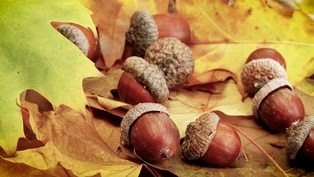
Clip: S21 Ep8 | 2m 49s | Learn how to grow oak trees from acorns and seedlings. (2m 49s)

Video has Closed Captions
Clip: S21 Ep8 | 7m 54s | Learn how urban trees improve community health. (7m 54s)

Video has Closed Captions
Clip: S21 Ep8 | 8m 33s | Tree planting tips from a professional arborist. (8m 33s)

VHG Clippings: Celebration of Trees
Video has Closed Captions
Clip: S21 Ep8 | 26m 46s | Learn how trees help us and how we are helping trees. (26m 46s)
Providing Support for PBS.org
Learn Moreabout PBS online sponsorship

- Home and How To

Hit the road in a classic car for a tour through Great Britain with two antiques experts.












Support for PBS provided by:
Virginia Home Grown is a local public television program presented by VPM