Virginia Home Grown
Clippings: Seeing the Garden Differently
Clip: Season 25 Episode 3 | 26m 46sVideo has Closed Captions
See the garden in a whole new way!
Get a close-up view of the microbial life of plants and other unseen life forms at a Cooperative Extension laboratory. Then visit a colonial style garden to learn about flowers and herbs grown to make colorful dyes for fabric. Engage with us or watch full episodes at Facebook.com/VirginiaHomeGrown and vpm.org/vhg. VHGC 507.
Problems playing video? | Closed Captioning Feedback
Problems playing video? | Closed Captioning Feedback
Virginia Home Grown is a local public television program presented by VPM
Virginia Home Grown
Clippings: Seeing the Garden Differently
Clip: Season 25 Episode 3 | 26m 46sVideo has Closed Captions
Get a close-up view of the microbial life of plants and other unseen life forms at a Cooperative Extension laboratory. Then visit a colonial style garden to learn about flowers and herbs grown to make colorful dyes for fabric. Engage with us or watch full episodes at Facebook.com/VirginiaHomeGrown and vpm.org/vhg. VHGC 507.
Problems playing video? | Closed Captioning Feedback
How to Watch Virginia Home Grown
Virginia Home Grown is available to stream on pbs.org and the free PBS App, available on iPhone, Apple TV, Android TV, Android smartphones, Amazon Fire TV, Amazon Fire Tablet, Roku, Samsung Smart TV, and Vizio.
Providing Support for PBS.org
Learn Moreabout PBS online sponsorship(gentle upbeat music) >>You never know when that door opens, what's coming in, and this was a rose sample that came in, and it obviously has something going on.
They wanna know what it is and is it something they need to treat.
Well, this is a really good example of the rose aphid.
>>If you like the shade, overdye it a little bit longer because if you like this shade, once you wash it, will get lighter.
>>I love that shade.
>>So leave it on longer.
>>Okay.
>>Because once you wash it, it's gonna get a little bit more faded, so go a couple of shades darker than whatever it is you're shooting for.
(birds chirping) >>Production funding for "Virginia Home Grown Clippings" is provided by viewers like you.
Thank you.
(gentle upbeat music) Welcome to Virginia Home Grown!
Today we think about and look at the garden a little differently as we introduce the microscopic world hidden within and discover some amazing colors not provided by the flowers.
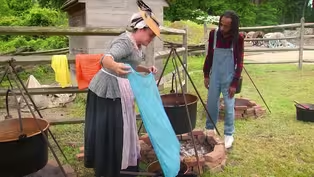
First, Randy Battle met with Gretchen Johnson at the American Revolution Museum in Yorktown to learn about native and imported plant materials that were historically used to make dye.
Let's take a look.
>>Make ready.
Take aim.
Fire!
(rifle firing) >>So we have set up three dye pots today to show you.
And the one right behind you is a really popular dye at the time called Madder.
And it's actually the root of the Madder plant that creates everything from peach to kind of a carrot orange to a brick red.
And that's a really popular dye for centuries.
And even though it's not native here, it's growing quite well in Virginia and other parts of the world by the 1770s.
And we've actually got some growing in our garden right here at Yorktown.
>>Amazing.
>>And then behind us is a yellow dye pot, but it comes from the heartwood of a tree called Osage Orange.
>>Oh, beautiful.
>>And a lot of people.
It is, it's such a great yellow.
It's actually the heartwood or the pulp of the tree that creates this beautiful yellow, and that's something that's native to North America.
And so Indigenous people would've been using this and dyeing with it long before any European contact.
That's what's so neat about dye stuff, is that everybody around the world has put color on things, has decorated with color.
And so everybody would be familiar with it before they had that convergence of contact.
But we are standing next to what I think is probably the most special dye, the most magical dye, if you can say that.
So if you were to look at the top, what color would you say this dye pot was?
>>It looks a little purple or lavender-ish.
>>Yeah, it does have like a purple-ish hue to it.
And that's because this is sitting on the outside where the oxygen has already hit it.
But if I blow on this (blowing), can you see how it looks almost like- >>It looks green.
>>It does.
It looks kind like a sickly green, almost like pond scum.
Or if I was using a modern equivalent, I would say something like antifreeze.
>>And this is gonna actually make blue.
>>It's gonna make blue.
>>Wow.
>>So for these dye pots, when we're dying with 'em, you're gonna notice that we are kind of submerging 'em in the dye pot and keeping 'em there for as long as we want.
So the longer in the dye pot, the darker it gets.
>>Okay.
>>For Indigo, it doesn't work like that because it has to oxidize, it has to be brought out and let oxygen hit it before it turns blue.
So if you left it in for 20 minutes or 2 hours, the first time you pull it out, it'll be the same shade of blue.
And you just have to keep over dying it.
>>Okay, let's do it.
>>All right, so I'm gonna slowly put it in because we are trying not to introduce any more oxygen than need be.
And you can kind of see that kind of sickly green color.
And Indigo, you're able to purchase it.
So even though we don't grow it here, you can grow it in Virginia, but it's a cash crop in South Carolina, so it would probably be purchased.
And what's neat about this little farm that we portray here at the American Revolution Museum at Yorktown is that it's the middling sort.
And so they would be obviously growing a lot of things and foraging for dye stuffs, but they could also purchase them in town if they want to.
>>Okay, I noticed you mentioned that you had to keep it at a certain temperature.
>>Exactly right.
>>And what is that?
>>So the Indigo is just kind of fussy.
So there's a secret ingredient you put in here, in the time it's called Sig, but it's really stale human urine, and which is free and in abundance.
So you can get that pretty easily if you want to, but that is the catalyst that causes it to turn blue when it's oxidized.
>>Got it.
>>This is something that, I think one of the fascinating things about this is that it's ancient.
So people figured this out thousands of years ago.
And all people have a different version of Indigo.
>>Wow.
>>So we're gonna slowly pull it to the edge, and when we pull it out, you might be, you might like the color or you might be slightly horrified by it, but as the oxygen hits it, it's gonna turn blue right before your eyes.
And don't worry about all the little schmutz and all the different colors.
>>Absolutely, it looks amazing.
>>Isn't that neat how that happens?
And you can still see- >>It's kind of a tie dye type.
>>It does look like that now.
But that is not what we're going for.
Although, they do have a version of that in the 18th century too.
>>Wow.
>>How beautiful.
>>Amazing.
>>And it's got those little pieces on there, but we'll over-dye it again.
And those little spots and speckles will come out.
>>That is absolutely isn't amazing.
>>That's just one dip.
And we didn't even leave it in very long.
>>Right.
Now are you able to show us where these plants are grown?
>>Absolutely.
>>And how you actually get the plants and harvest them, and what are you use them for?
>>We sure can, come with me, and I'll show you.
>>All right, let's go.
So this would be considered the farm area of the space?
>>Yes, so at the American Revolution Museum at Yorktown, we have two outdoor living history areas, and one is the recreated military encampment, and one is our recreated tobacco farm.
And so we're headed over to the kitchen garden.
Inside of the perimeter are all different, some medicinal herbs, some culinary herbs, and as you pointed out, some dye herbs.
And then the center, we have mostly vegetables growing.
>>All of my favorite veggies, cucumbers, beans, lettuce.
Now who takes care of this, and how often do they have to maintain this space?
>>So it's a great question.
All the living history interpreters here, people dress like me that work here on the farm that are stationed here, they are the ones that are taking care of this daily.
They are out here every single day in all seasons tending the gardens and the fields.
>>Wow, and this looks like an outside tool shed.
>>That's exactly right.
So tool shed's obviously for woodworking, but it could be just any messy project you don't wanna do inside your house, so woodworking, but maybe you're prepping your dye stuffs here, maybe you're doing butchering over here.
So just kind of outdoor work.
>>Now, this building is a significant space here on the farm, and it's called the enslaved people's quarters?
>>Absolutely, so it is, you know, a reconstruction of what a building may have looked like that housed people that were enslaved on a farm this size.
And what a lot of people don't maybe realize is that, where the last major battle of the revolution was fought in York County, Virginia, slightly more than half the population was enslaved.
Right.
So even though this is the place where we talk about how people won their freedom and independence, you know, and had liberties, the majority of people living here at the time wouldn't have experienced that.
>>Wow, that is such important information.
Thank you so much for sharing.
>>Thank you.
>>Now what do we have going on in this space?
>>So these are a couple more examples of some of the dye stuffs that we grow here on our farm.
And the one that's closest to us is Coreopsis.
So it might not look much like a dye plant at this stage, the way it's growing now, but soon, we're gonna get really pretty little yellow flowers at the top, some actually have kind of a red center.
And so unlike other dyes or some of the other dyes we talked about today, these are the flowers themselves that make the dye.
And so they would kind of steeped down in hot water and kind of release that dye.
And then that would be used just like we were using the yellow dye stuffs out there today, the Osage Orange.
>>Wow.
Now I also notice you have a few things going on over there.
Tell us a little bit about that.
>>Sure, so in the front section, that's the Calendula, and that is an import as well.
So that's from kind of Western Europe, but that would've been a yellow dye stuff.
And those have really pretty little yellow flowers.
It's also used medicinally in some cases too.
And then behind it is Woad, W-O-A-D.
And that is neat because that is kind of an ancient blue dye, much like the Indigo that we were working with.
And it actually has some of the same properties to it.
And so right now you see all the little seed heads popping up.
At this point, it would be past the point of usefulness for dyeing.
So it's actually the leaves of the plant, just like the Indigo plant.
And so we would ferment them down into kind of like a paste, and it would be in water, and the sediments are kind of pulled up.
So that's how Indigo works.
And Woad is working like that too.
And this is not as high of a concentration, so you're not gonna get as deep of a blue with Woad as you would with Indigo.
>>Well, Gretchen, it has been my pleasure being here.
Thank you so much for having us.
Now tell others how can they get involved and hands-on with the farm?
>>Yeah, we'd love to have folks come out.
We're actually open 362 days a year.
So as long as you don't show up on Thanksgiving, Christmas or New Year's, we are open to the public.
We've got great indoor things to do and activities and great outdoor activities at both the encampment and here on the farm, and it's hands-on history.
So you're welcome to try your hand at any of the things we've got going on out here.
>>This is so exciting.
Thank you again for having us.
>>Thank you.
>>We appreciate you.
>>Thank you for coming.
When we think of different ways plants brighten our world, dyeing fabrics isn't usually one of them.
Yet seeing those vibrant colors proves there is more to a plant than what the eye can see.
Next, Shana Williams has some tips and tricks for bringing more birds and bees to your garden.
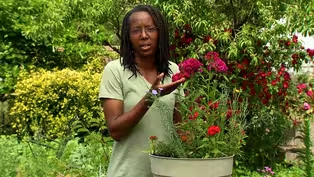
You just have to see like a pollinator... (mellow music) >>As a veggie gardener, I love having flowers throughout my garden, not just because they're beautiful, but at the same time, I'm trying to get as many pollinators to come to my garden as possible.
So I often look and say, which ones should I put in my garden?
'Cause there's so many different varieties.
But really, which ones will attract the most pollinators?
From the moths flying around to the various types of bees and bumblebees to the birds, to the evening moths that pollinate so many things, even sometimes I look at, hey, my little beetles, those little clumsy things that fall all over the place, they're doing their job too.
So as I look at this blue flax right here, I look at that, how open that is.
That allows that bumblebee to have a landing strip.
This Dianthus right here, it's beautiful colors, and this right here is a wallflower.
It has so much fragrance that it'll attract those various type of pollinators.
So throughout my garden, I have beebalm, I have lavender, I have coneflowers, I have mint.
I have so many different types of flowers, some that are tubular, because not only do the bees and the wasps do a great job of pollinating, but I also wanna see hummingbirds come to my garden and the various types of butterflies.
So you have bumblebees that, as I mentioned, they need a sturdy platform and a good cluster.
But one thing about it, you see this is red?
Bumblebees aren't crazy about red, but they like purples and blues and yellows and whites and oranges.
They see it differently than how we might see it.
So it's almost like an ultraviolet light that's telling them, hey, come here.
I need you to pollinate me.
But then we have the birds who fly around.
They're not crazy about the color white, but they love all these other colors here.
So as you're planting in your garden, put a variety of different types of colors and petals and scents throughout your whole garden because they're going to invite such an array of pollinators to your garden.
Because think about it, one in three bites of food that we consume came to us via a pollinator.
So as you garden, think of it from the perspective of what will invite the various pollinators into your yard, and you'll enjoy so many benefits, from the different fruits that you grow to the seeds that they'll give you the next season.
Try it out.
Happy gardening.
Imagine seeing the true colors in flowers through the eye of a bee with its UV vision, or the garden through the sharp eye of a bird.
I think how such an experience would change my garden designs.
It's just a fascinating thought.
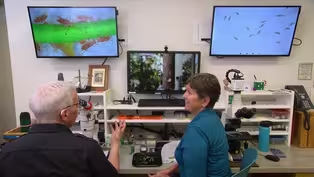
And next, I visited Chesterfield County Cooperative Extension Lab, where I met Mike Likins and took a microscopic look at some pests and plant diseases.
Let's get going.
>>Cooperative Extension is a centuries-old process where the federal government, local authorities have come together to take the information from universities and distill it, or as we say, extend it, to the common people.
So this has been a successful program, as I say, for over a hundred years.
>>That's fantastic.
It's a great way to share information to people who don't have it.
>>Yep.
>>And I wanna say, this is kind of a perfect example of the information that's shared, is we have this wilting plant.
It's a zizia aurea.
What could be wrong with it?
People don't know.
And they would bring it here.
>>Exactly.
We provide accurate and timely diagnoses so that if there is a product to be used, we can prescribe the exact one.
Versus just going to a store and buying a bunch of different things.
So we're trying to protect water quality, bee and pollinators.
We're trying to do the best with the least.
>>Exactly, so we can have more sustainable gardens.
>>Exactly, sustainability is the key.
>>Yeah, absolutely.
>>But we do have to take care of the emergencies.
>>We do.
Be they home pests or be they out in the garden.
>>Absolutely.
>>And this service here, this office is a wonderful location to do so because it has a very special place.
>>Yes, the lab, we're happy to have what I would call the gold standard of the state.
Goochland has a nice one and so does Hanover.
>>So if you live anywhere, in any state in the United States, you have a Cooperative Extension office you can contact.
>>Exactly, and that's the key.
They are local authorities on, not just agriculture, but horticulture, arborists come to them, greenhouses.
Anybody that deals with the green industry will come to the Ag and Natural Resource.
But then you have two other components of Extension, which would be 4-H, which is the youth development.
>>Right.
>>And then you have Family & Consumer Services.
Which is the modernization of home ec.
>>Right.
>>Okay.
>>You can learn to can, you can learn to preserve, you can learn to sew.
>>Financial management.
They're doing the modern things too.
>>Well, I'm excited to see this beautiful lab.
>>It's just to your left.
So if you'll move that way, I'll follow you.
>>Absolutely.
Mike, this is awesome.
>>Well, thank you.
Appreciate you coming by and seeing this operational lab.
It's not a lot of glitz, it's really just pure science.
You're at the operational end of our process.
We have a triage area out front where we bring in large samples, then we have a clinical sample area where we can take the saws and whatever.
Behind us is the diagnostic, where we get the sample down small enough that we can bring it over here and have some fun.
>>Really start looking at it.
>>Yeah, we can visit an alien world, and we don't need a passport.
>>Nope.
>>As an example, today someone walked in with a rose sample.
They knew something was going on, but they weren't sure.
So they bring it to us, and we can put it under the microscope and take a look at it.
And as you can see, it's crawling with creatures.
And we can positively ID this based on this sample as the rose aphid.
>>Well, this is fantastic because me, I'm sitting here looking at on the monitor, so I can easily see these move around.
And I can also see that the people in the window at the library can also see this.
This is fascinating, what a great opportunity.
>>Well, it's a teaching tool, and, you know, if you see it, you believe it.
And rather than just trusting me that I'm seeing something in the scope, clients, we can take pictures here, we can take video and share them.
So, again, it's just another tool in our education process.
We do a lot of demonstration.
Specifically we have a demonstration garden outside.
>>Yes.
>>And it's where people can learn what works, what doesn't work.
And so, you know, this, again, that experiential aspect of Cooperative Extension.
>>You know, Mike, and I think of that garden as another portal for people to use to get in here.
And as they're walking through it, it's a great educational opportunity as well.
>>Yeah, a lot of people think about demonstration gardens, just, you know, planting, you know, beans and stuff like that.
But we have a lot of ornamentals, we have pollinator, we have almost a prairie planting in the back.
We try to encompass all these different ecotypes and attract not just the pollinators but also the people.
>>Yes, yes.
>>Because they wanna see, "All right, does this plant work in Chesterfield?"
>>Yeah, you even have companion planting examples out there.
>>Yeah.
>>And then in here, crawling into literally the microscopic world.
What else you got?
>>Well, we also had a homeowner bring in a pantry pest.
This is, let me see if I can get this one here a little bit closer.
This is a very common pantry pest.
It feeds on a lot of cereals and other things.
And it has a thorax that has kind of a saw edge.
So we call this the saw-tooth beetle.
It's not a structural pest, it is a pantry pest.
It's a nuisance.
But it does require that the homeowner go through a rigorous process of finding out where it is, and then vacuum, vacuum, vacuum.
>>Yeah, yeah.
>>This is not one that we want to encourage sprays because it's gonna be around food.
>>Yes.
>>It can be managed with mechanical processes.
>>Yes.
Oh, here's a very obvious one.
>>No, let's do the boxwood.
>>Oh, let's do the boxwood.
This is a pretty one.
>>Yeah, pretty in a bad way.
And unfortunately in 2015 we see that this disease kind of escapes and gets into the nursery, gets into the landscape, and it's causing a lot of havoc.
The diagnosis is the easy part.
>>Of boxwood blight?
>>Of boxwood blight.
What you do about it is gonna be the hard part.
>>Well, there's the dark spots that we can visually see on the stem.
>>Yeah, you can see.
>>Which is one of the visual diagnosis.
>>Three things are: you get defoliation, you get the blackening of the stem, and then you get a leaf spot.
And there's nothing else that looks like that.
But when you start to incubate these things, and that's one of our technical ways of encouraging fungi to grow, you'll see that they produce these stellate, almost crystalline structures that are exceedingly beautiful.
They contain hundreds of sticky spores.
>>Yes.
>>And that's how this fungus gets around.
That's probably one of our number one diseases that we're dealing with right now.
>>Back to bugs.
>>Other things that come in.
A lot of times people will bring us in materials that have some type of aberration on 'em.
People think that this is mite eggs or something like that, when in fact this is really just a good dose of pollen.
>>Yep.
>>But fortunately they gave us a good sample, and we see, I can bring this around a little bit here, we see that we have an insect egg factory.
And this is the cottony camellia scale.
These are basically just egg factories.
And you can actually see if I zoom in a little bit.
There's one of the crawlers right there.
If you don't have the egg masses, which they're pretty dramatic, you can't see this crawlers, then you probably will miss the identification.
It's easy to control if you have an accurate and timely diagnosis.
>>Right.
>>And then one that we were unfortunate to be one of the first in Virginia... >>Yay.
(Peggy laughs) >>Yeah, we're first in a lot of things, but this one is called the allium leafminer.
There we go.
Almost looks like a little sewing machine pattern.
This is where the female is depositing eggs and, the larva, it'll just mine straight through the leaf.
>>And people aren't realizing that this is such a minute insect that it's between the layers of the leaf.
>>Absolutely.
>>Well, Mike, this is fascinating, and I don't think many people know about this and to know that they have this resource available to them so that it will help them become better gardeners.
>>Well, that circles back to Cooperative Extension.
We are experiential.
You know, they can come in here and experience it.
But we give them the information to make a positive change.
Whatever the community needs, that's what Extension does.
>>Well, this is fantastic, and this lab is just such a wonderful resource.
>>Thank you.
>>Well, thank you for showing it to us.
There is far more to our gardens than what we can see.
It's a fascinating world, teeming with life, both above ground and below.
I have to admit, I get a bit nerdy when I think about the various layers of life in my gardens, and it makes me smile.
And now, doctor Robyn Puffenbarger has a tip to share on seeing your landscape differently.
You can provide benefits to native wildlife and save time cutting grass.
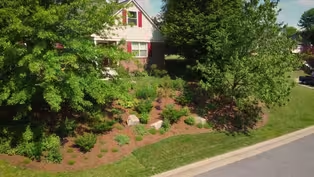
(relaxed music) >>It's so much fun to look at our gardens and landscape in new ways, and one of the big parts of the areas around our houses is usually our lawn, and my friends here in Harrisonburg had a real issue with this very sunny spot on a very steep slope because it just wasn't safe to mow.
It felt very dangerous.
One of the other things that's growing here in the front yard is a nice looking oak tree that's beginning to get some size to it, and while you think that might be a problem to give them a lot of shade, the way this lawn sits and looks west, it's gonna be full sun, so very, very hot, sunny all summer long.
So, working with a landscaper, my friends reimagined this piece of lawn into a native sunny plant garden, and they have added a wonderful array of native plants to try to control the slope, keep from mowing, and keep the maintenance to a minimum.
So, one of the plants here is the native lyre-leaf sage.
It's got a nice bloom on it right now and this is a plant that's gonna be very attractive to our native pollinators, like insects, bees, butterflies, and moths.
And then finishing up is the creeping phlox.
This is a native plant to Virginia that is now in cultivation in many colors, giving you a wonderful pop of pink, white, candy stripe, or purple in your early spring garden.
Other plants in the garden include carexes.
These are very soft looking grasses that you don't need to mow and as the garden continues to mature, they will fill in.
There's also monarda, which is another great pollinator plant, low-grow sumac, which is going to be a great ground cover, and while the garden is mulched now, as these plants begin to fill in, there won't be any need for mulch later on, so the planting is going to get lower and lower and lower in maintenance as time goes on, so my friends won't have to mow, which felt very dangerous.
They won't have to use any fertilizers or water because the native plants are used to our Virginia ecosystems.
So, as you look at your lawn, you don't have to have this kind of slope problem to think about adding native plants, but just think about how much you'll enjoy not having to mow as much when you've filled it in with all kinds of plants that will support the native pollinators and birds in your yard.
Happy gardening.
From the perspective of a pollinator, a dye maker and a plant pathologist.
There are so many fascinating ways we can look at our gardens.
I thank you for watching, and we hope you will think about the ways you can see your garden in a new light as well.
See you soon.
And until then, remember, Gardening is for everyone and we are all growing and learning together.
(birds chirping) >>Production funding for "Virginia Home Grown Clippings" is provided by viewers like you.
Thank you.
(gentle upbeat music) (chime)
Video has Closed Captions
Clip: S25 Ep3 | 8m 26s | Zoom in on plant problems at the Chesterfield Extension Lab (8m 26s)
Video has Closed Captions
Clip: S25 Ep3 | 7m 59s | Discover a unique way that plants bring color to our world (7m 59s)
Seeing the Garden Like a Pollinator
Video has Closed Captions
Clip: S25 Ep3 | 2m 57s | Think like a pollinator to bring more birds and bees to your garden (2m 57s)
Video has Closed Captions
Clip: S25 Ep3 | 2m 54s | Discover the benefits of reducing lawn size (2m 54s)
The Unseen Colors Inside of Plants
Video has Closed Captions
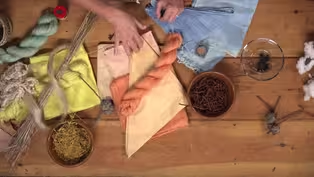
Clip: S25 Ep3 | 6m 23s | Learn tips for creating colorful dyes from plants (6m 23s)
Zooming In on Garden Pests and Diseases
Video has Closed Captions
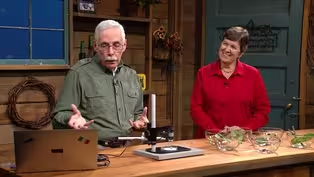
Clip: S25 Ep3 | 6m 2s | Get a close up view of common plant problems (6m 2s)
Providing Support for PBS.org
Learn Moreabout PBS online sponsorship

- Home and How To

Hit the road in a classic car for a tour through Great Britain with two antiques experts.












Support for PBS provided by:
Virginia Home Grown is a local public television program presented by VPM