Virginia Home Grown
Clippings: The Nighttime Garden
Clip: Season 25 Episode 7 | 26m 46sVideo has Closed Captions
Explore the garden after dark!
Visit a garden in Waynesboro, designed to be enjoyed by moonlight. Learn about the dark-sky movement and how light pollution disrupts the circadian rhythms of plants and nighttime pollinators. Engage with us or watch full episodes at Facebook.com/VirginiaHomeGrown and vpm.org/vhg. VHGC 503.
Problems playing video? | Closed Captioning Feedback
Problems playing video? | Closed Captioning Feedback
Virginia Home Grown is a local public television program presented by VPM
Virginia Home Grown
Clippings: The Nighttime Garden
Clip: Season 25 Episode 7 | 26m 46sVideo has Closed Captions
Visit a garden in Waynesboro, designed to be enjoyed by moonlight. Learn about the dark-sky movement and how light pollution disrupts the circadian rhythms of plants and nighttime pollinators. Engage with us or watch full episodes at Facebook.com/VirginiaHomeGrown and vpm.org/vhg. VHGC 503.
Problems playing video? | Closed Captioning Feedback
How to Watch Virginia Home Grown
Virginia Home Grown is available to stream on pbs.org and the free PBS App, available on iPhone, Apple TV, Android TV, Android smartphones, Amazon Fire TV, Amazon Fire Tablet, Roku, Samsung Smart TV, and Vizio.
Providing Support for PBS.org
Learn Moreabout PBS online sponsorship(gentle upbeat music) >>Everything that lives on the surface of the earth has evolved a very finely honed biological system that depends on the day/night cycle.
And now that we're messing with the day/night cycle with artificial light at night, it's really impacting all kinds of living creatures all over the planet.
>>The whole center of this garden is a grass circle in the shape of a full moon.
And it's surrounded by plants that were originally either white or pale so that they catch the moonlight and reflect it.
(birds chirping) >>Production funding for "Virginia Home Grown Clippings" is provided by viewers like you.
Thank you.
(gentle upbeat music) (mellow music) Welcome to Virginia Home Grown!
Today we're exploring the nighttime garden and the effects of diminishing darkness on our plants and wildlife.
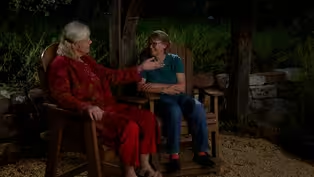
First, we're going to visit the Moon Garden in Waynesboro, where Doctor Robin Puffenbarger sat down with Lucy Ivey to learn how the garden has evolved over time to include a native plant focus.
Let's take a look.
>>I have always wanted to have a Moon Garden.
And the whole center of this garden is a grass circle, which is in the shape of a full moon.
And it's surrounded by plants that were originally either white or night flowering or fragrant, or pale, which is the idea of a Moon Garden, so that they catch the moonlight and reflect it.
My husband and I moved down here from Afton.
When we moved into this house, this lot, which was an extra lot next to the house, was one flat yard.
And I got it into my head that I wanted to start doing some native plant gardening, but I wasn't the gardener, my husband was.
He, though, had done a life of construction and could no longer really garden.
So gardening was up to me.
I got a gardening company to help me build the garden.
>>And we're sitting here under an incredibly beautiful semi-circle pergola.
>>I can't really describe to you how they bent the wood.
And you can see these pegs are hand hewed and driven into it.
It involved the cooperation of the landscaping company and a woodworking company.
And the idea of the pergola was you would sit out here in the night and enjoy the moon passing over the garden.
So here's this glorious sky that you're supposed to do that.
Unfortunately I got it a little bit wrong and there's only about a week in the month when the moon passes over this garden, when the sky is dark enough and we're actually awake.
But it is glorious when that does happen.
>>But I think you enjoy this space much more than just when the moon is going over.
>>Yeah, because actually, the moon circle is so large that it's hard for it to pick up these and reflect off the flowers.
But it is a perfect place to have coffee in the morning, to eat out here with friends.
And also it's wonderful when there're children 'cause they just love to go out there and dance and look like little fairies dancing around.
>>I think a lot of people don't think about plants going up unless they're trees.
But what all do you have growing on this?
>>So I planted them behind the columns and they're all native vines, Virginia Creeper on the outside, then Coral Honeysuckle.
And there is a Purple Passion flower vine growing up the last one.
And because it began to take over the whole garden, we ended up trying to pull it all out.
But I miss it.
It gets the most wonderful fruit and has the most beautiful flowers.
After seven years of summers, the fruit was finally delicious to eat.
It wasn't just empty seeds inside.
It was really wonderful, flavorful fruit.
>>So, one of the things that's traditional about a Moon Garden is fragrance.
And I'm not sure I see a lot of fragrant plants right now.
Is it a time of year thing?
>>Well, you know, it's difficult to get a lot of native plants that are really fragrant.
We have the mountain mints and they are, and then surrounding this garden, but not actually in it are a few fragrant trees that flower.
Virginia Magnolia, apple tree was fragrant in the spring.
That's not native.
The sweet pepper bush is fragrant and the Virginia Sweetspire is fragrant.
So unless I wanted to bring in a lot of non-native plants, that's one element that's sort of lacking from this Moon Garden.
>>But you have lots of pollinators.
>>Yes.
So really this is a splendid pollinator garden.
And the wonderful thing about this year, as opposed to last year, is that because there's been rain, it has been a year full of flowers, which of course pollinators love.
They first started coming with the shrubby St.
John's wart, which was covered with bees.
And then they move on to the Mountain Mints when they started flowering.
Now they're in the Obedient Plant.
So they have just been racing through all the plants.
Oh yeah.
The milkweeds, there've been mostly bees in this garden.
I have lots of native bees.
There's Dog Bane down in the lower field and that beautiful dog bane beetle.
>>Yes.
>>Is much more beautiful than the Japanese beetle.
>>Saw lots of skippers >>Yes.
>>Tonight.
>>And this year, unlike last year, even the year before, I've had plenty of monarchs flying through and I have pawpaw trees now, but I have yet to see a zebra swallow tail.
>>It may take a few years.
>>Yeah.
>>As we were looking around, though, there's a lot of pollinator plants.
You've kept a lot of really great things.
>>Well, there are hundreds of species in this garden, not just forbs, but there are plenty of species of trees and shrubs.
But there are a few successful native plants that have really taken over, like the ones right behind us, which have the common name of Shale Barren Asters.
And they are so successful.
We have actually spent this entire summer trying to replace some of them with worthy competitors so that we, I don't end up with a monoculture in this garden.
>>And I see you have some Mountain Mint.
>>Yes.!
Now isn't the original Mountain Mint.
There were three plants back up in there.
And it really features one of the things that's so wonderful about native plants, which is that they spread themselves all over the garden.
And one year you'll have them up here and the next year you'll have them elsewhere.
So this year they formed themselves right here in front, which is really nice when the moon comes over this garden.
>>So nice when natives work out that way.
So it sounds like one of the themes of your eight years of gardening is you build it and they will come.
>>Yeah.
>>And they will spread themselves and it will evolve and change sometimes to your liking and sometimes not.
>>Yeah, this year has been really lucky 'cause we had plenty of rain for most of the summer.
But native plants do really well in most drought situations.
But last summer we had months of drought and they really suffered for it.
>>But, like you said, they've come roaring back.
>>That was the good news, is that they don't die.
They don't, you know, give up the ghost, they hang on.
Their roots go really deep into the soil and so if you can shield the soil and part of what shields the soil is the fact that they grow so tall so they shade themselves.
So even if they don't flower abundantly, they protect the future for themselves.
>>So just give it some time.
>>Yeah.
>>And you'll see it again.
>>Yeah.
>>Well, thank you so much for having us here to enjoy this incredibly beautiful space.
>>Thank you, Robyn.
>>Right in downtown.
>>It's been my pleasure.
While some insects rest at the end of the day, others are very active, despite the darkness.
Including native plants in the garden supports the ecosystem around the clock.
And now Shana Williams has a tip on how to enhance the sensory experience in your garden by adding calming sounds, which can be enjoyed day or night.
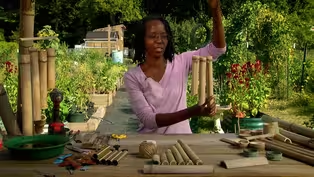
(light percussion music) >>Whenever visiting a garden, there's an explosion of sensory information that you receive from the beautiful flowers and viewing all of the beautiful pollinators flying here and there.
What I've noticed is that there's a couple things that are missing from my garden.
I mean, I love the smell of the mint and being able to pick and touch and the beans that grab hold of you.
But the garden is beautiful at night.
You may not be able to see everything, but what I can observe is to hear the wind chimes and the tranquil sounds of water.
So what we're going to do is we're going to add two of those simple features to our garden.
First we're going to start with just taking our bird bath and adding a simple solar fountain.
And this solar fountain comes with many different types of adapters that allow the water to shoot up in the air.
That creates that beautiful sound for us.
What we're going to do is move that over to the side, and we're going to start trying to make some bamboo wind chimes.
Wind chimes, understand, they're made of various types of materials, but we're going to use bamboo because I like that natural deeper tone that it creates.
So we have an anchor right here, which we've already pre-drilled, and we also have pre-drilled some of our bamboo.
So we leave that first notch right here.
The larger they are, the deeper sound that they might make.
And the smaller they are, their tone changes slightly, and it may be a little bit more higher pitch.
So what I have here is an anchor point, and I've attached one.
But what I have to do is take my drill.
Along the top I have to drill in through here to create two holes on opposite sides.
And then when I do, I have to lock this string, which this is the fishing wire that I'm choosing to use.
But I can also use twine, but it doesn't last as long.
And then sliding it under and pushing it through just like so, and pull that knot nice and tight.
So I'm gonna hold this up so you can see what this one is starting to look like.
Now, if you notice, this still has to have an anchor point.
I'll drill a hole right here through the top.
(drill whirring) And this will allow me to also add just a little piece of wire through the top there so I can have an anchor point so I can attach this here.
Or if I didn't wanna use that anchor point, I can simply go just like this.
Open that up.
Attach it.
And it allows me to hang it like so.
It's not done yet, but it's the start of a beautiful wind chime.
Perhaps you might wanna try creating wind chimes.
They don't have to be fancy.
It can just be slices of wood clicking together just to make simple, beautiful sounds.
Wind chimes, water features, they add to our experience in the garden.
Happy gardening.
(wind chimes clatter) Sound, sight, sense and darkness are all components of the night garden.
Of those darkness is most vital.
I met with Doctor Kelsey Johnson at UVA's Morven Sustainability Lab in Charlottesville to talk about the ways that light pollution impacts nighttime pollinators, migratory birds, and our plants.
Let's get going.
>>Kelsey, I have to admit, I have never given a garden interview in the dark.
So this is a first for me.
(chuckles) >>Well, as an astronomer, I have never been on a garden show, so this is also a first for me.
>>Well, this is exciting.
'cause here we are at UVA's Morven Sustainability Lab and it's getting darker by the minute, but that's what we're here to talk about.
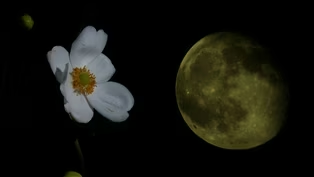
>>In the world today, 80% roughly of the global population lives under severely light polluted skies.
As an astronomer, this is a problem, but it turns out it's also a really big problem for everything else that lives on the surface of the planet.
>>Our circadian rhythm is really connected to that dark sky, that rhythm of our living and even our processes, you know, our plant processes and stuff.
So what have you discovered as you've brought the darkness down to the earth, you all call it?
(both chuckling) >>Well, yes.
We have to bring things down to earth.
Well I think, you know, one thing that I think is glaringly obvious if you think about it, is that everything that lives on the surface of the earth has evolved actually over millions of years, a very finely honed biological system that depends on the day, night cycle.
In modern life, when we have artificial light at night, we're actually messing up something that things have evolved to have over millions of years.
And it causes a lot of stress.
>>It does.
People just don't understand that plants have processes during the day, photosynthesis, but they also have them at night.
>>That's right.
>>You know, and if you don't have that darkness, the plant can't shift over to do its nighttime respiration.
But there's other processes dealing with plants that are affected by the lack of a dark sky as well.
>>So many, I mean, almost everything you can think of with plants is affected by their sensitivity to daylight.
So we could think about, for example, blooming out in the spring, right?
If plants start getting or perceiving that they're getting more daylight, they might think, oh, it's spring, it's time to bloom.
And we might think, oh, they're blooming.
They're so pretty.
But here's the thing, right?
If they bloom too early, what happens?
>>Well, you don't have the insects coming out to match the plants.
>>That's right.
>>You don't have the pollination.
>>That's right, they've shown up early to the party, no one's there.
>>Exactly.
>>Well, and the other thing that can happen is frost, right?
If it's still early in the season, and we're not outta danger of a hard frost yet, you know, if plants bloom to early, they're in danger of actually losing that entire reproductive cycle, which is a lot of energy for a plant.
>>You know, we think about the pathetic tomato on the sad plant, but that plant's putting everything it can, into making into seed.
Yes.
>>Into reproducing itself.
>>Yeah.
And it will lose that if it happens too early.
>>Exactly.
And exactly.
And the same with leaf color change.
You know what triggers leaf color change, a myriad but day length is one of them.
>>Exactly, and so when they get their cues wrong, because they're around artificial light at night, they might leaf out too early in the spring or in the fall.
Likewise, they don't get the cue that, oh, it's time to go into hibernation and let those leaves go.
And they waste a lot of energy holding onto those leaves that they need to be putting into themselves and into their systems.
>>And you know, we don't think this affects us, but it does be.
Think about your fruit tree growers.
>>Yeah.
>>Think about your farmers.
Think about the importance of the health of those plants and the timing of the bloom to meet the insects so that those fruit tree flowers can be pollinated.
So we can have our fruit and think about the bread baskets to feed everybody here on earth.
So I mean, it draws a direct line from dark sky to the plant to us.
>>It does.
When many people take a step back and think about greenhouses and how do we get tomatoes in the winter, people understand the importance of light signals to get things to bloom or to fruit at particular times of year.
>>Right.
>>But, when we do it in that controlled way, we're doing it on purpose and with a goal, what's happening with light pollution is we're doing some of that light engineering by accident and not in a productive way.
>>Right, animals too, with their processes and disrupting some of our wildlife, particularly our insects.
>>Yeah.
I think a lot about pollinators and I know many people are thinking about pollinators in the world right now.
And often when we think about pollinators, I think bees get all be attention and they should.
I love bees.
I'm like, I'm a fan of bees with everyone else.
But I think what people often don't realize is that when it's dark at night, a whole night shift of pollinators come out and moths.
Anyone that has been outside at night with a light understands what moths do with light.
So I think it's pretty intuitive to understand when moths are around light pollution, they're gonna get distracted.
They're gonna go into like doom scrolling with the light, and they're gonna fly around and they're not gonna go do the important work of pollinating.
>>And I know too, bird migration.
>>Yeah.
>>Because, birds are running into buildings trying to survive and live in this brighter environment when they're used to navigating really by the stars.
>>That's right, many birds use light cues to navigate at night.
In North America, it's roughly 50% of the bird species are in decline.
So this is a real growing crisis.
And estimates are, and this number I think is astounding.
Roughly a billion birds in the US die a year from collisions with buildings.
>>Wow.
>>And so, turning our lights off and being aware of the illumination we have in the corridors that birds use to migrate, it's really important.
>>That is extremely important.
So now that we've kind of defined the problem, I know that we have a dark sky movement that's slowly gaining momentum.
You know, what are the steps that homeowners could take to sort of improve their situation?
>>Light pollution is actually one of these problems that is in principle, super easy to fix.
Like we could almost literally fix it overnight, if we had the mindset and the will to do it.
Don't use lights when you don't need them.
Don't use lights brighter than you need them.
When you do need lights, make sure they're pointed down.
If I can make one plea to your viewers, (both laughing) one simple thing is just please don't uplight your trees.
But then, you know, there are other things too that may seem less intuitive.
One really important thing about outdoor lighting at night, if you get a light bulb that says daylight on it, it's mimicking daylight.
We wanna avoid those at night.
So for nighttime, you really wanna use warmer color temperatures.
So redder lights, it's not that there aren't still impacts on the flora and the fauna, but they're not as bad as when we're using the daylight.
>>Well, I have one more question for you, and this is for the astronomer.
>>Okay.
>>I have been seeking a dark sky to go to experience that.
So where would you recommend I go?
>>Oh goodness.
East of the Mississippi, there are really only two spots left.
>>Oh, wow.
>>And, those are in extreme, Northern Minnesota.
>>Okay.
>>And extreme Northern Maine.
Those are your options.
>>Two of my favorite places.
>>I mean, I'll go to Maine with you.
That'll be fun.
>>It's a deal.
Let's go.
>>And we can look at gardens and stars.
>>Okay.
>>But locally, you know, we really, within Virginia, we don't have access to any pristine dark skies.
But just over the border in West Virginia, there is a pocket of darkness that it's not pristine, but it's darker than anywhere else on the East Coast.
So we do have something drivable from here.
>>Okay, but we do have capabilities to make choices that are more positive to helping to mitigate this problem.
And I think we all need to just learn more so that we can consider those choices as we move forward.
>>Such simple choices.
Right.
It doesn't take a lot to make a really big difference.
Even just in your backyard, you can change the ecosystem and make it healthier, just by reducing the illumination at night.
>>Collectively.
We make a huge difference.
>>We do.
We do.
>>So, thank you, Kelsey, thank you so much for coming on, being an astronomer on the gardening show.
(chuckles) >>My pleasure.
>>Yes.
(crickets chirping) Our nighttime skies have changed.
The baseline has shifted from a star filled sky to one that glows from artificial lights, obscuring the majority of stars.
This shift has occurred so slowly, many don't notice it.
But our plants and wildlife do.
Next, Amyrose Foll has a tip to share on the importance of nighttime pollinators for the vegetable garden.
(mellow music) >>When we think about pollinators, you probably think about the ones that come out during the day, such as butterflies and bees.
We see them everywhere.
They are ubiquitous in conversations about pollination in your garden and in the wider world, but there are a lot of really important nighttime pollinators that are vital to the health, wellbeing, and even production of our gardens.
Here I am standing in a gourd and squash arch that I made out of some old cattle panels.
And around me you'll see little birdhouse gourds, there's a large one here, some warty gourds, spinner gourds, and Choctaw squash here.
And these are gonna be long season varieties, so you wanna plant them in the spring.
And what I have here is basically maximizing the square footage that these leaves are going to get from the sun, which is also very important.
The leaves are the solar panels of their plants.
They're going to be converting that UV energy, the sunlight into the fruits that are coming off of these vines.
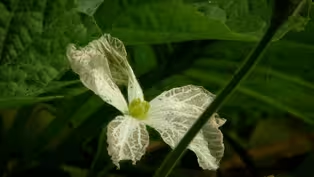
And these guys have very large light colored flowers that open in the evening, and they will attract those moths, such as the hawk moth and the sphinx moth.
Sphinx moth will actually lay their eggs on the Virginia Creeper and the grapes.
Their caterpillars will eat them and develop into those moths that will help our garden.
So if you wanna plant some grapes, that's a good way to get them around here.
These aren't the only plants however that will benefit from nighttime pollinators.
There are other plants such as okra flowers.
Okra flowers are actually my favorite flower in the garden, more than hollyhocks or roses any day, hands down.
They're beautiful and they're delicious.
So you can benefit from your okra harvest with those nighttime pollinators.
Eggplants benefit greatly, as well as asparagus, beans and peas, those legumes.
And we have quite a few different kinds of nightshades, such as potatoes, tomatoes, and of course the tomatillos.
The tomatillos not being self fertile, they benefit the most out of the nightshade family.
But these moths will visit almost all of your nightshades in your garden, hopping about and doing their duty.
So when you're planning your garden or maintenance in your garden, just remember, there is pollination happening around the clock.
So we wanna make sure we're taking care of our little relatives that are helping us put all of these amazing things in our house and on our table, and make sure that we're not doing anything that could possibly hurt them.
I hope this helps and happy gardening.
Whether it's the glow of the moon, the hum of the night pollinators or the soothing sounds from the wind chimes.
The nighttime garden is alive with activity.
All this confirms darkness is just as important as sunlight in our gardens.
When we protect it, we support the health of our plants, pollinators and the whole ecosystem.
Thank you for watching.
We hope you will think of your garden as a full 24 hour experience as you consider the important role darkness plays when making lighting choices.
See you soon!
And until then, remember, gardening is for everyone and we are all growing and learning together.
(birds chirping) >>Production funding for "Virginia Home Grown Clippings" is provided by viewers like you.
Thank you.
(gentle upbeat music) (chime)
Video has Closed Captions
Clip: S25 Ep7 | 3m 35s | Calming sounds benefit your garden day or night (3m 35s)
Video has Closed Captions
Clip: S25 Ep7 | 8m 8s | Learn why a day and night cycle is just as important to plants as it is to us (8m 8s)
Video has Closed Captions
Clip: S25 Ep7 | 7m 36s | Visit a garden full of native plants designed to be enjoyed at night (7m 36s)
Night Pollination in the Vegetable Garden
Video has Closed Captions
Clip: S25 Ep7 | 2m 43s | Pollination occurs around the clock in our gardens (2m 43s)
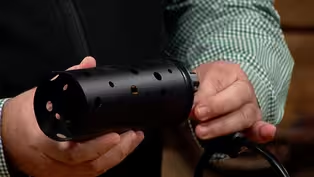
Responsible Landscape Lighting
Video has Closed Captions
Clip: S25 Ep7 | 6m 18s | Learn how to reduce glare and enhance your garden lighting design (6m 18s)
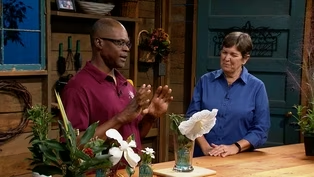
Traditional Moon Garden Plants
Video has Closed Captions
Clip: S25 Ep7 | 6m 23s | Discover the characteristics of plants for night time gardens (6m 23s)
Providing Support for PBS.org
Learn Moreabout PBS online sponsorship

- Home and How To

Hit the road in a classic car for a tour through Great Britain with two antiques experts.











Support for PBS provided by:
Virginia Home Grown is a local public television program presented by VPM