
Cowan Creek Mountain Music School, World Champ Stone Skipper, Harlan Hubbard Experience
Season 32 Episode 4 | 25mVideo has Closed Captions
Visit Cowan Creek Mountain Music School, stone skimming and Harlan Hubbard's life on the Ohio River.
Visit Cowan Creek Mountain Music School, a place where tradition, community and old-time music come together; meet Jon Jennings, the Kentuckian who became the first American crowned World Stone Skimming Champion; and learn how Kentucky Hall of Fame writer Harlan Hubbard shared his lifelong passion for the Ohio River before settling at Payne Hollow, Kentucky.
Problems playing video? | Closed Captioning Feedback
Problems playing video? | Closed Captioning Feedback
Kentucky Life is a local public television program presented by KET
You give every Kentuckian the opportunity to explore new ideas and new worlds through KET. Visit the Kentucky Life website.
Cowan Creek Mountain Music School, World Champ Stone Skipper, Harlan Hubbard Experience
Season 32 Episode 4 | 25mVideo has Closed Captions
Visit Cowan Creek Mountain Music School, a place where tradition, community and old-time music come together; meet Jon Jennings, the Kentuckian who became the first American crowned World Stone Skimming Champion; and learn how Kentucky Hall of Fame writer Harlan Hubbard shared his lifelong passion for the Ohio River before settling at Payne Hollow, Kentucky.
Problems playing video? | Closed Captioning Feedback
Where to Watch Kentucky Life
Kentucky Life is available to stream on pbs.org and the PBS app.
Providing Support for PBS.org
Learn Moreabout PBS online sponsorshipProduction of Kentucky Life is made possible in part by the KET Millennium Fund.
Coming up on Kentucky Life... we'll travel to the Cowan Creek Mountain Music School, where this Kentucky art form is kept alive and well.
We'll head down to the creek bed with Kentuckian Jon Jennings, who's been crowned the best stone skimmer on the planet.
Wait till you see how he can skip a rock.
We'll explore the setting for this week's show, Hyden, Kentucky.
And we'll see the work of Writers Hall of Fame member Harlan Hubbard, who is also a talented painter known for his simple lifestyle.
All that's next on Kentucky Life.
[music playing] Hey, folks, and welcome to Kentucky Life.
I'm your host, Chip Polston.
It's good to see you again.
Our travels today have brought us to Hyden, deep in the mountains of eastern Kentucky in Leslie County.
Now, as of the last census, Hyden was home to 303 people, but don't let that number fool you.
Some notable Kentuckians are from here.
It's the home of College Football Hall of Famer Tim Couch, who played high school ball in Hyden.
There's a statue of him in front of the school.
Couch left here to play quarterback at UK and was the first pick in the 1999 NFL draft for the Cleveland Browns.
He even has a road named after him here, the appropriately named Tim Couch Pass.
The statue I'm standing beside today is that of Mary Breckinridge, who saved untold numbers of lives in the region.
In 1925, she founded the Frontier Nursing Service right here.
Her nurses rode horseback to provide modern health care and midwife services to remote Appalachian families, drastically reducing infant and maternal deaths.
Breckinridge was a pioneering nurse midwife who revolutionized rural health care in the United States.
It's a remarkable legacy for this small town, and we look forward to exploring it during our show.
But first, Kentucky's musical traditions have been passed down for generations, and at Cowan Creek Mountain Music School, students of all ages learn not only how to play these timeless tunes, but also how to keep this rich musical heritage alive.
Let's visit a place where tradition, community, and old-time music come together to create something truly beautiful.
[music playing] If you're coming here to Cowan Music School for the first time, you're going to find a curvy road, and then you're going to start to hear music.
The Cowan Creek Mountain Music School has been going on since 2002.
It's a week-long summer music camp in the heart of Letcher County, Kentucky.
It's a place where people of any age can get together and learn old-time music that comes right from this area.
You can take classes in fiddle, banjo, guitar, dulcimer, mandolin, all the way from beginning to advanced, and learn from the best players there are in this style of music.
It is an opportunity for musicians here locally, across the state, and nationally, and sometimes internationally, who come together to celebrate, learn, practice, and be in community with those who love traditional mountain music.
An inspiration, a catalyst for this would rest with Bev May, a fiddle player who's been at the school for the 25 years.
She had a visit to Ireland.
She saw all these different schools going on.
She just thought, “Well, why can't we do this back in eastern Kentucky?” The summer schools in Ireland have been really important to bringing back their music, which almost went extinct, just like ours.
I took an intermediate film class.
About two-thirds were local kids, and the other third were people from other countries.
It was just beautiful.
The whole community was so much in love with their own culture and their own music, and it really made an impression on me.
When I came home, my mission was to build the audience for old-time music.
If you want to build the audience for old-time music, you've got to make more musicians.
She pulled together a mixture of community organizers, and they got together and created something really from scratch.
They had the space, and they had folks to teach, and it resonated deeply with the community and got an immediate, wonderful turnout.
The first year, we had 75 students.
About half of them were local kids.
They'd never square danced before, most of them.
They'd never heard this music except in the movie, “O Brother, Where Art Thou?” They had that connection.
[music playing] We doubled in five years.
I believe it got up to 150 in the fifth year.
I think that it grew so fast at the beginning because people were just hungry for it.
People that were lovers of that style were already somewhat engaged and looking for a way to get involved that was more closely related to the place that music comes from.
That meant a lot to the local community immediately.
It made them feel heard and special, and they had something to offer.
But it also really resonated with people from around the country that were trying to learn old-time music without that deep connection to place.
Old-time music and Appalachian music, traditional folk music, if nothing else, associates the emotion that you feel as you create, perform, remember, pass down, but you associate it with a place and a time.
It's music that is deeply rooted in the people who created it, the people who passed it down, the people who perform and witness it, but also the place you're from.
To me, that's a pretty powerful combination, and I'm not positive that many musical traditions have that.
It looks like Angeline again.
Open 1, 3.
[fiddle playing] One thing that really sets this camp apart is the fact that you're often learning from people for whom this is a lived experience and a living tradition.
I love the intergenerational nature of this camp.
It's so special and so unifying to see five-year-olds literally jamming with 80-year-olds, and that's been that way since the beginning.
Here, the kids are integrated.
As soon as they can play, they're integrated in with the adults, and they're almost the most important part of this.
It is ingrained in our culture and our history here that we respect our elders, and not just that we respect them nicely, neatly on a shelf, but that we engage with them, and we listen with them, and we learn from them.
It's natural that that would come with music.
[music playing] The cultural impact of the Cowan Creek Mountain Music School extends far beyond the week itself and far beyond that place.
There's a recognizable Cowan repertoire that you can see in Kentucky fiddle music across the state.
If there are folks that have come to Cowan before and you hear them jamming, they're going to start calling these Kentucky tunes that have very much been preserved by Cowan.
Many of the masters that teach there come representing a certain repertoire, and then you learn from them, and when they pass on, you're holding on to that language, that shared language that could possibly die out if you don't work to preserve it.
Why that's important, I think, is because these playing styles are, I mean, they're culturally vital, but it's also a living tradition that represents the aesthetic of a specific place and the economy and culture of that place and what it meant to be somewhere in a certain time.
[music playing] These are songs that evoke a particular feeling and an association with people before you, and I think that for young people in particular, knowing that you're part of something larger than yourself, knowing that you're not by yourself, knowing that you have accountability and visibility and responsibility and that people are there to help you too when you need it, that's what community is.
Music has been a part of humanity for millennia.
To really see how communities use that as a way to pull together tightly, I think it's part of the point.
[music playing] [people cheering] Skipping stones down by a creek is a pastime long enjoyed by folks here in Kentucky, but for one Louisville man, that hobby has turned into his passion, and he's pretty good at it.
In fact, in 2025, he became the first American to ever win the World Stone Skimming Championships in Scotland.
How does someone go from being a kid in Graefenburg throwing rocks in a creek to a world champion?
Let's meet Jon Jennings.
[music playing] To watch Jon Jennings practice his craft is pretty remarkable.
Folks stop in their tracks when they see him skip a stone 30, 40, or 50 times.
How'd you get into this?
What possessed you to start skimming stones on creek beds like this?
I can't remember ever learning to skip a stone.
From the time I was a kid, I've always been able to do it.
My mom claims to have taught me, I always give her the credit.
I just grew up poor.
We didn't have a whole lot.
I grew up in the ‘90s when your parents would kick you outside.
They're like, “Hey, go outside and play."
We weren't grounded to be in our rooms.
We were grounded to be outside.
I just spent all my days out in the creeks.
When did you figure out you're good at this?
Was there a eureka moment where you're like, “Hey, I'm pretty darn good at this, I might be able to do something with it”?
In my 20s, I think people would see me skipping stones, and they're like, “Man, how would you do that?” I never knew.
I never knew the science behind it, really, or anything.
It was until I started competing that I actually learned the mechanics and everything behind it.
The mechanics are interesting.
We went to the mechanical engineering department at the University of Louisville to meet Dr.
Yongsheng Lian.
His explanation of how stone skimmers like Jon create their magic centered around two main principles.
The first was spinning the rock when releasing it.
This provides gyroscopic stability, just like a spinning top or a bicycle wheel that keeps it from wobbling or flipping over.
Next is the angle that the rock hits the water.
If done just right, the divot in the water creates a tiny ramp the rock can use, all while spinning, to launch itself forward over and over again.
Just like a ramp.
This rock actually will fly with the ramp, and the gravity will drop you down.
Then another one, another one, another one.
Basically, that's how it works.
You want it a little tilted back, 15 to 20 degrees is what you want it to hit the water.
Right.
You want to find something good that your finger clips right over.
When you throw it, you want to roll off your finger and kind of flick around to get that gyroscopic spin going.
Then there are the stones.
Jon is constantly on the lookout for the perfect one.
I have a feeling you walk around with your head down all the time because you're probably constantly looking for these stones, aren't you?
My wife always says that I'm the only person she knows that'll probably win a contest with a stone I found at the gas station.
[laughs] I'll be at a rest stop anywhere and I'm just searching through the rocks.
You're always looking around for one.
Yeah, if I see any kind of rocks, it's just second nature.
It always has been, too.
The best rocks to use were a big topic of conversation at the 2026 Kentucky Stone Skipping Invitational Tournament in Shelbyville.
Competitors from around the country participated in the pro division, and yes, there are pros in this sport, but it was also open to anyone who wanted to try it out, no matter their age.
Kids had a lot of fun trying to figure out the mechanics of the sport.
The kids division winner, nine-year-old Ben Ohmer from Erie, Pennsylvania, skipped a stone 24 times.
He has one piece of advice he always tells his friends.
You've got to spin the stone when you're skipping it because it only skips across the water if it's actually spinning.
I tell them that they had to flick their wrists so that it would spin.
Ben's dad, David Ohmer, won the pro division of the Kentucky Invitational, skipping a stone 34 times.
He picked up the hobby around 17 years ago while skimming stones with co-workers on the Allegheny River between work breaks.
Besides the connection the sport provides with his son, he enjoys the welcoming nature of the pro stone skipping community.
It is because we make it so.
We know what it's like to be the new guy at the competition.
You don't want to show up and just walk away going, “Well, those guys were really good.” It's like you got to give them an opportunity.
A new guy shows up and you think like, “Oh, that guy's really good at this.” It's like, well, give him some rocks.
Give him an opportunity to show really what he can do.
This is Jon competing at the 2025 World Stone Skimming Championships in Easdale, Scotland.
The key to winning here is distance.
The longest cumulative distance in three throws wins.
Each stone has to skip a minimum of three times and stay between the white buoys in the water.
The main achievement is hitting the big rock wall you see at the end of the channel.
Only one of my stones hit the back wall, and one of the guys did really good, the guy who got in second, and I thought that I had to hit the back wall three times.
When only one of my stones hit the back wall, I didn't think I won.
I was sitting there hoping for no one to [laughs] skip further.
I'm holding my breath almost.
Every time someone throws a stone, I'm waiting to see if it goes out of bounds or hits the back wall.
What's going to happen?
I literally at times felt like I was going to get sick.
I was so nervous, and my stomach was so knotted up.
Even after the contest, still with Fred telling me that I won, I was like, “I think I got second, man.
I think that this other guy had further distance than me.” When they announced it, it was insane.
I just went crazy, and I was so happy.
As for his future plans, Jon hopes to see the sport grow in Kentucky and America.
He has to hustle to pursue his passion.
Chasing sponsorship dollars is key to him being able to compete as most tournaments offer no prize money.
In fact, he even has to give back the world championship trophy he won at the end of the year.
Short term, he's hoping to win more titles and possibly break the world record of 88 stone skips.
He's come close.
Long term though, Jon hopes to create a legacy his four kids will be proud of.
Hopefully one day, one of my kids will be sitting on a creek bank like this talking about how they grew up with their dad as the world champion so they wanted to go in the worlds as well, overseas.
Not bad for a kid from Graefenburg who used to spend his summers standing out next to the creek throwing rocks, right?
I know.
I was actually skipping yesterday in the neighborhood.
I invited them out to the stone skipping contest, and I was like, “Hey, you never know where that creek leads you.” [music playing] In January 2016, Harlan Hubbard was inducted into the Kentucky Writers Hall of Fame.
While recognized for his writings such as "Driftwood," it's perhaps his paintings where Hubbard defined his commitment to the transcendental movement of our country, often identified with other great Americans like Henry David Thoreau and Ralph Waldo Emerson.
Just like his novel “Driftwood,” his art would surround his love for the Ohio River.
[music playing] [music playing] The life and artwork of Harlan Hubbard can be divided into three parts, each involving a different location, but always related to the Ohio River.
Both his life and paintings were guided by his philosophical thoughts concerning what he saw as industrial development interfering with the growth of nature and the need for a simpler life.
Harlan Hubbard really was very ahead of his time in terms of what we now recognize as the sustainability environmentalist movement of caring for one's land and of caring for one's place.
All of his art and his writing ties back to that idea of sustainability and caring for the world around you.
Born in Bellevue, his family left Kentucky for a short time, but would return to reside in Fort Thomas, another northern Kentucky community where the Ohio River bends.
Here, the landscapes and steamboats stimulated his imagination with the nature of the river, and Hubbard developed his initial style as an artist.
Harlan Hubbard, during his early northern Kentucky years as an artist, was trying to find not only his personal voice, but also trying to find his artistic voice, trying to find the techniques and that recognizable hand in what he was doing on canvas, what he was doing on paper.
It was also during this time that Hubbard began a journal, recording his thoughts on the desire for sustainability and self-reliance that grew inside him.
“So that I may come to this river as I do today and not find it cluttered with emotions and thoughts of former days or its shores lined with drift of cities, I must see the elements as they are, earth, water, sun.
I am animal foraging about as much a part of the earth as the birds singing overhead.
Even in the city streets and buildings, I am still on the frontier.” In northern Kentucky, Hubbard would meet Anna Eikenhout, a librarian from Cincinnati.
They would marry, and their lives would build upon each other.
Harlan Hubbard, of course, is known as the artist, the writer.
Anna always said Harlan was the creative one.
But of course, Anna brought incredible creativity to their life in other ways that haven't been talked about quite as much.
She was ultimately the catalyst for everything that happened in the second half of their lives.
It was her idea that they were going to finally do the shanty boat journey that Harlan had always wanted to do.
A shanty boat is of a simple design.
It has no industrial motor but rather floats on a river, guided only by oars and poles.
The basic living quarters added to the simple life that both Harlan and Anna sought.
For eight years, they drifted down the Ohio and then the Mississippi, all the way to New Orleans.
As they shared this life, Harlan Hubbard painted scenes reflecting his thoughts as he mused about his existence.
[music playing] "The river tugs at whatever is within reach, trying to set it afloat and carry it downstream.
Living trees are undermined and washed away.
No piece of driftwood is safe, though stranded high up on the bank.
The river will rise to it, and away it will go.
The river extends this power of drawing all things with it, even to the imagination of those who live on its banks.
Who can long watch the ceaseless lapsing of a river's current without conceiving a desire to set himself adrift, and like the driftwood which glides past, float with the stream clear to the final ocean?” [music playing] After their shanty boat stage of life, the couple found land overlooking the Ohio River at Payne Hollow in Trimble County.
Just as with the shanty boat, they sought the self-reliance of building a cabin and the sustainability of deriving their existence from the land.
They raised goats, they grew all their own food.
Of course, Harlan painted, Anna cooked, the both of them played music together.
It was a wonderful combination of all of these creative elements that had been coming together in the first two pieces that then made the third piece, this incredible explosion of creative energy and joy.
Here, Harlan Hubbard entered his third stage of artwork, all the while looking out onto the river that molded his life.
“Our house adjusts to the seasons, opening in the summer and closing against the winter's cold.
The time of our getting up in the morning depends on when the sun rises.
Who would want to lie in bed in summer dawn when the air is filled with birdsong?
On the other hand, there's not much use getting up in the dark even during the shortest days of winter.
Yet often I do so, assisted in extending the day by a late rising moon, which furnishes light enough for woodcutting even when it shines through a layer of cloud.” Anna would die in 1986, and Harlan would pass two years later.
Two lifetimes of love and sharing and providing Kentuckians with the prolific collection of artwork of life with the Ohio River.
[music playing] It's been great spending time today here in Hyden.
Folks could not have been nicer and more welcoming.
If you haven't spent much time in this part of eastern Kentucky, really do encourage you to check it out.
Now if you've enjoyed our show, be sure to like the Kentucky Life Facebook page and subscribe to the KET YouTube channel for more of what we like to call Kentucky Life Extras, where you'll have access to lots of other great videos.
Until next time, I'll leave you with this moment.
I'm Chip Polston cherishing this Kentucky life.
[birds chirping] [birds chirping] [music playing]
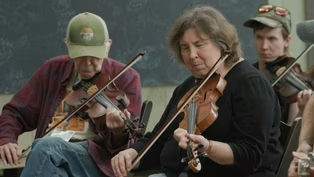
Cowan Creek Mountain Music School
Video has Closed Captions
Clip: S32 Ep4 | 7m 9s | Experience old-time music and Kentucky tradition at Cowan Creek Mountain Music School. (7m 9s)
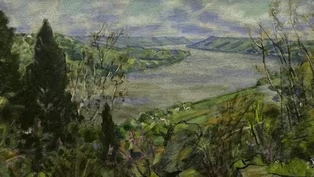
Video has Closed Captions
Clip: S32 Ep4 | 6m 37s | Explore Harlan Hubbard’s art, love of the Ohio River and life at Payne Hollow. (6m 37s)
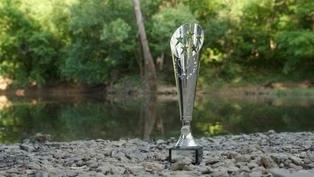
Video has Closed Captions
Clip: S32 Ep4 | 7m 1s | A Kentuckian becomes the first American World Stone Skimming Champion in Scotland. (7m 1s)
Providing Support for PBS.org
Learn Moreabout PBS online sponsorship













Support for PBS provided by:
Kentucky Life is a local public television program presented by KET
You give every Kentuckian the opportunity to explore new ideas and new worlds through KET. Visit the Kentucky Life website.