DO YOU HEAR THE "AN" IN ANT?
7/9/2024 | 58m 19sVideo has Audio Description
LET’S LEARN about transformation! Learn how mealworms turn into beetles. Play "Trade Up."
LET’S LEARN about transformation! Solve “The Case with No Questions.” Play “Trade Up.” Learn about animal superpowers and how a mealworm changes into a beetle. Read CAN YOU SEE IT? Explore the sounds "an" and "am." One-hour programs help children ages 4-7 learn while having fun. Content provided by Brooklyn Preschool of Science, Fyütch, Houston Zoo, Studio in a School, Meet the Helpers.
See all videos with Audio DescriptionADProblems playing video? | Closed Captioning Feedback
Problems playing video? | Closed Captioning Feedback
Let's Learn is a local public television program presented by THIRTEEN PBS
DO YOU HEAR THE "AN" IN ANT?
7/9/2024 | 58m 19sVideo has Audio Description
LET’S LEARN about transformation! Solve “The Case with No Questions.” Play “Trade Up.” Learn about animal superpowers and how a mealworm changes into a beetle. Read CAN YOU SEE IT? Explore the sounds "an" and "am." One-hour programs help children ages 4-7 learn while having fun. Content provided by Brooklyn Preschool of Science, Fyütch, Houston Zoo, Studio in a School, Meet the Helpers.
See all videos with Audio DescriptionADProblems playing video? | Closed Captioning Feedback
How to Watch Let's Learn
Let's Learn is available to stream on pbs.org and the free PBS App, available on iPhone, Apple TV, Android TV, Android smartphones, Amazon Fire TV, Amazon Fire Tablet, Roku, Samsung Smart TV, and Vizio.
Providing Support for PBS.org
Learn Moreabout PBS online sponsorship- [Presenter] Ready to learn?
- I have with me here my friend.
- Melena!
- [Presenter] It's time to share a story, read and write.
- What's this word going to be?
- [Presenter] Discover science, sing.
♪ How you gonna clean up the earth ♪ ♪ If you don't clean your room ♪ - [Presenter] Play and so much more.
- We solve - [Both] Word mysteries!
- [Presenter] Stay tuned for lessons and activities.
[children laughing] [cheerful music] - [Presenter] Funding for this program was provided by the JPB Foundation.
[cheerful music continues] - Did a word that's important to you go missing?
- And now all you can feel, do, or think is the opposite of that word?
- Then call us!
I'm Sly.
- And I'm Gabby.
We're word detectives and we solve - [Both] Word Mysteries!
- Together, we run the Wordsville Online Detective Agency.
- We'll find your missing word fast.
- Not to mention briskly.
- And swiftly!
- Yeah, we're really good with words.
- [Children] Wordsville!
- Hey Gabby.
That's weird, I want to ask you something, but I can't.
- Just a sec.
I'm checking to see if Artist Clay posted about his top secret masterpiece yet.
No one even knows he's working on it.
Oops.
I shouldn't have said that!
- Don't worry.
He told me about it too.
I guess he's not that great at keeping things top secret.
- [chuckles] No, he's not.
Reporter Read's calling.
- Normally I would ask about the reason, but I guess I'll just answer.
- Word Detectives, I need your help.
- Something seems to be wrong.
Huh?
I meant to ask that as a question.
- That's why I'm calling!
Something is missing.
This photo is from the newsroom party.
- But you're the only one who works in the newsroom.
- That's not the point.
This board shows how I investigate a news story.
First step I take is to inquire by asking questions about what I'm investigating.
Look!
- The word inquire is gone!
I'm taking a screenshot for later.
- Now I understand why we can't ask questions.
Inquire means to ask someone for information, as in I would inquire how this happened.
But I can't!
- If we can't ask for information, we can't solve this word mystery!
- We can still investigate.
We just need to do it without inquiring or asking questions.
- Wait, on Reporter Read's board it says observe.
- Observations are what we make when we watch and notice things.
- And I observe a big glob of slime in the scene of the mystery.
There!
- The slime is Scientist Cosmo's invention.
He was here earlier.
- Tell us what happened so Sly can animate it for us.
- [Sly] Recap time!
- [Reporter Read] Scientist Cosmo asked me to take back a story I wrote yesterday about his invention, sticky slime.
It's supposed to stick stuff together, but it didn't work.
So I wrote an article about it.
He said he fixed the formula, but when he showed it to me, it exploded and slime went everywhere.
There was no way I could take back my story after that!
As he cleaned up, Artist Clay came to take some old newspapers.
I was going to interview him about his new masterpiece, but by the time I set up my voice recorder, both of them and the word inquire were gone.
- That must have been upsetting.
- Yes, it was.
- That gives me an idea!
We can use statements to get information.
- But questions ask something and statements tell something.
- Exactly.
Sly, make a statement that tells us something that Reporter Read can agree or disagree with.
- Okay, Baker Graham and Firefighter Amber came to the newsroom today.
- No, Artist Clay and Scientist Cosmo came to the newsroom today.
- I get it!
If I tell Reporter Read the word inquire went missing- - Yes, you are correct.
Ah, I see how this works!
- And we'll work out this word mystery.
- Case notes but with no questions.
- On it.
We know what happened.
Someone took the word inquire and now no one can ask questions.
This is where it happened.
The newsroom.
This is when it happened.
As Reporter Read set up a recorder.
- Our suspects are Scientist Cosmo and Artist Clay.
Now to find out who did it, how and why.
- Let's start with Scientist Cosmo.
- Words Detectives, something happened, something bad!
I can't ask any questions and asking why and how things happen is the whole point of being a scientist!
- That's because the word inquire is missing.
- Please respond to some statements so we can figure out what happened.
- Certainly!
- Today you went to the newsroom.
- Yes, I want to Reporter Read to take back that insensitive story she printed about my sticky slime.
She wouldn't even ask me one question about my new formula.
She was too busy inquiring about Artist Clay's top secret masterpiece, which we all know about.
- There's something weird going on with your hands.
- My sticky slime kind of exploded in the newsroom.
I cleaned it up and I got sticky slime on my hands and now everything I touch sticks to me.
- That's amazing!
We'll be in touch.
- [Gabby] Uh-oh, you're stuck on the call.
- Maybe try using your nose.
- Okay.
Bye.
- Scientist Cosmo was upset Reporter Read wouldn't take back her story or inquire about his new formula.
- Let's see what Artist Clay has to say.
- Hello Word Detectives, you have called for a reason I assume.
- Artist Clay, we need you to respond to some statements like- - Your top secret masterpiece is ready and you wanna show us!
- I don't know what you mean.
- Okay, here's our next statement.
You went to the newsroom today.
- Yes.
I needed old newspapers, um, for no reason.
I was about to take them and go when Reporter Read stopped me to do an interview.
- You mean you asked Reporter Read if you could take the old newspapers.
- No, asking questions is a waste of time.
Now, I must get back to what I was doing before.
- Case notes time.
- [Gabby] Scientists Cosmo wanted Reporter Read to take back her sticky slime story, but we know he loves questions.
- And Artist Clay does not.
He took the old newspaper without asking.
- He also didn't wanna talk about his new top secret masterpiece with us or Reporter Read.
- [gasps] Now we know how it happened, let's show everybody else!
Now presenting the word mystery animated reenactment of...
The Case With No Questions.
- Reporter Read, please take back that story about my sticky slime.
- No.
- Okay then, do a report on my new formula.
It's super sticky now!
- Definitely no.
Artist Clay!
- I'm taking these old newspapers.
- I want to inquire about your rumored art project.
I'll get my voice recorder and interview you!
- I'd rather you didn't inquire.
Artist Clay is who did it!
- I knew it!
- He took the word inquire when Reporter Read wasn't looking.
That's how.
- And he didn't want Reporter Read to ask him any questions.
- That's why he did it.
- You're right.
The article was going to reveal that I am working on a top secret masterpiece.
- I didn't know it was a secret.
Everyone knew about it.
- Tell me who.
- Me!
- You told me.
- Me too.
- Oh!
Sorry if I've been cranky.
My masterpiece still needs something.
Normally I'd ask myself what's missing, but I can't, because I took inquire!
I must return it right away so I can finish my art.
- [Reporter Read] The word inquire is back!
- Feels good to ask questions again, right?
- It does.
I'm sorry for taking the word inquire from Wordsville.
- May I put a picture of your masterpiece in the newspaper?
- Great question.
You may.
And my new masterpiece is ready.
Here it is!
- Yay.
- Nice Job Artist Clay.
- Isn't it magnificent?
The question mark is what was missing.
- Thanks Word Detectives!
- But Gabby, I have to ask, what does Artist Clay's masterpiece mean?
- I think we're supposed to find our own answers to that question.
[both laugh] [bright music] - Hi friends!
It's me, Isabel and welcome to my reading nook.
My reading Nook is my cozy place where I come to read great books like this one.
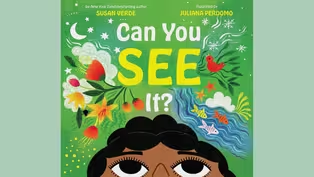
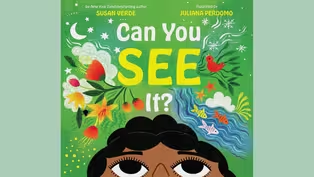
This book is called, "Can You See It?"
And it's written by Susan Verde.
She's the author.
And it's illustrated by Juliana Perdomo.
She drew the pictures.
And today as we read, I'd like to think about the word see.
There are many different words we use that mean the same or similar to the word see and Susan Verde uses them in her book.
So I'd like you to look for as many as you can see.
Ready?
Let's get started.
Can you see it?
When I am busy moving through my day, watching where I go, looking shows me what is right in front of my eyes.
But when I slow down, find stillness, and notice with patience, that means calmness, and curiosity, I can see.
Seeing shows me more.
I can look at a tree, but I can see life.
Signs of change and letting go, flowering and feeding, shading and sheltering.
A place to call home.
What can you see?
Friends, what do you see living in the tree?
I can look at a city block, but I can see beauty.
Old mixed with new, life in unexpected places.
Moments of calm in the hustle and bustle.
A story of community.
Community is people coming together.
What can you see?
I can look at the sky, but I can see magic.
Floating, flying, arching, sparkling, like the stars.
An invitation to stay in or go out, rest or play.
What can you see?
I can look at a friend, but I can see kindness, a helping hand, making space for everyone, attention to little things that make a big difference.
What can you see?
Friends, how do you show kindness to others?
I love to share.
What do you do?
I can look at my family, but I can see love, time together.
A smile that says, "I am happy you are here."
A hug just when it's needed.
A warm meal made to share.
What can you see?
I can look at myself and I can see my inner light shine.
Can you see yours?
Glowing from the inside out, your creativity, those new ideas, your compassion, your caring, your joy, all that makes you you.
What can you see?
We can look, but seeing is the feeling in our bellies when we realize the world is full of miracles!
This glorious universe has so much to share.
Can you see it?
I loved that story and it makes me think about looking and seeing.
So I want you to look around.
You can look out of the window.
You can look around the room you're in, the place you are, and then I want you to draw what you see.
So when I look out of my window over there, I see a tree.
[no audio] And I see some grass.
And is that a bird?
That's what I see.
What do you see?
Wow!
That's amazing, friends.
I love your art!
[cheerful music] There you are friends!
I see you!
I was looking all over for you.
I'm so glad I found you because today we are going to be learning about sounds that come together.
And we call them glued sounds and they make sounds together.
Like when A that says ah, meets N, that says n, an is the glued sound they make or wait, wait, wait!
When A that says ah, meets M that says m, the glued sound they make is am.
We're gonna be learning about that today so let's get started!
Our first activity of the day is a phonemic awareness activity.
Phonemic awareness activities help us to hear all the sounds in words and today we're going to be blending sounds together to make a word.
So let's try one together.
P-a-d. Pad.
Pad!
Good job.
Let's try another one.
Ch-a-t. Chat.
Chat!
Chat-chat, chat-chat.
Let's try another one.
k-l-ah-p. Clap.
Clap!
[clapping] Clap.
Last one.
G-l-ah-d. Glad.
Glad!
I'm so glad you're here.
Let's get ready to read.
Let's build some words together.
Today we're talking about the two letters A and N that come together to say an and the two letters A and M that come together to say am.
We think of these as glued sounds because when we start to blend the sounds together, an, the ah slightly changes, and the same is true for the am, am glued sound.
So we glue them together to remind ourselves of that change that the short A is going to make.
So now that we've talked about that, it's time to build some words.
Here I have my glued sounds, am and an together on cards to remind myself to keep the sounds together.
Let's build a word.
R-am.
What's that word?
Ram.
A ram is an animal that looks like this.
Now, if I were to add the letter C in front of this word, what do you think my new word would be?
Let's see if you are right.
Cr-cr-cram.
What's the word?
Cram.
That's the word!
When you cram, for instance, if I were to cram things into my stomach, that means I'd have to eat something really big and a lot of it.
[imitates eating] If I wanted to study for a test, I could cram for it, which means I wanna take all the information that I've learned and put it up here so that I'll do well on the test.
Right up here in my noggin.
Cram.
What's the word?
Cram.
Let's build another word.
B-am.
Bam.
Bam is a sound.
That's a sound word.
Bam!
H-am.
Ham!
Ham is a type of meat.
Now I'm going to move on to my next glued sound.
An!
And I am build one of my favorite words.
Can.
Can!
What happens when I add a consonant at the end?
Does this word look familiar?
And.
And!
I like you and you and you.
You get the point.
Last one.
T-an.
Tan!
Great job!
Tan is a color.
You are now ready to read.
Come!
Read with me.
Let's read.
Think of the glued sounds that we learned about today.
Answer the following two questions.
What sounds do these letters make when you see them together?
Am.
What sounds do these letters make when you see them together?
An.
Great job!
It's time to show what you know.
When the word appears on the screen, read it as fast as you can.
If you need to sound out the words as you read, that's fine.
Let's go!
[no audio] How did you do?
Did you read all of the words correctly?
Cam, fan, slam, pan, man, ant.
Great job!
Now we're ready to write.
Are you ready to write with me?
[children cheering] Great!
First you're going to need to get a pencil or something to write with and a paper or something to write on.
So go ahead and go get that.
[bright music] Great.
We are going to write a word together.
The word we're going to write is slam.
Can you say that word?
Remember, we wanna hear all the sounds in the words so sometimes we'll tap out the sounds so we can hear them clearly.
S-l-am.
Our glued sound.
I learned that today.
Go ahead and write that word.
Good!
Is this what you wrote?
Listen as I sound it out as I write.
S-l-am.
When you slam something, you close it firmly.
You might slam a car door or slam a door in your house.
Slam.
You did such great work today, friends!
I am so happy you were able to spend time with me.
Can't wait to see you again.
See you again soon, friends.
Bye!
[cheerful music] - Hello Fyutch!
I don't know about you, but I live on Earth, so every day is Earth Day.
♪ Pick it up, pick it up ♪ ♪ Put it back, put it back ♪ ♪ Switch it up, switch it up ♪ ♪ Swap it out, swap it out ♪ ♪ Pick it up ♪ ♪ Put it back ♪ ♪ Switch it up ♪ ♪ Swap it out ♪ ♪ Pick it up ♪ ♪ Put it back ♪ ♪ Switch it up ♪ ♪ Swap it out ♪ ♪ Pick it up, put it back, switch it up, swap it out ♪ ♪ Pick it up, put it back, switch it up, swap it out ♪ ♪ Pick it up, put it back, switch it up, swap it out ♪ ♪ Pick it up, put it back, switch it up, swap it out ♪ ♪ Pick it up, put it back, switch it up, swap it out ♪ ♪ Pick it up, put it back, switch it up, swap it out ♪ ♪ Pick it up, put it back, switch it up, swap it out ♪ ♪ Yeah ♪ ♪ Look, we made a mess ♪ ♪ Time to pick things up ♪ ♪ Bad habits ♪ ♪ Time to switch things up ♪ ♪ It's so tragic ♪ ♪ Why we still drinking water bottles made of plastic ♪ ♪ The least that you can do is get you a refillable ♪ ♪ The plastic ends up in the ocean killing animals ♪ ♪ The trash on the land is not biodegradable ♪ ♪ Better habits start at home, my dude ♪ ♪ How you gonna clean up the Earth ♪ ♪ If you don't clean your room ♪ ♪ So pick it up, pick it up ♪ ♪ Put it back, put it back ♪ ♪ Switch it up, switch it up ♪ ♪ Swap it out, swap it out ♪ ♪ Pick it up ♪ ♪ Put it back ♪ ♪ Switch it up ♪ ♪ Swap it out ♪ ♪ Pick it up, put it back, switch it up, swap it out ♪ ♪ Pick it up, put it back, switch it up, swap it out ♪ ♪ Yeah ♪ ♪ Do you know where your trash goes ♪ ♪ To a landfill ♪ ♪ But we fill those ♪ ♪ Zero waste is the new goal ♪ ♪ It's not enough if we just recycle ♪ ♪ Refuse if you don't need it ♪ ♪ I don't need that ♪ ♪ Reuse, use it again ♪ ♪ Use it again then ♪ ♪ If it breaks, try to repair it ♪ ♪ You can fix that ♪ ♪ When you finish, then you can share it ♪ ♪ Re-gift it ♪ ♪ Donate those old toys, shoes and sweaters ♪ ♪ One person's trash is somebody else's treasure ♪ ♪ It's time to declutter clutter ♪ ♪ Hold up, wait ♪ ♪ Don't throw it away, pass it on to another ♪ ♪ Pick it up, pick it up ♪ ♪ Put it back, put it back ♪ ♪ Switch it up, switch it up ♪ ♪ Swap it out, swap it out ♪ ♪ Pick it up ♪ ♪ Put it back ♪ ♪ Switch it up ♪ ♪ Swap it out ♪ ♪ Pick it up, put it back, switch it up, swap it out ♪ ♪ Pick it up, put it back, switch it up, swap it out ♪ ♪ I wish that I could wake up to a world with no pollution ♪ ♪ But let's be realistic and talk about solutions ♪ ♪ Here's a couple tips we can switch for improvement ♪ ♪ If everyone commits, we reduce the carbon footprint ♪ ♪ Turn the running water off when you don't need it ♪ ♪ Turn the lights off in the room when you leave it ♪ ♪ Try to carpool or use public transportation ♪ ♪ Turn the screen off, go outside, enjoy nature ♪ ♪ Compost food scraps to fight the climate change ♪ ♪ Shop at farmer's markets and support the local flavor ♪ ♪ Plant a little garden, something small, nothing major ♪ ♪ And when you see some trash on the pavement ♪ ♪ Pick it up, pick it up ♪ ♪ Put it back, put it back ♪ ♪ Switch it up, switch it up ♪ ♪ Swap it out, swap it out ♪ ♪ Pick it up ♪ ♪ Put it back ♪ ♪ Switch it up ♪ ♪ Swap it out ♪ ♪ Pick it up, put it back, switch it up, swap it out ♪ ♪ Pick it up, put it back, switch it up, swap it out ♪ [hip hop instrumental music] [hip hop instrumental music continues] [cheerful music] - [Narrator] Some superheroes can make themselves invisible.
Clouded leopards can do this with their spots.
They have large spots that are shaped like clouds that work to help them camouflage in the treetops where they spend most of their time.
Superheroes are also known to be able to scale tall buildings and leap from rooftops.
For clouded leopards with their long tails and sharp claws, they are perfect treetop acrobats.
As they move through spots of light and shadow, their cloud shaped patterns allow them to almost disappear from view when they stand still.
Clouded leopards have sharp claws and specially designed ankles.
They can rotate their ankles more than other cat species.
This means that unlike the larger cats, they can not only climb up trees, but they can climb down trees, hang upside down, and move around much more easily and with more stealth or secrecy than other cats.
This allows them a better chance to catch food like birds and small monkeys.
In order to spy their prey, clouded leopards also have excellent binocular vision.
This super sight is crucial for judging distances as they climb and pounce on prey.
Their pupils, the black center of their eyes, are also different from any other cat's pupils.
They never get fully round like big cats, yet they never shrink to vertical slits like small cats.
Instead, they stay in an oblong shape.
[bright music] We have four clouded leopards and the two pairs both work together just like a superhero and their sidekick.
Clouded leopards usually do not like other cats in their space.
However, when a male and a female clouded leopard are paired together when they're around 1-year-old, they're more likely to get along well and make great parents.
Our older two had cubs late last year.
In the wee hours of November 12th, Suksn gave birth to two tiny cubs, Nova and Luna.
[bright music continues] Now that they're getting bigger, the duo explores their habitat and tests out all of their climbing superpowers.
[cheerful music] - Hi everybody.
My name is Daniel.
So today we're going to work with a new art material.
Now, what is this?
This is clay.
Now what do you notice about the clay?
- It looks hard.
- It looks a little bit hard.
What do you notice about the color of the clay?
- [Child] Hmm, it's- - Gray.
- Gray.
- It is gray.
It is gray.
It looks a little bit hard, a little bit soft, but it also feels squishy.
- It's also clay and we can break it and turn it into whatever we want.
- Clay is a material that we can transform using our hands.
We are going to use our hands as tools to change the clay.
I wonder what I can do with my hands to change the shape of the clay.
Hmm, I wonder what will happen if I roll the clay.
Can you show me rolling?
So I'm gonna roll like this.
We're gonna roll around and around.
Roll, roll, roll.
Let's roll.
Now, what happened when it rolled around?
What happened to the clay?
- It turned into a ball.
- It turned into a ball or a sphere.
Excellent.
Can we pull in a different way?
What about like this?
Go like this.
Roll back and forth everybody.
Rolling back and forth.
Rolling back and forth.
Excellent.
We can also roll on the table.
I'm gonna roll a little bit like this.
Back and forth.
Now what do you notice is happening to the clay?
- [Child] It looks... - Longer.
- [Daniel] It's longer.
It is getting longer.
- And if we get a little piece and turn it into a circle and we roll it, then it'll turn it into a snake.
- We can roll it.
And if it goes very long, it will remind you of a snake.
Now I wonder, what else can it do?
I have an idea.
Do you notice that the clay's a little bit long?
I wonder what will happen if I just go like this.
Everybody show me like this.
Twisting.
Everybody say twist.
- Twist.
- What do you notice happen when I twist the clay?
- It's breaking.
- It's breaking a little bit.
And I like that it has some lines here, almost like a spiral.
Now I'm going to press.
Everybody press.
Press, press.
And I'm gonna press a little bit on the table.
Just a little bit.
Not too much.
Press, press, press, press.
What happened to the clay when we press?
- It gets soft.
- It's also soft and it flattened.
It flattened a little bit, almost like a little pancake.
Now show me your finger.
Show me your finger.
Let's poke.
I'm gonna try to poke.
Can you say poke?
- Poke.
- Poke.
So I'm trying to poke.
Mm, the clay's a little bit harder.
Show me your thumb.
We're gonna go up, up, up, down, down, down.
And poke.
I'm gonna poke.
What do you notice what happened when I poke?
- A hole!
It's like a donut!
- Yes, I made a hole like a donut.
Now, I would like to pinch the clay.
Show me your pinching fingers.
Pinching fingers.
And I'm gonna pinch, pinch, pinch, pinch.
Wow, I'm gonna pinch all around my clay.
What happened when I pinched the clay?
- It turned into a alien spaceship.
- There are different parts that are sticking out.
It's a little bit spiky.
- It's like a flower.
- It's like a flower too.
So let me see, what else can I do using my hands to transform the clay?
Oh, what happened?
- It broke.
- I broke the clay, right?
But I can also put it back together and we can do it all over again.
So artists, it is your turn to use your hands to transform clay.
So how are you going to use your hands to change the clay?
- I'm going to make a donut.
- So let me ask you, how does the clay feel?
- It feels very hard.
- [Daniel] It feels very hard.
What else?
I love that you're using your fingers and you're poking, you're putting your fingers in the clay.
- I'm squishing.
- You're squishing.
I love that you're rolling back and forth.
Excellent.
Mia, I noticed that you took a small piece and you're rolling to make it longer.
- Look what I'm doing.
I'm opening it with my thumbs.
- [Daniel] You are opening it with your thumbs.
Are you poking a little bit or pressing?
- I'm opening it.
- You're opening it.
I like that you're pulling and you're twisting.
And I like that you're using your muscles.
You're really, really, really working hard.
- Look.
- What happened when you twist the clay like that?
What happened?
- It got a little broke.
- It broke a little bit.
Yes, you're right.
It's breaking a little bit.
Would you like to see if you can break it all the way?
Would you like to try that?
- Yes I did.
- Oh wow.
So how many pieces of clay do you have now?
- One, two.
I'm gonna put it back together and see what it turns into.
- [Daniel] What happened when you pressed, Cici?
What happened when you pressed your piece?
- It's getting flatter.
- It got flatter.
Yes.
Hey Mia, how are you?
Tell me, how do you make that piece?
- I was rolling.
- This one is getting really flatter.
If I roll it, it's getting flatter.
- So tell me, what are you doing to the clay?
- Rolling it.
- You're rolling it?
- Yeah.
- And how did you get it to be a little bit more flat?
- I'm rolling it and it's going sideways.
- Wow, you changed your clay in so many different ways.
So let me see.
Mia, what do you do with your hands to change the clay?
- So I made a potato and a tart and I made a rainbow.
- And how did you make those pieces?
- I rolled and did all the shapes.
- So I noticed that you were rolling.
Can everybody show me rolling back and forth like this?
Excellent.
Let's look at Cici's.
Cici, how did you change the clay using your hands?
- I rolled.
- Did you roll back and forth or around?
- Around.
- Can you show us how you rolled around?
Let's do it like this.
Roll.
Excellent.
So we can roll in different ways.
Amond, I noticed that you have a hole in your piece.
How did you make the hole in your clay?
- This part here and then I made my thumb over here and then I broke a little.
- [Daniel] You broke a little bit there and how did you make the hole?
Did you use your fingers to make the hole?
- Yeah, and I made my fingers to make the rock.
- So I noticed that you were poking.
Can everybody show me your fingers?
And let's poke with different fingers.
Everybody go poke, poke.
And let's poke with the thumb too.
We're gonna poke, poke, poke.
Excellent.
Did you enjoy changing the clay?
- Yeah.
- Now it is your turn to transform the clay.
How are you going to use your hands to change the clay?
Have fun artists.
[cheerful music] - Hello, I am Luca.
- [Mother] Uh-huh.
- Hello, I am Micah and today I will show you how to pick an egg.
I am four and three quarters.
First get under the skin.
Once you do that, just needs to keep cracking.
[bright music] Some got on my shirt.
[laughs] Stop that, squeaky egg!
And that's how you do it.
Oh, there's a little piece there.
Here we go.
Mama.
- [Mother] Yeah!
[cheerful music] - Hi friends.
Welcome to my classroom.
I'm Miss Zoe and today we are going to talk about place value.
What is place value?
Place value pretty much means that each digit in a number has a value, right?
And so zero through nine are our digits and they can make up other numbers.
Let's say like the number 15.
What does that mean?
Well, it means we have 15 of something, right?
So today we are going to use our ones and our 10 stick we made out of snap cubes.
And our 10 stick represents 10.
And we don't really have to count it 'cause I know there's 10, but we're gonna make sure just in case.
One, two, three, four, five, six, seven, eight, nine, 10.
So if I had the number 15, what does that mean?
That means I have five ones and one 10.
Five ones and one 10.
What does that look like on a place value chart?
Well, let me take 15 of something.
So I'm gonna use these snap cubes.
Let's count out 15.
One, two, three, four, five, six, seven, eight, nine, 10, 11, 12, 13, 14, 15.
So I have 15 ones.
Now that's a lot to look at and a lot to count one by one.
So is there a way that we could represent this on our place value chart?
Yes.
So we are going to take our 10 stick and trade them for 10 ones.
One, two, three, four, five, six, seven, eight, nine, 10.
And because I took 10, I have to replace it with something, right?
So we have to replace it with a 10 stick.
And we have to replace it with the same value.
10 ones for one 10 stick.
So now let's take a look.
We have five ones and one 10.
And that matches our number 15, five ones and one 10.
So when we write out the number, it'll look like this, but when we work with place value charts, it'll look like this.
So now what happens now that I have only five ones, can I trade that up for a 10 stick?
Mm-mm because it's not the same value.
I would have to keep going until I had more ones so I can trade it for a 10.
And that's what we're gonna play today.
I'm here with... - Madison.
- Madison.
I call her Maddy.
Well, so today we're gonna play the place value game called trade up.
And we're gonna use the die.
She's gonna roll, she's gonna count out ones until we hit 10 or more.
And then we're gonna trade up for a 10 stick.
And how many ones are on the 10 stick?
- 10.
- 10.
Excellent.
Can you roll the die?
- Yep.
- And what'd you roll?
- Three.
- A three.
- A three.
- So she's gonna hand me, can you count them out?
- One, two, three.
- All right.
One, two, three.
Do we have enough to trade for a 10 stick?
- Nope.
- Nope not yet.
- Four.
Wait no, five.
- Five.
- One, one, two, three, four, five.
- All right, I'm gonna add the five.
One, two, three, four, five.
Let me count.
One, two, three, four, five, six, seven, eight.
Do I have enough to trade for a 10 yet?
- Nope.
- Nope.
All right, roll again.
- Four.
- Four.
- One, two, three, four.
- Four.
One, two, three, four.
I'm gonna count.
Ready?
Count with me.
- [Both] One, two, three, four, five, six, seven, eight, nine, 10, 11, 12.
- [Miss Zoe] Do I have enough to trade for a 10?
All right, I'm gonna give you 10 and you're gonna give me a 10 stick.
One, two, three, four, five, six, seven, eight, nine, 10.
So here's 10 for you.
And may I trade that for a 10 stick, please?
- Yeah.
- All right.
So now I have two ones and how many tens?
- 10.
I mean ones.
- I have two ones and how many tens?
- 10.
- I have 10 ones in this 10 stick.
So I have two ones and one 10 stick.
Excellent.
So what number does that make?
- 12.
- 12.
And here's our number 12.
Great.
Let's try again.
- Two.
- Two.
One, two.
Keep going.
- Four.
- Four.
- One, two, three, four.
- Four.
Keep going.
Two, three, four.
One.
- Keep going.
- Four.
One, two, three, four.
- One, two, three, four.
Let's count how many ones I have all together.
Ready?
- [Madison] One, two, three, four, five, six, seven, eight, nine, 10, 11.
- [Miss Zoe] All right, so can I trade 10 ones for a 10 stick?
- Yes.
- Let's count.
Two.
- Three.
- Four, six, eight, 10.
All right, I'll trade you for a 10 stick.
So now I have one ones and one tens, what number is that?
- 11.
- 11.
All right.
Last number.
I'm going to write the number and you're going to show me with our cubes.
- 26.
- So our number is 26.
Can you give me how many ones?
- Six.
- Six.
All right.
Hand me six.
- One, two, three, four, five, six.
One, two, three, four, five, six.
- Great.
So one, two, three, four, five, six.
And how many 10 sticks are you going to give me?
- Two.
- Two.
10, 20.
10, 20.
So that's 10, 20, one, two, three, four, five, six.
Excellent!
Alright, friends, thanks for hanging out with us and playing trade up.
Thanks.
Bye!
[cheerful music] - Hi helpers.
Do you know that you can be a changemaker?
Changemakers work to make the world a better place.
Every person can make change by standing up for what is right, like making rules fair for everyone, keeping our Earth clean, and helping people in need.
Changemakers can be activists, nonprofit workers, volunteers, and even kids.
Some famous changemakers are Martin Luther King Jr. who helped make rules fair for people of all skin colors, Jane Goodall who helped protect chimpanzees, and Malala Yousafzai who helped girls around the world to go to school.
Kids can help make the world better too.
We are never too young to be changemakers.
[cheerful music] - Hello everyone.
My name is Crystal and I'm here at the Brooklyn Preschool of Science with my friend Sahil.
Sahil, can you please say hello?
- Hello.
- How are you today?
- Good.
- Awesome.
Together we are going to do a really fun hands-on science activity.
Before we start with the activity, I have a question.
What is a transformation?
Do you know what a transformation is, Sahil?
- What?
- A transformation is a complete change.
- Complete change.
- Yes.
A good example of a transformation is like how a tadpole can transform into a frog or a toad or like a caterpillar, it can transform into a butterfly.
I have something here that goes through a complete transformation.
You ready to see what it is?
- Yeah.
- Yes.
They're inside here.
- Mealworms!
- Good job!
Mealworms.
- Mealworms.
- That's right.
I'm gonna put my hand out and I'm gonna pour these mealworms on my hand, okay?
- Yeah.
- Whoa.
- Whoa.
- Look at that.
There's so many, yes?
- [Sahil] Yeah.
So many mealworms.
- [Crystal] Yes and do you know that although they are called mealworms, they're actually not worms?
- No, they're mealworms.
- Well, yeah, but you know what?
This is actually the larvae of a darkling beetle.
- Those are mealworms.
- Yeah.
Look, they're walking on the table.
So these mealworms, right now, they're not fully developed.
They're gonna go through a transformation process called metamorphosis.
Can you say that, Sahil?
Can you say metamorphosis?
- Metamorphosis.
- Good job.
Gimme five.
Awesome.
That is what their process is called.
They're gonna go through four stages in their lifecycle.
Would you like to see?
- Yep.
- Okay.
So right now, I'm just gonna put the lid on this right here.
And I'm gonna leave these two baby mealworms on the table.
Now, I would like you to look closely at what I have here.
I'm gonna show you the four stages of the darkling beetle.
Okay?
Lifecycle- - Egg!
- Good job.
Egg.
For about one to four weeks.
And then after four weeks, do you wanna see what crawls out?
- Yeah.
- Our mealworm friends.
- A mealworm.
- Yes.
You see?
And then it's like dark yellow.
It has brown stripes.
The larva is a dark yellow with brown stripes.
It has two antennas, six tiny legs, and it has a hard body called an exoskeleton.
Can you say that?
Can you say exoskeleton?
- Exoskeleton.
- Whoa.
Amazing.
Ready for the next stage of its life?
- When it comes out?
- Not just yet.
Look at that.
Can you say pupa?
- Pupa.
- Yes, pupa.
Stage three.
The pupa stage is a state of sleep that can last about two to three weeks.
And after this stage, it turns into an adult darkling beetle.
- Beetle.
- Yes.
It hatches from the pupa.
At first it's white and then it turns brown, almost black.
Look.
You see the antenna?
Six legs, a head, a thorax, and an abdomen.
This transformation process, this is called metamorphosis.
You know what we're gonna do today with our mealworms?
- Yeah.
- We are going to create a mealworm habitat.
Can you say that?
Habitat.
- Habitat.
- Do you know what a habitat is?
- Yeah.
- What's a habitat?
It's a home.
- Home.
- A habitat is a home.
We are going to provide them with shelter.
- Shelter.
- Water and food.
- Shelter, water, food.
- Yes.
Okay, so now let's look at the materials we have.
So we have our mealworms.
- Mealworms.
- We have this clear plastic container here with the lid, and the lid has some holes.
What do you think the holes are for?
So they can breathe for air.
- Breathe.
- Yeah, those are air holes.
- And mealworms drink apples from the water.
- They can drink the water from the apple.
That's right.
That's why we have apple here.
What about the oats?
What do you think they do with the oats?
- They eat.
- Yes, we have, look at that.
We're gonna provide them with some shelter, some apple so they can drink the water and some oats so that they can eat.
- Yeah.
- Now Sahil, I need your help.
I'm going to take this Dixie cup and I'm gonna fill it up with some oats all the way to the top.
Can you please carefully take those oats and pour it into the container?
Good job.
Okay, so now we have our oats in there and now can you please take one slice of the apple and put it inside the container too?
Thank you, sir.
And now we're going to take, which mealworm would you like?
Pick a mealworm.
This one here?
Okay.
So I'm gonna very carefully pick this guy up.
Whoa.
He's dancing.
- Why is he dancing?
- He's a dancer.
He's happy because he's gonna get a new home.
- A new home.
- Yes.
So we're gonna carefully take our mealworm and we're gonna place it right inside its new home.
Look at that.
Now you know what we can do?
I love this activity because we get to now take this home and we can observe and watch it go through its life cycle.
- [Sahil] Yeah.
- Yes and then when it turns into a darkling beetle, you can go to the park and set it free.
- And then what will happen?
- Maybe it will start a family.
- Family?
- Yes.
How was that activity?
- Good!
- It was good or was it great?
- Great and good.
- Oh, great and good.
Awesome.
Thank you so much for your help.
Can we say see you later to our friends?
- See you later.
- Bye-bye now.
- Bye-bye.
[bright music] - Set, go.
- My name is Brian, my wife Ardith and I have two children, Cedro and Draelen.
All of our schedules are busy and we're all trying to balance our crazy, hectic life.
We try and incorporate breaks throughout the day for fun family activities and exercise or creative time where they can be away from the screen.
The kids can get refocused and re-energized.
And I think it overall helps with the stress levels.
A really great thing we've been doing recently is having grandpa reading time where we dial in with my stepfather and he's been helping the kids with their reading.
- Hi Drae-Drae!
- Hi.
- Are we ready for some new words?
- Yes.
- Grandpa will often prepare things based on what they're learning in school.
He's been putting together these things for my daughter, working with words and adding in family pictures to get her really excited.
- On top of her papa.
- And there you are sitting right up on his shoulders.
- It's really been a win-win situation as it gives me some more free time and the kids have really been enjoying their quality time with grandpa and their reading has really improved because of it.
- Well, very good Drae, you did great today.
- [Brian] It's been such a great way for us to stay connected as a family.
- Thank you.
- [Presenter] Funding for this program was provided by the JPB Foundation.
[cheerful music] [cheerful music continues] [cheerful music continues] [cheerful music continues] [cheerful music continues] [bright chime] [no audio]
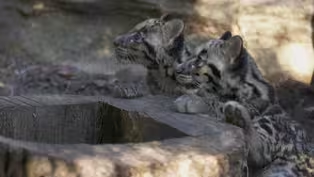
ANIMAL SUPERPOWERS: CLOUDED LEOPARDS
Video has Audio Description
Clip: 7/9/2024 | 2m 58s | Learn about animal superpowers by watching how the clouded leopard climbs. (2m 58s)
Video has Audio Description
Clip: 7/9/2024 | 7m | Isabel Simmons reads CAN YOU SEE IT? by Susan Verde. (7m)
Video has Audio Description
Clip: 7/9/2024 | 7m | Isabel Simmons reads CAN YOU SEE IT? by Susan Verde. (7m)
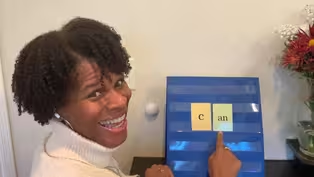
GLUED/WELDED SOUNDS: AN AND AM
Video has Audio Description
Clip: 7/9/2024 | 9m 18s | Explore glued and welded sounds "an" and "am" with Isabel Simmons. (9m 18s)
MEET THE HELPERS: THE CHANGEMAKERS
Video has Audio Description
Clip: 7/9/2024 | 47s | Learn how changemakers work to make the world a better place. (47s)
Video has Audio Description
Clip: 7/9/2024 | 1m 3s | Peel a hard-boiled egg with siblings Micah and Luca! (1m 3s)
Video has Audio Description
Clip: 7/9/2024 | 6m 56s | MIGHTY MORPHING MEALWORMS (6m 56s)
Video has Audio Description
Clip: 7/9/2024 | 3m 13s | Sing “Pick It Up,” a song about recycling with Fyütch. (3m 13s)
Video has Audio Description
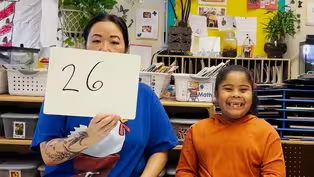
Clip: 7/9/2024 | 8m 39s | Play “Trade Up,” a two-digit place value game. (8m 39s)
WORDSVILLE: THE CASE WITH NO QUESTIONS
Video has Audio Description
Clip: 7/9/2024 | 7m 24s | Learn the meaning of the word "inquire" in Wordsville's “The Case with No Questions.” (7m 24s)
Providing Support for PBS.org
Learn Moreabout PBS online sponsorship















Support for PBS provided by:
Let's Learn is a local public television program presented by THIRTEEN PBS