
DO YOU HEAR THE “ED” IN DRIPPED?
7/16/2024 | 57m 53sVideo has Audio Description
LET'S LEARN about plants! Read UP IN THE GARDEN AND DOWN IN THE DIRT. Make leaf rubbings.
LET'S LEARN about plants! Read UP IN THE GARDEN AND DOWN IN THE DIRT. Make leaf rubbings. Stop to smell the roses. Solve “The Case of Too Much Happy.” Meet a gorilla. One-hour programs help children ages 4-7 learn while having fun. Content provided by Brooklyn Preschool of Science, Feel Your Best Self, Figure Skating in Harlem, Houston Zoo, N-Y Historical Society, Studio in a School.
See all videos with Audio DescriptionADProblems playing video? | Closed Captioning Feedback
Problems playing video? | Closed Captioning Feedback
Let's Learn is a local public television program presented by THIRTEEN PBS
DO YOU HEAR THE “ED” IN DRIPPED?
7/16/2024 | 57m 53sVideo has Audio Description
LET'S LEARN about plants! Read UP IN THE GARDEN AND DOWN IN THE DIRT. Make leaf rubbings. Stop to smell the roses. Solve “The Case of Too Much Happy.” Meet a gorilla. One-hour programs help children ages 4-7 learn while having fun. Content provided by Brooklyn Preschool of Science, Feel Your Best Self, Figure Skating in Harlem, Houston Zoo, N-Y Historical Society, Studio in a School.
See all videos with Audio DescriptionADProblems playing video? | Closed Captioning Feedback
How to Watch Let's Learn
Let's Learn is available to stream on pbs.org and the free PBS App, available on iPhone, Apple TV, Android TV, Android smartphones, Amazon Fire TV, Amazon Fire Tablet, Roku, Samsung Smart TV, and Vizio.
Providing Support for PBS.org
Learn Moreabout PBS online sponsorship- [Narrator] Ready to learn?
- And I have with me here, my friend.
- Milena.
- [Narrator] It's time to share a story, read and write.
- What's this word going to be?
- [Narrator] Discover science.
Sing.
♪ How you gonna clean up the earth ♪ ♪ If you don't clean your room ♪ - [Narrator] Play, and so much more.
- We solve word mysteries!
- Word mysteries!
- [Narrator] Stay tuned for lessons and activities.
[student giggles] [bright music] Funding for this program was provided by the JPB Foundation.
[bright music continues] - Did a word that's important to you go missing?
- And now all you can feel, do, or think is the opposite of that word?
- Then call us.
I'm Sly.
- And I'm Gabby.
We're word detectives, and we solve word mysteries!
- Word mysteries!
Together, we run the Wordsville Online Detective Agency.
- We'll find your missing word fast.
- Not to mention, briskly.
- And swiftly.
- Yeah, we're really good with words.
Wordsville!
- Wordsville!
- Hey, Gabby, how are you?
- Great.
I just broke my favorite mug.
And I really loved it, too.
How are you?
- I got a balloon, but it slipped out of my hand, and now I'll never see that balloon ever again.
- Sly, that's really sad.
[chuckles] - I know, but I feel great about it, which is weird.
We should both be more upset.
Is this a word mystery?
[phone ringing] - Artist Clay's calling, so, probably.
- Word Detectives, the most awful thing has happened.
My gloomy masterpiece has been stolen.
Look!
- [Gabby] Your painting says the word gloomy.
- The word gloomy means feeling sad and unhappy, like things won't get better.
- And since the word gloomy is gone, that must be why we're so cheerful!
- So if we don't solve this case, we'll stay happy forever?
- Sounds pretty good to me.
- Me too.
Sorry, Artist Clay, but your painting is long gone.
- This is serious.
I wanna feel all my feelings, even unhappy ones.
I should be sad my painting is gone.
It's not right that I'm happy.
- Well, okay.
Tell us what happened, and I'll animate it.
Recap time!
- [Artist Clay] I had just finished my gloomy masterpiece when Athlete Glory came over.
She admired my painting, but asked to see some cheerful art, so I went to go look for some.
That's when Baker Graham came in, but I asked him to wait.
So I went to look for the happiest painting in my storage room, but when I got back, Athlete Glory and Baker Graham are gone, and so was my gloomy painting!
- Fascinating.
Can you show us the scene of the mystery?
- Absolutely!
[intriguing music] - Hmm.
Cake and a table tennis paddle.
I'll take a screenshot for our case notes.
[camera snaps] - I dunno how those got there, but I sure am glad people are leaving their things all over my studio!
- Artist Clay, you'll be happy to know we'll solve this word mystery.
- Please hurry, Word Detectives!
I can't take much more of this!
- I'm really, really happy it's case notes time.
- What happened?
Someone stole Artist Clay's gloomy painting.
- And everyone is happy about it.
- We also know where it happened, in the art studio when Artist Clay went to look for a happy painting.
- [Sly] And that our suspects are Athlete Glory and Baker Graham.
- Let's figure out who did it, how, and why.
- Or we could quit now and be happy forever.
- Sly, we can't.
Come on, let's see the scene of the mystery.
- [Sly] There's that table tennis paddle and the cake again.
- The table tennis paddle must be Athlete Glory's.
Let's call her.
[phone rings] - Hey, Word Detectives.
How are you?
I'm feeling great.
- So are we.
- Someone took Artist Clay's gloomy painting, and now everyone is happy.
Can you tell us what you were doing at Artist Clay's studio?
- Sure.
I felt sad because my outdoor table tennis tournament got canceled.
It's too gloomy and rainy outside to have it today.
I went to look at art to cheer up.
- Oh, man, that stinks.
I should feel bad for you, but I don't.
- Neither do I.
When I got to the studio, Artist Clay was finishing up his gloomy painting.
It did not make me feel better.
I asked to see a more cheerful one, so he left to find one as Baker Graham came in.
- What did Baker Graham think about the gloomy painting?
Did he love it?
- Not at all.
He won't even look at it.
Pretty mysterious, right?
- It is.
- We saw a table tennis paddle in the studio.
Is it yours?
- Yep, but I have lots.
I'll get that one after practice.
- What a great interview.
She's the best!
- The best.
- Athlete Glory saw the gloomy painting, but she wanted to see more cheerful art instead.
- She also said that Baker Graham wouldn't even look at the painting.
- Let's find out why.
[phone rings] - Hi, Word Detectives.
[sneezes] - Oh, no, Baker Graham!
Are you sick?
- Yes.
I baked a new type of cake, but can't taste it because of my cold.
- So why were you at the art studio?
- I wanted Artist Clay be my taste tester.
He's always so grumpy and gloomy.
So, if my cake can make him happy, it could work for my bakery, too.
But when I got there, he left me with Athlete Glory, who was staring at this total bummer of a painting.
- Artist Clay's gloomy painting?
- I don't like sad stuff.
I didn't wanna look at the painting or think about the painting or touch the painting, so I found a place to leave the cake and came back to my bright, cheery bakery.
Oh, that kettle is for my herbal tea.
It's best that I go.
- What great suspects!
They're both so suspicious.
Case notes time!
Athlete Glory came to the studio to cheer up, but she didn't like the gloomy painting and asked to see something happier.
- [Sly] And Baker Graham wouldn't even look at the gloomy painting.
- Let's see the scene of the mystery.
- [Sly] Baker Graham's cake is on the easel where the painting was!
- But he said he wouldn't look at the painting or think about it or touch it!
- [gasps] I think I know what happened!
- Me too!
By the way, is your face hurting from all this smiling?
- So much!
[phone rings] Now presenting the word mystery animated reenactment of The Case of Too Much Happy.
- Athlete Glory, what do you think of my newest gloomy masterpiece?
- Well, I'm already pretty sad.
Do you have anything more cheerful?
- [sighs] I'll check my storage room.
- Artist Clay!
Just the person I was looking for.
[sneezes] - I'll be back in just a minute.
- Okay.
- Ugh.
So gloomy.
Sad.
Too sad.
I can't keep doing this.
- Better find a place for this cake without looking at the painting.
- Athlete Glory is who stole the painting, because it made her feel too gloomy!
- That's why she did it!
- She did it when Artist Clay was in the storage room.
- And Baker Graham had his back turned!
That's how.
- You caught me!
Seeing this painting after my tournament got canceled made me so, so sad, so I took it.
- [chuckles] I get it.
But if you were happy all the time, it wouldn't feel as special when good things happen.
- Oh, yeah.
Like when I win my games.
- Right, but if solving this case doesn't make me happy because I already am happy, is that even happiness?
[whimsical music] - I'll bring the painting back now.
- I think that's for the best.
- Thank you.
I'm happy to have my gloomy painting back.
The real kind of happy.
And it inspired me to create an even gloomier painting!
- Gloomier.
It's the best one yet.
- Athlete Glory, it's okay to feel sad sometimes, but it might help if you let yourself really feel your feelings.
If you pay attention to how you feel and let it pass, it won't get to be too much.
[all sighing] - You know what?
That helps.
I'm sad, but not so sad and gloomy.
- Glad that's over.
Now, who wants to cheer up with some cake?
- I do!
- Me too!
- Thanks, Word Detectives!
- Thanks, Word Detectives!
- Gabby, the gloomier painting made me feel sad about the balloon I lost.
- I'm sad about my mug too.
Let's feel our feelings.
[Sly sighs] You know what?
I feel better.
- Me too.
I'd also like some cake.
[both chuckling] [bright music] - Hi, friends.
My name is Anna.
I actually just came inside from playing in the garden with my daughters and their grandmother.
We love digging in the dirt and finding all, like, the little bugs and creepy crawlies we can find, and then also, like, picking the flowers and the vegetables.
Well, it's funny, because the story I was going to read today is all about the joy and wonder of gardening.
Would you like to listen to the story?
Great!
So, the story that I'm going to read to you today is called "Up in the Garden and Down in the Dirt" by Kate Messner, with art by Christopher Silas Neal.
As we're reading, pay close attention not only to the awesome things growing above the ground, but what's happening beneath the surface.
"Up in the garden, I stand and plan, my hands full of seeds and my head full of dreams.
Spring sun shines down to melt the sleepy snow.
Wind whistles through last year's plants and mud sucks at my rain boots.
'It's not quite time,' Nana says.
'Down in the dirt, things need to dry out and warm up.'
'What's down there?'
I ask.
'Down in the dirt is a whole busy world of earthworms and insects digging and building and stirring up soil.
They're already working down in the dirt.'
Up in the garden, we snap brittle stalks, scoop rusty armfuls, and wheel away weeds for the chickens.
While they squabble and scratch, we spread compost over the soil.
Down in the dirt, pill bugs chew through last year's leaves.
I give a gentle poke.
They roll up tight and hide in plated suits of armor, rolly polly round.
Up in the garden, it's time to plant.
I trail a furrow with my finger and sprinkle seeds in a careful row.
'Give them a drink,' Nana says.
We pat them down to snuggle in the dark.
Down in the dirt, a tomato horn worm rests, waiting for wings, and the leaves where she'll lay her eggs.
Up in the garden, carrot plants sprout.
Pea blossoms bloom.
Wasps are on the prowl.
And honeybees visit, legs loaded with pollen.
I weed and wilt in sun so strong, even Nana looks for shade.
Down in the dirt, earthworms tunnel deep.
I'm jealous of their cool, damp dark.
Up in the garden, rain shower!
Nana turns the hose on me.
Ee!
I hide behind the cucumber vines, but their leaves can't save me.
I shiver and laugh, drenched in Nana's rain.
Down in the dirt, water soaks deep.
Roots drink it in, and a long-legged spider stilt walks over the streams.
Up in the garden, there's so much to eat.
Ladybugs feast on aphids.
Nana crunches green beans.
I bite a ripe tomato, warm from the sun.
Juice dribbles down my chin.
Down in the dirt, a robin's beak finds a cricket, a beetle, a grub.
Slugs are scrumptious, too.
Up in the garden, we pick cukes and zucchini, harvesting into the dark.
Bats swoop through the sunflowers, and I pluck June bugs from the basil until it's time for bed.
Down in the dirt, skunks work the night shift.
They snuffle and dig and gobble cutworms while I sleep.
Up in the garden, a praying mantis wakes to hunt mosquitoes.
Nana sprays away the aphids, and I'm after grasshoppers, ready to swoosh, but...
Snap!
Someone else is faster.
Down in the dirt, a smooth, shining garter snake crunches on supper.
Up in the garden, the wind grows cool.
Pumpkins blush orange and sunflowers bow to September.
Nana ties them together to build a house for reading.
Down in the dirt, an orb-weaver spins her web, strand by silken strand.
She'll munch on moths tonight.
Up in the garden, colored leaves litter the squash vines, and we know the cold is coming.
Hurry, hurry and harvest!
There's enough for the neighbors, too.
Down in the dirt, frantic ants gather what we leave behind.
They're storing food for cooler days ahead.
Up in the garden, frost draws lace on leftover leaves where secret egg sacks hang, waiting for the warm to return.
We say goodbye and spread the winter blankets.
Down in the dirt, beetles burrow and scurry.
Earthworms curl tight in the dark.
When Grandpa calls us in for soup, an autumn moon is rising.
Up in the garden, dry corn stalks tremble, and the wind smells like winter.
But the long, ripe days of summer still rest in the garden beds.
The ladybugs and bumblebees, earthworms and ants, are hunkered down, hiding, biding their time, dreaming of sunshine and blossoms and sprouts, until the bare arms of trees and the blanketing snow, a whole new garden sleeps, down in the dirt."
How cool was that story?
Did you notice all the bugs crawling around underneath?
I think my favorite was when the little ants were scurrying, trying to gather everything before the winter.
Well, I hope you enjoyed today's story.
Until next time.
Bye!
[bright music] My name is Anna.
What's your name?
- Jada.
- Jada, and Jada, how old are you?
- You know how old.
- They don't know how old you are though!
How old are you?
- Four!
- Four years old, okay.
So, today we're gonna be learning about a new sound.
But before we do that, Jada is here to help me with a blending words activity.
Okay, I'm gonna explain it to you first.
I'm going to say two words, and then I want you to blend them together.
So for example, if I said base, ball, you would say baseball.
- Baseball.
- Oh, good job!
[laughs] Let's practice one word together, okay?
If I said air, plane, you would say- - Airplane.
- Ooh, airplane!
Okay.
You ready to try some with us?
You ready for some more?
- Easy.
- Easy, okay, here we go.
Ready?
- Yeah.
- Door, bell.
- Doorbell.
- Awesome.
News, paper.
- Newspaper.
- Pony, tail.
- Ponytail.
- Ooh.
Chalk, board.
- Chalkboard.
- All right, let's do one more.
You are doing awesome.
Ready?
Sun, flower.
- Sunflower.
- Good job, Jada.
And good job to you, too.
Okay, friends, let's work on our spelling pattern slash sound for today.
Okay, we're gonna be working with the sounds of E-D. Now, E-D can represent three different sounds.
Sometimes it's going to make what we call the id sound.
Sometimes it's going to make the t sound.
And then other times, it's just gonna kind of sound like d, okay?
So these are three different ways you can pronounce E-D when you see it at the end of a word.
Now, today, it's gonna be a little different though.
We're not just gonna be focusing on that sound, but also when we spell words with this E-D sound, it changes.
I know, this is a little weird.
Okay, follow along with me.
If I had the word, like, walk, right?
Like, I walked to the store.
Well, yesterday, if I walked to the store, all I have to do is add E-D to the end, right?
Well, now, here's something different.
If our word has a short vowel sound, then we have to do something called double.
Ooh, we have to double something?
So double means two of something.
Okay.
Let's first go over our short vowel sounds.
Let me get rid of some of this right here.
All right.
What is our short sound of A?
A, like apple.
What about our short sound of E?
Eh, like Ed.
What's our short sound for I?
I, like itch.
How about our short sound for O?
O, like octopus.
And how about our short sound for U?
Uh, like up.
Okay.
Now, what's gonna happen is if we had a word like trip.
Right?
Like, be careful not to trip down the stairs.
Well, if we actually tripped, ooh, I don't want that to happen, notice how my I is representing its short sound, i.
So, when I go to write the word tripped, I'm going to write T-R-I-P, so I'm gonna start with my base word.
Then I'm going to double that final consonant.
That means I actually need two Ps, and then I'm gonna add my E-D.
So, trip becomes tripped.
And then notice that E-D is making that d sound, tripped.
Okay, so see, we doubled our P before we added the E-D because of the short vowel.
All right, let's try another one.
Ready?
Okay, how about if I have the word stop?
Do I have a short vowel there?
Yeah.
My O, it's giving its oh sound, its short sound.
So, to write the word stop and to stopped, I'm gonna start with my base word, so, S-T-O-P, and then I'm going to double that final consonant.
So the final consonant is P, so I need a second P, before I add my suffix, E-D.
So, stop becomes stopped.
Okay, but we don't say stop-ped, right?
Stopped.
All right, let's try another one.
What about the word...
I like this word.
Brag.
Like, I know my daughters like to brag about how good they are at dancing, right?
What do you like to brag about?
How good you are reading, at math, soccer, football, basketball?
Love it.
All right, so, if I had the word brag, and I wanna say bragged, right?
He bragged about how good he was at sports.
Well, let's look back.
We have our A.
Is our A representing its short sound?
Brag, bra-ah-ah.
It is.
It is saying its short sound.
So in order to turn brag into bragged, I'm gonna start with my base word again.
And then what do I need to do?
That's right, I'm gonna double the ending consonant, that final consonant, which is a G, so I need a second G, before I add my E-D.
So, brag becomes bragged.
Okay, let's try one more together.
Ready?
How about, ooh, something I love to do, I love to shop, especially for books.
All right, so, what do I do for shop if I wanna turn shop into shopped?
So, right, first take note of the vowel.
Is O representing its short sound?
Shop.
Thumbs up, thumbs down.
That's right, it is representing its short sound.
So then what do I need to do to turn shop into shopped?
So, right, I'm gonna start with my base word.
That's right, I need to double the final consonant.
And in this case, I'm gonna double the P before I add my E-D.
So, shop becomes shopped.
Okay, I have a little challenge for you.
See if you can figure out which words you would need to double the consonant for, and which ones would just stay the same.
Good luck!
Remember, when adding E-D, you double the consonant when the vowel is representing its short sound.
If the word needs to have the consonant doubled, give a thumbs up.
If the word does not need the consonant doubled, give a thumbs down.
Hop, hopped.
Yes!
Slip, slipped.
Yes!
You try the last two on your own.
[no audio] Superb.
You were unstoppable at that last activity.
Great job!
So remember, when working with words that have the short vowel sound and end in one consonant, oftentimes, when you wanna add that E-D suffix, you're gonna have to double the final consonant first.
Try practicing this some more on paper, or just kind of writing it places.
Just ask a trusted adult for permission first before you start writing all over things.
[chuckles] Well, until next time.
Bye!
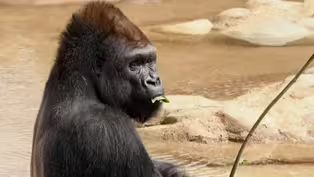
[bright music] [whimsical music] - [Narrator] Western lowland gorillas are native to Central Africa, though our gorillas were all born and raised in other American zoos.
Gorillas are the largest of the living apes, although the western gorilla is smaller and lighter than its eastern, or Grauer's, gorilla relative.
They live in structured family groups containing a dominant male, several females, and their offspring.
Mature male gorillas are known as silverbacks, and are named after the silvery white hair on their back, rump, and thighs.
Silverbacks form bachelor groups after leaving their family and before taking over or forming a new group.
Here in Houston, two troops call the zoo home, one family group and one bachelor group.
Gorillas inhabit a variety of forests, as well as lowland areas in their native habitat.
Their diet is mainly fruit and vegetation.
This means they are frugivores.
Unlike herbivores, whose diets rely solely on plants, frugivores enjoy diets consisting of primarily fruits, as well as leafy greens, nuts, and seeds.
Gorillas are also very intelligent animals and have been seen using tools.
They're quite capable of doing complex tasks.
They can make up to 25 vocalizations, such as grunts, laughs, hoots, barks, and screams, each with its own specific meaning.
Adults perform elaborate displays, including chest beating, running sideways, and tearing up vegetation, to frighten off an intruding male or other threat.
Mike is a perfect example of this.
Mike loves to act tough, but secretly has the sweetest, most playful personality.
His favorite thing is to charge and display at new people, and then watch their reactions from the corner of his eye.
Although they can walk for short distances on two legs, usually in conjunction with doing a display, gorillas generally get around by walking on all fours.
When doing this, they walk on their knuckles, which is known as knuckle walking.
In the wild, the endangered western lowland gorilla faces many threats.
Their native habitat in Central and West Africa is shrinking, largely due to the expansion of mining and agriculture in the area.
In the rainforest homes of animals like gorillas, chimpanzees, and okapi, there's a metal called tantalum that we use in electronics like our laptops and cell phones.
If we recycle our small electronics, the materials taken from wildlife habitats can be reused, allowing those habitats to be protected.
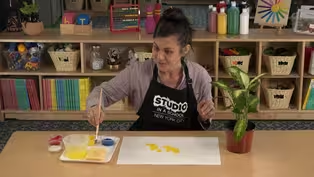
[bright music] - Hello, everyone.
My name is Lia.
Today we are going to try mixing colors to make the colors of this plant.
Let's see what we have to paint with today.
I have a big paper.
I have the paint brush.
What else do you see?
- Water!
- Water.
The water is to rinse the paintbrush.
We have the sponge to dry the paintbrush, and we have colors.
We have white.
- White.
- Yellow.
- Yellow.
- Red and blue.
- Red, blue.
- Wow, these three colors are called the primary colors.
Do you know why the primary colors are special?
Because when we mix them together, we can make new colors.
But today, we are going to make green.
So, which two colors do you think we should use?
[gentle music] - Blue and yellow.
- Blue and yellow, great.
So let's try.
Now, first, I'm going to hold the paintbrush in the middle, with the fingers in one side and the thumb in the other.
I'm ready to paint.
So, we're gonna dip the paintbrush in the yellow, and now paint on the paper.
[gasps] Do you like yellow?
I love yellow.
- I love bright yellow.
- I think I'm ready for blue.
Can I put the paintbrush into the blue?
- No.
- No.
- You wash!
- I need to wash it.
One, two, three, stop.
One, two, three, stop.
Knock, knock, knock.
And now, dry it on the sponge.
So dip it into the blue, and now I'm going to go... Wow, look at this blue.
- Maybe you have to mix it up.
- [Lia] Let's see what happens.
- Green!
- They make green!
Wow, this is great!
You were right!
I wonder if we can make the colors that I see on this plant.
Can you help me?
What colors do you see on the plant?
- [Student] Green.
- What kind of green do you see?
- So many greens.
- Hmm.
I see dark green.
Now, I want to make the dark green.
How I can make it?
Should I add more yellow or more blue?
- More blue.
- More blue?
Let's try it.
- It's dark green!
- It's dark green!
With a lot of blue, it make a dark green.
Now, do you see another kind of green?
- Light green!
- Light green!
Where do you see the light green?
- Over there.
- There.
- Over there, in the middle, right?
So, how am I gonna do the light green?
I'm going to start doing yellow.
And how much blue should I have to make it lighter?
- A little bit.
- Let's see if it happens.
[gasps] You were right.
With a tiny bit of blue, we make light green!
[gasps] What?
That is amazing!
Now, I see another kind of green.
Do you see this in the middle?
How we can make it so light, this green?
- Using the white!
- Should I add white to it?
Let's see what happens.
[Lia gasps] - It's turning really light!
- Now it's your turn.
What kinds of green will you make?
How you will mix them?
Are we ready?
- Yeah.
- And now, wow.
Yellow!
You are painting so carefully.
Wow.
[gentle music continues] [gentle music continues] - This is turning into so dark green.
- It's the light green.
- How you make light green is you have to put white in first.
Oh my goodness, look.
It was white, and now it's turning so yellowy.
- I'm gonna do white first this time.
- [gasps] Well, it looks like the plant.
Like the middle on the leaf that is really, really light green.
[gentle music] - And if I put yellow on top of it, it will turn so bright.
[gentle music continues] - It's green!
- Green!
- Yes, look, it looks like the leaf!
Look.
Beautiful.
Look, what is going on on those papers?
I think we are done.
Hey, man, I see a dark green on the bottom.
How did you make it?
- So, how to make it is just put white first.
- [Lia] White first, and then?
- Yellow.
- And then?
- Blue.
- Cici, which one is your favorite green?
- [Cici] This one.
- How did you make it?
- Yellow then green.
- Now, Mia.
I wonder, how did you make this light green on the top?
- So I used white, blue, and green.
- Fantastic.
Now it's your turn to mix all kinds of green.
What kinds of green will you make, and how will you mix them?
Have fun, artists.
[bright music] - I'll be back soon, Grandma.
Come on, Mina, let's go get the basketball court before somebody else does.
[Mina sighs] [whimsical music] Mina?
Hello?
What are you doing?
- Oh, it's such a beautiful day.
I was just taking a moment to stop and smell the roses.
- Smell the roses?
I don't see any roses.
- It's a thing people say, like an expression.
It means to stop and enjoy the moment.
[basketball bounces] Sort of like calling a timeout in basketball.
[basketball bounces] - Oh, I get it.
So you don't need real roses.
[basketball bounces] - Exactly.
Want to stop for a moment with me?
We can wake up all our senses.
- Cents?
Let me see.
I think I have a penny or two somewhere.
- [chuckles] Not cents like money.
Our senses.
We have five different senses.
Sight, sound, touch, taste, and smell.
[Mina sniffs and exhales] - Oh, I see.
- See anything special?
- Uh, the blue sky.
[wind rustles] - Yeah, let's pause and just look.
[wind rustles] - Ah!
The sky makes me so happy, I start to smile.
- Me too.
Did you hear the bird singing?
- Oh, I missed that.
- Listen again.
[bird chirping] - Ha!
Wow, I love that bird song.
♪ Doo doo doo, doo doo doo ♪ - That's awesome.
What other senses are we missing?
- Um, sight, sound, touch.
[gasps] Oh, the breeze!
- Ready to stop and focus on the breeze?
- Mm-hm.
[both sighing] [wind rustles] [birds chirping] - [sniffs] Ha!
Wow.
Not only does the breeze feel good on my skin, it also brought the smell from the bakery.
[sniffs] It smells so sweet!
[upbeat music] - [sniffs] I smell rubber.
[gasps] My trusty basketball!
- Ha.
What a beautiful day.
I feel wonderful.
- Me too!
It feels great to stop and check in with your senses.
- Did you see me stop and smell the roses?
We checked out the whole world with all our senses.
And you can, too.
Any time you need a break, just stop and smell the roses.
[sniffs] [bright music] - Hey, my name is Cheyenne, and today I'm gonna show you a two foot glide into a one foot glide.
[upbeat music] You're gonna start with your arms up and out, and your feet parallel.
Then you're gonna push off with one foot and then push off with the other, and then lift your foot up.
And then at the end, you're gonna finish nice with the snow plow stop.
Thanks for watching.
Bye.
[bright music] - All right, so right now, I have my friend... - Eva Luna.
- Eva Luna.
And we're gonna play Number Flash.
All right, so, today, I'm going to put a number of plant counters on here, I'm gonna flash it to you, and you have to see if you can show me the same amount, all right?
Are you ready?
All right, so I'm gonna show the camera, and then I'm gonna show you.
[bell dings] [upbeat music] - Five.
- Five, how did you know it was five?
'Cause you know, because how many are on the top?
How many squares are on the top row?
- Five.
- How many?
- Five.
- Five.
So, this is what I showed her, and she knew that the top row automatically had five, so she didn't even have to count.
Can you show them?
Do they match?
- Yes.
- Yes.
Great job.
All right, let's do another one.
Ready?
No peeking.
Ready?
[bell dings] - Four.
- Oh my goodness.
She knew right away it was four.
You're really good at this game.
Do they match?
- Yeah.
- Yes, and you knew that... How many are on the top all together?
- Five.
- Five, but there's one less, which makes... One, two.
- Three, four.
- Right, so five minus one we know is four.
Good job.
[bell dings] - Three.
- Oh, that was so fast.
Ready?
I did it fast.
[bell dings] - Six.
- How did you know that was six?
- 'Cause I saw it.
- 'Cause you saw it.
How many are on the top?
- Five.
- And how many are on the bottom?
- One.
- One, so we know that five and one more makes six.
Eva Luna's really good at this.
Let's see.
Do they match, friends?
- Yeah.
- Yeah.
All right, ready?
[bell dings] - Eight.
- Oh my goodness!
All right, let's see if I can get you.
Think I can get you?
All right, ready, friends?
[bell dings] - 10.
- Ah!
I'm gonna show my friends.
[bell dings] - Nine.
- My goodness, you are so good.
Let's see.
This is what I showed her, friends.
[upbeat music continues] Let's see if they match.
All right, friends, do they match?
- Yeah.
- Ready?
[bell dings] How many did I show you?
- Two.
- Two.
Oh my goodness, so fast.
I'm gonna try to do a super fast one.
Ready?
Ready?
[bell dings] - One.
- Ah, I was trying to trick you!
Let me see.
Show our friends.
They match.
I'm gonna show my friends.
I'm gonna show you.
How many is that?
- Seven.
- I can't trick her.
What if I do it this way?
[bell dings] Ready?
What is that?
- Six.
- Say it louder.
- Six.
- Six.
They match, friends?
- Yeah.
- Yeah, wow.
Okay.
I'm gonna try something new.
Ready?
All right, clear your board.
Let's see if I can get her on this one.
If I can't get her on this one, she must be an expert.
[bell dings] - [chuckles] Eight.
- Oh my goodness!
How did you know it was eight?
It was different!
How many are on the bottom?
- Five.
- And how many are on the top?
- Three.
- All right, show me.
I thought I was really gonna get Eva Luna there.
I tried to trick her by having five on the bottom and three on the top, and she still got it.
I changed the direction of where I'm putting them.
Show our friends what you have.
Do they match?
- Yeah.
- They do.
Great job.
So I just tried tricking Eva Luna in all these different ways, but her subitizing skills are so good.
Eva Luna, thanks for playing with us.
All right, friends, have a great day.
- Bye.
- Bye.
[bright music] - Welcome to Let's Learn Living History here at the New York Historical Society.
My name is Miss Cheyney, and today we're going to learn about 18th century home remedies for illnesses.
Indigenous people such as the Lenape for thousands of years used the plants all around them, including the knowledge of the people in their communities, to help heal one another.
As New York was colonized first by the Dutch and then by the British, people from all over the world came to this area, bringing their traditions and medical knowledge with them.
250 years ago, there were trained medical doctors and apothecaries, people who prepared and sold drugs for medical purposes.
Today, an apothecary would be a combination of a doctor and a pharmacist, a person who gives adults their prescription medications in the drugstore.
Today, pharmacists only give out medical drugs, but in the 18th century, apothecaries both made them and gave them out.
We know what type of medicines were used in the 18th century because much of this was written down in books.
We also have an idea of the types of remedies people used at home because there were recipe books and manuals.
Even if the healer was a Dutch apothecary, indigenous midwife, farmer, or an enslaved nurse, they all used the herbs available to them.
Today, you can get many of these items at a grocery store or pharmacy.
Now I'm gonna show you how you make a tea for a cough or sore throat that you can make at home.
Please remember to always have the assistance of an adult.
First, we're gonna talk about wild cherry bark.
Wild cherry trees are native to North America.
The bark of the wild cherry tree just peels right off easily into flakes.
I love wild cherry bark because not only is it a great cough suppressant, that means that it can help you stop coughing, it makes the tea really yummy, delicious.
Next we're gonna talk about slippery elm bark.
Slippery elm bark is native to North America.
Only the inner bark is used.
If you chew on it, it will become really slippery.
It coats and soothes the throat.
It's also a great cough suppressant.
And then next, we're going to use fresh mint.
In this case, peppermint.
This provides a very cooling feeling that helps to fight off a cold.
First, you wanna find a heat safe bowl or cup or glass.
And I'm using a mug today, so we're gonna place this here.
And then we're going to grab our slippery elm bark.
Go ahead and pop that all in.
And then we are going to take our cherry bark, and go ahead and put that in.
And you're gonna wait off in putting the mint leaves in.
Because they're fresh, you don't want to leave them too long in the hot water, because then it'll become bitter.
You wanna keep that nice flavor going.
So we're gonna then take our hot water, our boiling water, and pour that in.
And then we're gonna let that steep for about 20 minutes.
And then about two minutes before that 20 minutes is up, you're gonna add in the mint leaves.
[clock ticking] Now it's been 20 minutes, we're going to take our mint, and you're gonna make sure it's washed.
Then we're going to take it right off the stem here and pop about five of them in.
I'm gonna mix those in here.
Oh, that smells really nice already.
So we're gonna wait another two to three minutes.
[clock ticking] Okay, I think it's ready.
So, once your tea is done, you can pour it through a cheesecloth or a strainer, and you can pour that directly into a bowl or another cup.
You can store it, you can cool it off, or you can drink it right away warm.
Thank you for joining us for Let's Learn Living History at the New York Historical Society.
[bright music] - Hi, everyone, Krystal here at the Brooklyn Preschool of Science, and I'm with my friend, Sahil.
Sahil, can you please say hello?
- Hi!
- How are you today, Sahil?
- Good.
- Awesome, good.
Hey, so we are at the Brooklyn Preschool of Science, and right behind us, there is our plant wall.
We also call it our grow wall, because it's literally growing.
There are so many plants.
Plants are very important.
Do you know that, Sahil?
- Yes.
- Plants provide our planet with food, oxygen, and energy.
Look what I have here.
Giant bag.
- Giant bag.
- Of spinach.
- Of spinach.
- Do you like spinach, Sahil?
- Yeah.
- Yeah?
I love spinach.
I love to do two things with spinach.
One, eat it, and two, make chlorophyll paintings.
Would you like one?
- No.
- No?
Are you sure?
Okay.
Okay, friends.
[upbeat music] Spinach provides the best green chlorophyll.
Chlorophyll is the natural green color on a leaf, okay?
So you know what we're gonna do together?
- Yes.
- We're gonna make some chlorophyll paintings, okay?
Let's just look at our materials.
Everyone just needs some spinach, some leaves.
Right here, these spinach leaves.
What are these?
- Spoons!
- Yep, some spoons.
And this worksheet here.
So this is a picture of a what?
- [Sahil] A tree.
- [Krystal] A tree.
But what is it missing?
- [Sahil] Leaves!
- Yeah, it's missing leaves.
Okay, so this is what we're gonna do.
We're gonna take our worksheet.
And friends at home, if you don't have this worksheet, that's okay, just get a piece of paper, and you can draw the tree without the leaves, okay?
Now, we're gonna take some spinach.
We're gonna put it down on the paper just like this, okay?
We're gonna put it down on the paper like that, friends at home.
Okay, and then you're going to fold your paper just like this.
You see that, Sahil?
So we put our leaves.
Good job.
I'll add some more, okay?
Just like that.
And now we're gonna fold it.
We'll put it all on one side of the paper, okay?
It could be the right or the left side, just make sure the leaves are on one side.
Then you're gonna fold it, okay?
I'm gonna fold it just like this for you, okay?
And now we're going to use this metal spoon, and you are going to press down right on the leaf and the paper, and you're also gonna rub at the same time, okay?
I'll show you an example at home, okay?
So I'm gonna press.
I feel that the leaf is right here.
I'm gonna hold it down in place, Sahil, you see?
And with my spoon, I'm going to press down.
I'm applying pressure, and at the same time, I'm rubbing.
Okay, rub, rub, rub, rub, rub, rub, rub, rub, rub, rub.
Would you like to try, Sahil?
- Yeah.
- Yes?
Which spoon would you like?
- This one.
- Okay, there you go, buddy.
Here, I can help you.
I'll hold the paper down for you while you rub.
Do you feel the leaf in there?
Okay, now press down.
Would you like me to help you too?
We can do it together.
- Yeah.
- Yes?
Okay.
Rub together, just like that.
Keep rubbing.
Good job.
All right.
You let me know when you feel like you should take a break and check it out.
Do you think we should take a break now, Sahil?
- Yeah.
- Yes?
Okay.
Are you ready?
Put those down, and let's see.
Oh, wow.
Good job!
Amazing!
Look, all the chlorophyll from the green leaf is now on your paper.
Friends at home, do you see mine?
This is awesome, right?
This activity is such a great way to integrate science and art.
Next, we are going to do leaf rubbings.
With leaf rubbings, you just need a piece of paper.
- Paper.
- Yeah.
Some crayons.
- Crayons.
- But the trick is take some, you have to take the paper, peel it off, okay?
So you have, you see, all around, there's no paper.
So you have your crayons, and you need some leaves.
- Leaves.
- Okay?
So here's your leaf.
And what you're gonna do is you're gonna put it on your table first, okay?
- [Sahil] It's my favorite color!
- Oh, really?
Awesome.
You're gonna take the blank piece of paper, and you're gonna place it right over the leaf, just like that.
So, you can use a piece of tape to keep your paper in place, or just with one hand, hold your paper down so the paper doesn't move, right here.
And then take a crayon.
And you have to make sure it lies down on the paper, just like this, okay?
And then you're gonna roll it just like that.
Oops.
Can you hold the paper down?
We'll do this together, okay?
And you can do more than one color, so you can do, like, a colorful leaf rubbing.
So right now, I'll show you our first leaf rubbing.
Are you ready?
- Yes.
- I'll show our friends.
Ta-da!
Should we do another?
- Yeah.
- What color should we use?
- Blue.
- Blue?
Okay.
So here, would you like to try while I hold the paper?
- Yeah.
- Okay, I'll hold it down.
Here's the blue.
There you go.
Oops.
There you go, you rub it.
Remember, it has to lie flat like this, just the way I did it, just like that.
And then rub it back and forth.
Good job.
Keep going, bud.
Make sure you get the whole leaf.
Get the veins in there.
Whoa.
[chuckles] Good catch.
Keeps running away from you, huh?
Good job, Sahil.
I'm gonna try another color, okay?
- Another color.
- Which color should I try?
Should I try green, red, brown, orange?
- Orange.
- Orange.
Orange.
Ooh, that's beautiful, right?
- Yes.
- Here, look, friends at home, so you can see how it's coming out.
- [Sahil] Next.
- What color should we use next?
- Green.
- Green?
Okay.
So you do this.
Put it over here, you have some space.
Oh, that's beautiful.
How was that?
- Good.
- That was awesome?
- Yeah.
- Gimme five, man.
[upbeat music] - Hi, my name is Julie.
My husband, Adam, and I have a 6-year-old named Jack.
I have had multiple sclerosis, also known as MS, for 16 years now.
MS is a chronic, degenerative, often invisible illness that I battle daily.
And while you might not be able to see it, I certainly feel it every single day.
When Jack was little, I always said, "Help Mama up."
So I would give him my hand, and he would help me up.
And I was telling a physician about this one day, and he said, "No, change the language to, 'Show me Super Jack, let me see those muscles.'"
It really changed the way I viewed situations, from me needing help to him being a more empathetic person that wanted to help.
Kids have such wonderful imaginations.
My cane becomes a magic wand.
So what I saw as my shortfalls turned out to be great adventures for my son.
There was one birthday party that we missed, and I had so much guilt, but instead, we filled a bath with his own ball pit.
Tough days are still tough for me, but remembering how he sees those days is what's important and what keeps me going.
Do you like it?
- Yeah.
- He doesn't mind the days that we cuddle up and watch a movie.
He doesn't mind bringing all of his favorite toys and playing in a fort.
I think that he just wants love, and that is never in short supply in this house.
- [Narrator] Funding for this program was provided by the JPB Foundation.
[bright music] [bright music continues] [bright music continues] [bright music continues] [bright music continues] [bright music continues] [upbeat music] [no audio]
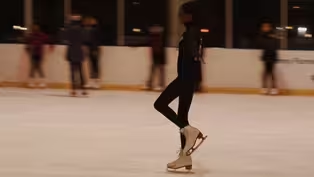
CHEYENNE TEACHES A TWO FOOT GLIDE!
Video has Audio Description
Clip: 7/16/2024 | 42s | Cheyenne from Figure Skating in Harlem teaches a two-foot glide! (42s)
Video has Audio Description
Clip: 7/16/2024 | 7m 8s | Mix yellow and blue to make green and paint a plant. (7m 8s)
Video has Audio Description
Clip: 7/16/2024 | 3m 27s | Meet gorillas who live at the Houston Zoo, where they eat fruit and leafy greens. (3m 27s)
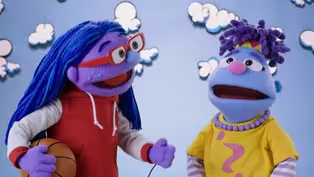
FEEL YOUR BEST SELF: SMELL THE ROSES
Video has Audio Description
Clip: 7/16/2024 | 3m 41s | Learn a strategy called “Smell the Roses” to refocus. (3m 41s)
Video has Audio Description
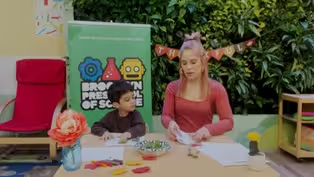
Clip: 7/16/2024 | 6m 42s | Make rubbings using leaves and crayons with Krystal Balmes from the Brooklyn Preschool of Science. (6m 42s)
Video has Audio Description
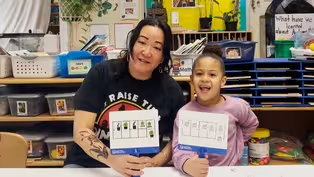
Clip: 7/16/2024 | 5m 11s | Play a number flash game with Zoe Kleinmann. (5m 11s)
Video has Audio Description
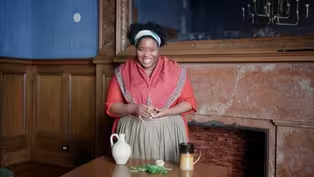
Clip: 7/16/2024 | 4m 52s | See how to make a soothing tea recipe from the 18th century for coughs and sore throats. (4m 52s)
UP IN THE GARDEN AND DOWN IN THE DIRT
Video has Audio Description
Clip: 7/16/2024 | 6m 35s | Anna Scretching-Cole reads UP IN THE GARDEN AND DOWN IN THE DIRT by Kate Messner. (6m 35s)
UP IN THE GARDEN AND DOWN IN THE DIRT ASL
Video has Audio Description
Clip: 7/16/2024 | 6m 36s | Anna Scretching-Cole reads UP IN THE GARDEN AND DOWN IN THE DIRT by Kate Messner. (6m 36s)
WORDSVILLE: THE CASE OF TOO MUCH HAPPY
Video has Audio Description
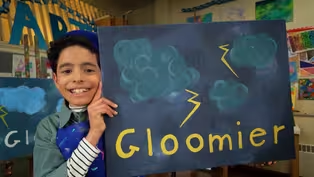
Clip: 7/16/2024 | 7m 26s | When Artist Clay's gloomy painting goes missing, everyone in Wordsville is overjoyed. (7m 26s)
Providing Support for PBS.org
Learn Moreabout PBS online sponsorship

- News and Public Affairs

Top journalists deliver compelling original analysis of the hour's headlines.













Support for PBS provided by:
Let's Learn is a local public television program presented by THIRTEEN PBS