
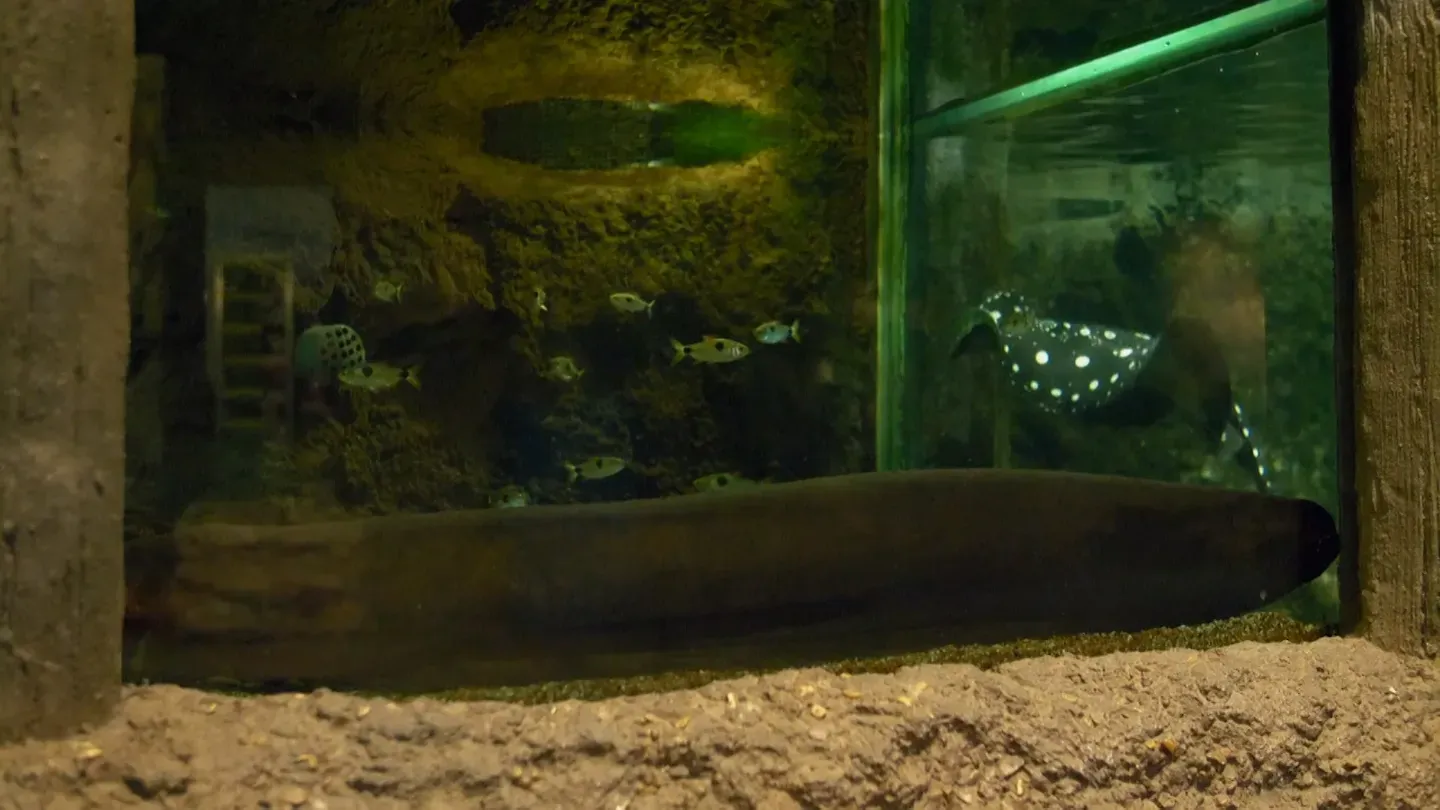
ELECTRIC EEL
Clip: 7/24/2024 | 1m 43sVideo has Audio Description
Meet an electric eel at the Houston Zoo! It sends out electrical pulses to find food.
Meet an electric eel at the Houston Zoo! Although it is called an eel, it is actually a relative of the catfish. The electric eel has poor eyesight so it sends out electrical pulses to navigate and find fish to eat.
See all videos with Audio DescriptionADProblems playing video? | Closed Captioning Feedback
Problems playing video? | Closed Captioning Feedback
Let's Learn is a local public television program presented by THIRTEEN PBS
ELECTRIC EEL
Clip: 7/24/2024 | 1m 43sVideo has Audio Description
Meet an electric eel at the Houston Zoo! Although it is called an eel, it is actually a relative of the catfish. The electric eel has poor eyesight so it sends out electrical pulses to navigate and find fish to eat.
See all videos with Audio DescriptionADProblems playing video? | Closed Captioning Feedback
Where to Watch Let's Learn
Let's Learn is available to stream on pbs.org and the PBS app.
Providing Support for PBS.org
Learn Moreabout PBS online sponsorship[bright cheerful music] - [Narrator] The electric eel is a long, snake-like fish with a flattened head that is found in dark, freshwater habitats in South America.
They might look like eels and be called eels, but they're really relatives of catfish.
One unique thing about electric eels is they are nocturnal fish.
Similarly to catfish, they will spend their evening searching for food.
Adult electric eels are carnivores, and they eat other fish, crustaceans, insects, and small amphibians, reptiles, and even mammals.
Since they have poor eyesight and live in poorly lit water, they use weak electrical fields to navigate and identify their surroundings.
Just like a bat using echolocation to find bugs in the night sky, electric eels will seek out fish by sending out electrical pulses.
Once a prey item is found, the electric eel will encircle it and send out a strong burst of electricity to stun its prey before consuming it.
Their electric shock is so strong, it can temporarily light up a small Christmas tree covered in lights.
These fascinating animals need clean water to survive.
We can all do our part to help keep the water waste healthy by reducing our use of single use plastic and recycling properly.
Simply by switching to reusable bags, water bottles, and straws, we can help keep plastics, which are harmful to eels and other marine animals, out of the water.
Here at the Houston Zoo, we're doing our part to help save marine animals in the wild by eliminating all single use plastic bags, bottles, and straws.
 New Episode
 New Episode
- Drama

Lesley Manville and Tim McMullan return in the final installment of the Susan Ryeland mysteries.


 New Episode
 New Episode

 New Episode
 New Episode

 New Episode

Support for PBS provided by:
Let's Learn is a local public television program presented by THIRTEEN PBS