
How One NC College Keeps Student Parents from Dropping Out
Clip: 10/20/2026 | 7m 9sVideo has Closed Captions
Childcare is why many student parents quit college. Forsyth Tech built a system to stop it.
Most colleges do not track how many of their students are parents. Forsyth Tech Community College in Winston-Salem asked and childcare came back as the barrier again and again. The college gave student parents first priority at a childcare lab it already ran, partnered with a regional center to place the rest of the children within a day or two and opened food pantries on all seven campuses.
Problems playing video? | Closed Captioning Feedback
Problems playing video? | Closed Captioning Feedback
ncIMPACT is a local public television program presented by PBS NC
How One NC College Keeps Student Parents from Dropping Out
Clip: 10/20/2026 | 7m 9sVideo has Closed Captions
Most colleges do not track how many of their students are parents. Forsyth Tech Community College in Winston-Salem asked and childcare came back as the barrier again and again. The college gave student parents first priority at a childcare lab it already ran, partnered with a regional center to place the rest of the children within a day or two and opened food pantries on all seven campuses.
Problems playing video? | Closed Captioning Feedback
Where to Watch ncIMPACT
ncIMPACT is available to stream on pbs.org and the PBS app.
Providing Support for PBS.org
Learn Moreabout PBS online sponsorship- She almost quit college, not because the classes were too hard, but because she couldn't find anyone to watch her kids.
Nearly 6 in 10 student parents who drop out cite childcare as the reason.
Most colleges don't even track how many student parents they have, but Forsyth Tech built a program to fix that.
We're here to find out if it actually works and whether any other school can do the same.
I'm David Hurst.
This is "ncIMPACT."
[pensive music] This is Kayla Conner.
She's got two boys, one nine and one about to turn six.
This year, she finished her degree at Forsyth Tech.
How challenging was that to try and balance school and motherhood?
- I'd say it was really challenging because I really wanted to be there and, like, do things with my kids at their schools as they started to get older, and so trying to see what they need to be doing and be active with them and then trying to make sure that I'm getting my work done.
- Balancing school and motherhood was hard enough, but sometimes life throws in something harder.
Were there ever times when you thought, "I can't do this"?
- Yeah.
Yeah, there were.
I went through, like, a few family losses, and so that mental, it was hard, like, mentally sometimes.
- [David] Kayla almost became one of the students who never finish.
Nearly 6 in 10 student parents who leave community college without a degree name childcare as a reason why, and more than half say they simply couldn't balance coursework with caring for their kids.
Most colleges don't even know how many students like Kayla are on campus.
Shanta Reddick has spent her career trying to close that gap.
My co-host, Anita Brown Graham, sat down with her to find out how.
- Tell me a little bit about how you even got into this work.
What was the driver, the motivation?
- Well, well, you know, the driver and motivation was my own life experience.
Being a single mom, going back to school as an adult, and having to kind of navigate in those different hard spaces and places led to, definitely, my work with student parents.
- [David] Reddick's team wanted to know exactly what was standing in the way, so they asked.
Students kept naming childcare as a barrier.
- Not only do we not have enough childcare centers, we don't have enough childcare workers, and then we don't have enough funds for them to pay to be able to go to the childcare centers.
- It just keeps going.
Yeah.
- Yes.
It just keeps going.
- [David] So Reddick and her team looked for a solution, but they didn't have to look far.
It turns out the college already had a childcare center.
It just wasn't built for student parents.
It's called the Early Childhood Lab.
Forsyth Tech built it to train future preschool teachers.
Students get real hands-on classroom time with real kids.
- They're knocking down things, trying to see what works and what doesn't work, so it's really fun to see what they can build and create.
- But during COVID, Reddick looked at that room and saw something else.
She saw childcare for the student parents trying to get to class.
So now the children of student parents get first priority for those 15 spots.
How long are the kids usually with you?
- They're usually here for two years.
- Two years?
Okay.
- So they start when they're three and then they'll eventually leave when they're five.
- Okay.
I imagine you're able to see a lot of growth in those two years.
- Yes!
So it's really fun to see them grow.
Sometimes they come in shy and then they're blossoming into who they are.
- Yeah.
- Mhm.
- [David] Kayla's boys were two of those kids.
- I knew that my kids would be able to go somewhere where they'd get, like, a good education, and then I also like that they have that two-way mirror.
So, like, my son, he was kind of clingy.
He wants to cry.
He was crying, so I was able to watch and make sure that, like, he got acclimated.
- [David] But 15 kids only goes so far.
What happens to everyone else on the waiting list?
- When it comes to childcare, we partner with Childcare Resource Center.
They're one of our big partners.
We're able to send students to them to help try to find those childcare spaces and places, whether it's even an in-home daycare, whatever we can do at that moment to get some sort of childcare so the student can still come to class.
- [David] Reddick calls it a soft hand-off.
Every childcare request her office gets goes straight to that regional center, and most students hear back within a day or two.
- We partner with Kid Spot, who's about probably three minutes from here.
It's a drop-in childcare facility, so we're able to partner with them with the discounted rate for our students to be able to go there.
- [David] Childcare was one piece of the puzzle, but what about everything else student parents say is standing in the way?
Reddick's office calls itself Forsyth Tech Cares.
They try to catch whatever a student needs before it becomes the reason they leave.
- The first thing that I do is I always, when they're coming into my office or we're on the phone, the first thing I do is I listen and I really hear them out because most of the time, by the time they come to my office, they have a lot going on and they really just want someone to hear them out.
- [David] For a lot of students, it's food, so Forsyth Tech opened seven food pantries, one on every campus.
Students are able to access them twice a month because SNAP benefits only stretch two weeks.
Food and childcare may get a student through the semester, but Reddick says the real pay-off shows up somewhere else.
- If I said helping a parent helps a kid, most of them would go, "Well, of course," but if I pointed out that helping a parent accomplish their academic dreams actually results in better academic outcomes for their children, our listeners might be surprised.
Why is it that this two-generational strategy is so powerful?
- I think it's empowering.
I think it changes generations.
I think it allows kids to be extra proud of their parents and see where they are and be able to have the same image of, if they can do it, then I know I can definitely do it.
- [David] That's Reddick's vision for what this work can do.
- For generations to come, because they're gonna be able to pass it along.
- [David] The question is whether it's actually working.
[classroom indistinctly chattering] In the fall of 2025, about 9,900 students were enrolled at Forsyth Tech.
620 of them, about 1 in 16, got help from Forsyth Tech Cares.
81% of those students came back the next semester.
Forsyth Tech isn't the only college doing this.
As of 2025, 17 of North Carolina's 58 community colleges offered some kind of on-campus childcare.
- The goal is not just for Forsyth Tech to do this work, but every community college to be able to give these resources.
- [David] Even so, Reddick says real challenges remain.
She still needs resources, partnerships, and people willing to do this work every day.
- Finding the people who have the heart, because this work takes heart, and to do it every single day and show up in a space for students, you've got to be able to be transparent because that's the one thing a student can do.
They can tell when you're not genuine, and they will completely shut down.
- [David] It's one of the things that mattered most to Kayla.
- I feel like that was one of the biggest things that helped me, just making me feel like I belonged.
- [David] Forsyth Tech didn't build something new.
It found a use for something it already had.
Reddick's hope is that other community colleges can find a way to do the same.
For "ncIMPACT," I'm David Hurst.
 New
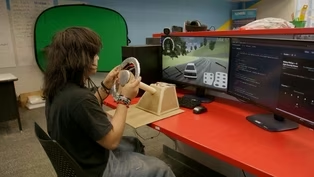
The NC Schools Where Students Have No Grades
Video has Closed Captions
NC schools are experimenting with letting students earn credit by finishing tech projects. (7m 8s)
Video has Closed Captions
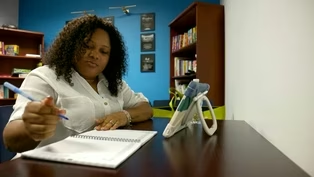
Three NC schools are doing things schools don’t normally do, from childcare to disaster housing. (20s)
Providing Support for PBS.org
Learn Moreabout PBS online sponsorship New Episode
- News and Public Affairs

Top journalists deliver compelling original analysis of the hour's headlines.
 New Episode
- News and Public Affairs

Today's top journalists discuss Washington's current political events and public affairs.
 New Episode
 New Episode


 New Episode



 New Episode
 New Episode


Support for PBS provided by:
ncIMPACT is a local public television program presented by PBS NC