Virginia Home Grown
Native Plants
Season 23 Episode 7 | 56m 46sVideo has Closed Captions
Explore the important role that native plants play in our ecosystem
Healthy ecosystems need native plants to provide food for wildlife. Learn about native roots, fruits & nuts from a school that connects students to nature. Then visit an organization that restores indigenous plant communities that have been suppressed by traditional landscape practices. Engage with us or watch full episodes at Facebook.com/VirginiaHomeGrown or vpm.org/vhg. VHG 2307 September 2023.
Problems playing video? | Closed Captioning Feedback
Problems playing video? | Closed Captioning Feedback
Virginia Home Grown is a local public television program presented by VPM
Virginia Home Grown
Native Plants
Season 23 Episode 7 | 56m 46sVideo has Closed Captions
Healthy ecosystems need native plants to provide food for wildlife. Learn about native roots, fruits & nuts from a school that connects students to nature. Then visit an organization that restores indigenous plant communities that have been suppressed by traditional landscape practices. Engage with us or watch full episodes at Facebook.com/VirginiaHomeGrown or vpm.org/vhg. VHG 2307 September 2023.
Problems playing video? | Closed Captioning Feedback
How to Watch Virginia Home Grown
Virginia Home Grown is available to stream on pbs.org and the free PBS App, available on iPhone, Apple TV, Android TV, Android smartphones, Amazon Fire TV, Amazon Fire Tablet, Roku, Samsung Smart TV, and Vizio.
Providing Support for PBS.org
Learn Moreabout PBS online sponsorship>>Commonly we talk about planting milkweeds as a way to support monarch butterflies.
But what they really need is not just a milkweed plant in isolation, we have to plant it with all of the other species that it's evolved with over millions of years.
>>Up here on the right is some green briar.
Humans can eat the new growth at the tips, but the deer also love them and they'll browse on them all year round.
>>Well, you know, that plant is not highly regarded in the garden because it's got thorns even on the roots as well as the shoots.
>>Yeah, it's quite a formidable plant.
>>Yes it is, and I am so glad the deer enjoy it.
(Peggy chuckles) >>Mm, yeah!
>>Production funding for Virginia Home Grown is made possible by... (bright music) >>Welcome to Virginia Home Grown!
Well, we made it through the summer and the cooler days of fall are here.
I embrace the fall and all it brings to the garden.
We have a full show and later on we'll be answering your gardening questions, so please send them in via our website at vpm.org/vhg, we always enjoy hearing from you.
Today we are highlighting native plants and talking about their importance in the ecosystem.
In the second half of our show, we will learn about the value of replacing turf grass with native plant habitat.
But first, I traveled to Mint Springs Valley Park in Crozet to meet Paul Cipriani from the Living Earth School to talk about native plants that produce food for people and wildlife.
Let's get going!
>>Paul, when most people think of taking a walk in the woods, they just think of that they're gonna be able to relax and have this wonderful experience, but your experience of a walk in the woods is very different than that, so explain it to us.
>>Yeah, so when I'm out in the woods, there's multiple layers to my surroundings.
When I first started going out in the woods, I grew up in the suburbs, so I was used to lawns and parks and things like that, but as I started becoming more aware of everything that was out there from the animals to the plants, to even the rocks and the soil itself, my awareness started to open up and plants is one of those things that it's really hard for people to start to see.
Birds, it's pretty easy, everyone knows- >>Correct, different colors that fly around.
>>Yeah, exactly.
>>Plants are all green.
>>Yeah, it looks like just one big curtain of green out there, but the more you look, the closer you look, there's a lot out there to really learn about.
>>And there's so many facets to learn about too and to understand how important plants are to the wildlife in the woods.
Paul, I've never heard of the Living Earth School.
Could you please tell us about it?
>>Yeah, it's a school based out of Charlottesville, Virginia, and we offer programs to youth as well as adults.
We have homeschool programs throughout the year.
We also have summer camps that are pretty well known in the area, so we teach naturalist skills and survival skills.
>>That's fascinating.
Do you have a lot of participants?
>>We do, and the numbers keep growing.
In fact, since the pandemic, people have been really trying to get outside and it's really opened the doors for them to learn more about their surroundings.
>>That's fantastic.
I'm so glad there's a way for people to learn more about our outdoors, so thank you.
>>Yeah.
>>There's so much plants provide for us, even down to this persimmon tree.
Can you tell us more about it?
>>Well, the American persimmon has these beautiful orange fruits that it gets a little later in the year.
Right now, it's covered in the fruits.
They're green, but you wouldn't wanna take a bite out of them right now 'cause they're so astringent, and even when they start to turn a little bit of orange, it's tempting to take a bite out of them, but you really have to wait.
However, when they are ripe, they're delicious.
They're very sweet, they're easy to dehydrate, and they're also good forage for all of the animals out there, the raccoons, the opossums.
In fact, sometimes it's hard to get to them before the critters do, but it's a very important food source for a lot of the wildlife.
>>And when you say ripe, there is a certain time after we've had a good cold snap the starches will convert to sugars, and even the animals know that.
>>Yeah.
>>If you want some, you've gotta be right Johnny on the spot.
Yep.
>>Yep, the fruit will even start to wrinkle a little bit and that's another good indicator that you're on the right track, you're at the right time.
>>Yes, do we have any fruit to show?
>>Yeah, we picked up a couple here.
This one is, this is what most of the fruit look like right now.
This one has that orange color.
That pretty characteristic of it.
>>Very tempting.
>>It feels soft, I wanna pop it in my mouth, but I know better because I've been tricked like many other folks to take a taste test of the unripe persimmons.
Kind of a rite of passage, but it's something you could avoid if you want to, you know, just take our word for it.
>>Yes.
Wait for that good cold frost and then go out there.
What else do you see around us that kind of pops out as something that's beneficial?
>>I mean, there's things like wild grape growing in the thicket right over here.
There's pine trees, which every single pine tree can be used in some sort of survival situation, even as far as wild food goes.
There's a black walnut tree, which is actually pretty common in the area and they're all throughout most people's neighborhoods and I'm sure most people know their kids come back with their hands all dyed brown from playing with the husks, but there's edible quality to it as well.
In fact, I've seen bags of hulled black walnuts sold in the grocery stores for exorbitant amounts of money, and yet they're just, they're littering people's yards and they rake 'em up and bag 'em and send them off.
>>Yes, I think they're smart to capitalize on that.
>>Yeah, exactly.
>>It's so interesting to know all the plants around us that have, I'll say plants with a purpose, but are there other areas with plants for us to see?
>>Yeah, there's plenty of other areas.
Would you like to go take a look?
>>Sure, I'd love to, yes.
Well, Paul, where'd you pick that up?
>>Well, I found this cattail down by the edge of the pond.
It's one of my favorite survival plants.
It's got utilitarian purposes, such as thatching and insulation, but it's also got some edible qualities.
Right now, the plant's putting all its energy down into the roots.
>>Right, 'cause it's fall.
>>Yeah.
>>Plants are doing that.
>>These roots are full of starch, so all winter long, even when the greens go away, if you know where to dig 'em, you have access to carbohydrates, which can be kind of rare out in the woods.
>>Particularly a lot of protein, but few carbohydrates.
>>Yes.
>>Yes.
So it makes a tea, right?
>>It's something that you can take the starches from the root and use those starches in some sort of baked good or porridge.
However, there are roots that can be made into tea, such as in the sassafras tree.
>>A favorite of mine, yes.
>>Yeah, the bark of the roots gives this like beautiful reddish-orange tea that's reminiscent of root beer, and if you sweeten it and add a little bit of sparkling water, it almost tastes like the soda itself.
>>Interesting.
You know, you mentioned a reddish-orange color because this plant turns red-orange in the fall, making it beautiful for the landscape.
>>Yeah, definitely, it's something that would be wonderful to plant around your house, for sure.
>>Yeah, my kids always called this either the mitten tree or the dinosaur tree 'cause the leaves are either in the shape of a mitten or a dinosaur.
>>Yeah, those very distinct lobes make it a easy tree to identify.
>>Very easy.
>>There's a few more things down the trail.
Would you like to check it out?
>>I'd love to.
>>All right.
Up here on the right is some green briar.
>>Okay.
>>It's a vine that's covered in thorns, but on the very ends of the stems, they get these shoots of new growth that are really delicious.
>>Oh, really?
I didn't know you could eat those.
>>Yeah, they're really good.
They're very tender.
They just snap off and you can cook them up.
They're also really good forage for deer and other wildlife.
>>As a gardener that that plant is not a favorite because even the roots have thorns on them.
>>Yes.
>>Making it quite a challenge.
>>It's a very formidable plant.
>>It is very formidable, and you know, just because it's native, doesn't mean it's a great plant for the garden.
>>Exactly.
>>But I'm glad the deer like it.
(laughs) >>Yeah.
>>You've got some great plants here.
Big, beautiful alders and gorgeous witch-hazels.
What else do you have growing along here?
>>Up here on the right, there's a black locust tree.
>>Oh, I love black locust, but again, it's a very thorny native plant.
>>It is, it's interesting in it's use around planting so it can fix nitrogen in the soil, which is a nutrient that other plants need.
>>Very important, yes.
>>Yeah, and over here we've got this spice bush.
>>Oh, I'm a spice bush fan.
I love the fragrance of the leaves.
It's a super easy way to identify this very common green plant, we'll call it.
>>Right, and this time of the year, the berries are all turning red so they're quite beautiful.
>>But what can you use spice bush for?
>>Well, spice bush is good for teas.
You can use the leaves, or even the stems in the wintertime when the leaves are gone, and the berries can be dried and ground into a powder and used as like an allspice replacer.
>>Oh, a nice flavor, wonderful.
You know, as we've taken this walk and you've been able to point out plants, it's really helpful to show people that while they walk through woods, they're walking by a bunch of green plants, but so many of 'em have attributes that can be used for so many different purposes so I thank you for taking the time to do this.
>>Yeah, you're welcome.
>>I hope we've removed the curtain of green by encouraging you to look more closely at different plants and to value the role they play in our environment.
Paul is here with me now to talk more about Virginia native fruit trees.
But before we get started, remember to send in your gardening questions on our website at vpm.org/vhg.
Well, Paul, you've got quite an array of, I'll say, roots and and fruits here, as well as some nuts.
>>Yeah.
>>So where would you like to start?
Because there's so much to share and so much to talk about.
>>Yeah.
These are all fruits or edible portions of plants that are available right now.
Over here, there's this passion fruit vine, which has this amazing purple flour that it gets.
And it kind of takes over the place.
Vining everywhere, comes up, sends its roots to the soil.
>>Yes, yes.
>>And it gets this fruit, which this fruit isn't ripe right now.
>>No, it's still a little early.
>>Yeah.
>>But how much longer do you think?
>>I'm not sure.
>>Okay.
>>That's a good question.
But you can tell when they start to wrinkle up and they'll get soft.
But I think we should dissect it and see what's inside.
>>Okay.
That's good >>Because I think people will be familiar with passion fruit.
You can see that it's got those, just massive seeds on the inside.
>>Yes.
>>Yeah.
>>And I think so many people, this is a great little treat, but the wildlife love it as well.
>>Yes.
>>It's very, very popular- >>Yes.
>>With the wildlife.
But some people make jams and jellies out of it.
>>Yeah.
It's very delicious.
>>Have to get those seeds out though.
>>Yeah, yeah.
Yep.
>>But passion fruit is a fruit is, one, the passion vine, it grows like in a part-shade shade situation.
And it just really can be, I wanna say, aggressive in the garden.
>>Yes.
It's very prolific for sure, yeah.
>>But if you're growing it for the fruit- >>Yeah.
Yeah.
>>You've gotta balance it all.
>>It's a beautiful plant.
>>It is a beautiful plant with a beautiful flower.
So to go from passion fruit though to something not as pretty, what's next on our list?
>>Well, I brought in some pieces of the cattail root.
>>Uh-huh.
>>This root right now, the, the cattails are, they're kind of tailing off towards the end of the season here and they're starting to put their energy down into their roots.
>>Okay.
>>So the roots are full of starch.
>>Oh, okay.
>>And this starch, you can see on the outside, it's just got this brownish skin.
But when you split it, it's got these white fibers.
>>Okay.
>>And the white is the starch that you can harvest from it.
I've actually got this little jar here.
I wash some of the starch out from the fibers last night.
And what you do is you take the root and mash up the fibers underwater, and the starch comes into the water and then it settles to the bottom of the bowl.
>>Uh-huh.
>>And then once it's settled, you can pour the water off and then use that flour.
You can mix it into just like regular bread flour or you can dehydrate it and set it aside.
Or you could just take the starch and like boil it as a porridge or something like that.
And it's just high in carbohydrates.
And when you cook it, it actually gets kind of sweet.
It's actually- >>So the starch just changes.
>>I don't if say delicious.
>>Yeah >>But it's a unique taste out in the woods.
>>Okay.
So do you like peel that off?
>>Yeah.
Yeah, you peel it apart and you can see that- >>Oh my, I see it now.
>>It's full of fibers.
>>Yes.
>>And then when you scrape it, there's all this like white goo, which is the starches that's in there.
>>Okay.
>>Yeah.
>>That's interesting, very interesting.
>>And this small amount of flour that I got in here.
>>Yeah.
>>That's from like probably eight sections of root like this.
>>Okay.
>>So it's a bit time intensive to get it.
>>Pretty intensive.
>>And these are the end shoots that were at the ends of the roots.
The roots were making their way through the mud.
>>Right, yeah.
>>Ready to come up in the spring.
And these are really tender.
They just snap and they're really good sauteed or boiled.
But all cattail has to be cooked because if it's growing in a water source that has various bacterias or viruses or things like that, you want to kill off the bugs >>Oh, definitely.
>>Yeah.
>>Yes.
>>And you never wanna harvest from a place where there's runoff from roads because the cattails will actually take up heavy metals.
>>Right.
>>And other pollutants and stuff.
So this actually came from a source where I wouldn't actually eat this.
I just brought it in for a demonstration.
>>Okay.
>>You'd have to really be selective about where- >>And get permission.
>>And get permission, of course, yeah.
>>Yes.
>>And also it's in a very sensitive environment so it's not a good idea to just go out there, and it's important to the wildlife.
>>Yeah.
>>It does a lot.
>>Sounds great.
Well, let's move along 'cause our time is running along.
>>Okay.
>>So tell us about what you've got here.
Let's... >>Yeah, so I've got some of these black walnut, which is pretty common.
And I've got one that I cracked open.
In fact, this is the result of messing with this black walnut.
It dyed my skin brown.
>>I'm so sorry.
>>So you gotta keep that in mind in case you have something special to go to at the end of the day.
But I also brought a butternut in, which is a tree that is related to walnuts, but it's also called white walnut, and it's a little less common.
>>Yeah.
>>You don't find it as often.
And some of the places where we hold our programs, we have secret butternut trees.
And the kids will spend hours cracking them open- >>Wonderful.
>>And cooking 'em over the fire and stuff, yeah.
>>It's got more of a football shape.
>>It does, yeah.
>>Versus the round shape.
>>Yeah.
And it has a different flavor too.
It's almost reminiscent of banana, some people say.
>>Cool.
>>Well- >>it's good.
>>Speaking of flavor, let's keep on moving along.
We've got our sassafras here.
>>This is sassafras.
This is a tree that grows pretty commonly around this area, and it's got this beautiful color.
>>Yes.
>>And what I did was I took this root.
this is some sassafras root right here.
And I, I took a knife and peeled the outer bark of it and then simmered it for about five minutes.
And it gave me this tea.
>>Excellent.
>>Yeah.
>>Excellent.
>>Well, we have 30 seconds left.
And I wanna get to- >>Oh my goodness.
Yeah, we gotta to get to the pawpaws.
>>Then we've gotta get to our pawpaws here.
>>Yeah.
>>And real quick.
"Quick like a bunny," as my mom would say.
>>All right, we got this ripe pawpaw here.
we just gotta open this baby up 'cause it was so good.
>>And pawpaws are common throughout low wetlands, wait a minute, low wetlands.
And in order to harvest, you actually don't.
You just pick them up off the ground.
>>Yeah.
>>Because if you harvest them from the tree, and you'll find you'll have very, very bitter.
>>Yeah.
These came off the tree.
They're very hard and they're on the small size, but this is the ripe pawpaw.
Should we eat a little bit of it?
>>Let's have a little bit of a bite.
>>All right.
Then we'll save it.
But you gotta watch those seeds.
>>Yeah.
It's got these very large seeds- >>Yeah.
>>In them.
They're kind of beautiful.
And you'll find them scattered on the ground where the wildlife has been feeding on them.
That's really good.
>>That is a very good, good pawpaw.
>>That's really sweet.
Yeah.
>>Our wildlife enjoy these fruits as much as we do.
>>Yeah.
>>And it's important that when we're out walking, that we take a look around and see what's there.
>>Definitely.
>>But also to learn and to get permission.
>>Yes, definitely.
>>And to make sure that we leave plenty for the wildlife.
>>Yes.
It's more important to them than for us, for sure.
>>Yes, absolutely.
Thank you, Paul.
You're welcome.
And now we're going to get ready to answer your questions.
But first, Serome Hamlin has a tip on how to feed pollinators.
No matter the size of your outdoor space, you can create a container garden full of native plants.
(upbeat music) >>Throughout the years, we have learned the importance of using natives in our landscape.
Now, more and more people are moving onto smaller properties and have smaller landscapes to work with.
But did you know that you can still benefit the ecology by providing native plants in a container?
I would be working from back to front using the thriller, filler, spiller method.
First, I'm gonna use this Veronia because this is gonna be one of the tallest plants.
Now to use as a filler, I've got Rudbeckia.
Now we're really, really gonna pack this container but it will be okay.
Next season, if it starts getting too full, then you can always divide and spread the wealth.
Now it look nice with some grasses.
So this is the little bluestem.
We can add that right in.
I think I wanna add one more.
The little bluestem, squeeze 'em in there.
So it's starting to look pretty full already.
And now, for our spiller here, I have a aster.
This one is called Snow Flurry.
Neat thing about this little aster is that it only gets about eight inches tall, so it will work perfectly for the front.
Let's go ahead and get this in place here.
Gonna make a little more space because I want to add in one more thing.
And this is this Callirhoe here.
Now I have added in different things to have different interests so the pollinators will have something to go for throughout the season.
This is in place now.
I think we are all set.
So I just need to top dress some soil in the bare spots here.
And then one other important thing, always remember to water your containers right after you're done putting them together.
Give those roots a drink.
I hope everyone will give this a try.
'Cause even the smallest garden make a big difference in the environment so you can go out and do this too.
Go out, get some native plants and put together a beautiful mixed planting.
Trust me, the pollinators will find it.
>>Members of our team are on Facebook right now answering questions so please connect with us there or visit our website vpm.org/vhg to submit more questions.
And Serome has joined us in the studio to help answer questions too.
Welcome Serome.
>>Hello.
How are you doing?
>>And in addition to being a pollinator magnet, wow, that container looked great.
My compliments.
>>Yes.
Thank you.
Yes, it's important to go ahead and have many things that will attract the pollinators in different seasons.
So it's nice to have a mix of plants that have interests in different seasons to attract the pollinators and extend their season as you go along and enjoy.
>>Perfect.
Perfect.
Well, tell us, we've got some good questions.
>>Yes.
And this is one I want to start off with.
Someone is asking, can they collect paw paws and persimmon in parks and state forest?
>>Hmm, yeah, that's against the law to collect plants from places like that.
The best way to go about it would be to plant some of your own trees in your yard and you'd have a source every year.
>>So they just gotta keep that in mind and just go out and plant their own.
>>Yeah, yeah.
>>Yeah.
>>Ashley is asking, she has some oak trees and want to donate her acorns but don't know what type of oak she has.
>>Gotcha.
>>Can you give some pointers on what type of oak she may have or ways that she can figure it out.
>>Yeah.
The first thing that I look for is the leaf shape.
So, there's a few different categories of oaks, but the two categories that I focus on are the red oaks and the white oaks.
And the red oaks usually, at the ends of their lobes, have these very sharp points, whereas white oaks have rounded lobes.
So that's a really good place to start.
And then if you wanted to get more specific about that then you could, you know, grab a field guide and use that as guidance.
As far as like using acorns as a food source the white oaks are the ideal acorns to use because the tannin content in the acorn is much lower which means it just takes less time to process the acorn in order to eat it.
You can still use the red oak acorns, but it just takes longer.
So if you've got time on your hands, it's not a big deal, but- >>It's the processing, just takes a lot longer.
>>Yeah.
>>So is there a particular oak that may, more and more people would want to have?
>>Yeah.
>>As far as a donation situation.
>>As far as like ideal acorns go?
>>Variety.
>>Variety, yeah.
So, in terms of like the good acorns, I would focus on things like chestnut oaks, and the white oaks and bur oak, which gets this really big acorn that's low in tannins.
And I don't know if there's any live oaks that...
I think maybe they're a little closer to the coast or further south, but yeah.
>>Yeah, the other thing is, you were saying that even the wildlife is aware of which acorns have less tannin.
>>Yeah, they'll actually, the squirrels will go out and they'll scoop up all the white oak acorns first and eat them, and they'll leave the red oaks.
And sometimes the red oak acorns don't all get eaten up and they'll be more liable to sprout.
But yeah, they know which ones are more bitter and less bitter, and they have their preferences.
They know what they're doing.
They have to eat them on a regular basis, so.
>>They know a little more than we do.
>>Yeah, definitely.
(all laugh) >>Well, they have a long winter too, to survive in.
>>Yeah.
>>So, you were talking about the black walnut and someone is asking, how would you open up a black walnut in the wild?
>>In the wild, yeah, you would definitely need two heavy stones to crack open the black walnut and you have to watch out not to smash your fingers while doing it.
And you have to kind of finesse it a little bit.
You come in with a stone and you've gotta gently, I mean, as gently as you can, crack the shell so that you can pick it apart.
But if you come in and just smash it it sends pieces everywhere.
It's a really hard shell to crack.
It's incredibly hard.
And I think that's why it doesn't get used very often just because it is a challenge to crack them open.
But yeah, rocks are the way to go in the wild.
If you're at home, grab a hammer, that's, you know, you can do that.
Or I've heard some people run 'em over with their cars.
Whatever.
>>Oh, that sounds like a lot of... (all laugh) >>It would make a big mess.
My hands look horrible.
Just imagine what your driveway would look like.
>>Here's a good one though.
Favorite shrub to add to feed the birds if someone were to add shrubs to their landscape.
>>Oh, this time of year I would add American beautyberry because of the beautiful soft purple berries and the kind of orchid color.
And of course they have a flower earlier in the year.
But those berries would, to me, add some beauty to the landscape as well as feed the birds.
Yeah.
>>I was thinking viburnum.
Get some of the viburnums and get a nice food for the birds.
>>Yeah.
>>This time of year and a little later.
>>Paul, do you have one or not, or?
>>I can't think of one off the top of my head.
I keep thinking back to dogwood trees which aren't quite a shrub but their berries right now are being eaten.
In fact, it might not even be the berry itself.
I've been finding lots of the berries opened up on the ground and the seeds are taken out.
>>Seeds taken out, yeah.
>>I'm not sure what does that, but they're very precise.
>>If it was sitting in my house, it would be squirrels.
>>The squirrels, yeah.
>>Squirrels love the dog berry.
>>Yeah, yeah.
>>The dogwood berries at my house this time of year.
They would even chatter at you when you get too close.
>>Yeah.
>>Mine.
>>Protecting them.
(all laugh) >>Exactly.
So my question for you is, how can people learn more about your school?
>>You can go on our website and look it up.
It's Living Earth School and yeah, that's the best place to go.
And we've got lots of programs that we offer for youth and adults as well.
We have homeschool programs throughout the year.
We have summer camps that are quite famous in the area and we have various weekend workshops.
In fact, we have various plant walks and things like that that are really, really nice to go on.
Some very knowledgeable people that lead those walks.
>>Easy to get to, too.
>>What's that?
>>Easy to get to as well?
>>Yeah, yeah, for sure.
>>Wonderful.
Any other questions?
>>I was gonna still carry on with this, but...
So, it's such a neat premise, especially with the youth and getting them out in nature and learning about plants.
So where do you, is there any plans in the future to add or expand or how do you see this program going?
>>Well, right now we're trying to acquire some land that we can have as a home base.
Right now we're a little nomadic and it's creating some challenges for us.
So to like acquire a good piece of land so that we can have a patch of forests that we can get to know really well and have, you know, just the kids can have access to learn more about the plants, learn more about the animals, learn more about the landscape and how to interact with it.
We're big into like interacting with the environment, so, in ways that are healthy for the landscape.
So that's a big push right now, is some land.
>>Awesome, I just find it very important, especially in this day of technology, to get people reconnected- >>Yeah, for sure.
>>With nature.
>>Yeah, the kids are not allowed to use their phones when they come to programs.
They gotta tuck 'em away and then they've got six hours out there of having to interact with the environment and interact with each other, which is not always all that common anymore.
(all laugh) They take to it pretty quick once they're out there, yeah.
>>Well this sounds great.
Thank you very much.
I was gonna say, we've just got seconds.
So what's your favorite program at the school?
>>My favorite program is the teen apprenticeship program, meets once a month, it's an overnighter.
The kids build their own survival kit from pack baskets to moccasins, to bows, to fishing equipment.
And then at the end of the year we have a week long survival camp that they go on.
So it's very exciting.
>>Sounds great.
>>Well, that does sound fun.
>>Yeah.
>>Yep.
Well, Paul, that's all the time we have right now and we look forward to answering more questions later in the show.
So please folks, keep 'em coming and thanks for being with us tonight.
We appreciate it.
>>You're welcome.
>>Moving on, we have Dr. Robyn Puffenbarger, is going to take us to Charlottesville to meet with Devin Floyd from the Center for Urban Habitats and learn about converting lawns into native plant ecosystems.
>>We aim to replicate natural plant communities in our installations.
And we do that through use of rigorous data collection and we look at that data and use it to figure out what ecosystems would be most likely to occur on a site and attempt to restore them.
Supporting pollinators is another thing.
And so a great way that we can do that is by ripping up our lawns and putting in native ecosystems like these ones right here.
We're mimicking natural ecosystems here.
This is not a butterfly garden or anything like that.
This is a native ecosystem restoration and we do that in the small scale in the home landscape and it makes a big difference.
>>I would've called this a rain garden but my understanding is it's so much more.
>>In the wild, we happen to see settings like this in natural habitats and it turns out they function a lot better than our traditional rain gardens.
Oftentimes when we're doing research and we're documenting natural systems, we find divots and swales in upland landscapes and if they happen to be full sun, those spots support so much diversity in the plants and they're little patch prairies and we make lists of species that we note there and that's how we know what to plant in these rain gardens that are trying to mimic natural habitat and support wildlife.
>>When I've been doing plantings and converting lawn into what I'm hoping is more like a native pollinator supporting garden, I've probably not been doing what I see here.
I've been smothering grass, planting a few of my native favorites, and then hoping they'll fill in but then I've got a mulch area that I have to spend a lot of time weeding.
So how did y'all plant this?
>>Well, site prep is very important and there are a few really good ways to do it.
The most important thing is to get rid of the existing seed bank.
The way that we do this most often is we strip the sod off and include about an inch of soil with that.
Another way is to smother the ground with cardboard, perhaps with a deep layer of mulch on top of the cardboard.
Takes a lot more time, but it works.
And a new practice that is kind of new into people's awareness is to use small scale prescribed fires to set the tone of the site.
>>Removing those unwanted seeds, the fire is really gonna get after that.
>>Yeah, it also forces germination quickly so you can see the full extent of your problem.
It won't remain lurking in your garden for two years.
You can go ahead and get rid of the problem right away, get those weeds out as they germinate.
But the fire has the effect of taking the plant material and turning it into magnesium and calcium and other cations and putting those back into the soil.
And that has a powerful impact for the plants that you're about to put in.
>>Wow.
>>Yeah.
>>So once the site has been prepped, you've planted the plants, they're growing now, what kind of ecosystem services is this patch gonna provide?
>>The primary service is definitely in the service of supporting biodiversity at the locality.
You're making a node of resilience that kind of echoes out through your neighborhood and beyond.
It just contributes to overall conservation and everybody can do that, even if it's something really tiny, can have an impact.
>>This site looks gorgeous.
There's great texture and differences in heights.
So tell us about the plants that are actually here in this site.
>>This time of the year we're seeing purple, yellow, and white, and that's because we have Black-eyed Susan's, like this, and Orange Coneflower down there and also Goldenrods, that Gray Goldenrod really lighting things up with gold.
But we also have lavenders and purples coming from Blue Mistflower, but also Great Blue Lobelia, those are some of the things we're seeing.
And then we've got these elegant grasses that kind of form a matrix between them.
Upland Bentgrass is in full bloom right now and it's really beautiful.
Bottle Brush Grass is another one.
The white that you see in the background is Thoroughwart, there's also Bushy Aster that's just started to bloom.
It's making some whites and the Asters, Thoroughwarts, the Goldenrods, there's not just one species of each plant.
There's four or five of each of those types of plants.
And that's what we see in the wild.
And what we notice is when we mimic that, the insects are supported doubly, there's more density in the insects and there's more variety.
>>So I'm sure the homeowner is really excited and involved in this project.
Could we meet him?
>>Oh yes, absolutely.
>>Hi Gregg.
>>Hey Gregg.
>>Thanks so much for having us here to your gardens.
Can you tell us a little bit about the transition from lawn to native plants and how you've enjoyed this immense change?
>>Yes.
I frankly had no idea what all of this would be like.
So it has been so enjoyable to see the richness, the diversity, the wildness that comes with all of this.
Where we used to have sort of an ugly patch of yard, we now have something I love to just come out and be in and sit in and watch what's happening in there.
So it's really changed the whole experience.
>>Wow, so Devin, there's a lot going on in terms of the plant diversity over here, out of the "rain garden" and into more of a drier area.
What kinds of plants do we have over here?
>>Yeah, in this area we have plants that are adapted to shade and part sun and intermittently wet and dry.
Those would include Bluemist flower, River Oats, Smooth Blue Aster and Christmas Fern, White Snakeroot, things like that.
>>My understanding is there is support from local government agencies to do this kind of work because of the water quality issues.
How did that play into what happened here?
>>In a big way, so water was our initial issue.
This is inundated with water in heavy rains, so it'll just fill with water and stay here for three or four days.
So we were looking for a solution to that.
And as we approached Devin, he brought in this possibility that there's money available to do this.
So it was the local Soil and Water Conservation District that we connected with.
They have a program that offered 75% financing up to a certain level to be able to do this.
And so we could have not have done what we did at this level without that level of funding.
We didn't have the budget for that.
So we're thrilled that that funding's available and it has launched our beginnings into this.
>>I think many of us think about a garden as an aesthetic, pretty plants, looking nice, maybe some maintenance.
But I think y'all have a very different philosophy.
And would you try to describe that for us?
>>Yeah, I'm happy to share how I've grown into that because I too, I think, I wasn't that connected to plants because it was just what's pretty, but I think as part of this process, there's a whole different way of looking at it.
What has excited me is we're not just planting plants anymore, but we're actually enriching the ecosystem around our house and that I find meaningful and that I want to expand on here.
So I'm a full convert in seeing this different way of holding plants and in our own place that we live and land that we can control to do that.
So I'm very excited about it.
>>That's great.
Yeah and for the homeowner that is beginning this process on their own, it means setting some goals that are a little bit different.
And usually it's aesthetics, straight lines, color, but if you come from restoration ecology, you start with biodiversity, plants and animals, fungi and everything.
And it just means taking some attention off of what we need and think about what the system and its plants and animals might need.
And then asking questions about what those things are and learning.
And it is a lifelong learning process which is part of the beauty of it.
>>Well, it's just a gorgeous landscape to have.
I'm so inspired by the density of planting and what I've learned about how to transform grass into a native planting with lots of biodiversity.
Thank you so much for hosting us today.
This has just been a wonderful learning experience.
>>Yeah, thank you for having me.
>>Thrilled to have you.
>>Thanks.
>>Yeah, thanks.
>>I like how the edges of the planted beds create a clean look that many homeowners seek, while the Virginia native plants within the beds provide food and shelter for pollinators and other wildlife.
And now I'm joined by Lisa Trapp from Capital Trees.
And Lisa's going to show us different sizes and types of native plants for the sun or shade, and in between.
But before we begin, remember to send in your questions through our website, VPM.org/VHG, or through Facebook.
So, Lisa, you've got quite an array of different plants here.
So, what do we have?
>>Yeah, so, I've brought in a couple of different trees, a couple of different shrubs, and some different perennials as well, just to kinda highlight some of my favorites, from down at the Low Line.
>>Okay.
>>So, the first one I would love to talk to you about today is our river birch.
>>Yes.
>>This one I love.
>>It loves water, doesn't it?
(chuckles) >>It does, yeah.
It's not particularly happy with the cutting I made earlier today.
But it really does have these beautiful little leaves on there, and it gets this wonderful kind of shreddy bark to it.
>>Yes.
>>And it has a wonderful fall color.
>>Yes.
>>It really does quite well, actually, in a range of moist and dry areas.
And so, it really is kind of hardy of a plant.
But the other reason I love it is that it does provide resources to passing insects.
It also is sometimes a host plant for your saturniidaes, your mouthless moths, your luna moths, your polyphemus moths, your cecropias.
In fact, I was lucky enough to see a luna moth this year at the Low Line.
>>How fun!
>>So really, these do have tremendous wildlife value, and they are beautiful to look at in the landscape.
>>Checks off two boxes.
>>Yes, absolutely.
>>Pretty tree that works in the landscape.
So, well, here's one very few people know about.
>>Yes.
>>And it's a favorite of mine.
And I'm gonna put it upside down.
>>Absolutely.
This is also a favorite of mine as well.
This is our hop-hornbeam.
>>Mm-hm.
>>It is just the coolest plant.
I mean, it's got these wonderful little leaves on it.
The bark is really shreddy, and kind of really texturally >>Yes.
>>interesting to look at.
But the favorite part of this whole thing is these wonderful little seed pods.
>>Yes.
>>They get its name because they look like little hops, >>Mm-hm.
>>which I think is the coolest thing!
But on top of that, they also have these lovely little catkins on the end.
>>Mm-hm.
>>So they actually are a wonderful food source for seed-eating songbirds.
They're wonderful for insects as well.
And, really, once their leaves fall in the winter, they have lovely winter interest, 'cause these seed pods stick around.
>>Yes, they do.
>>And I think, you know, a lot of native plants, we always think that they don't look like anything in the winter, but this is just one of the coolest things to see in the landscape.
So, I love this one, yeah.
>>I do too.
A soft snow on this plant in the winter is very striking.
>>Oh yes.
It's one of my favorites.
>>Yes, I do.
And as you can see, it has lovely green leaves too.
>>Oh, yes, still.
>>Yeah.
>>Still green right now.
(Lisa chuckles) >>Okay.
Now here's one that many people just absolutely love.
>>Mm-hm.
>>And it's a Virginia favorite, and I'll just tuck it over there, yes.
>>Perfect, yes.
This is our sweet bay magnolia.
>>Uh-huh.
>>I wanted to highlight this one because it does have the potential to stay evergreen.
If it gets a little colder, it can drop its leaves.
>>Yeah.
>>But if you are looking for something that might have a little bit more longevity in the winter, >>Yeah.
>>this is a wonderful tree for that.
And it's got these really kinda cool, red seed pods also.
>>Yeah.
>>I'm all about a seed pod.
>>Yes.
(chuckles) >>So, really, these are great, again, great food for songbirds, all sorts of things.
>>Yes.
>>If it's got a fun seed pod, it's probably feeding something.
>>Yes.
And this one's got a nice glossy leaf, which adds >>Mm-hm.
>>a different texture to the landscape.
>>Absolutely.
>>But it does need moisture.
>>Yes, they are a little bit >>Yes.
>>more persnickety, I think, than some of the other trees >>Yes.
>>that we brought today.
>>This doesn't adapt to dry.
That's experience talking.
I tried.
(Lisa chuckles) I like it.
So, anyway.
Well, some shrubs that you have to share.
>>Yeah.
Absolutely.
>>Let's move on to those.
You wanna move on to the hollies together?
>>Sure, let's do that.
So I did bring in two.
>>I'm gonna put this one up.
Well, no, I guess that's better.
>>Yeah, I did bring in two today.
I tried to grab a couple with some berries on it.
>>Yeah.
>>We have some winterberry here, with the red berries, and then inkberry, with the smallish blue-gray berries on them.
They are in the holly family, so they do need a male plant in order to set fruit.
>>Yes.
>>But the inkberry remains evergreen throughout the winter.
>>Yes.
>>It's a wonderful food source, again, for fruit-eating mammals, or birds.
And then, the winterberry, although it's deciduous, these berries are tremendous.
>>Oh, they're beautiful.
>>And I think they feed over 48 different species of songbird.
>>Mm-hm.
>>So, really, if you love birds, especially cedar waxwing, these are the ones you're gonna wanna have.
>>Exactly, and from an aesthetic part, >>Mm-hm.
>>these berries stay on through Christmas, so you can cut them and put 'em in arrangements.
>>Yes, the winterberry, if you will, yeah.
(chuckling) >>Yeah, without the thorns.
Yes.
>>Yes.
>>It's a great plant, though, and I really love 'em.
You can get 'em in different cultivars, different heights >>Yes.
>>to suit your needs.
>>These are, in fact, cultivars.
Because they did come from the Low Line, these are a dwarf variety.
>>Excellent, excellent.
So they stay within the landscape confines.
>>Yes, so they're a little bit >>Yes.
>>more compact down there.
>>Yeah.
What else do you have to share?
>>We have a couple, oh, I also have, actually, I guess, our arrowwood viburnum.
This is a little bit of a different shrub.
Again, more moisture-loving, didn't love >>Being in your car.
>>being cut this morning and sitting in the car.
But I will do my best.
It has, again, this really tremendous leaf.
And I brought this one in because it does have a very straight growth.
>>Yes.
>>And so, it kind of serves a different purpose, if you're looking to kind of block, or provide a barricade through planting, >>Mm-hm.
>>like a hedge or, >>It's a great screen.
Yeah.
>>yeah, thank you, a screen.
But this also has tremendous wildlife value.
>>Yeah.
>>I mean, it's really one of those that feeds the insects, and then feeds the birds that eat the insects, >>Yes.
>>and feeds the birds that eat the fruit.
And it has a beautiful white flower in the spring.
>>Yes.
>>And then these tremendous blue-purple berries in the fall.
>>They're gorgeous.
>>And it also gets really lovely yellow fall coloration to it.
>>Mm-hm.
>>So, though it does drop its leaves, the sticks are nice and straight, and I think the winter interest on this one is really wonderful as well.
>>That's the reason it's called arrowwood.
>>Yes, absolutely.
>>Yes.
>>Used to make arrows, yes.
>>So we have one minute left.
>>Okay.
>>What would you like to talk about?
>>Well, I will go ahead and highlight this one, I think, might be a good one, just because we have not really talked about stuff for full sun, really dry space.
>>Really, yes.
>>And, or, I guess, I think I've heard recently, it does very well in really moist as well.
So, one or the other.
>>Ooh.
>>But I would love to know if that's true.
>>Me too, I've only grown, this is rattlesnake master, >>Yes.
>>and I've only grown it in harsh dry spots.
>>Dry spots.
So, yes, correct.
We have rattlesnake master here.
Yuccifolium is the species name.
So, like yucca.
>>Like yucca, uh-huh.
>>And it is planted in full sun.
But really, one of the things that it does well is the flower itself is not particularly bright and showy, but it is a powerhouse for pollinators.
>>Oh my gracious.
>>So, and it gets really tall.
>>Mm-hm.
>>So I know I'm not very tall, but it is taller than me.
(Peggy chuckles) And it really is kind of amazing to see the wasps, and the bees, and all the little things that are kind of flocking to it in the spring, >>Yes.
>>and all through the summer.
And then it does have this wonderful seed head as well, that sticks around throughout the winter.
>>Great winter interest.
>>Yeah.
>>And a great plant that people need to grow more in their gardens.
>>Oh, I totally agree.
>>Lisa, thank you for bringing these in.
I appreciate it.
I appreciate you sharing your knowledge.
>>Absolutely.
>>Yeah.
Next, we're going to answer more of your questions, but first, Amyrose Foll explains why fall is a good time for planting, and shares what she's sowing in her wildflower meadow.
(light clacking sounds) >>I am in my meadow today and we have been curating a collection of native wild flowers here.
I'm broadcasting seeds, it's fall.
Fall is an excellent time to be planting wild flowers.
I have already some fire weed, some bluemist, goldenrod and in the back, there's boneset, a bevy of different kinds of native wild flowers here and the reason I'm doing it in the fall is because planting in the fall will give you about a two week headstart on blooms versus planting in the spring, and it really allows those seeds to settle over the wintertime.
Some seeds require a stratification process, which is a cold treatment, and they need certain hours of cold to be able to sprout and for those seeds to grow so this is the perfect time to do it.
You can buy already stratified seeds online or get them from other seed keepers, but this is great if you have them.
No muss, no fuss.
Mother nature will do the work for you.
Today we're adding some variety.
I have some goldenglow rudbeckia, I've got evening primrose and we've got bundle flowers.
We've got different heights, we've got different colors and different bloom times.
Our evening primrose will start blooming mid-summer, beginning of summer till fall, and they bloom at night.
They're native to this area.
We've got bundle flowers, they're white and shorter and then our goldenglow rudbeckia is gonna be taller and yellow and it will beautifully compliment this bluemist throughout this field that we planted previously and they are going to be perfect to put in now.
They'll settle into the ground and naturally sprout in the spring.
As a farmer, it gives me something to do a little farther into the season when the varieties that you can plant start to get smaller and smaller.
By getting these seeds in the ground now, you're gonna have an earlier food source, they'll be ready for those pollinators come spring.
It's also a great time to plant trees and shrubs for that spring bloom, so I encourage you to try this.
It's so satisfying and it gets you out in the garden farther into the season.
>>Presently, the majority of our planted landscapes are composed of plants from Asia or Western Europe.
Reintroducing local native plants back into the landscape through plant substitutions, reducing turf, adding a meadow, or planting a container are important steps to take toward restoring our ecosystem.
So we've got questions here for you to answer and so let's get going.
But before we do, Lisa, I was wondering, you left some plants on the table.
Of the ones that you left and didn't have time, what's your favorite to share one more with us?
>>Oh, I think I really love the skullcap.
I've kind of fallen in love with that one this past summer.
It's a new plant for me and it really, it kind of blooms all summer long.
It has a lovely flower.
Bumble bees love it, and then, of course, it has just the cutest seed pod.
(all laugh) So, it's one I've really kind of grown fond of and it grows in a kind of more of a dappled shade.
So, if you've got more of that dark shadier areas, you still might be able to get a lovely bloom and some great pollinator plants.
>>Yeah, it doesn't get very tall either.
>>No, it's very small too, yeah.
>>It's almost good for a ground cover actually.
>>Oh yeah.
>>It would make a good one.
So, speaking of shade, Paula has asked, you know, how to plant pawpaw seeds, and does anybody have any experience with planting pawpaw seeds?
>>I have not had any experience planting pawpaw seeds, but I would imagine that it still needs a lot of moisture.
Just because typically, that is where you find pawpaws growing.
>>Yes, and actually they do need to have a period of cold.
Okay, it's a stratification and so they need to be outside.
A lot of times with tree seeds, what I do is I put them in pots and then I just put a light covering of kind of a netting or a wire over them so that the birds, I mean, so the squirrels can't dig 'em up.
And I just put 'em outside and I put 'em in the shade outside so they get good and cold throughout the entire winter.
And typically, they'll germinate when it's time, so.
But definitely moist, heavy, moist lowland soil.
I think of the huge pawpaw forest against the Appomattox River that I've walked through a few times.
It is very damp and wet, so.
We need to understand where our plants grow to get them to grow at their best.
>>Yes, when you find them in wetlands that's where they like it.
>>Typically, yes, they are.
You know, Andrew has asked, "Are there any particular types of trees to plant to encourage owls?"
And this is a tough one, because owls actually love to be very high and have open perches so that they can see down below to the ground.
And so, you wanna have a tree that's got a open canopy, not one that's gonna be very, very dense.
Like you showed the hop-hornbeam, that's kind of got a dense canopy.
So, one that would be open I would think would be best.
Plus, oak trees, they love the oak trees.
>>Yes, that's what I was gonna suggest, is oak trees.
>>Yes.
>>Oaks are just so important and they just provide a lot for so many species.
>>Yes, of caterpillars and such for the birds, absolutely.
>>Eastern screech owls, I believe are cavity nesters.
So, having kind of an older, potential, some amount of decay, different stages of growth within a landscape where you might have a larger cavity could also potentially be a good feature to include, but that's a tougher one for sure.
(chuckles) >>Yeah, you know, we're so quick to take down those old trees and I think I used to just, you know, encourage people to remove the crown, make it safe.
>>Yeah.
>>Yeah.
>>But then allow the trunk to be there.
>>So they do not snag.
>>Yeah.
>>So many of our birds are cavity nesters.
>>Yes, and we need to remember that too.
So yeah, Shannon has asked, "How would you recommend," oh, "How would you recommend planting strawberries this time of year?"
>>I really wouldn't, just because strawberries are so shallow rooted and our winters can come really quick.
So, I just don't know if they'll have enough time to get established.
>>Well, unfortunately they bought a hundred plugs and they're in the ground.
(chuckles) >>Then I would say just give them some protection and cross your fingers.
>>I would get the straw out and heavily bed them in straw and then maybe get a barrier cloth to put on them so that you're just giving them that insulation with the straw.
>>Yes.
>>And then... >>I guess if it gets really cold, you could bend like some PVC over your beds and put plastic just to kind of have a greenhouse effect.
>>Yes, that would be- >>Just during the cold periods.
>>Yeah, yeah, try to make a little microclimate for them.
Another question we have was Tricia from Surrey.
She's asked you about foster hollies, which are not native, but also about burning bush berries.
And are either of those safe for the birds to eat?
Lisa, what do you think?
>>I wouldn't really recommend them.
Those are, at least burning bush is an invasive plant and a lot of the times, some of these invasives we don't really know exactly, or they can be actively toxic to some of our birds.
So I would always recommend prioritizing native plants 'cause that's what our birds know to eat.
>>Yes.
People know, I mean, burning bushes are everywhere because the birds do distribute them.
But what we don't want is for the birds to distribute this highly invasive plant.
So I always encourage people, if they have a burning bush let's substitute something like that- >>Native.
>>Yeah.
The arrowwood viburnum would make a great substitution for that burning bush.
Or if they wanted the red berries they could put in the winterberry holly.
Yes, and let's do that instead of worrying about what's out there, just make the decision to remove it.
I grew fosteri holly for many, many years and it's never germinated underneath.
It's such a hybrid.
But I also am wondering about the birds eating them.
I don't recall, but it is a holly, it is an ilex, so.
Then we have planting tips for moles and dealing with moles and moles on this.
The low line, have you dealt with them?
>>We've been very fortunate.
It's in a fairly urban space, so we don't get a lot of the mammalian critters except for the occasional beaver.
(chuckles) But, you know, moles are tremendous for insect consumption.
So as a wildlife scientist, I always say, as much as you can, try to balance the ecosystem.
>>And I know like plants, like daffodils, they're not going to eat, because it's poisonous.
Hyacinths are another one, 'cause the silica covering, as far as bulbs.
And then if you really love a plant, put a barrier in, dig the hole, put in some, what I call hardware cloth, plant the plant and then, you know, and have the hardware cloth stick up about an inch, an inch and a half, you know, above the soil line.
And that will create a barrier to prevent the vole- >>From completely- >>The mole and then the vole from getting into your roots.
Be very well trimmed roots.
So, thank you so much.
Well, we're out of time Lisa, and I wanna thank you for being with us.
I truly appreciate you taking the time.
>>Thank you for having me.
>>Yes.
Before we go, I wanna remind you about the Virginia Homegrown Newsletter.
Each month we are sharing gardening articles written by me and other members of the team.
Visit vpm.org/vhg to sign up.
This month, I share some of the plants I grow in my gardens.
Another way to connect with us between episodes is on the Virginia Homegrown Facebook page.
We always enjoy hearing from you there.
If you're not watching on Facebook already then please switch over to catch Randy Battle's, "Take what you have and make it work."
This month he explains how to use potassium rich banana peels as a garden fertilizer to increase flowering fruit size and flavor.
Thanks again to all of our guests and thank you for watching.
I look forward to being with you again next month when we visit specialty gardens to learn about plants for making tea and how loofah is grown and processed to make sponges.
Remember, gardening is for everyone.
We are all growing and learning together.
Happy gardening.
(gentle music) (gentle music continues) (gentle music continues) >>Production funding for Virginia Homegrown is made possible by.
(birds chirp) (gentle music) (gentle music continues) (gentle music continues) (upbeat sting)
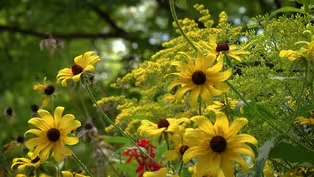
Video has Closed Captions
Clip: S23 Ep7 | 26m 46s | Learn how native plants feed wildlife to create healthy ecosystems! (26m 46s)
Video has Closed Captions
Clip: S23 Ep7 | 2m 19s | Fall wildflower seeds bring early spring color (2m 19s)
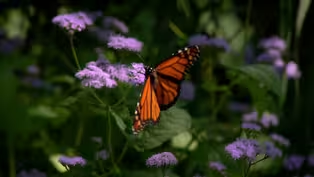
Video has Closed Captions
Clip: S23 Ep7 | 8m 49s | Remove lawn to restore beneficial plant communities (8m 49s)
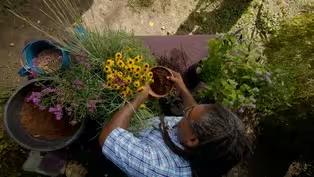
Video has Closed Captions
Clip: S23 Ep7 | 3m | Feed pollinators from a container garden (3m)
Video has Closed Captions
Clip: S23 Ep7 | 7m 49s | Discover native plants to feed people and wildlife (7m 49s)
Native Plants for the Landscape
Video has Closed Captions
Clip: S23 Ep7 | 6m 19s | Discover native plants for the home landscape (6m 19s)
Video has Closed Captions
Clip: S23 Ep7 | 7m 1s | Learn about Virginia native food plants (7m 1s)
Providing Support for PBS.org
Learn Moreabout PBS online sponsorship

- Home and How To

Hit the road in a classic car for a tour through Great Britain with two antiques experts.












Support for PBS provided by:
Virginia Home Grown is a local public television program presented by VPM