Outdoor Elements
How to Be a Bee Campus
Clip | 7m 16sVideo has Closed Captions
A regional campus has taken steps to be pollinator friendly and also manage an apiary.
https://beecityusa.org/ A regional campus has taken steps to be pollinator friendly and also manage an apiary. What does that all mean, and how can you be a part of Bee City USA? Evie and Cameron fill us in at IU South Bend.
Problems playing video? | Closed Captioning Feedback
Problems playing video? | Closed Captioning Feedback
Outdoor Elements is a local public television program presented by PBS Michiana
Outdoor Elements
How to Be a Bee Campus
Clip | 7m 16sVideo has Closed Captions
https://beecityusa.org/ A regional campus has taken steps to be pollinator friendly and also manage an apiary. What does that all mean, and how can you be a part of Bee City USA? Evie and Cameron fill us in at IU South Bend.
Problems playing video? | Closed Captioning Feedback
How to Watch Outdoor Elements
Outdoor Elements is available to stream on pbs.org and the free PBS App, available on iPhone, Apple TV, Android TV, Android smartphones, Amazon Fire TV, Amazon Fire Tablet, Roku, Samsung Smart TV, and Vizio.
Providing Support for PBS.org
Learn Moreabout PBS online sponsorshipI'm on the campus of Indiana University, South Bend.
And did you know it is a big campus?
What does that mean?
We'll find out.
I'm with Cameron Kincaid.
Cameron's a student, actually a senior at IU South Bend.
And you're part of the staff of the Center for Sustainability, right?
Yep.
So you have the great privilege of taking care of the bees.
We're going to get into that But tell me, what is a big campus?
What does that mean?
So a bee campus is a campus that promotes pollinator friendly plants.
Reduces their use of pesticides, and all around makes it a good environment, a safe environment and healthy environment for bees and other pollinators.
To fly around on campus.
That's great.
That's great.
So your specific area of interest is taking care of the bees now, does every bee campus have hives?
Um, yes.
I believe that the ones in Indiana, they do have hives.
There's yeah, the five that are in Indiana.
Do, do.
What are some of those other campuses?
So Hanover College is one, IUPUI is another.
Goshen College.
And Indiana State University and then ourselves as well.
OK, that's great.
The hives that you help maintain are full of honeybees, right?
Yep.
Russian honeybees.
Russian honeybees.
Right.
So good point.
Honeybees, we they are great pollinators.
They're not necessarily native, but they do a great service pollinating plants and helping us produce fruit and all that kind of great ecological services.
What what do you get to do with the bees?
When you're taking care of them?
So when we take care of them, you know, we're doing the basics health checks and making sure that they're OK and making sure that they're thriving their colonies doing well.
Nothing like colony collapse is going to happen.
And that's it.
We should say colony collapse.
That's a syndrome that, like, all the bees just die.
Right.
Yeah.
They can't sustain themselves, and sometimes it just happens.
But when we come in, you know, we make sure that they're doing as good as possible.
They're doing well and making sure that they're healthy and still thriving.
And they have been doing great.
I also take care of the garden across the bridge, and I see them flying around in the garden.
So Good, good, good.
Do you actually harvest any honey from these hives or not?
I personally have not harvested any honey.
OK, but do you have another beekeeper that helps you?
Yes.
The beekeeper that comes and helps.
He he's more well versed with the harvesting of honey.
I just like to come along and help and make sure that they're doing okay.
That's awesome.
Yeah.
Now, Bee Campus, in addition to potentially having bees, has some other policies and procedures that you have to have in place.
Right.
So what are some of those?
So obviously one of them is applying to be a member paying that membership Another, like I said before, it's having pollinator friendly plants on campus promoting that healthy environment for the bees and the pollinators.
So before you go into the other policies, is there a little spot where we could go see some of that pollinator happen?
Yes, there is.
Well, let's go look at some habitat.
All right.
Cameron, we made it out here to this beautiful stretch along the parking lot full of native plants.
So this is an example of how I view South Bend has established some habitat for pollinators.
Correct.
Which is awesome.
And, you know, just standing here, we've seen bumblebees and probably this is one of your friendly honey honey bees, and we've seen butterflies.
So it's working, which is great.
Oh, yeah.
What are some other things that the campus needed to do to become a bee campus in terms of policies or plantings?
So another thing that the campus had to do was reduce their use of pesticides.
Obviously, they're not very good to use and it kills a lot of the native plants, and it just makes it not a very healthy environment for pollinators.
So that's one of the that's one of the things we did.
Also, putting the actual bee site on campus was another thing we did to become a bee campus on pollinate.
I think part of it, too, is making sure there's adequate tree cover.
Yep.
And how about any safety protocols?
I know, you know, we saw the sign near the beehives, right?
So there signs near the beehives, of course, obviously, to help steer people away.
If, you know, hey, they're stumbling back there, but we'll have bee suits.
We have bee suits on hand for safety, for people to safely work with the bees to make sure that they're not going to get stung.
And we also have, you know, first aid kits ready and available.
So making sure all of that is part of the protocol for being a bee campus, which is awesome right now.
You obviously have a passion for bees and pollinators and attracting pollinators.
What do you think is the benefit of a campus like this to be a bee campus?
So personally, me, I think it helps beautify the campus.
It does because it's not only is it working with sustainability you know, preserving what we have, you know, making the environment good for the bees and for other pollinators for that matter, but it gives our campus this beauty It makes it look good and it feels good knowing that our campus is like a good environment for these and other pollinators to fly around.
And why should we care about pollinators?
So it's important.
We can think bees and other pollinators for about 70% of the food that we in general are there more pollinators, fewer pollinators around.
I would say since we become a bee campus and have planted the pollinator friendly gardens, I would say there's more pollinators around.
That's great.
That's great.
So we should all be thoughtful about what we can do to help pollinators in our own yards.
We don't have to be a campus.
We can be a bee friendly backyard.
Right.
And there's there's 269 affiliates, total affiliates for BE City, USA City, across 44 states in the United States.
So there's a lot of people doing it.
That's great.
Campus wise, there's 124, and we make up five of those.
So I think that's here in Indiana.
Right.
That's impressive.
I think that's pretty cool.
Yeah.
Well, congratulations on being a big campus congratulations to you and being part of this success story.
Your enthusiasm and passion for pollinating insects and everything that goes with it is impressive.
So thanks so much for sharing it with us.
Thank you.
I appreciate it.
Remember, you can find your own outdoor elements if you visit area parks and natural areas.
We'll see you soon.
Video has Closed Captions
Clip | 3m 2s | Take a winter walk with us at Fernwood Botanical Garden! (3m 2s)
Video has Closed Captions
Clip | 4m 20s | 🦉🌲 WHOO was here? While walking along a wooded path, Evie came across a mysterious p (4m 20s)
Barking Up the Right Tree: Norway Maple
Video has Closed Captions
Clip | 4m 30s | No description (4m 30s)
Don't Toss Those Holiday Lights! | OE
Video has Closed Captions
Clip | 8m 25s | 🎄✨ Got holiday lights that no longer sparkle? Don’t toss them! ♻️ In this ep (8m 25s)
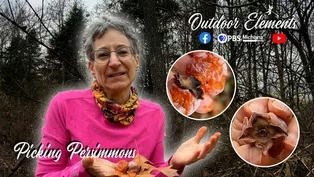
Video has Closed Captions
Clip | 3m 38s | 🍂✨ Out on a fall walk in the woods, Evie stumbled upon a sweet seasonal surprise — (3m 38s)

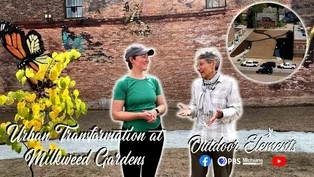
Urban Transformation at Milkweed Gardens
Video has Closed Captions
Clip | 17m 11s | No description (17m 11s)
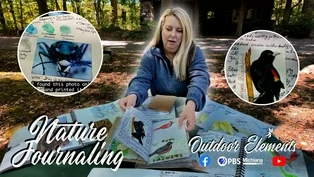
Video has Closed Captions
Clip | 11m 50s | 🌿🖊️ It’s time to slow down and connect with nature! In this episode of Outdoor E (11m 50s)
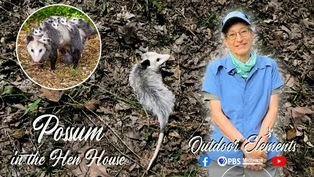
Video has Closed Captions
Clip | 3m 20s | 🐔👀 There’s a possum in the hen house! 🐾 On this episode of Outdoor Elements, E (3m 20s)
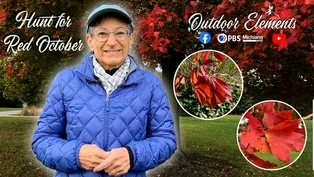
Video has Closed Captions
Clip | 2m 57s | 🍁 It’s that time of year when nature puts on its most colorful show! 🌳 In this epi (2m 57s)
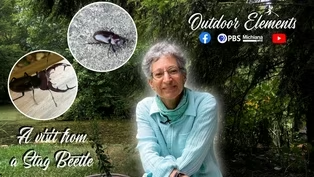
Video has Closed Captions
Clip | 3m 36s | 🌿🪲One of our awesome viewers spotted a beetle making its way across the driveway and (3m 36s)


Video has Closed Captions
Clip | 3m 24s | A viewer shared a fascinating video of a Paintedhand Mudbug, and Evie dives into the detai (3m 24s)
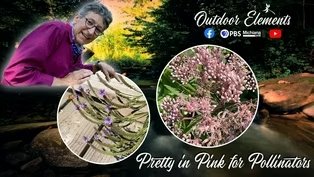
Pretty in Pink for Pollinators
Video has Closed Captions
Clip | 5m 3s | At Lydick Bog Nature Preserve, Evie spots a burst of pink in a wetland. She explores these (5m 3s)
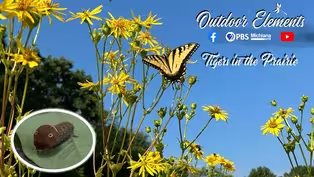
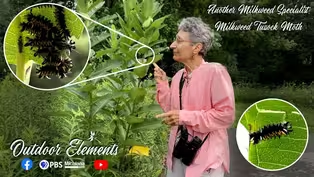
Another Milkweed Specialist: Milkweed Tussock Moth
Video has Closed Captions
Clip | 4m 36s | No description (4m 36s)
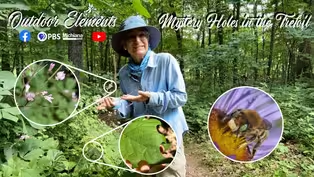
Video has Closed Captions
Clip | 3m 43s | Evie spotted Pointed-leaf Tick-Trefoil and shares how to identify this plant. (3m 43s)
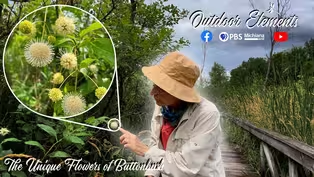
The Unique Flowers of Buttonbush
Video has Closed Captions
Clip | 3m 58s | Evie finds Buttonbush at Spicer Lake Nature Preserve (3m 58s)
Saving Ash Trees, One Tree at a Time
Video has Closed Captions
Clip | 11m 16s | No description (11m 16s)
Bringing Bees Back to the Nature Center
Video has Closed Captions
Clip | 6m 10s | No description (6m 10s)
Gathering for Science: An Environmental Research Symposium
Clip | 10m 27s | Evie stops by the St. Joseph County Public Library during their Earth Day celebration to c (10m 27s)
Surprising Color in the Woods: Blue Stain Fungi
Video has Closed Captions
Clip | 3m 48s | No description (3m 48s)
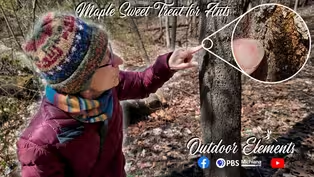
Maple Sweet Treat for Ants | Outdoor Elements
Video has Closed Captions
Clip | 1m 34s | A sweet surprise in the woods! (1m 34s)
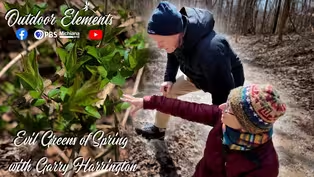
Evil Greens of Spring with Garry Harrington
Video has Closed Captions
Clip | 12m 56s | Things are greening up in the spring woods, but it’s not necessarily a welcome sight. (12m 56s)
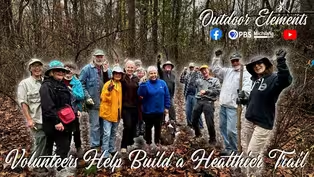
Volunteers Help Build a Healthier Trail
Clip | 6m 9s | At Lydick Bog Nature Preserve, volunteers make a big difference in protecting and maintain (6m 9s)
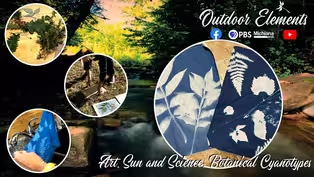
Art, Sun and Science: Botanical Cyanotypes
Clip | 6m 49s | Experimenting with cyanotype fabric brings nature to life in beautiful, sun-printed design (6m 49s)
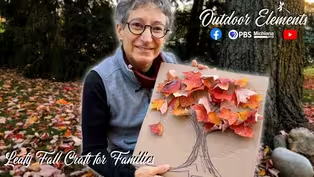
Clip | 3m 57s | Evie shares a fun and simple craft idea using autumn leaves that the whole family can enjo (3m 57s)
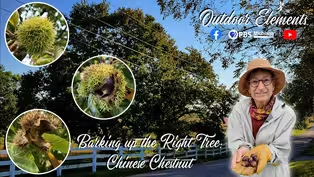
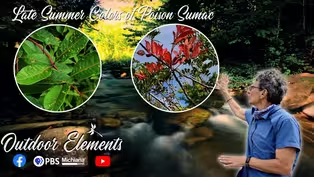
Late Summer Colors of Poison Sumac
Clip | 1m 59s | Watch out for this colorful danger at Lydick Bog Nature Preserve! (1m 59s)
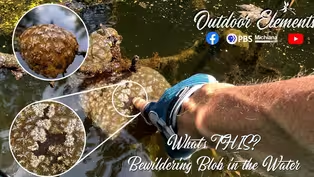
What's THIS? Bewildering Blob in the Water
Clip | 5m 8s | What’s that mysterious blob in the water (5m 8s)
Clip | 7m 14s | Find out how thousands of volunteers help the US Geological Survey teams and other resourc (7m 14s)
Meet Up with Kam and Chevy: Black People Outside
Clip | 5m 18s | Meet the inspiring creators behind Black People Outside. (5m 18s)
Surprise! It's American Columbo
Clip | 5m 14s | Explore the unique features of the American Columbo. Discover its habitat, appearance, and (5m 14s)
Searching for Snakes: Researching Populations
Clip | 13m | Delve into the world of snake population research in northern Indiana and discover the met (13m)
On the Trail for Lizard's Tail
Clip | 3m 10s | We are at @SpicerLakeNaturePreserve to learn about the fascinating plant known as Lizard's (3m 10s)
Providing Support for PBS.org
Learn Moreabout PBS online sponsorship

- News and Public Affairs

Top journalists deliver compelling original analysis of the hour's headlines.













Support for PBS provided by:
Outdoor Elements is a local public television program presented by PBS Michiana