Scout-History
Storytelling (Visions of Idaho)
Special | 14m 50sVideo has Closed Captions
How tales, legends and memories illustrate history.
The stories people tell give us an idea about how they lived and what they thought was important. Stories can explain nature, relate memories or teach history through legends and true accounts. Gain an insight into how some Native Americans related to their world and the realities of a changing culture.
Problems playing video? | Closed Captioning Feedback
Problems playing video? | Closed Captioning Feedback
Scout-History is a local public television program presented by IdahoPTV
Scout-History
Storytelling (Visions of Idaho)
Special | 14m 50sVideo has Closed Captions
The stories people tell give us an idea about how they lived and what they thought was important. Stories can explain nature, relate memories or teach history through legends and true accounts. Gain an insight into how some Native Americans related to their world and the realities of a changing culture.
Problems playing video? | Closed Captioning Feedback
Where to Watch Scout-History
Scout-History is available to stream on pbs.org and the PBS app.
More from This Collection
A 15 part series detailing Idaho's rich history. These shorter videos are specifically formatted to comply with curriculum for fourth grade Idaho history. Visit Idahoptv.org for correlating teacher's guides.
Video has Closed Captions
Demonstration of Native American tool making and plant use (14m 50s)

Video has Closed Captions
A review of the history of the timber industry in Idaho. (14m 52s)
Religious Settlers (Visions of Idaho)
Video has Closed Captions
How religious settlers shaped Idaho. (14m 50s)
Quality of Life (Visions of Idaho)
Video has Closed Captions
How Idahoans' view of wilderness has changed. (14m 52s)
Video has Closed Captions
A look at the history of Idaho's first major industry. (14m 51s)
Homesteading (Visions of Idaho)
Video has Closed Captions
The lifestyle of ten-year-olds during Idaho's transition from territory to statehood (14m 51s)
Video has Closed Captions
The major geological forces that shaped Idaho. (14m 38s)
Video has Closed Captions
Understanding Idaho through it's geography. (14m 51s)
Early Lifestyles (Visions of Idaho)
Video has Closed Captions
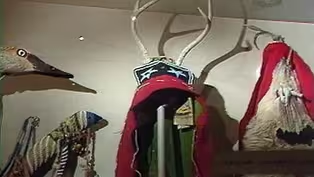
The lives of ancient Idahoans and Native Americans (14m 52s)

Early Exploration (Visions of Idaho)
Video has Closed Captions
Exploration from Lewis & Clark to the formation of the Idaho Territory. (14m 50s)
Contributions (Visions of Idaho)
Video has Closed Captions
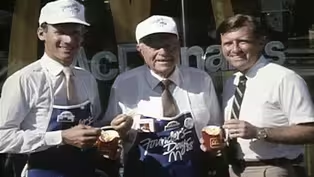
A look at some of Idaho's gifts to the world. (14m 51s)
Providing Support for PBS.org
Learn Moreabout PBS online sponsorshipSTORIES OF MONSTERS THAT ROAMED IDAHO... TALES OF LIFE LONG AGO.
WHAT DO YOU THINK THE NATIVE AMERICANS THOUGHT WHEN THEY FIRST SAW A WHITE MAN?
STORIES ARE AN IMPORTANT PART OF IDAHO'S PAST.
COME... LEARN MORE ABOUT STORYTELLING.
SITTING AROUND A CAMPFIRE... IT'S A GREAT PLACE TO TELL A STORY.
I'M PHYLLIS EDMUNDSON.
YOU CAN LEARN A LOT ABOUT A PEOPLE FROM THEIR STORIES.
THE ANCIENT IDAHOANS DID NOT HAVE A WRITTEN LANGUAGE.
CHILDREN LEARNED FROM STORYTELLERS.
STORIES WERE HANDED DOWN FROM PERSON TO PERSON.
HAVE YOU EVER PLAYED THE GAME TELEPHONE?
ONE PERSON STARTS A MESSAGE... THE MESSAE IS CHANGED ONCE THE WORD COMES BACK.
THAT'S HOW STORIES HAVE BEEN PASSED ON FROM THE ANCIENT IDAHOANS.
THEY HAD TO REMEMBER THEIR STORIES.
IF THEY DIDN'T, THE STORIES WOULD BE LOST.
THEIR STORIES TRIED TO EXPLAIN THE UNKNOWN.
ALLEN SLICKPOO REMEMBERS THE MONSTER LEGEND.
IT EXPLAINS WHERE HIS PEOPLE CAME FROM... Allen Slickpoo: THE GREAT MONSTER BEGAN TO SWALLOW UP THE PEOPLE.
THE COYOTE BECAME LONELY.
HE CHALLENGED THE MONSTER.
COYOTE WAS SWALLOWED.
COYOTE THEN CUT ON THE HEART.
HE FINALLY KILLED THE MONSTER.
ALL THE PEOPLE GOT OUT.
HE CUT UP PIECES OF THE MONSTER AND THREW THEM IN DIFFERENT DIRECTIONS.
THE PIECES CREATED DIFFERENT TRIBES.
COYOTE SPREAD THE BLOOD AROUND SAYING, "THESE WILL BE THE NEE-ME-POO... NEZ PERCE."
Phyllis: OTHER STORIES EXLPAINED NATURE.
RAMONA WALEMA IS A STORYTELLER.
Ramona Walema: "MY FATHER IS A STORY TELLER.
HE ALWAYS TALKS ABOUT THE TYPES OF ANIMALS.
HE SAYS, THEY WERE ALL HUMAN BEINGS.
ONE DAY, THE ANIMALS BEGAN TO STARVE AND DIE.
THE SQUIRREL WAS THE CHIEF.
HE CALLED A MEETING TO DECIDE WHAT TO DO.
HE SAID, "TONIGHT WE'RE GOING TO DANCE."
THEY STARTED SINGING AND DANCING.
THE SQUIRREL DANCED.
HE HAD LONG TOENAILS.
THEY DUG INTO THE GROUND.
THEY PRAYED TO THE FOUR WINDS.
THE WIND BROUGHT THE SEEDS... AND RAIN MADE THEM GROW.
TANSY MUSTARD SEEDS GREW ALL OVER.
THE PEOPLE DIDN'T GO HUNGRY.
Phyllis: WHY ARE THESE STORIES IMPORTANT?
THE STUDY OF HUMAN BEINGS AND WHY THEY DO THINGS IS CALLED ANTHROPOLOGY.
ANTHROPOLOGISTS STUDY STORIES.
STORIES WERE IMPORTANT TO IDAHO'S NATIVE AMERICANS.
AND NOT ALL OF THE STORIES WERE LEGENDS.
SOMETIMES STORIES TOLD OF EVERYDAY THINGS... ANTHROPOLOGIST JON DAYLEY ASKED JOSEPHINE THORPE ABOUT HER EARLY LIFE ON THE PAYETTE RIVER.
SHE TOLD A STORY ABOUT WHAT HER LIFE WAS LIKE.
SHE TOLD IT IN HER NATIVE LANGUAGE OF SHOSHONE.
IT SOUNDS DIFFERENT.
JOSEPHINE SPEAKS IN SHOSHONE.
Josephine Thorpe: "LONG AGO THEY DIDN'T EVER BUY ANYTHING.
WHAT THEY ATE, WHAT THEY LIVED ON, THEY KNEW HOW TO FIX.
THEY USED TO HANG UP FOOD THEY ATE.
I FEEL GOOD ABOUT HOW WE LIVED."
JOSEPHINE SPEAKS IN SHOSHONE.
Josephine Thorpe: "ALSO, THEY HAD MANY HORSES.
THEY USED TO TRAVEL AROUND ON THEIR HORSES.
IT DIDN'T REALLY SNOW VERY MUCH AROUND WHERE THEY LIVED.
THEIR HORSES WOULD EAT THE BUNCH GRASS.
THEY WOULD ALSO GRAZE ON THAT GREEN GRASS THAT GREW ALONG THE WATER'S EDGE."
Phyllis: LIFE FOR IDAHO'S NATIVE AMERICANS CHANGED WHEN MINERS TOOK OVER THE LAND.
FARMERS PLANTED CROPS AND SETTLERS HUNTED THEIR GAME.
IMAGINE, NOT BEING ABLE TO FIND FOOD OR CAMP WHERE YOU HAD ALWAYS CAMPED.
IMAGINE MEETING A PERSON YOU COULDN'T UNDERSTAND.
EMALINE GEORGE TELLS THE STORY WHEN HER GRANDMOTHER FIRST SAW A WHITE PERSON.
Emaline George: "WHEN SHE FIRST SAW NON-INDIANS, SHE WAS IN THE LEMHI VALLEY.
THEIR LEADER WAS CHIEF TENDOY."
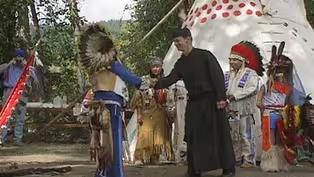
Phyllis: HER GRANDMOTHER SAW MORMON SETTLERS AND ARMY TROOPS.
THE MORMONS WORE DARK CLOTHING.
NATIVE AMERICANS WORE COLORFUL CLOTHING.
Emaline George: "GRANDMOTHER SAID THEY WERE AFRAID OF WHAT WAS GOING TO HAPPEN.
THE SOLDIERS WORE UNIFORMS.
GRANDMOTHER DIDN'T KNOW WHAT THE WHITES WANTED.
SHE SAID THESE WHITE PEOPLE WERE AFTER OUR LANDS."
Phyllis: SETTLERS AND NATIVE AMERICANS SOMETIMES HURT EACH OTHER.
THEY DIDN'T UNDERSTAND EACH OTHER.
NATIVE AMERICANS WERE FORCED TO GO TO RESERVATIONS.
THEY WERE FORCED TO LIVE WHITE MAN'S WAYS.
BUT THINGS ARE CHANGING.
GEORGE SAYS NATIVE AMERICANS ARE PROUD OF THEIR CULTURE.
Emaline George: "I WAS LISTENING TO MY GRANDPARENTS.
I FELT LIKE I WANTED TO DO SOMETHING.
MAYBE THE GOVERNMENT PUT BAD FEELINGS IN THEIR MINDS.
BUT NOW IS THE TIME TO FIX THINGS.
AND MAYBE THEIR SPIRITS LOOKING UPON US COULD FEEL GOOD."
Phyllis: YOU CAN LEARN A LOT FROM STORIES.
HOW ANCIENT IDAHOANS TOLD OF THE UNKNOWN.
HOW NATIVE AMERICANS ONCE LIVED.
AND WHAT THEY THOUGHT ABOUT THE NEW SETTLERS.
AND WE CAN SHARE THEIR FEELINGS.
STORIES ARE AN IMPORTANT WAY TO LEARN ABOUT PEOPLE.
DO YOU HAVE A STORY THAT YOU COULD TELL?
I'LL SEE YOU NEXT TIME.
CLOSED CAPTION TRANSCRIPTION BY SARA J. HANSEN














Support for PBS provided by:
Scout-History is a local public television program presented by IdahoPTV