Virginia Home Grown
Specialty Gardens
Season 23 Episode 8 | 54m 3sVideo has Closed Captions
Explore specialty gardens focused on unique products!
Peggy Singlemann visits Mark Ragland in his tea garden to discuss how to grow Camellia sinensis. Amyrose Foll meets Lara Brooks to learn about growing luffa to produce natural sponges. In the studio Mark demonstrates how to brew tea and Lara shows how luffa fruit are processed. Engage with us or watch full episodes at Facebook.com/VirginiaHomeGrown or vpm.org/vhg. VHG 2308 October 2023.
Problems playing video? | Closed Captioning Feedback
Problems playing video? | Closed Captioning Feedback
Virginia Home Grown is a local public television program presented by VPM
Virginia Home Grown
Specialty Gardens
Season 23 Episode 8 | 54m 3sVideo has Closed Captions
Peggy Singlemann visits Mark Ragland in his tea garden to discuss how to grow Camellia sinensis. Amyrose Foll meets Lara Brooks to learn about growing luffa to produce natural sponges. In the studio Mark demonstrates how to brew tea and Lara shows how luffa fruit are processed. Engage with us or watch full episodes at Facebook.com/VirginiaHomeGrown or vpm.org/vhg. VHG 2308 October 2023.
Problems playing video? | Closed Captioning Feedback
How to Watch Virginia Home Grown
Virginia Home Grown is available to stream on pbs.org and the free PBS App, available on iPhone, Apple TV, Android TV, Android smartphones, Amazon Fire TV, Amazon Fire Tablet, Roku, Samsung Smart TV, and Vizio.
Providing Support for PBS.org
Learn Moreabout PBS online sponsorship(insects chirping) >>To be true tea, it needs to have camellia sinensis in it.
There are a lotta herbs you can add to tea, and there are herbs you can drink on their own.
(insects chirping) >>If you do grow it on the ground, they tend to rot.
A trellis is probably one of the best things for it to grow with.
(bird squawking) So this is a trellis that's made out of cattle panels.
They're very rigid, and so they can support the weight.
The luffa has an incredible amount of weight on it.
(bird squawking) >>Production funding for "Virginia Home Grown" is made possible by.
(birds chirping) (birds squawking) (upbeat music) (upbeat music continues) (upbeat music continues) (upbeat music continues) >>Welcome to "Virginia Home Grown."
Don't let the recent warm weather fool you.
It's fall, and our show highlights this cooler portion of the growing season.
Before we get started, I wanna remind you to send in your gardening questions through our website at vpm.org/vhg.
We'll be answering those a little later.
Today, we're visiting specialty gardens that focus on unique products.
In the second half of our show, we will learn about growing the luffa plant and harvesting the fruit to make natural sponges.
But first, I visited Mark Ragland at his private garden in Prince George to learn about growing camellia sinensis for making tea as well as other herbs that can be brewed.
Let's get going.
>>Peggy, welcome back to my garden.
>>Mark, it's been so long since I've been here and look how much everything's grown.
>>Everything's really gotten big.
>>It's amazing.
These crepe myrtles were just eight feet tall last time I was here.
>>I know, it's changed the garden.
It's become a primary shade garden where we used to be full sun.
>>Yes, you've had to totally change your plant inventory.
>>And still replanting as we speak and that'll be going on for a while.
>>Wow.
With so many different garden rooms which one is your favorite?
>>Ah, it's always hard to pick favorites, but I have to say herbs would probably be it.
>>Yes.
>>And, of course, tea is one of those.
>>Oh, and look at these cute little guys.
>>Yeah, these are the new plantings, the new varieties, but come look at the mature specimen over here.
>>Okay.
Oh, Mark, this is absolutely gorgeous.
And look at all those flower buds.
And look at all those flowers.
It is fall and it is a fall blooming camellia.
So what type of camellia is this?
>>This is a camellia sinensis.
And that's important to know the variety because you wouldn't wanna make tea out of another variety of camellia.
>>Oh, gosh, no, I can imagine, yes.
This is such a beautiful plant.
How do you get it to survive here?
>>There's a few things you have to do to check the boxes and make sure it's happy.
First, we get easily, the acidic soil is a necessary thing for this plant.
The other thing is water.
So we do get a lot of rain, but sometimes we don't.
And when we don't you gotta make sure and keep this wet feet.
>>Okay.
>>The third thing is winter warmth.
So I always tell people, when you're out in the garden in the winter, watch where the snow melts first, that's your warm spot.
And that's true for right here.
Plus I get the reflective heat from the gravel, the stonework in the building.
And it's all protecting this and keeping it nice and happy through the colder parts of our winters.
>>People don't realize the value of a microclimate, the reflection off of a wall, a stone, or even a walkway plus their driveway.
It just makes such a difference.
>>It's so true.
I mean, you'll have so many in your yard depending on the size of your garden.
>>Exactly, but do you have to fertilize this at all?
>>I don't.
You can fertilize it.
And sometimes I'll add compost to the top just to dress it, but generally speaking, it's perfectly happy in our soil.
>>That's fantastic.
Well, let's get back to tea, though.
What part of this tea camellia do you use to make tea?
>>So I picked a branch, I'll take this out.
So typically when tea pickers are picking they're going for just the newest leaves, the tender leaves.
You can use any of the leaves, but the reality is the best flavors are gonna be in that new growth.
These older ones at the bottom they're just a little tannic.
They've got too much of the things you don't want in your teacup.
>>Understandable.
Well, I'm gonna ask then.
You know, we have buds here.
Does this make a different tea the bud of the plant rather than the leaves of the plant?
>>So that's the amazing part.
There's so many different types of teas and people are always wondering do I grow this plant for white tea, and this plant for green tea?
And the reality is you can make all varieties of tea from the same leaf.
It's when you pick it and how you process it.
>>So when's the best time to pick tea?
>>Well, that depends on who you are.
There are people that swear by that first picking in the spring, that first flush of new growth 'cause you've got all that wonderful flavor building up all winter long and it's gonna be right in the tip.
So your first spring picking, which is called first flush, is typically your best.
>>Does that make the green tea, or what type of tea does that make typically?
>>You can make any of the teas.
White teas usually come out then 'cause that's when you're getting all these wonderful new, and the white tea is gonna be that newest little bud of growth.
>>A tiny little thing.
>>It's a little fuzzy.
And it's got a white fuzz to it which is why it's called white tea.
>>Interesting.
So black tea and green tea.
What parts of the leaf are they made out of?
>>Same leaf.
>>Okay.
>>The difference is, if I take this leaf now I've picked it it's gonna start to die.
It's a process, right?
And just like when you cut an apple, it starts to oxidize.
Tea leaves do the same thing.
So we're gonna cut this up in lots of little pieces.
And then as it oxidizes, we're counting.
As soon as it starts to oxidize you're getting away from green tea.
So you don't want it to oxidize if you want green tea.
Once it starts oxidizing, oh, then it could be in a yellow tea, I'll stop it.
No, no, we'll let it go halfway through its full process.
That's oolong.
And if it goes all the way, then we get the black tea.
>>Interesting.
So how do you stop the oxidation?
>>You need to heat it.
Heat it in some way.
And there's another great variance in the varieties of teas, right?
If you heat it with smoke, if you heat it in the oven, if you heat it in the sun.
>>So this whole plant here, we can get every type of tea we want.
A type of black tea I'll say.
>>Exactly.
When I've made tea from this myself, I like oolong.
So it's half fermented.
So I'll pick this, cut it up, and I'll let it go for just a few hours instead of a whole day.
And then I put it in the oven to stop it.
And it makes a really nice oolong.
>>So what other plants can be used to make tea with?
>>Well, let's be clear on one point.
To be true tea it needs to be camellia sinensis, but it's a modern world.
So a lot of people still call teas herbs, and things that are infused with herbs.
So we should probably go into the herb garden and look at the herbs that are growing for that.
>>Sounds great.
>>Come with me, come on.
>>Okay.
>>So this is the formal herb garden.
>>This is amazing, Mark.
I love how you've arranged the beds.
>>Well, thank you.
It's divided into different types of herbs based on their classifications.
>>Wow, how many different herbs do you have in here?
>>Usually around 200 different varieties.
>>My, my, I'm really impressed by this.
>>Thank you.
>>And I really love the fact that you've got the tea plants together.
>>So this is my OCD nature coming out.
I've got all the herbs organized by types here, the salvias, but these are the herbs for tea.
>>Ah, what a wide variety, so many different types.
>>Well, there are a lot of different types.
>>Yes.
You know, people don't realize or associate tea with grass.
>>You wouldn't normally, but this particular one is quite lemony.
Lemongrass is excellent for tea, whether it's its own brew, or you blend it with the tea for the lemon flavor.
>>A lot of people don't know that that's an annual.
>>Well, it is an annual here.
>>Yes.
>>And if we get lucky I've had it come through a couple winters.
>>Oh, wonderful.
>>So sometimes, yes, but count on replacing it.
>>Yeah.
What other lemony things do you have in here?
>>Well, there are some good herbs for that.
Lemon verbena is my personal favorite.
>>Mine too, it's so lemony.
>>It does have that great lemon flavor.
>>Yes.
>>And then there's lemon balm.
>>Oh, which we have to be careful about.
>>I saw the cringe.
Yeah, it is a little invasive.
So you wanna get those seed heads off before it gets into other areas you don't want it, but super hardy that's the good news.
>>It is, it is, but you also have another tall plant there, the hibiscus.
>>Right, my love of Egypt and hibiscus tea as a welcome drink.
>>Oh really?
>>I had to have hibiscus in the garden.
It makes a wonderful, wonderful tea all to itself, but it does blend well with tea.
>>It does.
I can't think of a better way to welcome people.
>>Yeah, exactly.
>>Oh, how sweet, yes.
Some of the other plants you have.
I'm seeing some bee balm here.
>>Yep, got the bee balm.
We also have the mints all mixed in.
As well as betony and the alpine strawberries for that tea.
>>Wonderful strawberry flavor.
>>Yes.
>>And I think people need to realize, I put my mints in a pot so that they don't wander.
>>Yes.
They're in their own little rock fortress here.
Not that they can't escape a little but I get 'em when they come out.
>>Good job.
Well, throughout the garden, what other plants do you have?
>>Well, they're spread all out, right?
So there's more.
The chamomile is over in this bed.
We've got basil here and the basil is going to bloom now because I need to help those poor pollinators at the end of the season, but I'll cut that back and get to the pesto very soon.
>>Excellent, excellent.
You know, Mark, I also know that you had some lavender in the corner too, and I love lavender tea.
>>Well, there's my favorite too.
Blending lavender with tea just makes that wonderful soothing blend, right?
You've got that tea that's calming you and then the lavender does that.
>>Ah, it's just such a- >>Perfect place to be.
>>Exactly, speaking of perfect places to be this is a perfect place to be.
And I just wanna thank you so much for having us.
>>Oh, I'm so glad you got to come back out.
You've been a longtime friend.
It's good to have you in the garden again.
>>Thank you, it's so nice to be here.
>>In fact, I should probably welcome you to a cup of tea.
Why don't we go get one now?
>>I love it, let's go.
>>Okay.
>>Our gardens evolve over time and Mark has done an outstanding job adjusting what he grows to meet the changing growing conditions.
And Mark is here with me now to demonstrate how to make teas and herbal infusions.
But, before we start, remember to send in your gardening questions on our website at vpm.org/vhg.
Well, Mark, I'll be honest with you.
This smells delicious in here.
All these aromas of these teas and you know, where do we begin 'cause I just take the water, pour it on the tea, let it, go do something, come back and then I drink it and I don't think that's what your intent is.
>>Well, tonight we're gonna learn to make the perfect pot of tea.
Not just a pot of tea, but the perfect one.
>>Okay.
>>In a truncated way.
>>Okay.
(both laugh) >>All right, so what do you think the most important ingredient is to start with?
>>Well, the tea.
>>Well, you would think that, but actually your water source is.
If you don't like the taste of your water, there's a good chance your tea's not gonna taste that good and a lot of people make that mistake.
So I'm lucky to have the well water, so it's not so bad for me, but make sure you get a good source of water 'cause that's your main ingredient.
And tea will adapt to that flavor, so you wanna make sure it's good.
>>That makes sense.
It makes perfect sense.
>>Then you're gonna need to wait to heat the water.
>>Right.
>>Because that's part of the process.
So I've got a handy-dandy water heater and you're gonna open it up with your good source of water.
>>Right.
>>Fill it to the appropriate amount for your pot.
>>Okay.
>>We'll skip the full amount of that.
>>Right.
>>And then you're gonna want to heat the water.
>>Well, to what temperature do you heat the water to?
>>Well, that's where the decision you're about to make, makes a big difference.
>>Okay.
>>So the next step in the process before we actually push the button, is to choose the tea we wanna make.
>>Huh, okay.
So what are my choices of tea to choose from?
>>Well, tonight I brought you just a couple.
There are lots to choose from.
>>Right.
>>I brought you some of my own brew.
This is tea I've made from my garden, so that's the oolong that I've made.
>>That's nice and coarse.
That's usually coarser than... >>Yeah, if you've got a bigger leaf, it gives a different type of flavor than if it's much finer, typically a better flavor.
>>Okay.
>>That's what's considered.
>>Alright.
>>And we've also got monkey picked.
>>Monkey picked?
Truly picked by monkeys?
>>Truly.
>>Okay, I trust you.
>>That's the idea.
At least it used to be.
>>Yep.
>>And then, we've got a wonderful tea from India, the Darjeeling tea.
>>Oh.
Oh, that smells wonderful, that's- >>Before you make your decision, keep in mind that we also have some herbs.
>>Yeah.
>>But remember what we've learned, if it's got tea, it's got to be Camellia sinensis.
>>Right.
>>To really be tea, it can't have the herbs because that's an infusion or a tisane.
>>Okay.
>>So you can blend the herbs with the tea and still be a tea.
>>But if we just wanna do these, like I've got the hibiscus, and we've got the rose hips- >>Right.
>>And we've got lavender.
>>Oh, my favorite.
>>They all make great tisanes or infusions by themselves.
>>Right.
>>So you've got those to choose from as well.
>>But we could add those as a flavor to the tea?
>>Equally.
>>Okay.
>>And still be great.
>>Okay, well I'm gonna choose a Darjeeling.
>>Ah, good choice.
>>Thank you.
>>All right, so the next thing we wanna do- >>Is, I'll tell you what.
>>Is start the water up.
And because this is a black tea, that's gonna need full heating.
We want to heat the water to boiling.
So a good water heater's gonna give you different choices for different temperatures.
If it's a green tea, you don't wanna boil it.
'cause that'll scald the tea.
If it's an oolong, you want it to just about boil, so there's bubbles on the edge of the pot right before it boils.
>>Right.
>>That's the point.
And for black tea, you wanna boil.
Cold water to start with, push the button and let it start heating.
>>All righty.
>>Now we gotta get the tea ready to go in the pot.
>>Okay.
>>So I've got a handy dandy tea ball here.
>>Well, how much do we put in the tea ball?
>>Ah, that matters too.
>>Okay.
>>So, typically, for a teapot of this size, which is a four cupper- >>Okay.
>>You want two heaping teaspoons.
>>All righty.
>>So I'm gonna put two in and you'll see what that looks like.
It's not quite full.
However, I know you and I prefer a stronger cup of tea.
>>We do like the tea stronger.
>>A good brew.
So I'm gonna put an extra spoonful in.
A lot of people say an extra spoon for the pot anyway.
>>Right.
Okay.
>>The key is you don't want to overfill it and go above the middle of the tea ball.
>>Why not?
>>It needs room to expand, especially with a larger leaf tea, the better teas, they need room to grow in the tea ball and dance around and do what they do as they infuse.
>>These are dehydrated leaves.
You're right.
Mm-hmm.
>>So you'll take your tea ball and get it in the pot and get it ready.
(teapot clangs) Now, through the magic of time- >>Yes.
>>The water is ready.
You heard this ding.
>>Bingo.
>>And it's boiling.
>>I did hear a ding, yes.
(both laugh) >>Now, we wouldn't have normally put the tea in.
You were supposed to catch me on that.
>>Oh, I'm so sorry.
>>Gosh, Peggy.
>>Oh, I blew it.
>>So before the tea goes in, what you really need to do is heat the teapot.
>>I've never done that.
>>Because the teapot's cold.
And if you don't, that temperature you're trying to get with the water, it instantly goes down because the teapot cools it down.
>>And it's all about the water.
>>It is, so pour a little hot water in, warm up the teapot, spill it out.
Then you put your tea in and now you can add your water.
>>Okay, well- >>And let it- >>I like our invisible water.
>>Let it steep.
>>So how long do we let it steep?
>>Again, the decision you made affects that length of time.
And I've got this handy dandy timer that has three different timers for different types of tea.
Nicely, it's color coded.
>>Yes.
>>So green for green tea, which is gonna be three minutes.
It's less time.
It's a fragile tea.
It doesn't need as long to steep.
A lot of times you will re steep a green tea.
>>Yes, up to three times.
>>Yellow for yellow teas or oolong teas, and black for black teas.
>>Sounds great.
>>So we turn that over and we let it wait, five minutes in this case, and our tea is brewing to a perfect cup.
>>Sounds great, which we have just one minute left.
>>So, I've already made a pot of the tea you happened to select.
>>Yes.
I am a magician at heart, so I- >>You are a magician.
>>I guessed ahead.
>>Would you like me to pour?
>>I would love a cup of tea.
>>That's a nice, rich, beautiful cup of tea there, Mark.
>>Yeah.
>>Absolutely beautiful.
Well, tell me, what do you do with the pot once you're through?
>>So it's important too, to keep that tea warm because we all wanna enjoy it at the nice temperature we've gotten it to, and that's where tea cozies come in handy.
You can just throw one of those over.
I saw you pull one off.
>>Mm-hmm.
>>But that'll keep the pot warm for hours.
Amazingly, a good tea cozy will do that.
>>So I don't have to worry about making it immediately and serving it.
I could make it ahead.
>>You can make it ahead >>And then enjoy.
Let it stay hot and then I can serve it to my guests.
>>Exactly.
>>Or myself, even.
And have more than one cup.
>>Exactly.
>>Well, Mark, this has been enlightening.
You know, we always thought, well, I always thought it was the tea, but it's the water and it's the source of the water, the temperature of the water, as well as the steeping time.
And this has been very enlightening.
Thank you.
>>Great.
I'm glad you enjoyed it.
>>Yes.
Truly appreciate it.
And now we're going to get ready to answer your questions, but first, Randy Battle has a tip to share on cool weather crops you can grow in the garden this winter.
(lively music) >>As the weather changes and temperatures begin to drop, you can continue your gardening all season long.
So, today, we're gonna be planting three different cool weather crops.
First, you wanna start off with a nice, even soil.
This is a mixture of compost and general soil, and you wanna make sure it's nice and loose, you guys.
Make sure it's nice and loose.
So we're gonna section off an area, just like so.
You know, just take you a little garden shovel and make you a space, and I like to cut mine into squares just like that.
You see that?
You can also use a sheet of paper, eight and a half by 11, and make you a square.
So, today, we're gonna start with arugula, and what I do is I simply just take a gardening shovel.
You can use your hands, and if you get starter plants, that's great, because, at this time of year, starting from seed could be a little tricky.
So we're just gonna take our arugula.
Plop it right down in the soil.
Give it a good base, just like that, okay?
And then we're gonna do another one right here.
Easy peasy.
Gardening can be fun, simple, and easy.
We have arugula.
Next, we're gonna plant leeks.
I'm gonna make another row here, and leeks can be interjected and interplanted with a lot of different crops.
They're so easy to grow and they don't require a lot.
Loosen up the root ball.
We're gonna take our hand, put it right down in there like so, and cover it up.
Give it a nice base, a nice little soft packing like so.
And one of my most favorite things to grow is cabbage, and, today, I'm gonna be planting some purple cabbage.
These are very frost tolerant, you guys.
They will take a frost and keep on moving.
So we're gonna take our cabbage plant and just plop it.
Break the root ball down a little bit and just plop it right in the ground.
Give it a strong base, just like so.
Give it a nice pressing, and what you're gonna do is water these and give 'em a little fertilizer.
I like to use a 10, 10, 10, which is an NPK, nitrogen, phosphorus, and potassium, and just water 'em in.
So, when growing your cool weather crops, you can expect to harvest all different times of year.
Like, the arugula, I like to cut them around the edges, and the middle part will keep growing, and you'll have salad all year long.
Our leeks, we're gonna put these in the ground now, and they will be available early spring of next year.
You'll have an early harvest.
You'll be ahead of the game.
Our cabbage is gonna come in next spring as well.
So, just take your time and plant different things at different stages, like this kale.
I'm gonna plant this and this is gonna come up all year long.
My cauliflower, it's gonna come up all year long.
So, remember, grow what you can grow, eat what you can eat, and live, love, and laugh.
>>Members of our team on Facebook right now are answering questions.
So please connect with us there or visit our website, vpm.org/vhg to submit your questions.
Today, we have Jen Naylor in the studio with us to help answer questions too.
Welcome Jen.
It's great to have you with us.
>>Great to be here.
>>Aw, thank you.
>>Thank you for having me.
>>Yes.
We've got some great questions.
>>Yeah.
>>So let's start.
>>Well, Mary asks, "How long will dry tea leaves keep their flavor and how should they be stored?"
>>Ah, both good questions.
I'll do the second part first.
So, storing is really critical to tea.
Tea and light coffee and some other things really should never be put in the refrigerator or freezer.
Moisture is their enemy, as is light and air.
So you want as airtight a container as possible and then out of the light source.
And they'll keep for quite a while.
Like spices, they don't really ever go bad if you store them correctly, but they will lose their flavor over time.
So green teas and white teas are the most fragile, typically a good year or so for those.
Beyond that two years, maybe three years, for a black tea.
It's not like you have to throw it away after three years.
It's just not gonna be quite as favorable.
Add a little more tea in.
>>Wow.
>>So you really wanna put it into a sealed container?
>>Yep, airtight, sealed.
>>Okay.
>>Yes.
>>You're killing me.
My mother-in-law made this beautiful tea box and yeah, it's, >>So put it in a cabinet and make sure it's sealed well or put it in the air sealer.
>>That's okay.
>>I'm sorry.
>>So you can't just gonna keep it in the kitchen or something.
>>If you're gonna use it really quickly, it's not as important.
But if you're intending on keeping it or you have the supply I do, (chuckles) you do need to store it correctly.
>>Gotcha.
Well wonderful.
And what's our next question?
>>Okay.
All right.
Well, next question.
Okay, here we go.
Since we are on the edge of the growing zone, could tea trees be grown in greenhouses?
>>They could.
They certainly could.
You would need to maintain that just like you would any other greenhouse material.
So it's gonna need extra watering and you've gotta be really careful in the summer, 'cause it could get too much heat from that greenhouse.
>>Right.
>>So maybe in a large container that you can move it in and out.
'cause you're probably gonna trim it back.
But you could do that.
>>I was thinking that too.
>>Yeah.
>>You know, a friend of mine kept a camellia alive up in zone five for years by bringing it in and out of their greenhouse.
And they had it in a massive pot and it worked great.
The important thing is though, because it's in a pot, they have to remember to fertilize it because as they water it, the nitrogen's gonna leach out.
>>Right.
>>Right.
>>And again, they have to take their pH regularly, 'cause this plant does require acidic pH, where most of our potting soil is a neutral pH.
>>That's a great info, yeah.
>>Yeah, so they've gotta think, what are the cultural conditions and they have to be able to mimic them to have them to survive.
>>Right, right.
That's fantastic.
>>Yes.
>>See, I didn't know that.
>>Yeah.
>>See, I'm learning everything.
>>Yeah.
Very acidic, 4.5 to 5.8.
>>Really?
>>Yeah, which is- >>Wow, that's- >>Great for Virginia.
>>Yeah, that's our typical pH.
>>We got that.
(all laugh) >>Wow.
Should we go to another question?
>>Oh, yes please.
>>Okay, here we go.
Oh, we did that one already.
Okay.
Tori from Mid-Olian, from Midlothian, (laughs) asked, "I want to grow tea.
I have a flower bed on the east side of the house.
How could we grow tea plants there?
Or too sunny?
Where do we buy tea plants locally?"
>>A lot of the smaller nurseries in town will have them in the spring, typically.
So look around and again, the big box stores don't usually have them, but look around for a nice small nursery and they'll probably have them, or ask 'em and they can get them easily.
>>Okay.
>>Yeah.
>>Just get that Camellia sinensis.
As far as planting it at your house, put it close up to the house.
It's gonna love that warmth that you get from the home in the wintertime.
You're not gonna give it too much sun.
You're more likely to not give it enough sun, especially in the winter when it needs to stay warm in the cooler months.
>>Wow.
>>Yeah.
>>And make sure it stays watered, because if it's really close up to your house, there's a chance there's an eave or something, keeping it from getting rain.
And again, this plant likes 80 to 90 inches, which is double our normal, whatever normal is, so, yeah.
>>Yeah.
So we've gotta mulch it well, you know, to protect that soil, also keeps it buffered too.
But it helps hold that moisture in.
>>Okay.
>>Correct.
>>And we're using acidic mulch, of course.
'cause we want that acidic soil.
>>Right.
>>So- >>Right, right, right.
>>Yeah, it's all about those conditions.
>>But definitely doable, definitely try it.
>>Okay.
Okay.
>>Well Mark, I have a question then.
How old is a tea plant while it's, how can I phrase this?
How old can a tea plant be and still be viable or still be able to be harvested?
>>That's a great question.
So out in nature, tea plants, tea trees, they are actually trees, can live up to 800 years.
>>Oh my goodness.
>>But their productivity, as far as harvesting tea and getting a good tasting tea, is usually just about a hundred years.
So, probably long enough for us.
>>Still, hundred years.
(all laugh) >>Okay.
>>So, you won't be replanting every year.
>>That's fantastic.
>>Yeah.
>>Wow, a hundred years.
>>I know, I wish I could say I was that productive.
(all laugh) >>But you had mentioned it was a tree.
So how tall does this tree get?
I only know it as a shrub 'cause I took care of one for so many decades.
>>And that's, it is a very slow growing shrub.
So it typically is going to take maybe a hundred years to get up to the 80 or 90 feet it could grow, and you're gonna be trimming it back constantly.
So, it's perfectly happy staying as a low shrub.
>>So it could literally grow up to 80 to 90 feet.
>>There are trees.
Yes.
>>Wow.
>>Yes.
>>Interesting.
>>Wow.
That's great news, isn't it?
(all laugh) >>Well, I wanna switch over to herbs- >>Sure.
>>For the infusions.
What are your favorite herbs to use in the infusion?
Which ones give you the most flavor?
>>As far as just herbs by themselves without the Camellia sinensis involved.
>>Mm-hmm.
>>I really love the lemony ones.
So the lemongrass, the lemon verbena or the lemon balm.
Those are truly my favorites.
But right next door, is mint.
I love a good mint brew.
There's something refreshing about mint.
Obviously it blends so well with tea and so many other things.
>>Yeah.
>>But, there's something about mint that just makes you feel better.
>>Mm-hmm, if you had a part shade garden, 'cause yours is full sun- >>Getting shadier every day.
>>Getting shadier every day.
Which herbs would you suggest people put in that garden that they could make an infusion for with their tea?
>>Well, what's great about herbs is they can really withstand more shade than we give them credit for.
What they tend to lack when they're in more shade is the blooms.
But for most of what I'm talking about, it's not the blooms that you're going for anyway.
>>You want the leaves.
>>So I have grown all of the ones I just mentioned, the lemongrass, lemon verbena, lemon balm, in a four to five hours.
If you really have low light and shady, lemon balm doesn't care, and mints can do very well in the shade.
>>Mm-hmm, again, putting them in a pot or some way of containing- >>Yeah, don't let them get loose.
>>Right.
Yes.
Yes.
Oh.
>>Lemon balm as well, yeah.
They're both in the same square stem family.
>>I love lemon grass.
I mean, it's just absolutely...
I love lemon grass- >>So much.
>>To use cooking and such.
>>Oh my gosh, yes.
(all laugh) >>I mean, I literally use the whole plant.
It's just, you know, the green parts for the tea and the bottom, chop them up and make it into marinade.
Oh.
>>Now I'm getting hungry.
>>Yeah, you're getting- >>I know, right.
(all laugh) >>Well, if you were a beginner gardener, starting off with growing tea, venturing into this part for their garden, what would you recommend people do?
>>Choosing the spot is critical.
Make sure you choose a really good spot that is gonna give you that winter warmth and be as damp as possible.
And then you're just gonna have to baby it because it is a slow grower and slow to get established.
So this first few years, make sure you keep it watered, give it maybe a little extra winter protection with some pine straw, something on top just to protect it.
And once it gets established, you're gonna have it for a lifetime.
(laughs) >>800 years.
(Jen and Peggy laugh) >>Better sell your house with a tea plant there, >>Put it in your will.
>>Yeah.
>>Maintain my tea plant.
>>There you go.
>>Well this has just been, you know, just been very, very interesting and I wanna thank you for sharing your expertise with us, 'cause it is your passion.
>>Always a pleasure.
Thank you.
>>You know.
Ah, thank you, Mark.
>>Wonderful.
>>Thank you.
>>Well, that's about all the time we have right now to answer these questions, but we look forward to answering more questions later in the show.
So please keep them coming.
And again, thanks for being with us and teaching us about the nuances of tea.
>>Truly my pleasure.
>>Yep.
>>Thank you.
>>It's been tea-rific.
(Peggy and Jen laugh) Sorry.
>>And next, Amyrose Foll visited Lara Brooks at her private garden in Henrico to learn more about the loofah plant and how it is grown to make sponges.
So let's take a look.
>>So the luffa comes from the gourd family.
And it's originally from Southeast Asia, so it's kind of more tropical, but you can grow it through zone 7.
>>Very nice, what do you do with these?
I've never met anyone that grows luffa before.
>>Right, so luffa is kind of dual-purpose.
So, when it's very, very, very small, just like this one, it is edible.
But most people grow luffa because it creates a natural sponge.
This vine will grow 120 days, and after 120 days, you can harvest the fruit.
And after you harvest the fruit, then you can take off the skin, extract all the meat and seeds, and you're left with this internal xylem.
And that fiber can be dried out and used as a natural sponge, which is great because then it's compostable, and so less plastics.
And you can use it for anything really.
>>How long do they last?
>>The sponge itself can last up to a year, so as long as it dries out between uses.
Originally, I started off because I wanted to block an old fence and I was just looking for a pollinator.
Because not only does this plant do that visual barrier, which is a beautiful visual barrier, but it has these gorgeous, gorgeous yellow flowers.
And bees and wasps and ants and, you know, moss and butterflies, they're all over it all summer long.
So it has that potential too.
But they're also great, especially here in Virginia, is because they're deer-resistant.
Oh, so the deer don't bother them at all.
But you also have to think, what are you gonna do with all this luffa when you're all done?
You'll have enough sponges for the rest of your life for every kind of purpose that you would ever need.
>>That's a really interesting farm business.
And you're doing it here.
>>Yeah.
>>Right next to your house.
>>Yeah, just on, you know, this suburban lot.
>>So, when you're getting these ready for the market, are you selling the whole sponge or are you portioning them off?
>>So, I can sell them whole but they're very hard to process whole.
So normally, I sell them in five to six inches.
So it's good enough for you to hold in your hand.
>>Is this a difficult plant to grow?
>>It is not difficult in the fact that once it's growing, it just grows and grows and grows up to 30 feet.
But it is kind of hard to get it started because the seeds are hard to germinate.
It has to be started early, so that's another thing.
So you have to be ready to go.
So you have to have your site kind of decided where exactly where you want it 'cause as you can tell, that 30 feet of vines can just take over everything.
And it needs that full sun.
So, you have to kind of think about it first.
And then once you plant it, usually if you're doing a direct sow, three weeks before the last frost, and then it takes 20 days to germinate.
So you're waiting and waiting and waiting for that germination.
And then finally, the plant is germinated, starting to grow, and then another 90 days before the first fruit.
So you have to be patient with this plant.
It takes a long time to grow, but as you can tell, at the end, you can have a ton to harvest.
>>It is gorgeous.
Can you tell us a little bit about how you harvest and when to harvest.
How you know it's ready?
>>Yeah, so that's the trick with luffa because if you actually harvest it too soon, the xylem inside, 'cause it has a fiber inside, so it's a gourd.
So think about a pumpkin, it has like that pumpkin meat and seeds in it.
But it also has this internal fiber in it.
So, if you harvest it too soon, the fiber hasn't developed yet.
So it's a little tricky.
You can wait until it's completely dead on the vine, just brown and dead on the vine.
You can actually shake it and hear the seeds in there.
But if you do that, when you peel it, it's also brown and brittle and you might have to bleach it in order to get that internal sponge.
>>Okay.
>>So that's not a really great product though.
So you have to kind of play around of when you wanna then harvest.
You can harvest when the vine, it gets a little bit brown, and then the gourd itself is still green.
So you can harvest it then.
Or you can do it a little bit beforehand, which is a lot more labor-intensive but you get an amazing product.
And so, you're looking for that skin right before it pulls away from the xylem.
And then, so you can still peel it, but you're actually extracting all the meat and seeds from it.
And from doing that, then you can have that internal fiber.
>>Is it difficult to peel when you take those off when they're not quite brown?
>>They are very difficult to peel.
You actually have to, you know, stratify it and kind of pull it off.
So it is labor-intensive.
It takes about, you know, 10, 15 minutes per fruit in order to do it.
You can see some here.
Like, this luffa right here is probably, you know, a little bit too far gone.
You can see it's brown, it peels off right away.
And you can harvest that.
But if you just wait a little bit longer, or a little bit earlier, and you put in the effort, you can harvest it when it's this lighter color.
And again, I can't really pull the skin off very well right now, but you get a much stronger end product.
But luffa is actually quite interesting too because, and you have to think about this when you're growing it, is that it's a water hog.
I mean, it takes a ton of water.
So when I first started growing it a few years ago, I didn't water it enough, and you just get a few tiny little luffa on it.
So you have to kind of experiment around exactly how you're going to water it, if you have an irrigation system.
But I kind of do the flood method.
So this year I did something new and I put tree rings, and I embedded the tree rings directly into the soil and kind of pushed them in so there was a barrier there.
And then planted the luffa seeds right into those tree rings, so they had, you know, the organic matter they put in there and I usually fertilize with the duck water from the duck pond, you know, as a natural fertilizer.
But that water allows me to water every two to three days and I can flood it.
So the tree ring will hold a few gallons of water and I can just flood it in and it can do a slow drip down.
>>That is an amazing idea.
It's really beautiful.
>>It's the first year I've done that, and I think because of that and because of the trellis, I'm getting a bigger yield this year than previously.
>>There's hundreds of luffa here, it's pretty impressive.
So do you save your seeds from the ones that have gone a little bit too far to use for subsequent plantings?
>>Yes, so every one of these luffa plants, after you extract all the meat, you'll have hundreds of seeds.
So the interesting thing about luffa seeds though is that they don't have a really good germination rate.
So out of those a hundred seeds, maybe only 10 will germinate.
>>Really?
>>So I dry them.
You have to nick the seed, soak the seed for at least 24 hours before you plant them.
And then you have to kind of decide how you're going to plant them.
Are you going to direct sow them or you going to start them so you have a seedling that you can then plant.
And I've done it both ways.
And really, it doesn't really matter.
You kind of get the same results both ways.
Of course, if you do a seedling, then at least you know that that's seed actually.
But when I plant them, I actually overseed.
So you know how when you normally plant something- >>Yes, I do that too.
>>You do like one or two or three seeds.
Like, I am like putting in like, you know, 12 seeds.
So maybe I get three plants out of those 12 seeds.
>>Do you thin them at all?
>>You know what, I have not, because again, not very many of them go to germination.
So it's like you're waiting and waiting and waiting.
Like, are you doing anything, are you doing anything?
And finally, you know, finally, you get the tiny little leaves up.
>>This is amazing.
Thank you so much for sharing your knowledge with us.
>>My pleasure.
>>Amazing how trying to hide an old fence grew into a small business.
And now Lara's in here with the studio so that we can actually see what's going on with the luffas.
But before we get started, I wanna remind you to send in your questions as soon as possible at our website at vpm.org/vhg.
So Lara, that, to me, is the smallest luffa I've ever seen.
>>It is.
It's edible at this size, but that's not what we really want.
If we're here to process luffa into sponges, then we had to wait 90 days for this to grow into a full-sized luffa.
>>That's an eternity in the gardening world.
>>It is, it is that.
But then you have the hard decision about, when and how are you going to harvest?
So it's a little tricky.
Some people wait until it dries on the vine.
>>That is rock solid hard.
>>It is rock solid hard.
And if we were going to peel it, you could see that it is totally brown and brittle inside, and people would have to bleach it in order to get a nice sponge.
>>That looks painful.
>>Yes, actually.
And not a very nice end product.
So we're going for that nice end product.
So then you have the decision about, what are you going to harvest, and when?
>>Yes, yes.
>>So I try to keep track of it in the garden.
And you might be tempted, when it gets this big and nice and green-- >>Oh that is so nice.
>>To go ahead and start to harvest it, but don't do it.
>>But that's very firm.
>>It is very firm.
But I could still just peel it away, but you can see I can still stick my thumb right through it.
There's no sponge there at all.
You can just rip it in half.
>>It's just fibrous.
>>It's just not a good fiber, so you wanna wait until it's this nice light green.
It's lighter.
Feel how light it is.
>>Oh, much lighter.
And it's got a little give to it, where the other one was really solid.
>>It is.
It does have a little bit of a give to it.
And then, it's just easier to then begin to harvest.
Now, usually I use gloves when I harvest and I'm in my overalls, because this is messy outdoor work.
>>Love it (chuckles) >>But we're here today, so we're gonna try to keep it a little clean.
So the very first thing that we're gonna do is just cut off the end so that we can get to it.
And then you want to actually just score the luffa all the way down.
>>Oh, I like that tool.
>>Yeah, it's kinda tricky, isn't it?
>>Yeah.
>>So you wanna make two scores.
And then you can just begin to peel off that luffa.
>>Is it coming off easy, or do you really have to work it?
>>It is, it is, I know you wanna get in here and try it.
>>I do, actually.
Get my hands in there.
>>Yeah, you could see, oh, I'm making a mess already.
But you're just peeling that away.
>>Oh, and look, there's all the fiber right there.
>>Oh, and you can just absolutely, that xylem is right there.
But notice I can't put my thumb through it like I could before.
It is actually tough.
So I would go ahead and peel this in all the way down.
And then comes the fun part.
Because you can see, and I'm gonna sneak this over here so everyone can see, look at all those seeds in there.
I mean, it is packed full of seeds and meat, kind of like a pumpkin.
So once it's all the way peeled, it then becomes the process of actually getting all of the meat and seeds out of it.
>>Oh my.
>>And you could just push 'em out.
Look at 'em, they're just coming straight out.
>>Oh my golly, yeah.
>>Just like a pumpkin.
Sometimes they're so hard, though, I have to, like, bend it and push it against a bucket, And once you've actually just taken all of those seeds and all the meat out, then comes the fun part, 'cause you have to get a hose, 'cause you have to get a hose, and you have to put it on a jet, as hard as you can, and you just blast it, 'cause you have to get every bit of that meat out.
>>Oh, so it's gotta be just down to the xylem, just to the fiber.
>>Exactly.
>>Oh my.
>>But then it gets even more.
This is not for the faint of heart.
>>This sounds like fun, Lara.
>>I know, I know.
Take out all your displaced aggression, right?
And so, then, to get, there's always seeds stuck in there, so you actually have to take it and slam it against your hand as hard as you can.
And seeds just scatter everywhere until you have just the xylem.
You might have a little bit of meat still in there, a little bit of seeds in there.
And then you're done outside.
>>Outside (chuckles).
>>So I can only handle about 10 of these until my hands are really giving way.
And then you go inside.
>>Oh my.
>>And inside, you get the hottest water out of your tap that you can.
>>Right.
>>And soak it, each sponge in there.
>>Right.
>>Add a little bit of Dawn dish soap in there, and just, again-- >>Knead it in?
>>Knead it, knead it, knead it, knead it till you can get all of those meat and seeds just out of there, and make sure it's completely clean.
Sometimes I have to take this long pick, and you're just, like, picking every little seed out.
>>Sounds tedious.
>>It is tedious, but it's worth it.
Because here's your choices.
You can have this dry, brittle brown that you're gonna have to bleach, and it's gonna break down really fast.
Or you can have this really nice, clean, bright white, non-bleached-- >>I think we need to remind people what our-- >>Yeah, exactly, look what we're talking... And so this is the end product after it's dried.
'Cause after you're done and it's soaking wet inside, then you have to put it to dry for two days on a cooling rack.
And then just store it in a dry place, and it lasts forever.
>>How do you keep it lasting?
>>So this is ready to use.
So you can use the sponge any way you'd normally use a sponge.
For your body wash. You can use it to wash your dishes.
You can use it to clean your vegetables.
You can use it to clean you eggs, or however.
Clean your house with it.
>>Fantastic.
>>Any way.
But you just have to make sure you rinse it really well between times, and let it air dry, and it can last six to eight months that way.
>>Yeah, I see here that you've created some soaps with them, as well.
>>I do, I do.
Yeah, because I noticed, you know, you have to stop and put the soap on the sponge and use it.
So instead, I'm just embedding just some soap.
You can see the xylem right there.
So you have a little bit of that exfoliant right in a naturally-based, glycerin-based soap.
>>I also know that what we didn't get to yet was the fact that, real quick, one of these is very firm and wonderful.
>>Exactly, so it depends on when you harvest 'em.
So if you harvest 'em too soon, and I don't know if you can see this, it's so-- >>Malleable.
>>Flexible, right?
And when that gets wet, it's just gonna be just like a washcloth.
So this one, you can tell, it's so tougher.
I can't even barely bend it.
And so when I use this one, then it's gonna be more of an exfoliant.
So that gives me that more of an exfoliant sponge that I can use.
And it's very durable at that point.
>>Well, Lara, this has been very, very interesting.
And I thank you so much for sharing.
I really enjoyed getting this demonstration.
>>Absolutely, and sorry about the mess.
>>Don't worry about it.
And next, we're going to answer more of your questions.
But first, Dr. Robyn Puffenbarger has a fun planting idea to share, using herbs as elements in landscape beds.
(playful music) >>In my vegetable garden, I have large patches of herbs.
So I have lots of fresh, beautiful herbs to bring in to use in the kitchen all summer long.
But one of the things I realized as I was doing my planting around my house more in my landscapes is that I wanted to add some other interest and I brought over the rosemary and thyme.
Rosemary is a little taller.
It has a nice silvery green leaf that's evergreen during the year.
Now I'm in garden zone six in Virginia, which is a little cool.
I'm right on the edge of the hardiness for rosemary.
So what I've done is I've placed it in a microclimate using this very nice heat island.
I'm standing on a big patch of concrete, which is part of my walkway.
And the rosemary has really liked this extra jolt of heat in the wintertime.
And I harvest it several times a year to take into the kitchen as part of my cooking and recipes.
Right next to it, I have a slightly smaller evergreen plant.
And that's thyme, has a smaller leaf, stays a little bit greener all year.
And thyme doesn't have any concerns for winter hardiness.
It's hardy throughout Virginia all year.
And that's another wonderful herb to bring into the kitchen all year to use when I cook.
Another herb I really enjoy in this landscape bed is parsley.
It has a really bright kelly green leaf that's a little larger.
And it is almost evergreen through the winter for me.
And what I do notice is as I'm working with the parsley, sometimes I will find the swallowtail caterpillars on the parsley.
They like to eat it as their host plant.
If the swallowtails begin to do a little too much damage to the parsley that I might wanna use in the kitchen, I just take the swallowtail caterpillar over to Golden Alexander, which is the native host plant which we cannot use as an herb.
And then they can munch to their heart's content.
Parsley is a biennial.
So you need to plant some every year.
So it goes through its two-year growth habit.
The parsleys I have here this year will put up flowers and then go to seed next year and die.
I just make sure I'm planting them in a rotation so I have parsley all the time coming out of the garden.
So in your landscape, think about some of these perennial herbs.
They can add interest in terms of height, color, fragrance, and just are a really different idea in your landscape, not just for your vegetable gardening.
Happy gardening.
>>We have learned about some unique plants today, but you can also add interest to your garden by growing traditional plants in unexpected places.
To keep you and the garden fresh and fun, we need to try new plants and embrace new ideas and learn new skills.
And now let's get going to some of the questions.
Okay, Lara?
>>Sounds great.
>>All righty, first is Bob from Crozet has asked, "I have a bucket of loofah from last year and it has something like mold on it.
Can I still peel and use the sponges?"
>>You can peel them, but you'll find that they're really not usable at that state.
So they're so moldy that the mold has seeped through the xylem and then it'll have a musty smell if you use it as a sponge.
So one of the great things about loofah is it's a natural sponge, so it doesn't really get that musty smell that most sponges get.
>>Okay, well then how long does a loofah last?
>>Yeah, so a loofah, if you take care of the sponge and you make sure you rinse it well and you allow it to air dry between uses can last a year or so.
So really, if you take care of it well inside, you can use it for a really long time.
>>So, what do you do once you're done with using it?
>>That's the great thing about loofah is that it's compostable.
So as soon as you're done, >>Oh, yes.
Just put it right back into the compost.
>>Like the circle of life, that's fantastic.
>>And what a great way to decrease our use of plastics.
>>Exactly, truly, well I just have a question too.
What do you do with all those vines after the frost?
>>Yeah.
>>I know, so I'm racing against the first frost right now.
And that's a great question because even the chickens won't eat 'em.
>>Oh.
>>And so I just actually put them into the compost and allow 'em to just biodegrade at that point.
>>Oh, okay.
>>Yeah, 'cause there is a lot of vines.
Because it's growing 30 feet in 120 days and that's a lot of vines for all of this.
>>One question for you, about the mold.
Were you able to use bleach or some sort to kill them more?
>>You could, but it sounded like that had been sitting for quite a long while.
>>Okay.
>>So sometimes when I harvest, if a fruit has gone too far and it's started to get very, very brown, that brown will seep all the way through the xylem.
>>Really?
>>Wow.
>>And so it kind of just, if you want a pure sponge at that point it doesn't look as great.
It's still usable.
That's what I use to clean with.
But you wouldn't want that out in your guest bathroom for everybody to use, because it does have that problem.
>>Only for my sister in law.
Exactly, exactly, it has that horrible brown spot through it.
(everyone chuckles) >>Well, here's another question.
If your loofah matures late in the season, is there a way to force the actual fruit to mature?
>>I have never found a way to actually force it to mature.
And this is the hard thing about loofah is that you have to be ready to go.
You have to plant it early and then have that 120 days.
But you'll have some that you just have to sacrifice at the end of the season.
Or when the first frost comes.
>>Add it to the compost pile.
>>Yeah, add it to the compost pile.
>>Wow, I mean, I have never cooked loofah before.
>>Right.
>>Now it's very... >>Sounds like a challenge, Jen.
>>I know, I just love cooking.
So, how do you cook it?
>>You have to cook it when it's very small, like the little fingerling that I showed you earlier.
So it's kind of thinking of like okra, you know?
>>So, is it slimy?
>>So, kind of like an okra, it's more like a zucchini.
>>Gotcha.
>>But like an okra, you can't let it go too far 'cause that xylem starts to grow and then it gets too fibrous.
>>Okay.
>>Yeah, oh wow, that would be really unique.
>>I know, I'm gonna try it.
>>I hope so.
And then you have to bring it in and share it.
(everyone laughs) You should grow loofah on your tunnel.
>>I'm gonna try that.
>>It was on the.
>>Great idea.
>>I can't wait.
>>And have beautiful, bien.
>>I'm gonna have a glass of my wine.
>>Life is going to be good.
>>And if you go in there in the middle of the summer, it's like 10 degrees cooler.
>>I agree.
>>And there's beautiful leaves.
>>Yes and the flowers.
>>And all the yellow flowers.
>>It's quite gorgeous.
>>Because I grow, gosh, what do you call?
>>Cucumbers?
>>Yeah, cucumbers, yes, and bitter melons.
And it's just beautiful.
>>Yeah.
>>Yeah.
>>Beautiful loofah, I'm gonna do it.
>>Yeah, the tunnels are the way to go.
>>Yeah.
>>Yeah, that's for certain.
>>I have a very short tunnel and I grow sweet potatoes on mine.
>>Oh, nice.
And I love it.
And the kids, the grandkids come over and they play in that spot.
And you're right, it's much cooler.
>>A little secret cave there.
>>But mine's only eight feet long.
(everyone laughs) Well, you all have real tunnels.
(everyone laughs) Well, speaking of vines, another one came in totally off topic about passion flower.
This is a popular question for us.
>>Yeah.
>>Do you grow any passion flowers in your garden Lara?
>>So I did at one point, but I found it to be so invasive.
>>It was popping up everywhere.
Now what a gorgeous flower though.
>>Oh my.
>>Oh, and a beautiful vine too.
But I have eliminated it from my garden.
>>Yes.
>>Just for that reason.
>>It was too hard for me to maintain.
>>The fragrance is just amazing though.
>>It is.
>>I pick flowers and put it in my car as a air freshener.
(everyone laughs) >>Yeah, and the flower's so multilayered.
>>Oh, it's beautiful.
>>And the color's gorgeous, but no, it's just too invasive.
It pops up everywhere.
Interesting enough with all the loofah seeds that fall to the ground, I do not have loofah that come up naturally.
>>Really, really?
>>Wow, oh my, that's surprising.
>>Yeah, and there are 1000s of them on the ground.
>>Wow, wow.
>>I'm wondering if there needs to be a scarification or a stratification for the seed to germinate?
>>No.
>>Which means does it need cold or does it need to be nicked?
>>It needs to be nicked.
So, to get the best germination possible, you do need to nick it.
I've seen some people say, just soak it too.
So I just over seed because I have a lot of seeds, so I can over seed.
People often ask me, "Do I sell my seeds?"
And I don't because the low germination rate, I'd hate to sell you something that perhaps would not germinate.
>>But can you buy them?
>>You can, you can.
>>Buy a lot.
>>Yes, buy a lot.
>>Yeah, sounds like that.
>>Yeah.
>>It's like Morning Glory seeds buy a lot.
>>Oh my gosh, yes.
>>Because you just never, never know when they're gonna germinate.
>>Very true, very true.
>>And about 30 pop up this year that I planted two years ago.
>>Oh my gosh, yeah.
>>Surprise, surprise!
>>I can't get rid of them.
>>Well folks, we're out of time.
And Lara, I wanna thank you for being with us this evening.
>>Absolutely, thank you.
>>And Jen, I wanna thank you as well for being with us.
>>Oh, thank you.
This was so much fun.
>>Yes.
>>I've learned so much today.
>>It's always a pleasure having you with us, and I truly appreciate it.
>>Thank you.
Moving on, I wanna make sure that we also thank Mark for being with us this evening.
And to also make sure that while the television season is ending, the growing season has never truly ends.
And so we are still there and we want you, several ways for you to connect with us until we're back with new episodes in this spring.
I need you to sign up for our monthly newsletter on vpm.org/vhg for gardening information and advice from our team, such as Jen and I.
And you can also find us on the Virginia Homegrown Facebook page.
Wonderful ways to keep in contact.
But if you're not watching on Facebook already, then switch over to Catch Randy Battle.
Take what you have and make it work.
This month he explains how to use leaves to protect seedlings and enrich the soil.
Soon, a new season of Virginia Homegrown Clippings will start on Saturday mornings.
So keep an eye out for us there.
I wanna thank you on my talented team of co-hosts and the amazing production crew.
Together we do create something special.
Most importantly, thank you for watching.
I look forward to being with you again soon.
And until then, remember, gardening is for everyone, and we are all growing and learning together.
Happy gardening.
>>Production funding for "Virginia Home Grown" is made possible by.
(birds chirping) (birds squawking) (upbeat music) (upbeat music continues) (upbeat music continues) (upbeat music continues) (bright tone)
Video has Closed Captions
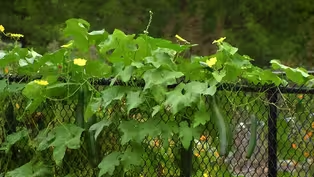
Clip: S23 Ep8 | 26m 46s | Learn how to grow tea trees and luffa plants! (26m 46s)
Video has Closed Captions
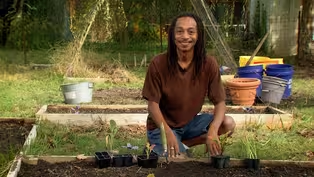
Clip: S23 Ep8 | 3m 35s | Vegetables that grow over winter (3m 35s)
Video has Closed Captions
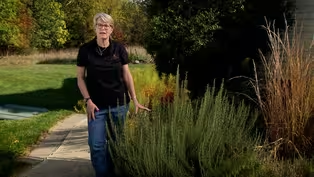
Clip: S23 Ep8 | 2m 44s | Add interest to landscape beds by using herbs (2m 44s)
Video has Closed Captions
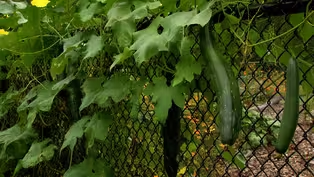
Clip: S23 Ep8 | 7m 34s | Discover how luffa plants are grown to make natural sponges! (7m 34s)
Video has Closed Captions
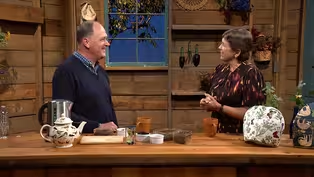
Clip: S23 Ep8 | 5m 37s | Discover tips to brew tea perfectly (5m 37s)
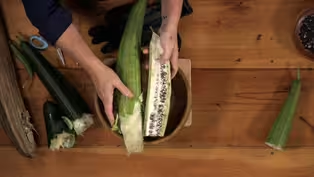
Natural Sponges made from Luffa
Video has Closed Captions
Clip: S23 Ep8 | 6m 34s | Learn how the luffa plant is processed to make a sponge (6m 34s)
Video has Closed Captions
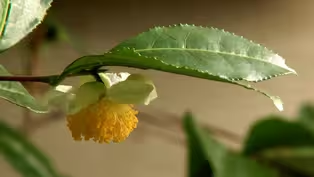
Clip: S23 Ep8 | 7m 33s | Tour an herb garden focused on tea plants! (7m 33s)
Providing Support for PBS.org
Learn Moreabout PBS online sponsorship

- Home and How To

Hit the road in a classic car for a tour through Great Britain with two antiques experts.












Support for PBS provided by:
Virginia Home Grown is a local public television program presented by VPM