Virginia Home Grown
Spring Flowers
Season 26 Episode 1 | 56m 46sVideo has Closed Captions
Celebrate renewal in the garden with the first blooms of the growing season!
Visit a cut flower production farm in King William then explore a baker’s garden in Charlottesville to learn how flowers are used to embellish baked treats. Engage with us or watch full episodes at Facebook.com/VirginiaHomeGrown and vpm.org/vhg. VHG 2601 March 2026.
Problems playing video? | Closed Captioning Feedback
Problems playing video? | Closed Captioning Feedback
Virginia Home Grown is a local public television program presented by VPM
Virginia Home Grown
Spring Flowers
Season 26 Episode 1 | 56m 46sVideo has Closed Captions
Visit a cut flower production farm in King William then explore a baker’s garden in Charlottesville to learn how flowers are used to embellish baked treats. Engage with us or watch full episodes at Facebook.com/VirginiaHomeGrown and vpm.org/vhg. VHG 2601 March 2026.
Problems playing video? | Closed Captioning Feedback
How to Watch Virginia Home Grown
Virginia Home Grown is available to stream on pbs.org and the free PBS App, available on iPhone, Apple TV, Android TV, Android smartphones, Amazon Fire TV, Amazon Fire Tablet, Roku, Samsung Smart TV, and Vizio.
Providing Support for PBS.org
Learn Moreabout PBS online sponsorship(relaxed guitar music) Our florists love ranunculus and it's in the Buttercup family and they just have beautiful layers.
They're an excellent cut flower.
They come in a rainbow of colors and our florists eat them up.
Zinnias are a super, super easy flower to grow and they're super hearty, especially in the summertime.
As well as Cosmo's also nontoxic.
Those flowers provide a nice focus point and are super easy to grow.
>>Production funding for "Virginia Home Grown" is made possible by Strange's Florists, Greenhouses, and Garden Centers.
Serving Richmond for over 90 years, with two florist shops, two greenhouses and a garden center located throughout the metro Richmond area.
Strange's, every bloomin' time.
And by Sally R. Youngs in honor of the Grateful Deadheaders Resident Interest Group, and by (birds chirping) (upbeat guitar music) (upbeat guitar music continues) (upbeat guitar music continues) Welcome to Virginia Home Grown.
We are so happy to be back for a new season of growing together with you.
You might notice that things look a little different around here.
That's because we are in the process of moving into a new studio.
Exciting things are happening behind the scenes, and we look forward to unveiling our new state of the art Virginia Home Grown set later this year.
Today we're embracing spring and the start of the new growing season by taking a look at some of the most eye catching signs of the season - spring flowers!
To me, spring is a celebration of flowers.
They brighten the world just like this little arrangement lights up the room.
Don't you agree?
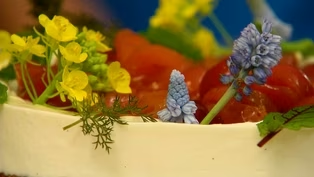
Later in today's show, we will visit a baker's garden in Charlottesville to learn how flowers can be used to add an extra flourish to cakes and other sweet treats.
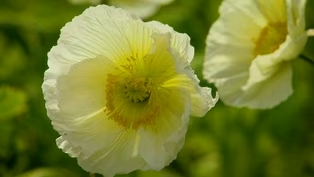
But first, Serome Hamlin takes us to Wind Haven Farm in King William County to learn about sustainable cup flower production in greenhouses and beds.
Let's get going.
>>We are a sustainable cut flower farm, located in King William, Virginia, and we sell wholesale to florists and grocery stores and small boutiques and other businesses in Richmond, Virginia primarily, and a little bit in the Northern Neck.
The first flowers we're able to force into bloom are tulips in our heated greenhouses and crates, as well as our raised beds of tulips in our minimally heated tunnel.
We like to go for the ones that are not your average tulips, things that are unique, that are the right color palette that the florists are looking for.
All kinds of doubles and fringes and parrot tulips.
The same thing with Snapdragons.
We go for a lot of open face varieties or colors that are slightly unique.
And then we try to get them growing earlier than a lot of different places are able to.
Because it helps us create a year round position for our employees and income for the farm.
Every year we're like, let's dial it in a little further.
>>Yeah.
>>Let's have less waste.
>>Yeah.
>>What did we not need?
What did we enjoy?
What was easier?
What were our designers really wanting?
What's that color that they're really after?
Because wedding and event designers and florists are artists.
And they want very specific looks to their designs.
They're known for the look of what they do.
>>I think sustainability comes with a question mark always too, because you're always having to question exactly what is sustainable, and especially with everything that's changing so rapidly around us now.
Bonding the sustainability and efficiency, I feel like is really key.
At that moment, then you're gonna reach something that might work, you know, that can hold together and can sustain.
>>Sustainable growing practices as an organic measures, even though we're not a certified organic farm, we follow those planting practices.
>>Yeah.
>>Mm.
>>And sustainability for what it means for us and our team, and like being able to do what we're doing without burning out.
>>Yes.
>>Because farming is hard.
>>Farming is hard.
>>All right, it's hard, yeah.
>>Tell me, how did you get started with cut flowers as a farming method?
>>Well, Paul here grew up on a vegetable farm over in King and Queen County, and so I learned how to farm from his parents.
And then along the line, I kept pushing them.
I gravitated towards the flowers and I kept pushing and pushing for more flowers.
"Oh, let's go to farmer's markets.
We could do this, yeah."
And they were so kind and they indulged me.
(laughs) And they taught me so much and I'm just so grateful to them.
And then they needed to rearrange what they were doing and go back to doing more vegetables.
And I didn't just wanna do the vegetables.
So I was very upset and went home and cried and Paul was like, "We can till up the front yard tomorrow."
Because flowers are a wonderful thing, where you can grow a lot of flowers in a very small amount of space.
And that's why there's a huge resurgence of small cut flower farmers in the United States because you can be on a quarter acre lot.
You can be on an urban lot and have an urban flower farm that still produces many stems.
>>When we started, I don't know that we really knew what it was gonna turn out to be.
Definitely not quite this big.
>>No.
We didn't think we would have all this.
>>I'm glad it did.
I mean, we just kind of, it was something we could create together and I think that was part of has driven us and, you know, and gotten us to this point is doing it together, and with a team.
>>Yeah, that's awesome.
>>And with the team and then thinking about, you know, "Oh, wow, we really enjoy this.
Let's try to bring some more people on, you know?"
And then realizing that they enjoy it too, you know, it's not just work.
There's more to it than that.
>>Oh, yeah, most people enjoy cut flowers and they can be used for so many different events or occasions or anything like that.
>>That's true.
Think about all the moments in life where cut flowers are involved, like weddings and funerals.
>>Yes.
>>And like honoring someone after they passed.
>>So how do you choose what to grow?
I know you have your set client list, but how do you make those decisions on what can grow here to match what they would want?
>>You learn what works well.
I think we grow over 600 varieties of cut flowers, whether that be just a different color or a different variety or plant all unto itself.
But like, say this flower that's in front of us, Orlaya, we planted that in the fall, it likes to develop in the cool, and then will bloom super early for us now in these tunnels.
It's related to carrots.
It's in the carrot family.
But florists love it.
And it produces gobs of cut flowers, and it's one of the earliest ones we can get to grow in an unheated tunnel.
>>Then after your cold season crops, when do you normally start your warmer season crops?
>>So I looked at what we were seeding this week, and we're seeding, starting to get into seeding some of our warmer weather crops, like Gomphrena and Ageratum, and a few of the earlier ones that take a little longer in the greenhouse.
I'm not sure that this is the technical term, but we have a few that we call early annuals, where they will survive a frost but they don't particularly like it.
So some of those we're putting out in March, and then if we get a hard frost, we're gonna cover it with frost cloth.
Those are things like Strawflower, Statices, things like that.
They still wanna develop cold to be able to have nice, tall stems and be robust plants, but they can't take a hard freeze.
>>Yeah.
>>So we are in this high tunnel.
Do you think you could show us a little more of the farm?
>>Absolutely.
>>Yeah, definitely.
Let's go check it out.
>>Yeah, come on.
>>How did you choose this location for your high tunnels?
>>Partially out of necessity because a lot of our flat land past the barn I wanted to use for annual production.
And back here, it is all sloping, which if you think about that in some sense is not great, but a little bit of sloping is good, especially for high tunnel stretches because of the drainage.
Some of the challenges that we do have with these tunnels is that you're gonna end up building up, you can build up minerals.
You can build up salt.
Especially salt.
You can build up nitrogen.
You can build up pathogens, bugs, all that stuff.
So inside of these tunnels is like their own little ecosystem.
>>And each one is a little bit different from the other.
They're all kinda similar and they've gotten better, but they're all just a little bit different.
>>It is a difference between growing out in an open field and inside of the high tunnel, so how do you manage pest?
>>A lot of it's very much just walking through and having visual inspections.
Like I will inspect all the greenhouses at least once a week.
If I have a problem, then I'm in there more than that.
I take kind of a gradual approach.
I try not to over spray anything.
We use all OMRI approved.
Most of the time, I am using Neem Oil, and then the big guns is like the Pyganic.
That's what you graduate to.
Overall, our bug pressure is pretty good.
There's a lot to be said with having healthy plants.
Getting the soil health, the more optimal you can get it, then the better your plant's gonna be able to withstand anything.
>>Exactly.
Get a healthy plant, then it can, to a point, try to resist some of the bug pressures or diseases.
>>Yeah.
>>Well, awesome.
I'd like to thank you for walking me around and showing me the houses today and just chatting with us.
>>You're welcome, thank you.
>>Cut flowers bring us joy and are comforting.
And while we revel in their beauty, rarely do we think about how or where they're grown.
There are over 300 cut-flower farms in Virginia alone.
Some can be directly supported through CSAs or at your local farmers market.
Well, Serome, that farm looks like it was a beautiful place to visit.
Those growing tunnels were just glowing with spring flowers.
You know- >>It was incredible.
>>It was incredible.
And here's some more spring flowers.
>>Yes, today I've got some more spring flowers.
This time of year we'd go out to our local garden center or even the grocery store, and what do you see?
It's potted bulbs.
>>Exactly.
>>So, impulsively, we'd buy 'em and bring 'em home.
And then what do you do with it?
>>Exactly.
>>So today I want to just make a quick display on how we can display our bulbs, and then we can just change the container out later in the season.
>>I love that you've got mulch in there, and what a great idea to make sort of a rotating container.
>>Yes, and that way when you have bulbs, you know, 'cause the bulbs are gonna grow, they're gonna flower, and then what happens?
The foliage starts looking a little shabby.
So this way you can just take the whole entire potted bulb and move it out of the container, put it away for later, and then plant it directly into your garden.
>>Truly, yes.
>>So, today I've got this fairly big container, and what I've done is filled it with wood chips.
You can use mulch or whatever you have on hand.
You don't have to use potting soil, but I have a pile of wood chips that I use in the garden, so today I'm gonna just use that.
>>Certainly.
What would you like to start with?
>>Let's start with the daffodil.
>>Okay.
And I want people to notice what he's doing.
>>Yes, so what I'm doing is leaving everything in the container and just move the mulch out of the way, and we can set the pot in.
Try to get it in just below the lip of your container.
And then you can just push the soil back into place.
And can I have the tulips?
>>Certainly.
>>Another big pot.
>>You know, this- >>Starting with- >>I was gonna say this is how a lot of public gardens put together instant color for an event or something.
>>Yes, it's a nice way to make a quick display that is changeable quickly.
So we're setting this in.
Make sure it's snug and at least somewhat under the lip of the pot.
And I'm going to grab hyacinth here.
>>My favorite.
I love the fragrance of hyacinth.
>>I do too and just arrived with it in the car.
You just can't deny the smell of this.
>>Yes.
>>So we get that set in.
We're gonna use a different color here.
>>And it's smart to have blooms at different levels, we'll call 'em.
These are buds so that this container will bloom a little bit longer.
>>Exactly, and that's a another point to make too.
As you're going to buy your containers, and you see the bulbs, make sure that you look and see if they still have some unopened blooms.
I know you see the color, and you get excited, but then the flower only gonna last for so long.
>>Truly, truly.
Buying in bud is best.
>>So, get this in, and I'm gonna save a little space for a decorative element 'cause I like woodland gardens.
So I am going to- >>Throw in a little piece of driftwood.
What a great accent.
And it's a nice contrast, and it actually personalizes your container.
>>Exactly, so just do whatever you have on... Use whatever you have on hand and to your style.
>>Yeah.
>>So be creative.
>>Yes, yes.
>>And I've got... Actually, I think that's gonna about fill it.
And so what I'm gonna do next is I'm gonna add a layer of sphagnum moss.
>>Kind of finish it off.
>>Just to finish it off.
And you can use just the sphagnum moss to finish off the tops just so you're not looking at the bare soil and the edge of the potted containers.
And of course I'm making a mess.
>>That's okay, you're just hiding your mechanics, they call it, you know?
>>Yeah.
(laughs) So you don't want to see the edge of the pot, so we will go ahead and just cover this up so that we can be able to hide this container.
And then what I'd like to use, just in different areas, again, it's to my style.
I like woodland gardens and can't have woodland gardens without moss.
>>Of course not, yeah.
>>So, I've got some sheet moss that you can use.
I like using the preserved natural sheet moss.
I don't like the moss that is dyed.
>>Yes- >>So- >>Yes.
>>Just keep in mind if you go out and buy that, just look for a live sheet moss.
>>The other thing is too, while you're covering up these pots, mentally take a picture as to where they are because when you water this container, you're going to be watering at the base of the plants.
>>Exactly.
>>This is not a potted container.
This is one that just have pots in it, so you've gotta get the pots with the water.
>>Exactly.
>>And- >>And it's easy to do.
>>It is easy.
Just take a mental picture.
And the other thing is when they're through blooming, I put them in my garden, you know, if the weather is conducive, it's not too cold.
These are spring flowers.
They can take colder weather.
>>Yes.
>>They can go down into the mid 20s, and so I've put them out into my garden.
>>And that's a nice way the growers have already gave you a jumpstart on- >>Yes, and they'll catch the cycle the next year.
Yep, they'll catch it for next year.
>>And even if you can think ahead of time, you can even pot up your own bulbs in the fall when you start doing that, and you can still do this.
>>Yeah, some of them of course require refrigeration.
>>Yes.
>>And to be able to get that cold period so that they'll bloom properly.
So, yeah, it's smart to look at the cultivars to make sure that you're choosing one that can easily be forced with refrigeration.
>>Now I'm just adding in some accents of moss.
I really like the sheet moss, especially if you find the ones that come in big sheets.
>>Well, we're sliding down on time, my friend.
>>All right, I will speed this up.
We will get all of these tucked in, and then I think this is gonna be about done.
>>That looks absolutely perfect and lovely too.
>>Thank you so much.
This is a easy container for people to be able to change out seasonally.
And then you have your bulbs already started that you can just plant in your garden when it is time after the foliage is starting to die out.
And you don't have to keep this in this display.
You can move the pots along and then plant it directly out into your garden.
>>I think it's a great idea, and I thank you so much for sharing.
This is something many people can do and very easily, so, thank you.
>>Yes, thank you very much.
>>And now we're going to get ready to go back to Wind Haven Farm and answer some of the questions you've sent us.
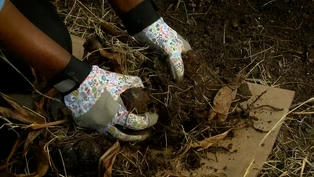
But first, Shana Williams has a tip to share for dividing and replanting perennials to help maximize the blooms in your garden.
(upbeat music) >>When dividing and transplanting your perennials, a key time is to do this in early spring.
You wanna separate and divide and spread out all of those various types of flowers that you love, put 'em in different locations in your garden to add color throughout the season.
So one of the things that I do here is I have my bed, which I've prepped.
I just have some 10-10-10 and some compost here.
You can use both or either or as you add it to your soil to just amend your soil.
And by enriching the soil, it'll help that plant just transition, boost that growth.
So in this bed, I had some daffodils, but I also know that my canna lilies are going to overshadow those daffodils.
So I had to dig them up.
So I'm just gonna simply put them in the pot for right now and then move them into another location in the garden.
But this is the area that I'm going to plant my canna, canna lilies, and I have this nice clunk of lilies here.
This whole section has to get moved.
So over here, I've already dug these up.
I have these beautiful rhizomes, and typically I'll have to separate them.
I can pull them apart with my hands, or I can use a fork and pry them apart.
That's big.
Oh, there we go.
Separate those just like so.
And you have this beautiful, healthy system right here with the root system.
So what I'll do is I can separate this big clunk even to a smaller section.
But what I'm gonna do is dig down in here and just place it anywhere between one to two to two to three inches below the soil.
Put that in.
Have another one here.
This has a longer neck to it, but what I'm gonna do with that later is just snip that neck off.
Let me put that here.
Again, make sure I spread out the roots.
And I know this plant is gonna grow really big and these roots are going to multiply, but I like the big clusters that the canna lilies provide.
And once I do that, I'm going to cover that up.
And the key thing is I have to make sure that I water this in consistently 'cause you want them to not die from the shock or the stress.
I encourage you to try some of these tips, get out into your garden.
Look at those areas where you find that flowers are starting to cluster up.
See the new growth, lift them up and divide them and transplant them in other locations in your garden.
Happy gardening.
>>So, do you have any suggestions for maybe a rain garden situation if somebody wanted something to cut?
>>Yes.
So we don't grow a whole lot of cut flowers per se that actually work in our rain garden.
A lot of the flowers we grow do not like wet feet, but I have seen other people do that.
But we are delving into more woody cut shrubs and trees 'cause we do have some wet spaces on our farm.
One of the things that we also do is we don't just grow cut flowers, we grow cut foliage and we grow sticks and berries and other textural items.
>>Great, get all the nice fillers for arrangements.
>>And those are really important, just as important as flowers and just as profitable as cut flowers.
>>And sometimes lasts longer than a flower.
>>And lasts a long time.
So one of the things I, in my research, we're actually considering adding more red osier dogwood because red twig dogwood is something we can cut this time of year that gives you a nice red stick, and that apparently can do well in wet soils.
>>Yes, that does very well in wet soils.
It can handle the drying out, so that will be a great plant for a rain garden situation.
>>And then you're also, if you buy the native red osier, then you're using a native species, as well, which tend to be more durable than some of the cultivated species.
>>More durable and awesome for the environment.
All the pollinators and everybody else.
>>Exactly.
>>Can utilize it.
>>We're actually looking into applying for grants for native plantings of things that we think we might be able to use as cut flowers soon.
>>That's really cool.
We'll have to stay updated.
>>Yeah.
>>Now and on the opposite end, we've gone from wet to how about full sun and dry for a homeowner?
>>Like baking?
Zinnias are tough as nails and they love hot, dry weather.
Gomphrena, as we mentioned before, tough as nails.
And then the other things that we love to grow midsummer that can handle the heat are celosias, which come in a rainbow of colors.
And plant breeders are breeding more delicate colors for those, as well, which is nice because a designer doesn't always want red or bright orange or something like that.
>>Or burgundy.
>>Yeah.
They might want some more delicate colors to go with a bridal bouquet.
So they're breeding peaches and greens and little pink ones, and they come in a variety of forms.
Celosia is a large family.
We grow both celosia cristata, which is cock's-combs, which come in brighter colors.
And then also the plume celosias, as well.
>>And some of those can be quite bright but totally different flower texture than a cock's-comb.
>>And and cocks'-combs are dryable, as well.
>>Yep, yes, they are.
And they do hold their color very, very well.
>>Mhm, especially the red, that I don't normally grow, red.
>>So we have someone who was asking, what flowers can be started from seed early spring?
>>Early spring.
Well, it depends on whether you're trying to get some flowers out that bloom before maybe June.
In that case, you could start strawflower around now and be careful about, like, early, I mean, frost.
But that would be able to take a little bit of a cold snap.
And there's some other things that we start, like statice, that like to develop cool and then bloom in April and May.
But then if you really wanna have a nice summer cut flower garden, you can start... We have a few plants like ageratum that we're starting now that would go in after the last frost date, which is April 15th in Eastern Virginia.
And some great cut flowers that are great for summer-loving heat cut flowers is zinnias 'cause they're a cut and come again, and they bloom and bloom and bloom for a long window of time.
The other one is gomphrena.
Just make sure when you're going to buy your plants, if you're gonna buy a plug, make sure they're a variety that gets a nice tall stem for cut flowers.
A lot of times landscaping plugs will be shorter and they won't really produce stems that are long enough for cutting.
>>Okay, that's really good to know.
Now, how about, when is the best time to cut your flowers?
>>So flowers are-- >>For arrangements.
>>Such an individual thing.
Every cut flower has its own stage of harvest that we have to learn and teach our team here.
They are, some of them have to be completely open, like zinnias need to be completely open.
They don't continue to open in the vase.
And then other flowers, like ranunculus, we harvest at a certain, like, marshmallow stage, and they'll continue-- >>Completely open up.
>>They'll completely open in the vase for our clients.
>>Awesome.
So is Wind Haven open to the public that would... Do you allow photographers to come in?
>>We do allow photographers to come by appointment, photographers specifically with clients.
And we would like to welcome more photographers in the coming years to come out and visit us.
Otherwise we are wholesale, so we are not open to the public on regular times.
We do offer group tours through garden clubs mostly.
We've done a few of those a year the last few years, and we find that really a great group of people 'cause they're so excited about plants.
>>Yes.
Yep, a group of people to have a common interest and get to take a field trip and.
>>And the great thing about tours for us is it helps us remember all the magic of growing.
>>Of what you're doing, yes.
>>Because you get to tell someone else who's so excited about it.
Because, you know, we're tired, we're tired.
We work hard, it's our work.
You kind of, not take it for granted but you get so used to it, sometimes it's harder to see all the things that other people can see.
And so they remind us to keep up, like, seeing the magic in what we're doing.
>>Yes, because, again, like I said earlier, cut flowers make people happy.
>>Oh, that they do.
They bring joy.
>>They truly do.
Well, thank you for sitting down and answering a couple questions.
>>Happy to.
>>And I appreciate your time and having us here at Wind Haven Farm.
What a beautiful place.
And I highly enjoyed being here, so thank you again.
>>Well, we enjoyed you guys, as well.
And next we're going to take you to a baker's garden in Charlottesville.
I visited Chris Martin at Florosa to see how fresh, seasonal flowers can be used to decorate and garnish their local and Latin inspired creations.
Let's take a look.
>>I worked in fine dining for a number of years and got to work with really amazing edible flowers and micro greens.
And now being in Central Virginia, they're a lot harder to source.
I realized I had to grow them myself.
>>Oh, I'm so happy for you, because this is a fun hobby to add to baking.
>>Oh, of course.
>>You know, here it is early spring.
It's a unique time of year because we can truly see things just popping up and, I don't know, it's kind of a rebirth time.
One of them, though, is our grape hyacinth, our muscari right here.
So I didn't realize it was one that you could use.
>>Absolutely.
It provides that puffy little cotton ball look on a cake.
>>Interesting.
Kind of like a floral design on a cake.
I love it.
>>That's really a lot of what these cakes are.
It's floral design in one big sponge.
>>Fantastic.
And that sponge is made with fresh eggs from the chickens?
>>Absolutely, absolutely.
>>Which adds an even better flavor.
>>Yes.
>>But I love the site that you have here because I love the mixture of full shade, part shade, and full sun.
And as a gardener, to me, it checks every box.
>>Oh, thank you so much.
I feel like I had to lean in to the things that I couldn't change.
So working with the shade from the trees and making sure that it has, like, some partial shade plants that are able to benefit from that, and then making sure to use the tin and a sort of hugelkultur style of swales to be able to catch the water and reduce erosion.
>>This is genius.
And if people could really see the way the water would flow out of heavy rain, each layer catches, or each level catches that water.
>>It does, it does.
>>And then that hugelkultur, which is all those sticks and all the branches and I'll say leaves as well as the logs under there absorbs it and holds it so you actually have less water needs here.
>>Absolutely.
And I do have the water catchment barrel, the tote up at the top.
Some soaker hoses will hook up and hopefully keep the bottom half of this hydrated.
But up at the top, I want it to be a little bit drier because I'm trying to establish some strawberries and we know they benefit from less water.
>>Absolutely.
But I also see that you're using as a cover crop bachelor buttons, and I love that (chuckles).
>>Oh, I mean, they're the best and I can use them infinitely and they dry really well.
So I'm able to have some sort of floral confetti sprinkle in the winter as well.
>>Fantastic.
Love those bachelor buttons.
So many good uses, and such a pretty blue too.
>>Ah, I love.
>>Brightens things up.
You've just got so much good going on here.
I can see you've put a lot of thought into it.
>>Thank you.
I like to dig.
It's really therapeutic.
>>It is.
It's extremely.
And then over here with the herb garden.
How do you get these plants to grow in this heavy clay though?
>>Ultimately, a lot of this is backfilled with gravel from the previous owners.
And so the Mediterranean style herbs really benefit from that level of drainage.
>>That's excellent.
What do you have growing in here?
>>I've got a variety.
I've got a Tokyo bekana that's coming up and starting to bloom, which would be a really great garnish for a cake.
Little bits of dead-nettle are really important to keep those available for the bees.
It's a hard time of year.
They're just waking up.
>>Sure, it's that early spring that's so hard, and the late fall as well.
>>Absolutely.
>>So it's important to have those flowers still available.
>>Plumes of parsley and tarragon.
The sorrel does really well this time of year, the red vein and more of the green traditional.
And then lemon balm as well.
I use a ton of lemon balm.
>>Yes, and it's so easy to grow and it's so prolific.
It seeds everywhere.
>>It really is.
It never gets there.
It never gets to seed because I use it a lot.
>>I'll take that under advice.
I'm pulling it everywhere.
(Peggy and Chris laugh) But I can't help but wonder about the daffodils.
>>Oh, yeah.
I mean, they are beautiful, though they are toxic.
So those are not good for cakes.
I like to cultivate and put in flowers that are edible and non-toxic.
Though, the daffodils are here, and I know definitely not to put them on cakes.
>>Right.
They predate the garden?
>>Mm-hm.
>>Yes.
Most daffodils do.
Well, I understand that you have a cake inside for us to decorate.
>>I do.
>>And I'm excited to do that.
>>Oh my gosh.
>>Can we go and take it out?
>>Let's do it.
Of course, let's see the bakery.
(mixer whirring) >>Chris, in putting together a cake and starting to decorate it, really, what's on your mind, your thoughts while you're starting to prepare for this?
>>Well, when I'm harvesting flowers and herbs in the garden, I'm thinking in odds and evens.
I really like to work in odds.
You get a lot more visual interest.
We picked five of the grape hyacinth outside.
I'm creating a little crown.
So I'm trying to give accents and also not in perfect symmetry as well.
So being able to place kind of here in a triangle, right?
These are longer and this is shorter.
So that way you have this, like, interesting connection of color components.
And it's about spreading out the color as well.
So you get the pops of the red vein and the red sorrel, the yellow from the Tokyo bekana, which we also, if you can count, hit five.
So we had three big of the visual interests and then the two of the smaller accents.
So I always want some bigger components and then some smaller accent pieces.
>>Mm-hm.
What type of frosting did you use for this cake?
>>Well, this is a lemongrass whipped ganache made with last year's lemongrass from the garden.
>>Oh, that's so cool.
>>So I save the bottom stalks for tasks that make more sense for them.
But the leaves, which is usually considered waste, I wrap them up like this and use them to infuse into heavy cream, and fat is a great carrier for flavor.
But you can also throw it into stock, sauces, stuff like that, to bring that lemongrass flavor without having to get rid of all this lovely, lovely leaf.
>>Yes.
Oh, that's excellent.
I love that idea.
After you've decorated a cake, what's the next step?
How does it preserve?
>>So the next step is getting it into an airtight container, whether that's a cake box or potentially an upside down Tupperware tends to work as well.
And putting it into the fridge.
You really don't want the air circulation from the fan in the fridge.
That will dry your flowers out.
>>Yeah, desiccate them.
>>As soon as possible, like, from putting flowers on the cake to serving.
>>When you're putting together your garden plans, are you choosing flowers with the consideration of their longevity after you've harvested them or are you choosing for texture or color?
What are your factors thinking of the end result?
>>I choose for texture and color and I choose for season.
So I know what comes up earlier in the spring and will be able to fill that gap.
Like, when you're really waiting for rhubarb to come and you're like, "Please," I'm really waiting for certain flowers to come.
So the muscari coming up, I'm like, "Thank goodness."
And I do let cabbages bolt because their flowers can be used for purposes like this.
And then I make sure that I have coverage through the summer and also through the fall.
>>Pastries you can do?
Because I think of confectionery sugar, I'm not thinking of frosting, or I'm thinking of a very light glaze.
So how do you handle that with the flowers on a pastry?
>>So on a pastry, it's less of the whole flowers and more of the single petals, typically.
And when something is going to sit in a pastry case for a longer amount of time, I know it's something that will not hold up to time and will wilt.
But if it's an event that I'm working at and I'm plating for people, being able to put on a fresh component, the red vein sorrel is a classic micro green.
And then the lemon balm as well.
But petals of pansies, those come off really easily, or borage, as well, has that cucumber flavor.
So you can just put just one on top of, like, a little fruit tart- >>It's all you really need sometimes.
>>Or something like that.
>>Yep, just a little touch of color to brighten it up.
Make it a little more personal too.
>>Exactly.
>>What would you advise a home gardener start with if they wanted to venture down this road and start decorating their cakes?
>>It's easiest to start with the herbs, and they also serve a double function where you can use them both as, like, the herb and the leaf or you can let it go to bloom and you can use those blooms.
>>Well, this has been fun.
It's just been fun to, I'll say, see a garden from a baker's perspective rather than just a gardener's perspective and to start thinking of our flowers, how to use them, and also which are edible and certainly which are not edible.
>>Absolutely.
>>Thank you for sharing your expertise.
>>Thank you.
Thanks for being here.
>>Serome, does it surprise you to learn that I had fresh flowers on top of my wedding cake?
No plastic bride and groom for me, just pretty flowers.
>>Would it surprise you is I had the same thing.
I had fresh flowers on top of my wedding cake as well.
>>Really?
You see, we're all working perfectly and we would've enjoyed talking with Chris together.
But I got the treat because I got to learn about which flowers are best to use for garnishes.
And in the future, my cakes won't be the same.
>>You got to invite me to your next party.
>>I will definitely.
But speaking of fresh flowers, people have to understand that there's certain steps we can follow to keep our fresh flowers longer in our vases.
And it all starts with, you know, conditioning the flowers, which we'll get into.
But the most important step is sharp tools.
>>Having the tools for the job.
>>Exactly.
And so many of us pick up our tools that have been in that shed all winter long.
>>Guilty.
>>Yeah, brush them off and expect them to work like a charm.
(chuckles) And unfortunately they don't.
>>No, but you're gonna give us a tip on what we can do to improve our chances of making nice fresh cuts.
>>Yes, because fresh cuts are gonna keep those flowers longer in that vase and in our houses to enjoy.
First thing is, is choosing the right tool, and it's a secateur or a scissor-type clipper and making sure that it has a little nub on it, which is the sharpening guide because that sharpening guide enables us to get the right angle.
Plus another one is if you need an ergonomic pair, if your hand cramps up quickly or can't fit this large, I'll say grasp.
You can get a pair that's smaller and also that will be a little more gentle to your hand.
>>Yes.
>>But it all needs to be sharpened.
>>So many tools out there that works with individuals.
>>Absolutely.
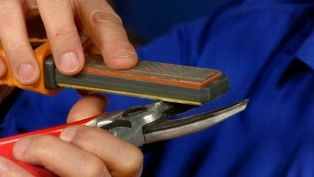
And the other thing is, is to get a good sharpener, one that can fit in your hand.
I've got some smaller little stones, but I've moved to this one.
I like this a lot and I got it at my local garden center.
And on this side I have a rough edge, and this one is smooth just like an emery board.
So what we wanna do is to understand that we've only got one cutting edge on these clippers.
>>Yeah.
>>And the other edge is not.
So we only need to sharpen one edge.
And on that edge we only need to sharpen one side.
>>This is a bi fold kind of motion instead of an anvil.
>>Yes.
>>So it makes it a lot easier for cutting things like fresh flowers 'cause you're not crushing the stems.
>>Truly.
Those anvil style clippers do crush.
They don't cut no matter how sharp they are, yes.
So what I'm gonna do is start first with my rough side, and I'm going to use my sharpening guide here to angle my blade or my sharpening tool so I get the right angle every time because sharpening is all about angles, and I make continuous long strokes on that blade.
And after a few I test it and I go, "Oh, it needs to be fine tuned."
So I move to the less rough size, follow the same thing just to fine tune it again, okay?
And then I'll flip it over, and I'll just take that little bur off.
Are you familiar with that little burr?
>>Take that little rough edge off.
One thing that we always forget is the other side gotta get that just cleaned off.
>>Exactly.
And one big swipe does it as well.
>>Because you're not sharpening the other side.
>>No.
>>You're just cleaning it.
>>You're just cleaning it.
And the other thing is, is to make sure that your clippers are in the hand where the sharpened side is in your dominant, is able to be moved with your fingers, not on the thumb side, so that you're actually working the clippers with the stronger part of your hand, your grip.
And that will work the clippers and not you as much.
>>Yes.
Let the tool do the work and you can go through your season because it's gonna be a long season ahead, and you're going to be doing a lot of cutting.
>>Yes.
And speaking of, I don't wait till the end of the season to sharpen my clippers.
(laughs) The other day I was pruning, and I sharpened them probably five or six times that day.
>>So what would you recommend for the average homeowner?
About how often should your tools be sharpened?
>>Well, I'm gonna say it depends on the cuts, because let's start cutting and I'll explain.
The more you cut gentle and softer tissue versus woody tissue, the longer your tools will stay sharp.
But when you start to reach for that woody tissue, such as this forsythia, and you start to put a nice, sharp angled cut on it like we want, you're actually going to dull the blades faster.
And I was pruning shrubs, okay?
>>Yes.
>>The other thing I do is I make sure between my cuts is that I sterilize my clippers.
>>Yes, keep everything sanitized.
You don't want to transfer pathogens from one plant to another.
>>Absolutely.
And I use, you know, rubbing alcohol, isopropyl rubbing alcohol.
I use 91%.
It kills everything there is to kill.
And then what I also do is between bushes, I spray my clippers, but I turn away from the bush so I don't have the alcohol spray the bush, yes.
>>Don't wanna damage the foliage.
>>Exactly.
But moving on with our flower arrangement, we wanna make sure that we do a nice, angled cut with our clippers so that we open up the cambium more so that the water can be absorbed so the flower will last longer.
>>Yes, that angle cut will provide more water surface area because the bottom of the stem is holding it up.
So it keeps everything up and flowing so it's able to absorb it a lot more.
>>Absolutely.
And the other thing is, what people forget is that, I do, every other day I change the water and I put a slim fresh cut on the bottom of my stems too, so that I'm, again, opening up more of that cambium layer so that the flower can absorb the water.
>>Yeah, because the longer it sits, the more it starts callousing over.
So you want the fresh cuts that it keeps absorbing.
>>Exactly.
And the other thing is that people have a tendency to forget to realize is that some flowers do last longer than others and don't throw away whole arrangement.
Take out what's still good, get rid of the rest, and then continue to enjoy that arrangement.
>>Yeah, of course, you've put the work into it, so enjoy it as long as you can.
>>Exactly.
And as earlier, it's always important to throw a few buds in so that your arrangement can have some life in the future.
>>Lasts a lot longer.
>>A lot longer.
Well, Serome, I hope everybody watching grabs those tools and thinks about how they're gonna sharpen them.
Go out and get a sharpener and just go to town.
It's gonna be a learning curve.
But after that you'll enjoy having a nice, sharp tool to work with.
>>Yes, and let the tool do the work for you.
>>I agree.
And now we're going back to have Chris answer the questions that you sent in.
But, first, Amyrose Foll has a tip you can use at home if you have fruit trees.
Proper pruning techniques will give you more blossoms and, of course, a more bountiful harvest.
(bright percussive music) >>There's many different methods and schools of thought on pruning.
We're gonna be talking about orchard trees.
This particular tree is an apple tree, and what we're doing today is a late winter, early spring pruning.
You want to ideally do that between February and March every year while the trees are still dormant.
And what you're going to do is encourage blooms early in the spring, and in turn, you'll get a bountiful harvest.
What we're doing today is going to be removing the three Ds, dead, damaged, and diseased wood.
And we're gonna be taking off suckers and water sprouts as well.
These little guys down here are below four feet in height, so we're gonna be removing everything below that.
You wanna make sure your tools are clean and sharp so that you're not introducing disease into the tree.
And everything comes off fairly easily.
You're basically just clearing everything from four feet down.
And you don't want to do this with trees that are too young.
Give them a few years to get established first.
We had a flood last year, or two years ago, and these actually fell all the way over, so we staked them.
The stakes will come out, you don't ever wanna leave a brace in for too long because when you remove it, if you leave it for too long, you can damage the roots.
And so we're gonna be taking all of these morning glories out.
If you have other things like Virginia creeper or trumpet vine around your tree, remove those, you don't want them to strangle your tree.
And then as you work your way up, the more horizontal branches, that's what we're gonna keep, because eventually, as you're shaping your tree over a few years, you want those horizontal branches to be fruit-bearing.
So what you're gonna do is you're gonna identify your horizontal branches and run your hand along the bottom of each one of those and remove everything that's growing down or everything that's growing straight up.
This guy will come off.
We'll remove these.
And then that's pretty good, and this guy is pretty good.
You're gonna wanna open up this canopy in the center.
We have three main branches here.
This would be our central leader, it's the most vertical, and that's gonna control the tree growth.
But as you see, there's these branches in the center, we wanna remove those as well.
Anything growing into the center of the canopy, you wanna remove because we want to increase air circulation and light harvesting.
So we want the light to penetrate into the canopy of the tree.
It may seem a little harsh, but you'll thank yourself later in the season.
These branches growing out, they will eventually start to droop farther, and that's great.
We want them to be about horizontal when the tree is fully mature and producing fruit.
The best thing you can do is don't overcomplicate it.
When you are pruning, keep in mind the three Ds, dead, diseased, and damaged branches, removing all of those.
And then make sure that you are pruning with capturing light and air circulation in mind.
You'll have great spring blooms and you'll have a bountiful harvest in the fall.
(turkeys gobbling) >>Well, okay Chris, we've got our first question and one of them is, "If you have mature peonies, can you dig them when the eyes emerge and still have blooms this same year?"
>>That's a great question.
I just put my peonies in and I'm really looking forward to seeing how they grow.
I might have put them too deep because I know you're supposed to put them at surface level.
>>That eye has to be right there at the level.
Yes.
>>Yeah.
We're not there.
But I found out and I did some research online where you can see how they grow in that first establishment and then move them, I think, either the fall or potentially in that early spring window a little bit higher.
>>Yeah.
>>So that way the next year they do better.
>>Yeah, plus if you really need to divide them, don't divide 'em into smaller pieces 'cause then they won't re-bloom.
>>Mm.
>>But if you divide 'em and maybe just take a small section off and leave a majority of the mass of the plant there, then it will bloom the same year.
>>Ah.
>>'Cause I don't lift 'em to divide 'em, I just kind of put my shovel in and slice away a piece, 'cause I don't wanna disturb the existing peony.
>>Yeah, that makes sense.
>>It's not a day lily.
>>Yeah.
Yeah.
>>It's a peony, so yes.
So yes, it can be done.
You just have to be a little more careful.
And then speaking of flowers, which flowers from native plants can be used for garnishing?
>>Mm-hmm.
>>And, yes?
>>Well in the garden I have yarrow as well as hyssop and those do really well.
I love the little clusters of the yarrow flowers because they look like coral.
>>Yes.
>>So it's like, I can really play with that texture.
And the little ferny leaves are really fun as like, on the side of the cake, or sometimes, I'll press them into the side and then lift up the leaves.
>>Oh.
And then- >>So you get the print.
>>Oh that's cool.
>>Yeah, it's really fun.
>>Yeah.
>>But yeah, the yarrow does really well, the hyssop, and those beautiful flowers that come from that are really exciting 'cause you get that same pom pom bushy type of texture that I enjoy.
>>Mm-hmm.
Well what about asters?
>>Oh, asters as well.
I just started those seeds.
So that big garden in the back is basically empty.
Like there's, it's a whole empty plot basically.
>>Wonderful.
>>So I started some asters of different colors to be able to put into that space and see how they do in different spots.
>>Mm-hmm, yes, 'cause you do have full sun, part shade, and shade out there.
>>Mm-hmm.
>>So it'll be fun.
>>Yeah.
>>There is an aster divaricata.
It's called eurybia divaricata.
It's a white fall blooming aster that will grow in full shade.
So if you have problems, give me a call.
>>All right, that sounds great.
>>I'll remind you of that one.
Certainly.
Do you ever freeze any of the flowers or the herbs in ice cubes?
And if so, which ones?
>>Well, I think pansies or the violas do really well.
The smaller pansies, not the big violas.
Unless you've got a really big ice cube mold.
And then the violets from your lawn.
>>Ah, well Karen asked this question, and I think she'll enjoy that.
>>Yeah.
>>Everybody's got violets right now this time of year.
>>It's really fun.
And when you make, you can make the violet lemonade where you have like a color changing situation.
So you steep the violets and you get the purple and then when you add the acid of the lemon juice, it turns pink, I do believe.
>>Oh, fun.
>>And you can put the little violas in your ice cubes in your lemonade.
>>Oh, what a lovely drink.
>>Yeah.
I learned that from a local farmer here and she does it with her kids.
>>Great idea.
So many good things to share.
So question from Leisa, "Many spring bloomers disappeared during the summer.
Any tips for permanently marking their locations?"
>>Hmm.
It's not a great skill that I have, ultimately.
I think like little flags but also the flags for me interrupt the eye.
So in my mind I'm like, especially with that big, amorphous plot in the middle, that's a lot more natural.
I think I'm just gonna let it go.
>>Yeah, you know, I bought little plastic markers and it just bothered my eye.
I could pick up on the white too easy.
So I use popsicle sticks.
>>Popsicle sticks are great.
>>They only last a year.
But.
>>Yeah.
>>You can pull 'em out and you'll see where they are when it's time to plant in the fall and then just remove 'em at that time, 'cause they'll just disintegrate.
>>It's so handy 'cause I did lose my peonies.
They're somewhere in there.
>>Yes.
Popsicle sticks.
>>Perfect.
>>Plus they're a little more organic than plastic tag.
>>Yeah.
I prefer that.
>>Yes, definitely.
My last question is, what are your future goals for the garden outside?
>>My goal is to have plantings that are really lush and have it filled out.
Like right now it's this blank slate and I'm like, "What could possibly go in there?
And how?"
And making it work with the eye as well as instituting a lot of the water catchment totes that I have set up and making sure that those are set with the proper soaker hoses and all those types of things to be able to take a big lift out of it, because as the bakery develops and as the garden develops, I'd really love to be able to utilize and harvest that rainwater effectively and cut a lot of time out as well.
>>That's a hefty goal and a good one at that.
Yes.
And I need to share too, that you do have blackberries out there and raspberries and blueberries.
So you've got those covered.
And just making a lush garden that's kind of more self-sufficient sustainably.
>>Exactly.
Getting into that permaculture type of technique.
The strawberries being that ground cover for the apple tree, hoping that all those types of practices come in.
The less seeding I could do, the better I think as well.
Letting things go through their life cycle and becoming those dried out sticks over the winter that don't look great, but are great places for bugs and pollinators to live.
>>Absolutely, yes.
>>So it's, you know, it's nice to let the carrots sow their own seeds.
It's less work for me.
>>Yes.
And you still get the product.
>>Exactly.
>>Well thank you again, Chris.
It's been a joy talking to you.
>>Thank you.
>>It's always fun talking gardener to gardener.
>>Oh my gosh.
Thank you so much.
>>Yes.
I can't think of a better way to mark the start of a new growing season than to focus on the beauty of cut flowers and the farms that produce them.
As you look to your gardens and see the succession yet fleeting blooms of spring, it shows promise of what is to come this growing season.
So Serome, what goals do you have for your garden this year?
>>Well, I think, for starters, to keep it all alive.
>>Yes.
>>But, I'm actually gonna start transitioning, and as I'm taking stuff out, I'm adding more natives in.
So that's going to be a continuous goal in my garden is to continue adding in more natives.
>>Yeah.
Mine as well.
I'm working hard at that.
But you know what my other goal is, is to pick more flowers and bring them into my house to enjoy them.
You know, and so many people need to do that.
>>Oh yeah, it's awesome when you can go out and cut even branches off of trees and be able to make a bouquet just to set on your shelf.
>>Yeah.
>>To enjoy.
>>I agree.
And Shana had a question.
"How do we preserve those flowers longer?"
What are your tips on that?
>>Well, for start, making sure that you keep the water clean.
>>Yes.
>>And as you mentioned, just keep cutting new, up the stem as the flowers sit.
And then that way it keep continuously to absorb water.
>>Yes, and you know, there's been a lot on the internet about using home remedies to put into the water.
I can't even begin to cite them all.
But there's been some research done and that powder packet that the professional florists provide.
>>Always come with every bouquet.
>>Yep, exactly, that actually is the best additive and will actually prolong the life of your cut flowers, so.
>>But that's good to know and not just follow anything, just because it was on the internet.
>>Exactly.
Well, we're out of time, Serome.
And I thank you for joining us today to help kick off the new season, not only of the show, but of the garden season too.
And I wanna say thanks to all of our guests today, and thank you for watching.
Next month, we're talking with two horticulturalists who use very different approaches to create sustainable landscapes for everyday living.
And we encourage you to send us your questions on this topic on our website, vpm.org/vhg, or through Facebook.
We also welcome other general gardening questions anytime.
Remember that you can stay connected with us by signing up for the monthly newsletter on our website, vpm.org/vhg.
And while you're on Facebook, check out Baking In Bloom for more tips from Chris Martin.
We are excited to have Chris sharing ideas for using what is fresh and seasonal in the kitchen each month.
I look forward to being with you again soon.
And until then, remember, gardening is for everyone and we are all growing and learning together.
Happy gardening.
>>Production funding for "Virginia Home Grown" is made possible by Strange's Florists, Greenhouses, and Garden Centers.
Serving Richmond for over 90 years, with two florist shops, two greenhouses and a garden center located throughout the metro Richmond area.
Strange's, every bloomin' time.
And by Sally R. Youngs in honor of the Grateful Deadheaders Resident Interest Group, and by (birds chirping) (bright music) (bright music continues) (gentle tone)
 New
NewVideo has Closed Captions
Clip: S26 Ep1 | 7m 57s | Learn about edible flowers and garnishes used to decorate cakes (7m 57s)
 New
NewVideo has Closed Captions
Clip: S26 Ep1 | 7m 59s | Learn how cut flowers are grown locally using sustainable methods (7m 59s)
 New
NewVideo has Closed Captions
Clip: S26 Ep1 | 3m 1s | Divide and transplant perennial flowers to fill your garden with color (3m 1s)
 New
NewVideo has Closed Captions
Clip: S26 Ep1 | 6m 4s | Learn tips to keep your garden tools sharp and clean (6m 4s)
 New
NewVideo has Closed Captions
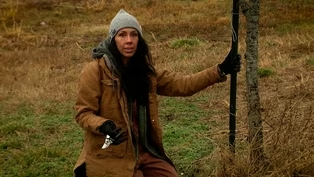
Clip: S26 Ep1 | 3m 33s | Increase blossoms and get a bigger harvest by properly pruning fruit trees (3m 33s)
 New
NewVideo has Closed Captions
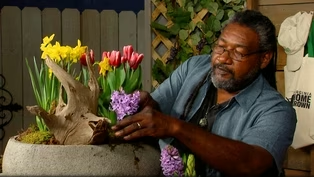
Clip: S26 Ep1 | 6m 54s | Learn how to make an easy spring planter using potted perennials (6m 54s)
Providing Support for PBS.org
Learn Moreabout PBS online sponsorship

- Home and How To

Hit the road in a classic car for a tour through Great Britain with two antiques experts.










Support for PBS provided by:
Virginia Home Grown is a local public television program presented by VPM