Virginia Home Grown
VHG Clippings: Native Plants
Clip: Season 21 Episode 6 | 26m 46sVideo has Closed Captions
Explore the world of native plants from the vegetable garden to the landscape.
Meet a master gardener who has replaced her lawn with native flora and learn how Indigenous Peoples are working to save seeds and reestablish traditional crops. Allison Hurst and Dr. Robyn Puffenbarger share gardening tips you can use. Engage with us or watch full episodes at Facebook.com/VirginiaHomeGrown or vpm.org/vhg.
Problems playing video? | Closed Captioning Feedback
Problems playing video? | Closed Captioning Feedback
Virginia Home Grown is a local public television program presented by VPM
Virginia Home Grown
VHG Clippings: Native Plants
Clip: Season 21 Episode 6 | 26m 46sVideo has Closed Captions
Meet a master gardener who has replaced her lawn with native flora and learn how Indigenous Peoples are working to save seeds and reestablish traditional crops. Allison Hurst and Dr. Robyn Puffenbarger share gardening tips you can use. Engage with us or watch full episodes at Facebook.com/VirginiaHomeGrown or vpm.org/vhg.
Problems playing video? | Closed Captioning Feedback
Where to Watch Virginia Home Grown
Virginia Home Grown is available to stream on pbs.org and the PBS app.
Providing Support for PBS.org
Learn Moreabout PBS online sponsorship>>Production funding for "Virginia Home Grown" is made possible by... (bright upbeat music) (birds twittering) >>Hi, Dorothy, thanks so much for having us out to your garden.
It's so beautiful, full of color.
I'm seeing lots of pollinators.
I'm hearing lots of birds.
What kind of wildlife do you see in these days in your garden?
>>Well, we're seeing a lot of insects and several different kinds of butterflies, and of course, the birds.
The birds are attracted to the insects, but they're also attracted to things that are starting to make seed.
We have quite a variety of birds that actually nest right around the house here.
>>Oh, nice, are deer a challenge in your garden, as they are in most people's gardens?
>>Somewhat.
But by having just a large variety of plants and not having masses of one particular plant, the deer are really not that much of a problem.
We do have some problems with rabbits, but again, having just a huge variety of plants helps to alleviate the problem.
>>Nice, that's great.
I noticed you have a lot of native plants in your garden, but I'm also seeing some ornamentals peppered through.
What's your approach to gardening here?
>>Well, most of us have some non-native plants that we're rather fond of.
And it's what we call "sight adapted".
They fit right in.
Site adapted means they fit into the local ecosystem.
As the site adapted flowering plant, which most of them are, the insects are attracted to the flowers.
They may provide cover.
Like for instance, coneflowers, which there are a lot of around here.
Right now there are a lot of pollinators on them and then, in the winter, the seeds attract particularly goldfinches, but other other birds too.
>>So you're really gardening for four seasons, all four seasons, and seeing a lot of wildlife in your garden throughout that time.
>>Right.
>>Well, you've got a lot of showstopping plants right now that are really growing super well through this drought that we've been having.
So why don't we take a look at some of them now?
>>Okay, here's a verbena, which is a native, and it volunteers in the garden, which is fun.
And here we have Joe Pye weed.
>>It's beautiful.
I love the pink on the unopened flowers.
>>Right and butterflies, a large variety of butterflies, love that.
And of course here, the coneflowers.
>>Yeah, gorgeous as always.
And what is this really interesting grass you have here?
>>This is bottlebrush grass which likes some shade.
>>That's really nice native grass.
>>It is, it's very attractive.
And here's a blue mist, that's just getting ready to come out.
It's a very prevalent native plant.
>>That's a really nice, fall blooming, some great color in the fall garden.
>>Right, and the blue will be coming along.
>>Just about time, just about to start flowering.
That's gorgeous.
>>And here we have something that's just full of bees, Clethra or sweet pepperbush.
>>Wow, look at all the activity in this plant right now.
>>You can hear it.
>>Yeah.
So you've got a lot of shrubs actually in the garden.
I noticed some mix of natives and some ornamental shrubs.
>>Right, well, this is a rain garden, so the clethra does very well here.
Itea would also do well.
>>Nice, now you've got a beautiful oak tree in the foreground here, in your garden.
Can you tell us a little bit more about how... I imagined this was already here and you kind of work your garden around it?
>>Right, yeah, it's a white oak, but it's also very tuff oak.
It has Virginia creeper growing up it, which we've left because Virginia creeper provides food for the pollinators in the spring and berries for the birds in the fall.
But also, those droops that hang down, the orioles like to nest in there.
So it's interesting that we can sit here on the porch and watch the orioles go in to feed their young.
>>Oh, that's so neat.
Of course oak are so valuable for supporting all sorts of different caterpillars, so they're really a key component to having a richness of pollinators in the garden.
>>Right.
>>I see you also have lots of ground covers as well in the garden.
>>Right.
>>What is this one that's kind of thriving right now in the dry conditions?
>>This is green-and-gold, and there's some more of it along here.
Also, there's some erigeron, or robin's plantain.
>>Now you also got... This is also having a lot of pollinator activity, right.
This is anise hyssop?
>>Yes, yeah.
And the pollinators love it and the goldfinches love the seeds.
>>Oh, great.
Wonderful.
>>And the deer don't eat it.
>>(chuckles) That's key.
I noticed you've got a nice fennel plant here.
You're letting that grow, is that for pollinators as well?
>>Right, the caterpillars like this.
It's not a native, but it's not aggressive either, so it fits into the ecosystem.
>>And it's important for swallowtail caterpillars, right?
So I know you've got a lot of swallowtail butterflies as well in your garden.
>>Right, in fact, we have something for the swallowtails starting in the early spring because they'll come to those native azaleas that are down there.
They seem to really like the native azaleas.
>>Nice.
That's great.
>>And then we have some more verbena here.
And then we have milkweed.
>>Oh, yes, look at that.
Done flowering, but look at those pods there, so striking.
>>I'm pretty tolerant of things just kind of popping up, as you can see.
I do pull out some because milkweed, even though it's native, can be a little aggressive.
It can come up pretty much anywhere.
But I did see a few monarchs earlier in the year, so I'm hoping as they start their migration, 'cause frequently we do see some in the fall as the migration starts.
>>Well, it's just so much fun that you're having out here in your garden.
>>It is.
>>And you know your garden so well.
Clearly, this was not an overnight work.
You really worked diligently over the years.
What kind of advice do you have for people who are just getting started who really have an interest in native plant gardening?
>>Right, well, there are a lot of people around who can be very, very helpful.
And at the extension office, actually the extension office itself might be helpful.
But particularly the Master Gardeners, the Master Gardeners have a help desk.
The Master Naturalists, of course, loves to talk about using baby plants.
And a lot of gardeners love to share their stories about how they got something to grow.
So in this area there are some more native shrubs, there's a shadbush or the Amelanchier, which in June the birds love the berries, and they have lovely foliage in the winter.
>>Quite delicious as well, right?
>>They are.
>>I've noticed you also have some other edibles in your garden.
>>I do.
>>Yeah.
>>Yeah, it's hard to get some of them because the birds like them so much.
(Keith laughs) >>I saw some pawpaws over there and- >>Right and the elderberries, the elderberries just finished.
I made some elderberry jam.
The blueberries, generally the birds get them, but that's okay.
>>Sure.
(laughs) So over time, how did you really kind of think about this and create this?
Did you bring in like different media in order to amend the soil to create the right conditions or did you just work with what you had?
>>Well, I used some compost as I planted things.
The soil here is actually pretty sandy, which is very unusual for Albemarle County.
The advantage of that is it's well drained.
So there are a lot of plants that don't like to grow where they have, what we call "wet feet," wet and damp areas.
But as far as planning, what you're going to put in your garden, it's really important to look at a site before you start putting plants in.
And see, you know, does this get any afternoon shade?
Well, a lot of plants don't like our afternoons in July and August to have no shade at all.
>>That's right, just like us.
>>Right.
>>Well, Dorothy, thank you so much for having us out.
Your garden is an inspiration.
It's packed full of diversity.
You've got so much wildlife out here.
It's been wonderful to witness that and to really take that in, it's just... What a fun garden.
>>It is fun!
Thank you.
>>Welcome to downtown Harrisonburg, and my friends', Jennifer and David's, natural garden.
As you can see, there's very little lawn.
Remember, our lawns are fairly sterile ecosystems, and they don't really support a number of our insects and our birds.
So, for many of us, a lawn may seem like a time-saving way to manage our habitats.
But remember, we have to mow spring, summer and fall.
And there are weed, feed, and seeding things to keep that lawn green and growing.
And it just isn't a good choice in terms of insect and bird diversity.
So a number of homeowners are interested in creating a more diverse habitat by adding native plants.
The Virginia Native Plant Society is a great place to go for more information about adding natives to your yard.
Now you don't have to start by doing the whole lawn, as Jennifer and David have done.
Many of us may want to just take a small patch and convert the lawn to some natives.
Here's a great example, the Virginia native petunia, with its bright purple flowers.
Right now in August, it's a time where not a lot of other things are blooming, and I am surrounded by butterflies and bumblebees, which are very happily taking the nectar and pollen from this plant.
Things like echinacea will plant and stay where you put them, whereas something like the native Petunia, as you can see, is growing and taking a lot more space.
But that's where a little bit of pulling on your part can keep it in the place you want it.
Or maybe you just want to let it spread across area that you want in native plants.
Notice my friends did not necessarily remove every non-native.
Behind me there's a beautiful, mature Japanese maple, and a number of hostas in the deep shade.
One rule of thumb comes from Dr.
Doug Tallamy, to think about 70% native plants and 30% non-native, so you can enjoy maybe some of your favorites, like the hostas, along with these plants that are going to support your native insects and bird life.
So, take it a little bit at a time, add some new plants instead of some lawn, and create a diverse ecosystem in your yard.
Well Amyrose, you brought in quite an array of vegetables here, and I'm very familiar with what they are but I'm not familiar with all the different cultivars such as that beautiful corn in front of you.
Can you tell us a little bit about that?
>>So this is glass gem it rose to fame in Major Media I would say probably about 10 years ago.
This came from Carl Barnes before he passed away in 2016 and I've been working with it for about the last 10 years to try to consistently get about five years per stock of corn.
>>And so what you do as you've been, as you harvest you kind of save the seeds from the five-years the five years corn stocks?
>>So we let them, we sort them into different categories of how good the quality of the seed is, how uniform the seeds are, the number of cobs on the stalks and then we let them dry completely on the stalk.
So this will be brown not green like the grocery store corn that you're used to.
And that's what we save.
>>Interesting, but you've got some beautiful like blush corn here, this kind of with a red pink tint to it I've never seen that before.
>>This is Abenaki Rose Corn, and it is a white flower corn with a rose halo thus Abenaki Rose Corn.
>>Yes beautiful.
>>And those are all short season variety that was cultivated for the last few thousand years in New England and Maritime Canada.
>>Interesting, what section, well first I wanna finish this cause this corn is dented and usually here in present day dented core is feed corn, but here's this beautiful blue dented corn here, so.
>>So that's a dent corn you can tell by the dents on the top of each one of those kernels, and that's traditionally feed corn now in modern America, but it can be roasted and it can be parched and used for a lot of different things.
You can actually grind that and make grits and harmony and moss out of it as well.
>>Yeah, so how, what part of the cob are you saving for the seed?
>>So what we do is we take the best plants and we dry them, then once they're dry we would take and use your hands to save the middle part of each one of these corncobs, and that's called the corn mother, just like the child comes from the mother's middle- >>Right.
>>The corn that we plant from year to year is gonna come from the best kernels in the center of the cob.
>>Interesting, how interesting.
Once you have dried them on the corn stalk and you've harvested them and then you've harvested the seed, how do you store them?
>>So we actually freeze all of our corn, >>Okay, >>And it's completely dry you wanna take it down to about three to 5% humidity and then it's frozen and it stays frozen until I use it when it's ready.
We catalog everything so I know the growing conditions that that corn developed under the year that it was harvested and all sorts of things like that.
The average the gardener doesn't really do.
>>Wonderful record keeping.
People who wanna journal this is it.
(laughs) >>Yeah we take it very seriously especially because things like the Abenaki Rose Corn are very rare and you can't generally buy them commercially.
>>Well you're dealing with plants that you just can't go down to the local garden center and pick up.
>>It's our heritage we need to preserve it for future generations.
>>Speaking of there's one more unique corn in that basket there let's pul that up.
>>So this is, so this is a blue flower corn it is centaurea cyanus.
>>Can you take a little out in your hands so everybody can see it.
And so this is really great for making masa.
We would nixtamalize this which is to soak it in hardwood ashes.
And that removes the pericarp, which is the outer layer of that corn.
>>Flatten your hand a little bit, there we go thank you.
>>So that would slip off, it actually also adds calcium and vitamin B to it.
And that's what helped generations of people prevent pellagra because it unlocks the nutritional capacity of the corn when you do that.
And it allows you can actually redry it and it'll last for quite a long time.
So traditional Southern Harmony is also is just the whole corn after it's been nixtamalized.
>>Thank you, well we've gotta go from corn to beans cause we want so much to talk about.
So let's- >>Put that in there.
>>You've got some interesting beans not our usual you know garden beans, so let's please.
>>Yeah so we have another star of the three sisters, these right here these are very beautiful I'm gonna put them here on your board so that- >>Please do so that people can see.
>>So these are Seneca Bear Paw Beans, right here these beautiful purple and black beans.
>>They are lovely, yes.
>>And then these are true cranberry or Abenaki cranberry beans.
These are also from New England, this would be from the great lakes region.
>>Right.
>>And then we've got Potawatomi beans, which are I don't know, there's something about these colors, the Calico color on those lima beans, but it's just breathtaking to me.
>>Beautiful.
>>I love opening up these- >>Pods to discover what's inside.
>>Yes so we let them dry so that- >>On the plants?
>>Yeah we let them dry right on the plants, and then I send my sons around to collect them all into a bucket.
>>Look at those beans they are so beautiful.
>>There's something so magical about just finding out what's inside and how beautiful.
>>So these ones aren't as pretty as these ones right here.
>>Oh but those are pretty enough to have picture.
>>But they're pretty neat.
So we wouldn't save these ones, these would be eating beans.
>>Yes.
>>These would be saved for next year.
And what we really try to strive for is the best quality, the first producing the most uniform habit and form of every season.
>>And then you would dry of course those are dried, and so you would store them in a jar or?
>>So generally I put these in the jar and then they also go into the freezer as well.
So we have a lot of freezer space- >>I bet you do.
(laughs) >>Gets a little overwhelming to my husband sometimes.
>>You should see my refrigerator anyway.
(laughs) >>But I love them they're beautiful.
And we actually redistribute a lot of these seeds.
The seeds are saved to be given freely to anybody that wants to grow.
We send them to the Tuscarora Reservation in Lewistown in New York and all the way down to Puerto Rico and out to Oakland, California they go everywhere.
>>To other reservations, yes.
Speaking of I know we only have a minute or two, but the yellow, you know, we have all those squashes over there and one of them is a pumpkin there, people don't realize which one it's going to be.
But could you show us about how to harvest the squash seeds and the pumpkin seeds, yes?
>>Okay, so this is a Penobscot pumpkin.
>>Yeah put it over the board, thank you yes.
>>So generally we would cut it longitudinally.
We wait until they I'm actually I'm gonna turn this around, and you see how dry this is?
I wait until this sucks up every last little bit of sunlight that the garden has to offer and the vine start to dry.
So it's just about falling off of the vine when it's ready to go.
>>Okay.
>>So you would actually cut these out of the middle and just like the corn, the ones on the ends aren't quite so good.
>>Right.
>>So all of the good seeds would be coming from the middle and you can see how nice fat this one is.
>>Yes that's a healthy seed.
>>And so I actually run them through the colander, a very low-tech go through the colander spray them down with water, and then they go right onto a screen for drying.
And then every surface in my house becomes a seed storing nightmare.
(laughs) It's pretty great though, it's really beautiful and it's a great opportunity for children to learn, because it's something they can't really break and they get to learn a little bit of science.
>>And I think the joy of it is, growing something, harvesting the seed, preserving the seed, and then pulling it out and growing it again next year.
And then again preserving that seed.
>>And hopefully my children will do the same thing.
I save seeds that my grandmother had saved for when she was still gardening.
>>Oh that's wonderful- >>From her plants.
>>What a great legacy.
Well Amyrose I have to applaud you for the work you're doing and the effort you're making into preserving all of these wonderful vegetables that we don't consider as part of our mainstay diet from the grocery store, but have been around for more than just generations.
So thank you, thank you very much.
>>In the world of growing, it can be so exciting to dream and envision your garden and all the different plants you'll have in it.
But likewise, it can often be very daunting, because there's a lot of plants, and there's a lot of factors for growing a healthy and wonderful garden.
And native plants are really a blessing when it comes to growing because they're just meant to be here.
When I'm thinking about the plants I want to put into my garden space, I consider history and function.
When I talk about history, I mean telling a story; a narrative about your garden space.
What's been occurring on the land before now?
What is growing and living here now, and would help it to thrive?
And then also, what kind of story do you want to keep telling with your gardens so that people can be inspired, and so that your area can be thriving and fruitful?
Another item I like to consider is function.
Is your plant going to sit well in full sun, if it's partially shaded?
No, if it likes partial shade, it wants to be in an area that probably has a canopy.
So what kind of infrastructure do you have in place, or what is around you in your setting, that is going to support the plants you want to see?
Are there pollinators, or bugs, or insects, or other animals, birds, hummingbirds, you'd like to see in your garden?
Maybe there's a plant like Echinacea, Purple Coneflower, that would be great for inviting some of those animals and insects into your garden.
Or a plant like Common Yarrow that's colorful, balmy, and also medicinal, another great pick for your garden.
I want to think about maybe shade in another spot, maybe I'll choose a vine like Passiflora incarnata.
Whatever the case, you want to think about what's gonna work for you, and what you want to create, but also what kind of relationship and support you want to give to the ground where you're growing.
When in doubt, do some research.
Where are you living?
What kind of light are you experiencing?
How much rain does your plant need?
I think that you'll find, when you ask these questions, you're going to have a great growing experience.
Good luck with telling your story, and I hope that your garden thrives.
>>Production funding for "Virginia Home Grown" is made possible by... (bright upbeat music)
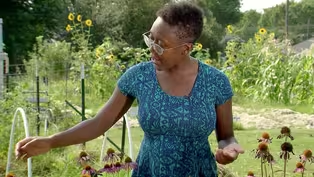
Choosing Plants for Your Garden
Video has Closed Captions
Clip: S21 Ep6 | 2m 27s | Get tips and ideas for deciding on what to grow in your garden space. (2m 27s)
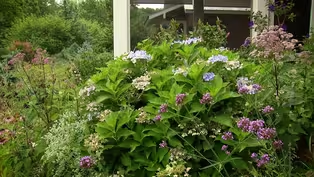
From Turf Lawn to Native Landscape Space
Video has Closed Captions
Clip: S21 Ep6 | 7m 51s | Meet a master gardener who has replaced her lawn with native flora. (7m 51s)
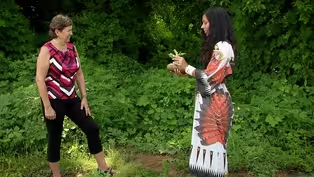
Indigenous Peoples Work to Save Seeds of Traditional Crops
Video has Closed Captions
Clip: S21 Ep6 | 8m 10s | Learn how Indigenous Peoples are working to save seeds and reestablish traditional crops. (8m 10s)
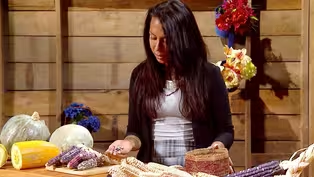
Video has Closed Captions
Clip: S21 Ep6 | 8m 20s | Learn how Indigenous Peoples save seeds from traditional crops. (8m 20s)
Video has Closed Captions
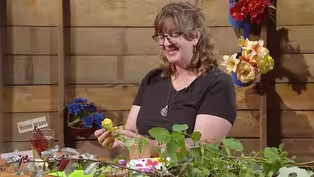
Clip: S21 Ep6 | 8m 17s | Learn how to make poultices and tea with native plants. (8m 17s)
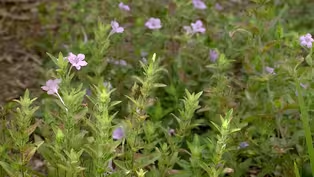
Why Reducing Lawn Turf Grass is Great for the Ecosystem
Video has Closed Captions
Clip: S21 Ep6 | 2m 31s | Learn about the advantages of replacing lawn turf. (2m 31s)
Providing Support for PBS.org
Learn Moreabout PBS online sponsorship














Support for PBS provided by:
Virginia Home Grown is a local public television program presented by VPM