Virginia Home Grown
Water
Season 23 Episode 3 | 56m 46sVideo has Closed Captions
Discover uses for water in gardening and agriculture beyond sustaining plants
Peggy Singlemann learns about ornamental water features when she visits Bill Pinkham in Isle of Wight to see his 30,000 gallon koi pond. Robyn Puffenbarger tours Wade’s Mill in Rockbridge County, with owners Karen and John Siegfried, to see how water power was used to process corn and grain. Engage with us or watch full episodes at Facebook.com/VirginiaHomeGrown or vpm.org/vhg. VHG 2303 May 2023.
Problems playing video? | Closed Captioning Feedback
Problems playing video? | Closed Captioning Feedback
Virginia Home Grown is a local public television program presented by VPM
Virginia Home Grown
Water
Season 23 Episode 3 | 56m 46sVideo has Closed Captions
Peggy Singlemann learns about ornamental water features when she visits Bill Pinkham in Isle of Wight to see his 30,000 gallon koi pond. Robyn Puffenbarger tours Wade’s Mill in Rockbridge County, with owners Karen and John Siegfried, to see how water power was used to process corn and grain. Engage with us or watch full episodes at Facebook.com/VirginiaHomeGrown or vpm.org/vhg. VHG 2303 May 2023.
Problems playing video? | Closed Captioning Feedback
How to Watch Virginia Home Grown
Virginia Home Grown is available to stream on pbs.org and the free PBS App, available on iPhone, Apple TV, Android TV, Android smartphones, Amazon Fire TV, Amazon Fire Tablet, Roku, Samsung Smart TV, and Vizio.
Providing Support for PBS.org
Learn Moreabout PBS online sponsorship(chain rattling) >>1750 is the earliest documentation of a mill being located here.
Mostly Scots-Irish immigrants coming from Northern Ireland, Philadelphia, then down the valley.
And so the stone work that you see here, a lot of the timbers go back to 1750.
>>Oh, this, they really like this.
When the filter activates and the water starts shooting the food down, then they really go, you can see 'em all gathered right there.
>>That's amazing, they're just beautiful.
>>Production funding for Virginia Home Grown is made possible by... (birds squawking) (birds chirping) (upbeat lively music) (upbeat lively music continues) (upbeat lively music continues) >>Welcome to Virginia Home Grown.
Despite the early spring, the cool temperatures persisted into May and the plants responded.
Our gardens are filled with flowers, lush new growth and an extended spring harvest.
Today, we're talking about water, but not just for nourishing and sustaining the plants we grow.
We will explore ornamental water features to enhance the garden and learn about the history of water mills in Virginia.
Before we get started, I wanna remind you to send in your gardening questions on our website at vpm.org/vhg, we always enjoy hearing from you.
A little later, we will visit the Wade's Mill in Rockbridge County, where they've been using the power of water for milling corn and other grains since 1750.
But first, I visited Bill and Linda Pinkham's private garden in Isle of Wight County.
In addition to having an amazing collection of unique and rare plants, their landscape also boasts a remarkable koi pond that you cross to reach their front door.
So let's get going.
>>Bill, you've got just an amazing collector's garden here.
What are some of the features that you have here in your garden?
>>Well, I not only collect plants, I also collect rocks, and this is an up and coming garden feature that's being practiced all over the country.
It's called a crevice garden, but I also use rocks as walkways and retaining walls, and then also as sculptural elements like these basaltic column crystals.
>>Beautiful.
>>That is framed by this nice arch of native bald cypress.
>>Oh, the softness of that just makes it, but, you know, texture-wise, you've put together some wonderful combinations here and colors.
So, when you get a new plant, how do you figure out where to put it?
>>Well, thank you.
It's a challenge.
I walk it a lot.
I walk the garden a lot, finding these spots.
Sometimes I flag them, and then I'm not on yellow plants, and they stand out, particularly evergreens.
Summer and winter, they liven up the garden.
>>Right.
Right.
>>So I try to triangulate those.
>>Yes.
You know, there's so many features to a garden.
You know, texture, color, everything, but also views and water, and you've got it in spades here, my friend, with this amazing view of the James.
That's just gorgeous.
>>The site, Linda found this place and it is amazing.
That's the James River with the Norfolk Naval Base on the other side.
>>It just adds so much.
It opens the garden.
Any other water features?
>>Well, our main water feature's at the front door.
Want me to show you that?
>>Okay.
I'd love that.
(water burbling) Bill, these fish are absolutely beautiful.
How often do you feed them?
>>I feed them twice a day, once in the morning and once in the evening.
>>Mhm, and the water circulation helps a lot with the fish, giving them oxygen?
>>Yes, definitely.
It also is a deterrent for the birds.
So, yes.
>>While we're talking, is it possible to turn off the water?
>>Oh, yeah, sure.
All right.
We're in good shape now.
>>I absolutely love this fountain.
This just is beautiful, and, to be honest, this whole area, you know, I was in Japan a number of years ago, and I feel like I'm back in Japan.
>>Yeah.
>>So, was that your inspiration?
>>Definitely.
We were there in 1976 on a Virginia Tech alumni tour.
It was our first time and the first week was in Tokyo.
The second week was in Kyoto and we did nothing but go to gardens.
>>Oh, sounds like my trip.
>>And we saw this technique.
One had millstones, little millstones, another one had natural stones, and, of course, I love everything Japanese, so I had in the back of my mind that, someday, I was gonna design something.
>>So how deep is the pond?
>>It's two feet deep.
Legally, in the state of Virginia, if it's over two feet of depth, you have to have a fence.
They like a deeper spot in the pond, as much as like five feet.
This is all two feet.
>>How many gallons is it?
>>It's 30,000 gallons.
They say that you're allowed to have one larger fish per 1,000 gallons.
So, the 30,000 can have 30 fish, and that's what I have.
>>And you have beautiful fish.
Absolutely gorgeous.
>>Yeah, some domestic.
Some imported from Japan.
>>Some from Japan.
What a wonderful combination.
Well, tell me about the care of the pond, though, because so many people would love to have a water feature in their landscape, and they really don't know where to get started or even what the care is for it.
So, tell me.
How do you care for this beautiful space?
>>The best thing is to find a source, a local source.
We have a guru over in Newport News, and he has answered all the questions.
That's his life's work.
So, if I have a problem, and they're the ones, they sent somebody over here, actually.
They got me on the right track.
Salinity is probably the number one thing, and I have this meter that you press.
When it zeroes, you stick it in, and it's reading 0.12.
It went up to 0.13.
That's exactly where you want it to be, and the reason for that is, through research, they found that the 0.12 will not kill plants, but it keeps the slime coat on the fish, which is what keeps them healthy.
>>Yes.
That's very important.
Well, you have a water filtration system but I don't see it.
>>Originally, this back here was the filter, and it wasn't enough, not nearly enough, so the water stayed cloudy all the time with algae.
So, at some point, about eight years, seven or eight years ago, I decided we had to build a better filter, and we did that on the side of the house, which is lower than this, which was a little bit of a challenge, because most ponds are on level ground and they put their filter right behind the pond with a waterfall.
>>Right.
Exactly.
>>And that recirculates with one pump.
Because this is higher than the filter, the water has to be pumped down to the filter, through the filter, and then pumped back up back.
So, two pumps.
>>Since it is a biological filtration system, what is the maintenance on it?
>>The filter on the side gets, there's a trap on the pump that gets cleaned every day, and, if I don't, it just builds up on there.
It'd probably burn the pump up.
>>Interesting.
>>The surface of it has to be cleaned off once a month, so you go in and clean that off.
>>Okay.
>>And the reason I didn't do it, because you all were coming, is that it really muddies the water up.
>>Right.
>>And then I have, there's a manifold system underneath the filter with screw caps for clean-outs, and I have this coil of piping I take down there, and I just unscrew it, and, quick, hold it over, and that takes the gunk, algae out, and dumps it into one of the beds.
>>It just sort of helps clear out whatever has been collected.
>>Right.
That's about, every two weeks, I do that.
>>Okay, and then, here, what do you do?
Do you check the salinity every day, or?
>>No, not really.
I check it depending on the rain.
If we get a lot of rain, I check it, and it usually needs more salt.
It's the same salt used in swimming pools.
It doesn't bother the fish.
It's nothing.
It's just salt.
>>What do you do to try to mitigate the temperature of the water?
Do you do anything on a hot summer day?
>>Nothing.
Nah, nothing.
>>Or is all the aeration and bubbling helping to stabilize that?
>>Yeah, it might get pretty hot, but I don't do anything.
>>Oh, interesting.
>>I come out here with ice, maybe.
I'm not gonna do that.
(Peggy and Bill chuckle) Tell me, though.
I'm assuming you must have another door to your house, because if you come home very tired, I don't know if you want to maneuver these stepping stones.
>>We're not gonna be coming in this way if we're drinking, but nobody has ever fallen in this pond.
My sister brought her dog up here from North Carolina and I brought the dog right out here and I turned around about where you're standing, and I turned around, and I said, "See, Jamie?"
About that time, the dog walked right off.
(Bill and Peggy laugh) They don't have any depth perception, and I should have kept walking.
>>You surprised him.
Yeah, surprised him.
So, despite having a dog in the water, for people considering putting a pond at their landscape, what would be your advice?
>>Do the typical one where it's all on one level, and freeform shape.
This is rectilinear, just because, the way it was lined up with the house, I didn't have enough room to do this really informal curvilinear thing out in the yard, so it just made more sense to make this rectilinear, and then these are on cinder blocks, so it's all solid.
>>Nice and low and solid.
Yeah, mhm.
>>Yeah.
>>Would you encourage people to do more of a larger bog?
You know, sort of garden like?
>>If somebody tells you this, you need this for the filter, double it.
>>Double it?
>>Really, because there's never too much filtration.
>>Well, Bill, you know, this, to me, is the ultimate example of a water pond, and it's- >>Oh, thank you.
>>You're welcome.
I love the fact that it's the entry to your home.
>>Yeah.
We do too.
>>And I just love the fact that you've got these beautiful fish, and you've actually, over the years, figured out the best way to manage this, and I thank you so much for sharing this with us.
>>You're welcome.
>>What a great use of water in the landscape.
The first time I encountered their entryway, I was astonished.
Water gardens are typically tucked in the landscape, but not this one, it's part of their front walk.
And now we're going to be joined by Chris Bell of Bell's Pond and Patios to learn about different styles of water gardens.
But before we get started, remember to send in your gardening questions on our website at vpm.org/vhg.
Well, Chris, I'm just amazed by what your career is, in creating water gardens.
I couldn't think of anything more fun.
You must be meeting a lot of people who think of water gardens as just beautiful additions to their landscape.
And yet I'm sure you've had some other experiences.
>>It's the best job in the world.
>>Yes, it is.
>>I get to do what I love, and it brings a lot of joy to their life.
So it's a double, it's a bonus, it's win-win.
>>Well I wanna share with, ask you then, most people ask for water garden.
Why do they want that water garden?
>>That's a good question, because actually, they don't really understand why they want it.
They think they want a big koi pond, they want all the fish.
Most times they don't really want all the maintenance.
And it's understandable, it's a lot of work.
It can be a lot of work.
So a lot of times I introduce them to either smaller fountains, or what we call pond-less waterfalls.
It's a great system.
You still get the waterfalls, you still get the lights, the sound, but you don't have the extra maintenance, and sometimes a lot less cost that goes along with the larger ponds.
>>Yes, well, many people want to do like a DIY water pond.
And yet, as a professional, what are some of the tips that they may not know to be able to really be successful with their DIY project?
>>There's always different levels of DIY, and I see some great installations, but typically some of the more common things, I actually brought a few things with me.
All ponds have liners.
Liners are gonna vary as far as quality, but most of 'em work very well.
The biggest thing I would say is they don't protect the liner.
So what I brought here is I have, I have liner underneath, but this is what we call pond underlayment.
It's to protect the liner.
So let's say you are doing a large pond, and you're gonna set a large boulder on top, you need to adjust it a little bit.
Odds are, it's gonna probably rip that liner on the bottom.
You're never gonna see that, so you're gonna have a leak.
It's also important for going on the bottom as well, because you have rocks, you have roots and things of that nature that could puncture the liner as well.
So just something to keep in mind, if you are at home doing your own pond, protect the liner.
It's very important.
>>So put it below, put the liner, and then put it above.
>>Yes, on the top and bottom.
And sometimes we'll actually take and we'll double it up, or even triple it up, again if it's a large boulder, lotta of weight, sharp corners, you wanna protect the liner.
The liner and your pump are probably the most, two largest expenses of the actual feature.
So you wanna protect your investment.
>>That's a good tip.
Speaking of liners, there's different widths, and there's different types.
What type do you recommend?
>>It depends on the installation, 'cause they're all made for different reasons.
If you're gonna have a regular koi pond, you can go with a normal, basic 45 EPMD rubberized liner.
We're actually concurrently working on a duck pond, and ducks are a bit more messy, and they're a bit more aggressive, so you want something a bit thicker, a bit more durable.
They're not the most fun to work with, but they're gonna last a lot longer.
>>Well, that would be good.
And then speaking of ducks, and dirty water, and things like that, how do you recommend the filtration system be?
What is your, I'll say perfect filtration system.
>>We prefer the Upflow filtration, which would be, we take something just like this.
We'd use several.
We base it on the surface area of the pond.
Then we measure out what the bog or the wetland's gonna be.
And we'll place these all throughout.
And what happens is the water's fed, it comes up from below.
We'll have layers of rocks, different layers of rocks, different size rocks.
>>Good size rocks, not just pebbles?
>>You don't want small pebbles, no, because it won't allow for water to flow through there properly.
>>Okay, so you want large gaps?
>>You want the large gaps.
And it will break down, as you go up, you'll have one to three inch rocks, and then a bit smaller.
And then on top, you'll actually have plants, and you can plant anything you want.
You can have tomatoes, you can have herbs.
It's a hydroponic system, basically.
>>Interesting, 'cause we all think about bog plants only, but you're saying we could put anything in this.
>>Yeah, bog plants are great, but they can get boring after a while.
And especially if you're a home chef and you want fresh herbs, it's perfect, it's natural, it's healthy.
>>Yeah, pH neutral.
>>Very, very much so.
>>So how do you clean out this system?
>>It's very easy, about every three months, you literally just open this guy up.
The water that's already being pushed in here is gonna push out any debris.
Just scoop it out, put it right back on.
>>It couldn't be easier.
>>Sometimes I'll turn it upside down so I don't see the top as much.
But usually I hide it, a rock, or a plant, or something like that, it's no big deal.
>>Just to make it a little discreet.
>>Yes, exactly.
Exactly.
>>Chris, this has been, this is amazing information, and it's so simple, these little tricks and tips that you've shared from your professional experience.
And I just, I really appreciate you coming here and kind of giving some insight into your world.
>>It's been fun, thank you very much for having me.
>>Thank you.
And now we're going to get ready to answer your questions.
But first, Shana Williams has tips to share for collecting rainwater for the garden, and how to be more water wise.
(upbeat music) (rain pattering) >>At the Williams City Farm, we use rainwater all the time.
We know the benefits of rainwater.
Rainwater is the nitrogen in the air.
It captures that and it basically is our natural fertilizer.
But one of the key things too is it's free and our plants adapt so readily to rainwater.
We do have a setup now that allows us to use tap water.
However, the one thing about this tap water, it's cold.
It shocks our plants, and rainwater is softer water whereas tap water is a lot harder and it has more minerals.
Therefore, if we can use rainwater often as possible, that's the best thing for our plants.
Now, when we talk about our water collection systems here this is what we created and we have them located throughout the farm.
We're trying to create a roof just like at your house.
So we have our roof, we have our rain gutter here, we also have our downspout.
But the important thing is to have a type of rain barrel that will allow you to collect water but it's really going to be really important that it's food safe.
No harsh chemicals should have been inside it either one of these containers.
And then another thing is if it's dark in color that means simply less algae and less algae is your friend.
Over time, diseases can form in your water affecting your plants.
Now what we have to do periodically is we have to make sure that the gutters are clean.
We need to make sure that the screens are clean and we'll check inside of our rain barrels to also make sure that they're clean.
We might use a little simple bleach solution if we see that there's algae forming in there, less as possible.
Just rinse it, clean it out.
If you notice, this is approximately about two and a half feet off the ground.
That allows gravity to do the work for us and when I attach it to a water hose, gravity is going to help deliver the water to where I need it to go so we don't have to lug water all over the garden and it creates that water pressure that we need.
Think about the different types of water spouts that you choose to use.
Now, this water spout that we have here has a simple on and off shutoff, but some have the turn knob and it's always important to make sure that it's turned off and it's closed.
Sometimes when you have it twisted, you can't tell if it's turned off or on.
But here, simple.
We know it's on.
We turn it, we know it's off.
Always make sure that you're paying attention to this.
You're hate for it to rain on a hard day, heavy rain and then you don't capture all that rainwater that you would like.
As you think about using rainwater, it's simple and easy.
Attach one to your house or build a simple structure like this.
Capture rainwater.
Feed your plants.
You can do it.
I know you can.
You'll love it once you do and your plants will love it too.
Happy gardening.
>>On Facebook right now, Shana and other members of our team are answering your questions.
So please, send them in via Facebook or through our website.
We look forward to hearin' from you.
And now, we have questions to answer here as well, and Dr. Robyn Puffenbarger has joined us to help out.
I wanna thank you for being with us.
So let's get started, what do we have?
>>Well, I wanted to ask Chris about ponds because algae and other clutter sometimes make the pond not so attractive.
And I've had people ask me, "How do I get rid of it?"
>>A lot of it's gonna depend on what area of the country you live in.
We have different rains than you have in the Midwest.
You have heavier metals on the East Coast than you do in the Midwest.
Water quality, water balance is all gonna differ.
So, I can't really give exact advice on...
If you're in California, it's gonna be a little bit different than Virginia.
I do things differently in the beginning of the year when you're getting the string algae and everything's building up, and most people wanna pull it out and clean it.
Let the fish eat it.
We're not feeding 'em until late in the spring anyway, they're not ready for it.
Let them eat it.
They'll actually take away most of that algae for you, and it's healthy for 'em.
>>[Peggy Singlemann] Yeah, most fish are herbivores.
>>Exactly.
>>[Peggy Singlemann] For the koi at least, yeah, 'cause they're carp, yes.
>>Exactly.
>>Yeah.
Well I wanted to ask if you had advice to give to somebody who's made a decision what type of water feature they wanted in their landscape, what bit of advice would you give them?
>>Well, this is gonna come kind of off the cuff from a guy that owns a business doin' this.
(Peggy laughing amusingly) I don't want to say, "Hey, go spend more money," but it is an investment.
You are gonna spend a substantial amount of money.
You're gonna get a lotta reward from it, but make sure you're getting exactly what you want.
Talk to a few of the friends that might have one, see what you like, what you don't like.
Maybe take a garden tour, look at a few different things.
'Cause the last thing you wanna do is spend a large amount of money and not get the exact results that you want out of it.
It's very easy to do.
>>Any advice on the size to start with?
>>Big.
>>Yeah.
(laughing) >>All my clients, every single one, they all laugh at me, but I say, "Hey, when I'm done, you're gonna wish you went bigger."
And they go, "Oh Chris, you're crazy."
No, they all wanna go bigger.
>>Oh, that's great.
>>Or, they go for another one if they can't fit something bigger in that spot.
>>Dual ponds.
(laughing) >>Exactly, exactly.
>>That's very good advice.
>>It becomes addictive, so yes.
>>Yes, yes.
Not so easy to dismantle, but fantastic to build and be able to enjoy for long term.
>>Oh, most definitely.
>>Yes.
So Robyn, any other questions?
>>Well, we have John asking what can he plant under pine trees for color?
I think that's more a question for you.
>>Yeah.
(laughing) Well John, under pine trees, I like to plant a wide variety of acid loving plants for the shade.
And you can put in some natives as well as some non-natives.
And you know, people like to plant the azaleas, and if you don't have deer, those are fantastic.
And hellebore is another one.
And poet's laurel is another one that would look really well underneath there.
I'd like you to think about, in choosing your plants, to look at the textures and to look at evergreen considerations.
As well as we think of pine having a lush, sort of duffy base to it, but they can get very dry as well.
So I plant a lot of summer blooming and spring blooming bulbs under mine, like daffodils.
So Robyn, what would you recommend?
>>I really enjoyed in a previous spot where I had some runoff coming under a pine tree, I could get away with Virginia bluebells and Jack-in-the-pulpits.
And that was a really beautiful spring addition to the garden.
>>[Peggy Singlemann] That is a beautiful spring addition, good recommendations.
>>The next question is, Tori is concerned that her new yard is overgrown with what looks like Virginia creeper, and is that pet safe, and is there a way to put that under control?
And of course, I would want Tori to be really careful about making sure she knows what it is.
Because if it's poison ivy and not Virginia creeper, that would be a very miserable experience if she tried to take it out herself.
>>Yeah, although some people are also allergic to the latex, you know, the sap of the Virginia creeper.
So I agree, I would strongly encourage Tori to get that properly identified.
And then if it is truly Virginia creeper, it'll rip up pretty easily because creeper attaches with suction cups and the roots are not that deep.
So it'll come up, pulling, very, very easily.
Poison ivy, a whole nother story.
>>Yes, yes.
And then there's also English ivy, or maybe vinca.
There's a lotta things you might be confused by, so just make sure you know what it is 'cause the vinca and English ivy are gonna be a little bit harder to get rid of and tame.
>>Exactly, that's an understatement.
(Robyn and Peggy laughing amusingly) >>And let's see, we also have a question from Sally about cutting the spent flower heads off of an allium.
>>Oh, I like to keep my allium heads up there because I like to harvest the seeds, I like to use the dried flowers.
You know, there's so many uses 'cause they still have flavor those flowers.
And dried or fresh, it's gonna add to your dishes, and the seeds themselves will give you more.
But any... Yeah.
>>Do we have time for some more?
>>Well, do we have one more for Chris?
>>I didn't see one come in.
I was wondering what would you do if you wanted to DIY, and you want no koi and maybe just a few plants, but you really want that sound of water?
How hard is that to do?
>>It's much more difficult than you realize.
It seems easy.
A lotta people like to watch a YouTube video, go outside and start diggin' a hole, and go, "Wow, this is not easy."
'Cause it's easy to lose water.
Water wants to escape, it's going to find a place to escape.
My job is more to control water than it is to rebuild the pond sometimes.
(laughing) But that is something, on that level, I would not recommend DIY only because there's a lot more that can go wrong with it than can go right.
But you can get a consult from a professional that can go out there and show you the basics of it, not a problem, walk you through it.
>>Yeah.
But, how do you determine what size pump to use?
You know, you've gotta pump the water to the filtration system and you've gotta pump the water for sound, you know?
>>Exactly, another reason why you'll wanna consult a professional.
Because you may have a great design, you might be able to install it completely yourself, but if you don't have enough head pressure, you're not gonna have what you need.
If you don't have enough water volume, it's not gonna turn out and give you the look and the sound that you really want.
Too many people wanna get a really large pump, put a very small hose onto it.
The next thing you know the pump's getting burnt out 'cause it's not moving fast enough.
>>[Peggy Singlemann] Yeah.
People don't realize the back pressure.
If they can't move that water- >>Yes, exactly.
>>[Peggy Singlemann] It's gonna burn out the pump.
>>And not only that, it'll destroy the impeller as well.
>>Exactly, exactly.
>>Mm-hmm.
>>The other thing about a pump too is keeping the water clean is critical for maintaining the pump too 'cause that impeller can get pity and start to really wear.
>>That's another thing a lotta people don't think about is actually protecting the pump.
So you do wanna have an actual filter around the pump so that debris is not getting pulled in.
Most pumps can handle small solids, but it's not typically something you want on a regular basis for it.
>>No, not at all.
And I think with bog gardens, you know, they're so popular these days 'cause it's a wonderful way to create a water feature that is positive for native plants.
You know, so you can bring in your pitcher plants, and others that thrive in that wonderful boggy substance.
>>That's also great for mosquitoes.
>>Yes.
>>I'm sorry, not mosquitoes >>Yeah?
>>Wrong, bumblebees.
>>Bumblebees, yes.
>>Yes.
The bees, the butterflies, the smaller insects.
That's a great place for them to go live, hide, drink water, get outta the sun, get outta the heat.
>>Yeah, 'cause we think of bird baths.
>>Mm-hmm!
>>Yeah, Robyn's a birder.
We think of bird baths.
>>Sure.
>>But, what we have to think about is creating an even very shallow area of water for our bumblebees and our other bees.
>>Exactly.
>>Yes.
So these are all considerations to really be able to hone in on what you want, or what you need, or what you're looking for.
So, do we have time for a quick question?
>>Expanding an existing pond and the koi that live in it.
>>It is very possible to do.
It is not the easiest thing, but it can be done.
It depends on what type of liner you currently have and the condition of the current liner, that's gonna be the biggest key.
>>[Peggy Singlemann] Yeah, and finding a place to store the koi.
>>We usually put 'em in quarantine.
Right on site, we'll put the koi in quarantine.
Sometimes, we'll do water changes.
We have to babysit the koi for the most part, but yes, we can do that, not a problem.
>>[Peggy Singlemann] So it's doable.
>>We do it all the time.
>>Super.
Well that's all the time we have right now, but we look forward to answering more questions later in the show, so keep them coming.
And I wanna thank you for being with us tonight, Chris, and for sharing your expertise.
>>Hey, thank you very much.
It was a pleasure being here.
>>And now, Robyn takes us to Wade's Mill to see how mills are powered by water, and learn about stone-ground agricultural products.
(water gushing) (mill creaking) (mill whirring) (water gushing) (water gushing) >>Karen, I know Wade's Mill from my time in graduate school and visiting here in the mid-90s.
But I understand the mill is much older than that.
>>Yes, Robyn, there's been a mill on site since 1750.
And so Wade's Mill is one of the oldest commercial grist mills in Virginia if not the oldest, and one of the oldest in the US.
>>As we're standing here looking at the water coming over, I think it didn't always come in just like this.
>>Right.
So originally, there would've been a long wooden mill race going all the way back to the edge of the property but as you can imagine, a long wooden box full of water the entire time was very hard to maintain.
So in the early '30s, iron pipe was installed and that's how the water gets to the mill.
>>Now would that be the 1930s or the 1830s?
>>The 1930s.
The 1930s.
>>When you're looking at preserving a property from the 1750s, I'm guessing things are not the same.
It's more than just the water that's changed over hundreds of years.
>>Right.
Well, originally, the mill was three stories and then in the late 1700s when they installed the Oliver Evans system which was US patent number three as a way of moving material around the mill, the fourth floor was added.
So that was a change from the original structure.
But the foundation that you see, the limestone is the original from the 1750s and much of the interior.
A lot of the beams are the original beans from the 1750s.
>>And so the original miller, how far would people be bringing the grain to them?
>>Originally, the mill would've served the local farming community and the majority of the milling would've been done for animal feed, to feed the farmers animals and a bit for the human consumption for the farmer's family.
>>And then it sounds like things changed from the late 1700s into the mid-1800s.
>>Right.
And once that system, the Oliver Evans system was installed in the mill, the miller could then become more of a merchant mill and could buy in grain to mill and then send packed in barrels by river out to the eastern seaboard and then abroad.
>>So we are talking about flour from Virginia in the late 1700s, mid-1800s going international.
>>Internationally, as far as Brazil.
>>Wow.
When we're thinking about the history of the mill, we get to the 1850s and there's something else famous going on just down the road.
That's right.
>>So up until that point, the Shenandoah Valley was considered the Bread Basket of America.
And then Cyrus McCormick came along at his farm just up the road and invented the Reaper.
And so once the Reaper was around, it didn't really work that well on the landscape of the hilly landscape of the Shenandoah Valley.
So Cyrus McCormick moved his business to Chicago and the rest is history.
The Midwest became the grain belt of America as it still is today.
>>But you're still here.
>>But we're still here.
One of the few mills still standing.
>>Wow.
Well thank you, Karen, so much for all this history as we watch the waterwheel go around.
Now, we're going to go inside the mill and I think someone else is gonna give us a special tour.
>>That's right.
You'll be meeting my husband, John, the miller.
(water gushing) >>So John, what now is working with the water power from the wheel outside?
>>So water power still comes into the operation.
I still use it for lifting my heaviest sacks of grain up the side of the building.
So all of my grain is stored upstairs.
All of the milling is done here.
In the 1980s, the Wade family installed two sets of electric stones.
And so everything is stone ground but done with two sets of electric stones.
>>So it sounds like US patent number three of the 10 million that have been granted in the US is a very important number for you.
>>It's an important number for a lot of the mills that were built between 1750 and 1850.
It was a patent signed by George Washington.
It was a patent developed by Oliver Evans and it was the most efficient way to organize a grist mill with the power plant downstairs milling and packing on this floor and separating or sifting on the floor above and then storage of the grain and cleaning.
So you're constantly shifting material up and then using gravity to help you separate out big things from little things.
>>And so before patent number three, that would've been all human powered?
>>Yes.
Efficiency, there's always a cost to that or you're working toward trying to reduce the number of people that are in many cases, exposed to safety issues.
Mills can be dangerous things.
There's belts, pulleys turnings.
So the fewer people that you had in the mill, the safer it was, but also the more efficient.
>>As we were talking about outside, Virginia once was a bread basket.
So how would this mill have contributed to having food not just for Virginia, but maybe farther afield?
>>Yeah, so once you could separate, once you could remove bran and germ from white flour, then you had a commodity.
So that was the early 1800s.
But then by 1850, Mr. McCormick just up the road developed the Reaper in that industrialized agriculture.
And he very quickly moved to Chicago.
And then it was a long slow decline.
The Wade family bought the mill in 1880 and upgraded it.
So a lot of the equipment that we run on weekends goes back to the 1880s.
We run that and we run the water wheel so people can kinda see how a mill ran in the 1880s.
Businesses were always trying to improve their business and make them run but the writing was on the wall.
It was far more efficient to farm in the Midwest.
And by 1850, you had rails so you had distribution then.
>>So then, how do you come into the picture now?
'Cause we're in the 2020s and so much later than 1880.
>>Yeah, probably even since I left university, there's been a slow and growing community of people that wanna know where their food has come from.
They want stone ground grains.
There's actually an organization in Virginia that is trying to get grain production back to Virginia.
It's called the Common Grain Alliance.
It's an alliance that connects farmers to millers to bakers.
And so that has also helped.
It's helped us be able to connect to farmers because we're not ag people originally.
But if you're interested, you can learn to do anything.
And we've slowly now have a network of farmers, local farmers that grow for us and local bakers that use our product.
>>So what kinds of products would you produce nowadays?
>>Most of our raw material is sourced locally.
We grind five kinds of corn, three kinds of wheat, depending on what kind of baker you are.
Spelt, rye, buckwheat.
Most of it's grown between Southern Pennsylvania and North Carolina.
>>Wow.
John, thank you for all of this information.
This is just a wonderful place to come and visit >>Anytime.
Happy to have you.
>>Wow, the mill has seen so many changes over hundreds of years.
I'm glad to see it continues to develop with the times.
John and Karen wanted to be with us today, but unfortunately had to change their plans.
So Robyn joins me now to talk more about her visit to the mill and the stone ground products they created.
But before we begin, I want to remind you to send in your questions through our website, vpm.org/vhg, or through Facebook.
Robyn, it's so kind of you to step in and to be able to share what you learned during your visit at the mill.
And I just, you know, these beautiful grains, I just take them for granted that they get ground up.
>>That's right.
So here we have field corn.
This would not be something we would eat, but we do have to dry it and then it can go to Wade's Mill for the stone ground process.
And in any of the grinding processes, you're going to get some chaff, some product that you can't use for human consumption.
>>So what do we do with that?
>>So this could go into an animal feed.
And in the Shenandoah Valley, that would be extremely common.
And as the corn is being ground finer and finer, we would get to something like this, which is actually cornflour.
I didn't even really know this existed.
It feels like silk through your fingers.
>>Oh, I know.
We were playing with this earlier.
It's so soft.
It's so fine.
>>So in order, then, to make product from corn, one of the things we're gonna eat, this is the yellow corn grits, and this is a much coarser meal.
We don't typically use cornflour in our American cooking, but we do use cornmeal, which would be two parts of the flour to one part of the grits.
>>Interesting.
>>And then this feels, you know, just like what you felt when you make cornbread or corn muffins.
>>Kind of a little bit of texture, but not too much.
>>Not too much.
>>I will say that this cornflour is so silky and so soft, I could just touch it all day.
>>Yeah, and, you know, it is gluten free, so I don't know exactly what you could use it for in the kitchen, except that with that gluten free, you might be able to adapt it to some recipes, which would be really amazing.
>>Well, this is a unique ear of corn that I think is just fascinating.
>>So this variety of corn was actually developed and introduced in Virginia in the 1840s and given to settlers by the native people.
It's called Bloody Butcher.
>>Oh, what a name.
>>So it's got a really great name.
(Peggy laughs) And the reason for the name is once you grind it and make this meal, this is maybe what the butcher's apron would've looked like when he was finished, splattered with blood.
>>Yes, splattered.
>>So the Bloody Butcher.
And this makes a beautifully different-looking corn muffin or cornbread because of that cool, cool red color.
>>You know, when we talk about cuisine, we want to have our colors there.
And I was thinking with yellow cornbread and the Bloody Butcher cornbread, it'd just be a very interesting breakfast table.
But, you know, corn is a staple to us and we're so familiar with this, but we also have wheat here, which is another staple that we're familiar with.
And I don't think people realize when they drive by a wheatfield exactly what part is the important part for I'll say food purposes.
>>Right, and this is called a wheat berry.
So this would be the grain that's up at the top.
It's also been dried.
And once they start to do the stone ground process, one of the things that they have to get rid of is the germ.
This is full of oil and it would make the flour go rancid.
So we can't keep that in.
It actually gets sifted out.
>>Interesting.
So if you have a low grade, you know, I'll say milled product, then it still has the oil in it and it won't last as long?
>>Exactly.
You could keep it, but you'd have to keep it in the fridge or the freezer if you have this.
So one of the things that they were doing at the mill was sifting.
This is a whole wheat flour, so it has the flour and that silky feel, but it also has a little bit of the bran left in it.
They're not producing white flour at this time.
The mill used to, that used to be a major commodity, but now they're producing, as far as I know, a whole wheat flour, and that has some of the bran left in it.
>>Well, when we're talking about grinding, you know, we've talked about the importance, I mean, the different stages, these levels of coarse, then medium and fine.
But the operation of the mill itself, I noticed that stone there.
That must get ground down very quickly.
You know, we all think of that one stone rubbing over the other stone to grind this down.
>>Yeah, it was really fun to read about the, you know, we talk about our special thumb measure, and that's from the miller who was actually using his thumb, he was feeling the grain as it's coming out from between the two stones.
So the bottom stone isn't turning.
So that's the sleeper.
And then the runner's on top being turned and then he's feeling for that quality, that coarseness, fineness, as it's coming out.
And that's something that you, like John, would have to learn how to do.
It's a really impressive process.
>>So that's where the phrase rule of thumb came from.
>>Exactly.
>>Oh, that's fun.
>>And don't forget, you have to wait your turn at the mill because the water wheel has to turn and you grind your grain.
>>(laughs) But as that, wow, but the stones and the wheel and everything, I mean, there's so much friction.
I would be so concerned about fire in a mill.
>>Yeah, that was something that John talked about.
You really have to be careful.
There's a lot of dust in the air.
It can be flammable.
And probably a lot of mills that were in Virginia at one time burned because fire was such a major hazard for them.
So now they, you know, just have to be really careful with filtering the air, keeping it open when they're doing their grinding days.
>>But also, I have a millstone in my garden and the grooves there, they actually allowed for I'll say the flour or whatever product to come out, but there was also grooves to allow air in to be able to cool the stone from all the friction.
>>Right.
And in thinking about where those stones came from, there would be local quarries, but they could come from as far away as New York, Pennsylvania.
But the finest stones were from France.
So France goes way back in our history of baking and fine goods.
>>How fun.
>>And so that's, you know, a really high-quality mill would've had French stones.
>>Interesting.
Well, now we know how French cuisine can come to Richmond, actually to Virginia.
So Robyn, I want to thank you so much for sharing this information.
I think everybody learned something today.
>>Thank you so much.
>>Yep.
And now we're going to get ready to answer more of your questions.
But first, Jen Naylor shares tips for growing Korean chili peppers and explains how she dries and grinds them to make her own chili powder.
>>Today I am gonna show you how to grow Korean chili peppers.
Now, these are actually started in the greenhouse with the seed and then when they're about this tall seedlings in about mid April to at the end of April, you take it out, you plant it in your garden.
They are prolific producers and they're absolutely delicious.
Now, when they're green, I use it to pickle, I saute them, I actually make it into pepper chips.
And also you can grill nice piece of steak and peppers grilled, you're gonna be in heaven.
When they're red, you harvest them.
And what I do is I sun dry them basically using a mat that's made out of straw.
And that way, the air circulates from the bottom to top and, of course sun at the top.
Drying.
Now, sun drying to me is what I grew up with.
My grandmother, when I was growing up in Korea, she would harvest these hand harvested, of course everything is grown naturally.
She sun dries them and she takes out the stem and cut the pepper in half and take all the seeds out and she'll take them to water mill in Korea.
And I used to just absolutely love it.
It's because the water mill is just to me, it is just so beautiful and it's natural.
So, my grandmother would take it there and milk them and then bring it home and she keeps them for the wintertime and also to make him chew with.
Now when they're green, they're very, very crunchy and some are kind of sweet and mild, some are very spicy.
But anyway, they're absolutely wonderful.
Now, when they're the small and if it gets really hot quickly, what happens is that it could start to bloom.
Now, what I need you to do is take that bloom off the plant and go ahead and discard that.
If you leave it on there, what it does, it'll stunt the growth of the actual plant.
So, it's not gonna get as big is because all that energy goes to making that pepper.
Now, this will get up to about three to four feet tall and you'll have tons of Korean chili peppers.
I grind these in a coffee grinder.
I don't have the water mill.
And also, you can grind and grind it to very fine powder and you can make Gochujang, which is a Korean chili paste.
Very, very tasty.
But anyway, I hope you'll be able to go and grow your own Korean chili peppers and sun dry them, experiment and grind them, coffee grinder works for me.
Try making kimchi or any other dishes.
I just absolutely love cooking with Korean chili peppers.
>>Preserving what you grow provides comfort in knowing where your ingredients come from.
Like Jen with her chili powder, I'm enjoying the garlic powder I dried, then ground, last summer.
Well, Serome Hamlin joins us now to help answer more of your questions.
So let's see what we have here.
And I know we wanna get started, but Robyn, I know you use milled, ground products with your cooking and such, so what's the difference between buying flour and such from the mill versus buying at the grocery store?
>>Well, typically, the grocery store is roll milled and they add back the nutrients that are lost.
And so if you buy the stoneground products, the nutrients are still there, some of the B vitamins and iron.
So that's one of the reasons I really appreciate the stoneground ingredients I can get locally.
>>Oh, that's great.
So people should look for a mill near them and start, frequent, buying their products there.
I'll say buy local.
(Peggy laughing) >>Oh, does sound good when you say, "Buy local."
>>So we can support our farmers here in Virginia, and our millers, so.
Well, thank you again.
We have a lot of great questions here.
I'm gonna start off with raspberry canes.
Jerry from The Fan asked, "Raspberry canes, I'm not having very good luck keeping them going.
What am I doing wrong?"
>>I guess I would question how long has it been in the ground?
'Cause, typically, you need to start removing some of the older canes to make the plant rejuvenate itself.
>>Mm, yes, I've been growing raspberries for a few years too, and I find that they really like some high compost.
If you think of where they grow, it's pretty nutritious soil.
I've also learned to rein in my raspberries.
(Robyn laughing) >>So I have them in (laughing) a very large, large kinda trough so that they don't rampage all over my garden.
So yes, I'd say keep it going and give it another try.
And understand, they keep moving out and you've gotta move 'em back in.
>>Yep, back in.
>>Yes, so that's a good one.
Jillian asked, "I recently bought a birdbath and haven't noticed the birds take any interest in it over the few months.
Is it possible my birdbath isn't a shape or style they prefer?
And what makes for a good birdbath?"
>>Well, shallow is best.
Most of our small songbirds have an instinctive fear of drowning, and so they won't go into water if they can't tell how deep it is.
So you can do things like put a stone in it, keep it fresh.
The other thing is, birds are very cautious of new things in their environment, and so if there's not enough cover for them to feel safe getting there, then they might be leery of approaching it because there could be danger there.
>>Oh, that's interesting, 'cause I put in a birdbath and I put half of it with lots of decorative stones for the bees.
But my plants keep growing over my birdbath, and I keep pruning 'em, so I should leave 'em.
(Serome and Peggy laughing) >>Yeah, they really are very nervous of predators, and so having that cover to make them feel safe as they fly in and look about.
>>Oh, interesting, very good point.
I like that.
Let's see.
>>And you don't have to spend a lot on a birdbath, you can get just a cheap.
>>Oh, no, you can use any vessel that holds water.
>>Plastic container.
>>But it is a good idea to use stone, 'cause you can set it there, the birds have a place to land, and the bees and other little pollinators have a place to land and they're able to get a drink as well.
>>Yes, that's a very good point.
And clean it out regularly, to clean it of algae.
>>Yeah, yeah, and if you're worried about mosquitoes in the summer, just rinse it out a couple times a week and that won't be a problem at all.
>>That's very important to note, 'cause we all know.
>>Oh yeah.
>>Any standing water is mosquitoes.
>>Yep, and it doesn't take a lot.
>>Right, I'm very pro emptying containers, emptying trays, doing our due diligence to prevent mosquitoes from breeding.
So we have another one, Andy from Front Royal asked, "I have an invasion of morning glory in my vegetable garden."
(Serome laughing) "How do I get rid of the morning glory without affecting my vegetable plants?"
>>Pulling.
(everybody laughing) And lots and lots of pulling.
>>That's all I know to do.
>>(laughing) Yes.
>>And digging down and getting those base roots, 'cause they just run everywhere.
And they do have some substance to 'em, you can dig these out, it just takes a little time.
>>Yeah, and just make sure you get it all, 'cause if you leave any to flower, then you're still gonna have a continued problem.
>>Yeah, and if it's in your walkways, just smother your walkways with cardboard and then lots of organic matter.
Smothering is an viable option here too, it works, to be able to eliminate the oxygen getting down and it will kill the plant.
So it's a lot more nutrient positive too for your vegetable gardens to smother them.
>>Yeah, and I've tried to learn how to recognize 'em when they're just a couple of little leaves and pull them very quickly.
>>(laughing) Yeah.
>>(laughing) Not let them get going, 'cause those seeds, they'll be there forever.
>>Exactly, (laughing) exactly.
>>Yes, and once they get going, they grow really quick, so.
>>And another one similar to that is passionflower.
I encourage people to think twice before they plant passionflower in their garden.
It's a beautiful vine, put it someplace else, so (laughing) same problem.
(Serome laughing) We have another question Michelle asked, her soil is mostly clay, what amendments should she add for growing tomatoes?
>>Compost.
>>Compost and also lime, 'cause the lime will chemically break apart the clay.
It's a chemical reaction that would help.
But I would suggest taking a soil test.
>>Oh yeah, the extension office, the master gardeners will be happy to help you do that.
Send it to Virginia Tech.
It's very, very affordable and it's really worth your while to know if you have anything you need to add to make your vegetables grow.
>>Exactly, it'll give you the percentage of clay you have, it'll give you the organic matter content, it'll give you the pH and the nutrient content, and you'll be able to streamline that soil for tomatoes.
And on the notes, put you're growing tomatoes in this area so that they know, so.
We have another question from Anne from Tappahannock, "My 25-year-old climbing roses have new canes that are red and flexible."
Ooh, ooh.
"How do I know if this is rose rosette disease for new growth?"
Ooh, Anne, I'm sorry.
(Peggy and Serome laughing) It is.
(laughing) I would recommend taking a sample of that cane and bringing it to your local cooperative extension agent and having it confirmed, or if you know a local rosarian, and having it truly confirmed.
But if it's flexible and it's hyper prickly, roses have prickles, not thorns, hyper prickly and very red, unfortunately, that's a sign for rose rosette, and unfortunately, it's a systemic virus and you're gonna have to remove the rose.
>>Have to remove it.
>>Oh, and it breaks my heart, it does.
I have, over the years, tried to eek another season out by pruning back a very large infected cane, but it was for naught, the problem was still there, and I ended up digging out the whole bush, so.
I'm so sorry to give you that answer, Anne.
(Peggy sighing) >>How long do you have to wait before you could put roses back?
I'm not a rose gardener, so I don't know.
>>Well, to replace the rose, you have to remove, basically, the old wives tale's a bushel of soil.
I say three, five-gallon bucket fulls of soil, gives you the idea, nice and deep.
You remove the soil, because roses are allelopathic, which means their roots actually put hormones in the soil to prevent other roses from growing there.
So replace a bushel full of, wide and deep of soil, and then you can replant.
It's people who don't do that that they say, "Oh, my roses never did well after the first one," it's because of what's in the soil.
>>Oh wow.
>>So that's a good question, thank you.
Last question is, Jocelyn asked, "How can I keep slugs from attacking my squash blossoms?"
(Serome laughing) >>Drown 'em in beer.
(everybody laughing) They go to heaven happy.
>>Yep, well, that's a very good answer.
(Robyn and Serome laughing) Nice and quick.
And thank goodness, 'cause we're out of time.
And I wanna thank you and Serome for pitching in and stepping in on such a short notice to join us this evening.
>>No worries, glad to be here.
>>Yes, this show contrasted the power of water, and its strength can move a wheel to hoist a load, yet its soft flowing sound can soothe the soul.
Water is vital to all living things.
I also wanna remind you to visit the Virginia Home Grown Facebook page for upcoming opportunities, including tours, plant sales, and my speaking engagements.
If you're not watching on Facebook already, then switch over to catch Randy Battle take what you have and make it work.
This month he explains how to garden in a common shopping tool.
It's something you probably already have.
Thanks again to our guests, Bill and Chris and John and Karen, and thank you for watching.
I look forward to being with you again next month.
We will explore the positive effects of gardening and nature for mental and physical wellbeing.
Remember, gardening is for everyone.
We are all growing and learning together.
Happy gardening.
(bright music) >>Production funding for Virginia Home Grown is made possible by... (birds squawking) (birds chirping) (upbeat lively music)
Video has Closed Captions
Clip: S23 Ep3 | 26m 46s | Discover uses for water in gardening and agriculture beyond sustaining plants! (26m 46s)
Video has Closed Captions
Clip: S23 Ep3 | 8m 39s | Discover how the power of water is used to process grain (8m 39s)
Video has Closed Captions
Clip: S23 Ep3 | 8m 8s | A unique water feature for the front door (8m 8s)
Video has Closed Captions
Clip: S23 Ep3 | 2m 53s | Making chili powder for Korean chili peppers (2m 53s)
Video has Closed Captions
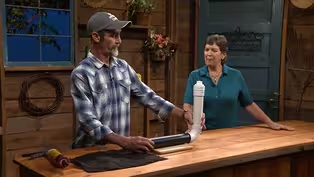
Clip: S23 Ep3 | 4m 54s | How to build a water feature that meets the goals for your landscape (4m 54s)
Video has Closed Captions
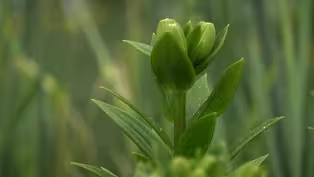
Clip: S23 Ep3 | 3m 12s | Learn how to harvest and store rainwater safely (3m 12s)
Video has Closed Captions
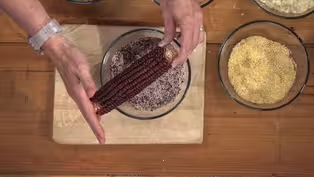
Clip: S23 Ep3 | 6m 12s | Learn about the products millers create from corn and wheat (6m 12s)
Providing Support for PBS.org
Learn Moreabout PBS online sponsorship

- Home and How To

Hit the road in a classic car for a tour through Great Britain with two antiques experts.












Support for PBS provided by:
Virginia Home Grown is a local public television program presented by VPM