Virginia Home Grown
What Makes Healthy Soil?
Season 21 Episode 4 | 56m 46sVideo has Closed Captions
Dig in to learn more about the overlooked star of the garden, the soil!
Visit Reynolds Community College to learn how soil composition differs across the landscape with Karin Stretchko. Then travel to Black Bear Composting to learn how they transform food waste into healthy compost for garden soil. Engage with us or watch full episodes at Facebook.com/VirginiaHomeGrown or vpm.org/vhg. VHG 2104 June 2021.
Problems playing video? | Closed Captioning Feedback
Problems playing video? | Closed Captioning Feedback
Virginia Home Grown is a local public television program presented by VPM
Virginia Home Grown
What Makes Healthy Soil?
Season 21 Episode 4 | 56m 46sVideo has Closed Captions
Visit Reynolds Community College to learn how soil composition differs across the landscape with Karin Stretchko. Then travel to Black Bear Composting to learn how they transform food waste into healthy compost for garden soil. Engage with us or watch full episodes at Facebook.com/VirginiaHomeGrown or vpm.org/vhg. VHG 2104 June 2021.
Problems playing video? | Closed Captioning Feedback
How to Watch Virginia Home Grown
Virginia Home Grown is available to stream on pbs.org and the free PBS App, available on iPhone, Apple TV, Android TV, Android smartphones, Amazon Fire TV, Amazon Fire Tablet, Roku, Samsung Smart TV, and Vizio.
Providing Support for PBS.org
Learn Moreabout PBS online sponsorship(engine accelerating) >>It's all about the microbes.
All we're doing is creating the ideal environment for those microbes to do their job.
>>I take everything, chop it into nice one foot little sections when I'm doing my cutting back and I lay it right back on the ground.
And so that's free organic matter.
>>I'm Peggy Singlemann, host of Virginia home grown.
And this month's show is all about building a foundation for a thriving garden.
In the first half of our show, we will learn that there's more to soil than meets the eye and how organic matter increases the life of the soil as well as the soil structure.
>>And I'm Keith Nevison, in the second half of the show, we'll be visiting Black Bear Composting in Crimora, Virginia, to learn about the process of turning food waste into good healthy compost for garden soils.
As always We welcome your questions via Facebook and email.
Stay tuned for another episode of "Virginia Home Grown".
>>Production funding for "Virginia Home Grown" is made possible by... (crickets chirping) (upbeat music) >>Hi, I'm Peggy Singlemann.
Welcome to "Virginia Home Grown".
The weather in June has been lovely and our gardens are lush and bountiful because of it.
Today, we're taking a closer look at soil because it is the foundation to every successful garden or landscape.
We will learn about organic matter teaming with microbial activity that is rich in nutrients and about the different soilless mixes found at your garden center.
Remember to send in your questions through Facebook or email to ask our guests how you can improve the soil in your garden or other gardening questions you may have on your mind.
In the second half of this show, my cohost Keith Nevison, visits Black Bear Composting to learn how it is nurtured on a large commercial scale with tips on composting at home.
First, let's take a look at my visit to Reynolds Community College in Goochland, where I met up with Karin Stretchko.
She shared with me the dirt on the differences in soil throughout their lovely display gardens, lawn and vegetable beds.
>>Karin, it's so nice to be here at Reynolds Community College in Goochland.
I can't think of a better site to talk about soils.
There's so much here for the students to learn from, from the perennial borders, to the lawns, and to the vegetable gardens.
And all of these are great opportunities to discuss soil 'cause, as we know, it is the secret to success.
>>It is, everything starts with the soil.
And one of the easiest ways to promote or participate in soil health is to actually make frequent additions of organic matter.
Organic matter, anything containing carbon.
So it can be compost, but it can also just be debris that wouldn't naturally fall.
>>Leaf debris.
>>Leaf debris.
>>Needles.
>>Sticks, leaving your perennials, cutting them back and leaving that debris on the ground.
Those are easy ways to put organic matter back into the soil.
>>Naturally do right, yes, not be so clean.
>>And what a lot of people don't know is the primary role of organic matter is to feed soil organisms.
And when we're talking about soil organisms, we're not only talking about the earthworms and arthropods that you see, the beetles, but we're talking a lot of microorganisms.
Those include, bacteria, fungi, protozoa, actinomycetes.
And microorganisms, their primary role is to recycle carbon and also to recycle nutrients.
>>Yeah, and I don't think people realize that there's life to this soil.
That the soil is, I don't call it a being, but a living entity.
It's not just, pieces of rock and dirt put together, that it's true life down there.
>>It's a home, it's a home to all those soil organisms.
And so, those organisms take that organic matter, pass it through there.
>>Whatever.
>>And they do it over and over and over again.
So it breaks it down into smaller and smaller pieces, where finally those microorganisms can actually access it, and convert it at that point into nutrients that are available to plants.
So it's a process; it doesn't happen overnight.
So when you're adding organic matter to your soil, at that point, you're not actually providing nutrients to your plants, you're feeding the soil organisms.
>>Well, I see you've got a soil auger.
Can we take a look at what's in this soil so we can show people what we're talking about?
>>I do, so this area here has been under this perennial permanent garden for about 20 years now.
And we leave the organic matter- >>To be.
>>To be.
>>Just let it recycle.
Yep.
And so all those organisms can break down that organic matter.
>>Yeah.
So one of the things that you can see, in through here, is we actually have developed a topsoil into that mineral matter.
And what that topsoil is showing, is the organic matter component that it has been accumulating in that mineral soil, over time.
And so in various spots around here, we can get anywhere from six inches up to about a foot of topsoil.
>>And people don't realize that soil has horizons.
>>There's actually letters designated with these horizons.
At the very top, you'd see the weak letter, that's the O horizon.
The area that has that accumulation of organic matter, that's the A horizon, what we know as top soil.
And then below that you're going to have your B horizon or your subsoil.
>>Well, this is exciting, because you can actually see the success.
>>Right.
And it's a real easy way, besides soil testing, to monitor whether or not you're getting organic matter accumulation in your soil, is just to go out and look at those horizons.
>>This soil is lovely, and absolutely lovely, because it's been tended with so much organic matter from the plants.
But you've got a lawn nearby that has a whole different profile.
>>And something to note here, is we don't do any chemical inputs.
So no fertilizers go into this area or have for a long time, 'cause again, we're returning everything back into the soil.
>>Back into the soil.
>>This sample right here- >>Here, I'll swap them okay?
>>Is from the lawn area that's right across the street from us.
So these two actually started out the same about 20 years ago, all the soil looked like this.
But this being under lawn, there's not a whole lot of organic material being returned.
>>There's almost no organic material.
>>Yeah, yeah, there's no O horizon, and there's no A horizon.
We go straight to the the B horizon, subsoil.
And that's because there's no biomass in lawns.
And even if you're returning your clippings, it's just enough to, make those accumulations and make those improvements to the soil.
>>People just don't realize how sterile lawn is.
>>They are, and if you're not putting that organic matter back into the soil, you have to put those chemical inputs into it to keep it going and that's why lawns really aren't considered sustainable.
>>But we have a third soil to talk about.
>>Yeah, we're gonna walk over to Betsy.
Betsy Trice is our Sustainable Agriculture Instructor, her sustainable area and we're gonna look at a disturbed or crop soil.
>>Sounds good, let's go take a look.
What an awesome garden, it's so lush.
>>Yeah, so this is our sustainable agriculture area.
This is one of the beds that we actually just planted cover crops last week, you can see- >>I can see the little seedlings popping up.
>>You can see the little buckwheats coming up?
>>Yes.
>>And so, when you have a cultivated and cropped area, it's really important that you remember that you're disturbing the soil on a regular basis.
And when you disturb that soil, whether it's with a pitchfork pulling out weeds, you're introducing oxygen into it.
And when you introduce oxygen into soil, the soil life has a tendency to have a little burst of activity.
>>Coming to life.
>>Comes to life.
That's good, 'cause it recycles those nutrients faster.
But it's bad because you have organic matter being consumed at a faster rate.
>>So you need to put more in?
>>So you need to put more organic matter in, at a more frequent regularity.
The other thing is when you are cropping and harvesting those crops, all those nutrients that in a natural system would return to the soil, you're harvesting them and taking them away.
So you're not returning those nutrients to the soil.
And that's one of the reasons we do cover crops.
Every area is gonna be cover cropped at least one season a year.
>>So that you can actually put those nutrients to the soil.
>>And if you look around, you can see we've harvested cover crops.
And over through there, we've harvested them and then we just lay it back down on the ground, and it's biomass, and then we plant right into that.
>>It's great mulch.
>>It is, and we've got a cover cropped area right here, which is oats and phacelia.
And so that will go through the Summer here, and it helps bring in pollinators.
And again, then we'll harvest that, lay it to the ground, and plant it this Fall.
So I'm gonna bring up a soil sample from this area here.
>>That went in a lot easier, Karin.
>>Let's hope it brings out.
>>Yes.
>>And so you can see, with this soil sample in through here, is compared to this, this is the one that we brought from the lawn area, again, because this area's cultivated on a regular basis.
So that organic matter that we add to the top, the soil activity has taken it down and mixed it in- >>That is beautiful.
>>And you've got a great accumulation of organic matter in our garden area.
>>Once again, in this lawn, we have clay with such a minute amount of organic matter That is just really not worth mentioning.
And again, we're being too sterile in our cultivation with our lawn.
Where here, we're actually increasing the soil life.
That is wonderful.
Thank you for having us and explaining to us about the importance of soil and the fact that soil is sort of the host home for so much life we don't even think about.
>>It is, it is the starting point for plants and for a lot of soil organisms.
>>It's the secret to the success of the garden.
>>It truly is.
Karin, thank you for sharing your knowledge about soils in our gardens.
The gardens are absolutely lovely and the soil is what makes them the perfect outdoor classroom for the students enrolled in the horticulture programs.
You can learn more about the classes they offer on their website.
The western campus is located in Goochland Courthouse and the gardens are open daily until dusk.
Guests are welcome to walk and enjoy, just please take away only pictures.
Well, I'm very pleased to be joined by Harris Wheeler, retired Horticulture Instructor at Richmond Technical Center, to continue the discussion on soils and talk about common types of growing media you might find for sale at your local garden center.
But before we get started, remember to send in your gardening questions via Facebook or email.
Well, Harris, you've brought a lot of supplies here and we've just got so much to talk about.
So I understand we've got some potting soil there and some garden soil.
Could we kind of start off with comparing the two?
>>Well, first of all, I wanna thank you for inviting me.
>>Oh thank you.
>>And when you call me about three weeks ago, I said, you know, this is gonna be a great opportunity.
I took time out and start visiting the local garden centers to find out exactly what's going on.
You know, you can sometimes think, you know, but when you actually take time to examine closely, you see some things you said, wow, I didn't know that.
So this was a fun project.
I got my grandkids involved... >>Wonderful.
>>And we had so much fun.
>>So let's get started.
>>Let's get started.
>>All right.
>>Thank you.
>>So when you visit your local garden center, first of all, you need to determine what'd you gonna grow.
>>Exactly, seeds?
>>Right.
>>Maybe some bedding plants?
>>Right.
>>Maybe some shrubs?
>>Right?
So you need to know that, do a little research.
And so the first example I have here of potting mix, I'll just pour a little bit here and it's got a lot of organic matter minerals, organic matter of course you wanna make sure that air is in your soil and it's very light and it's really for it's a potting mix is more sterile and especially for seedlings and you started something with seeds or small seedling plants.
And so you start reading the back.
The main thing I can tell you is read the labels.
>>Yes, amen.
(laughs) >>You go into stores and they have all these different bags and it looks so beautiful.
They spend a lot of time with the advertising on the bags.
>>Yes they do.
>>So don't get fooled.
Don't get fooled by the beauty of the bag.
Look at the back of the bag and examine exactly what minerals and nitrogen phosphorus and potassium.
And so that's important.
So this right here is the potting mix, as you can see, is the camera's on it.
It's got some perlite mixed in it.
Perlite is something I have over here.
It's actually mixed in with, what they call pro mix.
And it helps the aeration, again I said, minerals, you got to have the organic matter, the water, and you have to have air.
So perlite is generally mixed into a lot of different soils.
I'll just give you a some.
And it's an actually a inorganic matter perlite but it helps with the air circulation.
And this helps with far starting new plants.
Now again, decide, first of all, what you're gonna grow.
I come from a background from South Carolina and it was all about the dirt and it was all about the horse stable.
>>Well, what was the dirt like down there?
>>Well, I'll tell you what, it was a playground for me.
>>Not bad.
>>My grandfather, had a horse named Bird and all we did, he said, "all right, it's time to get some that horseman you are".
So all I knew was go out there and get that horse mule and put it out in the ground he tilted in.
So I didn't really have the understanding that I have now about the different soils.
So, read the label, study, figure out exactly what you want.
Now, we talked about a little potting soil right here.
I have some garden soil, which is not as sterile as the potting mix.
It's a very valuable, organic matter.
And that's used a lot, but at the same time, it's important, again, decide what you're gonna grow and where are you gonna grow it inside or outside?
>>Well, would you put garden soil in your plants on the inside?
>>I would use the potty mix now.
That's what I would do.
>>Yes, because it's sterile?
>>It's sterile yes.
>>We don't wanna bring in all those... >>That's exactly right.
And so there's so many varieties.
Again, moving along, here we have the coir.
>>And what is that?
>>That's part of a coconut fiber.
Now let me say this right here, before we go any further.
I am not a soil scientist.
>>Nop, but you're a Grower and a Horticulturalist sir.
>>I just love the outdoors.
I want everybody to know that I love the outdoors, I love to get my hands out there and play and see what's going on.
So I began, this was an educational part for me because a lot of times at the school we got what they call pro mix.
>>Right.
So everything was already, so you really didn't have to do a lot of research 'cause it was all packaged.
So anyway, coir is another garden product.
Just keep that in mind C-O-I-R coir.
Again, my job was to just go to the garden centers and see what was available.
And there's so much available.
The next product I have here is pine bark mulch.
I will just take a little bit of this right here.
>>What's the benefits of pine bark mulch?
>>Again, I'm not a soil sample scientists but acid loving plants?
>>Yes.
>>Right?
Now, again, study, Google is so amazing.
>>Isn't it?
>>I'm telling you.
It's taking out a lot of their work, hard work.
I think just Google, Google, Google.
And you can come up with some answers.
So, be mindful of all the products that are out here there's so many.
So, and you can get confused and you can get caught up with, like I said, the beauty of the bags, the fancy, lettering and everything.
You're like, what is really going on?
So I'm just introducing some of the things that I saw at the garden centers.
So we have the pine bark, We already talked about perlite.
Then you have vermiculite.
And generally that's mixed in with your pro mix as a sterile agent would be this seedlings and small seeds.
>>'Cause it's a great water absorber?
>>It does.
It does.
So this is perlite, perlite right here are.
Actually, you can grow plants in vermiculite by itself.
>>Yes you can.
Yes, it's a great place to start cuttings.
>>And if you want to learn more?
Again, it's vermiculite and I have here perlite, pine bark mulch, coir, C-O-I-R. and this tag right here was the potting sour mix and garden soil.
Now, when you asked me to do this, I got to thinking, I sit there I'm a visual person.
>>Right.
>>I can talk, talk, talk, talk, talk, but let's do something.
So I got my grandkids, we had a little plant party.
What we call, I said, we gonna have a pant party.
They like party.
So they didn't know what it really all about but so we put this together right here.
>>So you put in all the different soils, each one of these pots?
>>All the different soils in each one these pots and put some grass seeds in here.
>>This was done June 10th.
>>Fascinating.
>>So this was about three weeks of growth of these grass.
Now, actually, because... and I'll give you example here.
We're talking about aeration and just how hard the soil is.
This goes in real easy.
A screwdriver goes around this one pretty easy right here.
I'm looking at the tag right here.
This is a leaf compost.
Every one of them went pretty good.
This one's a little tight right here.
Oh, it's clay.
>>Surprise to that.
(laughs) >>So that's clay has the fine particles and clay really compacts easily.
So you have to be very careful if your soil is just full of clay.
So this was kind of tough right here.
This one right here...
I actually, if my mother is watching, she has a famous word where she calls concoction.
I took everything that I have on here and put it in this one right here and just say, let's see what happens with- >>It's doing better than the clay.
>>Yes, it's doing better than the clay right here.
>>But let's go back to the clay Harris, 'cause I want people to see the ribbon in effect and we've got less than a minute to do so.
So can I distract you to do other- >>Yes, let's do this.
Let me, let me get this started right here.
AS my little grandkids sings ♪ Clean up ♪ Clean up So let me see if I can clean this up a little bit over here.
>>Now, that's perfect.
And let's just bring our pot over because I think people need to realize that clay has a lot of sand in it, but there's also different properties of clay.
And if by putting some water in with it, you can really determine just the extent of that wonderful colloid called clay is in our soil and it's a fun, little easy experiment.
>>Well, I'm doing this.
I will say this was taken out of an actual yard and I'm not sure if the camera can actually see it, but rocks and clay you see how the grass is having a hard time germinating.
This was taken out a yard about three weeks ago, actual yard and a close friend of mine.
And I told him, I said, you're gonna have a little problem here.
>>So let's just do it real quickly make a ribbon.
>>Let's see if we can make a ribbon.
I'm not sure if we're gonna be to make it that quick.
>>This is one way of determining the amount of true clay is in your soil is making a ribbon.
And it was a way that people who are, you know, you go buy a property, you can pick some up and just run it through your fingers.
And if you make a ribbon, you've got pretty good stuff there.
>>Again, the most important thing in deciding on going into your garden center is deciding exactly what you want to grow and making sure you take time out to read the label and then have some fun.
You may have some failures.
>>Yap, you may.
So let's start ribbon it, 'cause we're running out.
>>We've run out of time.
You see I'm having a little fun.
>>I see you're having, you're making a mud pie there.
That's perfect.
>>This is what my grandkids love to do.
>>Yep.
>>And I'm trying hard make this ribbon here.
>>I think we can get close.
>>And a little bit slow.
My grandkids probably would have had it done already.
>>Yeah.
>>Maybe I should- >>But the interesting thing is the fact that as you're stirring it, you can actually see it starting to make a ribbon on the spatula because it's actually starting to stick and it's that stickiness... (cross talk) We've got some paper towels for you, sir.
So you can get that hand in there and you can start to see that there's a lot of sand in that clay more than we realize but it's that colloid that allows it to come together.
And sir, we're gonna have to, wait and see 'cause we've gotta go.
I wanna thank you.
I'm gonna start talking while you make your ribbon.
>>I'm having fun.
(laughs) >>You are...
Thank you, Harris.
You've always shed light on the differences in what is in the bag on the shelves in our garden centers, as well as what's in our soil.
And this has been great information.
I truly appreciate you coming and sharing and taking your time to share your knowledge and to learn a little.
So thank you.
>>Okay, thank you and I'm about to get it here.
Here we go.
>>Here we go.
We're done.
>>Thank you.
>>And now we're going to get ready to answer your questions.
But first we have a tip from Dr. Robin Pufffenbarger about how the bloom color of hydrangeas can change based on this soil.
(upbeat music) >>Today, we're talking about soil health, and particularly soil pH, at Harmony Harvest Farm in Weyers Cave, Virginia.
Soil is a substrate, and has a pH that could be neutral at pH seven.
Above seven it would be alkaline, and below seven, it would be acidic.
And different plants grow at very different rates, or maybe even not at all, depending on your soil's pH.
So it's really important to get a soil test and know your soil's pH as you begin to put plants in.
One of our favorite backyard plants are the hydrangeas.
And these are plants who can tell you the soil's pH merely by their flower color.
So at pH seven, which is neutral or above, which is alkaline, the French hydrangea, or mop top hydrangea, hydrangea macrophylla, is pink.
At pH six, which is acidic, this same plant can have this periwinkle or deep blue color.
If you plant one of these hydrangeas, and the color isn't what you were hoping for, you can change it by changing your soil's pH.
So if you had a pink hydrangea and you'd rather it go a bit blue, you need to lower your soil's pH.
You can achieve that by purchasing sulfur to add to your soil, or using maybe if you've got some oak leaves from your other beds to add to it.
If it was blue and you'd rather it be pink, you need to raise the soil's pH.
That means adding lime, which you would buy at a garden center, or maybe wood ash, which you might have from your fireplace.
Some hydrangeas you can't change the color, so make sure you know which ones you're purchasing.
This is our native hydrangea, hydrangea arborescens, this is cultivars Annabell.
And it's white because of its genetics.
You can't make it pink or blue.
And over here we have the Southeastern native, the oakleaf hydrangea, which has this beautiful pentacle type flower, and it is also white because of its genetics.
You can't change their colors.
But if you did want to change the color of one of your macrophylla-type hydrangeas, again, you just need to raise the pH if you want it pink, or lower the pH if you want it blue.
It may take a couple of years.
It may take a couple of cycles, so you get the color that you're looking for.
>>Thank you Robin, for clarifying, for many gardeners, why mop head hydrangea flowers are pink or blue and how to manipulate that color.
On Facebook right now co-host Keith Nevison and the team are answering your questions.
So please send them in via Facebook or email.
We always enjoy hearing from you.
Well, Harris, we have some questions here and some are for you and some are for me.
So just feel free to jump in any time if you wanna add something, okay?
>>Sure.
>>So let's start with our first question.
Our first question is about potting with old soil.
Would it be okay to start potting with year old soil from an open bag followed by this year soil from the garden store on top.
I feel like I'm wasting good soil when I fill up a deep tall plant pot with only soil purchased at the store this year?
So she wants to kind of layer it like lasagna.
>>Yes, I see no problem with doing that.
Again, as I said earlier, make sure you take time out to read the label of the potting I think soil.
What you're gonna plant and far as I'm concerned, it's no problem at all.
>>Yeah, I was thinking maybe when she put in her first layer, she could just put in a little of the new layer to kind of mix it so there's sort of a transitions.
>>Mix it up very well.
>>Yes, so the roots don't come down and go, oh, here's something different.
>>Right.
>>So that we kind of tease- >>They call it hard pan.
When it goes through that soft soil and it hits that next layer and you don't mix it up very well, it's a hard pan.
So you don't want that.
>>No, you don't.
You want those roots to traverse all the way down and then to make sure you water it all the way through.
>>All way through.
>>Yes.
Well, we have another question here.
What best practices do you suggest to be used for combining different types of soil as is often recommended for certain plantings?
For example, for raised garden beds, combined soil, that includes food for growth with peat moss to help with drainage and the compost maneuver to help with growth and plant health?
She's talking about a raised bed and the recommendation is to buy products to mix in with the soil in the raised beds.
And do you have any thoughts on that?
>>Well, I have raised beds at my house and I've actually mixed a lot of things in it with leaf compost.
And actually I mixed mixed some spagnum peat moss in there too.
And I did it recently and things are coming up.
Now, I'm doing some experimenting at my house, so... >>I'm not surprised.
(both laughs) >>It's fun.
It sometimes when it doesn't work, I had a funny quickly, one of my neighbors came to me and say "you planted these and it's not coming up and look at yours, everything is coming up."
So I've got to go to her house and take a look and see just what, what the problem is.
And we would try to fix it.
But now she's gardening.
This is the first time she's had a garden.
>>Yeah.
It's a good thing right there?
>>Yes.
>>So adding things in is a good thing.
>>Yes.
>>Yes.
Except here was one that I'm gonna debate on.
Combine needles and gumballs be used as mulch.
Now here's the deal 'cause gumballs have a lot of seeds in them.
A lot of little sweet gum tree seeds and pine needles are acidic.
So it's again, what are you growing?
>>Right, right.
>>Like if I would not put pine needles in my vegetables garden.
>>No, I would not recommend that.
Again, people are doing a lot of different research and you maybe can Google that, that's an answer, but for me, I would not try that.
>>Yeah.
I would not put the gumballs.
>>Right.
I would just walk on by and I'm just creating a weed problem.
And the pine needles I would use maybe on my azaleas and my rhododendrons, my chameleons, my acidic loving plants.
And sometimes the native plants too, 'cause many of them are acidic, loving as well.
So yeah, I think so too.
Here's one.
Can you make seed balls with method you shared in the demo?
When they create soil and they make a ball and they mix seeds in it so that they can throw them into vacant lots and maybe out onto open area.
>>That's could kind of difficult.
It's not quite as lonely as you would like for it to be, to really stay in a bowl, but you can help me out with that- >>Yap.
I think if they mixed a little clay in with this to get some consistency.
>>Then it would work.
>>Right.
But I think just having maybe like the pine bark mulch or the potting soil, or even just the garden soil, they need something to give it that, that stickiness we'll call it.
>>That's right.
>>And then to choose seeds that are proper for the area where they're going.
>>That's right.
>>Not just any old thing.
>>Right some of these questions, I'm not sure where they're coming in, but you need to know what region they're in, the hardiness zone, that has a lot to do with what you're planting in the soil.
>>Absolutely.
>>So that's important.
>>And you know, we end up with here at "Virginia Home Grown", we're going zone seven, zone six, zone five and zone eight.
So each zone, all of our gardeners out there have an area.
Now here's a quick one though.
Is there a universal seed starting soil or soil mix that's out there on the market?
Do you use any special soil mixes to start your seeds or and then transplant?
>>At the Technical Center we just basically use pro mix and it was sterile and it was a mixture of the perlite and the potting soil and the organic material.
That's what we use.
We didn't try trial and error on other things.
>>You don't wanna waste it?
What you wanna do is make sure that those seeds can hold that moisture in the soil, can hold the moisture, so those seeds can germinate, but allow it to drain so they don't rot.
>>Right.
>>So thank you, sir.
Harris, it's been a joy to have you on the show today and I thank you for sharing your knowledge on the soil mixes and on soil.
>>Thank you so much.
>>Thank you.
And now let's join Keith Nevison to visit Black Bear Composting in Crimora to learn about composting on a commercial scale.
>>We're surrounded by compost out here, Eric.
So how'd you get interested in compost and start Black Bear Composting?
>>You know, I think I probably started when I was a little kid.
My grandmother used to compost and well I thought that was weird.
It kind of stuck with me.
And as I got older, started composting in my own house, in my backyard.
And was looking for changing jobs and I was looking for something more in the sustainability field and heard of another company doing commercial composting and thought that sounded like a great venture for me to try.
>>That's great.
Now of course, compost is the foundation for good, healthy soil.
What can be composted?
And what can you compost out here that you might not be able to do in your home, residential compost pile?
>>So we like to say if it grows, it goes.
So anything that was once living or growing can be composted.
At home, you want to keep out things that will attract animals before it's fully decomposed.
So things like fats and dairy and meat, but those things compost great and we do so at a commercial facility like ours.
And so we can compost any sort of food waste at all, as well as any sort of compostable products and yard waste, things of that nature.
>>Nice, so this is the first stage in a compost pile.
We've got a great pile right in front of us.
Can you tell us a little bit about how compost is made?
>>Sure, so composting is a natural process, we're managing that natural process, because in nature, you don't have giant piles of food waste out there.
But it's all about the microbial activity and keeping those microbes happy.
They get plenty of food from the materials.
They get plenty of water, because food waste has a lot of water in it.
So our job is to keep air circulating, which is why you turn your compost pile or in our early stages, we have a forced aeration system to force air through the pile.
And we can tell those microbes are thriving by temperature.
So temperature is a by-product meaning that they're multiplying, that they're consuming these products and that they're happy.
It's our job to keep them happy, so we we take a temperature reading to make sure that they're doing such.
>>So what's the temperature of the pile right now?
>>Well, let's find out.
I've got this thermometer that allows us to track that.
Yesterday it was at a little over 140 so I expect to be somewhere around there, maybe a little bit higher.
The temperature is important to make sure that we're doing our job well, but also to make sure that we need a temperature over 130 degrees to make sure that we are sterilizing any sort of weed seeds or fruits seeds, as well as any sort of foodborne pathogens.
>>So what's it do from here down the chain?
>>So we bring it out of here and we form a windrow, which is a nice long pile of compost.
And when it's in a windrow, it just gets more exposure to the natural elements, sun, wind, rain, air, all those types of things will help keep that process moving along.
>>That's great.
>>And we can see how things are going over here.
We can see some things that are signs of life of a healthy composting process.
>>Yeah, it looks like you've got a lot of fungus in here.
Lots of nice mycelium in it right now.
>>Absolutely.
>>Great for gardening.
>>Absolutely, so when you see in your compost pile, if you see some white fungus that's a good thing, it's not a bad thing.
You're going to have all sorts of creatures in your pile, some you can see, some you can't see, you might see some flies.
You might see a little bit of earthworms digging at the base of your compost pile.
All good signs of life.
You see a little steam, you know that there's some microbial activity in there and some temperature in your pile.
So those are great things to have.
>>I see food scraps, of course, yard waste.
What are a lot of the raw ingredients that you're putting into these piles to balance them?
>>We balance our materials with, food scraps is our focus.
And with that, we put in wood chips and leaves.
Leaves break down a little faster than the wood chips.
Wood chips helped give it structure.
So when you're building a compost pile, you want to have some natural structure to keep air pockets in your compost pile.
And parts where you turn your compost pile at home are just to get the air back into the pile.
>>And about how long does it take for the pile to break down?
>>Good things take time.
So for us, a commercial facility, we do it in six months.
So in your backyard pile, your pile is gonna be probably a little smaller than ours so it might take a little bit longer.
>>I do see that there looks like there might be some contamination in here, but how do you get all that out in order to have a finished product?
>>Right, so contamination is a challenge because we do focus on food waste.
Along with food waste comes food packaging and cutlery and service ware.
So we try to work with our customers to make sure that they keep those materials out or that they swap out those materials for compostable versions.
So there might be some things in this pile that look like they're plastic, but they're really a compostable plastic designed to break down in a compost pile, a commercial compost pile.
It's not going to hurt your home compost pile, but it might take a little bit longer.
And then there are things that shouldn't be in here, like I'm looking at a latex glove.
So those come out the old fashioned way where someone like myself picks it out either at the beginning of the process, when we first pick it up, or when we're mixing it, or here.
Then our final step of the process is screening it where everything goes through a screen, and it's a physical screen, so anything that can fit through a quarter inch hole is our finished product.
Everything too big goes out another shoot and that's what we call our oversized materials.. >>Well, I'll help you out and pull out one thing there and why don't we go on our way to see the finished product.
>>I appreciate it, thank you.
Absolutely, let's go.
>>Oh, wow, oh geez.
Oh, this is just beautiful.
So obviously compost is a fantastic addition for home gardens, vegetable gardens, fruit trees.
What are some of the other benefits of compost?
>>Putting this compost back into your garden, putting it on your lawn, using it for trees.
It's a great way of putting carbon back into the soil, improving soil health, making that soil a carbon sink.
>>Nice, so it's got implications for combating climate change.
>>Absolutely, absolutely.
Of all the things you can be doing to fight climate change, probably one of the biggest things you can do at your house is to have healthy soil and turn your yard, however big it is, into a carbon sink.
Waste less, keep those materials out of the landfill where organic materials in landfills off gas and create all sorts of greenhouse gases that are far more potent than carbon dioxide.
Composting it in your backyard, reduce transportation affects of that, keeps those materials local, putting it back into your soil.
Growing up strong, healthy plants are going to pull more carbon out of the air.
It's a wonderful thing that everybody can be doing, and it's super simple to do.
>>That's great.
Now you have a lot of customers, a lot of supporters, you've got a subscriber program.
How can people get involved and find out more information about Black Bear Composting?
>>Absolutely, you can go to our website and you can learn about our services for businesses, for organizations, for offices and for residents.
We've got subscription programs for residents to compost at home who might have their own compost pile but might want to augment it with things that they can do in their backyard, or maybe they just want to be a part of the program.
And the wonderful thing about our programs, whether you're a business or you're a resident, is that part of the program is getting you some of the good stuff back as part of the process, because we want people to remember why they're doing this and nothing is better for that reminder than having some awesome compost that you can put right in your garden to grow more food.
>>Well, thank you so much for the service that you guys provide.
We really applaud what you're doing out here.
>>Absolutely, we love it.
>>Thank you for this amazing look at composting on a scale that is difficult to imagine.
Eric Walter, chief composting officer at Black Bear Composting is with us now to talk more about how he takes truckloads of organic material from local homeowners and turns it into black gold for the garden.
But before we begin, I wanna remind you to send in your gardening questions via email or Facebook.
Well, Eric, we've got quite a lot to talk about to go from a scale such as that to our homeowners scale and some of the materials that were coming in to your facility and what we can use at home that sort of mimics that.
So how do you suggest a homeowner start with composting if they've never done so before?
>>Absolutely.
So composting is easy to do and you can put as much work into it or as little work into it as you like.
So it's friendly to all.
I would recommend starting with a countertop compost bin.
And while this is a shiny bin, it's really nothing special.
It's got a lid with some air holes and a charcoal filter to keep some of the smells in but you can really use anything you want.
But having it handy so that as you're preparing your meal, you can scrape those food trimmings into it is key.
So having that handy as is where you start.
>>I happen to have one of those.
>>Absolutely.
And it's a great measuring device too, because once it's full and you bring this out to your compost pile, you dump your fresh trimmings out.
And then you wanna use the same to measure other things, things that will break down or slower carbon sources, your browns, if you will.
The food is the green, but your brown is you wanna put on at least two to one, hopefully three to one ratio.
>>So proportions are important?
>>Exactly, exactly.
You can use this as your scoop.
So you wanna have stockpiles of your carbon so you could just scoop it out and cover the food that you just brought to your pile.
So I've got some things to share.
>>Please do, because yeah some of these things are pretty innovative.
So I'm pretty excited.
>>Absolutely.
>>During spring, when you're cleaning up up your old beds, don't throw away that old mulch, use it.
Mulch is great for making compost piles and one of the reasons why it's so great is because it has lots of texture and shapes so that you can create air pockets for the microbes in the compost.
So by composting, you're just creating the ideal environment for those microbes to thrive.
>>So air is very important for compost.
>>Absolutely air, water, and food.
That's all they need just like us.
We're giving them the food and we need to create an environment that has lots of air pockets.
And so, as we show different things that you can use in your compost pile home, heres the key thing that I'll keep touching on.
So we've got that.
>>In the spring and in the fall.
>>And in the fall we have leaves, so you can see leaves.
And leaves are great because they are essentially carbon ready to go.
And carbon things that are breaking down slower mixing with the things that are breaking down fast helps give it a nice, slow approach for the microbes to actually do their job before your compost pile turns into a slimy mess.
>>So it's not like a fast food joint.
It's more slower.
>>Exactly, exactly.
And you can see the leaves are just crumbling and it's ready to go and ready to turn into healthy soil.
>>But you've got some unique things there to put into the compost.
>>You're right.
So most people, when they compost at home struggle with having enough browns or enough carbon rich materials and so at home you have to be a little creative.
And so I've got all sorts of fun stuff here.
So pizza boxes aren't good for recycling but they are great for composting.
You can see that I've torn it into small pieces because it was a big sheet of cardboard.
That's not really gonna break down in your compost pile.
And again, when it's irregular shapes like this there's lots of air pockets in there.
>>All that air.
>>So that's a great thing to use for pizza boxes.
Again, paper towel tubes, you could recycle this as cardboard, but this has built in air pockets and it's nice, it's it's paper.
If it grows it goes and paper was once growing, it's wood pulp.
So it's fantastic stuff for your compost pile.
Paper towel tubes as well, as well as the paper towels.
So when you're cleaning up in the kitchen, you've got a messy paper towel from a spill, put it in the compost.
It's got the best of both worlds.
It's got your food waste and it's got built-in carbon.
>>Didn't think about that.
That's a great idea.
>>Absolutely.
Now, if you're cleaning up with chemical sprays, you want to avoid those materials putting those.
>>Those you would put those in the trash.
>>Exactly.
Coffee filters with coffee.
If anybody is still makes coffee and with a basket style, the coffee filters are compostable along with the grounds.
>>Do the grounds make the compost to acidic or is it more of a neutral?
>>I think it's more neutral but it's also depending on how much, if you're running a diner then you might ended up being a little acidic 'cause you're probably gonna have a lot of coffee.
But at home, I think most people don't drink enough coffee to turn the whole pile acidic.
>>Some other fun things, I never thought about egg cartons.
>>Yes, egg cartons.
So paper egg cartons, paper again and it's great because it's got all sorts of little weird shapes for air pockets.
So throwing this in your compost pile maybe tearing a couple of different pieces, it'll break down just great.
Nice paper for the carbon and air pockets for the microbes.
And we've also got, if anybody's shreds office paper at home.
>>Do so often.
>>Yep, exactly.
So keep out your staples and your windowed envelopes, and you've got some great additional material that you can add in.
Not too much because it will kind of clump together but.
>>I was gonna say.
>>Just in different measure.
>>So we're still on our one bucket of food scraps to two buckets of, I'll say unique compostable items.
>>Exactly, exactly.
I wouldn't necessarily put two buckets of paper but.
>>Mix it around.
>>Mix it around, exactly, exactly.
And paper bags as well.
>>I saw that.
>>Yeah, so you've got the option of paper plus in the store, paper will accomplish as well.
It gets nice and wet in your compost pile and it'll break down into little pieces.
>>We all know what happens when you put the wet milk in the paper bag.
>>Exactly, exactly.
>>But what are some of the things that we shouldn't be putting in our compost pile at home?
>>Absolutely, it's a good question.
So you wanna keep out plastics, metals, and glass, and you wanna keep out meat because even though meat was once growing and it'll break down great in a compost pile, it's gonna take a little bit longer in your home compost pile and it'll to attract animals before it fully compost.
And so you don't want to turn your backyard compost pile into a feeding frenzy for neighborhood critters.
>>I don't think your neighbors would appreciate that.
>>No, no.
>>No.
>>But you've got some other products over there too.
>>Yes, so we've talked about all these paper products being compostable.
So one would naturally think that, hey, this paper coffee cup that I just finished, just emptied would be great for composting.
But unfortunately, paper products that are made for food that are especially like liquid in nature such as coffee, they're plastic lined.
So you can not compost a paper coffee cup unless it specifically says compostable.
Because then it's made with a corn based plastic polymer that is designed to break down in a compost pile without any residue.
So I'd say no on the coffee cups.
And along the same lines, milk cartons.
These used to be wax lined and wax paper would compost fantastic.
However, they do not make wax cards anymore.
So, nope, they're all plastic lined, plastic on the outside, plastic on the inside.
So the milk doesn't sip through.
So unfortunately, this is not compostable.
Some places can recycle cartons, but not compost.
>>Well, Eric let's get to the finished product.
We're down to our last bit of time.
>>Sure.
So the finished product is right here.
>>Beautiful black gold.
>>Black gold and, this looks good, it's because it's what we do for a living.
So don't disparage that at home.
It's not gonna look this great.
>>Mine doesn't.
>>Mine doesn't at home either.
But at work we make great compost.
So, yeah, (indistinct).
>>There's the grand finale.
>>Exactly.
>>Well, Eric, thank you.
Thank you for coming in and showing us some unique ways that we can compost and giving us, I'll say the down and dirty on it.
Sorry, I had to say that.
(laughs) >>Welcome, thanks for having us.
>>Certainly.
And now we're going to get ready to answer your questions, but first we have a tip from Randy Battle about a quick and easy way to get started composting on a very small scale, in a container.
(upbeat music) >>Today, we're going to talk about composting, one of the easiest things that you can do to make your garden even better than it already is.
All we need is some brown leaves, some grass cuttings from your lawn, some of those kitchen scraps, you know, that lettuce that you thought, ooh, this has gone bad.
We're going to use it.
And some gardening soil.
This is composting on a small scale.
You can do it in your home, your porch, deck, patio, or apartment.
We're gonna make it work.
So what we're gonna do is we're gonna take a container, add your brown leaves.
You can add your grass clippings, your brown leaves, you can take the twigs and toss them.
We ain't got time for that.
And then we're gonna take some of our kitchen scraps.
See that?
We have eggshells, we have old squash, we have lettuce, cucumber peelings, pour them all in there, just like that.
Get you some of your gardening soil, pour it in there like that.
And we just made a compost cake.
>>And then he just want to take it, mix it all together, just like so.
It's not pretty, but it's productive.
Now, what you wannna do is make sure you have drainage holes in the bottom of your container.
And then what you wanna do is cover it as tightly as possible.
Put it in the hottest location in your yard.
That way the heat will help with the decomposition process.
And then what you wanna do is check on it every 30 days.
You know, add a little water to it, make sure it's still moist.
Let it sit for about 60 to 70 days.
And then you want to turn it.
Turn it again.
After a while, what you're gonna get is something that looks like this.
I call it black gold.
I take it, and I sprinkle around all of my vegetables, around the root base.
And then I water it in with my water hose.
I take my fingers sometimes and I poke holes around the edges, just to make sure that it gets down in there.
I guarantee you, you will be so pleased with what you're gonna get.
This is what composting is all about, you guys, making what you have better.
Remember, live, love, laugh, you guys.
Grow stuff and eat it!
And don't forget to label.
Randy, your tip proves each of us can compost, regardless of how small a space we garden in.
Thank you.
Well, Eric, we have a bunch of questions here and some for you and then some are for me.
So if we can just feel to jump in anytime to answer them, okay?
But before we get started, I wanna encourage people to send in their gardening questions via Facebook or email.
So I wanna answer this quick one about spider warts from a viewer.
They're asking if they can be cut back now to help them bloom again.
And if so, can I cut out two thirds of the plant?
And the answer is absolutely.
I actually bring the spider warts down to just about four to six inches and let them regrow so they can bloom again.
So now is a perfect time.
It's also a perfect time to cut back cat mint.
And it's a good time to kind of look at your roses and maybe open them up by removing maybe a branch here, a branch there to get good air circulation.
So thank you for that good question.
We've got a question here on turning compost.
This person's been out composting at home in a square bin made from chicken wire and it sits on cinder blocks to get airflow from all sides.
How often should that pile be turned?
>>As often as they'd like to.
>>Yes.
(laughs) The more air the better.
>>That's right.
So it sounds like they've got great air flow in that already.
It's got air on all sides and here at the bottom.
So if they are industrious, they can turn it a bunch.
But I think they're off to a great start.
>>What'd you think , every few weeks, once a week, every few months.
>>It depends how quick they want to get it.
So like, I'd say at least every couple of weeks, so yeah.
>>Thank you.
We've got one here on rusty colored leaves on many of their plants, knock out roses, azaleas and spider warts, they have a clue of what this is.
This is a high moisture season.
And so there's a lot of rust out there on our plants.
And at Maymont, we've been kind of pruning those out, but then there's a number of fungicides that you can apply to for that rest.
So I'll send more information on Facebook for this answer and then moving on to indoor plants.
Do you think that it's good to use compost for indoor plants, Eric?
>>You could be bringing in a little bit of the outside with that, so in good, healthy compost, there's all sorts of little critters in it and a good way you could be bringing those inside.
So I would say probably not.
You'd probably wanna keep the compost on the outside of the house.
>>Yes, I agree 100%.
I think people would be introducing things.
They wouldn't want finding crawling in their home.
So which is where the sterile soils, the potting mixes and the soilless mixes are perfect for home gardens.
So here's one, can I easily compost why living in an apartment.
>>There are different types of composting, so you could do vermicomposting in your apartment.
So you could, compost with worms vermicompost is composting with worms and just a shallow layer of vegetables and your worms would be very happy.
>>Yes, yes.
We've been talking a lot about vermicomposting here in "Virginia Home Grown" and it's a very quick and clean easy.
I'm gonna say easy way to compost, (indistinct) use your scraps and have them create some beautiful soil.
How important though is airflow?
And I have to keep compost pile covered to keep my dog out of it, but what would keep things from composting?
If she's limiting it by covering it due to her dog, how can she initiate that airflow?
>>Air is critical to composting, at least aerobic composting.
If you don't have air flow in it, then it will start to slime and break down in an anaerobic way, a way without air.
So I would, if you have to keep it covered most of the time, because the dog, I would take the cover off when you can, when you know the dog's not gonna be out there, turn it a little bit more often than you would normally, and let it get some sun and wind and rain on days when maybe the dogs.
>>Or maybe some using some hardware cloth rather than a solid cover or drilling holes in the cover maybe.
>>Good point, good point yeah.
>>Just so the dog can't physically get to it, but the moisture and the air can get to it.
>>Exactly.
Other breathable fabrics made specifically for composting.
So yeah, so that might be a good option.
>>Are the fabrics for lining or is it for the tapa?
>>I was thinking for the top.
So it's almost a felt like material where air can circulate, but the rain kind of wicks off a little bit.
>>That's interesting.
I'll have to look into that, new thing to learn about.
Thank you.
>>This person purchased a compost bin from the store it' round, and I turn it to tumble the compostable items.
What are the pros and cons of using a turning bin like this?
>>Those are great.
So it keeps the materials aerated.
So it keeps the air circulation.
The one con would be that it can get a little heavy.
So once it starts getting too heavy to turn, I would take it out of that compost bin and let it finish outside.
So form a compost pile outside of the tumbler.
'Cause if it's too heavy to turn, then it's not gonna work for you.
>>Okay, thank you, Eric.
Eric, this has been fun and I thank you for joining us.
Composting is great for our gardens, but also great for the environment.
Hopefully you've inspired some new composters by sharing this information with us tonight.
So I appreciate it.
>>Thanks for having me.
>>Yes, "Virginia Home Grown" has an awesome Facebook page and I encourage you to look for timely information from our team.
And also look for "Pat's Plant Pick" after this show.
This month, he is showcasing pitcher plants, and Sarracenias are so fun to grow.
Next month, our show is all about bugs from the good to the bad.
We will learn about beneficial insects and how to support them in the landscape, as well as talk about the pests that eat up our vegetable gardens before we can harvest them.
I look forward to being with you then, and remember, gardening is for everyone.
We are all growing and learning together.
And thanks for watching.
>>Production funding for "Virginia Home Grown" is made possible by... (crickets chirping) (calm guitar music)
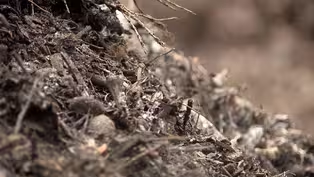
Video has Closed Captions
Clip: S21 Ep4 | 7m 35s | Learn how food waste is transformed into healthy compost for garden soil. (7m 35s)
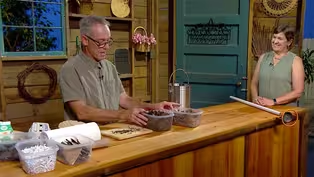
Video has Closed Captions
Clip: S21 Ep4 | 8m 6s | Learn what items can and cannot be composted. (8m 6s)
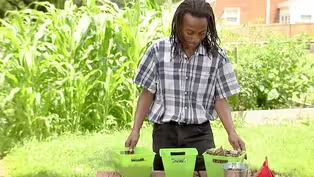
Video has Closed Captions
Clip: S21 Ep4 | 2m 25s | Learn how to make compost on a small scale. (2m 25s)

Video has Closed Captions
Clip: S21 Ep4 | 2m 37s | Learn how soil pH can affect the color of some hydrangeas. (2m 37s)
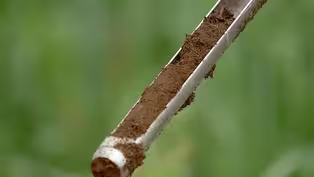
Video has Closed Captions
Clip: S21 Ep4 | 7m 53s | Compare soil samples from different growing sites. (7m 53s)
Video has Closed Captions
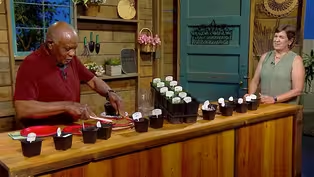
Clip: S21 Ep4 | 11m 15s | Learn about common soil mixes and additives sold at garden centers. (11m 15s)
Video has Closed Captions
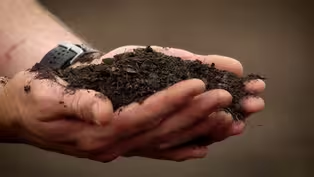
Clip: S21 Ep4 | 26m 46s | Dig in to explore the star of the garden, the soil! (26m 46s)
Providing Support for PBS.org
Learn Moreabout PBS online sponsorship

- Home and How To

Hit the road in a classic car for a tour through Great Britain with two antiques experts.












Support for PBS provided by:
Virginia Home Grown is a local public television program presented by VPM