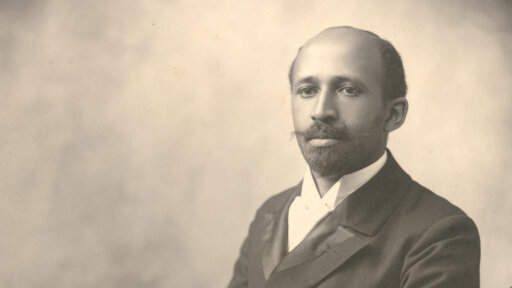
Explore the life and legacy of notable Black scholar and civil rights pioneer W.E.B. Du Bois. From his birth, just five years after the Emancipation Proclamation; to his death, on the eve of the March on Washington in 1963, his legacy as an activist continues to resonate today.
This timeline takes a closer look at W.E.B. Du Bois’ life and the major milestones in his career.
W.E.B. Du Bois is born
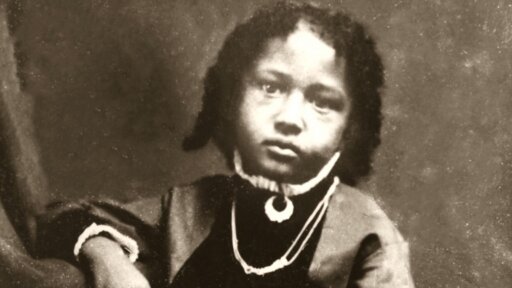
William Edward Burghardt Du Bois was born in Great Barrington, Massachusetts, to Alfred and Mary Silvina (née Burghardt) Du Bois.
Du Bois starts writing for New York Age, New York Globe, Freeman and Springfield Republican newspapers. Western Massachusetts correspondent for New York Age, New York Globe and Freeman.
Graduates as valedictorian from Great Barrington High School.
Relying on money donated by neighbors, Du Bois attended Fisk University, a historically black college in Nashville, Tennessee, from 1885 to 1888. Enters as a sophomore. Receives degree in 1888; teaches in country schools during summers.
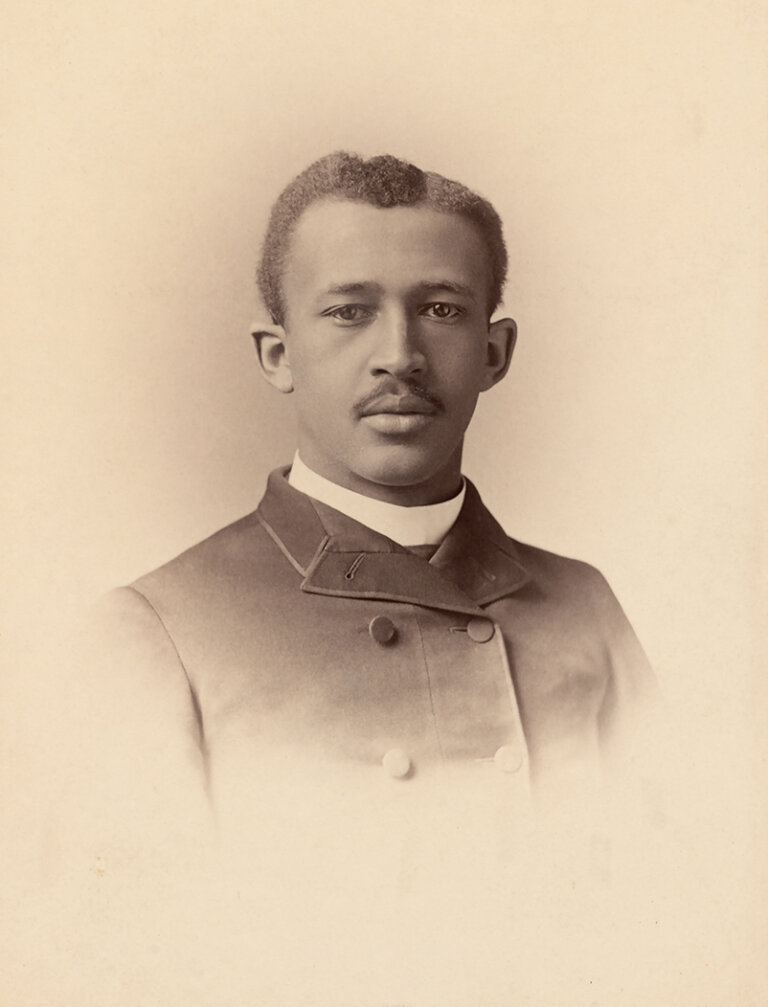
Attends Harvard, where he was strongly influenced by his professor William James, prominent in American philosophy. Enters as a junior. Graduates, B.A, cum laude in a Harvard class of 300; is one of six Commencement speakers, subject: "Jefferson Davis: Representative of Civilization"; attracts national attention.
Du Bois receives a fellowship from the John F. Slater Fund for the Education of Freedmen to attend the University of Berlin for graduate work. Considerable travel in Europe.
While teaching at Wilberforce University in Ohio, Du Bois married Nina Gomer, one of his students.
Du Bois completed his graduate studies; he was the first African American to earn a Ph.D. from Harvard University. Publishes his first major work and dissertation in 1896, “The Suppression of the African Slave-Trade to the United States of America, 1638–1870.”
After two years at Wilberforce, Du Bois accepted a one-year research job from the University of Pennsylvania as an "assistant instructor in sociology" in the summer of 1896. The Philadelphia Negro [Essay]: a sociological and epidemiological study of African Americans in Philadelphia that was written by W. E. B. Du Bois, commissioned by the University of Pennsylvania and published in 1899 with the intent of identifying social problems present in the African American community.
In the August 1897 issue of The Atlantic Monthly, Du Bois published "Strivings of the Negro People", his first work aimed at the general public, in which he enlarged upon his thesis that African Americans should embrace their African heritage while contributing to American society.
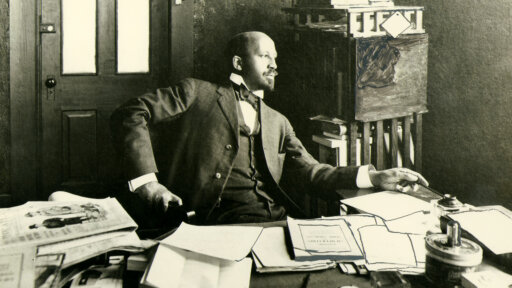
Du Bois was on the faculty of Atlanta University -- first as professor of history and sociology. Organizer of the annual Atlanta University studies of the Negro Problem; editor of their Annual Publications.
The death of his only son, Burghardt. His death was caused by diphtheria and occurred in Atlanta, GA.
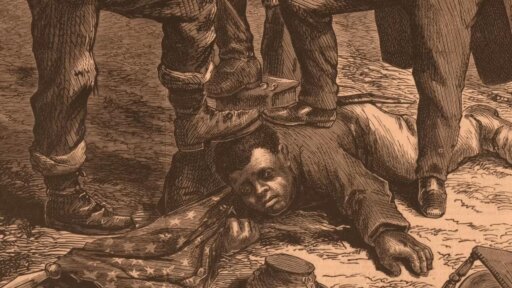
Sunday Apr 23, 1899: Du Bois was inspired to greater activism by the lynching of Sam Hose, which occurred near Atlanta in 1899. Hose was tortured, burned and hung by a mob of two thousand whites. When walking through Atlanta to discuss the lynching with newspaper editor Joel Chandler Harris, Du Bois encountered Hose's burned knuckles in a storefront display. The episode stunned Du Bois, and he resolved that "one could not be a calm, cool, and detached scientist while Negroes were lynched, murdered, and starved." Du Bois realized that "the cure wasn't simply telling people the truth, it was inducing them to act on the truth."
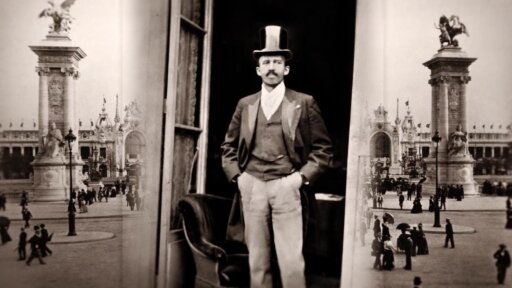
Du Bois was primary organizer of The Exhibit of American Negroes at the Exposition Universelle held in Paris, for which he put together a series of 363 photographs aiming to commemorate the lives of African Americans at the turn of the century and challenge the racist caricatures and stereotypes of the day.
Du Bois published "The Souls of Black Folk"
In an effort to portray the genius and humanity of the black race, Du Bois published The Souls of Black Folk,, a collection of 14 essays. The book contains several essays on race, some of which had been published earlier in The Atlantic Monthly. To develop this work, Du Bois drew from his own experiences as an African American in American society.
Du Bois and several other African-American civil rights activists – including Fredrick L. McGhee, Jesse Max Barber and William Monroe Trotter – met in Canada, near Niagara Falls.There they wrote a declaration of principles opposing the Atlanta Compromise, and incorporated as the Niagara Movement in 1906. He served as founder and General Secretary of The Niagara Movement.
Riots broke out in Atlanta, precipitated by unfounded allegations of black men assaulting white women. This was a catalyst for racial tensions based on a job shortage and employers playing black workers against white workers. Ten thousand whites rampaged through Atlanta, beating every black person they could find, resulting in over 25 deaths. Du Bois' family was in Atlanta during this, and he rushed home from research he was doing in Alabama.
Du Bois soon founded and edited another vehicle for his polemics, The Horizon: A Journal of the Color Line, which debuted in 1907. Freeman H. M. Murray and Lafayette M. Hershaw served as The Horizon's co-editors.
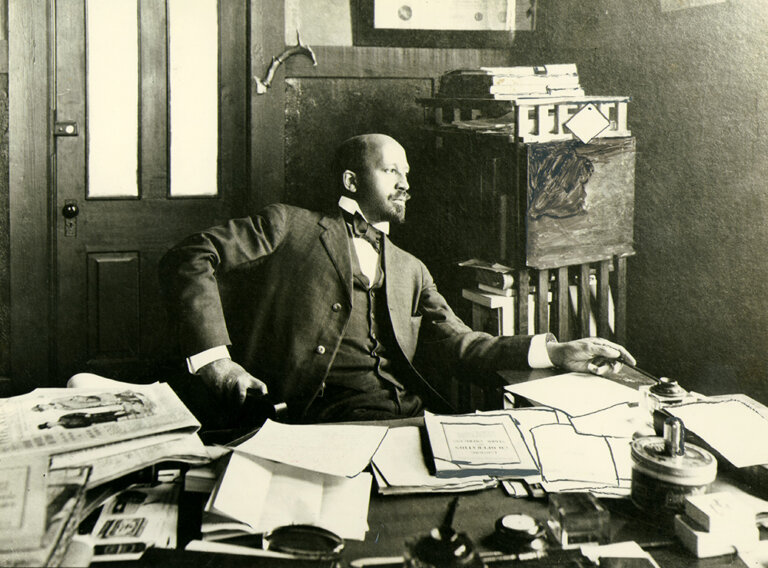
The NAACP is established
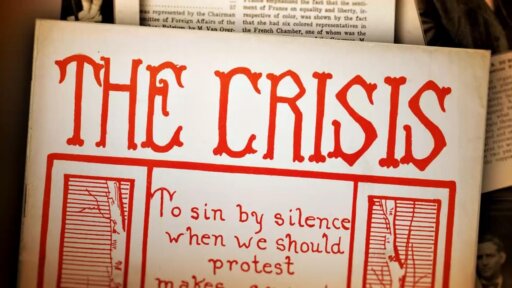
Helps establish the NAACP and serves as editor of its journal, “The Crisis,” for the next 20 years. Joins Socialist Party. Among original founders and incorporators of The National Association of the Advancement of Colored People (NAACP). NAACP leaders offered Du Bois the position of Director of Publicity and Research. He accepted the job in the summer of 1910, and moved to New York after resigning from Atlanta University.
Publishes “The Souls of White Folk,” a critique of white supremacy and racism.
Du Bois writes the "Star of Ethiopia" Pageant.
Du Bois used his influential role in the NAACP to oppose a variety of racist incidents. When the silent film The Birth of a Nation premiered in 1915, Du Bois and the NAACP led the fight to ban the movie, because of its racist portrayal of Black Americans as brutish and lustful.
Support U.S. entry into World War; fights mistreatment of Negro troops; leads in efforts to enroll Negro officers.
When the war ended, Du Bois traveled to Europe in 1919 to attend the first Pan-African Congress and to interview African-American soldiers for a planned book on their experiences in World War I.
Du Bois published Darkwater: Voices From Within the Veil, the first of three autobiographies he would write. Darkwater: Voices from Within the Veil is a literary work by W.E.B. Du Bois. The text incorporates autobiographical information as well as essays, spirituals, and poems that were all written by Du Bois himself. This includes the afro-futuristic sci-fi short story, "the Comet."
Founder and editor of The Brownies' Book, a magazine for children.
Du Bois traveled to Europe to attend the second Pan-African Congress. The assembled black leaders from around the world issued the London Resolutions and established a Pan-African Association headquarters in Paris. Under Du Bois's guidance, the resolutions insisted on racial equality, and that Africa be ruled by Africans (not, as in the 1919 congress, with the consent of Africans).
President Coolidge designated Du Bois an "Envoy Extraordinary" to Liberia and – after the third congress concluded – Du Bois rode a German freighter from the Canary Islands to Africa, visiting Liberia, Sierra Leone and Senegal.
Du Bois published Dark Princess, a romance novel. The novel explores the beauty of people of color around the world. This was part of Du Bois' use of fiction to explore his times in a way not possible in non-fiction history. He expressed fully imagined lives of his characters, using them to explore the richness and beauty of Black culture.
Du Bois leaves "The Crisis" and the NAACP
Du Bois did not have a good working relationship with Walter Francis White, president of the NAACP since 1931. That conflict, combined with the financial stresses of the Great Depression, precipitated a power struggle over The Crisis. Du Bois, concerned that his position as editor would be eliminated, resigned his job at The Crisis and accepted an academic position at Atlanta University in early 1933. Breaks with the NAACP after he supports a form of “separate but equal” as a legitimate strategy for Black self-advancement. He resigns from The Crisis and Board of NAACP.
Du Bois returned to Atlanta University's sociology department. Chairman, Department of Sociology, Atlanta University.
Du Bois published his magnum opus, Black Reconstruction in America. The book challenged the standard academic view of Reconstruction at the time, the Dunning School, which contended that the period was a failure and downplayed the contributions of African Americans. Du Bois instead emphasized the agency of Black people and freed slaves during the Civil War and Reconstruction and framed the period as one that held promise for a worker-ruled democracy to replace a slavery-based plantation economy.
Co-Chairman, Council on African Affairs. The Council was a volunteer organization founded in 1937 in the United States. It emerged as the leading voice of anti-colonialism and Pan-Africanism in the United States and internationally. Paul Robeson served as the CAA's chairman for most of its existence.
Dusk of Dawn: An Essay Toward an Autobiography of a Race Concept, Du Bois's second autobiography, was published.
Turning down job offers from Fisk and Howard, Du Bois re-joined the NAACP as director of the Department of Special Research.
Du Bois published Color and Democracy: Colonies and Peace. This book weaves into the fabric of a world peace founded on democracy several seemingly separate problems. The first is that of the various colonies and their colored peoples; then come the problems of foreign investment for profit; the question of the expansion of democratic government for the masses of men; the role of Russia and her ideology in the post-war world, and the feasibility of world government through mandates and missions. Out of the solution of these problems, Du Bois believes will come the only trustworthy foundation on which permanent peace can be built.
United Nations is established
Du Bois was a member of the three-person delegation from the NAACP that attended the 1945 conference in San Francisco at which the United Nations was established.
Du Bois published The World and Africa. Against a background of the vast contributions of ancient and modern Africa to world culture, peace and industry, Du Bois documents the historic injustices of the rape of Africa from the slave trade to its partition by the colonial powers.
Du Bois' association with prominent communists made him a liability for the NAACP, especially since the FBI was starting to aggressively investigate communist sympathizers; so – by mutual agreement – he resigned from the NAACP for the second time.
Nina Gomer dies.
At the age of 82, Du Bois ran for U.S. Senator from New York on the American Labor Party ticket and received about 200,000 votes, or 4% of the statewide total.
Du Bois is indicted by the U.S. government for his association with the Peace Information Center, an organization that advocates for nuclear disarmament. The charges are dropped but he is still banned from traveling outside the US.
Du Bois marries Shirley Graham.
Du Bois publishes Peace Is Dangerous. Partially given as speech to National Council of Arts, Sciences and Professions on September 28, 1951 and at Community Church in Boston. Concerning peace, colonial imperialism, and United States' foreign policies in the Cold War.
Du Bois publishes In Battle for Peace: The Story of My 83rd Birthday. One of the most neglected and obscure books by W. E. B. Du Bois, In Battle for Peace frankly documents Du Bois' experiences following his attempts to mobilize Americans against the emerging conflict between the United States and the Soviet Union.
Received International Peace Prize from the World Council of Peace.
Du Bois invited to Ghana to participate in their independence celebration, but he was unable to attend because the U.S. government had confiscated his passport in 1951.
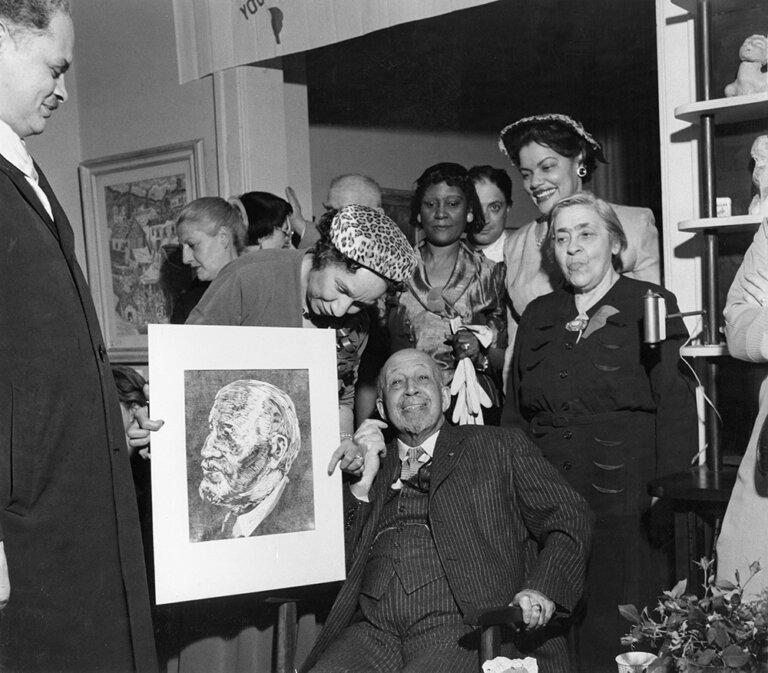
In 1958, Du Bois regained his passport, and with his second wife, Shirley Graham Du Bois, he traveled around the world, visiting Russia and China. In both countries he was celebrated. Du Bois later wrote approvingly of the conditions in both countries.
Du Bois takes residence in Ghana
At the age of 93, Du Bois and his wife traveled to Ghana to take up residence. Invited by President Nkrumah, Director of Encylopaedia Africana Project.
Du Bois joins the Communist Party. Around that time, he wrote: "I believe in Communism. I mean by Communism, a planned way of life in the production of wealth and work designed for building a state whose object is the highest welfare of its people and not merely the profit of a part."
Du Bois writes his third and final autobiography. "The autobiography of W.E.B. Du Bois; a soliloquy on viewing my life from the last decade of its first century."
The United States refused to renew Du Bois' passport, so he made the symbolic gesture of becoming a citizen of Ghana.
W.E.B. Du Bois dies
Du Bois' health declined during the two years he was in Ghana, and he died on August 27, 1963, in the capital of Accra at the age of 95.
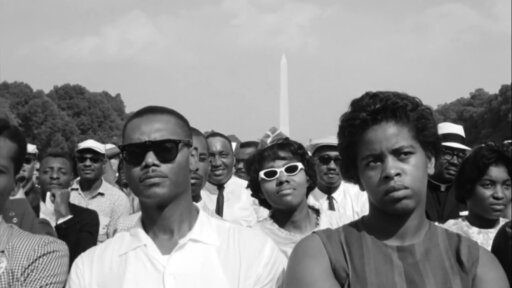
At the March on Washington, speaker Roy Wilkins asked the hundreds of thousands of marchers to honor Du Bois with a moment of silence.