Informed Consent and Medical Research


LUCKY SEVERSON, correspondent: A bittersweet moment for members of the Havasupai tribe, retrieving blood samples they gave to Arizona State University (ASU) 20 years ago.

CARLETTA TILOUSI: We felt very strongly that blood samples are sacred to all Native Americans, a major part of our spiritual, cultural, and religious identity. We are going to take them back down to Supai Canyon where they can finally rest in peace.

SEVERSON: Supai Village is actually at the bottom of the Grand Canyon, where about 600 Havasupai continue to weave baskets and farm and struggle against the diabetes that has afflicted so many of their tribe.

REX TILOUSI: I began to see the sickness come to my elders. Some of my elders didn’t have no legs. They were helpless.

post01-informedconsentSEVERSON: So the Havasupai tribe approached a scientist at ASU who took blood samples of about 200 tribal members.

DANNY WESCOGAME: Thirty-two people have passed on since this whole thing began, and it hurts, hurts a lot to me.

SEVERSON: Scientists at ASU could not find the link to congenital diabetes, but author Rebecca Skloot says they didn’t stop there.

REBECCA SKLOOT: Those samples were later used without the tribe’s knowledge for research into schizophrenia, alcoholism, the effects of intermarriage, and a lot of the stuff was stuff that they either found to be stigmatizing or that actually went against some of their own belief systems.

SEVERSON: The Havasupai received a cash settlement in a rare win for cell donors. There are hundreds of millions of bio samples, such as blood and tissue stored in bio banks in this country. But the answers to the tough religion and ethics questions about informed consent and compensation haven’t kept up with the science. Bioethicist Jonathan Moreno says even the science-fiction writers underestimated the state of the art as it is today.

PROFESSOR JONATHAN MORENO (University of Pennsylvania): You know, our science-fiction writers anticipated, like H.G. Wells at the end of “War of the Worlds,” the importance of bacteria in the late nineteenth century. People were really taken by that. The science-fiction writers didn’t anticipate that our cells themselves would be the subject of experiments.
post03-informedconsent
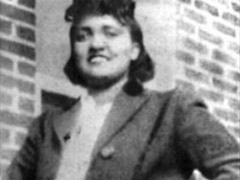
Henrietta Lacks

SEVERSON: And nowhere is there a better example of the importance of human cells than those cancer cells taken by doctors in 1951 from Henrietta Lacks as she lay dying of cervical cancer.

MORENO: They are the most prolific cells. Nobody knows exactly why. They have some characteristics that haven’t been identified, but they don’t seem to age in every passage. So far as we know those cells really are immortal.

SKLOOT: Henrietta’s cells grew sort of unlike anything anyone had seen. They doubled their numbers every 24 hours.

SEVERSON: Rebecca Skloot wrote the best-selling book called “The Immortal Life of Henrietta Lacks.” She says Henrietta’s cells, also known as Hela cells, put end to end would wrap around the earth three times and weigh more than 50 million metric tons. But what’s most amazing is their contribution to medical science.

SKLOOT: They have literally saved millions of lives, and pretty much everybody out there has benefited in some way from research on her cells. They were used to develop the polio vaccine. They went up in the first space missions to see what would happen to human cells in zero gravity. Her cells were the first ever cloned.

SEVERSON: Henrietta’s cells also made many scientists and entrepreneurs rich.

SKLOOT: Her family to this day lives in quite a bit of poverty. They can’t afford health insurance so, you know, the scientists would come to get samples from the family and, you know, her sons would say things like, “If our mother was so important to medicine, why can’t we go to the doctor?”
post05-informedconsent
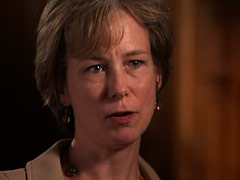
Maggie Little

SEVERSON: Maggie Little, director of the Kennedy Institute of Ethics, says the courts almost never side with individuals whose bio samples become commercially profitable.

MAGGIE LITTLE (Kennedy Institute of Ethics): In general, when courts have looked at somebody who gave a tissue sample, and the pharmaceutical company later did find a commercial application for it, the courts ruled that the individual who gave the sample didn’t have any intellectual property rights or any claim to profit-sharing.

SEVERSON: Rebecca Skloot spent 10 years researching and writing her book and eventually won the trust of Henrietta’s daughter, Deborah, who didn’t find out about her mom’s amazing cells until researchers asked the family for samples 25 years after Henrietta died.

SKLOOT: Deborah was a very deeply religious woman, and she very much believed her mother’s soul was alive in these cells, and so the scientists would come to the house and take samples, and she would say things like, you know, “Can my mother rest in peace if you’re sending these bits of her up to the moon and injecting them with chemicals? Can she feel that somewhere? Does she then get sick in the afterlife?”

SEVERSON: She became so distraught worrying about her mother Deborah’s cousin, Gary, offered to perform a kind of exorcism.
post04-informedconsent
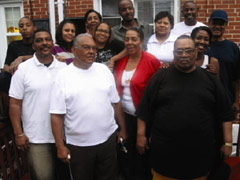
The Lacks family

SKLOOT: He just stood up and put his hands on her head and started singing and praying and, you know, saying, “Lord, you’ve got to take the burden of the cells from this woman. She can’t take it anymore. It was an enormous relief for her.

SEVERSON: Today there are laws requiring consent from people like Henrietta Lacks, but they apply only to research that is federally funded, and there aren’t clear laws regarding stored tissues. But Maggie Little says if someone’s cells are used for specific research end up being profitable, then the donor should be compensated.

LITTLE: Sometimes individuals have biologies that are especially interesting, and their version of a cancer cell or their version of a liver cell is of enormous commercial value, and then it does seem to me that fairness indicates a little bit of profit-sharing.

SEVERSON: And ethicists like Jonathan Moreno feel that privacy and confidentiality are absolutely essential to protect those who do give.

MORENO: If you take some of my tissues, my cells, and do genetic analysis, you’re learning not just about me, but in some measure at least you’re learning about my relatives. So we have to be very sensitive to the prospects of stigmatization.

SEVERSON: As for informed consent and defining exactly what the researcher is looking for:

post02-informedconsentMORENO: What drives a scientist is the unexpected, and that’s what you can’t capture in informed consent. Probably the better model is the idea that really if my cells are being taken as part of my therapy, and they might be useful in science, I should really gift them. They should—I should give them away to the scientific community so that they can be used productively.

SEVERSON: Deborah might have argued that the family should have received some remuneration for Henrietta’s fertile cells, but she finally came to terms with her mom’s legacy.

SKLOOT: She really came to believe that Henrietta was chosen as an angel to live on in these cells and take care of people and, you know, if you look at the Bible it says the Lord—believers will be granted immortal life, and you never know what form they’ll come back in.

SEVERSON: As for the Havasupai, they’ve taken their sacred blood samples back down to the canyon, where the tribe says they can rest in peace.

For Religion & Ethics NewsWeekly this is Lucky Severson in Phoenix, Arizona.
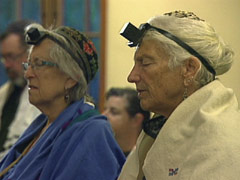
Norman Fischer on Meditation


KATE OLSON, correspondent: It’s early morning along the Pacific Coast. Norman Fischer, a Buddhist priest who’s been teaching meditation for over three decades, opens a day of silent meditation for practitioners of Zen Buddhism.

NORMAN FISCHER (speaking to group): Thank you all for coming, and I hope that everybody has a good day, a peaceful day, a day in which whatever needs to arise in your heart will do so.

OLSON: Other days, Fischer is at Google in Silicon Valley offering the same meditation practice to employees participating in a class called “Search Inside Yourself.”

FISCHER (speaking to class): Lengthen the spine, open the chest, and let your body pull itself up.

post03-fischerOLSON: Or he may be at a Jewish contemplative retreat sharing the practice with Jews seeking to experience their own faith tradition more deeply.
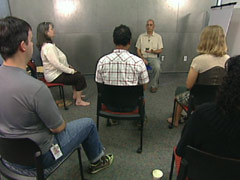
FISCHER (speaking to retreat): The practice that we’re doing on our cushions is fundamentally the practice of just feeling our life.

OLSON: The various hats that Fischer wears are part of his effort to help enrich everyday life experience by sharing the spirit and practice of Zen with the world.

FISCHER: If you really do the meditation practice and you continue that over time, your life really changes. You really have a sense of purpose, you really have a much greater sense of connection to other people, and loving kindness and interest in others and wanting to help others. Nothing makes us feel better about our own lives than that.

OLSON: At Google, Fischer is helping employees increase their so-called emotional intelligence on the job. Since the class began just over two years ago, close to 600 employees have taken it with the full blessing of management.

post04-fischerFISCHER: At Google it’s very explicit. Our brief is let’s get smarter about our feelings and emotions. Let’s go deeper than we usually go for the purpose of getting closer to ourselves and being able to be more empathetic and more understanding of others, and that’s the whole realm of emotional intelligence. There is no better technique or practice for going into and working through and really understanding our heart and the hearts of others than meditation practice.
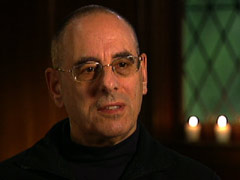
OLSON: Developing emotional intelligence is not a cognitive process, Fischer says. Understanding the heart calls for another way.

FISCHER: This doesn’t work by thought and will. It doesn’t disregard thought and will, but thought and will are not the engine that makes this go. The engine that makes this go is taking a step back and trusting the body, trusting the breath, trusting the heart. We’re living our lives madly trying to hold onto everything, and it looks like it might work for awhile but in the end it always fails, and it never was working, and the way to be happy, the way to be loving, the way to be free is to really be willing to let go of everything on every occasion or at least to make that effort.

So the practice really works with sitting down, returning awareness to the body, returning awareness to the breath. It usually involves sitting up straight and opening up the body and lifting the body so that the breath can be unrestrained. And then returning the mind to the present moment of being alive, which is anchored in the breath, in the body.

post02-fischerThen, of course, other things happen. You have thoughts, you have feelings. You might have a pain, an ache, visions, memories, reflections. All these things arise, but instead of applying yourself to them and getting entangled in them, you just bear witness to it, let it go, come back to the breathing and the body, and what happens is you release a whole lot of stuff in yourself. A whole new process comes into being that would not have been there if you were always fixing and choosing and doing and making. This way you’re allowing something to take place within your heart.
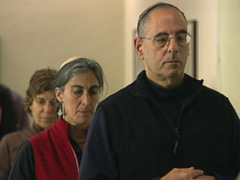
OLSON: Fischer says the meditation practice, which includes meditative walking, is not an escape from difficult or painful emotions and negative thoughts, but a way to be present, and not attached, to whatever arises. This opens a whole new way of seeing oneself and others.

FISCHER (speaking to class at Google): I begin to notice others are rather like me and I’m rather like them. There’s not so much difference, you know. I’m scared. Well, probably they are too. I have yearnings or longings. Well, maybe they do too. So maybe there’s more of a felt sense, not a theoretical sense, but a felt sense of actual kinship.

OLSON: And this has implications that go beyond working more effectively for a company.

FISCHER: You end up coming to a place where it becomes more and more difficult to be harmful to others. It becomes more and more difficult not to be kind, more and more difficult to push for a result and not notice the consequences.

OLSON: At the Jewish retreat, Fischer teaches meditation to help Jews experience their own faith more deeply. He draws on traditional Jewish language and imagery in his teaching, such as Jacob’s ladder.

FISCHER (speaking to retreat group): A ladder rooted in the earth and stretching up toward heaven—that’s the human body. That’s the spine is that ladder.

post05-fischerOLSON: Fischer, who is a practicing Jew, feels much of the teaching about Judaism today doesn’t do enough to support a personal connection with God. Meditation not only deepens this relationship but helps one see God in everything, as he says the Torah teaches.

FISCHER: When we sit we recognize the crucial, divine importance of absolutely everything that arises—every thought, every feeling, every breath, every unspeakable, unnameable impulse. But also we recognize the ultimate importance of the others—of the sky, of all the sounds inside and outside the room. As the mind becomes a little more quiet the sacredness of everything within and without becomes clear to us.

OLSON: So how can a practice from Zen Buddhism, a tradition that does not speak of God, help practitioners from a tradition where God is central?

FISCHER: Buddhism in general is not committed to God or no God. It’s committed to awakening. So taking this practice from Buddhism and applying it to Judaism, it’s a way to go deeper into our heart, our mind, our consciousness and in a Jewish context, when you do that I think, at the bottom, you find the divine. You find God, and there’s nothing in this practice nor is there anything in Buddhist or Zen thought that would deny this possibility.

post06-fischerOLSON: Fischer, who has served as abbot of the San Francisco Zen Center, says it’s important on the spiritual journey not to ignore the emotional realm, which is sometimes overlooked in religious practice.

FISCHER: When we think we’re going to go from, you know, everyday life straight through to the divine, leaving out maybe all the many needs and feelings and human foibles and frailties that are actually there, they need to be processed and dealt with.

(speaking to retreat group): The thing about this practice that is, to me anyway, so sweet is that we are doing it together. We’re walking the big long line all together, like one person walking.

OLSON: Wherever Fischer teaches, he says the practice is an ongoing contemplation that leads beyond the self to a deep connection and compassion for others and all life.

FISCHER: And if you stay with this practice long enough, you basically will work through all the knots and confusions that your life has sort of set up within you. The practice will help you work through that and see below, below, below, below all of that to the place where you see what’s really important to you, and what really matters to you is that you are alive, and you are alive in a world with others. You really feel like my life is a life of complete connection, and it’s a life of joyful connection and concerned connection, and then you have to act on that.

OLSON: Fischer says the practice he teaches doesn’t conflict with other faith traditions, but can be helpful to anyone on the spiritual journey, a journey he calls “to the bottom of the heart.”

For Religion & Ethics NewsWeekly, this is Kate Olson in San Francisco.

Norman Fischer Extended Interview

“There’s no such thing as a hermetically sealed religion or culture. We human beings have been talking to each other since the beginning, and every time we talk to each other we change each other.” Watch more of correspondent Kate Olson’s interview about meditation with Zen Buddhist priest Norman Fischer.


George Lopez: Peacemaking and Aid to Terrorists

Watch University of Notre Dame peace studies and political science professor George Lopez, currently a senior fellow at the US Institute of Peace, comment on the consequences of the Supreme Court’s recent decision upholding a federal law that makes it a crime to provide “material support” to foreign terrorist organizations, even if the help takes the form of training for peacefully resolving conflicts. Interview by Julie Mashack, Religion & Ethics NewsWeekly associate producer for news.


Howard Rhodes: “A Closely Managed Mess” in Afghanistan

How should ordinary citizens concerned about the war in Afghanistan respond to the recent controversy and change of command in the International Security Assistance Force? For most people, the basic judgments about recent events are uncontroversial. President Obama acted responsibly as commander in chief of the United States military by removing General McChrystal and replacing him with General Petraeus. General McChrystal’s actions threatened to undermine the war effort by revealing deep rifts between the military officers who put strategy into action and the civilian authorities who craft the policies and negotiate the broader political relationships that, in the end, are essential to our success in this conflict. General McChrystal was justly punished for his indiscretion. General Petraeus was a wise choice to replace him insofar as General Petraeus will insure the maximum amount of command continuity possible in such a difficult and changing situation.

post-rhodesWhile most of these judgments are uncontroversial, many people still regard the upheaval of these last few days as significant and momentous. For many citizens, these events call attention to—and provoke anxiety about—what they regard as the fundamental confusion of our counterinsurgency effort as a whole. According to recent polls, the majority of Americans believe things are going badly in Afghanistan. They are unclear about exactly what state of affairs our military and civilian leadership are trying to bring about. They find it difficult to express in a concrete, satisfying way what “victory” might look like. For this reason, many Americans are increasingly critical of the war and distrustful of the claims ouir leaders make about it. The momentary spike in popular confidence at the beginning of the troop surge in Afghanistan has collapsed. Upon us are the days when the public must come to terms with the demands of a slow, expensive, and inglorious counterinsurgency conflict that promises no ecstatic victory, but only a closely managed mess with profound security implications. The recent fluctuation in leadership in this conflict is, of itself, relatively insignificant. The larger frustration to which it points will be with us for some time.

Democratic publics are notoriously bad at remaining dedicated to “small wars,” especially if they are fought far away, do not promise fundamental security transformations, and involve ongoing casualties. It is difficult for most citizens to support a war if they cannot reasonably believe that the future result will be a cooperative, basically liberal regime capable of establishing and abiding by the rule of law. For the most part, no one expects a situation of this sort to develop in Afghanistan or Pakistan in the near future. Neither of these countries have the social prerequisites upon which liberal regimes have historically depended. Furthermore, American citizens perceive intuitively that the people of Afghanistan and Pakistan are unlikely to believe that cooperating with the United States is in their long term interests, even if it is.

Barring a “victory” in this sense—where the governments of these countries are empowered effectively to contain or destroy the recalcitrant elements of their societies and impose the rule of law—what the United States faces is a future of quasi-imperial “management.” This situation, in which US military personnel play an ongoing role in subduing insurgent forces in distant lands (and often with only the tacit cooperation of local governments), is one that democratic publics tend to reject in principle (as overtly imperialistic) and in practice (as involving more problems than clear gains). Many citizens regard large-scale military activities of this sort as a threat to democracy itself. Our ongoing involvement in the conflict in Afghanistan seems therefore to threaten more than the lives and well-being of young soldiers; it seems to threaten the very moral constitution of American democracy itself.

But what, really, are the choices here? Even granting the legitimacy of the above concerns (which may be both premature and misplaced), the United States still faces a situation in central Asia where many people are actively working to carry out terrorist attacks in the United States and Europe. It still faces a situation where the Pakistani government could be overthrown and its nuclear materials seized by unscrupulous people. As legal scholar Philip Bobbitt has argued powerfully in his book Terror and Consent, if a terrorist organization were to acquire and detonate a nuclear device against civilians, it would fundamentally transform democratic politics as we know it.

This places the citizens of the United States in a clear bind. In order to secure the situation in central Asia as effectively as possible, they must accept a role for their military in the imperial management of an inherently disappointing situation that will require blood, guns, and money for an indefinite future. In choosing to commit to that situation, however, they must evolve new forms of democratic self-awareness that will prevent their society from accepting such imperial self-assertion too easily.

The controversy over General McChrystal will change little in Afghanistan. It is, if anything, a distraction. It distracts citizens by making them believe the war will be “won” or “lost” depending upon the military leadership that guides it. The real challenge is whether Americans understand adequately the political future they are committing themselves to in the decisions of their civilian representatives. To succeed in Afghanistan, US citizens must look beyond the vicissitudes of military leadership to the form of ordered peace they desire their military power to bring about.

Howard Rhodes is assistant professor of religious studies at the University of Iowa, where he teaches in the areas of international relations and the ethics of war.

George R. Lucas Jr: Petraeus, Afghanistan, and the Ethics of Military Anthropology

post-lucasGeneral David Petraeus pioneered a program to enlist the aid of anthropologists and other academic social scientists to advise on ethics and local cultural practices in Iraq, where the program met with some success despite the controversy it generated back home [see Anthropologists in Arms: The Ethics of Military Anthropology (AltaMira Press, 2009)]. The program has had limited presence in Afghanistan, but might now be “ramped up” as Petraeus takes direct charge of that conflict. In every respect, he is the most astute military leader we have at present, and President Obama was wise to call on him for what will undoubtedly be the toughest assignment of his career.

George R. Lucas Jr. is Class of 1984 Distinguished Chair in Ethics at the US Naval Academy’s Vice Admiral James B. Stockdale Center for Ethical Leadership.

Anthony F. Lang Jr: Authority, Afghanistan, and Obama

post02-lang
When President Obama fired General Stanley McChrystal as force commander in Afghanistan, at one level he simply exerted his constitutional authority as commander in chief of the US military. Military officers serve at the pleasure of the president. But at a deeper level, the decision shines a light on the complexity of authority in warfare, and it is at this deeper level that the just war tradition can be of some help.

For a war to be just, one of the fundamental criteria remains that it be waged by the proper authority. For some philosophers, this criterion has receded in importance in place of just cause or right intention; such positions tend to reflect the increasingly cosmopolitan sentiments of philosophers who write on ethics and international affairs. They no longer believe that the nation state can provide proper authority in any context, so there is no proper authority criterion any longer.

Yet the just war tradition has long been focused on the centrality of authority. From Augustine of Hippo in the fourth century through Thomas Aquinas in the thirteenth century to Hugo Grotius in the seventeenth century, the decision to use violence must be disciplined by the fact that only legitimate authorities can use this most coercive of methods of politics.

And no single criterion can trump any other. The just war tradition forces us to think about all of the criteria at the same time—just cause, right authority, right intention, etc. To privilege one above the other distorts the essentially political nature of the tradition.

Determining the proper authority in using force remains a central part of determining whether or not the use of force is just. This brings us back to the current controversy. General McChrystal, at least according to this week’s article in Rolling Stone, had cultivated a reputation for being a maverick. From his days at West Point to his current post, he preferred “getting the job done” to kowtowing to formal rules and procedures. His staff seemed to reflect this attitude, as they were focused on “winning” over being diplomatic or respectful of civilian authority.

This approach plays well in American political culture. It reflects the belief that pragmatic solutions to complicated political problems require cutting through bureaucracy. It also reflects the “Jacksonian” approach to foreign policy described by foreign policy expert Walter Russell Mead: use overwhelming force when threatened and don’t worry about the consequences.

But in this particular war, that attitude creates multiple problems. General McChrystal helped put into place the COIN [counterinsurgency] strategy that relies on creating a political order in Afghanistan that will be accepted by all. Indeed, McChrystal worked hard at ensuring that Afghanistan President Hamid Karzai would be acceptable to the American administration; that is, he understood the importance of creating an authoritative political structure.

Yet McChrystal also resisted the authority of his own command structure, and from the evidence of the magazine article he seemed to encourage a staff culture in which winning was more important than respecting political authority.

Can the just war tradition help us here, too? It helps in that it forces us to think carefully about whether winning or respecting authority is more important in this conflict. If the justness of the cause is paramount, McChrystal is right: the only criterion is whether or not the US can win. But if President Obama is right, then it matters who is making decisions. It matters that the US has a system in which civilians dictate decisions to military commanders. It matters that the political system is one in which the populace elects someone who appoints military commanders. It matters that the decision to put young men and women in harm’s way is not based solely on whether the cause is just, but whether there is someone who is making that decision who is responsible to a population that has a choice in an electoral contest.

Just wars require right authorities. President Obama is the right authority. For now, at least, his decision conforms to the standards of the just war tradition. One can only hope that he and others in his administration continue to reflect on whether or not this war is just.

Anthony F. Lang Jr. is senior lecturer in the School of International Relations at the University of Saint Andrews, where he teaches on ethics and the use of force.

Adoption Ethics


BOB FAW, correspondent: Life is peaceful now for the Harshaw family since their eight-year-old adopted son Roman has been at a residential facility where he is being helped with his escalating violent behavior. Last year Roman tried to drown his sister, Grace, in their swimming pool. Another time, says his mother, Roman…

JULIE HARSHAW: …got mad because he wanted her to continue to play with him, and so he went over and found a two-by-four that was on the side of the yard and came up behind her and was going to hit her over the head to stop her from leaving. It would have killed her. I screamed at her to run, and Roman, you know, two minutes later didn’t even know what he had done.

FAW: The Harshaws adopted Roman from a Russian orphanage when he was 18 months old. They were told he was healthy, but as he got older Roman became hyperactive and aggressive. Eventually he was diagnosed with fetal alcohol syndrome, leaving him with the mental capacity of a three-year-old.

post02-adoptionethicsJULIE HARSHAW: He gets frustrated very easily, and when he gets frustrated or mad he basically can’t control any of those emotions.

FAW: Roman has punched holes in walls, nor does he sleep much. To keep him from wandering off, the Harshaws had to install alarms on every door and window. Watching Roman, never knowing what might trigger an eruption, has exhausted this family.

CHIP HARSHAW: Over the last six years, you get worn down. Every day is incredible stress here, and not just for mom and dad but for everybody. We are in a terrible dilemma. We look at him as our son. You know, what would you do if it was your biological child, you know? Is it just because he’s adopted that these questions are posed? To us he’s our son, and we’re fighting for him.

FAW: Other parents who have adopted troubled children from Eastern Europe have taken more drastic measures. Dr. Ronald Federici runs a clinic for families wrestling with difficult adoptions.

DR. RONALD FEDERICI (Developmental Neuropsychologist): I’ve picked up children at the baggage carousel at airports. I’ve had them left in my office, in my office—they drove off. I’ve seen some horrific situations where parents, good people, totally lost it and wound up in prison for murdering their child. The amount of child abuse cases have been enormous.

FAW: When a Tennessee mother packed off her adopted son on a plane back to Russia with only a note, many people were outraged. But others who have walked in that mother’s shoes, were more understanding.

post06-adoptionethicsJULIE HARSHAW: My first reaction was that I could empathize with her, knowing that she must have been going through probably a lot of the same things that we go through, and certainly don’t condone how it was done.

FAW: You could understand?

JULIE HARSHAW: I could understand, and unfortunately, people like to judge you before they know what you’re going through.

FAW: Eighteen-year-old Elyana identifies with that little boy sent back home alone to Russia. She knows first-hand what it’s like to be cast away.

ELYANA GOLDWATER: When I heard about the Tennessee issue, I thought, “This is not a store. You can’t buy and return.”

FAW: Elyana was first adopted in 2000 by a family that wanted to help someone less fortunate. But it was not a good match, and the parents halted, or what caseworkers would say, disrupted the adoption.

GOLDWATER: It felt really, really bad, an it feels really bad right now, too.

FAW: It does leave scars?

GOLDWATER: It does, it does.

FAW: Elyana’s pain, her longing, was captured in a poem she later wrote.

GOLDWATER (reading poem): When I was little, little as you, I had a dream I thought would never come true. I dreamed of a family that would fill my heart with love.

post03-adoptionethicsFAW: For “disrupted” children, the wounds are lasting.

FEDERICI: Permanently scarred by having the hope of an attachment and then the disruption. The concern that I have on a lot of families is that when they adopt they may not always see it as a permanency nowadays, because there’s a lot of openings or availability to disrupt adoptions. Many of the agencies who know they may get sued will say we’ll take the child back.

JANICE GOLDWATER (Adoptions Together): The issue is how much a parent claims a child as their own, and so when parents claim their biological children as their own it comes naturally. We’re programmed hormonally to claim our children when they’re born. When we adopt children, it’s more of a process, and so once a parent has claimed a child as their own, you rarely to never see them give up on that child.

FAW: Janice Goldwater, who runs an adoption agency in Maryland, is Elyana’s mother. Elyana was adopted a second time by the Goldwater family in 2000 when she was eight. Janice found out everything she could about Elyana and knew the family would have to invest time and money in helping Elyana heal. When it comes to adoptions, she says, the best intentions are not enough. Love does not conquer all.

GOLDWATER: We actually had social workers that said, you know, as we looked at different children, “Oh, she just needs love. She just needs some love. She’s had really difficult years and just needs some love.”

FAW: And that’s naïve?

post04-adoptionethicsGOLDWATER: That’s very naïve. That’s very naïve.

FAW: Who is morally responsible, then, for the outcome of an adoption?

(speaking to Janice Goldwater): Morally, the parent has a responsibility to find out as much as he can.

GOLDWATER: Absolutely.

FAW: And the agency morally has a responsibility to reveal as much as they can.

GOLDWATER: To share everything. That’s right.

FAW: What’s the reality?

GOLDWATER: Families do get a tremendous amount of information, and in, you know, some instances they don’t.

FAW: The Harshaws, who spent over $25,000 to adopt their son, say they were not informed of Roman’s problems and are suing the adoption agency they used. The agency disputes their claims.

FEDERICI (speaking to patient): You are doing pretty good on this one.

FAW: Dr. Ronald Federici, familiar with hundreds of cases in the last 24 years, says agencies don’t work hard enough at getting the information about these children, and parents don’t push them enough.

post05-adoptionethicsFEDERICI: Both sides have not done due diligence. Families didn’t ask because they were told there’s nothing else available. Parents go in hopeful, trusting, pay a lot of money, but are often ill-informed and don’t do enough due diligence on their end on the part of the agency, and push them harder.

JANICE GOLDWATER: Sometimes nobody knew. Issues emerge as the kids grow. We’ve placed infants that appear to be healthy and grow up and have autism, Asperger’s. You have all kinds of issues that nobody had any idea was going to happen.

FAW: The moral choice facing the Harshaws in regards to their son’s future is difficult. Grace could be in danger if Roman returns home. Daniel, their 13-year-old son who’s stayed away from home because of Roman, may start doing so again. The family stress was so bad Daniel asked to see a therapist. And the Harshaws’ marriage has been severely tested.

JULIE HARSHAW: Chip and I basically are like two ships passing in the night. We don’t see each other, because one person has to control Roman while the other person has the other two. So the family unit’s kind of falling apart.

CHIP HARSHAW: We’ve considered everything, even in our marriage we have, and the truth is that we really need each other because of this issue. At the same time, sometimes it doesn’t feel like you’re married anymore, because of the amount of stress that we’ve become different people because of this situation.

FAW: People who watch this will say, at some point you’ve got to say to yourself we have tried everything, and that being the case we can walk away.

post01-adoptionethicsCHIP HARSHAW: There’s a bond there that has been created. He is our child, and we are his mom and dad. That he knows. That’s all he knows, that we are mom and dad, and to turn our backs on him and to walk away and say there’s nothing else we can do, that’s what is bothersome to Julie and I.

FAW: Even what they’ve done temporarily, putting Roman in a facility where he can get treatment, does not ease this family’s anguish.

JULIE HARSHAW: I was thinking about Roman, I’m thinking about what he’s doing. I’m thinking, about am I a horrible mom for having him there? If I let go of him permanently I don’t think I could ever live with myself. There is that part of him, that little boy, that is there that is trying to love the only way he knows how, and it’s not his fault that he can’t control himself.

FAW: When he does come home, what are you going to do?

GRACE HARSHAW: Give him a hug.

FAW: A big hug?

GRACE HARSHAW: A squeezie hug.

FAW: Ultimately, what happens to Roman is uncertain. For Elyana, the prospects are much brighter. Remember that sad poem she wrote? Listen to how it ends.

ELYANA (reading poem): First my heart said never. But now we are family forever.

FAW: Even her name now seems fitting. Translated, she says, Elyana means “God has answered.”

For Religion & Ethics Newsweekly, this is Bob Faw in Silver Spring, Maryland.

Jailhouse Chaplain


SAUL GONZALEZ, correspondent: Los Angeles County’s Twin Towers Correctional Facility: it’s one of the largest jails in the country. Behind its walls, over 3,000 men are locked up as their criminal prosecutions continue. Many prisoners are accused of committing murder, rape, and a variety of gang-related crimes. However, this jailhouse is also a house of worship to Dennis Gibbs, a senior chaplain at Twin Towers. His Sunday services are like few others, held in a cell block and closely watched by sheriff’s deputies.

CHAPLAIN DENNIS GIBBS: I think this is a holy place. I believe that we are standing on holy ground. This is a place of reconciliation and healing, and so I really see this as—in many ways this is my parish.

post04-jailchaplainGONZALEZ: Chaplin Gibbs is one of dozens of clergy men and women from a variety of faiths who offer pastoral care and spiritual guidance to the inmates at Twin Towers. Although an Episcopalian, Chaplain Gibbs provides spiritual counseling to all prisoners who approach him, no matter what their particular faith.

GIBBS (speaking to prisoner): Hey, man, how is it going? Good to see you again.

PRISONER: Could you say a little prayer for me and my girl, my baby?

GONZALEZ: Although the chaplain doesn’t condone what these men are accused of doing, he also doesn’t apologize for showing them compassion.

GIBBS (praying with prisoner): God the Holy Spirit be upon you and remain with you forever.

GIBBS: These men are wounded, these men are orphans, and these men are largely forgotten, and I think it’s powerful that we bring church to them and remind them that they are a part of our community, and that they are beloved by God.

CARLOS ORTIZ: You build a bond, I’d say, with the chaplain. You build a bond of friendship.

post03-jailchaplainGONZALEZ: Carlos Ortiz, who’s been at Twin Towers for six months, was recently convicted of drug possession. He says Chaplin Gibbs and other jailhouse clergy help inmates sustain and develop their faith when they need it the most.

ORTIZ: If you don’t have faith, they provide faith. You know, I am a man of faith, so just the fact there is someone that you can talk to, someone that can acknowledge about God, that’s something good for inmates. The situation you are at might not be good, but he makes you realize that you are good spiritually and physically, you are in a good spot.

GONZALEZ: Along with larger worship services, the chaplains spend much of their time holding private one-on-one sessions with prisoners who want to talk to them. Episcopal chaplain Greta Ronnigen says she’s not interested in why the men she ministers to are here.

GONZALEZ: You don’t care what the guys are in here for?

CHAPLAIN GRETA RONNIGEN: No.

GONZALEZ: Why? That seems counter-intuitive.

RONNIGEN: Because I am here for their spiritual support. I am not a lawyer. I am not social services. I’m about where they are with God. I am here to talk to them as they turn, turn away from the dark that has been their past, and they are looking, they are seeking.

GONZALEZ: Some of the prisoners at the center of complex cases, such as murder or gang-related crimes, can be held at Twin Towers for years before they’re convicted and sentenced to state prison. Except in extraordinary circumstances, say when an inmate might be threatening to murder someone, the jailhouse clergy keep confidential what they hear from prisoners, as Chaplain Gibbs explained in a conversation back at the Los Angeles Episcopal diocese.

post02-jailchaplainGONZALEZ: If an inmate says something in a confession and admits to something horrible you don’t have to report it, right?

GIBBS: It’s protected.

GONZALEZ: It’s protected.

GIBBS: Yeah, it’s protected. The nature of confession is that it is a sealed sacrament, and that’s important for the men. Once the priest puts on that stole and enters into the sacrament of the church, it is a completely sealed and confidential conversation, just like it would be with somebody confessing in their church.

GONZALEZ: The presence of the chaplains at county lockups also helps ease tensions and assuage anger, and the sheriff’s deputies welcome that. However, at Twin Towers security and punishment always come before worship, and that’s especially true in the jail’s highest security units or pods.

GIBBS: In this particular unit they are complicated cases. I would say a very good majority of the men are in here for homicide, and there’s a lot of gang-related crimes in this pod.

GONZALEZ: Here, services are often conducted through steel doors and plexiglass, and services, as in the day we were shooting, are often cut short by lockdowns.

GIBBS (speaking to Chaplain Ronnigen): Greta, full lockdown. We gotta go.

post05-jailchaplainRONNIGEN: Sorry, guys. Peace.

GIBBS: Yeah, the jail just went on full lockdown, so we never really know what that is about, just that a full lockdown means that there is no movement whatsoever, so we want to wrap up rather quickly. Hopefully, we’ll be able to get out of the jail.

GONZALEZ: Although he doesn’t get into the details, Chaplain Gibbs knew about confinement long before he arrived at Twin Towers six years ago.

(speaking to Chaplain Gibbs): You were in jail yourself?

GIBBS: I was, yeah. I have lived this despairing life to a great degree, absolutely. My personal response to the call to follow Christ has led me back to the streets where I once was homeless. It’s led me back to the drug-addicted and alcoholic, as I once suffered. It’s led me back to the jails, where I once was a prisoner.

GONZALEZ: I’m sure, Chaplain, when the men at Twin Towers hear about your past, and I’m sure you share some of your past with them, it gives you a particular credibility.

GIBBS: I think it does. I think it changes the conversation to a degree and kind of alerts people that I am not just some do-gooder Christian guy coming in to tell you that Jesus loves you.

GONZALEZ: That’s certainly the case for prisoner David Yi.

DAVID YI: He does give us hope. That he was once an inmate also and now this is where he’s at, helping other people find themselves—it’s just a lot of hope.

GONZALEZ: He’s a good model to follow?

YI: Exactly. Someone you can lean on.

post06-jailchaplainGONZALEZ: One of the Twin Towers prisoners Chaplain Gibbs has gotten to know the best in recent months is also the most unusual. He’s William Manson, a scholarly 80-year-old physician recently convicted of killing his ex-wife. Already in the hospital ward, Manson knows he’ll likely die behind prison walls.

WILLIAM MANSON: I think that the sentence was just under the circumstances. I did the crime. Now I’m paying the price.

GONZALEZ: And spiritually are you armed for this, for this life that you have ahead of you, being a man of faith?

MANSON: I don’t know. I think so.

GIBBS (speaking to William Manson): God bless you.

MANSON: Thank you very much.

GIBBS: Would you like to pray?

MANSON: Yes.

GIBBS: As chaplains we absorb people’s sadness, their brokenness, their wounding, their depth of spiritual despair, and we are very aware of that as chaplains. I think in many ways we hold for these inmates often what they cannot hold for themselves.

(anointing and blessing prisoners): May your wounds be healed.

GONZALEZ: For Religion & Ethics NewsWeekly, I’m Saul Gonzalez in Los Angeles.