| |  |
Interview with Rick Atkinson, author of Crusade: The Untold Story of the Persian Gulf War |
|
|
Here was a man who came to believe that the United States first of all would turn a blind eye to control the forty percent of the world's oil supply. He was a man who believed that he could hunker down and ride out an attack by what was clearly the most formidable coalition of military powers since World War II. He was a man who believed that the West lacked a political will to carry through on its threats. He was a man who miscalculated in taking hostages and then compounded his miscalculations and made Schwarzkopf's military efforts much easier by letting them go in December. Every time he had to make a major strategic decision, Sadam guessed wrong until the end of the war when he guessed right.
Sadam made many strategic miscalculations. He failed to recognize that the world was awash with oil. That Iraqi oil was not critical to the functioning of the Western democracies. There was plenty of oil. He failed to recognize that Arab unity would hold even in the face of attacks on Israel and the potential for Israel to come into the war. He failed to reassure King Fahd of his benign intentions toward Saudi Arabia thereby driving the Saudis into the arms of Washington. Perhaps most importantly, he failed to calculate that the United States was serious about this. That there had been a decision made in Washington that they would go to war. I think he believed that the United States would fold as it had after the bombing of the Marine barracks in Lebanon in 1983 and simply leave. He made one strategic miscalculation after another.
Q: What was the Bush Administration's understanding and policy toward Iraq before the war?
Atkinson: I think the Bush Administration had basically inherited a policy toward Iraq from the Reagan/Bush Administration that saw Iraq as a kind of fire wall against Iranian fundamentalism. And as it developed over the 1980's it became a real political run-a-muck... even though the Iraqis were known to be harboring Palestinian terrorists. Even though they were known to be attempting to buy equipment that could only be used for subversive purposes like building nuclear weapons. Even though it was clear that they were trying to become the foremost power in the Middle East, it was a feeling that even if Saddam Hussein was a thug he was perhaps our thug and controllable through a policy of sticks and carrots.
Saddam had come to power in the late 1960's and no one in Washington had any illusions that this was a Jeffersonian democrat. He was recognized as being incredibly ruthless. There was an appreciation for the fact that he was a man who had used chemical weapons against his own people... who had murdered thousands of people, who kept a gulag that was worthy of the worst despots. Nevertheless there was a feeling that Saddam could be contained somehow and that he was the lesser of evils if compared to the Ayatollah for instance. So there was a policy that evolved during the Reagan Administration that was endorsed in essence by the Bush Administration in which we wagged our finger at Saddam repeatedly.. told him that there were certain things that he could not do but that if he behaved within certain parameters it would be worth his while.
Q: What kinds of things did we do to help Saddam?
Atkinson: Well, in October of 1989 George Bush signed something called National Security Decision Directive 25 which was a secret order that in effect said, the United States believes that we can do business with Saddam and that we will pursue this policy of carrots and sticks that we will assist Saddam in certain ways if his behavior conforms to our aspirations for the Middle East and Iraq in particular. So there were credits extended for instance, agricultural credits worth a billion bucks to help Saddam stabilize his regime and to provide necessities for Iraqis. There were eight hundred export licenses granted to Iraq which allowed them to import certain sophisticated technical items which in fact in some cases could be used for military purposes. This was not unbridled trade in any sense. It was a recognition that Saddam was using some of this stuff for nefarious purposes . Nevertheless, he was given the benefit of the doubt, I think it's clear to say in retrospect that he was a guy who had to be given certain carrots if you wanted him to do what you wanted him to do in the Middle East.
Q: They obviously got Saddam wrong. Why?
Atkinson: Well, I think it's easy to say that we got Saddam wrong in retrospect and it's true we misjudged him in certain fundamental ways. We didn't realize the extent to which he was deluded. Here was a man who calculated and miscalculated on a vast scale. Here was somebody who had a country with a gross national product that was surpassed by the United States by eighty-fold. A man who had a relatively small country the size of California who nevertheless believed that he could go to war with the United States and thirty-seven other countries. It was difficult to conceive I think in Washington that this kind of irrationality could in fact carry one on into a war. I think there was a belief that Saddam was fundamentally rational and fundamentally recognized his position in the Middle East in ways which he clearly didn't. He had a megalomania about him which was difficult to appreciate in the late 1980's and on into 1990 in Washington. Part of the reason I think it's important to recognize that this development of Saddam's megalomania into a bellicosity which would lead him to invade Kuwait came at a time when the United States was completely preoccupied with the fall of the Berlin Wall which had happened in November of 1989, with the collapse of the Warsaw Pact, with the collapse of the Soviet Union. It's not as if Bush and Baker and the rest of the Bush Administration were not occupied with serious and important things. Saddam was a sideshow and I think that's a forgivable sin in retrospect . There was an effort in some corners of Washington to keep an eye on him yet it wasn't the main act. The main act was elsewhere so Saddam's agenda is something that happened without anybody in Washington watching very carefully.
Q: What was April Glaspie telling Saddam?
Atkinson: Well, April Glaspie our Ambassador to Iraq was telling Saddam fundamentally that we were concerned about his bellicose attitude and the various statements that he had issued regarding his intentions toward Kuwait, regarding his disgruntlement with the way he was being treated by the Arab world in general. But it was hardly tantamount to a warning shot across the bow. She had a meeting with Saddam on July 25, 1990 in which she basically said, the United States has no direct vested interest in Arab disputes including the border dispute that Saddam had with the Kuwaitis. In retrospect this was a clear mistake. I think if taken within the context of the time you have to first of all appreciate that she was more or less executing orders that came to her from the State Department. Secondly, again, this was a continuation of a long policy of tough love with Saddam. Warning him that we were watching him and yet telling him that we would continue to be his friend as long as he remained within certain parameters. It was a continuation of basically a tough love policy that the United States had adopted towards Saddam in which we periodically wagged our finger under his nose, but at the same time said, we will continue to be your friend. We'll make it worth your while if you will simply conform to certain standards of behavior. Saddam took this I think in retrospect as if not a green light -- a yellow light and one that he could safely run without consequence.
Q: Why wasn't she or Bush or the Administration firing a stronger warning shot?
Atkinson: Part of it was they were preoccupied with other events. The collapse of the Soviet Union, the collapse of the Warsaw Pact, the emergence of Germany. This occurred two months before -- German unification which was certainly higher on the agenda of world events in terms of American interests then what seemed to be a relatively minor border dispute which had cropped up periodically over the years between Iraq and Kuwait. I think that it can fundamentally be explained just in terms of inattention and a belief that Saddam had for the previous ten years in which we've been courting him adhered to this policy of carrot and stick that we had used toward him where we swaggered a bit, threatened, and then did nothing that we really found offensive. So in retrospect, clearly they misjudged. They misjudged his intentions. It was a bad read on Saddam's character and intentions at the time.
Q: To put this coalition together what did Baker and Bush have to do ?
Atkinson: Well, there was a hundred and sixty-six day campaign of coercive diplomacy that was launched beginning August 2, 1990 in which Bush and Baker and company recognized that first of all the United States needed international support to roll back this invasion of Kuwait. They needed the support of the international community through the United Nations and also bilaterally. Among other things they needed money and there were subsequently two trips -- called `tin cup one `and `tin cup two' by members of the Administration going around collecting cash to underwrite American cost for this . And they raised more than fifty billion dollars. There were various concessions made to different countries whose support was critical for the American led coalition. Egypt for instance had seven billion dollars in various debts forgiven--wiped out. Syria was fundamentally forgiven tacitly of many of the same sins of which Saddam was accused, including state-sponsored terrorism. We were willing to look the other way because we really needed Syria's support. There were concessions made to different countries on different levels depending on their importance to the Allied effort . And this is a process that went on for five months -- right up until the first bomb fell in January.
Q: President Bush--his character, the view he had of his presidency. .....
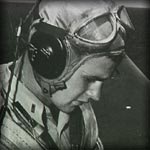
Atkinson: Well, he was a man who was remarkably well versed in virtually every public issue of this day. He was from a patrician background. His father had been a senator. He'd gone to prep school in New England and to Yale . He had been shot down as a Lieutenant in World War II in the Pacific. He was a warrior himself and this very much shaped George Bush's view of the world. His approach to foreign affairs was shaped by thirty years in government. He'd been the Ambassador to China. He'd been Director of the CIA. He'd been Vice President for eight years. He was a man who knew that the world was round. He knew where Kuwait was. He did not have to be told that the strangulation of up to forty percent of the world's oil was a direct and immediate threat to American interests and those of all the western democracies.
Q: What was his view about foreign policy up to that point in his Administration?
Atkinson: He was more active in foreign policy certainly than he was in domestic policy. In domestic policy he had vetoed twenty-one bills from Congress and that was his major approach to legislation. He was not an initiator. He was somebody who didn't know necessarily what he was for. He knew very much what he was against. In foreign policy he was more activist. He realized that the American presidency needed to lead the American foreign policy establishment. Nevertheless, with a couple of critical exceptions, the collapse of the Soviet Union, the reunification of Germany being two of them, Bush was someone who preferred to tinker at the margins. He was not someone who would get in and muck around in foreign policy for the sake of mucking around.
Q: So what's George Bush got to do to make this happen?
Atkinson: Well, the first thing George Bush had to do was decide in his own mind whether it was worth blood to roll back the invasion of Kuwait and it's clear that early on he made this decision that American vital interests were at stake and that it was worth spilling American blood. Secondly, he had to persuade the American people that this was in fact a vested interest. He had to find a rationale which allow Americans to support the notion of sending what were ultimately more than half a million troops and spilling American blood without making it appear as though this was a blood for oil swap and through the fall and right up until the first bomb fell in the middle of January, Bush careened around looking for a rationale...trying to find his voice on this issue. He hopped from rationale to rationale. You heard him talk about American jobs being at stake because of the strangulation of the oil supply. You heard him talk about Iraq's nuclear aspirations and how this was something we needed to stop. You heard him talk about the importance of standing up for the little guy in Kuwait. He had five or six different motifs that he tried. Most of them sounding rather tinny in fact. It was only when George Bush cast this as a crusade, as a moral obligation of the United States to intervene that you really felt it was coming from the heart . And at this point Bush seemed to find his voice. He seemed to rouse himself and the country in a way which would allow him to launch this crusade.
Q: So who does he have to pull in?
Atkinson: Well, Bush had a lot of balls in the air. He had to satisfy first and foremost that this was a cause worth supporting. That this was a cause worth going to war for. He had to satisfy his own military which would have to execute his war orders and which would have to believe in what he, the commander in chief believed in himself and thirdly, he needed to keep this very diverse, very peculiar coalition together over the course of the prelude to the war and right through the war and on beyond the war. These were three very different constituencies with three very different view of what was at stake and the five months up to the war and the six weeks of the war itself were largely from Bush's perspective a matter of trying to keep these three balls going without dropping any one of them which would have been disastrous.
Q: What's Bush's memory. His view of the fight versus the country's?
Atkinson: Well, it's interesting to remember I think that Bush was really of a different generation from his generals. They had all been seared by Vietnam. Every general--and there were many, many generals by the time this this war ended--had been in Vietnam. They had all been shaped by Vietnam. By the catastrophe of Vietnam. Bush was from a different generation in a different war. Bush was very much a man for whom World War II had been a defining experience of his youth. A young Navy Lieutenant shot down in the Pacific. He was a genuine war hero. He'd been the youngest pilot in the Navy and he viewed life in general as a battle of good against evil. He viewed Sadam and the circumstances involving the invasion of Kuwait in the same framework which he had used to view Japan and Germany in World War II. He was a man for whom shades of gray and nuances were annoying. He was fundamentally a man who viewed life in black and white terms. That's why it was much more comfortable for Bush to talk about this as a moral crusade.
Q: And his generals.....
Atkinson: His generals on the other hand, tended to recognize that there were shades of gray. That it was often possible to fight a war without being wholly righteous. These were men who had direct experience of ten years of catastrophe in Vietnam in which a cause which initially had appeared to be righteous had gradually disintegrated over the course of that decade to the point where it was very difficult to make the case that America was on the side of right and the North Vietnamese was evil. That's why it was hard for many of the senior commanders involved in the Persian Gulf War to completely buy into Bush's analogies when Bush referred to Saddam as Hitler for example. They recognized that Saddam was not Hitler. They had certain characteristics in common perhaps but there was only one Hitler and this lack of nuance bothered many of the men in Pentagon and in the field.
Q: Tell me about Colin Powell and the kind of position he'll play as events unfold.
Atkinson: Well, as Chairman of the Joint Chiefs, Powell was the senior military advisor to the president. In the American construct of the military he actually did not have sovereignty over central command and Norman Schwarzkopf. That chain of command was directly between Schwarzkopf and the Secretary of Defense, Dick Cheney. In fact, Powell by virtue of his own standing with Cheney served as the buffer between Washington and Riyadh, the theater. Powell was a man who I think as much as anyone else exemplified the observation that in an army of a political democracy the most peaceful men are generals. This was something that Colin Powell who was an inveterate collector of aphorisms certainly could live by himself I think. He was a man who by nature much preferred to negotiate to maneuver to avoid force of arms as a way to reconcile a problem. As the crisis unfolded in the fall, Powell, I think, clearly preferred that there be a way other than all out war to resolve this problem. I think for Powell, a man who had been in Vietnam twice, who knew first hand what it was like to have men die in combat--this was not a theoretical exercise. This was a matter where you sent young men out to die and I think particularly as October unfolded, Powell would try and nudge the President and the Executive Branch into examining whether there wasn't a way short of war to handle this problem.
Q: Schwarzkopf, what's playing out with him?
Atkinson: Well, Schwarzkopf had been in Vietnam twice. He'd been a battalion commander in Vietnam. Like all the other senior commanders involved in the Gulf War, he had a certain dread of civilian meddling in what were fundamentally military matters. He recognized that it was important for the Secretary of Defense and the President of the United States, the commander in chief to help steer this great engine of war. On the other hand, he was constantly torn between what he believed were military necessities in Ridyah and what were seen as political requirements in Washington. It will ever be thus-- the strain between Washington and the field is something that played out in Ridyah and in the Persian Gulf War in ways that aren't surprising but in ways that certainly tormented Schwarzkopf on occasion.
Q: Who's the brake man?
Atkinson: As the war unfolded, you would often hear in Washington that George Bush was the engineer. This was the metaphor that seemed to take root in Washington among the press corps and others that he was the man driving the train. In fact there was also a brake man on the train and that was Colin Powell. Powell was the voice who was loudest and most influential in deciding when enough was enough. So it was a symbiotic relationship in a sense between the engineer-the president, and the brake man-the Chairman of the Joint Chiefs of Staff.
Q: What were Saddam's miscalculations?
Atkinson: Well, Saddam made so many strategic miscalculations it's almost difficult in retrospect to comprehend. Here was a man who came to believe that the United States first of all would turn a blind eye to control the forty percent of the world's oil supply. He was a man who believed that he could hunker down and ride out an attack by what was clearly the most formidable coalition of military powers since World War II. He was a man who believed that the West lacked a political will to carry through on its threats. He was a man who miscalculated in taking hostages and then compounded his miscalculations and made Schwarzkopf's military efforts much easier by letting them go in December. Every time he had to make a major strategic decision, Saddam guessed wrong until the end of the war when he guessed right.
Saddam made many strategic miscalculations. He failed to recognize that the world was awash with oil. That Iraqi oil was not critical to the functioning of the Western democracies. There was plenty of oil. He failed to recognize that Arab unity would hold even in the face of attacks on Israel and the potential for Israel to come into the war. He failed to reassure King Fahd of his benign intentions toward Saudi Arabia thereby driving the Saudis into the arms of Washington. Perhaps most importantly, he failed to calculate that the United States was serious about this. That there had been a decision made in Washington that they would go to war. I think he believed that the United States would fold as it had after the bombing of the Marine barracks in Lebanon in 1983 and simply leave. He made one strategic miscalculation after another.
Q: What are Bush's real feelings towards Saddam?
Atkinson: In searching for a rationale to go to war, Bush settled on the notion of Saddam as an incarnation of evil basically and convinced himself that Saddam was fundamentally Adolf Hitler reborn. I think his feelings towards Saddam were in fact quite genuine and quite legitimately hostile. He was not play acting. He would refer to Saddam in the privacy of the oval office as that lying son of a bitch. I think he personally felt offended by what Sadam had done. By what he saw as a betrayal of American efforts to woo Sadam and I think that he felt most comfortable in demonizing Saddam in a way that permitted him to launch this great crusade.
Q: So why is he having so much trouble in describing to the American people why we're going to war?
Atkinson: Bush had trouble convincing Americans that this was a cause for which American men -- and women --should die. Bush bounced around from rationale to rationale and finally, having initially contended that cheap oil was at stake, that American jobs were at stake., that the principle of preventing bullies from picking on smaller neighbors was at stake..... I think all of those were somewhat hollow early on with the American body politic somehow. It was difficult to make a case that you could send a huge armada off to protect Kuwait or to reclaim Kuwait as a consequence of any of those reasons. It was only when he cast it in terms of a moral crusade that Bush really found his voice here.
Q: And ultimately what price has George Bush paid for demonizing Saddam like that?
Atkinson: It's my belief that by demonizing Saddam, by raising the stakes in this war to the point where we're talking about a great moral crusade that Bush in fact planted the seeds of discontent in the country because this was fundamentally a limited war with limited objectives and with limited gains. By leaving Saddam in power, by preventing the dismemberment of Iraq after the war, Bush I think left Americans feeling a certain lack of satisfaction. A certain feeling that war aims had not been fully achieved in the same way that Lieutenant George Bush in 1945 would have felt dissatisfied had the real Adolf Hitler still been in power in Berlin and the Japanese warlords still been in...
Q: That first offensive planning briefing, the one in October.....what is the civilian and Cheney's feeling as a result of that briefing.
Atkinson: When the briefing was given in Washington in October of the plan which was known as the one corps plan which envisioned an attack through Western Kuwait, there was great unhappiness with it. The air campaign which had been briefed at the beginning of the overall briefing was accepted almost with question. The ground campaign raised lots of questions both in the Pentagon and particularly in the White House. Brent Scowcroft, the National Security Advisor was very unhappy about what he saw as a very unimaginative drive straight through the teeth of Iraqi defensives. Cheney thought it was just a bad plan. That's how he described it. 'It's a bad plan.' Bush was alarmed by the fact that his closest civilian advisors were alarmed. The upshot was an effort to try to get Schwarzkopf and his planners to think more imaginatively. To look at what alternatives there were to what became known as `hey diddle diddle, straight up the middle.' The belief was that there must be way that American power and the Coalition's power could be harnessed in a more imaginative war plan then simply driving straight into Kuwait.
Q: And specifically, Cheney's reaction?
Atkinson: Cheney recognized that this plan was problematic not least because it was going to be hard to sell to the rest of the civilian leadership. Cheney did two things fundamentally. First of all he began pressing Schwarzkopf and Schwarzkopf's planners to look at alternatives. Secondly, he began to press some of his own ideas questioning whether or not it wasn't possible to strike way in the West of Iraq to come in through the back door as it were. He took a much more activist role than he had previously in the specific war planning and he pressed Powell and through Powell, Schwarzkopf to contemplate a more imaginative approach to attacking on the ground.
Q: And tell me the story about Schewarzkopf being called McClellan.....
Atkinson: Well, after the briefing occurred in October, there was a great feeling that took hold in the White House that Schwarzkopf was in fact simply trying to buy time. And among the civilian leadership in the White House there was a belief that here was a man who was fundamentally General McClellan reborn. McClellan had been Lincoln's commander during the Civil War. The certain kind of a man that Lincoln derided often for having the slows. A man who spent all of his time preparing and none of his time fighting. Lincoln had once said to McClellan, if you're not going to use the army I'd like to borrow it....And this was unfair. It was funny, but when it got back to Schwarzkopf it made him absolutely furious when Powell told him that this bit of witticism was floating around the White House, Schwarzkopf practically strangled the telephone and said, "you tell me who said that and I'll explain to them the difference between me and General McClellan."
Q: Why did Bush hold off announcing troops until after the election?
Atkinson: The decision was made on Halloween, October 31st that in fact the American presence needed to be doubled. It didn't take a genius to recognize that announcing this on the eve of the elections was bad politics. That it would become immediately a serious election issue with uncertain consequences. So, the decision was made in the White House--not surprisingly I think in retrospect, although somewhat duplicitous--that the decision would not be announced until after the election. A belief that you didn't want to complicate matters by making it even more of a political issue than it already was.
Q: Tell me about how Cheney starts doing his own planning suddenly.
Atkinson: Cheney became involved after the October briefing. Much more involved then he had been previously. He was alarmed not least because he recognized it was going to be difficult to sell this plan to the rest of the civilian leadership and the president. So, he began looking at his own potential options including attacking far to the west coming in through the back door of Iraq in ways that drove the planners in Riyadh crazy but nevertheless sent a message that he wanted a more imaginative approach then they had presented previously.
Q: After that first briefing, what does Powell realize he's got to do?
Atkinson: Powell recognized that the ground attack plan that had been presented thus far was not satisfactory. He recognized there was a certain rationale behind it in Riyadh. They were doing the best they could with the forces they had on hand but he also recognized that he needed to go himself to Riyadh and try and straighten it out. He needed to become more involved himself in the planning process.
Q: By the middle of January --what has Bush achieved? And could you set the scene how it's about to become the military's ball game.....
Atkinson: Well, by the middle of January you've got all the political pieces pulled together by Bush and his advisors. He's got Congress voting to support his war ambitions. He's got the coalition supporting United States leadership. He's got a massive force of almost seven hundred thousand troops in the desert. Now the scene shifts. The responsibility shifts to the military. Their responsibility at to this point is to win the war. They've been given everything that they asked for and then some. They've been given more or less free hand in planning both the air attack and the sequence of attacks that would lead to the ground invasion of southern Iraq and Kuwait. Now it's up to them. Now they've got to deliver.
Q: What's at stake for the military at the outset of the war?
Atkinson: There were many things at stake. First and foremost American lives and the lives of their comrades in this new-found coalition. Also, for the military particularly for the senior officers what's at stake is the opportunity to purge twenty years of baggage from Vietnam. They had demanded for twenty years the right to plan a war as they thought was appropriate without meddling from the White House and civilian leadership. They've been given that, more or less carte blanche. Now they had to deliver. They had to show that given the opportunity to run a war the way they wanted to run it that they could in fact win that war.
Q: At the outset, what [were] Cheney's hesitations about Schwarzkopf?
Atkinson: Cheney was a man of very few pretentions. A fellow from Wyoming who didn't like other fellows on high horses and he knew quite well what Schwarzkopf's reputation was within the army. That this was a man who was basically known as a screamer and he had some concerns about whether the temperament of his commander in chief was the kind of temperament that he needed for someone who was commanding a coalition of thirty-six or thirty-seven countries. Cheney himself saw a couple of episodes that bothered him. They flew together, Schwarzkopf and Cheney, to Riyadh, in early August to talk to King Fahd about stationing troops in Saudi Arabia. At one point, Cheney saw one of Schwarzkopf's aides, a Colonel, ironing Schwarzkopf's uniform shirt on the floor on his hands and knees. On another occasion there was a long line that formed to use the bathroom as everyone woke up after this transAtlantic flight and there was a young officer in the line and he got to the head of the queue and turned around and said, "sir" and he'd been Schwarzkopf's place holder. These kind of things offended Cheney and added to his doubts about Schwarzkopf and he wondered frankly whether Schwarzkopf was going to have to be replaced. He kept a close eye on him. He appointed Colin Powell as basically the manager of the Schwarzkopf account as they called it. And essentially over the coming months came to the conclusion that this was in fact a man who if not the perfect man for the job was adequate to the job.
Q: Can you just give me a capsule contrast between the image of the Stealth bombers and the reality of this plane.
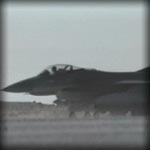
Atkinson: Well, the Stealth fighter had been in development secretly for many years in California. It was built by Lockheed in the 'skunk works' as they called it, where they did their secret projects. And the essence of the airplane was that it was built with a variety of materials and shapes which were radar elusive. It was not invisible but it was very difficult for enemy radars to get a fix on this plane. The claims for the plane in terms of its radar elusiveness were by and large accurate. The claims for the plane in terms of its accuracy as a bomber were not particularly accurate. In the first five days of the war, for example , Stealth fighters, the F117A, dropped a hundred and sixty-seven laser guided bombs. Seventy-six of those bombs missed. The plane was able to get in and out of Iraqi airspace without ever suffering a scratch. Quite remarkable given the intensity of Iraqi air defenses. Nevertheless trying to put one particular bomb on a particular target was something that the Stealth fighter had as much trouble as any of the other precision bombers that the Americans had.
Q: And, the problem particularly with the night flyers and the pills.....?
Atkinson: Well, American military pilots since World War II had occasionally used amphetamines as a way to stay awake, not falling asleep on long flights. In the Gulf War it became a cause of great concern to some of the Air Force commanders. There were go pills, dexadrine, speed, which were used by about two thirds of the pilots at one time or another and then there were no-go pills which was kind of sedative to put them to sleep. It was a particular problem for pilots who were flying on the night shift where they had to take their body with them and completely up-end them. They had to become creatures of the night and trying to sleep at a busy airfield in the middle of the day was something that many of them found much more difficult than they'd anticipated. So the no-go pills were to knock them out after a long night of flying. Missions that would last for five, six, seven hours and then the go pills were to get them up and running the next night.
Q: What did the Air Force do about it? What did they find themselves facing all the time?
Atkinson: Well, there was concern in some squadrons that the pilots were becoming psychologically if not physically addicted to the pills. The issue was handled largely on a squadron by squadron basis. Some commanders became concerned enough to ban the flight surgeons from issuing further go pills. No more dexadrine. It became an issue in which the night shift and the day shift had a falling out. The night shift guys would say, you don't understand how difficult this is. You don't know what it's like to try to change your body rhythms completely. The day shift guys would say, you're just whining. We don't want to hear anymore about this. It became remarkably divisive within some squadrons.
Q: At the end of the first night of the air campaign, Schwarzkopf has a little confusion about why Saddam isn't fighting back, and whether that's some sort of strategy game going on. Why isn't Saddam fighting?
Atkinson: Well, the first night there were about 50 Iraqi airplanes up. And they basically flew in circles and landed again. There was no meaningful Iraqi resistance other than air defense, which was substantial. But Iraq had more than 700 airplanes. They had top of the line fighters, French F-1 Mirages, they had MIG 29s, very good Soviet-built fighters, and they basically did nothing. Schwarzkopf and others were perplexed by this. Calvin Waller, Schwarzkopf's deputy, had figured that there would be perhaps 20 to 25 Allied airplanes lost that night. Others thought it might be as high as 50. And in fact only one plane was shot down. Losses were virtually nil. The belief was at the time, and probably was quite accurate that Saddam had recognized that throwing his air force against this armada coming north across his border was the quickest way to lose his air force. And that his best strategy, really his only strategy was to husband his forces, hunker down, wait and try to wait out the coalition as best he could.
Q: So summarize -- what happens that first night?
Atkinson: Well, in the history of 20th century wars--major wars-- only one had been decided in one day, and that was the Arab-Israeli war of 1967. At the end of the first night of the Persian Gulf War there were two wars that had been decided basically in a single day of fighting. Saddam's air defenses had been badly battered. The Allies had demonstrated that they could penetrate Iraqi air space to the heart of Baghdad with impunity, striking some of the most critical strategic targets, without suffering a scratch. They had showed that they could launch 700 sorties, individual flights, across the border into Baghdad, into Iraq, suffering only a single loss. They had in fact demonstrated although it wasn't entirely clear at the time that the Iraqis didn't have a chance.
Q: Could you explain the view, the confidence, the Air Force had in their plan for the strategic campaign?
Atkinson: The Air Force believed that they could leap over the army of occupation that Saddam had in Kuwait and the related forces in southern Iraq to strike at the heart of Iraqi power basically. They believed that there were certain centers of gravity which would cause the Iraqi regime to buckle and perhaps to topple that didn't involve going out and taking out every artillery tube or every Iraqi tank. So the game plan was initially to suppress the Iraqi air defenses so that you could get air supremacy, after a period of time, flying in and out without opposition really. And within the course of the first couple of weeks to hit these center of gravity targets, which included leadership targets that were command bunkers, in effect. And things like petroleum refining facilities and so on. That by hammering away over and over again at these various target sets you could cause Saddam's regime to cave in like this. And the belief was among some of the Air Force planners that you could perhaps so weaken the regime, so damage the Iraqi government by knocking the pins out from under the Iraqi government that Saddam would be overthrown by his own people.
Q: What's Powell's reaction, what's the Army's reaction to it?
Atkinson: Powell had great suspicions as most ground pounders, fellows who are wearing the green suits of the Army to Air Force claims. This is something that had been going on since the advent of the airplane.....this rivalry between air and ground. Powell was skeptical that air power alone would bring Saddam to his knees or force Iraq out of Kuwait.
Q: And what was that based on?
Atkinson: Well, the limitations of air power were certainly very evident to those who had fought in Vietnam. You had an enemy that was very resilient, an enemy that had triple canopy jungle to hide under, very mountainous terrain. There were limitations on the kind of attacks that could be launched, you couldn't have carpet bombing of Hanoi. And consequently there was a belief, particularly among army commanders that air power in and of itself was not a means to bring a foe down. That you needed a concomitant ground attack.
Q: Give me a thumbnail sketch of Air Force General Glosson. What's his background, character?
Atkinson: Buster Glosson was really one of the more interesting characters in the United States Air Force. Buster, first of all, it's important to know, is his real name; it's his given name. It's not a nickname. He's from North Carolina, he had come up as a fighter pilot through the ranks of the Air Force. He was a man who had been appointed by General Horner, the commander of the Air Forces in the Gulf, to be chief targeteer, and he was the commander of all of the wings that were there, all of the Air Force planes. He was only a one star general, but this empowerment that had been granted to him by Horner and his own natural autocratic bearing, gave him the weight of someone who was actually wearing three or four stars on his shoulder. He was a man who had made many enemies over the course of his career. He was a man who was called behind his back, Bluster, by some of those in the Gulf who didn't like him. And yet a man who could get things done. He always had a telephone in his hand, if not a telephone in both hands. He was tireless. He was profane. He was relentless. And he was absolutely a true believer that air power could save the lives of thousands of American and Coalition soldiers if he were given the opportunity to carry out the air campaign as he, Buster Glosson believed it should be carried out.
Q: Tell me about his claims to Schwarzkopf. He makes some pretty specific claims.
Atkinson: Glosson told Schwarzkopf that it didn't really matter what the scheme was for the ground attack. That air power would have so reduced the Iraqis that anything would work. He had a meeting with the senior Army generals a couple of weeks before the war began. And in the course of a really remarkable briefing to them, essentially promised that they wouldn't have any Iraqi opposition to speak of because he was going to be damn certain that the Air Force and the Navy, had so reduced the Iraqis that the biggest obstacle that the Army could conceivably face as it drove north would be the Allied airplanes stacked up whacking away at the Iraqi defenses. The Army commanders left this session shaking their heads, wondering if there was any point in even hanging around Saudi Arabia anymore, because it was clear that Buster Glosson was convinced he was going to win the war by himself.
Q: Then tell me about this row they have on January 15 about the B-52 raids.
Atkinson: Schwarzkopf had been invited on January 15, a day before the war was going to start, to come over and see the Air Force planners in the basement of the Saudi Air Ministry. He got a little tour. He was invited to shake hands and pat people on the back for all the hard work that had gone into planning. And toward the end of this he was showed a schedule of the attack sequence of the first night. Suddenly the pleasant demeanor that had been on his face falls away and he says, why aren't we attacking the Republican Guard the first night, the best equipped, the best trained of the Iraqi forces? And it was pointed out to him on the spot that in fact there were going to be attacks against the Republican Guard within hours after the campaign started. But first it was necessary to reduce the air defenses. He went absolutely bonkers. He erupted in one of his famous rages, saying you've disobeyed me, you've deliberately contradicted my orders. I told you I wanted the Republican Guard bombed from hour one. And you're not doing it.
There was an attempt by Horner and Glosson and the other senior commanders to calm him down and to explain what the rationale was for this. He would have none of it. He basically threatened to relieve his senior commanders on the spot. Said, if you can't follow my orders I'll find somebody who can. Glosson, who had a temper himself, immediately the hackles went up on his back. He said, you tell me how many B-52 crews you want to lose and that's how many we'll put out there right off the bat the way you want us to attack them. Schwarzkopf said, you know that I would never needlessly risk crews, that's not fair. Well, that's what we're talking about says Glosson. They retreat upstairs to Horner's office. Schwarzkopf says, you don't understand the pressure I'm under. Don't ever contradict me in front of men like that again, but you don't understand the pressure I'm under. Glosson started to reply and thought better of it. Thought to himself, you have no idea of the pressure we're under. Horner simply thinks -- give me a break.
Q: Describe for me, what Schwarzkopf is saying in public statements about the scuds and what the reactions from the Israelis and the Pentagon are.
Atkinson: Well, there was an attempt to portray the Patriot missile defense system as being infallible. Schwarzkopf at one point said, we all know how effective the Patriot has been against scuds. It's been 100 percent effective. There have been 33 scuds fired, and 33 scuds destroyed. This was known within the Israeli Embassy and in Tel Aviv as the Patriot bullshit. The Israelis who had a number of Patriot missile batteries based in Israel, and had been studying very carefully the performance of the Patriot against the scud knew quite well that the Patriot wasn't everything that it was cracked up to be. That there were serious questions about the extent to which the scuds were in fact, being intercepted and destroyed. There were a number of conversations, many of them heated, back and forth between the Israelis and the Americans. The Israelis changed the procedure by which the Patriots were operated, and made them manual instead of automatic. It was a source of great friction almost throughout the course of the war, and a belief on the part of the Israelis that the Americans didn't fully understand the extent to which the Patriot's shortcomings were jeopardizing Israeli citizens.
Q: And Schwarzkopf's public pronouncements about the scuds?
Atkinson: Schwarzkopf was very dismissive of the scuds. At one point he said -- I would rather stand out in the streets of Riyadh when scuds are raining down than in South Georgia during a lightning storm. scuds are less dangerous than the chance of being hit by lightning. This didn't sit well with the Israelis. Senior Israelis began referring to scud attacks as another lightning storm. There was a belief that Schwarzkopf was not appreciating either the danger that the scuds posed to
Q: Could you explain Schwarzkopf's skepticism about U.S. Special Forces?
Atkinson : There was a belief [that] Schwarzkopf distrusted Special Forces in general, sharing the conventional skepticism that many conventional soldiers had toward Special Forces. I don't think that's really true. I think he was just concerned that he keep them in check.
There was a belief among the Special Forces community in the United States that Special Forces, Green Berets, Delta Force, could be very useful to Schwarzkopf particularly in operating out in western Iraq, perhaps SCUD hunting, disrupting the Iraqis, doing commando kind of things. General Carl Stiner, commander of Special Operations for the U.S. military was full of saucy ideas about what he could do, and even proposed moving his own headquarters to Saudi Arabia. Well, that's the last thing Schwarzkopf wanted was another four star general in his theater. So he sent a resounding no to Stiner, and prohibited American Special Forces from crossing the border and operating. Nevertheless, he was persuaded by the British General de la Billiere that the British SAS 22nd Regiment, which was their Special Forces regiment, could be useful in SCUD hunting, and was finally persuaded, when it was clear that he couldn't stop the SCUD shooters otherwise, to allow the SAS to secretly set up in western Saudi Arabia and stealthily creep across the border and begin looking for the SCUD shooters.
Q: What were the difficulties facing the military in finding the mobile SCUD launchers?
Atkinson: Well, Schwarzkopf and his planners knew that there were some 30 fixed sites that the Iraqis had prepared to shoot SCUDS. The difficulty was that the Iraqis never once used those fixed sites, these launching pads. Instead they used mobile trucks that hauled the SCUDS around, could set up in a matter of minutes, fire in a matter of minutes, take off again. We're talking about an area of western Iraq, which was the size basically of Vermont, New Hampshire and Massachusetts put together, a pretty substantial chunk of territory. Trying to find those trucks out in a piece of territory that that's big at night, when you're prohibited basically from putting troops on the ground and you're relying on pilots flying at 500 knots overhead, simply proved to be impossible.
Q: Tell me about struggle inside the bunker in Riyadh, about the shape of the air war, and where the bombs should be dropped.
Atkinson: There was tension from the beginning. It got increasingly aggravated as the war unfolded, between the Army and the Marines on the one hand, and the Air Force on the other hand, over who would control which planes were dropping bombs where. Basically the Army had the view that the Air Force should be pounding the targets that the Army was going to have to fight as soon as the ground war was attacked, the tanks, the artillery. The Air Force was persuaded that the way to defeat Iraq was to leap over these forces and to strike the strategic targets that were in Baghdad and elsewhere, a belief that it was more effective to continue hammering away at the strategic targets. This became a source of consternation to the point where the Army would go to Waller, Schwarzkopf's deputy and say, we're not getting our share of attack sorties. We're concerned that we're going to be thrown into the teeth of an enemy that has not been sufficiently reduced. We're concerned that your aspirations for reducing the Iraqi forces by 50 percent before the ground attack starts will not be met.
Q: What's at stake for each service in the war?
Atkinson: Well, it would be cynical to suggest that in the forefront of everyone's mind was the budgetary benefits that would accrue to those who had performed well in the war. It would be naive to suggest that it was not in the back of those same minds. Clearly at a time when the military budget was being whacked substantially following the end of the Cold War, this was an opportunity for each service to prove its mettle, to show that it indeed had a role in the new world order. To show that the specific weapons systems that it wanted were in fact, worthwhile. So there were many things at stake, not least of which was a share of future budgets, not least of which was a share of prestige, and a belief that one service or another was more important as the 21st century was drawing nearer. It would also be cynical to say that that the individual services weren't concerned about losses within their own services. Ah, this was a driving issue for all of them. The Air Force didn't want to lose pilots, the Navy didn't want to lose pilots, the Army didn't want to lose soldiers. I think it would be fair to say that this was probably the driving force in most of the decisions that were made, but it would be foolish to believe that it was the only issue at stake here.
Q: Now tell me what was happening with the Patriots.
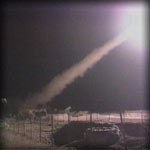
Atkinson: The Patriot had originally been developed as an anti-aircraft missile to shoot down enemy jets as they were coming in. And it had been adapted to shoot down incoming ballistic missiles, which is a much different process. A warhead that is coming in at mach 6 at 4,000 miles an hour is much more difficult to shoot down. It's much smaller among other things than an airplane that's coming at Mach 1 or Mach 2. Unbeknowst to the Americans the SCUDS had been modified in a way that made them much more difficult than anyone had anticipated to shoot down. In order to extend their range, the Iraqis had basically eviscerated the missiles and had welded in another section to give them more fuel, and it had been done in such a ham-handed manner, it was so clumsy that the stresses, the aerodynamic stresses of the missiles reentering the atmosphere caused them to break apart. And in effect, instead of having just one warhead plummeting down you had pieces of junk. It was almost as though they had deliberately designed decoys similar to the sophisticated intercontinental ballistic missiles that the Russians and the Americans had done, where all kinds of decoys would come out and make it difficult for radar to tell which was a decoy and which was the actual warhead. When the first SCUDs started falling, the Patriots would fire at a target, the Patriot missile would see a bunch of different things coming down and many Patriots would be fired to the point where first the Americans weren't certain what was being hit and secondly there were large numbers of Patriots being expended, 31 on one particular day early on. This caused concern first about the effectiveness of the Patriot and second about the stocks of Patriot missiles.
Q: What's the difference between what the public is being told about the performance of the Patriots and the reality?
Atkinson: Well, the public was being told that the Patriot was in fact, infallible. At one point, Bush went to the Patriot factory in Massachusetts and said, there have been 42 Patriots fired and 41 of them have been intercepted, virtually 100 percent. Schwarzkopf at one point said, of 33, 33 have been destroyed. 33 SCUDs. In fact, there was a recognition that they didn't quite know what the Patriot was doing. First there was confusion over the debris that was falling with the warhead as the SCUDs were breaking up. Secondly it was impossible to determine exactly what was happening high in the atmosphere, at these tremendous speeds, exactly what was being destroyed. It was considered prudent in the long run to keep this hidden from the public. I believe that the public was best served, particularly in Israel, by having great faith in the Patriot.
Q: Saddam's environmental terrorism, the oil fields....Tell me about Schwarzkopf's claim that the laser bomb shut down the flow of Iraqi oil?
Atkinson: With this tremendous river of oil pouring into the Persian Gulf there was frantic planning to figure out how to shut it off somehow. And finally a mission was launched with F-111 fighter bombers to put a laser guided bomb on a manifold which controlled the pumps and the valves that allowed this fuel to go, this petroleum to go into the Gulf. The bombs were dropped, the manifolds were destroyed. The oil more or less stopped flowing. It was only a trickle after that. It's never been clear, despite the claims of the time that that in fact is what shut off the flow. There's suspicion that Kuwaiti resistance fighters got into the oil field and shut it off manually themselves. Nevertheless, the claim was made that the Air Force had succeeded in stopping this environmental terrorism.
Q: Does the Gulf War in fact, represent the dying of the old world order?
Atkinson: I think that the notion that the Gulf War was being fought for a new world order was in fact, intended to obscure the fact that it was being fought for very much the old world order: cheap petroleum, benign monarchies, the preventing of a regime in the Persian Gulf from arising that was inimical to the interests of the western democracies. There was no new world order that came out of the Persian Gulf War. What the war showed was that it was possible to bring together a diverse coalition of countries toward a common cause under certain circumstances. Trying to pull them together again would depend on the circumstances of a future event. George Bush's vision of the new world order was that countries could unite in common purpose for the benefit of all mankind. In fact, I think that's proven to be mostly a pipe dream since then.
Q: Air power at Khafji....the lack of it. Glosson said in an interview that this is not the Air Force's best day. Could you talk about that....
Atkinson: Well, there was air power that was brought to bear in Khafji. There were planes up there that were attacking targets. One of the problems that the pilots discovered tragically was that it was very difficult at night, particularly, to determine who were the good guys and who were the bad guys. Out in the western part of this battle zone, west of Khafji, an A-10 inadvertently fired a maverick missile which destroyed a Marine armored vehicle and killed four Marines. This became a problem throughout the rest of the war, recognition that trying to tell who was Iraqi and who was American or other coalition force, especially at night, was going to be a persistent problem. I think it was hard for the Air Forces, who were flying for the coalition to react as quickly as they needed to in Khafji. They destroyed a lot of stuff. They did not, as Schwarzkopf claimed at the time, essentially destroy the Iraqi 5th Division, for example.
Q: One thing you emphasize in your book is that the Army missed the point of Khafji. That they just didn't pick up the signals about the strength of Saddam's forces. What is your understanding here...?
Atkinson: Well, clearly the three days of fighting in and around Khafji showed that the Iraqis had a lot of trouble mounting an even modest attack. That the Iraqis were not ten feet tall. And I think that it was fairly evident to the planners in Riyadh that the Iraqis had major deficiencies in the way that they were able to bring complex forces together, air and ground in particular. So you know, the lessons learned from Khafji were that the Iraqis were probably not going to be the tigers that some had portrayed them to be. That the Arab forces were willing to fight even if not with tactical competence on behalf of the coalition. And that air power was going to make life very, very difficult for the Iraqis if they tried to move anywhere, even though air power had not been particularly effective in destroying the forces attacking Khafji.
Q: What does that tell you about how to plan the rest of the war?
Atkinson: Well, to some extent the die was cast for how to plan the rest of the war. Shipping 400,000 troops out in to western Saudi Arabia is not something that you start and then stop, and say, OK, we're going to do it differently. We will go back to the `hey diddle
diddle `plan and drive right through the middle of Kuwait because these guys aren't going to be able to stop us. Once the decision had been made to attack from the west with this sweeping left hook, I don't think there was the practical ability to change that fundamental game plan. You know, you could argue that the ground attack could be launched sooner, and this was an argument that went on after Khafji in Washington and in Riyadh, ad nauseum, when to do it. But I don't think that there were lessons that could be drawn from Khafji that could fundamentally change the blueprint that had already been laid out for how to prosecute the rest of the war.
Q: Schwarzkopf tells Glosson to move his planes into bomb the theater. What's Glosson's reaction?
Atkinson: Well, this was part of the on-going tug of war between the ground forces, the Army and the Marines and the Air Force over where the planes would bomb. Whether they would hit strategic targets deep in Iraq, or whether they'd hit the Iraqi army. Schwarzkopf finally told Glosson that he needed to focus more on those Iraqi forces right along the border and occupying Kuwait as well as the Republican Guard. Glosson was not happy with this. Glosson wrote in his diary that this is a sad day, basically, that our strategic campaign which is going along swimmingly has been truncated by short-sighted Army commanders who don't recognize what we're trying to do. Glosson attempted to circumvent, and did circumvent, to some extent, this edict from Schwarzkopf by persuading Schwarzkopf on the spur of the moment that certain attacks needed to go farther north to hit strategic targets. He would control the air flow in such a way that the Army was getting some of what it wanted struck, but not other things. Again, Glosson controlled the planes and where the planes were going. It was difficult for Schwarzkopf to micromanage an air commander who was fairly wily in how he was using his airplanes.
Q: Jumping ahead to a briefing that happens on January 30. Schwarzkopf shows some tape, and says they're taking out local SCUDs--what's going on?
Atkinson: Schwarzkopf on January 30 had a briefing and he showed gun camera tape which seemed to show Iraqi vehicles being destroyed by F-15E's, and Schwarzkopf claimed that we may have taken out as many as seven mobile SCUD launchers in this one attack. In Washington, at Langley, Virginia, at the CIA headquarters, this was being watched on CNN, as it was everywhere else. And the CIA analysts looked at it and they said, oh my God, those are oil trucks. And elsewhere there was even a suspicion that they may have been milk trucks. Schwarzkopf went white with anger at this, when it was in fact, more or less confirmed that they were probably oil trucks. Glosson summoned the photo analysts who had assured him, one of them had even offered to bet $1,000 that these were SCUD launchers, and railed and threatened and generally carried on. As far as the American public was concerned, they remained SCUD launchers. They were never told otherwise.
Q: The press. Can you talk about the military strategy for handling them ....
Atkinson: Well, many of the military commanders involved in Desert Storm believed that the press had been a prime contributor to the loss in Vietnam. That the press, by negative reporting, tended to undermine support for the U.S. military at home. That if the press had not been agents of the loss in Vietnam, they had at least been agents of the loss of esteem towards the U.S. military. The general approach toward the press in the Gulf War was to impose restrictions that were more like the restrictions that had been imposed in Korea and in World War II than the free flowing autonomy that was largely given to reporters in Vietnam where you go out and get on a helicopter and go wherever you wanted. There were restrictions. You had to have an escort, you had to have signed an agreement that you would not disclose certain kinds of information. Sensitive operations were screened from the press completely. Access to key participants was tightly regulated. There were 1400 reporters in Saudi Arabia. That's four times as many as there were in Vietnam at the peak of the war there. Obviously some kinds of restriction were necessary, some effort to corral this brigade of reporters who showed up were warranted. Nevertheless, I think it can be argued that there was an effort to restrict what was reported in ways that probably didn't serve the American public well in the long run.
Q: What do you mean?
Atkinson: I think people came away believing that this war was basically bloodless. That it was a sanitary exercise in which no one was really hurt, no one really died. And I think that that's dangerous. I think it makes it easier to go to war the next time. That it devalues the human suffering that war always brings. And that particularly for a superpower it ought to be always very, very difficult to pull the trigger. And anything that makes it easier to pull the trigger, such as believing that war is essentially an operation in which nobody really dies, is hazardous.
Q: And General Powell's view on the press?
Atkinson: Powell had a more sophisticated view of reporters and the media in general. He recognized that the media was, for one thing, a very important part of his arsenal. He would tell young officers in speaking to them before the war, that once you've taken care of all of the military issues then worry about television, because you can win the battle and lose the war through television. So Powell realized that it was necessary to feed the press regularly. That the press needed information. And he recognized also the use to which television could be put in elevating people like Colin Powell in the esteem of the public. Powell was very good on television, Schwarzkopf is very good on television. Colin Powell recognized that, and instead of trying to prevent television from showing Schwarzkopf and Colin Powell, he harnessed it as part of his arsenal.
Q: Could you give a thumbnail sketch of the press corps there?
Atkinson: Well, there were about 1400 reporters in Saudi Arabia. In many cases the gap that had developed between, particularly the American military and the American press corps was illustrated in Saudi Arabia at this point. Very few reporters had direct military experience. Very few were personally cognizant of the American military culture. They didn't understand it. There was a belief among many military officers that these are dilettantes, that these are people who really didn't understand either what the military was about or what the military believed in. On the other hand there were great frustrations that the reporters had. Many of them were bottled up in hotel rooms in Dhahran and Riyadh watching the war on CNN, tremendously frustrated. And a belief that the military was bending over backwards to be as unhelpful as possible. So there was an antipathy that developed that was pretty poisonous early on.
Q: What about Schwarzkopf's decision to forego an amphibious landing. How did that come about?
Atkinson: I think sometimes the measure of a commander is not so much in the hard decisions that he makes to commit forces or to do something, but in the hard decision he makes not to do something. Schwarzkopf made the hard decision to hold back the Marines not to launch an amphibious landing. And I think it was a decision that was worthy of a Commander in Chief.
Q: What does it say about him?
Atkinson: It showed among other things his ability to evaluate very difficult conflicting pieces of information and make the right strategic judgment. It also showed his ability to resist the impulse to fling forces where forces didn't need to be flung. It was a tough call at the time. It's easier in retrospect to look back and say, oh that was easy, you didn't want to send Marines across the beaches. Why would you have had to do that. At the time it wasn't so easy and he made the right call.
Q: General Franks. What's his character and tell me what he personified.
Atkinson: Well, Fred Franks was a very mild-mannered man. You would have thought he was a college professor, which in fact he had been at West Point at one time. He had been captain of the West Point baseball team. He had later gone back and gotten a degree in English, studying Cromwell and 17th century English literature. Taught English at West Point. In Cambodia in May of 1970, he had had most of his left leg blown off. Here is a man who spent the better part of two years trying to put his life and his body literally back together. In many ways, he personified the Army after Vietnam. Maimed, traumatized, he stayed the course after the war in the face of national opprobrium toward the military, stayed the course at a time when the American Army was really unravelling from within, not only having lost a war but being destroyed by racial strife and drugs and all kinds of indiscipline. And Fred Franks stuck with it. He showed a certain inner grit that people tended to underestimate. He was also a man who was constitutionally inclined to wait as long as he could before making a decision. One of his closest aides said that he was a man who couldn't make the decision to pee if his pants were on fire. This was something that drove his subordinates crazy. They would say, General Franks we need a decision out of you now. And he'd say, I need more information, I need more information. He would wait and wait and wait. And he was the kind of man by personal inclination was not going to get along well with Schwarzkopf. He was very quiet, very mild-mannered, not blustery at all. And he was almost professorial. He would give tutorials on military subjects that Schwarzkopf found difficult to swallow.
Q: Tell me about the growing intelligence picture about the bunker at Al Firdos.
Atkinson: American intelligence knew that in the early '80s the Iraqis had had Finnish contractors build 25 shelters around Baghdad. In 1985, several of these were hardened against air attack and even against nuclear attack. These shelters were watched carefully on the belief that they could have been command bunkers. And in the attack planning there was a plan made to go ahead and strike several of the bunkers which was rescinded when the Allied intelligence determined that the bunkers were not being used. As the war developed into early February three of the bunkers showed signs of life. One of them in particular in a Baghdad neighborhood had been camouflaged on the first day of the war, they put green paint and so on on the ceiling. Reconnaissance satellites were seeing military automobiles and traffic in and around the bunker. The big ears that were listening with military eavesdropping satellites were hearing message traffic in and out of the bunker. There were signs that it was indeed being used as a command post of some sort. None of this was considered absolutely convincing to Buster Glosson. What was convincing, what put the final nail in the coffin of the Al Firdos bunker, as it was known to Allied targeteers, was a spy. The human intelligence network in Baghdad was not very good, but there was one spy, a high ranking Iraqi, who had been quite accurate, and who passed information that was very tightly held within the U.S. government that the Al Firdos bunker was in fact being used as an alternate command post by Iraqi intelligence and secret police.
Q: What about the bitterness of the Israelis about the performance of the Patriot? In the end, how did this work out?
Atkinson: The Israelis believed that the Americans didn't fully understand the deficiencies of the Patriot. That the Americans were being willfully blind about it. And there were bitter complaints. Moshe Arens came to Washington in February and had a meeting with Bush and his senior advisors in which he said, the Patriot is not working... We believe that only 20 percent of the SCUDs that are attacked with the Patriot are in fact, destroyed. Cheney at the same meeting spoke up and said, there is a fundamental disagreement over how effective the Patriots are. Nevertheless, the Israelis recognized that a belief that the Patriot was effective was almost as important as the effectiveness of the missile itself. It helped to calm the Israeli population. It helped to prevent the Israeli government, the Shamir government from coming under pressure to actively leap into the war. It was a very effective propaganda tool. And whenever suggestions were made within the Israeli government that the truth about the Patriot as seen by the Israelis be made public other voices prevailed saying, why would we tell Sadam that the Patriot is not working when in fact it's in our best interest to let him believe that it's infallible.
Q: The Al Firdos bunker attack...After the attack, Powell reacts. Can you talk about that...?
Atkinson: After Al Firdos--after perhaps 200 civilians were killed in that bunker--Powell believed that there was a serious danger of a public backlash in the United States and among the publics of the other coalition partners, that people would say, enough is enough, why are we killing women and children and civilians in general? Powell believed that another Al Firdos could cause the coalition to come unglued. My belief is that he underestimated the resolve of the American public at this point to some extent. That his analysis of the American public as having reacted ultimately against bloodshed in Vietnam for instance, -- there was not a parallel with Al Firdos. The American public reacted to American deaths, 56,000 Americans ultimately dying in Vietnam and not to the hundreds of thousands of Vietnamese that were killed. So I think that probably there was a steely eyed resolve that he underestimated a bit in this case.
Q: And was there resentment when Powell ordered strategic attacks be curtailed in Baghdad?
Atkinson: There was great dismay when Powell made the decision to, in effect, curtail the strategic attacks in Baghdad and elsewhere. There was a belief that this was akin to the kind of civilian meddling that had bedeviled the military in Vietnam. A belief that it was a Vietnam-style mistake, as one of the senior officers put it. The feeling toward Powell, I think, was certainly mixed. There was some concern that perhaps he had ambitions and aspirations that went beyond making hard military calls here that perhaps he had presidential aspirations. Some people felt that others would not have ascribed this to him. In general there was an anxiety among those who designed the air campaign that it was being truncated, that it was being cut short. That just at the point when they thought they had the Iraqis on the ropes, the Iraqis were being allowed to get off the ropes, that Powell, in effect, had rung the bell, just when the opponent was about to go to the canvas.
Q: So, on the eve of the ground war, what's the coalition's military position?
Atkinson: Well, as they get close to the launching of the ground war on the 24th of February, the military had every reason to be immensely pleased with themselves. The predictions of severe losses of aircraft and pilots had not come true. The losses had been quite minimal. The extent of the damage inflicted on the Iraqis while difficult to judge in some cases was clearly immense. This despite the fact that the weather had been atrocious. Forty percent of all the sorties had been weathered out in the first weeks of the war. And a feeling that the political aspects of the war had unfolded about as well as you could have hoped. The Israelis had not come in. The Arab countries had remained steadfast in their opposition to Saddam. The diverse countries of western Europe and elsewhere that were part of the coalition had remained steadfast in following American leadership. And now there was a feeling that it was time to deliver the knock-out blow and to launch the ground attack.
Q: What is Bush's state of thinking as the ground war approaches?
Atkinson: Well, Bush had several concerns as the moment of truth came for the ground attack to begin. One concern involved the Russians. A fear that Russian meddling--Gorbachev and his emissary to Baghdad, Primokov--were about to screw up the efforts of the Allies to bring the war to a resolute conclusion. Another concern that Bush had was that the Iraqis would pull back part way, perhaps to the northern border. That they would remain a threat, that they would perhaps occupy Bubiyan Island or the Ramalia Oil Field which was the source of the dispute in the first place. And that the Iraqis would subsequently be able to say that they had only been defeated by Allied superior technology, air power, and had not really been pummelled in a man to man fight across the desert. So these things weighed in Bush's mind as he made the decision whether to approve the launching of the ground campaign or not. On the other hand I think Bush had to feel quite good about how he had handled things thus far. He had showed fixed purpose, which the Prussian military theorist, Klausowitz tells us is very important in military commanders. And Bush had really played out the role of a Commander in Chief about as well as I think anybody could have expected.
Q: And the scope, the scale of the ground war about to unfold?
Atkinson: Well, you have essentially two huge armies lined up facing one another across a vast expanse of desert in a way that hadn't been seen in at least a generation. It was an old-fashioned kind of war in some ways in that you had a very clearly demarcated line between two adversaries. There's a certain romance, I think too, to desert warfare. If warfare retained any romance at all after the horrors of war in the 20th century, you could probably find it in desert war. There was a kind of Lawrence of Arabia quality to all of this, that certainly the American commanders felt. Schwarzkopf had described himself once dressing up in Arab robes and parading in front of a mirror like Lawrence of Arabia. There was a feeling that what they were about to do was something stupendous, something on a vast scale. That it was almost Homeric in its magnitude. And a feeling that it was going to be decisive. That this in fact, was the last act. It had all been building toward this, and that there would be no messy ending, that in fact, it would be resolved by force of arms by this one last titanic battle in the desert.
Q: And yet with all that, Bush has limited war aims......
Atkinson: Throughout the run-up to the war, and throughout the war itself, there were innumerable debates in Washington over exactly what the war ambitions should be. How far should you push it? And a great concern that the limited aims of a limited war not be changed. The antecedent that was most often in the minds of policy-makers in Washington was not Vietnam, but it was Korea. A concern that as in Korea there would be a decision made that the war is going well, why not just push on up to the Chinese border, which happened in Korea and brought China into the war with disastrous consequences. Bush ultimately decided that occupying Iraq, occupying Baghdad was not only militarily difficult, but politically foolhardy. It placed a burden of responsibility on the Americans in particular that would have implied an American presence in Iraq that could last for decades. There was also a recognition that the Iraqis would probably fight better in defense of hearth and homeland in Baghdad than they had in defense of Kuwait. You could make the case that you would be willing to die for your own home in Baghdad, when you're not willing to die for the Emir's Mercedes in Kuwait. All of this led to a conclusion that the war would be stopped at a point short of total victory. And it planted the seeds of a limited victory that would lead to a clear dissatisfaction and discontent at home.
Q: And.....the challenges of fighting this war with regard to the memory of Vietnam?
Atkinson: Vietnam is a poltergeist through this whole thing. For Schwarzkopf and his generals the Persian Gulf war didn't last for six weeks, it lasted for twenty years. The legacy of Vietnam was something that was with them all the time. The knowledge that they had been participants in a catastrophe, in a war that we lost, in a war that called into question the relationship between the Army and the Republic, the oldest, most complex relationship in our nation's history. So Vietnam is a very heavy presence that in a sense needs to be exorcised, and in a sense needs to be reconciled before this war can be finished.
Q: Tell me about the great deception strategy.......
Atkinson: Well, one of the things that Schwarzkopf and company needed to do was to hide the fact that they had moved more than 300,000 soldiers out to western Iraq in preparation for this great roundhouse hook that was to come from the west. There were all kinds of deceptive ploys, employed, including the creation of whole armies electronically. They would have electronic emulators that would send out radio signals back and forth. They would be scrambled, the Iraqis wouldn't be able to hear, but they would hear the hiss of radios operating. There were at night trucks with speakers that would go up and down the border playing tapes of tank noises, so that the Iraqis would think that there were armored brigades moving back and forth on the Kuwaiti and the Saudi side. There were inflatable dummies of tanks and various other military things that would cause any observer from a distance to think that --ah hah--there is in fact the 24th Mechanized Infantry Division just over there. And in fact, the 24th Infantry Division was 300 miles to the west.
Q: At the start of the ground war did the commanders tend to overestimate the strength of the Iraqis--and, why would they do that?
Atkinson: Well, everyone tended to overestimate the strength and the fighting prowess of the Iraqis, I think. They tended to overestimate the number of Iraqis that were probably still in the theater at the time that the ground war was launched. Part of it was a mentality that had come out of Vietnam and had been reinforced by events since then, which virtually precluded commanders like Schwarzkopf from underestimating the enemy. Schwarzkopf had been the ground commander in Grenada, where it was assumed this would be a cake walk against some happy natives and perhaps a few Cubans and in fact, ended up being a fairly bloody fight that stretched on for several days and was embarrassing to the U.S. military. Schwarzkopf had vowed that he was never going to underestimate his enemy again. Therefore there was a penchant to overestimate them, to think that he was greater in number, that he was greater in fighting spirit and capacity. And this was compounded by the fact that it was very difficult for U.S. Allied intelligence to get a handle on precisely how badly the Iraqis had been damaged.
Q: And was Vietnam a factor in this penchant to overestimate?
Atkinson: Well, I don't know... I mean there were technical reasons that caused them to miscalculate . The Iraqis had reorganized their army in a way that made it very difficult for Allied intelligence to calculate exactly how many artillery tubes there were in an artillery battalion, how many tanks there were in a tank company, how many of them were left as a consequence of the weeks of air pounding. There was a general inclination to err on the side of caution in evaluating the enemy because of a concern that the Vietnamese, the North Vietnamese and the Viet Cong had been underestimated. A belief that this ragtag barefoot gang of peasants could not resist the military might of the victor of World War II. That was a very painful lesson that stuck with all of the commanders who subsequently led the fight in the Persian Gulf War.
Q: When the Marines started their assault, can you describe the reaction of the front line Iraqi troops?
Atkinson: Well, when the Marines began their attack, very quickly it was recognized that the Iraqis were not going to fight well. And General Boomer, the Marine Commander, was well ahead of schedule, hours ahead of schedule before the attack had hardly begun at all. The Iraqi soldiers in the front lines had been pounded and pounded and pounded. They had been hammered with artillery, with long range rockets, and particularly with air power now for weeks. And they were in no shape to fight. In many cases desertions had been so high as to virtually eviscerate the units that were in the front lines. Was it surprising? I think for soldiers who believed that they were being flung into the teeth of a serious adversary, it was a bit surprising. And in places the Iraqis did fight there were some scraps, there were a couple of pretty good shoot-outs, but all in all, the Marines cut through those Iraqi defenses like the proverbial hot knife through butter.
Q: And how did that collapse then affect Schwarzkopf's timing of the main event?
Atkinson: Schwarzkopf in his bunker 40 feet below the ground in Riyadh has a problem at this point. He sees on the map quite clearly that the Marines are ahead of schedule, and the Marines are plunging on into Kuwait in a way that leaves them exposed. If you can imagine sort of this protrusion of forces. And there was concern that the Iraqis could attack perhaps from the west in ways that could hit the Marines in the flanks. So Schwarzkopf had to decide whether or not to, on the spur of the moment accelerate his attack plan and launch the rest of his forces, particularly the VII Corps, the heart of his ground forces further west, in a way that would completely upset his timetable, but nevertheless would react to the success of the Marines. You had to be prepared to exploit success.
Q: And what does he do?
Atkinson: Schwarzkopf after checking down the chain of command with his Army commanders, made the decision to launch the second phase of the ground attack, the main attack of the VII Corps into Iraq and toward the Republican Guard, almost a full day early. This was clearly the right decision to make given the fact that the Iraqi defenses were so weak and the fact that the Marines were making such progress. But it certainly threw the Army commanders involved for a loop, trying to move, in the case of Fred Franks, commander of the VII Corps, 140,000 men, thousands and tens of thousands of armored and ordinary vehicles forward, all of a sudden ain't easy. And trying to tell the commanders, who have been preparing for months to go on a certain time table that in fact that time table is now out the window, is something that was very difficult.
Q: Tell me what Franks does the first night...and what his staff's reaction is?
Atkinson: Franks had been adamant that once the attack was launched there would be no pause. In fact, it became known as the P word, and it was prohibited from using the P word in Franks' presence. Yet, because the attack had been launched prematurely in effect, that the time table had been thrown out the window, there were certain problems that Franks and his 140,000 soldiers were facing, which now caused him to rethink. For one thing the attack was going forward in hours of darkness when he'd anticipated they would have light. And this is difficult to move yourself across minefields in the dark. There were certain other things that had disrupted his timetable in a way that made him think that perhaps pausing for a few hours was more sensible than plunging ahead and risking friendly fire, risking running into minefields, risking having a fuel truck run over an unexploded artillery shell and blowing up. So much to the surprise of his staff, and it was quite a controversial decision, he decided that they would pause. He invoked the P word himself, and announced that they would wait until first light on the morning of the 25th and then proceed ahead. Franks believed that it was important to keep a fist together. That all of his combat power had to be in a clenched fist, and that you wanted to hit the enemy with the mass of that fist rather than as five separate fingers. This was a metaphor that he used ad nauseum. And he believed that if he were to allow that fist to come undone that it would cost him the lives of soldiers in the long run.
Q: What was Schwarzkopf's reaction?
Atkinson: Schwartzkopf got up after a couple of hours of sleep on the morning of the 25th and went in to look at the map in the war room. And he saw that the Marines were plunging ahead, that the 18th Airborne Corps out in the far west was plunging ahead, the French were doing OK. And then he looked and saw that the VII Corps basically had not moved since the time when he went to sleep. He completely and utterly lost his temper. First of all, he demanded to know why the plots on the map were wrong. And there was a great deal of scrambling and hubbub as they tried to get the coordinates that had been given by the VII Corps and match them to the map and realize that that's where VII Corps said they were. And then he called Yeosock the Army commander and said, what the hell's going on here. And worked himself into a lather that persisted for the rest of the ground campaign. Threatened to fire Yeosock, threatened to fire Franks, threatened to get himself a new range of Army commanders who could in fact show the kind of aggressiveness that he thought that he needed to show.
Q: What was Schwarzkopf's general evaluation of Franks?
Atkinson: Well, he'd initially been very happy to have Fred Franks show up. I don't think he knew Franks very well, but he was happy to have Franks and VII Corps to provide the kind of combat punch they had. This appreciation gradually eroded over the course of a couple of months before the war began to the point where Schwarzkopf began to think of Franks as a slow moving pedant. He talked about a pachyderm mentality that VII Corps had. He believed that Franks was a man who made a plan and could not alter it. Was not able to react quickly and spontaneously to the flow of events. That despite the fact that Franks was a cavalry man by training and at heart-- that he didn't have a cavalryman's brio somehow. That he was in fact a rather ponderous tactician. And this problem that Schwarzkopf saw as the ground attack unfolded very slowly -- only reinforced his suspicions of Franks.
Q: Was he being unfair?
Atkinson: I think that Schwarzkopf, being 300 miles from the front and 40 feet underground, didn't fully appreciate the difficulties that Franks was facing. Didn't appreciate the fact that friendly fire was already a big problem and would only get bigger if in fact this vast army were allowed to charge across the desert willy-nilly. Didn't appreciate the difficulties of accelerating the attack, of changing the time table completely. Of transgressing across a minefield at night. I think that he was fundamentally unfair. The commanders who were serving under Franks by and large, believed then, and believe today, that Franks did the right thing under difficult circumstances.
Q: Until the 25th or so, the SCUDs had done relatively little damage. But that goes wrong in Dhahran. What happened?
Atkinson: The SCUDs had caused very little damage until February 25th when a SCUD was launched toward....outside of the port city of Dhahran. The Patriot batteries that were there to defend Dhahran had had a new kind of software installed, and for complex reasons that no one appreciated at the time, failed to recognize the SCUD that was flying overhead. There was a technical glitch that blinded the Patriot temporarily to this one particular SCUD. This SCUD by luck and bad luck on the part of the Allies, hit a warehouse that was being used as a barracks, and immediately caused an inferno, while the soldiers for the most part were sleeping there. And caused the biggest single loss of life of any event during the war.
Q: But in a sense when it happened....there was some luck there, perhaps?
Atkinson: In a sense it was fortunate in the face of misfortune, that this happened when it did. Had this catastrophe occurred on the 17th of January say, right at the beginning of the war, it could very well have changed perceptions of the war, the cost of the war. It would have certainly caused doubts about the Patriot. It certainly would have given the Israelis reason to thinkthat the Patriot assurances were worth even less than the Israelis believed and might have caused the Israelis to leap into the war in ways that they didn't otherwise. So the fact that the tragedy occurred when it did, rendered it almost a footnote.
Q: Can you explain how there could be two distinct visions of the battlefield, one in Riyadh and one with Franks?
Atkinson: There really were two distinct visions of the battlefield as the ground war unfolded. In Riyadh where Schwarzkopf had the benefit of seeing the entire campaign map in front of him you saw the Marines having great success, the Arab forces even making ponderous but steady progress. Out in the far west, the 18th Airborne Corps, including the French making steady progress, the 101st Airborne in the Valley of the Euphrates, the 24th Mechanized Infantry Division, Schwarzkopf's old division which he had commanded, on its way to the Euphrates. For the VII Corps commanders in particular, none of this mattered much. What they were facing was a different enemy than the front line cannon fodder troops that the Marines for the most part had faced in Kuwait. The 18th Airborne Corps had faced very little resistance. There weren't many Iraqis out there. For Franks and his commanders they were focused on the Republican Guard, the best of the Iraqi troops--who were not retreating. Who were in some cases repositioning toward the on-coming VII Corps. For them the fight was not over. In Riyadh, on the other hand, the fight was all but over.
Q: Jumping to the fight known as 73 Easting, what of importance did it reveal?
Atkinson: Well, one of the sharpest early fights in the ground attack was at what was known in the military maps as 73 Easting. It's a map coordinate. And elements of the 2nd Armored Cavalry had come across dug-in Republican Guard troops. And there was a very sharp fight over the course of several hours in which essentially, virtually without losses, the American soldiers destroyed a good portion of the Republican Guard units that they fought. Absolutely demolished dozens of tanks. It showed a couple of things that were important as the rest of the battle unfolded. First of all it showed the prowess of the American soldiers. They fought very competently. They also employed not only tactics, but equipment, weaponry that was far superior when used competently than anything the Iraqis had. They were able to fight at night. They were able to fight with weapons systems that could simply outshoot and outpunch the Iraqis in a way that would be repeated subsequently through the ground war. It showed that the Iraqis were, in some cases, willing to fight. This was a fairly bold effort by the Iraqi commander to stand and slug it out, and yet again, never really had a chance.
Q: The 'highway of death'--do we know how many Iraqis were killed there?
Atkinson: I don't think we'll ever know how many Iraqis were killed there. There were about 1500 vehicles on the highway of death, counted, destroyed vehicles after the war. And another 400 or so on another road, a spur that ran parallel to the coast. Those who wandered through this wreckage right after the Iraqi surrender found relatively few bodies. Certainly some, and many that were terribly incinerated of those that were found. But the prevailing view is that many of the Iraqis had simply gotten out of their vehicles and ran. And it's difficult to believe that deaths on the highway of death probably exceeded more than a couple of hundred perhaps.
Q: So Franks has encountered the Republican Guard with his fist, and he's moving further east....Despite this overwhelming success going on with the Army and with the Marines, where is it all headed.....?
Atkinson: Well, by the end of the second full day of the ground attack everything is proceeding very well, albeit not as quickly as Schwarzkopf had hoped, particularly with the VII Corps. Nevertheless, the VII Corps is wheeling from a northern trajectory to one to the east, and prepared to move across and cut off the fleeing Iraqis who had begun to decamp from Kuwait. the Marines by this point are pretty close to capturing the Kuwait City International Airport. They're pretty close to beginning to move into Kuwait City itself. In the far west the Euphrates Valley is occupied. The concern about a counterattack from Baghdad, has long been forgotten at this point. And it's clear that it's now a matter of time. It's clear that now it's a matter of how much destruction do you want to inflict.
Q: And what ultimately is about to happen?
Atkinson: Well, almost from the time the ground attack began, Colin Powell began examining in his own mind, when it should stop. He became increasingly concerned about media reports of pilots talking about a turkey shoot and shooting fish in a barrel. He became increasingly concerned that this would be seen as an unmitigated slaughter. That basically the American soldiers would be remembered most for shooting a fleeing foe in the back. He was as of the 26th talking very directly to Schwarzkopf about when we're going to stop it, when do we see an end and so on. As of the 27th the decision was made to stop it, largely at Powell's instigation. Powell was again, the brakeman on this train who persuaded Bush, and others, that enough was enough.
Q: But, what did it mean to end a war like that?
Atkinson: Well, the difficulty that the Bush Administration had right from the beginning was in ending a limited war with limited gains in a way that was not utterly dissatisfying somehow. I think in Powell's mind the military objectives were fairly clear and were clearly achieved. Kuwait had been liberated. The Iraqi military had been badly eviscerated. The Iraqi weapons of mass destruction programs had been badly battered, although not as badly battered as was believed at the time. So he had checked off all the boxes, in effect, of the mission that he had been given. And so the conclusion was in his mind, we're finished. We've done what we set out to do. Now it's time to stop it before we face certain consequences of an unmitigated slaughter that will come back to haunt us. The problem with this was that first of all the degree of destruction to the Iraqis was not as great as was widely thought or the public was led to believe. Schwarzkopf gave a briefing in which he said, the gate is closed. That the Iraqi fleeing force cannot get out. That essentially they were encircled. This wasn't true. Why the Commander in Chief would have told people that it was true, why he would have believed in his own mind that it was true isn't clear. But the gate was not closed. There were still plenty of Iraqis getting out. And consequently there was always the hazard that there was going to be a sour taste, the taste of ashes afterwards that a prostrate enemy had been allowed to get away.
Q: How concerned is Powell that images of a turkey shoot is going to tarnish this victory?
Atkinson: Powell was very concerned that in fact, the victory would be besmirched in effect. He believed, as part of his military ethos that there is a kind of chivalry in combat. And that one of the credos of this code of chivalry is that you don't slaughter an enemy that is essentially, has already been laid low. And in his own mind he believed that the strategic gains of killing a few thousand more Iraqi teenagers were probably not worth the risk of being perceived as piling on, as one of the White House advisors put it, of being a bully. And consequently, Powell who always had one eye on public opinion when it came to military matters, quickly came to the conclusion that we had reached the saturation point.
Q: February 27, Washington and Riyadh seemed to misunderstand whether the Republican Guard is encircled or not. Could you contrast how it looked to them and what the reality was.
Atkinson: Schwarzkopf told the press in one of his famous briefings that the gate was closed, implying that the Republican Guard in effect was encircled. That there was no way out. That Basra was cut off. This simply wasn't true. The roads into Basra had not been cut, the roads north of Basra had not been cut. The road across the body of water that's west of Basra had not been severed, the gate was not closed. I think part of this is just the fabled fog of war. I think there was a misapprehension about exactly how far American forces were, to what extent they had looped around north of Basra, the extent to which air power had cut certain roads and certain bridges...
Q: The 'mother of all press conferences.' Can you sum up your sense of what that was....?
Atkinson: Well, Schwarzkopf came out and basically for an hour kept the world spellbound. He presented a fait accompli of a war won in a way that was dazzling. Among other things it played to our sense of great relief that in fact the war was virtually over. He very much was the American Mars here. He was a man who was wielding a pointer like Hector wielding a sword. He conveyed this image of competence, of humor, of strength that was very reassuring in some ways. And I think probably elevated the American esteem toward the military in general probably as high as it had been since before the dark days of Vietnam.
Q: What's your overall assessment of the decision to end the war?
Atkinson: I think that in fact they ended the war when they should have ended the war. I think that it's difficult to make an argument that pursuing the Iraqis for another day, another two days, was going to make any strategic difference to the shape of the peace consequently.
Q: At the end of the war, the 2nd Brigade, they go out with a song. Explain.
Atkinson: The 2nd Brigade had had a fairly tough fight against a dug in Iraqi armored brigade which was fundamentally destroyed in a rather intense bit of armored combat across the open desert. And as the word filtered down that the war in fact had ended, that the ceasefire had been declared and that this was it, there was an effort to find some way to commemorate the end of the war, that captured both the relief the soldiers felt, and the exhilaration that they felt. And they rooted around in the back of a jeep for a copy of Lee Greenwood's tape, that had become the anthem of the Desert Storm Operation. And they couldn't find Lee Greenwood. All they could find was James Brown, "I Feel Good," which was an anthem from a different war of a different kind--1968, I think it came out. So they plugged James Brown into this truck with big speakers on it, and you heard James Brown, "I Feel Good" blaring all over the desert, as their hymn of thanksgiving that the war was finally over.
Q: At the Safwan ceasefire talks with the Iraqi generals--what happens with the Iraqis' request to fly helicopters in?
Atkinson: The Iraqis asked Schwarzkopf during the talks at Safwan if it would be OK if they were to use helicopters. They explained that the air campaign had done such damage to the bridge system and the highway system that it was very difficult to get around, which was true. At this point, Schwarzkopf was feeling fairly generous and said, as long as you're not flying over our positions I will order our pilots not to shoot down your helicopters. Unfortunately the Iraqis took this largesse and converted it into a military advantage because when subsequently there was an uprising of Shi'ites in southern Iraq, the Iraqis launched many helicopter, attack helicopter strikes against them in ways that resulted in the deaths of many Shi'ites.
Q: What was Washington's miscalculation about the Shi'ites?
Atkinson: Well, when the twin rebellions began shortly after the war ended with the Iraqi Shi'ites in the south and the Kurds in the north both rebelling, there was a fundamental misunderstanding I think in Washington that the Shi'ites in the south were tools of the Iranian fundamentalist regime. And that what they wanted was to overthrow Saddam and to establish something akin to what the Ayatollah had established in Tehran. There was some concern about this. Not realizing, in fact, that there wasn't much connection. The Iranians were supplying some weapons and were certainly providing moral support, and encouraging the Shi'ites in southern Iraq to do their best to make life miserable for Saddam. But there's no firm evidence that they were in fact, that the Shi'ites in southern Iraq were taking orders from Iraq or from Iran or were bent on a kind of overthrow of the government that would have led to an Islamic republic.
Q: Explain to me why Bush's decision to stay away from getting involved in the uprisings in Iraq.....
Atkinson: Well, Bush had encouraged the Iraqi people to take matters into their own hand and to overthrow the government of Saddam Hussein. He'd said this publicly during the course of the war. The Iraqi Shi'ites in southern Iraq and the Kurds in northern Iraq were foolish enough to take him at his word. They did precisely that. They rebelled. The difficulty was that the rebellion was seen, not only by Saddam--but by the party that he headed and by the sect of Islamic believers who were a minority and yet in power in Iraq --as a threat to them. So they rallied round Saddam essentially. Bush made the decision that getting involved in 2,000 years of Mesopotamian politics probably was a losing cause in the long run. He was certainly encouraged toward this belief by Powell, who believed himself that getting involved in Iraqi politics had no benefit for the United States. And the decision was made to fundamentally keep hands off and let the Iraqis fight it out among themselves.
Q: At the end of the war when you look at Bush's struggle to explain why we were going to war....what are we left with?
Atkinson: Well, Bush tried to convince people in the United States that this was fundamentally a moral crusade, that we were going to war to uphold certain fundamental values on which our country was based. That it was a war of good against evil, of upholding the integrity of territorial boundaries of all of the things that we believe are necessary to civilized behavior, particularly in the new world order that Bush was espousing. And the fact of the matter is that the war was about cheap oil and benign monarchies and preventing the rise of hostile powers in the Persian Gulf region that were inimical to the interests of the United States. So the gap between what Bush was peddling in terms of a rationale for warfare, and the reality of that warfare itself, it was pretty substantial. Pretty hard rhetorically to make the leap from one to the other. And I think ultimately pretty difficult for Bush to carry that larger purpose beyond the war in a way that was really satisfying to the American public.
Q: What were the victories of the war?
Atkinson: Well, I think there were some clear achievements that ought not be denigrated. The United States affirmed the use of military power as an instrument of international diplomacy, something that had been discredited basically as a consequence of Vietnam. The American military showed that it could fight and win. That it was extraordinarily competent, that all of that money that we had spent in the 1980s was in fact used for a credible purpose. Saddam had been largely defanged. Saddam was as a threat to peace and stability in the Middle East fundamentally finished. Not as finished as we would have liked in seeing that head on a spit outside the gates of Baghdad, perhaps. But he no longer posed the kind of threat to the stability of the world that he had. It provided a certain impetus for Israel and its Arab neighbors to talk. And provided some glimmer of hope that this most intractable of problems was going to be solved. It empowered the United Nations in ways that the United Nations had never been empowered before. It showed that the United States as a leader on the world stage still had the ability to pull together a very diverse coalition of nations and to lead. And to exert itself as a superpower. All of these things were achievements of the Gulf War.
Q: And the ultimate effect on the so-called Vietnam Syndrome in the military?
Atkinson: Well, George Bush said, we've licked the Vietnam Syndrome once and for all. I think there's something to that. I think that certainly within the military there was a feeling that the 20 years that they had spent, in effect, preparing for this war, had been well spent. And that they had exonerated themselves by fighting capably by preparing for war, by minimizing losses by American forces and coalition forces. So I personally would hope that we haven't licked the Vietnam Syndrome to the point where we forget about Vietnam and the consequences, the terrible, the terrible results of wandering into a war that you ought not wander into. But in terms of Vietnam being a monkey on the backs of the military and the American public at large, I think there's something to that.
What's your assessment of Schwarzkopf's performance?
Atkinson: Well, I think Schwarzkopf needs to be given his due. He won the war. If he had lost the war or if he had come back with 10,000 dead, we would not have been singing his praises. He had done what he set out to do. He'd held together a very diverse coalition under very difficult circumstances in ways that no one could have anticipated he was prepared to do. He had showed himself to be a diplomat as well as a warrior. I think on the other hand, Schwarzkopf performed in ways that weren't necessarily unique to Schwarzkopf. He had, after all, seven hundred thousand troops there. He was fighting a second rate military with a first rate military. He tended to be rather niggardly in giving credit to his subordinates, in ways that I think are unfortunate. He had a lot of help, and sometimes you would not have known that from his subsequent statement after the war. The bottom line was Schwarzkopf was given a job and he did it.
Q: What did we learn about Colin Powell through this war?
Atkinson: Well, Powell showed himself to be extraordinarily competent in many ways during this war. I think that it's difficult to come away from Desert Shield and Desert Storm without an appreciation for the fact that here is somebody who seems to float above the shoals that snag lesser mortals. His capabilities in keeping the other chiefs of the services satisfied and unified, his ability in handling the Schwarzkopf account which was not an insignificant part of his role in the whole war. His role as a fulcrum between the military and the civilian side of the government, as the interlocutor basically between the theater and Washington, was carried off with remarkable aplomb I think. And we saw, as a consequence of looking behind the scenes after the war and what had happened and so on, we saw certain things about his character that I think are interesting. The fact that he's basically, he's a very profane, very earthy man in some ways. He's a man who's got a temper himself, Lord only knows. He's somebody who doesn't have an overly inflated view of himself, who recognizes that he's got limitations and perhaps even deficiencies. And I think we saw that he's a pretty accomplished guy, not only in a military uniform but as someone who recognizes where the pieces fit together in something as complex as the political military enterprise that was the Persian Gulf War.
Q: What did the moment mean to George Bush? What is it going to mean to his place in history?
Atkinson: In retrospect, I think it's clear that Bush rose above the limitations of character and vision for the first time, and as it turned out, the only time, in his presidency to become a really extraordinary man, briefly during Desert Shield and during Desert Storm. It's hard to see that his presidency will be remembered for anything greater than his performance during the war. He showed himself to be a really remarkable commander in chief. It was a major war, it was our tenth major war as a country. But, it wasn't World War II. It's hard to argue that he was Franklin Roosevelt. I think history will look back and smile on George Bush's performance. He performed in ways that might have been difficult to predict beforehand. And he performed after the war in ways that in many ways were entirely predictable. Again, Bush came back to earth when the war ended. And there Bush, I think, will remain.
Q: Did the war teach us anything?
Atkinson: Well, I think that the Gulf War was unique in some ways. And that it's always hazardous to try and project one set of circumstances that lead you to war on other circumstances in the future. I mean I think what the war showed in part was that expeditionary warfare is no panacea for domestic ills. That's what brought Bush down. The country recognized, quite quickly, faster than he did certainly, that having shipped off a very large army, and then brought them home again, then the country had to turn its attention to serious domestic issues, which Bush was incapable of handling in a resolute way that was satisfactory to the electorate. Sending armies off to defeat despots, has only a limited shelf life politically. And my own view is that the war affirmed military power as as a viable lever in diplomacy. It reaffirmed it. It reminded us that we're capable of doing this, and that it has results that sometimes can only be brought by military power. Other than that ,I think it's dangerous to suggest that the war really had a lasting impact in ways that shaped the world. There's no new world order that came out of it. The new world order is something that's much vaster than the Persian Gulf War, if it exists at all. And the Persian Gulf enterprise was only a way station toward a post Cold War arrangement of nations. So I think it's difficult to make the case that the Gulf War had say, the kind of influence and impact that World War II did-- or anything even remotely like that.
We've certainly seen subsequent to March of '91 that the efforts that went into putting together a coalition and fighting a war against a despot in Iraq, aren't necessarily prescriptive for other problems. In Somalia we put together a coalition of sorts under a UN banner and went down there and accomplished very little. The forces and the conditions which had led us to a certain measure of success in the Persian Gulf didn't obtain in Somalia. It's not clear whether they will obtain in Bosnia. And I think there are just limitations in trying to predict history as a consequence of past history.
Q: Is the impact clear about Saddam's ability to be a menace in that area of the world?
Atkinson: Well, I think the price of limited warfare is always going to be eternal vigilance. If you're not going to fight total war with a war aim that includes capturing the capital of your adversary and destroying the leader of, in this case Iraq and all of the power structure that supported him, then you're left with a requirement to keep an eye on him, maybe for decades. Is Saddam a menace? Saddam's certainly a nuisance. It's hard to believe that he's really going to be a menace in the same way. He's not going to have the kind of strength to capture Kuwait again. He's going to be a pain in the neck. And it's necessary to keep an eye on him. I don't think it's necessary to believe that he's going to arise again in the same form that he did in 1990.
Q: Is that why some feel disappointed with this war?
Atkinson: Certainly you can feel irritated that Saddam has survived, and he's outlasted all of his principal adversaries. I mean Thatcher's gone, Gorbachev's gone, Bush is gone, they're all gone, Shamir is gone. Saddam is still there. He pulled his pistol out of his holster when Bush was defeated by Clinton in '92 and fired a few celebratory shots in the air. That's very irritating, regardless of whether you voted for Clinton or Bush. There's part of us that wants a sense of closure, and in this circumstance closure includes seeing Sadam dead or gone or both. So, I think it's human to feel that there's an incompleteness there.
Q: Because of that shall we call this war a great success or not?
Atkinson: I think the war was not a great success, but I think it was a success. I think if you look at what the coalition powers in the United States set out to do that it was largely accomplished at minimal loss of life on our side. And in ways that would be difficult to improve upon. So I think it's a success. And I think it denigrates the achievements of those who fought it to claim otherwise.
Q: Finally, defining some of the key players and what they faced..... What was at stake for Bush in this war?
Atkinson: Well, Bush's presidency is clearly at stake. Bush recognized early on that if he got himself involved in a quagmire in Kuwait that his presidency was finished. He recognized that pyrrhic victory would probably also finish his presiden
cy and condemn his presidency. If he were to kick Iraq out of Kuwait at the cost of 10,000 casualties this is not something that history or the American electorate is going to smile fondly on. So it's all at stake for Bush.
Q: For Powell, this is a task of taming civilian masters?
Atkinson: Well, for Powell, like all the other men in uniform who were the senior commanders in this war, the task to some extent was to overcome the consequences of Vietnam, to put it behind them. The task for Powell was to become the linchpin
between the military and the civilian sides of the American enterprise. He was the fulcrum by which the desires of Washington were levered into the theater in Saudi Arabia and vice versa. So he was kind of a traffic cop in a sense. It was a challenge
that, you know, perhaps only a Colin Powell could have pulled off with the aplomb that he did.
Q: And Schwarzkopf?
Atkinson: Schwarzkopf in some ways had the toughest job of all. He's there, he's the commander. If he comes back with 10,000 casualties the finger is going to be on him more than anybody else. He's the man on the scene who's got to hold the coalit
ion together where the pressures are toughest. He's the man who makes the decisions that translate into lives lost or lives saved. That's a very tough burden to place on anybody.
Q: What about his internal struggle--is that Vietnam?
Atkinson: For all of them, all the men in uniform, the commanders, it's difficult to discount Vietnam in any of this. Vietnam hangs very heavy over them. I think you can overdramatize it to some extent, but certainly for Schwarzkopf many of the
things that he encountered in the Gulf were evaluated in light of his experience in Vietnam, including evaluating the strength of the enemy.
Q: Did Bush win his new world order?
Atkinson: Certainly there was no new world order of the kind that George Bush had envisioned that was born out of this war. At most, it was a way station toward a post Cold War order, but not one that was a grand new scheme of relations between
countries that Bush had posited.
Q: Powell, did he redeem the military?
Atkinson: I think that Powell, deserves a fair measure of credit for first of all pulling off what they said they were going to pull off, for doing it with a minimum loss of life, American and Allied life.
Q: And what did Powell get out of it?
Atkinson: Well, I think Powell came out of it with a reputation as someone who was extraordinarily competent and someone who projected an air of confidence and competence that perhaps translates politically into the presidency. I think that Powel
l showed himself to be somebody who could exert leadership with an air of calm and unity of purpose that really resonated with the American people.
Q: Schwarzkopf?
Atkinson: Well, Schwarzkopf came out rich and famous. He is probably the best known American general, except for Powell, of the last two generations, maybe since MacArthur. He came out of it with a reputation of a guy who'd won the war, who'd br
ought home virtually all the soldiers he took with him, fewer than 150 American deaths in this war, combat deaths. He won lasting fame and the gratitude of his country.
I think when you try to sum up Schwarzkopf's accomplishments and take the measure of the man as a general, you have to recognize that there were certain deficiencies. He failed to turn his attention fully to the only strategic threat that could have imp
eriled the whole enterprise, namely the attacks with SCUDs against the Israelis and bringing the Israelis into the war. He overestimated the strength of the Iraqi opponent. He overestimated the length of time that was needed to defeat the Iraqis. He ha
d very little to do with the design of the air campaign. A lot of the targeting was eventually taken away from him. On the other hand, let's give him his due. He won. If he had not won or if he had won with thousands of casualties we would not have be
en singing his Hosannahs. He did what he was asked to do. He drove the Iraqis out of Kuwait, he largely eviscerated the Iraqi military machine, he did it with minimum casualties. He allowed his commanders to exorcise command and to win the war. On occ
asion he seemed to be somewhat niggardly in giving credit to those commanders--well that's part of Schwartzkopf's character. But I think that it's important that the bottom line is here's a commander who came back at the head of an army that had won.<
P>
Q: Were they very concerned about casualties?
Atkinson: Well, there was a recognition that body bags were potential televised images that would bring the whole thing crashing down. That you could not sustain casualties above a certain level--and nobody knew where that level was--and retain
public support for the war. That it was very fragile to start with. That sending men off and women off to die for Kuwait was not something that was very close to the heart of most Americans. And that it wouldn't take many deaths to bring it all to a h
alt.
Q: So what did they do?
Atkinson: Well, there was always an effort to try to minimize casualties. Many of the battle tactics were intended to minimize casualties. But for instance, Dover Air Force base, which is the main mortuary for the U.S. military, quadrupled in si
ze in anticipation that there would be this flood of casualties coming through. And yet it was quite sealed off from the press. There was concern that televised images of forklifts unloading the American war heroes coming home dead from the battlefield
would knock the pins out from under support for the war faster than anything Saddam Hussein could do otherwise.
Q: Did each service have something to prove in this-- Army, Navy, Air Force, Marines? What kind of jockeying was going on?
Atkinson: Well, each service recognized that tough times had fallen upon them budgetarily. That the fat days of the Reagan years were gone forever, that the Cold War was gone. There was no perceptible adversary, and that it was going to be very
difficult to sustain the kind of force and the kind of budgets that they had grown accustomed to in the 1980s. And therefore each service had something to prove. The Air Force wanted to show that air power was ascendent somehow that air power could be
projected all over the world, in ways that didn't require you to keep for instance, big bases in Germany. The Army needed to prove that in fact you did need a land component, you needed in fighting a war to send an army in to occupy and subdue your oppon
ent, but you couldn't do it all from the air. The Marines would share the same sentiment. That you needed to have the ability to launch amphibious operations. You needed the ability to be flexible and lean and mean like Marines are. And the Navy neede
d to prove that the United States was still the world superpower at sea. They all had an agenda, and they all had something to prove.
Q: Those pictures of the victory parade. What did they symbolize for the country at that moment ?
Atkinson: Well, there was clearly an unbridled joy, I think at having pulled it off, and somewhat of a sense of surprise I think at having pulled it off so neatly. You think of those troops marching down Constitution Avenue in the same way that
their predecessors from World War I, from World War II did........
And yet.....that so few of us had died, somehow didn't have any staying power. The ills that we faced as a country and as a world were still there after the parade ended, after the last of the soldiers had tramped across the bridge, across the Potomac.
We still had all of these problems that the Persian Gulf War hadn't begun to address.
home · oral history · war stories · weapons · maps · chronology
tapes & transcripts
FRONTLINE · wgbh · pbs online
web site copyright 1995-2014
WGBH educational foundation
| |