News War [site home page]
  • Home
  • Interviews
  • Site Map
  • Discussion
  • Part 1
  • Part 3
  • Part 4
  • Watch Online

bob woodward

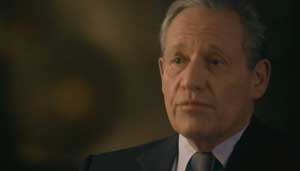
Woodward is assistant managing editor at The Washington Post and author of three books on the Bush administration and Iraq: Bush at War, Plan of Attack, and most recently, State of Denial. This is the edited transcript of an interview conducted on Dec. 13, 2006.

Why are confidential sources important for reporters?

Because they're the lifeline to the truth, or a better version of what goes on. Particularly now, when government is all about public relations and image and impressions, you have to dig under that, and people inside with knowledge are not going to talk to you if you identify them. You learn your first week as a reporter that the member of the city council will tell you one thing off the record and say something often slightly contradictory on the record, so you want to get to that best obtainable version of the truth. What does the councilman really think? Well, you have to find some way to dig under that and get that person or somebody else to say these are the real facts, not what we want to present to the public to enhance our political position or our product or whatever.

Is there a difference between a confidential source who, in a more traditional sense, people think of as a whistleblower, someone bringing information out that was hidden, and a confidential source who represents access, someone with power who won't talk to you, like the city councilman you gave as an example?

Well, it's all to the end of providing information about what's going on. If you take the case of the decision to go to war in Iraq, that 16-month period is really important, what happened. It's not about access; it's about authentic information that you can verify. You're going to get maybe some confidential source [who] may consider himself or herself kind of a whistleblower saying, "Oh, this is what really occurred"; for instance, learning that President Bush decided to instigate serious war planning about 78 days after 9/11. That's war planning for Iraq, when he called Rumsfeld, took him aside.

“We have to make ourselves more useful and do better and dig harder. And then you change the political climate. People will say: 'Ah, the press, [it's] useful' ... So, just keep at it.”

Somebody else might talk about that and just consider they're giving the story of the sequence and not think that they're blowing the whistle. Some people are going to take that information, say, "Oh my God, that soon, in 2001, there was secret war planning going on?" Others will say, "Well, of course there was secret war planning going on."

So you don't see a distinction between the two? Because I think many people think that there's a difference.

When you're trying to get to the bottom of a story, there really isn't. Sometimes you can convert somebody who's talking who [is] trying to spin things. Sometimes you can get them to give you information, what you would call admissions against interest, and you recruit them as a whistleblower.

I think to a certain extent, I recruited President Bush as a whistleblower over hours of interviews in which he said things that lots of people might say are admissions against his interest.

There's a critique that's coming, especially from people who are on the Internet, about this kind of above-the-fray position that professional reporters in the mainstream media take, that they have no biases. Don't you get involved with people on a certain level of trusting them or wanting them to keep talking to you because they've been so helpful?

But trusting them means, as Ronald Reagan said, "Trust but verify." I attempt to verify everything, including things that longtime sources tell me. I learned a long time ago that sure, you have opinions, inclinations; you have relationships. But it's like a doctor almost. Who are you operating on? It might be a friend; it might be somebody you don't know, somebody you even might dislike. But you do the operation as best you can. That's what a reporter is doing: trying to assemble the information; trying to get what Carl Bernstein and I always called the best obtainable version. Does that mean it's perfect? No. It's what's obtainable.

Let's talk about the Bush administration for a minute, because you've obviously covered them from Nixon to the present. Is this the most hostile administration to the press?

I think Nixon was much more hostile. We now know from the Nixon tapes and the convictions and all of the investigations that it was a criminal conspiracy that they were covering up, so the incentives to immobilize the press were as high as they might be.

In the case of the Bush administration, I haven't seen convincing evidence that there's a criminal conspiracy. They are secretive about decision making on all kinds of things, particularly national security. But their incentives are not, as best I can tell, to keep themselves out of jail. Their incentives are to keep the public from knowing how the sausage is made.

Well, you can say their incentive isn't to keep themselves out of jail yet, because they haven't had to deal with a hostile Congress until now.

That's possible, but we'll see. There are lots of important legal issues, debates about whether something falls under a certain law, whether they should disclose more, NSA [National Security Agency] wiretapping and so forth. But I haven't seen evidence of criminality.

Now, you're right. Maybe congressional investigations will so discover, or the press will so discover. But we're six years into this. Watergate really was something that occurred in the first Nixon administration and obviously ended his second administration more than two years prematurely.

Now, you say that they're not as hostile as the Nixon administration. Your critics say that you were on the outside with the Nixon administration looking in, or attempting to get inside, and with the Bush administration, they let you in. You were one of the few people who ever got inside.

But that's because I worked the outside and had low-level and mid-level sources who gave me information that then I took to other officials. People were willing to respond to one extent or another. People don't understand the method is not calling up the White House and saying, "I'd like to come interview the president." The method is, as I've written, sending a 21-page memo to the NSC [National Security Council] and to President Bush saying: "This is what I know. This is what I want to talk about, or some of what I'd like to talk about. Will you respond?" For two books, they were willing to do that. For the last one, they were not.

And were they willing to do it for the first two books because they thought they had a good story to tell?

I don't know. There always are mixed motives in something like this. And the books present a mixed picture. People try to pigeonhole it and say it's favorable, or that it's pro this or that. But anyone who's read it realizes that it is a pretty often unsparing examination of what they've done.

Well, on the surface at least, the titles of the book -- Bush at War, Plan of Attack, and then State of Denial -- it looks like you had a sea change in terms of your perspective on it.

That's not really the case. And again, if you read the books -- but they're long, and in the aggregate I guess they're 1,300 or 1,400 pages -- and it is not a sea change.

I want to go back 35 years ago, [to] the era of the Branzburg [v. Hayes] decision and the attitude of the administration toward the publishing of national security information. The same things are happening again: going after reporters for their sources and being generally hostile to anyone speaking out of school.

Well, interestingly enough, the most visible going after reporters for their sources, the Valerie Plame case, is one where they appointed an independent counsel and I think for a long time deeply regretted that. So in a sense, they lit the fuse on that. I don't know that they found any sources -- at least at this point -- or that they've prosecuted anyone [for leaking Valerie Plame's name]. So, there is a chilling environment, but I don't think there has been success, at least that I know of, in finding sources.

In the wake of the Branzburg decision and Watergate, the Justice Department promulgated guidelines -- guidelines that became more of a public recognition that reporters needed some protection for their sources. It appears that that truce, if you will, has broken down --

Yeah, that's a good term. There has been, by and large, a truce for a good number of decades on this --

-- in the federal courts and federal procedure. And it's the Justice Department that has to do these investigations, and the Justice Department is run by the White House, basically.

Yes.

So the Justice Department and the FBI is being involved in investigations of reporters for leaks of information, whether it's [Rule] 6(e) material or national security information, right? And there's willingness to subpoena reporters, which FBI officials have said to us was always the reason they never liked these cases, because they could never subpoena the reporters until now. So things have changed.

That's obvious, that it has changed. Your question, though, was, does it mean it's more hostile than it was in the Nixon administration? I don't see it, because they had much more to protect in the Nixon era.

That doesn't mean this isn't real or serious. My sense of it is that it is one of the many things they haven't totally thought through. I think it's kind of, "Investigate leaks; go out and do this." You hear about it, and as a journalist, I think it's really just awful public policy, unless they can really show serious damage. And I haven't seen any evidence of serious damage yet.

No? The president of the United States publicly praised these two [San Francisco Chronicle] reporters in the BALCO [Bay Area Laboratory Co-Operative baseball steroids] case for their reporting, saying it was in the public interest and that it was a great thing to do. Yet they're now threatened with jail.

My point is exactly that: I don't think they've thought this through. I think it is a clumsy war on the press, and it's got its own internal contradictions; namely, they don't have a good case of saying, "Look, these people got killed because of a national security leak, or this happened because of that leak."

So you just think they're clumsy?

Isn't that [the] evidence?

Well, I don't know. Because there's the BALCO case, these two reporters for the San Francisco Chronicle and the steroid situation. They've already jailed a video blogger [Josh Wolf]. … They say it's a federal case. He doesn't want to give up his videotape because he's afraid they want him to identify people. He's in prison, and he's going to be there until July.

It's an outrage that they would do something like that. And you've pointed out the inconsistency of the president praising the reporters who got the information about baseball steroids, and then they're investigating these people.

Look, there is such a thing as public policy and public interest. And based on the information available now, I don't think anything has really been damaged or harmed. Maybe there are cases that will come down the pike, but what they ought to do is just stop this and let the press do its job, as we make our own mistakes and have our own problems.

I truly hate the idea of reporters being called to grand juries. To do it I think is a matter of public policy and common sense and the political interest of the country. You have to have an absolutely compelling reason, and the compelling reason would be harm to national security or individuals, and I haven't seen it.

Let me just get one thing established: You believed there was WMD in Iraq. … You said as much publicly, right?

Yes. But I wrote a story for The Washington Post before [then-Secretary of State Colin] Powell's testimony saying there is no smoking gun on weapons of mass destruction. That means there's no ironclad, absolute proof.

Well, on Larry King [Live on CNN], you said on the question, "Suppose we go to war and go into Iraq and there are no weapons of mass destruction," "I think the chance of that happening is about zero. There's just too much there."

That's right. Exactly. And that was intelligence people telling me this, all of the arguments. In my book Plan of Attack, I outline how I had three sources who said the evidence on weapons of mass destruction is skimpier than they're saying; it's not ironclad. That's where the quote "There's no smoking gun" comes from. I proposed writing a rather strong story with a colleague, [Washington Post national security reporter] Walter Pincus. People didn't like it, thought it was a little too strong.

As I say in the book and deeply believe, I think I dropped the ball here. I should have pushed much, much harder on the skepticism about the reality of WMD; in other words, [I should have] said, "Hey, look, the evidence is not as strong as they were claiming."

The problem was the sources said they believed there were weapons of mass destruction in Iraq, even though there was no smoking gun, even though the evidence was skimpy. There was a historic case; Saddam had weapons of mass destruction before and had used them. And they had lots of circumstantial evidence. But I should have known -- and this is one of the lessons of Watergate that was not wisely internalized on my part -- if there's no smoking gun, you really aren't sure.

In Watergate, we spent a year and a half, investigators and the press, looking for that smoking gun. Nixon's tapes finally provided that, but it was only when that came out, the smoking-gun tapes, that he resigned. So there's a high standard of proof. And when I heard there's no smoking gun, I should have been much more aggressive. I've reflected on this. With my experience and the opportunity to report, I should have dug deeper.

Now, the reality is, the test of whether Saddam Hussein had weapons of mass destruction in Iraq -- that was a time before the war when you couldn't go to Iraq, or you certainly couldn't go and say, "I'd like to look for weapons of mass destruction." So there was not the possibility of getting that kind of ironclad ground truth that you would want.

At the same time, as we now know, there was skepticism in the bowels of the intelligence agencies that it wasn't absolute. But it was strong enough to have surfaced in the newspaper before the war.

So given that you and many other people reported that there were weapons of mass destruction, or you believe that there was evidence of that prior to the war --

What I reported is that the intelligence agencies believed that there were. And we all reported the statements of the president and Vice President [Dick] Cheney that there's no doubt Saddam has weapons of mass destruction.

But you believed it because everybody was telling you that?

Yes, that was the best obtainable version of the truth at that time. And I need to repeat this: I said that "there's no smoking gun." In some of these television interviews, I said the same thing. But there is the conviction and belief and certainty. And when I say the chances are about zero, that's the way it looked. It was totally wrong, and that's something you don't want to be wrong about.

It sent me into lots of introspection about what do you do and what level of skepticism do you have and so forth. The answer is, it should be absolute skepticism, and you should dig as deeply as you can.

I was going to say, us old dogs have to learn the old tricks again.

Exactly. Last year, in 2005, I happened to see the movie All the President's Men again. I've not seen it for about 25 years. I realized that it's all night work; the getting of information takes place at night. From that summer on, for this last book, I did a lot more night work because I realized the value of it. People speak more truth at night than during the day, and when they're at home and there's no appointment coming in at 11:00, you have an open-ended environment.

But when you saw your colleagues and others attack [New York Times reporter] Judy Miller as, in a sense, the person responsible for the WMD misinformation story, was that unfair? ... She said something to us very similar to what you said: She's "only as good as [her] sources." All her sources were telling her the same thing.

OK. But she had the wrong sources. And the excuse can't be, "I'm only as good as my sources." Now, if you talked to everyone and exhausted every possible avenue, then you can say that, but no reporter ever does that. So if your sources are wrong, you're wrong, and you have to accept responsibility for that. And you have to dig as hard as possible.

I think we all dropped the ball. My personal response is to think about my own role, and it should have been much more aggressive. If I correct that, then maybe I can criticize or point fingers at other reporters.

Was part of the problem in the WMD reporting reflective of the kind of reporting that goes on in Washington -- the desire for everybody to have access and to say, "If Bob Woodward has the president, I want the president," and to get closer inside the administration and accept then what these sources are telling you, because you want them to tell you more things as well later on?

I don't operate that way. In fact, for Plan of Attack, I quizzed the president intensely about the failure to find weapons of mass destruction, and he wondered: "Well, why is this important? Why should this be part of the book?" It's all laid out there. And he finally -- this was nine months after the war -- he finally said, "True, true, true, that we haven't found weapons of mass destruction." But it took me many minutes and a couple dozen questions to get him to acknowledge that.

Well, let me take you now back to the Valerie Plame matter. When you first heard that [her husband, former Ambassador] Joe Wilson said there was a smear campaign being orchestrated against him by the Bush administration -- and I believe that came out pretty quickly after Wilson's] op-ed piece appeared -- what was your reaction?

Who uses the word "smear"? Joe Wilson does, and others. He [Wilson] was on a campaign, and as I'm sure you're aware, he said very different things at different points in all of this, and this was the summer of 2003. I never saw any hard evidence of a smear campaign. [The Bush administration] were trying to discredit him because they believed he was wrong, and congressional investigations have shown that he misrepresented what he said.

When did you first learn about Valerie Plame's identity, and what did you make of it at the time?

It's so bloody complicated. It turns out I was the first reporter to learn that Joe Wilson's wife worked for the CIA. Now, I was told that she was a WMD analyst -- very important distinction -- not that she was an undercover operative.

A month later, it came out in Bob Novak's column. Novak wrote a follow-on column saying he learned of it from somebody who is not a partisan gunslinger. It was an offhand remark. That's exactly the way I learned it. Richard Armitage, the number two official in the State Department, has identified himself as Novak's source and my source.

It was a classic case of doing a long interview and Armitage gossiping at the end, and there was no significance or effort to discredit Wilson. He was merely saying his wife was a WMD analyst and helped him get the assignment to go to Africa to see if there was some connection between Niger and Iraq on yellowcake uranium.

But a leak investigation began. ... Did you think you were going to get questioned?

I thought it was possible, sure.

Never happened, though, for quite a while.

It didn't. That's right. It's the value sometimes of not telling anyone.

Well, you didn't write anything.

What would I write, that somebody told me the same thing that we now knew? It was already public through Novak. What would I say? I'm not going to identify my source. And it was not that she was an undercover operative; it was that she was an analyst at the CIA. There are all kinds of analysts at the CIA.

See, there was the confusion in this. There was no story for me to write. I guess it was a couple of years later, when Scooter Libby was indicted and the prosecutor [Patrick] Fitzgerald said that Judy Miller was the first to learn about this from Scooter Libby, the vice president's chief of staff, I realized I was the first to learn about it 10 days earlier. I felt kind of -- my wife says, "The reporter's juices were going" -- "I know something that may or may not be relevant."

I called my source and said, "You told me this on this date 10 days earlier." And the source said, "I'm going to the prosecutor, and you're released to testify." I was the aggressor. I was the one getting this out in the open. No one forced me; no one compelled me. I thought, there's something in the public record here that is wrong. Prosecutors made a public declaration. A couple of times I tried to get Armitage to let me talk about this and go with the story --

Prior to this happening?

Yeah, prior to this, and he would not discuss the issue with me at all. So there's nothing I could do as -- I think my mistake was not telling Len Downie, the editor of the Post, about it. But as he has said many times, it would have been nice to know, but there's nothing we could do. There was no story to write; there was nothing hidden.

It was a case of what reporters do, which is you have a piece of information, and I went back to the source, tried to see if there was some way I could put it in the paper or get the information out. He said no, but released me from the confidentiality agreement.

But you saw, starting with Novak's column -- in the beginning [of the] investigation -- and by the way, I should say that my own sources say that prior to Fitzgerald being appointed, that the investigation was concluding that there had been no violation of the law, of the agent identification act [Intelligence Identities Protection Act] --

That's most interesting, isn't it? That's what I said publicly all that time: that there was no violation that I knew of because it was offhand. There was no intent to smear or anything. It was gossip. And it wasn't that she worked as an undercover agent; it was that she was a WMD analyst. Now, we now know a number of years later: Armitage. No one has been charged with the crime of outing her or revealing her identity.

And this is a classic case of a lot of energy and airtime and ink over something that really didn't amount to a violation of the law, as best we can tell. At least the prosecutor has so said. And he has indicted Scooter Libby for a perjury charge, which emerged in the course of his investigation.

So I was always saying and always felt -- because I had the experience of how I learned this information, and quickly ascertained, and then much later learned for sure, that Novak had the same source. And it fit with what Novak had said publicly -- that this was kind of an accident, at least this part of it, certainly not a crime. And the prosecutor now agrees. Much ado about nothing.

But in the process, certain things happened. For example, your colleagues at The Washington Post and [NBC's] Tim Russert, [Time magazine reporter] Matt Cooper, Judy Miller, all wind up getting subpoenaed to a grand jury -- something which the Justice Department and apparently Attorney General [John] Ashcroft were unwilling to do, but a special prosecutor did. Did that process of everyone walking in to testify in a sense weaken the profession, weaken your ability to protect your sources?

Yes, sure, but I hope not critically. And this, too, shall pass. We have to keep doing what we're doing and make our product better, and by so doing, I think the government will see that there's a larger public interest in what the press does.

Everyone's testified. And the backup question is, when this started to happen, if you had come forward and said, "I know something about this case," as you did later on; if you and Tim Russert, the bigger names in this process had said, "We're not going to cooperate with law enforcement; we were doing something in the public interest; we were doing our jobs as reporters"?

Yeah. But nobody had subpoenaed me, and I didn't want to get involved in this process. I knew based on firsthand evidence, which has now been corroborated, that this was not a crime; that this was not a big deal. I knew that. I had personal knowledge of that.

Well, but you knew that subpoenaing these reporters to testify was really just damaging, if you will, the reporter's privilege to maintain confidentiality.

Well, I didn't know what their role was or what information they had or what other people had done, so I couldn't attest to it. But on the overall, I could attest, because as we now know, I was the first person to have [been] told this. So I'm pretty comfortable -- not perfectly comfortable, but pretty comfortable -- with the way I handled this. And I don't know an alternative course other than telling the editor of the Post, who would have said, "We can't do anything."

The point is -- and here's where I think a lot of the discussion of this is off-center -- and that is the idea that people were hiding something; that reporters were protecting government officials who were trying to smear this Joe Wilson. I have no evidence of that, absolutely zero -- in fact, contrary evidence. And if somebody in the administration had told me something to smear someone or to, "Hey, let's out this guy's wife who's a covert CIA operative," I'm not sure what I would have done. I'm pretty sure I wouldn't have written a story about it, and I would have dug really hard to try to find out what's going on. And if there were some sort of campaign or some sort of effort to do this, that's the story. Based on what we know now, I'm not at all sure that happened.

But the CIA did make a referral.

Yeah, but the CIA makes referrals all the time, any time classified information or information they think is classified appears in the news media. Somebody told me that happens about once a day.

So this was a situation that got of control?

It did.

In part because much of the media called for a special prosecutor? The New York Times did, politicians did, and lots of what I would call partisan journalists did, right?

Yeah, right. That's true. But, you know, be careful for answered prayers. This is a case of that happening. At the same time, at the end, I think it validated the process of reporters talking to people: We're trying to get information; we're trying to write stories; we're trying to piece things together. People operate differently. I looked at Novak's story when he wrote it, and I thought, what's this about? Why has he done this? I didn't think it rose to a level that a story should be done.

Well, he testified apparently, and it looks like a number of reporters will testify in the trial itself. That can't be good for maintaining or getting confidential sources.

I think that's right. At the same time, I was released by my confidential source. He requested that I testify because the information I had was exculpatory in terms of some sort of crime or some sort of dastardly conspiracy going on.

And there was no intent to violate any agent identification act from the beginning?

At least on his part, sure wasn't. He said WMD analyst. That's something that's lost in the hurricane of all of this.

So was this a problem to a certain extent -- I know you've mentioned it before -- in the kind of herd mentality that the press got into around WMD; that the story of Valerie Plame, and that she and her husband had somehow been wronged, became kind of a popular frenzy in the press?

Well, there was a frenzy about it. But remember, there was a valid investigation going on. Fitzgerald was calling lots of senior government people. There was lots of information that something perhaps had gone on.

It's like the Clinton-[Monica] Lewinsky affair. You don't know how it's going to end in history, but when you're in the middle of that history, you go balls to the wall, as [former Washington Post executive editor] Ben Bradlee would say. You are very, very aggressive. Now, I think we're better off in that posture than saying, "Well, maybe this isn't going to turn out to be such a big deal." I think it's OK to be aggressive. Again, as Bradlee says, the truth emerges. And it does.

In the case of Valerie Plame, what was it about? It's allegedly about the vice president's chief of staff committing perjury and a lot of conversation going on between journalists and government officials that is routine, if not boring, and kind of: "Did you hear this? What about that?" it's not -- no evidence I've seen that there was some sort of conspiracy.

But I can hear somebody out there saying that really what this was about, in many people's minds, was that Joe Wilson raised a serious question about the validity of 16 words the president of the United States used to justify the invasion of Iraq, and it was the first factual challenge to those allegations that you and most of the press, with, let's say, the exception of Knight Ridder reporters, didn't report.

Well, it's not as if we had the information and didn't report it. If you really look at it in context of 16 words, as I recall, it said "British intelligence"; the British believe this is the case. He'd attributed it to the British. It didn't say American intelligence believed it. It was not one of the key judgments in the National Intelligence Estimate [NIE]. It was not, in fact, a central part of the case.

It was a part of the case that Wilson, after the war, saw a weakness and kind of changed his story, at least according to the Senate Intelligence Committee's report on this, about how he viewed the evidence that he found in February 2002 when he went to Niger. So now it's, "What does all this mean?"

It means, for me, a couple of things; first of all, that the real issue in the summer of 2003 was we'd been in Iraq for three or four months and hadn't found any weapons of mass destruction. That was the real story. That was a big deal. That was just pulsing in the background of all of this. And the Bush White House -- and this, I think, is one of the big mistakes they make -- is so secretive and hidden, that people thought, oh, this is going to be the issue that will pry it open.

People have written that there were the echoes of Watergate in all of this. Well, we now know there's no echo of Watergate. This isn't Watergate. ... What is really important is the war and the intelligence failure: to say there was WMD and to get that wrong. The CIA had that flat wrong, and that was a central reason for going to war.

One side of the story is the WMD story. The other side is the injection of Patrick Fitzgerald into the investigation. He comes up with waivers, a new tactic by prosecutors to get the confidentiality agreement between reporters and their sources broken so that law enforcement can subpoena reporters. And he successfully gets all the reporters involved, eventually Judy Miller and yourself, to testify.

He didn't get me to testify, no. See, that's where --

Well, Armitage never gave you up?

But he didn't give me up. I mean, I'm the reporter; I never gave Armitage up. He went to the prosecutor and said: "Hey, look, Woodward called me and said I told him this. He gave me a waiver." It wasn't just a waiver; it was a request: "Please testify. I urge you to testify. I almost beg you to testify." So I wasn't giving anyone up; he wasn't giving anybody up.

Well, but the ultimate end here is that the reporters all testify.

Yeah, right.

And now we have Patrick Fitzgerald in court in New York getting the records of The New York Times in a completely separate story. We have him getting Judy Miller to testify in a separate trial in Chicago related to a terrorism case [involving mosques accusing of financing terrorism]. And we have the Justice Department in general, if you will, more willing to subpoena reporters, whether in San Francisco over BALCO and elsewhere. So it's had a significant change in the behavior of the Justice Department, if not the administration as a whole.

OK. But the "it" here is a whole series of things and an attitude. My point is that I think it's a serious public policy mistake by the Bush administration and prosecutors to do this, and it will reap bad things. It will make it more difficult for us to do our job. Suppose it turns out in this administration or another administration something really bad goes on -- not necessarily criminal, but in the national security area or the kind of things we saw in the Nixon administration. You need be able to get at that, and you need the confidential sources. If we can't establish those relationships of trust, if it's more difficult, we're not going to get there. We're not going to get there fast enough.

Now, as all of this has washed out, I know I can still function with confidential sources, have those relationships of trust, and in a practical sense, it has not hurt my ability. In my latest book, I have all kinds of notes of classified meetings, classified documents, private conversations on sensitive intelligence matters and so forth.

So I'm able to function. The question is, can you do it for a daily newspaper or television station? Can you get it really fast enough? And speed is important. And they're slowing down the process.

They are slowing the process down?

They are slowing it down. But I don't think in-depth reporting has been dealt a fatal blow by any means.

But as you just said, there was classified information in large amounts in your last book. So you have to assume the CIA or any other agencies [have] sent all the referral letters out about all these classified pieces of information.

I don't know. The story I'm telling here is about a war and the anguish of it and the failure to tell the truth about it. I think even the most aggressive lawyer would look at this and say: "Does the public need to know this? Is this really harming national security?" And I think the answer would be that the public does need to know about it.

This is exactly what happened in Watergate. At one point there was a grand jury subpoenaed, but it was withdrawn -- or a civil suit subpoenaed. But no one ever came after us in our sources because, by and large, people looked at it and said: "You know what? We need to know this. This going on. This is important."

I think in the Iraq war, on the information I have in my book that's been in newspapers or been in other books, people look at it and say, "We want to make some sort of case against a reporter for telling the public what the public ought to know." That's the ultimate defense for us, to present a product that people say, "Wow, that's new; that's authoritative; that's good to know."

The consequences of all these people testifying in the Plame case and then the special prosecutor, and now more subpoenas going out, and you have the BALCO case in San Francisco. This is happening in a time period where news organizations are being pressured financially as well. So is this a new crisis situation?

No, it's not a crisis. The remedy is a better product. Look, in the newspaper business and reporting business, we produce stories that people say, "That's important; that's significant."

We have to make ourselves more useful and do better and dig harder, and then you change the political climate. People will say: "Ah, the press -- oh, [it's] useful. We know a lot about the Iraq war or about terrorism or steroid use in baseball because of the press." So just keep at it and--

-- go to jail. But the next guy should just keep reporting; get more people to take risks?

Yeah. We live in the risk environment as reporters, so that's not worrisome. Hopefully people won't go to jail. Hopefully they will be aroused, ... and public policy will shift. I think [at] the end of 2006, the climate has shifted.

The problem in American society now is not the press. If anything, the public wants the press to be more aggressive, tougher, and dig deeper. So that's exactly our job. ... The press shouldn't become so self-absorbed that if there's a barrier in the road, or there's a snowstorm, or there's a grand jury investigation, we flee from the contest.

There's always been that potential contest really, and it's not that we welcome it; it's part of the price of doing the job. I'm not going home and wringing my hands and saying, "Oh my God, I can't build relationships of trust with people." I can. And that's the mother's milk of this business, as you well know.

You don't change the way you use telephones?

Sure, but it's a minor inconvenience And if this is part of the context in this era, fine. I think it will go away, because the reason the First Amendment has survived and been by and large embraced -- sure, people get mad at reporters, but basically, it works.

You were commenting to me earlier about the change in the newsroom. The newsrooms have changed.

Yes, they have. I remember working with Carl Bernstein on Watergate, and we'd do a draft of the story on 6-ply paper through a typewriter, and the copies would go to the editors. They would look at it; they would call us, and they would ask questions. They would say: "Check more sources. Have you done this?" We could work two to three weeks on a story before it would be published. Now if it looks like you have the inkling of an advance on a story, they say, "Can we get it on the Web at 10:00 a.m.?"

What is the consequence of this? The consequence of this can be fatal, and that is we don't spend time against the problem, and good reporting requires weeks, months, sometimes years to get to the bottom of something. If it can be short-cut every moment, we say, "Oh, let's put this on the Web" -- you can't have even a day, let alone a week or month to work on it -- our product is going to be a series of incremental snapshots of what we think might be going on according to conventional wisdom. There won't be confidential sources; there won't be documentation; there won't be this kind of digging that a good story requires.

But we've been around the country. We've looked at what's happening at the L.A. Times for the investors, and the management are saying: "You have to go local to survive. You have to go on the Web. You can't be another New York Times." It appears that the industry is moving in that direction. Is that a bigger threat than the government --?

Some of the industry is moving in that direction, but at The Washington Post, I think the investigative room is bigger than it's ever been, and the commitments by Don Graham, the CEO, and Len Downie, executive editor, is more in-depth reporting. So you can do it. It's expensive, but I think it pays off. We just need to make the payoff a little more evident to the public.

Why should the public care about you or your colleagues being subpoenaed to find out your sources?

Good question, and it's really easily answered now in the middle of the Iraq war. The Iraq war is the most important thing going on in the world and in this country right now. It is the spine of who we are. Those of us who have written about it -- tried to understand it, tried to understand the personalities and the evolution of the decision making -- live on confidential sources. The chapter notes in my book say -- Chapter 11 -- "Eight confidential sources provided this information."

That information would not be available, people wouldn't know about the failure to tell the truth in the Bush administration about the war and the level of violence on television and the newspaper didn't cover this bombing or that bombing. The hard numbers they kept classified for a long time, until it's published in my book.

People look at that … literally hundreds, thousands of people in one form or another, they look at this and say, "Oh, OK, that's what's going on."

What's really going on in a war is key, and I think people get that; people understand that. ... We're still a First Amendment society. Does that mean that always everyone's going to love it or accept it? No. And we have a lot of work to do to re-establish trust or build more trust with the public, but that's done by saying, "Here's something you really need to know."

home + introduction + watch online + interviews + parts 1 + 2 + part 3 + part 4 + join the discussion + producer chat
site map + press reaction + dvd/vhs & transcript + credits + privacy policy + journalistic guidelines
FRONTLINE series home + wgbh + pbs

posted feb. 13, 2007

FRONTLINE is a registered trademark of wgbh educational foundation.
photo illustration copyright © entropy media
web site copyright 1995-2013 WGBH educational foundation