| 
|
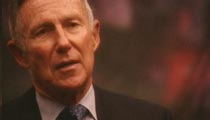
L.A.P.D. police chief for fourteen years (1978-1992), Gates had risen through the
ranks at the arm of the department's legendary leader, William H. Parker.
Gates' blunt-speaking and pro-active policing garnered controversy and
ultimately led to his resignation following the Rodney King beating. FRONTLINE
interviewed Gates on February 27, 2001.
| |
L.A.P.D. History
Help me to understand the L.A.P.D. as it existed before the torrents of the last
decade, and the storms, and the controversy. What kind of police force was it?
. . .We were the finest. We were the best in the world. We were a department that
people came from all over the world to study, to look at, to see how we
accomplished so much with so little; and we did.
It was a department that was really raised up into professionalism through
William H. Parker way back in the 1950s. That's where professionalism came into
law enforcement. It was a department where you had honesty and integrity
stamped right on you when you came into the Los Angeles Police Department. If
you violated that, or if you were a dishonest cop, you were terrible. We got
rid of you as quickly as possible. . . .
It was a department where we had very few police officers. . . for the vast area
that we covered. We had a larger area in the Valley than all of Chicago.
Chicago had 13,000 police officers, and we had hardly 1,000 to cover the
Valley. . . . I will admit, we were a very aggressive police department. We went
after crime before it occurred. . . . Our people went out every single night
trying to stop crime before it happened, trying to take people off the street
that they believed were involved in crime. That made us a very aggressive,
proactive police department.
And you were successful.
We were successful.
Emergence Of Gangs
By the late 1970s, and certainly by the 1980s, the demography of Los Angeles
is changing. It's a dynamic place. The city itself is changing. The nature of
crime, in some important ways, was changing, too. Suddenly there are
gangs--everywhere, it seemed--and this whole new culture of narcotics,
violence, drive-bys, and all of that. How does the L.A.P.D. perceive that problem
and respond to it back then?
We did perceive it, and it was not an easy problem to deal with. Gangs in Los
Angeles, Hispanic gangs, had existed for a long period of time, but they were
not very mobile. They stayed in their communities and they supposedly protected
those communities. That's total nonsense, but that's what they were supposedly
doing.
Black gangs began in the early 1970s. The black gangs began with the Crips and
the Bloods, particularly the Crips, and they were highly mobile. They did not
stay in their communities. They moved about. They tried to establish some kind
of territory, but they were very, very aggressive, and they moved about. They
committed crimes all over the city, and then went back to their particular
community as refuge, because they were supported by a lot of people in that
community.
So was there an explosion? Suddenly it seemed like the gang problem in Los
Angeles, by the mid-1980s, was a pretty infamous problem.
Yes. It began to develop in the early 1970s. Then there was the infiltration of
narcotics, and the fact that gangs found out they could make money by peddling
narcotics. . . .
That's a whole new area of concern that the L.A.P.D. has to address. How do you
address it? Do you get more cops?
We didn't have more cops, so we had to specialize. We put together some gang
units. . . . We put together what we call CRASH, that today has gotten a bad name.
It should not have a bad name, because they have done a magnificent job.
 We put them out there so that they could learn more about the gang culture; get
to know who the gang members were; get to know what all of that graffiti meant
that is an indicator of the gang; get to know what the tattoos were; get to
know all the gang monikers; develop some informants within the gangs, so that
if a murder went down, or a drive-by shooting went down, they could pull in the
information they needed. An awful lot of gang killings were solved because of
the expertise that the CRASH units had. We put them out there so that they could learn more about the gang culture; get
to know who the gang members were; get to know what all of that graffiti meant
that is an indicator of the gang; get to know what the tattoos were; get to
know all the gang monikers; develop some informants within the gangs, so that
if a murder went down, or a drive-by shooting went down, they could pull in the
information they needed. An awful lot of gang killings were solved because of
the expertise that the CRASH units had.
Unfortunately, we were never able to convince the city council that we needed
to make this into a specialized unit that had the kinds of experienced police
officers that we needed. We had to use police officers who did not have "P-3s,"
which are more experienced police officers. We had to use new police officers,
young police officers, but they did a good job.
What kind of cops went into that unit?
You try to select the very best: individuals who are not afraid, people who are
willing to work, people who are willing to get out and mix with the gangs, and
get a better understanding of the gangs, who are not intimidated by the
gangsta. The gangs and their violence can be intimidating, even to a police
officer. But we had people that were able to go out and do that, to acquire the
expertise. . . .
As the chief, did you see that these units were effective? If there is a war
on gangs, were you all winning it?
I think so. I think we were bringing gang killings down substantially from what
they were in the 1970s, and into the 1980s. We were bringing gang killings
down. There was a proliferation of gang killings, again, fed by the narcotics
industry, yet we were slowly bringing the gang killings themselves down.
I did a lot of things that people criticized, because I was so concerned about
gang killings. We put an awful lot of police officers into the South Central
portion of Los Angeles in Operation Hammer. I'm still being criticized for
that. But we went in there with a desire to do something about very oppressed
people.
The reason I went for Operation Hammer was the fact that there was a situation
where some people who were having a birthday party. They came out, and were
saying "Goodbye" in the evening. And a gang came by. There was a drive-by
shooting, and shot down about six or seven of these people right on their front
lawn. As I talked to people, they said that they couldn't eat dinner at night,
because they were worried about the drive-by shootings, so they'd eat on the
floor. They were afraid. Kids were afraid to sleep in their beds. They couldn't
sit on the front porch, because they were afraid of gang killings.
I finally said, "Enough is enough," and I put 1,000 police officers in what we
called Operation Hammer in the South Central portion of Los Angeles. It was
very, very effective, tremendously effective, but a lot of people criticized
it. A lot of people criticized it and said, "It's a terrible thing. You're out
there harassing all these people." We were harassing the gangs. What people
don't know is that complaints were filed on 70 percent of those we arrested.
In other words, these were actually good busts. You were arresting
criminals. You weren't just picking up people out of the street because they
were--
That's right. You know, we talk about civil rights violations. No one seems to
talk about the civil rights violations of the good people out there . . . that are
caused by gangs. Those gangs are so oppressive to those individuals who live
within that community. All we talk about is have we violated the civil rights
of these idiot gang members.
Let me ask you something about those good citizens--the people who were
eating on the floor because they were afraid somebody would come, who wouldn't
walk their daughters' friends out the front door without looking both ways to
make sure there wasn't some guy coming by with an automatic weapon. As you
really got aggressive with the gangs and began to see some success there, some
suppression of the violence and of the gang activities, did that part of the
community ever express gratitude or satisfaction with the police?
Sure. The good people did all the time. But the community activists? No.
Absolutely not. We were out there oppressing whatever the community had to be,
whether it was blacks, or Hispanics. We were oppressing them. Nonsense. We're
out there trying to save their communities, trying to upgrade the quality of
life of people. . . .
Rodney King Beating
Let's go through the 1980's. The war on gangs was a relatively effective
exercise. The city of Los Angeles was being, at least as the world perceived it
and as Los Angeles perceived it, fairly well policed. And then arrived that
night in 1991 when that videotape occurred, the endless loop of the Rodney King
incident out in the Foothill Division. What did you think when you first saw
that incident on tape, or heard about it?
. . . It looked horrible, no question about it. . . . Having somebody [who]
appeared to be being hit over the head with a club--it repulses you. I've seen
it in the field on many occasions, but it repulses you, and it did me. I said,
"What's going on here? What's happening here?" But I'm smart enough to know,
and I've been through so many of these things. So I said, "Hey, we've got to
find out what took place here. Let's get the information." . . .
The investigation went forward, but no one really listened to the Los Angeles
Police Department. This was so caught up in the racial aspects of the thing.
There was nothing racial about this, absolutely nothing racist about this. This
individual was speeding down the highway at 100 miles an hour, driving that
little Hyundai 90 miles an hour. He was a parolee, just out on parole, with a
snoot full of beer and probably marijuana, totally avoiding the direction of
the police, and running from the police. . . .
So when he got stopped, the two who were in the car with them, they're both
black. They get taken out. They followed the directions of the police officers.
Nothing happens to them. Rodney King decided he wasn't going to follow the
directions of the police officers because he didn't want to go back to prison,
and he knew he was violating his parole. So he aggressively attacked the police
officers, and they used those damned batons, which I am totally opposed to.
People saw that and that grainy film, and they saw this black man being beaten
by these police officers with this baton. And unfortunately, they did go too
far. They did go too far.
They went too far. But what you're saying is that there was a context to it.
The context was, of course, not what was played over and over and over again.
The image of the L.A.P.D. that was sent out to the world was this racist
organization that took this opportunity to express its racism by brutalizing a
black guy.
The media, particularly the electronic media, began giving that impression by
playing that tape over and over again. And then, of course, everybody that had
an opinion about what took place out there; they came in, they chimed in, and
they gave their opinion; and it did look like racism. "My goodness, here is
this black person who is being beaten. It looks like the Old South."
That's the impression that was given, but a totally false impression, because
there was nothing racist about it. No one knew what Rodney King had done
beforehand to be stopped. No one realized that he was a parolee and that he was
violating his parole. No one knew any of those things. All they saw was this
grainy film and police officers hitting him over the head.
I will be the first one to tell you that, when you see somebody being hit with
a baton, it is repulsive. It repels me. But I will also tell you that that's
the only weapon that police officers have. They have a gun, they have some
pepper spray, and they have a club. The real weapons that I believed in, which
was the upper body control holds, where they would tie up with Rodney
King--that was taken away from them.
What they were left with was a prehistoric instrument, a club, to hit him with.
That's what they were told to do. That's how you take the person into custody.
That's what they were told to do, and they did it. The problem is they went too
far. When he was down, they should have taken him into custody, rolled him
over, and handcuffed him. When you go back over that tape, you'll find out that
they tried that. They tried that. They had four officers that went in and tried
to do that, and he threw them off. He's a big man, a very strong man, very
strong. Then he attacked the officers, and that's when you started seeing the
officers hitting him. And, again, they went too far. But when you stop and look
at it . . . a jury looked at that, found three of the officers not guilty, and had
a hung jury on one of the officers, which was correct. . . .
Do you believe, in retrospect--and putting yourself back at that
moment--that there were forces interested in exploiting that tape, that
moment--forces that had an ax to grind with the L.A.P.D.?
I don't think there is any question about it. It was a great opportunity, a
great opportunity. They had the Reverend Jesse Jackson coming out here every
week. He didn't even know me, and he stood up and denounced me, over and over
again. He knew nothing about me, knew nothing about the policies of the Los
Angeles Police Department or what we had done in all communities throughout the
city--our community relations, our community efforts. He knew none of this. He
just blasted Daryl Gates and the Los Angeles Police Department. Al Sharpton
came out. He knew nothing about the Los Angeles Police Department, knew nothing
about me.
These people . . . filled the atmosphere with hate: hate, hate, hate. Those poor
Los Angeles police officers. I know--I talk to them, day in and day out. They
sat back and said, "Hey, what did we do? What did we do? We go out every day.
We try to do the job in the best way we know how. We know what service is all
about. We know. We try to help people. We try to keep them safe. What did we
do? What did we do?" All I could tell them is, "You didn't do anything. You did
your job. You've done a good job. You're damn fine police officers, and this is
a political thing, pure politics."...
I think that presidential politics came into this. [Warren] Christopher was
Clinton's chief advisor and ran his campaign. And there was the other guy who
also ran his campaign--I can't think of his name right now--but he was on the
Christopher Commission. I was a good friend of Bush's. Let me tell you, if you
don't think presidential politics were involved in this, you're foolish. They
were. They were definitely involved. I'm convinced of it. . . .
[When the jury returned] a verdict of "not guilty" [in the Rodney King
case], tell me where you were that day.
. . . I did see, on TV, that they had found three of the officers not guilty
and they had a hung jury. I thought, "OK we've got a hung jury. Now we'll go
back and retry this case with the one officer that I thought really went too
far." Two officers went too far. One was on probation and was just following
his training officer. But I thought one had gone too far.
So I said, "Hey, that's good, justice has been served." And then, of course,
the rioting began, which, quite frankly, surprised me. . . . And we were slow to
react, there was no question about it. Slow to react. . . .
One of the things that's most fascinating about the Rodney King incident
were the furies that were unleashed and the opportunism, the political
opportunism, as you described. One of the results was the commissioning of a
group of people, headed by Warren Christopher, a prominent Los Angeles
attorney, and not necessarily a fan of the L.A.P.D. or of yours, and he and that
group produced the Christopher Report. What was your view? Did that do any good for the L.A.P.D.? Was it an
illumination? Did it advance the cause of law enforcement in Los
Angeles?
Absolutely not. They made no recommendations that were anything that we hadn't
already been doing, and I implemented 94 of the 140 before I left. They were
easy to implement, because we were already doing them. In the preamble to each
one, we would say, "We're going to do this better. We already do it, but we're
going to do it better." . . .
In the late 1980s, a lot of new folks came into the force--a great thing for
the L.A.P.D., I would guess.
I thought so. I must admit that I was one of those that believed that we were
going to take the opportunity to bring in more police officers. . . . We had a
great deal of seized funds, that is, seized through narcotics seizures. Those
funds were there. [I was] asked if I would object to using some of that to hire
additional people, and I said, "Absolutely not. We really need additional
people." The mayor objected to it, but it was a political thing, and we finally
prevailed and got the opportunity to hire more people.
Unfortunately, when you do that, you go out and sometimes you slip, in terms of
your background investigations not being as thorough as they ought to be. Plus,
there's the fact that we were under a consent decree that says you have to have
so many women, you have to have so many blacks and so many Hispanics. You've
got to have a certain percentage, and we're trying to hire.
As a result, if you don't have all of those quotas, you can't hire all the
people you need. So you've got to make all of those quotas. And when that
happens, you get somebody who is on the borderline, you'd say "Yes, he's black,
or he's Hispanic, or it's a female, but we want to bring in these additional
people when we have the opportunity. So we'll err on the side of, we'll take
them and hope it works out." And we made some mistakes. No question about it,
we have made some mistakes.
No police department should hire more quickly than they can assimilate the
people that they bring in, and we did. I take responsibility for it. It was the
first opportunity I had to hire, and I wanted to do it, and I take
responsibility.
Some folks became cops, L.A.P.D. officers, who shouldn't have.
That's right, no question about it. The background investigators slipped, and
probably because they were overwhelmed. They hadn't had that many candidates
ever before, and suddenly they were overwhelmed, and they slipped. They did not
do the depth of research that's necessary in order to really weed out those
that ought not to be police officers. Some people were slipped in that ought
not to have been police officers.
Some people get in who shouldn't have. Would you say that among those people
were David Anthony Mack, Rafael Perez, Kevin Gaines--those sorts of
officers?
I don't think there is any question. I was told that David Mack, for example,
has a relative who is a major narcotic dealer. What's this? Nobody turned that
up? It's amazing that this guy would ever get in. I don't know all of the problems with Rafael Perez, but I understand that he
had several problems. . . .
Why did they [let them in]?
Again, simply overwhelmed. We had not had the opportunity to hire people
before. We suddenly get all these individuals. We don't have the staff to
really do the in-depth backgrounds that we ought to have done. And perhaps an
investigator from here or there said, "Hey, in order to get all the people we
need, we need another Hispanic, we need another black," and that's the way they
slipped through; just a mistake. . . . You know, we have such fine black officers,
and such fine Hispanic officers, tremendous guys. You don't need these [other]
kinds of individuals. You really don't. . . .
Gates Resigns
You believed that the L.A.P.D. was a righteous department, that it was a good
department. It wasn't a corrupt department. You were proud of the department.
Why did you leave?
I've looked back and I've asked the same question, "Why did I leave?" And I
left really because there was so much political pressure on the department, the
Christopher Commission, and all of these things. I thought, OK. As you probably
remember, in the last days, I was very, very critical of politicians. I was in
the newspapers every single day, criticizing somebody. And I finally thought,
"Hey, it will be better for my police officers if I get out of here. The focus
of attention will not be so much on me. Maybe people will recognize what fine
police officers they have out there, and maybe all of this will go away."
I really believed that I was hurting my police officers by staying, so I
reluctantly retired. To this day, I think back, I should have stayed another
year and straightened out things. I think I would have been better off if I had
stayed another year. . . .
They brought in a chief of police from outside. That was a mistake. They
brought in a chief of police from the East Coast. That was a mistake. . . . He
came in a very nice guy, and all of that. But he was an individual who did not
understand the Los Angeles Police Department, did not have what people ridicule
and say--very divisively--"the L.A.P.D. mentality," which is really a wonderful mentality. It's a
mentality of police officers out there wanting to do the job.
He came in and didn't understand any of that. He didn't understand the
structure of the Los Angeles Police Department, and he undermined that
structure, because he didn't understand it. As a result of that, you set the
stage for what happened in Rampart.
How?
He took away an awful lot of the kinds of things that are necessary in order to
make sure that you don't have police officers doing things that they ought not
to do. You have audits. You have inspections. You have close supervision,
particularly of specialized units, like gang units. You have very, very close
supervision. You need that supervision. It's important to have that
supervision. He took all of that away.
I had a lieutenant in charge. I had sergeants that understood what all of this
was about, what gang investigations were all about. They are the ones that
supervised and took pride in the supervision of the CRASH officers. He took all
of that away, and he put them in the various areas. He put them into Rampart
and didn't give them the supervision. He had the regular uniformed sergeants
supervising. Uniformed sergeants don't understand the gang activity, and they
don't understand how the CRASH units operate.
And then he really screwed up by taking the CRASH units away from the
supervision, and putting them down at another location outside of Rampart,
where they were on their own. What in the hell did anybody expect was going to
happen? And it happened. It happened.
. . . What importance did the city of Los Angeles, the politicians who hired
your successor, place on the fact that [your successor, Chief Williams] was
black? How important was it that the guy who comes in next has to be a black
chief?
I think it was absolutely essential. Absolutely essential. . . . The pressure was
coming from the black community to get rid of me. The pressure on the whole
situation, the Rodney King situation, was black pressure. So you had to have a
black chief, and that's what they did. They brought in a black chief. Again, a
nice guy, but totally incompetent to run the Los Angeles Police
Department. . . .
When, of course, Chief William's time as chief was considered a failed
tenure, his contract was not renewed. He wasn't brought for a second term. He
was replaced from within L.A.P.D. When they went looking for a successor to Chief
Williams and found Chief Parks, do you think that race played a role in that
selection?
You know, I don't know. Dick Riordan made that decision. I think he probably
was under a great deal of pressure to have a black chief of police, and I think
he looked at the two leading candidates and said, "This one is black, and this
one is not." There were some politics that existed in it, I think, yes. Not to
say that Bernie isn't highly competent. . . But I think that Dick Riordan needed
the support in the black community, which he didn't have, and he saw it as a
very good political move
And Bernie Parks is a cop.
Bernie Parks is L.A.P.D., and he's a cop through and through. . . .
The Rampart Scandal
You hear a story about a man driving down the street in his car, who looks
over at a fellow motorist, starts threatening him. They get into a little road
rage thing. The other guy tries to get away. He's pulling up next to him,
threatens to cap him. Pulls out a gun and points it at him. Turns out that
there is a shoot-out, because the other guy that he's pointing at is an LA cop.
The perpetrator is killed. They look on his thing and they find out that he's
got a badge, a shield, he's a Los Angeles police officer. What would that tell
you?
I'd say you had a real bad police officer, there is no question about that. . . .
You don't point your gun at anyone that doesn't recognize you as being a police
officer. You absolutely don't do it. And even if they can recognize you being a
police officer, you had better have a damn good reason for pointing that gun at
somebody. . . .
And as it turned out in this case, this was the case of Officer Kevin
Gaines. There was an investigation afterwards, and it turns out that he had
been involved in other similar incidents. And it turned out that he had a
personal history with Death Row Records. . . . That event is then followed by a
bank robbery at Bank of America. The robbery is fairly quickly solved, but it
turns out to have been perpetrated by another L.A.P.D. officer, an L.A.P.D. officer
that might have been connected with yet another police officer who accompanied
him to Las Vegas a couple of days after the robbery. And that police officer
turns out to be involved in stealing cocaine and dealing it on the street. So
now you have these events, and you're the chief of police. What does that say
to you?
It clearly says we have a den of iniquity there. We've got a conspiracy. We've
got some people who are out there who are not Los Angeles police
officers--we've got criminals. We've got very serious criminals who somehow
became Los Angeles police officers, and we've got to do something about that.
As I understand it, a great deal has been done about it. I have some
trepidation about how it was done and how long it has taken, but clearly
something was done. And again, the officer that was shot clearly deserved to be
shot. I don't think there is any question about it. . . .
That officer who shot him, who feared for his life and shot him, became the
subject of controversy. Why?
I think because the guy was black. Again, another example of, "He was black, so
obviously the reason he was shot is because he's black." That has been raised
so often, and it is so ominous, and it's so unfair, and so unnecessary. People
do that without having any of the basic facts whatsoever. They just raise it.
"He never would have been shot if he hadn't been black. This wouldn't have
happened if he hadn't have been black." And if you do that, or if you say these
things, you are immediately denounced as being a racist. People have said I'm a
racist. Anyone who knows me knows that's just absolutely ridiculous.
I assume that one of the things you would want to do, that a police
department would want to do, is to root out every possibility of there being
other cops involved in this sort of subculture of criminal activity. Do you
think that's what happened?
Do I think that they were rooting out all of these? I don't know. There is so
much connected with this that is ominous, I think; the whole connection with
some of the rappers, and some of the murders and other acts of violence;
the accusation that Los Angeles police officers were there, or they were
providing security. All of those things are very, very ominous. I think there
was a breakdown, quite frankly, and I ask myself, "Why wasn't L.A.P.D. intelligence
more astute and more knowledgeable about what was going on? They should have
known what was going on. They should have known if L.A.P.D. was there as
bodyguards." All of that should have been done.
You have these incidents, ominous incidents as you say, perhaps limited to
what they were, perhaps more widespread. Rafael Perez is caught. He's flipped.
He begins to talk. And suddenly what he's talking about, and what all of the
interest is, and what all of the attention is on, is not bank robberies, is not
gangsta cops, is not hanging out with Death Row Records. It's not any of that
stuff. Suddenly it is all about use of force issues.
Yes, which is very troublesome. When you look at the pictures of Rafael Perez,
our bank robber, and others like that, and for anyone to tell me that Rafael
Perez was not involved and did not know about that bank robbery, is nonsense.
If anyone can tell me that they didn't know what was going on in connection
with the rappers is nonsense. And no one ever talks about it. Nobody even asks
him the questions. Or if they do ask him the questions, he takes the Fifth, he
won't answer those. All he's talking about is other cops. And he's an
inveterate liar.
Two things are happening with Rafael Perez. One, he wants a better deal, and
two, he doesn't want to look like the bad guy, so he makes other police
officers look like bad guys, because he doesn't want to look like a bad guy.
It's his own self-esteem. "It's not just me, it's those other guys, too. I
wasn't the only one, those other guys did it too." So he puts a finger on a
whole bunch of people, and right from the very beginning, I would have had a
hard time believing anything that guy said. I know Internal Affairs has done a
lot of investigating, but who are you investigating, gang members? Are you
going to listen to what they have to say, too?
These are smart guys. A lot of them are in prison, or have been in prison. All
you do is ask the right questions, and you're going to get the right answers. I
would have a hard time, and I've had a hard time right from the very beginning
with this thing, and believing Rafael Perez. . . .
Federal Oversight Of The L.A.P.D.
What does it say to you that the federal government is having to come in
here and help run the Los Angeles Police Department? How does that make you
and the people like you on the force feel?
Like hell. It makes everybody feel like hell. It makes you feel like, "What am
I doing out here? I'm doing my best job every single day, and why? Why does it
take a federal judge, a federal monitor? Why does it take millions of dollars
of taxpayers' money that could be better spent for schools, and for parks, and
for other kinds of things that we need in this city? Why does it take this
money to reform a department that doesn't need to be reformed?" It's still a
great department. . . .
Let's talk about the morale level of the cops.
There is no question that morale is very, very low. I don't care what kind of
an organization you're in--your morale would be low if you're being told time,
and time, and time again that you're corrupt; that you're racist; that you're
brutal; that you need the federal government to come in and monitor what you
do. . . . You're being accused of things that you didn't do. . . . You've got a real
criminal, Rafael Perez, accusing a lot of police officers of things, where
they're saying, "I didn't do that. I didn't do that."
That's not the way I operate. That's not the way I was taught. That's not the
way I do my police work. This guy is a liar. Again, there's the continued talk
of corruption in a department that has never had corruption in 50 years. Not
like New York, or Philadelphia, or any of the other eastern cities; L.A.P.D. has
been corruption-free for all of these years.
I don't care what kind of an organization you're in. Your morale goes down. You
can't take that kind of a beating every single day when you get up to go to
work. . . .
| |