| 
|
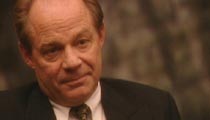
A Los Angeles civil rights attorney, Yates initially came to the Rampart
scandal through his representation of Ruben Rojas, who helped Yates
recruit other gang members that had allegedly been framed by Perez and other
CRASH cops. Yates represents over 60 Rampart clients and, at the time of his
interview, had settled 29 cases for nearly $11 million. FRONTLINE interviewed
yates February 6, 2001.
| |
Give me some sense of this department's place in the community.
Unfortunately, the image right now of the L.A.P.D. is at an all-time low. It's
very tarnished. And I say "unfortunately," because I think it's important to
the community to feel safe, to feel pride in their protectors.
Had it always been thus? When you began, what was the reputation of the
L.A.P.D.?
I started practicing in 1974. I noticed that there was a certain "us versus
them" attitude about the police. It's almost a Gestapo kind of
approach--something totally different from the Midwest, where I went to school
and was raised. That was the first thing that caught my attention about the
L.A.P.D. . . .
It wasn't until I really got involved in the plaintiff's end of the practice,
that I started handling the police misconduct cases, and always really wanted
to believe that I'm seeing an exception to the rule, while knowing that there's
bad cops just like there are bad lawyers, bad doctors. But I found out, I
would say in the early 1990s, that the L.A.P.D. certainly had some very deep-rooted
problems. . . .
Give me a sense of what the Rodney King case said about the L.A.P.D. and its
effect on Los Angeles.
Well, the obvious effect was that there was a riot, and I watched the city
burn. But there was still some optimism that maybe this was just a select crew
that had gone bad, so to speak. There were the racial implications, obviously.
In 1988, the 39th and Dalton incident was another eye-opener, where they went
into what they believed or had information was gang territory, drug-dealing
territory. They just basically knocked houses down and arrested innocent
citizens.
So the two things combined, Rodney King, 39th and Dalton, and then the findings
of the Christopher Commission made it very evident in the early 1990s there
were some serious problems. And more so outside of Los Angeles, the public
began to view L.A.P.D. as being a corrupt, an almost SS troop kind of organization.
I think the people that lived here wanted to deny it as long as they could,
because you have to feel that you're protected. Who are you going to go to if
you're in trouble? . . . I don't think that, until about 1994 or 1995, did I
became completely convinced that it was an institutional problem.
An institutional problem in the sense that this was a militaristic, rigid,
perhaps overly zealous department? Or something else?
Yes, but beyond that, that it was an us versus them organization that was
designed to protect and to serve. In effect, their first allegiance seemed to
be to protect themselves from exposure, from criticism. That became evident
when I got involved in a situation where I discovered that there was
broad-scale cover-up of officer misconduct by Internal Affairs. Internal
Affairs, the only body that could possibly internally police the police, was
more interested in picking little infractions out and disciplining the officers
for those, instead of going for the big stuff; in fact, going into the depth of
it and maybe to the point where it might involve some supervisors or
higher-level officers. . . .
What was your reaction to the Rafael Perez case?
 Well, when I heard that he was arrested for stealing eight ounces of cocaine
out of the evidence locker, it was like, "Okay, just a bad apple." But then it
started coming out about Ovando, that there were a number of other
convictions. And I started to find out what the testimony had revealed about
the level of corruption, the number of officers involved--it was somewhere
between about 20, to as many as maybe 70--if you want to talk about people who
knew but just turned their head, pretended like it didn't happen or they didn't
see it. Well, when I heard that he was arrested for stealing eight ounces of cocaine
out of the evidence locker, it was like, "Okay, just a bad apple." But then it
started coming out about Ovando, that there were a number of other
convictions. And I started to find out what the testimony had revealed about
the level of corruption, the number of officers involved--it was somewhere
between about 20, to as many as maybe 70--if you want to talk about people who
knew but just turned their head, pretended like it didn't happen or they didn't
see it.
Despite what I knew, I was shocked at the level of corruption which was
corroborated. What a lot of people don't understand is that there's an all-out
effort for the attorneys for the individual officers to try to whitewash this
thing. And they're always in the press saying, "Well, gee, this officer is so
unfairly defamed and we won the case. It's despicable that they would have to
go through this, these upstanding individuals who have worked all of their life
to protect the public." But what a lot of people don't understand is that the
task force that was made up of the district attorney's office and the police
force went out and independently corroborated these. They didn't rely on what
Rafael Perez said to them in and of itself. . . .
What are the implications for the community of Perez's allegations?
First of all, unfortunately, it reflects on the whole system of justice. Based
upon his testimony, there were so many instances where someone reviewing the
police reports--whether the supervisor, the district attorney, the
investigator of the district attorney's office, the public offender, the
judge--whoever reviewed them [was] seeing these repetitive, ludicrous
situations and claims by people that they were innocent, yet turning out most
of the time to plead guilty. There's a fundamental flaw in our system out
here.
But beyond that, it goes to the very core of our system of justice. Of course
[the police] are human beings; they're going to make mistakes. But if we can't
count on the police to be something other than just gangster cops, for whatever
reason, going out and just framing people because they don't like the color of
their skin, their association or if they wear a tattoo, whatever the case might
be, then we don't have a democracy. We've devolved, instead of evolved, as a
country. It goes to the core of the system. . . .
Why did you get involved in these cases?
. . . I just felt that one of the worst things that I see here in California is
the way that we have treated the Hispanic immigrants. . . . Whether they are gang
members or not, if you're standing on the corner and if you're Anglo, you're
not going to get picked up. If you're standing on the corner and you're with a
Hispanic, he'll get picked up or she'll get picked up, and you won't. Two
Hispanics standing on the corner, they're both going to get picked up. . .
.
How many clients are there now, including those that have been settled, that
you represent in Rampart?
Sixty.
Sixty. And you've had one huge settlement already, right? How many
people?
I settled 29.
What amount?
The gross amount was $10.95 million. . . .
Ruben Rojas tells, as you know, a remarkable story of widespread corruption.
He suggests that it was literally dozens of cops, and that it was almost an
organized level of corruption--criminal activity on the part of the L.A.P.D. He
calls it a gang. When you hear that, what level of credence do you grant that
story?
Well, he was the first one to ever bring that to my attention. And I've got to
be honest with you. I really didn't believe it. I didn't want to believe it.
I don't think anybody wants to believe it. I didn't necessarily think that he
was lying. I just thought maybe there's a little stretching going on here, or
this is something that he somehow has convinced himself to believe is the
case. . . .
But the fact of it is...I represented approximately somewhere between 15 to 20
different gangs. When you start to hear [the same story] from a rival gang
member . . . and then you do your investigation, as we've done, and find a
witness who corroborates it . . . I believe it. It's got to be true.
You've got gangsters making these assertions against the Los Angeles Police
Department. What credibility can there be?
There's none. Nobody gives any credibility to these gangsters. That's why
they've been slaughtered in these, quote, "board of rights" hearings that the
police held to determine whether or not the officer is guilty of misconduct. I
was in one of them with one of my gang clients, a youngster who finally got out
of jail and was questioned. "Why would Officer So-and-so come after you and
frame you unless you were doing something wrong? Why were you running from
him?" He looked at me and says, "Can I tell him the truth?" I said, "If you
want to. It's up to you." He said, "Well, because I owed him money." "What
did you owe him money for?" "For drugs." And when he said that, the entire
board, the entire panel came at him. They went for the jugular. And
coincidentally, he's now back in prison.
Surely this couldn't happen without the knowledge of supervisor-level police
force, of the personnel knowing? And one would daresay beyond that, up to the
chief level.
I've always found it hard to believe that the chief could actually know the
specifics we're talking about. I have no doubt that it goes to a supervisory
level. That, to me, is unquestionable. As to the chief, where the blame lies
is the us versus them mentality, which encourages a cover-up of any activity
that would reflect on the department. . . .
Do you think there is any official interest in all of these allegations
about criminality that goes beyond administrative malfeasance--that goes beyond
bad arrests and a pattern of making cases against known gangsters as an
expedient towards getting them off the street?
Absolutely not. For a number of reasons, but I think the main one is that
Rafael Perez gave the excuse that this was an us versus them, a war against the
gangsters to get them off of the street. And, see, that sounds good. The
public wants to hear that. That's something that appeases the higher-ups. .
. .
Do you believe there was a criminal enterprise [in the Rampart
Division]?
It's been corroborated from four or five or six different angles, none of which
know each other....
As a lawyer . . . you were beginning to discern that there's some
deep-rooted problem within the L.A.P.D.. When the Rafael Perez situation presents
itself, describe to me the sense of opportunity you must have
sensed.
That, hopefully, for the first time, all of this would come out in such a way
that the public would be concerned enough to force a change. I hoped that the
politicians and the hierarchy--including the mayor, the chief of police,
district attorney, governmental agencies, DPA, Department of Justice--everyone
would say, "Look, we've got a real problem. Let's go in and let's clean this
up, no matter what it takes."
But I'm afraid that, unfortunately, the way it looks, Rafael Perez is now being
used as a scapegoat. You always read in the newspaper, "Rafael Perez
convicted, admitted liar." And there's always, "the former gangster." There
are credibility issues regarding their background or prior convictions. And it
seems like there has been less than a hue and cry on the part of the public,
instead of saying, "Well, wait a minute. Maybe if this is being done to
youngsters that were in gangs or presently in gangs, they may do the same thing
to my son or daughter." So I'm very disappointed. And if the feds come in and
actively pursue it--and I'm hoping that will happen--then there's hope. . .
.
There is the view that what's been created by this litigation is, to quote
one official, an entire class of instant millionaire criminals.
Yes, see, that's the problem. That's the mentality. But who's the criminal in
this context? Are we going to say that, because you made a mistake when you
were 18 years old, that if a police officer frames you, you're not deserving,
just because you have a bad record? Are you any less deserving? If you were
framed, you were framed. And, see, that kind of thinking is the problem. The
criminal is Rafael Perez or Nino Durden or Michael Buchanan or Edward Ortiz--I
could go on and on and on.
Do you think--for all of the singing he's done and for all of the notice
that he has gotten for cooperating with this investigation and being the star
witness--that Rafael Perez is still withholding a good deal of the
truth?
I have no doubts about it. And yet--I have told his attorney this, and I'll
say it again--that in the context of what's taken place in this whole Rampart
scandal, he's probably the most credible of all. . . . But he's still holding
back. And certain questions were never asked, and will never be asked. . . .
| |