
Aug. 19, 2026 - Full Show
8/19/2026 | 26m 47sVideo has Closed Captions
Watch the Aug. 19, 2026, full episode of "Chicago Tonight."
Your commutes are going to get more expensive next year as officials OK a toll increase. And invasive carp are closing in on Lake Michigan — what kind of damage could they do?
Problems playing video? | Closed Captioning Feedback
Problems playing video? | Closed Captioning Feedback
Chicago Tonight is a local public television program presented by WTTW
WTTW video streaming support provided by members and sponsors.
Aug. 19, 2026 - Full Show
8/19/2026 | 26m 47sVideo has Closed Captions
Your commutes are going to get more expensive next year as officials OK a toll increase. And invasive carp are closing in on Lake Michigan — what kind of damage could they do?
Problems playing video? | Closed Captioning Feedback
Where to Watch Chicago Tonight
Chicago Tonight is available to stream on pbs.org and the PBS app.

WTTW News Explains
In this Emmy Award-winning series, WTTW News tackles your questions — big and small — about life in the Chicago area. Our video animations guide you through local government, city history, public utilities and everything in between.Providing Support for PBS.org
Learn Moreabout PBS online sponsorship>> Hello and thanks for joining us on Chicago tonight.
I'm Brandis Friedman.
Here's what we're looking at.
Major changes are being proposed to a federally funded childcare program.
What it could mean for families and providers.
And cue the jaws theme music as invasive carp move closer to the Great Lakes.
We get an update on efforts to prevent that from happening >> first off tonight, if the Illinois Tollway is part of her commute, it will cost you more starting next year.
The Tollway board voted unanimously today to approve its new capital program, which raises passenger vehicle tolls by $0.45 per toll.
commercial vehicles will also increase by 30%.
The move funds, the driving connections plan, which aims to improve aging roadway, infrastructure and fuel economic development.
Supporters say drivers will save money in the long run about $725 a year in repair and fuel costs.
They also estimate the average Chicago driver spends about 100 hours in traffic on the tollway each year amounting to $1800 in lost time.
>> Let's be clear.
We want to make sure that our roads, our pothole 3, that we're making more so that we can build our economy across the state of Illinois.
Otherwise, you know, if you do it, Aaron Bailey is suggesting ranked you're going to put the burden of the tolls on all of the taxpayers of the state down state.
Southern Illinois, Central Illinois.
It should be the people who use those tolls to pay for those roads.
>> And Republican candidate for Governor Darren Bailey has called for Illinois to eliminate holes and cancel the toll increase but has not outlined how the state would replace the revenue.
And it is governor's day at the Illinois State Fair and one Democratic lawmaker is making it clear he does not want your vote in November's election.
>> I'm going to ask you all a favor in 76 days.
We have an election don't vote for me in that The first time I've ever said that please don't vote.
>> Durbin is, of course, not running for his U.S.
Senate seat after announcing his retirement last year.
But he encouraged Democrats to back the Democratic nominee for his seat.
Juliana Stratton, who will be facing Republican Don Tracy in 3 months.
Many other Democrats were on hand in Springfield today to rally the party.
And look ahead to the midterms, including Massachusetts Senator Elizabeth Warren who headlined the brunch event.
One noticeable absence was embattled Illinois House Speaker Chris Welch who is facing some calls to resign over his handling of a harassment investigation against former State Representative Harry Benton.
Well, it was reportedly absent from today's state Fair for his kid's first day of school.
Republican Day at the state fair takes place tomorrow.
Your next Amazon order could be arriving by drone if you live in the burbs.
The mega retailer announced plans to expand its drone delivery operation more than six-fold to suburban areas in nearly 500 U.S.
cities, including Chicago.
The deliveries would happen in suburbia and away from tall buildings and major airports.
The goal is not to cut costs to replace drivers and trucks, but to provide faster delivery for customers.
The drones can only carry one package at a time up to 5 pounds.
The plan ramps up the pressure with competitor Walmart to provide consumers with the fastest delivery times.
What overhauling the federal early-childhood education program called Head Start could mean for local families right after this.
>> Chicago tonight is made possible in part by the Alexander and John Nichols family.
The Pope Brothers Foundation.
And the support of these donors.
>> Some of the nation's most in need.
Families might face new changes to childcare head start as the federal program that provides early education and services to low-income children and families, including those experiencing homelessness.
And in foster care is facing deregulation by the Trump administration.
Conservatives say the changes could save money but advocates question at what cost?
Joining us to talk more about this are Lowrie, Morrison, Fractal executive director of Illinois Head Start Association and Ted Dabrowski.
President of Wire points.
independent nonprofit research and commentary organization focusing on Illinois's economy and government.
He also previously ran for Illinois governor in the Republican primary.
Welcome back.
Thanks to both for joining us.
Thanks, France.
So Lori, some of the specific proposals include shifting standards on education requirements and teacher student ratios to the states changing multiple program teeth brushing developmental screenings meeting with special needs, reducing caps on administrative costs to 5% and establishing physical activity requirements.
What's your reaction to those changes?
Well, that's a really hard.
>> it have critical impact on our children and families across the state, including removing those comprehensive services that make our head start programs so impactful directly for children and families like our mental health services, like all of our health, oral health services and increasing our class sizes leave less opportunity for children to have individualized services.
Just to remind us that we serve those most in need across the state.
So that means that either are the children families are homeless or in our foster care system or below the 100% of the federal poverty level so that their most in need and they need these wraparound comprehensive services such as mental health and health nutrition services.
>> you've called for more scrutiny and accountability on the head start program.
Tell us why.
>> Well, first of all, I want to make the point that for my understanding of the they're removing a lot of the requirements.
But that doesn't mean that those requirements can't be kept in place by by local local To the extent that those governments still are, those groups still want to keep tight.
A tight rein on on the rules they should?
No, I think I think for me the big thing in in this is not, of course, not just head start, but many government programs.
We're not seeing the results were expecting.
And and we're not holding those groups accountable.
And then we've lost accountability and not speak about intentions of speaking about the actual results because I know that chlorine others to do hard work to to, to care about people in need.
But I think what we're seeing is I think the head start.
We've got a lot of criticism for a lot of its benefits fading out by the time kids get to kindergarten.
Start first grade or second grader.
3rd grade.
And that's what I'm obsessed about.
When you look at like the reading and math scores that CPS you're talking about just one out of every 10 black children are Hispanic children reading a great leveler doing math at grade level of the national.
national test.
We have to figure that out because that to me is if we don't care about if we can't figure out literacy, we can do all the head start program to walk.
But if we don't figure out how to get accountability in our schools spending $32,000 a kid, I don't see we're wasting time, but we are wasting money and we haven't figured it out already say that I would like to expand and, you know, sure, let's get rid of the regulations and we can still do them right.
>> Regardless of whether they they are they are not.
But reality, the Indigo in the administration's own words, they're going to remove all of those comprehensive services and regain 2.2 billion dollars in this next fiscal year and increased the recapture those funds so that we can our children.
So we can't do the mental health services or those health services, Aurora health services because we won't have the funding to do that work.
We need investment in head start not decreasing the investment in expecting us to serve our children without additional funds.
So has a huge impact, direct services for children and families.
And I just want to remind us these are proposed rules and that, you know, the impact that removing these 90% of the standards we'll have on children and families directly not receiving the services because they're going to switch the needle.
And credit to serve more children.
So one of one of Ted's concerns, Lori Wind.
Then 10, I'm gonna come back to, of course, the one of Ted's concerns was whether or not the the benefits of the head start program was lasting far enough.
>> Was setting kids up for for better outcomes down the road.
Data shows that children are enrolled in head start are more likely to graduate high school and attend college.
I think the Secretary Kennedy said as much in in previous comments, but how do you think this change might impact those results if deregulated?
Well, for example, they say we can only teach in English and so majority are children are dual language learners.
And that's just one example of what these proposed regulations >> would do to children and families.
We know that research tell us that the language development done in both languages is critical for the child's success moving forward.
And so that's one concrete example of a loss and then to address the fade out effect.
So we know that our children come below their typical developing peer and it takes a lot of do sage intensive dosage to get our children on the same level.
And when they leave had start, we have them.
They're they're 98% ready for kindergarten.
Ready for life.
And so that's that's a great accomplishment.
But what we do know is our children are entering.
living in poverty in and train low performing school districts.
And so they need that extra dosage throughout their K 3.
3rd can't great system.
Intensive support isn't always existing.
Yeah.
Say once get to kindergarten, sounds to correct a yes.
how do you think the success of a students were enrolled in head start?
How should that be measured?
Well, let me say one thing.
First of I think it be great if if I were in favor you, for example.
>> Having more control over the funds would be phenomenal right in the eye.
You get to do what you think is best.
I have the the Fed Feds tell you what to do how should we measure?
I my my big issue is is that we don't measure graduation, for example, might be something sounds good.
But we were gradually a CPS.
We're graduating so many kids who can't read grade level who can do math grade level.
So graduation for me, taken almost no meaning anymore.
want to see dew on the standardized EVA standardized tests debatable, too.
But you look at the national standards, we should be dominating on those that's not happening.
But I think the bigger issue is and I think, you know, what you're trying to do is is like I said, great intentions, but forgotten about this discussion, a family.
We're talking about a lot of single on wed unwed mothers trying to raise children and you we know how difficult it is.
And the other many heroes who do well, but we know that intact families do so much better, especially the black families, a black family will make 3 times the income nearly 3 times the income of a single a single mother.
So we have to get back to talk about family and supporting families supporting marriage.
And then, of course, getting back to to the core literacy and Numeracy.
Ted, is it fair to say that the federal government should be responsible for setting the standards if this is a federal program?
>> Or it sounds like it.
Do you propose it no longer being a federal program?
Well, just doing well.
Yeah.
So well, you could could be be just a state program.
We have many programs in this.
The other problems.
We have so many programs, so many overlapping programs and a big critique of my many.
If heard me talk about this, is that and Chicago, we and Illinois were probably the most equity based social welfare driven states for that Nic in the country.
But if you look at Chicago, if you look at that 15 largest cities in the country.
The outcomes for blacks are horrible on poverty, on education, on on a plot, unemployment.
>> We're doing it all wrong and it takes I think it takes good meeting of the minds to figure how to a better because we shouldn't have the worst outcomes in the country when we spend so much money like its EPS.
>> Lori, what impact might that proposed changes have on the teachers and staff at Head Start rights?
So just visit what had said Headstart standards are the blueprint for success there based on best practices of what we know is good for children and families.
And I think a misconception is that there's not flexibility in the standards.
It's red, Cape bureaucratic.
And that's that's totally opposite of what it is.
And there is not one head start program across the state that looks the same.
They have the flexibility to implement and define the standards to fit their community.
It's driven by their community and the engagement of their community in the parents decide how to interpret those standards and provide those impact.
Pull services every day that they're there and the impact is going to be huge.
So imagine children that need those health services are oral health services where we're supporting them to get to the dentist, to tell their teeth taken care of.
We won't be able to do that because the funds will not be there.
be switched over to serve more kids and that the administration says this in their analysis of proposed rules we've got 30 seconds left.
The Trump administration has previously pushed for the elimination head.
Start from the budget.
Do you think that's an effective solution?
>> Well, I like we know we're all in trouble on spending, right?
Was Chicago's got its budget mess.
The state has this budget mess.
The U.S.
has this budget mess.
We're all in trouble.
We need to look get back to looking accountability.
>> And tell you why.
I'm so obsessed accountability, CPS low.
It did.
Illinois lowered state standards for education.
But this past year, instead of raising standards of demanding more, we lowered standards and you've got you got in California.
You've got professors begging for a CTA SAT scores to come back because they're getting kids coming to college who can't do middle school math.
This is this is a big problem.
That's where we'll have to leave it a problem that we're not going all have in these 10 minutes standards are so important.
>> Is to make sure remaining those outcomes.
They're OK and then that's where we'll have to leave.
My thanks to Laura Morrison for Joint address.
He thinks Tebow.
Thank you very much for us.
>> Coming up, could a political feud over a planned Carberry are in Joliet threaten the Great Lakes?
We'll find out more next.
Electricity sound and even an underwater bubble wall are all part of the plan to keep invasive carp from entering the Great Lakes.
But the future of the cart barrier is in limbo.
At the end of July, the U.S.
Army Corps of Engineers issued a stop work order on the construction of the Brandon Road in or Basin project.
Meanwhile, carp are closer than ever to Lake Michigan over the weekend.
Monitoring crews found hundreds of young silver carp just 80 miles downstream.
Joining us now with more are Joel Braun, Meyer, president in CEO at the Alliance for the Great Lakes and Katie O'Reilly.
An invasive species specialist at the Illinois, Indiana Sea Grant.
Thanks to both for joining us here.
So, Katie, what could happen if invasive carp make it into Lake Michigan?
So the big concern is that if invasive carp do, in fact, make it into Lake Michigan.
>> They are just really great at what they do, which is eating and reproducing.
And so eat the same things that a lot of our native fish species eat, which is plankton these little microscopic plants and animals.
And without that, that could lead to the collapse of the fishery in the Great Lakes, which is about a 5 billion dollar fishery and obviously supports jobs throughout the Great Lakes Basin today be eating up all the food that the native fish eats, leaving them nothing to eat.
Absolutely them, of course not great for Why is it concerning that the cart found over the weekend are juveniles instead of adults?
This is >> a significant step in the invasion process that we haven't previously observed.
So we've seen a cart a little bit closer to the lake over the years.
But those have been sort of one-offs and the fact that we're seeing juveniles this close to the lake now >> indicates that they are actively reproducing, which is a step.
That means things just get a little bit tougher to control them.
If they've got this established population, if their brief producing, does that also kind of signal They're doing great.
They're getting what they need.
Exactly that that indicates they're doing.
And, you know, they have a great year.
Things are going well for them and that, you know, the conditions are right that they can keep potentially moving further upstream.
what do we know about why the Brandon Road project was paused?
>> Very little right now.
And I think the combination of the juveniles being found, plus a stop work order means alarm bells should be going off across the region and they're starting to across the Great Lakes States.
This project, this one that's been supported with bipartisan support for almost a decade.
Congress is behind that.
The states are behind it and as of now, we have no explanation as to why the stop work order has been issued.
Literally.
Construction crews are ready to start installing technologies into the channel in front of the Brandon Road Lock and Dam and take the next step on the project.
And that's not happening.
Who are some of the different stakeholders on this project?
Sure.
what's great about this project, again, bipartisan, lots of congressional support, the states of Michigan and Illinois have both put in their own budget money into the project, along with the Army Corps of Engineers.
And so it really is the closest thing to a universally supported project in the Great Lakes you might find.
And that's because everybody understands how bad it can get if an invasion happens.
Right?
Great Lakes states have been through this.
They've seen the impacts on the fishery and on the boating industry, which is a 16 billion dollar industry across the Great Lakes and bigger than all of that, it's part of the culture.
It's part of the way of life.
Great Lakers don't want to deal with another invasive species that's taking money out of their pockets and keeping them from enjoying the Great Lakes that we all love.
>> I imagine, you know, all of the stakeholders, 8 different agencies across different states across 5 different lakes.
I imagine that was no small lift to get everybody on board with with that isn't inexpensive project.
Yeah.
More than a more than a decade of negotiation.
Hard fought compromises made but everybody's on the same page and pulling forward, except as we've learned, the White House, there's one place that has power to actually bring people back to work and start construction up tomorrow.
It's our president and the White House that oversees the Army Corps of Engineers.
And so right now, we have no understanding of why the work has stopped.
But as far as we know, this is a this is a stop work that could be lifted tomorrow.
Katie.
Earlier I mentioned the bubble wall which sounds like fun.
If you're a toddler, not alone.
If not so Tell us how the plan, berry or or how the barrier actually works to to deter the cart.
Yeah, absolutely.
So the Brandon Road project is actually >> somewhat of a gauntlet for carp.
It is us sort of a stacked system of multiple different deterrents.
So you mentioned the bubble wall.
There's also sound which deters That's part of the reason you see them in those viral videos jumping out of the waters are really sensitive to sound.
>> There are electricity like some of the electric barriers that are further upstream.
So the idea is that by stacking all of these different deterrents, it reduces the possibility that they can get through any one of them like, you know, if it gets through one, it will get stopped by another.
So it really is an improvement on what we have currently existing in just pure electricity was the Chicago area.
So important for controlling invasive species like heart.
>> The Chicago area is really a lynch pin that, you know, the connection between the Great Lakes and the Mississippi River Basin is here.
You know, we have the connection through the Chicago waterway system, the of the Illinois River.
And so because that's, you know, so critical for commerce.
It's also critical for moving things that we don't necessarily want to get to places like fish that can play Do the expected cost of the project just over a billion dollars?
What would you expect the cost would be of not moving forward with it.
>> We know that their costs are compounding right now because workers are sitting idle and were actually that's a specialized every day of delay.
>> Has more days of delay the compound because you have to have staging and got the equipment in place and all that stuff.
All that's been pulled off the table by this White House to lay.
And so right now we're adding to the cost of the project.
But I want to emphasize that this caught this this project that as it was originally designed is worth every penny.
The Great Lakes region has a lot of experience in putting big dollars to work to clean up the messes that have that have compromised the Great Lakes in the past, whether it's pollution, whether it's invasive species, because we know the payoff.
It's a great, great lakes that everybody can enjoy.
So getting people back to work, getting the dollars that Congress and the states and so many other people have agreed need to be spent to stop invasive carp from getting into the Great Lakes.
That's job one right now.
It's also much cheaper to prevent.
It's been it is to clean it absolute of the accident or the problem happens.
Katie had a car cut to Illinois in the first place.
>> So the cards actually are originally from Asia brought over to the U.S.
and like the 60's and 70's to be used as a kind of biological control of algae and fish ponds, which is a good, you know, think sense at the time.
Unfortunately, the Mississippi River, as we know, often floods and a lot of those fish ponds got connected to the Mississippi River during times of flood Hartman did into the Mississippi River, which sort of acts as a superhighway.
And since then, we've seen them progress up up through Illinois.
What does carpet monitoring in the waterways here?
Look like so Kurt monitoring here in Illinois is really an all hands on deck effort.
It's the Illinois Department of Natural Resources, the U.S.
Fish and Wildlife Service, academia.
They're all working throughout the, you know, spawning season, which is everywhere from spring fall to really intensively monitors specific sites on the river so that we can find potential new, citing such as juveniles are, Leon, which is really critical to the prevention piece of this.
>> So you mentioned, you know, some, you know, fishermen, other folks, they know what it's like to can sort of get a muscle through muscles.
Probably not a good work invasive species.
You know, invading what?
What was that like?
What has that been like?
>> Well, what what was can happen before we can even flash back to 20?
0, 9, in 2010 when the adult invasive carp are found in the Chicago area and the panic that ensued among the states.
>> Realizing how close these these fish were.
And that was just those are the adults.
Now, 16 years later, and that led to, by the way, the creation of this project that we're talking about today, right?
The reason that we all came together and are willing to make that investment is because we saw what could happen if the car close.
16 years later, the project to supposed to be being built.
And now we're seeing these juveniles showing up even closer to Lake Michigan than they ever have before.
So alarm bells should be going off.
We don't want to get back into a panic situation like we had in 2000 and time and in 2010.
But what we've got in front of us is an opportunity to see a problem coming and actually stop it before it gets You could.
The barrier in about 30 seconds, couldn't stop other fish.
In addition to part.
>> Yes, so there's been a lot of research see if the same deterrence that deter invasive carp will act also deter potentially invasive fish.
Also native fish, which could lead to, you know, some this connections between them, but also things that are a little bit smaller.
Things like invertebrates crayfish, the mussels, for example.
So there's there's definitely benefits across the board.
Okay.
So we'll have to leave Keep us posted.
I'm Joe Burrow.
Myron, Catie O'Reilly, appreciate care.
And that's our show for this Wednesday night.
If you're looking to squeeze out every last bit of summer that you can be sure to check out our website for our festival guide.
>> That's at W T Tw Dot com slash festivals and join us tomorrow night at 5, 30 10 now for all of us here at Chicago Brandis Friedman, thanks for watching.
Stay healthy and safe and have a good night.
>> Closed captioning is made possible by Robert a cliff and Clifford law offices, a personal injury law firm, working to preserve the
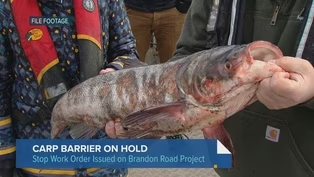
The Latest on Efforts to Prevent Invasive Carp From Reaching Lake Michigan
Video has Closed Captions
Monitors recently found hundreds of young silver carp just 80 miles downstream. (9m 16s)
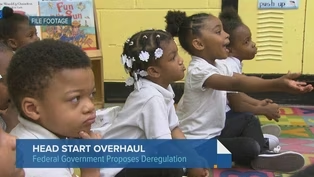
What Changes to Head Start Could Mean for Illinois Families, Providers
Video has Closed Captions
The federal education program provides early education and services to low-income children. (10m 44s)
Providing Support for PBS.org
Learn Moreabout PBS online sponsorship New Episode
- News and Public Affairs

Top journalists deliver compelling original analysis of the hour's headlines.
 New Episode
- News and Public Affairs

Today's top journalists discuss Washington's current political events and public affairs.

 New Episode
 New Episode
 New Episode
 New Episode
 New Episode


 New Episode



Support for PBS provided by:
Chicago Tonight is a local public television program presented by WTTW
WTTW video streaming support provided by members and sponsors.