WTVP EcoWatch
The Benefits of an All-Electric Home
Clip: Season 3 Episode 2 | 4m 2sVideo has Closed Captions
Experts explain the health, environmental and financial benefits of all-electric homes.
Grace Arnold explains how replacing fossil-fuel systems with electric technology can improve indoor air quality, reduce emissions and lower long-term utility costs. She discusses heat pumps, induction stoves, home energy assessments, insulation and available incentives, while emphasizing that each home needs a practical, carefully planned transition.
Problems playing video? | Closed Captioning Feedback
Problems playing video? | Closed Captioning Feedback
WTVP EcoWatch is a local public television program presented by WTVP
Support for Ecowatch is provided by the Backlund Charitable Trust
WTVP EcoWatch
The Benefits of an All-Electric Home
Clip: Season 3 Episode 2 | 4m 2sVideo has Closed Captions
Grace Arnold explains how replacing fossil-fuel systems with electric technology can improve indoor air quality, reduce emissions and lower long-term utility costs. She discusses heat pumps, induction stoves, home energy assessments, insulation and available incentives, while emphasizing that each home needs a practical, carefully planned transition.
Problems playing video? | Closed Captioning Feedback
Where to Watch WTVP EcoWatch
WTVP EcoWatch is available to stream on pbs.org and the PBS app.
Providing Support for PBS.org
Learn Moreabout PBS online sponsorship- The environmental benefits of an electric home is no fossil fuels in the home.
So our existing homes and buildings are a huge contributor to our CO2 emissions.
So by getting fossil fuels out of the home, we are taking a lot of our emissions just outta the equation.
Having fossil fuels in the home can contribute and exacerbate existing health conditions.
So there's been a lot of studies that have shown that having gas in the home can exacerbate things like asthma, which can be really bad for young children.
So putting all electric tech in the home and getting gas out of the home is great for air quality in the home and outside of the home.
And so is just overall better for our health.
- Let's talk about the economic impact of having an all electric home and maybe some money that people can save as homeowners.
- [Grace] So I will say for getting all electric technology or just any technology generally, there are gonna be higher upfront costs, but in the long run you are saving a lot of money.
So, as you probably know, and we all know, utility bills in the past couple years have been skyrocketing.
So by getting off that gas system, you're gonna be saving a lot of money month to month.
But if you're getting maybe a heat pump, that's a new thing and it's gonna cost some more money upfront.
So we don't recommend that people just buy new energy efficient technology.
But wait maybe until if your stove breaks down, then maybe consider an induction stove, stuff like that.
- What are some of the downsides, if any, to having an all electric home?
- I mean, I think they're pretty great, but we do hear a lot of people say, "Well, I mean I experience all four seasons.
Is this technology really gonna work when it's 20 degrees outside?"
And I think to that, I would say, it takes a lot of time, it takes a lot of research to really figure out what works best for your home.
But if you find qualified people that can like insulate your home, maybe fix your windows, figure out what exactly your home needs, then you can mitigate a lot of those, I guess, concerns.
And your home will be running pretty smoothly.
- And when people are making these transitions, especially if they do decide they wanna do it all upfront, they've got the money to afford it, what are some things they need to think about during this transition from maybe having gas in the home to not having gas?
- [Grace] I think the first step is getting a home assessment, figuring out what your home needs.
'Cause we all have homes from maybe a hundred years ago or 10 years ago.
You don't really know exactly what your home needs until you get that assessment.
'Cause some people, maybe you want solar, but it's too shady.
So getting that assessment, figuring out what your home needs kind of in the bones.
Do you need to be insulating, etcetera, stuff like that.
And just making sure that you are getting professionals that know your home, know what you need and can work together to make a plan so that the technology can work together to be most efficient and most financially feasible for you.
- You mentioned older homes.
You could live in a 100-year-old home and chances are that home may not be as insulated as a home that's only 10 years old.
So when people are thinking about maybe going solar or getting a heat pump, things like that, do they also have to look at their existing home and say the age of their windows or maybe how well insulated it is?
- Yeah, definitely.
I would say a lot of the homeowners I talk to, the first step is figuring out what the insulation situation is, what the window situation is.
'Cause for like an old home, the attic is not gonna really be insulated and you should be insulating it before you're putting in this expensive technology.
'Cause then it's not really gonna be efficient if you're heating up your home.
And then it's all kind of escaping out the attic.
So it's important to get your house checked, figure out what the needs are of your home before you're investing in technology, because a lot of times you gotta kind of insulate, fix the windows, et cetera, before you can fix the inside and the air quality and all of that.
- [Mark] We talked about the upfront costs and how they can be expensive.
Are there any like state incentives or grants or tax rebates that people can learn about?
- Yeah, definitely.
Both our utility companies and the state has programs for all different types of technology.
So I would recommend that if you're interested in starting the process is to look into what your local, or yeah, your utility offers and what the state offers and what you might be eligible for.
'Cause there definitely are programs that you can opt into.
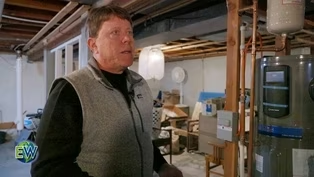
Inside a Fossil-Fuel-Free Macomb Home
Video has Closed Captions
Clip: S3 Ep2 | 6m 5s | Tour a Macomb home powered by efficient electric appliances, vehicles and rooftop solar. (6m 5s)
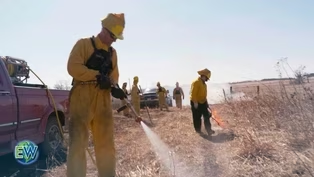
Why Prescribed Burns Need Better Insurance Access
Video has Closed Captions
Clip: S3 Ep2 | 5m 59s | Prescribed fire restores Illinois habitats, but limited insurance puts burns at risk. (5m 59s)
Providing Support for PBS.org
Learn Moreabout PBS online sponsorship New Episode
- Science and Nature

Explore scientific discoveries on television's most acclaimed science documentary series.














Support for PBS provided by:
WTVP EcoWatch is a local public television program presented by WTVP
Support for Ecowatch is provided by the Backlund Charitable Trust