Docs on Call
The Human Side of Cancer Care
Clip: 3/26/2026 | 1m 23sVideo has Closed Captions
An oncologist explains why emotional and practical support are part of cancer care.
Dr. Megan Hutchcraft discusses the human side of a cancer diagnosis and why treating the person matters alongside treating the disease. She explains the value of trusted care teams, bringing family or friends to appointments, asking questions and using social work services to navigate practical and financial concerns.
Problems playing video? | Closed Captioning Feedback
Problems playing video? | Closed Captioning Feedback
Docs on Call is a local public television program presented by WTVP
Docs on Call
The Human Side of Cancer Care
Clip: 3/26/2026 | 1m 23sVideo has Closed Captions
Dr. Megan Hutchcraft discusses the human side of a cancer diagnosis and why treating the person matters alongside treating the disease. She explains the value of trusted care teams, bringing family or friends to appointments, asking questions and using social work services to navigate practical and financial concerns.
Problems playing video? | Closed Captioning Feedback
Where to Watch Docs on Call
Docs on Call is available to stream on pbs.org and the PBS app.
Providing Support for PBS.org
Learn Moreabout PBS online sponsorshipWith all these brilliant doctors doing what they do, they have to be very precise and specific about how they treat the cancer, but there's also the human element.
You know, when the person is diagnosed with cancer, obviously, that's gotta be devastating.
How do you deal with the patient's emotions while still trying to deal with, you know, the medical symptoms?
- Yeah, I think that's a really important part of cancer care.
I think taking care of the person in front of you is more important than taking care of the, you know, the patient in front of you or their diagnosis.
And I think making sure that they feel comfortable with their care team, making sure that they have all of their questions answered, making sure that they have the opportunity to bring friends and family to appointments or listen into phone conversations, because, you know, once you hear the C word, a lot of times everything else is kind of like the ears are closed off, you can't remember anything else.
And getting the opportunity to, you know, have family members to be supportive is important.
We also have social work services as well, so for folks who are having, you know, additional problems, you know, that are other life stressors, you know, in addition to just having a cancer diagnosis, how are they gonna navigate that cancer care system?
How are they gonna pay for things like that?
You know, having an an expert in social services is really important, and fortunately, we do have that service available at our cancer centers.
- Do most patients know to ask for that,
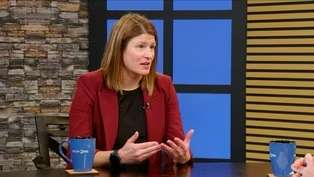
How Cancer Treatment Plans Are Built
Video has Closed Captions
An oncologist explains how cancer is diagnosed and why treatment must be individualized. (2m 7s)
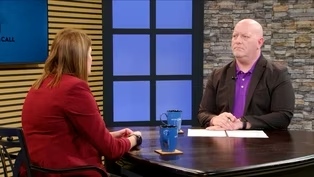
Preventing and Detecting Gynecologic Cancer
Video has Closed Captions
An oncologist explains HPV vaccination, screening and genetic cancer risk. (1m 32s)
Providing Support for PBS.org
Learn Moreabout PBS online sponsorship New Episode
- Science and Nature

Explore scientific discoveries on television's most acclaimed science documentary series.






 New Season



 New Season

Support for PBS provided by:
Docs on Call is a local public television program presented by WTVP